
多边贸易体制

Search documents
中国经济:世界格局之变中的稳定源与引力场
Zhong Guo Qing Nian Bao· 2025-08-31 02:01
Group 1: Global Economic Landscape - China's macroeconomic policies are focused on expanding domestic demand and maintaining medium to high-speed economic growth, providing essential support for the global economy [1] - Developed economies are facing weakened growth momentum and structural challenges exacerbated by tariff policies, leading to a decline in consumer spending and capital confidence [2][3] - The collective rise of global South countries is contributing significantly to world growth, with their trade accounting for 45% of global goods trade and contributing 80% to global growth [4] Group 2: Challenges in Developed Economies - Developed economies are experiencing a self-reinforcing cycle of decline due to protectionist measures, which fail to address structural economic issues [3] - The U.S. tariff policies have not resulted in the expected manufacturing return, instead increasing production costs and inflation, leading to a drop in personal consumption expenditure growth to 1.4% [2] - Other developed economies, such as Europe and Japan, are also suffering from reduced growth momentum due to their reliance on U.S. exports and supply chain connections [2] Group 3: Resilience of Global South - Global South countries are diversifying their economies and reducing reliance on traditional markets, with a young population providing a robust labor force and consumer market [4] - These countries are actively pursuing industrialization and integration into higher-value segments of global supply chains, enhancing their economic resilience [4] - Strengthened South-South cooperation is providing a robust support system against external risks, with initiatives like BRICS+ and RCEP enhancing regional collaboration [5][6] Group 4: China's Role in the Global Economy - China is emerging as a "stabilizing source" in the global economy, with a growth rate of 5.3% in the first half of 2025, attracting significant foreign investment [7] - The country is committed to high-level opening-up policies, with a 11.7% increase in newly established foreign enterprises, particularly in high-tech manufacturing [8] - China advocates for multilateralism and actively participates in global governance reforms, contributing to a more inclusive international economic order [9]
敢跟美国正面硬刚的第二个国家出现,中国苦心经营奏效
Sou Hu Cai Jing· 2025-08-30 14:40
莫迪此次访华意义重大。一方面,中国和印度作为亚洲最大的两个发展中国家,在当前全球经济复苏乏力的背景下,有着共同的发展需求和战略利益。最近 一段时间,中印关系持续回暖。双方在边界问题上取得多项进展,经贸合作也在逐步加强。另一方面,在面对美国贸易压力时,中印两国携手合作,能够形 成更强有力的应对力量,更好地维护自身利益和国际多边贸易体制。 在国际政治经济的大棋盘上,中国与印度之间的互动,正在悄然改变全球格局。最近一段时间,美国对印度不断施加关税压力,试图通过经济手段迫使印度 妥协。然而,在莫迪总理的领导下,印度展现出了前所未有的强硬态度。而在这背后,中国的支持发挥了重要作用。 自从特朗普政府上台以来,美国推行贸易保护主义的行为就越来越明显。他们不仅对中国加征关税,也对印度挥起了"关税大棒"。美方以印度进口俄罗斯石 油为由,对印度输往美国的商品蛮横加征高额惩罚性关税,妄图借此逼迫印度改变其既定的能源政策,放弃从俄罗斯进口石油,转而向美国的能源供应商靠 拢。但莫迪政府并未如美国所愿,选择妥协退让。 这段时间,中国在背后全力支持印度反抗美国的关税霸凌。中国驻印度官员明确表态,坚决反对美国强加给印度的关税,强调面对霸凌者 ...

沉默只会让恶霸大胆!当着全世界的面,中国大使发声力挺印度,莫迪敢不敢对美国强硬?
Sou Hu Cai Jing· 2025-08-29 06:39
Group 1 - The relationship between the US and India has sharply deteriorated due to recent tariff disputes, with the US imposing a 25% tariff on Indian goods and threatening punitive measures against India's purchase of Russian oil [1][2] - India imports 36% of its crude oil from Russia, which has raised US concerns about India's energy dependence and its geopolitical alignment [1] - The US aims to leverage economic measures to compel India to choose sides in energy and geopolitical matters, intensifying trade tensions [1] Group 2 - The Indian opposition has criticized Modi's government for being too lenient towards the US, calling for stronger countermeasures, while Modi faces a complex diplomatic challenge due to India's deep ties with Russia [2][6] - The US's dual standards in its Indo-Pacific strategy have heightened India's vigilance, as it feels caught between US demands to counter China and unilateral economic actions against it [2][6] - India's reliance on Western technology and advanced weaponry complicates its ability to sever ties with Russia, creating a challenging diplomatic landscape for Modi [2][6] Group 3 - The Chinese ambassador's public support for India against US tariffs signals a potential shift in Sino-Indian relations, with both countries possibly aligning against US hegemony [4] - China and India have made progress in various areas, including trade, which has reached $75 billion, providing India with economic support amid US pressure [4] - The call for a multipolar world aligns with India's strategic autonomy, enhancing its bargaining power in international negotiations [4] Group 4 - India has diversified its energy imports, reducing reliance on Russia, and attracting foreign investment in its manufacturing sector, which strengthens its economic resilience [6] - Modi's government must balance nationalism with pragmatic diplomacy, as a hardline stance against the US could lead to challenges, including potential military supply disruptions from Russia [6][7] - Rising nationalist sentiments in India have led to calls for boycotting US goods, pressuring the Modi government to adopt a firmer stance [7] Group 5 - In the short term, India may pursue a "soft confrontation" strategy, seeking negotiation space and potentially filing a complaint with the WTO against the US [7] - Long-term, Modi's government could reinforce a "Non-Aligned 2.0" strategy, maintaining a dynamic balance between the US and China while deepening economic ties with China [7][9] - The decisions made by Modi's government will have significant implications for India's geopolitical standing and its role in global multilateral mechanisms [9]
中国坚决反对!当着全世界的面,中国大使罕见发声力挺印度,莫迪敢不敢对美国强硬?
Sou Hu Cai Jing· 2025-08-29 04:15
Group 1 - The U.S. has imposed a rare 50% tariff on India, citing India's continued purchase of Russian oil as the reason for the punitive measure [1][3] - The additional 25% tariff, combined with an existing 25%, significantly impacts India's labor-intensive export sectors, leading to order cancellations and factory disruptions [1][3] - Approximately 55% of India's export products will face a 30%-35% price disadvantage, making many cross-border orders commercially unviable [3] Group 2 - India's government is prioritizing the protection of farmers and small businesses in response to the tariffs, while also considering retaliatory measures [3][6] - The Indian government is exploring ways to mitigate the impact of tariffs, including tax adjustments, low-interest financing for exporters, and diversifying export markets towards the Global South [3][8] - The geopolitical landscape is shifting, and India has an opportunity to strengthen its position by collaborating with China, Russia, and ASEAN to promote multilateral mechanisms [6][8] Group 3 - China's ambassador to India has made a rare statement supporting India against U.S. tariffs, emphasizing the need for multilateral cooperation to counteract unilateral actions [4][8] - India's response to the U.S. tariffs highlights the importance of energy security, with a focus on maintaining Russian oil imports due to their cost-effectiveness and logistical advantages [6][8] - The current situation presents a historical opportunity for India to assert its strategic autonomy and avoid becoming a "strategic vassal" of the U.S. [6][8]
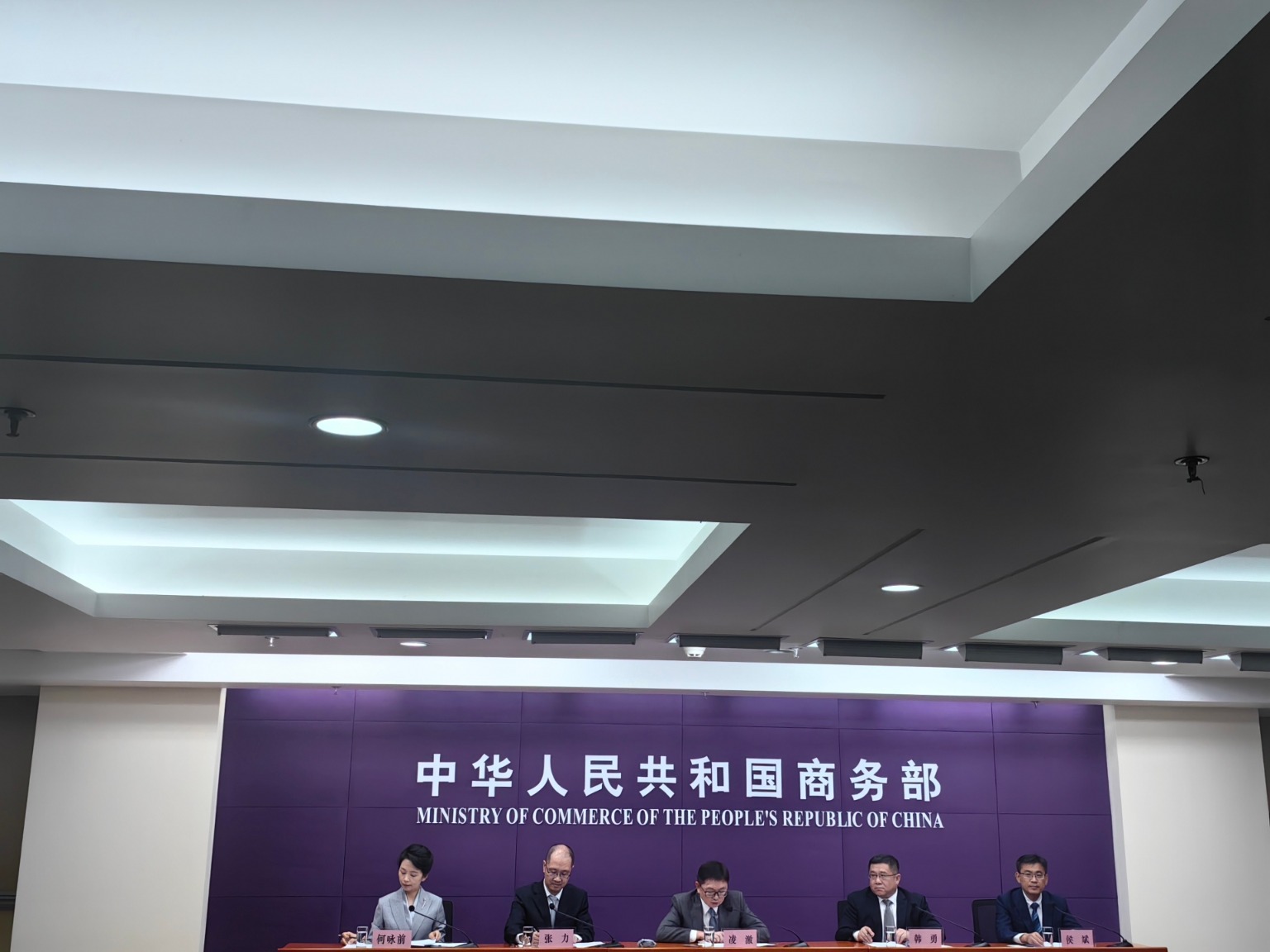
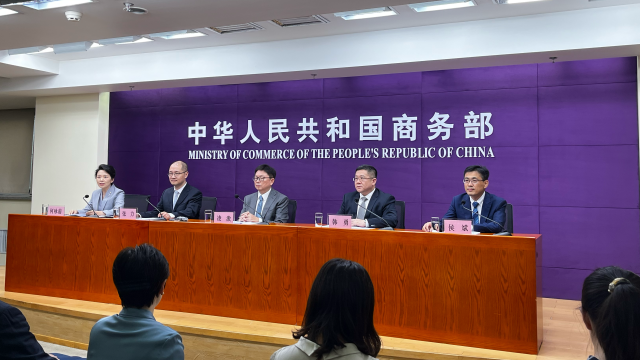
商务部召开上海合作组织经贸合作专题吹风会
Shang Wu Bu Wang Zhan· 2025-08-27 22:44
Core Points - The 2025 Shanghai Cooperation Organization (SCO) Summit will be held in Tianjin from August 31 to September 1, marking the largest summit since the organization's inception [1][2] - The summit presents a significant opportunity to deepen regional economic cooperation among SCO member states [2] - China has achieved a record trade volume with other member countries, amounting to approximately $512.4 billion in 2024, a 2.7% increase year-on-year, and double the trade volume from the 2018 Qingdao Summit [2][3] Trade and Investment - Trade with SCO member countries reached a historical high, with China importing nearly $90 billion worth of energy products and $13.66 billion in agricultural products [2] - China exported $210 billion in machinery and electrical products to SCO members, accounting for 63% of its total exports [2] - Investment cooperation has deepened, with over $84 billion in investments from China to other member states, expanding from traditional sectors to emerging fields like digital economy and green development [3][11] Connectivity and Infrastructure - Significant progress in connectivity projects, including the China-Central Asia Gas Pipeline and the China-Russia Oil Pipeline, has been made [3] - The China-Europe Railway Express has operated over 110,000 trains, ensuring stable supply chains in the region [3] Economic Cooperation Mechanisms - The establishment of various working groups and committees, such as the SCO Business Council and Economic Think Tank Alliance, has facilitated ongoing communication and cooperation [5][6] - A comprehensive action plan for high-quality economic cooperation has been implemented, with 67 out of 84 tasks completed [6][7] E-commerce Development - China has actively promoted e-commerce cooperation, establishing 23 online and offline national pavilions for member countries [14] - Training programs have been conducted for over 6,900 personnel from SCO countries to enhance e-commerce capabilities [7][14] Future Directions - The upcoming summit will see the signing of the "Tianjin Declaration" and the approval of the "SCO Development Strategy for the Next 10 Years," which will outline future cooperation [4][16] - The focus will be on integrating trade and investment, enhancing supply chain resilience, and improving regional economic cooperation frameworks [16][17]
商务部:中国对上合组织其他成员国各类投资存量超840亿美元 互联互通网络正快速形成
Mei Ri Jing Ji Xin Wen· 2025-08-27 16:35
Core Points - The 2025 Shanghai Cooperation Organization (SCO) Summit will be held in Tianjin from August 31 to September 1, marking the largest summit since the organization's inception, presenting significant opportunities for regional economic cooperation [1] - As of July 2025, China's investment stock in other SCO member countries exceeds $84 billion, with cooperation expanding from traditional sectors like oil and gas to emerging fields such as digital economy and green development [1] - The China-Europe Railway Express has operated over 110,000 trains as of June this year, ensuring stable supply chains across SCO member countries [1] Economic Cooperation Mechanisms - The SCO's main mechanism for regional economic cooperation is the Economic Ministers' Meeting, which has been operational for years, facilitating daily communication and coordination among member countries' economic departments [3] - A series of cooperation mechanisms have been established, including the SCO Interbank Consortium, the Entrepreneurs' Committee, and the Economic Think Tank Alliance to strengthen financial cooperation [3] Action Plan and Progress - The "China-SCO Countries Economic and Trade Cooperation High-Quality Development Action Plan" was launched, covering seven areas including goods trade, investment, and digital trade, with 84 tasks identified [4] - As of now, 67 tasks have been completed, 4 have made positive progress, and 13 require long-term efforts, indicating significant advancements in regional economic cooperation [4] Investment and Training Initiatives - An SCO Investors Alliance was formed, with its first meeting held in Astana, Kazakhstan, aimed at promoting investment among member countries [5] - A total of 173 training sessions have been conducted in various fields, training over 6,900 personnel from SCO countries, enhancing the capacity for economic cooperation [5] Multilateral Trade System - The SCO members, including China, support the multilateral trading system, with a consensus on maintaining the World Trade Organization (WTO) as a key platform for global economic governance [6] - The organization has issued statements reaffirming commitment to uphold and strengthen the multilateral trading system in response to global trade challenges [6][7] Future Directions - China aims to enhance communication and cooperation with other SCO members to promote genuine multilateralism and support WTO reforms [7] - The focus will be on maintaining fundamental principles of the WTO, advancing rules to facilitate investment, and ensuring practical outcomes from the upcoming ministerial meeting in March 2026 [7]
上合峰会即将召开 商务部答一财
Di Yi Cai Jing· 2025-08-27 15:58
Core Points - The upcoming Shanghai Cooperation Organization (SCO) summit in Tianjin from August 31 to September 1, 2025, is expected to be the largest since the organization's inception, presenting significant opportunities for regional economic cooperation [1] - The summit will see member states sign the "Tianjin Declaration" and approve the "SCO Development Strategy for the Next 10 Years," outlining a new blueprint for future development [1] Trade and Economic Cooperation - Trade between China and other SCO member states reached a historical high, with an estimated trade volume of approximately $512.4 billion in 2024, marking a 2.7% increase year-on-year and doubling since the 2018 Qingdao summit [3] - In 2023, China imported nearly $90 billion worth of oil, natural gas, and coal from SCO members, and $13.66 billion in agricultural products, with energy imports accounting for about one-fifth of total imports [3] - China exported $210 billion in electromechanical products to SCO members, representing 63% of its total exports to these countries, contributing to their industrialization and economic transformation [3] Infrastructure and Connectivity - Key infrastructure projects such as the China-Central Asia Gas Pipeline and the China-Russia Oil and Gas Pipeline are operational, enhancing connectivity [3] - The China-Russia Tongjiang Railway Bridge and Heihe Highway Bridge have been completed, and the China-Kyrgyzstan-Uzbekistan Railway is under construction [3] - The China-Europe Railway Express has operated over 110,000 trains as of June 2023, ensuring stable supply chains in the region [3] Investment and Industry Cooperation - China has established over 3,000 enterprises in other SCO member states, creating over 200,000 jobs annually [1] - The Ministry of Commerce is promoting investment and industry cooperation through strategic alignment, environmental optimization, and project implementation [5] - More than 20 cooperation documents have been signed in key areas, including infrastructure, renewable energy, and green minerals, facilitating mutual investment [5] Multilateral Trade System - The SCO member states, including China, support a multilateral trade system centered around the World Trade Organization (WTO), emphasizing the importance of maintaining a rules-based trading environment [7] - The organization has reiterated its commitment to uphold and strengthen the multilateral trade system, addressing global trade challenges and supporting open, inclusive, and sustainable supply chains [7][8] - China aims to enhance communication and cooperation with other SCO members to promote WTO reforms and ensure the system's authority and effectiveness [8]
2024年中国与上合组织其他成员国贸易额约5124亿美元
Xin Hua She· 2025-08-27 14:09
Core Insights - In 2024, trade between China and other member countries of the Shanghai Cooperation Organization (SCO) is projected to reach approximately $512.4 billion, representing a year-on-year growth of 2.7% [1] Group 1: Trade and Investment - China imported nearly $90 billion worth of crude oil, natural gas, and coal from other SCO member countries last year, along with agricultural products valued at $13.66 billion [1] - Exports of electromechanical products from China to other member countries amounted to $210 billion [1] - Chinese enterprises have established over 3,000 companies in other member countries, creating more than 200,000 jobs annually [1] Group 2: E-commerce Cooperation - The Ministry of Commerce plans to leverage the "Silk Road E-commerce Benefits Global" brand to continue hosting "SCO Cloud Products" promotional activities [2] - There will be ongoing efforts to promote e-commerce supply chain cooperation and guide e-commerce platforms in establishing more direct procurement bases in SCO countries [2] - The initiative aims to achieve compatibility in rules and standards in the e-commerce sector among SCO member countries [2]
上合组织天津峰会|2024年中国与上合组织其他成员国贸易额约5124亿美元
Xin Hua Wang· 2025-08-27 13:50
Group 1 - The core viewpoint is that in 2024, trade between China and other member countries of the Shanghai Cooperation Organization (SCO) is expected to reach approximately $512.4 billion, representing a year-on-year growth of 2.7% [1] - In the previous year, China imported nearly $90 billion worth of crude oil, natural gas, and coal from other member countries, along with $13.66 billion in agricultural products [1] - China exported $210 billion in electromechanical products to other member countries [1] Group 2 - The number of enterprises established by Chinese companies in other member countries exceeds 3,000, creating over 200,000 jobs annually [1] - The Chinese government has actively collaborated with SCO member countries to address global trade turbulence and support the multilateral trade system since taking over the rotating presidency of the SCO [1] - The Ministry of Commerce plans to enhance communication and cooperation with other SCO member countries to promote genuine multilateralism and support the reform of the World Trade Organization [1] Group 3 - In the e-commerce sector, the Ministry of Commerce aims to leverage the "Silk Road E-commerce Benefits the World" brand and continue hosting "SCO Cloud Products" promotional activities [2] - The ministry will promote e-commerce supply chain cooperation and guide e-commerce platforms to establish more direct sourcing bases in SCO countries [2] - There is a focus on achieving compatibility in rules and standards in the e-commerce sector among SCO member countries [2]
上合峰会即将召开,商务部答一财
Di Yi Cai Jing· 2025-08-27 11:43
Core Insights - The upcoming Shanghai Cooperation Organization (SCO) summit in Tianjin from August 31 to September 1, 2025, is expected to be the largest since the organization's inception, presenting significant opportunities for regional economic cooperation [1][3] - China has established over 3,000 enterprises in other SCO member countries, creating more than 200,000 jobs annually, indicating robust investment and industrial cooperation [1][3] Trade and Economic Cooperation - Trade between China and other SCO member countries reached a historical high, with an estimated trade volume of approximately $512.4 billion in 2024, reflecting a 2.7% year-on-year increase and doubling since the 2018 Qingdao summit [3][4] - China imported nearly $90 billion worth of oil, natural gas, and coal from SCO member countries last year, with energy products accounting for about one-fifth of total imports [3][4] Infrastructure and Connectivity - Significant infrastructure projects, such as the China-Central Asia Gas Pipeline and the China-Russia Oil and Gas Pipeline, are operational, enhancing regional connectivity [3][4] - The China-Europe Railway Express has operated over 110,000 trains as of June this year, ensuring stable supply chains across SCO member countries [3][4] Investment and Industry Cooperation - China is actively promoting investment and industrial cooperation with SCO member countries through strategic alignment, policy exchange, and project implementation [4][5] - Over 20 cooperation documents have been signed in key areas, including infrastructure and green minerals, facilitating mutual investment [4][5] Multilateral Trade System - The SCO members, including China, support the multilateral trade system, emphasizing the importance of the World Trade Organization (WTO) in global economic governance [6][7] - The organization has reiterated its commitment to maintaining and strengthening the multilateral trade system amid rising protectionism and unilateralism [6][7]