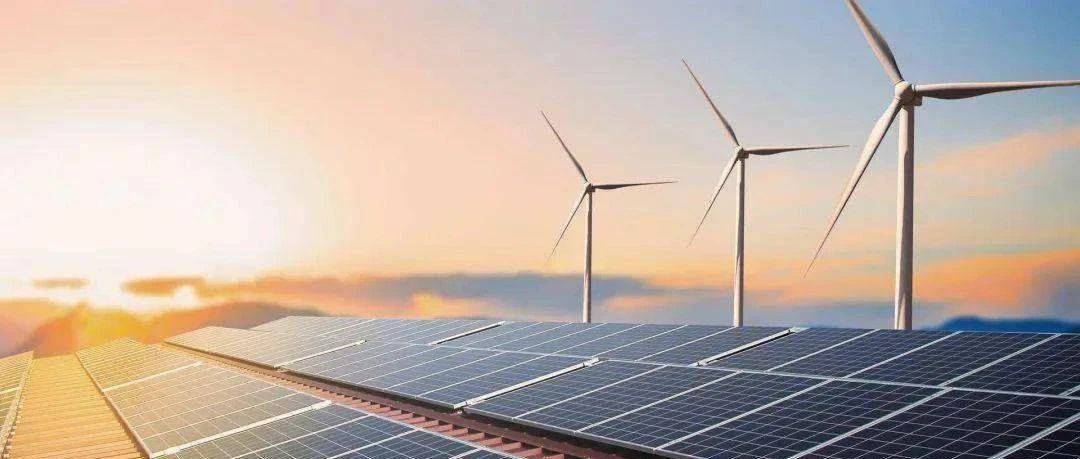
新能源消纳

Search documents
全国最高用电负荷同比增加1亿千瓦,多方发力迎峰度夏能源保供
Di Yi Cai Jing· 2025-06-26 06:34
Group 1 - New energy sources such as wind and solar power are becoming the main sources of new electricity generation, playing an increasingly significant role in ensuring power supply during peak summer demand [1][6] - The National Development and Reform Commission (NDRC) anticipates that the highest electricity load during this summer will increase by approximately 10 million kilowatts compared to last year [2] - The NDRC has implemented measures to enhance electricity supply capacity, including strengthening the energy production, supply, storage, and sales system [2][4] Group 2 - As of the end of May, the total installed capacity of electricity generation in the country reached 3.61 billion kilowatts, a year-on-year increase of 18.8% [4] - The NDRC is focusing on improving the efficiency of electricity transmission and has completed the construction of several ultra-high voltage direct current transmission channels to support electricity demand in densely populated and industrial areas [4][7] - The utilization rate of new energy sources remains above 90%, indicating effective integration into the energy system [7] Group 3 - The installed capacity of wind and solar power reached 570 million and 1.08 billion kilowatts respectively by the end of May, accounting for 45.7% of the total installed capacity, surpassing that of thermal power [6][7] - The NDRC is promoting policies to enhance the consumption of new energy, including direct supply of green electricity to specific users, which supports local consumption and provides new opportunities for high-energy-consuming and export-oriented enterprises [7] - The new energy storage capacity in the country has exceeded 80 million kilowatts, indicating a growing market for energy storage solutions as new energy sources become more prevalent [7]
第三批消费品以旧换新资金将于7月下达!
证券时报· 2025-06-26 04:36
来看具体内容: 第三批消费品以旧换新资金将于7月下达 李超表示,将于今年7月份下达今年第三批消费品以旧换新资金。同时,将协调有关方面,坚持更加注重 时序性和均衡性原则,分领域制定落实到每个月、每一周的国补资金使用计划,保障消费品以旧换新政策 全年有序实施。 第二批设备更新资金正在同步开展项目审核和筛选 李超表示,今年超长期特别国债资金对设备更新的支持力度为2000亿元,第一批约1730亿元资金已按 照"地方审核、国家复核"原则安排到16个领域约7500个项目,第二批资金正在同步开展项目审核和筛 选。 新增中央预算内投资支持地方实施以工代赈项目 李超介绍称,近日,国家发展改革委联合有关部门印发了《以工代赈加力扩围促进重点群体就业增收行动 方案》。通过这一项增量政策,进一步加大对困难群体的帮扶力度。去年11月份以来,国家发展改革委联 合财政部下达了2025年以工代赈中央专项投资165亿元,支持地方实施以工代赈项目3900多个,预计能 够解决38万名困难群众的就业增收问题。在此基础上,这次的行动方案提出,要新增安排一批中央预算内 投资项目,对于重点群体较为集中的地区予以支持。 以工代赈劳务报酬"提标" 尽可能增加群 ...

国家发展改革委:将在7月下达今年第三批消费品以旧换新资金
智通财经网· 2025-06-26 03:51
Group 1 - The National Development and Reform Commission (NDRC) is set to issue the third batch of funds for the "old-for-new" consumption policy in July, ensuring the policy is implemented smoothly throughout the year [1][2][13] - The "Two New" policy has shown significant effects, with sales of related products exceeding 1.4 trillion yuan this year, particularly in appliances, furniture, and communication equipment [2][13] - The NDRC has allocated 200 billion yuan in special bonds for equipment upgrades, with the first batch of approximately 173 billion yuan already distributed to around 7,500 projects across 16 sectors [1][13] Group 2 - The NDRC is enhancing the management of equipment upgrade projects and will introduce loan interest subsidies to reduce financing costs for businesses [2][13] - The NDRC is focusing on the timely evaluation of the progress of various sectors under the "Two New" policy to improve its effectiveness [1][2][13] Group 3 - The NDRC has reported a 5.8% year-on-year increase in industrial output and a 6.4% increase in retail sales in May, indicating stable economic performance [9] - Fixed asset investment has shown steady growth, with manufacturing investment rising by 8.5% [9] - The NDRC is actively addressing the challenges posed by external economic pressures while maintaining a focus on domestic economic stability [9]
新能源消纳持续打开空间,光伏需求侧预期有望向好,新能源ETF(159875)盘中上涨1.41%
Xin Lang Cai Jing· 2025-06-24 03:02
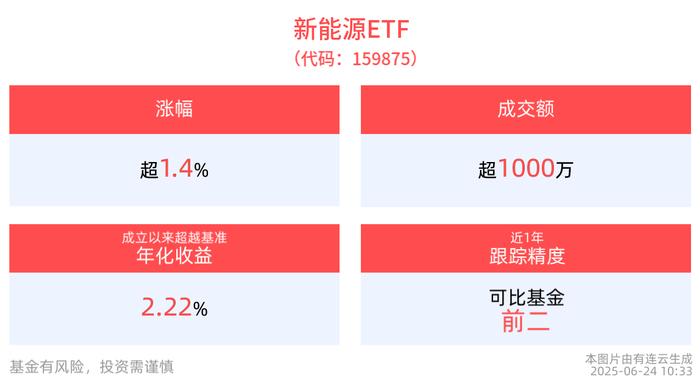
Core Viewpoint - The renewable energy sector is experiencing significant growth, with key stocks and indices showing strong performance, driven by favorable market conditions and government policies. Group 1: Market Performance - The Zhongzheng New Energy Index rose by 1.54%, with notable increases in constituent stocks such as Hunan YN (up 5.26%) and Zhongwei Co. (up 3.65%) [1] - The New Energy ETF (159875) increased by 1.41%, indicating positive investor sentiment in the sector [1] Group 2: Liquidity and Valuation - The New Energy ETF had a turnover of 2% during the trading session, with a total transaction value of 17.6062 million yuan [2] - Over the past year, the ETF's average daily trading volume was 35.548 million yuan, ranking it among the top two comparable funds [2] - The current price-to-book ratio (PB) of the Zhongzheng New Energy Index is 1.98, which is below 85.19% of the historical data over the past three years, highlighting its attractive valuation [2] Group 3: Key Stocks and Weightings - The top ten weighted stocks in the Zhongzheng New Energy Index account for 44.89%, with Ningde Times holding the highest weight at 10.62% [5] - Other significant stocks include Yangguang Electric (5.65%), Longi Green Energy (4.25%), and China Nuclear Power (4.25%) [5] Group 4: Industry Trends and Policies - The construction of ultra-high voltage projects in China is entering a phase of intensive production, with the recent commissioning of the Hami-Chongqing ±800 kV UHVDC project [4] - New policies such as the "Green Power Direct Connection" allow renewable energy sources to supply power directly to single users without connecting to the public grid [4] - The market for virtual power plants is expanding, with regions like Guizhou and Yunnan participating in various trading mechanisms [4] Group 5: Electric Vehicle Market Outlook - The China Passenger Car Association predicts that retail sales of new energy vehicles (NEVs) in June could reach 1.1 million units, with a penetration rate of around 55% [5] - The introduction of new models, such as the Xiaomi YU7, is expected to enhance the competitiveness of NEVs, driving demand for batteries and materials [5]
抽蓄系列产业报告1:抽蓄是促进新能源高质量发展和提升电力系统安全性的有效途径
China Post Securities· 2025-06-24 02:12
证券研究报告:电力设备|深度报告 行业投资评级 强于大市 |维持 行业基本情况 | 收盘点位 | | 6629.95 | | --- | --- | --- | | 52 | 周最高 | 8068.94 | | 52 | 周最低 | 5403.16 | 行业相对指数表现(相对值) 2024-06 2024-09 2024-11 2025-01 2025-04 2025-06 -11% -7% -3% 1% 5% 9% 13% 17% 21% 25% 29% 33% 电力设备 沪深300 资料来源:聚源,中邮证券研究所 研究所 分析师:杨帅波 SAC 登记编号:S1340524070002 Email:yangshuaibo@cnpsec.com 近期研究报告 《全面加快电力现货市场建设+辅助服 务顶层规划发布,有望理顺价格机制, 绿电价值有望重估》 - 2025.05.06 抽蓄系列产业报告 1:抽蓄是促进新能源高质量发 展和提升电力系统安全性的有效途径 驱动因素3:抽蓄的两部制电价,稳定成本回收预期+提升盈利; 国家鼓励民企参与抽蓄电站建设。华东地区规模最大的抽水蓄能电站 ——浙江建德协鑫抽蓄电站(240 ...
深度解读丨绿电直连费用几何?核算标准呼之欲出
Zhong Guo Dian Li Bao· 2025-06-24 00:27
Group 1 - The core viewpoint of the articles is that the introduction of a dedicated line for green electricity (green power) is a new pathway to alleviate China's renewable energy consumption issues, meet diverse energy needs of enterprises, and address carbon footprint certification challenges for export companies [1][2][3] - The National Development and Reform Commission and the National Energy Administration issued a notice that allows green power projects to directly supply specific users through dedicated lines, marking a significant policy breakthrough [1][2][5] - As of March 2025, the total installed capacity of wind and solar power in China reached 1.482 billion kilowatts, surpassing that of thermal power for the first time, indicating a shift in energy generation dynamics [2] Group 2 - The green electricity direct connection policy aims to enhance the efficiency of renewable energy resource utilization and meet the urgent green energy consumption demands of traditional and emerging high-energy industries [2][3] - The 650 document establishes a unified regulatory framework for green electricity direct connection, addressing fragmentation in local regulations and providing clear definitions and execution guidelines [5][6] - The policy encourages local decision-making flexibility, allowing regions to tailor implementation paths based on local power supply and renewable energy consumption conditions [5][6] Group 3 - The green electricity direct connection mechanism is designed to prevent capacity limitations in the power grid from restricting renewable energy generation and user demand, thereby improving renewable energy consumption rates [3][6] - The policy allows for a shift from an "unlimited responsibility" model for grid companies to a "limited and assessable responsibility" model, promoting self-balancing capabilities of projects [6][7] - The economic viability of green electricity direct connection projects is influenced by multiple factors, including renewable resource endowment, load characteristics, and market conditions [7][9] Group 4 - The implementation of the green electricity direct connection policy opens new pathways for enterprises to optimize energy structures, reduce energy costs, and address green trade barriers [7][8] - The policy is part of a broader strategy to build a new type of power system that is clean, low-carbon, safe, and efficient, integrating various stakeholders to enhance technology development and market mechanisms [9]
国网山东电科院开展新能源消纳测算工作
Qi Lu Wan Bao· 2025-06-23 06:16
Core Insights - The article discusses the efforts of the State Grid Shandong Electric Power Research Institute in enhancing renewable energy consumption capabilities in Shandong Province, aligning with national energy-saving strategies [1][2] - The institute has conducted a comprehensive analysis of renewable energy consumption capacity, focusing on key parameters such as wind and solar resource fluctuations, load growth trends, and coal power adjustment capabilities [1] Group 1: Renewable Energy Analysis - Shandong Province is a leader in renewable energy, with wind and solar installations ranking among the highest in the country [1] - The research team is engaged in detailed quarterly and annual calculations of renewable energy consumption, addressing the increasing scale of wind and solar installations and the challenges of energy consumption [1][2] - The analysis involves collecting and organizing vast amounts of minute-level data on wind and solar output and load, which presents significant integration challenges [1] Group 2: Team Efforts and Challenges - Team members have committed to intensive work schedules, including overnight shifts, to ensure data accuracy and complete the demanding analysis tasks [2] - The team has conducted sensitivity analyses on variables such as resource availability, load growth rates, and new renewable installations, providing insights into consumption capacity under different scenarios [2] - The completion of this analysis has identified issues and recommendations for efficient renewable energy consumption, supporting the transition to a greener energy system [2] Group 3: Future Directions - As the proportion of renewable energy generation continues to rise, the challenges of ensuring safe and efficient coordination between renewable generation, the grid, and load will become more pronounced [2] - The institute plans to focus on key technologies related to the coordination of renewable energy generation and distributed power source operation, aiming to address deep-seated technical issues through innovation [2] - These efforts are aligned with national strategic technology needs and are intended to support the country's goals of achieving carbon peak and carbon neutrality by 2030 and 2060, respectively [2]

甘肃绿电优势加速释放
Jing Ji Ri Bao· 2025-06-22 22:06
Core Viewpoint - The completion of the Longdong to Shandong ±800 kV UHVDC project marks a significant advancement in China's integrated energy base, enhancing the transmission of renewable energy from Gansu to Shandong, with a focus on multi-energy complementarity and improved renewable energy utilization [1][2]. Group 1: Project Overview - The Longdong to Shandong project is the first large-scale integrated energy base in China, with a capacity of 1,450 MW, including 1,050 MW from renewable sources and 105 MW of energy storage [1]. - The project is expected to deliver 36 billion kWh of electricity annually to Shandong, with renewable energy accounting for 50% of this total [1]. Group 2: Market Development - Gansu has established a comprehensive electricity market system, with market participants increasing to 87,000, and green electricity and green certificate transactions projected to grow significantly in 2024 [2]. - Over 430 industrial enterprises in Gansu are actively participating in the electricity spot market, leading to over 10% of the province's electricity load shifting from peak to off-peak hours, resulting in cost savings exceeding 3 billion yuan [2]. Group 3: Green Certificate Trading - In the first five months of this year, Gansu's green certificate trading volume reached 6.5164 million certificates, a year-on-year increase of 69.54% [3]. - The increase in green certificate transactions indicates Gansu's growing capacity to consume green electricity locally, with the market becoming increasingly active [3].
5月用电量数据发布,虚拟电厂建设加速推进
Guotou Securities· 2025-06-22 04:34
2025 年 06 月 22 日 环保及公用事业 5 月用电量数据发布,虚拟电厂建设加 速推进 本周专题:虚拟电厂推进加速,商业模式进一步清晰 6 月 4 日,国家发改委与国家能源局发布《关于组织开展新型电力系 统建设第一批试点工作的通知》,通知提出要围绕构网型技术、系统 友好型新能源电站、智能微电网、算力与电力协同、虚拟电厂、大规 模高比例新能源外送、新一代煤电等七个方向开展试点工作。这是继 4 月"357 号文"发布后又一国家层面加快虚拟电厂发展的文件。地 方层面看,上海、陕西等地相继发布相关政策,虚拟电厂建设加速推 进。357 号文的发布,从明确准入条件、健全电能量市场机制、完善 辅助服务市场机制和优化需求响应机制四个方面,为虚拟电厂参与电 力市场提供了清晰的路径和规范。建议关注虚拟电厂/功率预测相关 标的,国能日新、朗新集团、东方电子、恒实科技、国网信通、协鑫 能科、合康新能等;以及受益于数据中心放量的绿电标的,同力日升 等。 行情回顾: 6 月 9 日-6 月 20 日上证指数下跌 0.75%,创业板指下跌 1.45%,公用 事业指数下跌 0.87%,跑输上证综指 0.12pct,环保指数下跌 3. ...
经济日报丨绿电直连化解新能源消纳难题
国家能源局· 2025-06-19 08:21
Core Viewpoint - The article discusses the introduction of the "green electricity direct connection" model in China, which aims to enhance the consumption of renewable energy and meet the green energy needs of enterprises by allowing direct supply from renewable sources to end-users without going through the public grid [4][5]. Group 1: Green Electricity Direct Connection Model - The National Development and Reform Commission and the National Energy Administration have issued guidelines for the green electricity direct connection model, addressing its scope, development goals, management methods, and pricing mechanisms [4]. - This model allows renewable energy sources like wind and solar power to connect directly to consumers, bypassing the traditional multi-level grid system, thus improving efficiency and reducing reliance on the public grid [4][5]. Group 2: Benefits for the Renewable Energy Industry - The green electricity direct connection model expands the development space for renewable energy by providing more channels for energy consumption, reducing waste, and addressing the limitations of traditional grid capacity [5]. - It encourages technological innovation within the renewable energy sector, as companies will need to invest in research and development to enhance the stability and reliability of their power generation equipment [5]. Group 3: Advantages for Electricity Users - For export-oriented enterprises with strict carbon reduction requirements, the model offers a competitive edge by allowing them to demonstrate low-carbon electricity usage, potentially reducing carbon tariffs in international markets [6]. - New industrial parks and large energy-consuming enterprises can benefit from lower electricity costs and improved operational efficiency through the green electricity direct connection [6]. Group 4: Implementation Challenges and Future Prospects - Previous explorations of the green electricity direct connection faced various institutional barriers, including investment responsibilities and pricing issues, which the new policy aims to clarify [7]. - The successful implementation of this model requires collaboration among government, enterprises, and society to enhance policy frameworks, promote technological innovation, and ensure stable power supply [8].