
耐心资本

Search documents
私募股权创投基金设置股权回购条款时应科学合理 退出目标综合多元 中基协发文引导耐心资本化解股权回购困局
Zheng Quan Ri Bao· 2025-12-04 00:09
Core Viewpoint - The China Securities Investment Fund Industry Association has issued a notice encouraging private equity and venture capital funds to set reasonable equity buyback terms, aiming to support the long-term development of real enterprises and address conflicts of interest [1][2]. Group 1: Regulatory Guidance - The notice emphasizes the need for private equity and venture capital funds to establish scientifically sound and reasonable buyback terms, avoiding misuse of buyback arrangements for non-compliant activities [3][4]. - It encourages fund managers to adopt a long-term investment philosophy and enhance their capabilities in value discovery and active management [3][4]. Group 2: Market Context - The application rate of equity buyback clauses in domestic primary market investment activities has exceeded 90%, serving as a risk buffer for private equity funds while incentivizing founders to focus on long-term value creation [2][3]. - The buyback issue has become a significant concern, with many startups facing financial pressure due to triggered buybacks, complicating exit strategies for private equity funds [3][4]. Group 3: Recommendations for Stakeholders - Fund managers are encouraged to communicate effectively with investors and stakeholders when buyback conditions are triggered, considering external factors such as macroeconomic conditions and industry policies [4][5]. - It is suggested that fund managers may negotiate adjustments to buyback terms, such as extending buyback periods or lowering buyback rates, to resolve conflicts amicably and support the growth of real enterprises [4][5]. Group 4: Long-term Vision - The notice aims to reshape the perception of the private equity industry and promote a healthy ecosystem for patient capital, emphasizing the importance of collaboration among fund managers, investors, and entrepreneurs [5][6]. - The core of equity investment lies in sharing risks and rewards, necessitating a commitment from all parties to foster trust and focus on long-term growth [6].
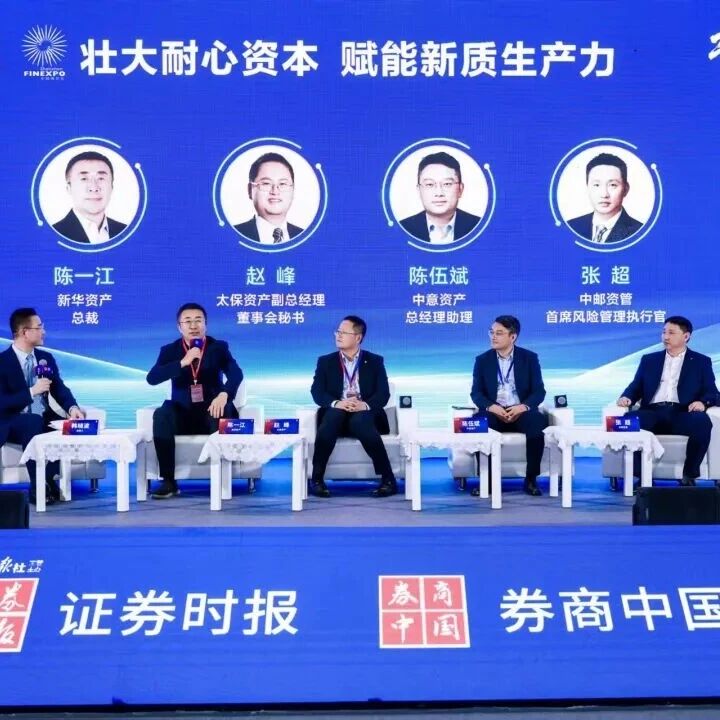
37万亿险资,如何做好“耐心资本”?四大保险资管纵论
券商中国· 2025-12-03 23:40
Core Viewpoint - The article discusses the role of insurance capital as "patient capital" in supporting emerging industries and future production capabilities, particularly in the context of the upcoming "14th Five-Year Plan" [1][9]. Group 1: Long-term Investment Pilot - The long-term investment pilot program, initiated by China Life and Xinhua Insurance, has expanded to a scale of 222 billion yuan, emphasizing the need for insurance capital to act as a stabilizer in the capital market [5][6]. - The pilot fund is designed for a holding period of over 10 years, focusing on high-dividend and high-yield assets, with a strategy of "trading only when necessary" [6][7]. - The pilot has shown positive results, with high and stable returns, and the companies involved are satisfied with the outcomes [6][8]. Group 2: Role of Insurance Capital in Technology and Innovation - Insurance capital is expected to play a crucial role in supporting technological innovation and new production capabilities, aligning with national economic transformation goals [9][10]. - Companies are adjusting their investment research frameworks to better evaluate technology-driven sectors, moving away from traditional cash flow assessments used in infrastructure and real estate [10][12]. - The focus is on building partnerships with industry leaders and investment banks to identify promising technology projects and establish a supportive ecosystem [10][12]. Group 3: Investment Strategies and Future Outlook - For 2026, companies are adopting a "tight balance" approach due to declining net investment yields, emphasizing the need for precise asset-liability management [14][15]. - The investment strategy will focus on dynamic balance, seeking new investment opportunities across various asset classes while maintaining stability [15][17]. - There is a strong emphasis on value investment and long-term strategies, particularly in high-dividend assets and sectors aligned with national strategic goals, such as high-end manufacturing and information technology [17][20].

中基协发文引导耐心资本化解股权回购困局
Xin Lang Cai Jing· 2025-12-03 23:22
Core Viewpoint - The China Securities Investment Fund Industry Association has issued a notice urging private equity and venture capital funds to set reasonable equity buyback clauses, encouraging long-term discussions to resolve conflicts of interest and support the growth of real enterprises [1][7]. Group 1: Industry Development - The private equity and venture capital fund industry in China has been steadily developing, acting as a representative of patient capital and contributing positively to high-quality economic development through its roles as incubators, accelerators, and promoters of technological innovation [2][9]. - The application rate of equity buyback clauses in domestic primary market investment activities has exceeded 90%, indicating their widespread use to address uncertainties and information asymmetries between investors and companies [2][9]. Group 2: Challenges and Issues - The issue of equity buybacks has become a focal point in the market, with many startups facing financial and developmental pressures due to triggered buybacks, leading to difficulties for private equity funds in exiting their investments [3][10]. - The inability of companies to go public in the short term can lead to aggressive claims for buyback rights, potentially resulting in insolvency or bankruptcy for the companies involved, which ultimately harms fund investors [3][10]. Group 3: Regulatory Guidance - The notice emphasizes that private equity and venture capital funds must set scientifically reasonable buyback clauses and avoid using buyback arrangements for illegal lending or other non-equity investment activities [3][10]. - Fund managers are encouraged to adopt a long-term investment and value investment philosophy, enhancing their capabilities in value discovery, active management, and valuation pricing [3][10]. Group 4: Recommendations for Stakeholders - The notice encourages fund managers to communicate effectively with investors and other stakeholders when buyback conditions are triggered, assessing external factors such as macroeconomic conditions and industry policies [4][11]. - It suggests that fund managers should consider flexible measures, such as extending buyback deadlines or adjusting buyback targets, to help companies navigate difficulties and support their growth [4][11]. Group 5: Building a Healthy Ecosystem - To restore balance and compatibility in equity buyback clauses, collaboration among all market participants in terms of concepts, rules, and actions is essential [5][12]. - Fund managers must balance diligence and flexibility, ensuring that any measures taken to assist companies are communicated transparently to investors to avoid potential liabilities [5][12][13].
破局科创融资难 多方合议“轻资产”企业成长密码
2 1 Shi Ji Jing Ji Bao Dao· 2025-12-03 23:08
Group 1 - The core theme of the discussion at the 21st Century Financial Annual Conference focused on the integration of technology and finance, emphasizing that innovation requires deep financial participation alongside technological breakthroughs and industrial development [1] - The emergence of new industries such as intelligent manufacturing, commercial aerospace, and biomedicine necessitates not only technological advancements but also financial capital to support growth [1] - Hebei Bank proposed a solution to the challenges faced by technology-based enterprises, particularly startups, by moving away from a single product service model to a comprehensive credit product matrix that includes both online and offline services, with loans disbursed in as fast as 30 minutes [1] Group 2 - Zhongguancun Bank has developed a full-cycle product system addressing the financing difficulties faced by startups, particularly those with light assets, by offering a "1+N" product service model that spans from seed to mature stages [2] - The concept of "patient capital" is becoming increasingly important in the full-cycle service ecosystem for technology enterprises, with a shift from financial investment to industrial capital involvement [2] - Galaxy Aerospace shared insights on financing paths for hard technology companies, highlighting the reliance on venture capital in the initial stages and the gradual adoption of diversified financial tools, including equity financing and local industry funds, as the company matures [2]
私募股权创投基金设置股权回购条款时应科学合理,退出目标综合多元 中基协发文引导耐心资本化解股权回购困局
Zheng Quan Ri Bao· 2025-12-03 16:17
Core Viewpoint - The China Securities Investment Fund Industry Association has issued a notice urging private equity and venture capital funds to set reasonable equity buyback terms, emphasizing the need for long-term planning and resolution of conflicts of interest to support the growth of real enterprises [1][2]. Group 1: Industry Development - The private equity and venture capital industry in China has been steadily developing, acting as a representative of patient capital and contributing positively to high-quality economic development through its roles as incubators, accelerators, and promoters of technological innovation [2]. - The application rate of equity buyback clauses in domestic primary market investment activities has exceeded 90%, serving as a risk buffer for private equity funds while incentivizing founders to focus on long-term value creation [2][3]. Group 2: Challenges and Issues - The issue of equity buybacks has become a focal point in the market, with some startup technology companies facing financial and developmental pressures due to triggered buybacks, leading to difficulties in exit strategies for private equity funds [3]. - The notice highlights that the buyback issue is a significant challenge for private equity funds, as enforcing buyback rights can lead to insolvency or bankruptcy for companies unable to meet these obligations [3][4]. Group 3: Guidelines and Recommendations - The notice requires private equity funds to set equity buyback terms that are scientifically reasonable and to avoid using buyback arrangements for non-private fund investment activities [3][4]. - It encourages fund managers to communicate effectively with investors and stakeholders when buyback conditions are triggered, and to assess external factors such as macroeconomic conditions and industry policies [4]. - Fund managers are advised to negotiate amicably with buyback obligors, potentially adjusting buyback targets, extending buyback periods, or lowering buyback rates to resolve conflicts and support the growth of real enterprises [4][5]. Group 4: Balancing Responsibilities - Fund managers must balance diligence and flexibility, ensuring that any measures taken to provide relief to companies are communicated transparently to investors to avoid potential legal or regulatory repercussions [5]. - Companies and their controlling shareholders should focus on improving core business operations and maintaining transparency to rebuild trust and restore buyback capabilities [6].
前海方舟董事长靳海涛:看好“五大进程”投资机会
Xin Lang Cai Jing· 2025-12-03 15:03
Core Insights - The 25th China Private Equity Annual Conference highlighted five key processes for venture capital funds to focus on, which are expected to yield good investment returns [1][3] Group 1: Five Key Processes - The first process is the "short board" process, aimed at addressing critical supply chain issues to ensure safety and self-control [1][3] - The second process is the digital transformation process, which involves using digital technology to reform traditional industries and alter work and life scenarios [1][3] - The third process is the carbon neutrality process, emphasizing the importance of transitioning energy structures [1][3] - The fourth process is the "big health" process, where significant changes in China's biomedicine sector, particularly in gene and cell innovation, are attracting investment [1][3] - The fifth process is the consumption upgrade process, which supports economic growth and enhances the quality of life, with consumption enterprises continuously evolving and deserving capital market support [1][3] Group 2: Market Outlook and Recommendations - The first recommendation is to "invest early, invest small, invest in the future," promoting the development of "patient capital" [2][4] - The second recommendation suggests optimizing the sources of capital for private equity investments [2][4] - The third recommendation indicates that private equity finance and capital attraction are becoming important means for local governments to transition from land finance, necessitating changes in commercial strategies and product designs of venture capital institutions [2][4] - The fourth recommendation emphasizes the need for venture capital institutions to focus more on post-investment management and services, adhering to a "30% investment, 70% management" principle [2][4] - The fifth recommendation calls for the development of S funds and follow-up funds from central to local levels to create a sustainable innovation investment ecosystem [2][4] - The sixth recommendation advocates for a diverse approach, where venture capital funds and capital markets support balanced development across various industries [2][4] - The seventh recommendation stresses the importance of maintaining a healthy secondary market, supporting IPOs of innovative enterprises and participating in mergers and acquisitions [2][4]
凝聚资本之力,照亮未来之路
Sou Hu Cai Jing· 2025-12-03 13:05
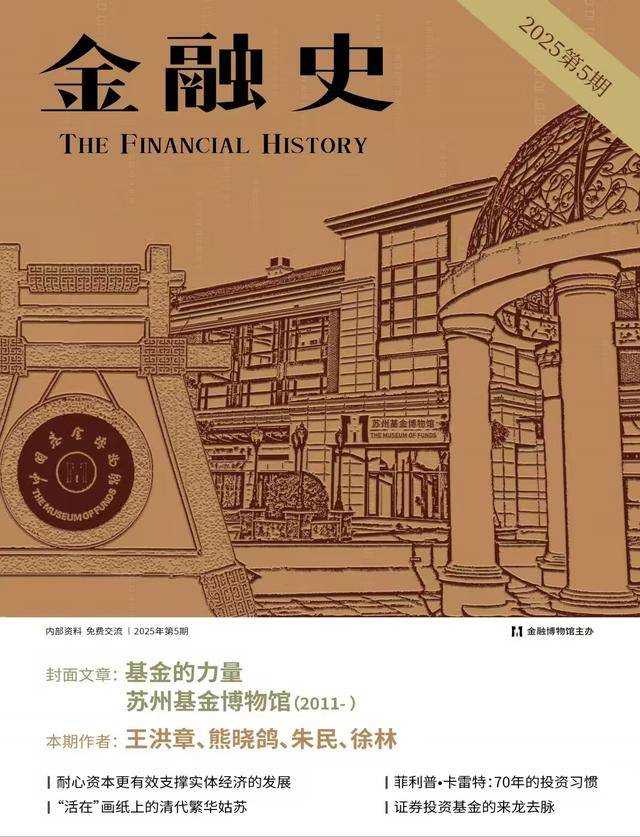
Core Insights - The article emphasizes the transformative power of funds, viewing them not merely as financial instruments but as carriers of historical wisdom, institutional trust, and future vision, providing a profound perspective on the modern financial ecosystem [1] Historical Context - The evolution of funds is traced from the establishment of the world's first contractual fund in 1868 to the development of the U.S. venture capital landscape over the past seventy years, and the rise of China's fund industry from "Zhu Xin Fund" to a significant player in the global capital market [3] - The Suzhou Fund Museum is highlighted as a key institution preserving and narrating this history, utilizing various multimedia methods to make abstract financial concepts tangible for the public [4] Conceptual Framework - The article presents deep insights from prominent figures in finance, emphasizing that the core of funds lies in the integration of trust, wealth management, and values, which elevates the discussion from a technical to a value-based perspective [6] - The discourse includes critiques of the current financial market's short-term profit focus and underscores the importance of long-termism in fostering new productive forces [6][7] Patience Capital - "Patience capital" is identified as a strategic pillar for China's capital market, characterized by long-term orientation, stability, and a higher risk tolerance, which is essential for supporting the development of new industries [8] - As of June 2024, China has 24,344 active venture capital funds with a total scale of 3.3 trillion, providing robust support for technology innovation [9] Fund Safety - The safety of funds is a critical concern, with China having over 20,000 GP management teams and more than 60,000 funds, raising questions about the reliability of these investments [12] - The article reflects on the rapid growth of the fund industry in China compared to the U.S., highlighting the need for safety and trust in this expanding market [12] Practical Narratives - The article employs case studies to illustrate the journey of IDG Capital from replicating Silicon Valley models to leading China's internet sector, showcasing the growth trajectory of domestic venture capital institutions [26] - It also addresses the lessons learned from early market imperfections and discusses current trends in ESG investment and smart finance [26] Future Outlook - The article captures the evolving role of funds in shaping the future, with AI and algorithms transforming investment decisions and ESG becoming a core metric for investment value [17] - Funds are positioned as not only wealth amplifiers but also as strategic forces in driving national core industry development and addressing significant social needs [17][18]
银行系千亿资金涌向科创赛道,多地拼抢AIC扩围先机
Sou Hu Cai Jing· 2025-12-03 11:56
Core Insights - The establishment of bank-affiliated Asset Investment Companies (AICs) is aimed at addressing the issues of "lack of long-term capital" and "insufficient resources" in the industry, directing financial capital towards technology enterprises to support innovation and new industry development [1][8] Group 1: AIC Establishment and Operations - The recent opening of 招银投资 (Zhaoyin Investment) by 招商银行 (China Merchants Bank) marks a significant step in the acceleration of AICs, with a registered capital of 150 billion yuan [3][4] - Other banks, such as 兴业银行 (Industrial Bank) and 中信银行 (CITIC Bank), have also established their AICs, with registered capitals of 100 billion yuan each [4][3] - AICs are expected to play a crucial role in the technology finance market, providing stable capital support for technology enterprises [2][8] Group 2: Business Models and Funding Sources - 招银投资's business models include debt-to-equity swaps, equity-for-debt exchanges, asset management product issuance, and private equity fund establishment [3][4] - Funding sources for AICs include registered capital, targeted reserve requirement funds from the People's Bank of China, interbank borrowing, and issuance of private asset management products [3][4] Group 3: Market Dynamics and Trends - The AIC market is evolving from being dominated by state-owned banks to a more diversified landscape with the entry of joint-stock banks, which is expected to reshape competition [10] - AICs are increasingly seen as a new force in supporting technology enterprises, with significant capital being mobilized across various regions [7][8] - The investment focus of AICs is primarily on sectors such as semiconductors, new energy, biomedicine, intelligent manufacturing, and artificial intelligence [7][8] Group 4: Challenges and Future Outlook - The AIC model in China is still in its early stages and faces challenges such as immature market investment mechanisms, limited exit channels, and the need for improved research and risk management capabilities [12] - There is a growing emphasis on integrating "patient capital" with traditional banking capabilities to better serve technology innovation [10][12]
“金融有为”地方纵横谈丨以培育耐心资本为核心的政府投行招商模式
申万宏源研究· 2025-12-03 07:04
Core Viewpoint - The article emphasizes the importance of enhancing the evaluation mechanism for local funds and increasing their tolerance for investment losses to better support foundational research and future industry development [1][3]. Group 1: Government Fund and Investment Strategy - Local governments are establishing industry funds and guiding funds to attract emerging industries and quality enterprises through equity investment and project attraction [3][4]. - The government should improve the evaluation mechanism for local funds, allowing for greater tolerance of investment losses and focusing on overall fund returns rather than individual project returns [3][4]. - Introducing market-oriented professional management institutions can attract more market funds and create a comprehensive investment chain covering various stages of enterprise development [3][4]. Group 2: Role of Government Funds in Project Development - Major projects and leading enterprises are crucial for building complete industrial chains and ecosystems, with government investment playing a significant role in this process [4][5]. - Local governments should identify core and weak links in the industrial chain and prioritize support for leading enterprises and key projects, especially in areas where private investment is hesitant [4][5]. Group 3: Balancing Traditional and Emerging Industries - The article stresses the need for a balanced approach that supports both the transformation of traditional industries and the development of new and future industries [5][6]. - Investments should not only focus on new ventures but also on upgrading traditional industries through technology, equipment, and digital transformation [5][6]. Group 4: Hefei's Experience in Government Investment - Hefei has successfully implemented a "government investment bank" model to attract strategic emerging industries, resulting in significant industrial clusters [6][7]. - The city has established a closed-loop mechanism for investment evaluation, ensuring that investments are based on clear industrial logic [6][7]. - Hefei's risk tolerance and exit mechanisms have been designed to encourage investment while ensuring the safety of state capital [7][8]. Group 5: Creation of a "Venture City" Brand - Hefei launched a "Venture City Plan" to shift from government-led investments to attracting proactive capital investments [8][9]. - The city has set up a government-guided mother fund with a total scale of 20 billion yuan, focusing on key and strategic emerging industries [8][9]. - The initiative has attracted over 300 venture capital partners and linked more than 200 funds, significantly boosting the local investment ecosystem [8][9]. Group 6: Economic Growth and Future Prospects - Hefei's comprehensive strength has seen significant improvement, with GDP surpassing 1 trillion yuan and becoming a new growth star in the Yangtze River Delta region [9].

破局科创融资难!多方合议 “轻资产” 企业成长密码
2 1 Shi Ji Jing Ji Bao Dao· 2025-12-03 07:04
Group 1 - The strategic importance of technology finance is increasingly highlighted, with the central financial work conference in 2023 emphasizing it as a key driver for high-level technological self-reliance and strength [1] - Experts agree that technology finance has evolved beyond simple capital supply to become a core hub for resource integration, risk diversification, and the transformation of technological achievements [2] - The characteristics of technology enterprises, such as being "light asset, lack of collateral, and high risk," present challenges to traditional credit evaluation systems, necessitating the development of financial service models tailored to their needs [3] Group 2 - Financial institutions need to adapt to the development patterns of technology industries to achieve a win-win situation between financial value and industrial value [2] - The discussion highlighted the need for a full-cycle, accompanying financial service ecosystem to address the significant differences in funding and resource demands at various stages of technology enterprise development [3][4] - The concept of "patient capital" is becoming an essential part of the full-cycle service ecosystem, with financial institutions expected to deeply engage in industry scenarios to match the evolving needs of enterprises [4] Group 3 - The integration of financial and technological innovation is driven by the high investment, long cycle, and high-risk characteristics of hard technology industries, necessitating collaborative support from various types of capital [4] - The financing paths for hard technology enterprises often begin with venture capital in the initial stages and evolve to include diversified financial tools, with equity financing remaining a crucial support [5] - Continuous funding, particularly from patient capital, is essential for strategic emerging industries like commercial aerospace and satellite internet, which require sustained investment due to high technical barriers and long infrastructure development cycles [5]