量子计算

Search documents
天风证券吴开达:资本市场有望走出“攻坚牛”
Zheng Quan Shi Bao· 2026-01-04 17:48
Core Viewpoint - The A-share market is expected to perform positively in 2025, driven by the enhancement of China's economic strength, technological capabilities, and overall national power [1] Industry Insights - Three key recommendations for industry sector allocation in 2025 include: 1. Focus on industries with high overseas business exposure, such as electronics, home appliances, automobiles, and power equipment, as indicated by the third-quarter reports and industry data showing a correlation with export strength [1] 2. As the economic cycle recovers, cyclical stocks are likely to attract incremental capital in the later stages of a bull market due to inflation being a lagging indicator [1] 3. Monitor industries with potential bottom reversals, including food and beverage, agriculture, social services, and pharmaceuticals, which offer high odds of recovery [1] Thematic Investment Opportunities - Emphasis on breakthroughs in frontier technologies and industrial transformations, such as AIDC (Artificial Intelligence Data Center), embodied intelligence, brain-computer interfaces, controllable nuclear fusion, and quantum computing [1] Policy Recommendations - Suggestions to enhance the capital market functions that coordinate investment and financing include improving flexibility and confidentiality, diversifying listing standards, optimizing investor structure, building a technology finance ecosystem, and deepening integration with Hong Kong and international collaboration [1]

雅克科技:2025年12月31日召开董事会会议
Mei Ri Jing Ji Xin Wen· 2026-01-04 14:30
Group 1 - The company, 雅克科技, announced that its sixth board meeting will be held on December 31, 2025, via communication methods [1] - The meeting will review proposals including the plan for capital increase and introduction of investors for its wholly-owned subsidiary [1] Group 2 - The article discusses various predictions for 2026, including potential impacts on the stock market, technology sector, and commodities like gold [1] - It raises questions about the future of AI, quantum computing, and their effects on industries such as cryptocurrency [1]

帮主开年展望:穿越2026迷雾,寻找核心投资主线
Sou Hu Cai Jing· 2026-01-04 12:30
Core Viewpoint - The investment opportunities in 2026 lie in the transitions between "new and old," "real and virtual," and "internal and external" factors, emphasizing the importance of a balanced and research-driven approach to investing [3][6]. Group 1: Technology Innovation - The first main line of investment is the transition of "technology innovation" from soft narratives to hard implementations, focusing on companies with actual products, revenue, and users rather than those relying solely on concepts [3]. - AI will continue to penetrate various industries, shifting from cloud-based solutions to edge computing, highlighting the need to invest in companies that provide core hardware and software platforms [3]. - Emerging technologies like quantum computing and brain-computer interfaces represent future technological peaks, warranting research and tracking despite their current lack of commercialization [3]. Group 2: Consumer Market - The second main line is the resilience and value reassessment within the "consumer market," which is becoming more structurally differentiated [4]. - Investment should focus on leading companies benefiting from consumer trends, such as high-end duty-free, smart home products, and domestic beauty brands, as well as traditional giants with strong brand equity and cash flow that are undergoing positive reforms [4]. Group 3: Globalization of Chinese Enterprises - The third main line involves the "outbound and globalization" of Chinese enterprises, which is becoming a second growth curve as domestic markets face saturation [5]. - Opportunities can be found in companies with strong brand recognition and channel advantages in overseas markets, as well as those in competitive industries like renewable energy and cross-border e-commerce that can secure international orders [5]. Group 4: Safe Assets and High Dividend Strategies - The fourth main line emphasizes the value of "safe assets" and "high dividend" strategies amid uncertainties such as inflation and geopolitical tensions [5]. - Assets like gold and strategic resources (e.g., copper) serve as stabilizers in investment portfolios, while companies with robust cash flow and high dividend payouts will become increasingly attractive in a potentially declining interest rate environment [5]. Group 5: Investment Strategies - The company suggests three core strategies for 2026: embracing balance over speculation, conducting deep research to avoid story-driven investments, and maintaining patience and discipline in long-term investments [6]. - A balanced allocation between aggressive tech growth and stable value defense is crucial to navigate uncertainties effectively [6]. - Long-term investment requires patience and the ability to take breaks during periods of high valuations to manage risks [6].

倒计时3天 | 时光为证 价值同行——思维财经&投资者网邀您共赴2025荣耀盛典之约
Xin Lang Cai Jing· 2026-01-04 12:26
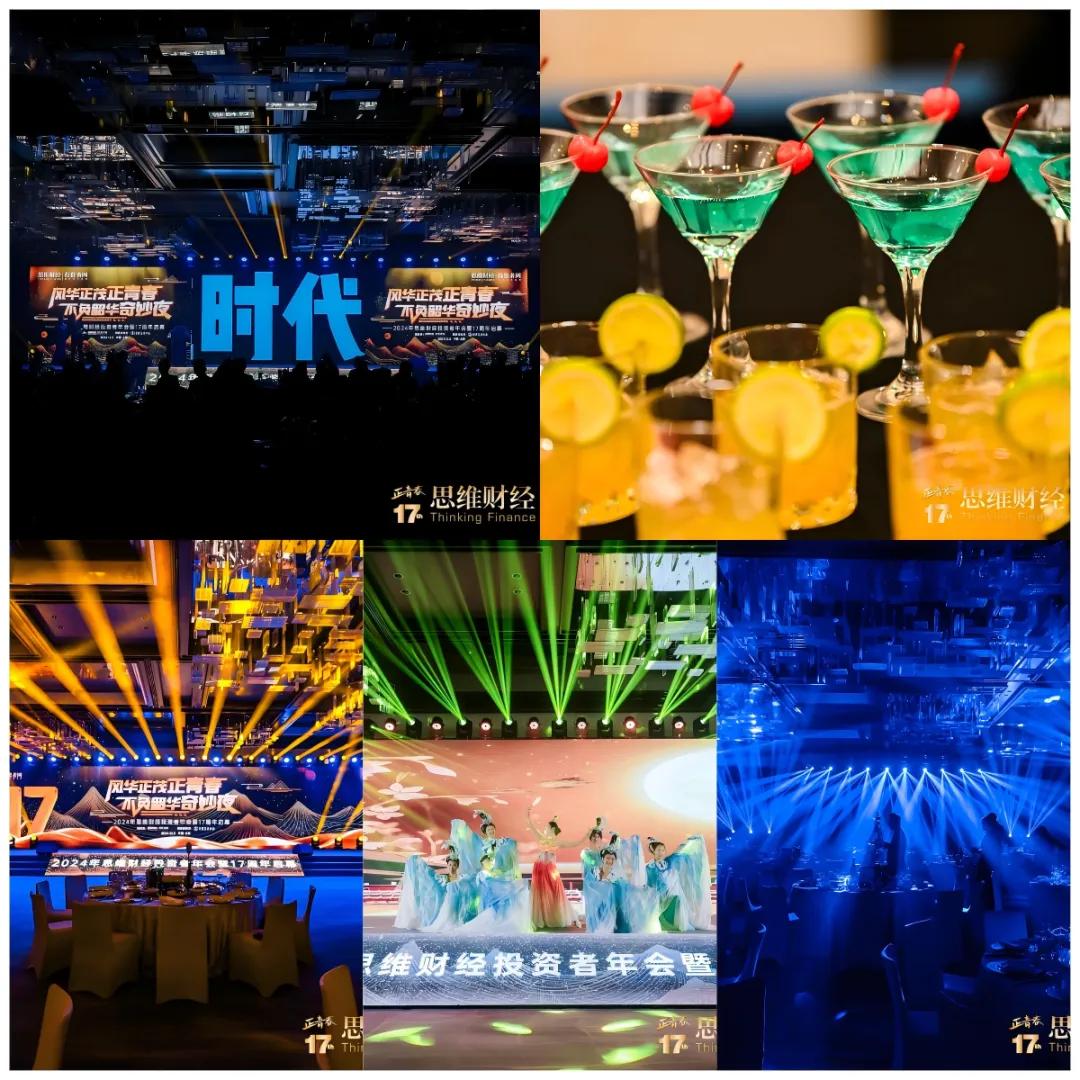
Group 1 - The article highlights the deep integration of global technological revolution and industrial transformation, with AI models reshaping industry boundaries, quantum computing overcoming computational bottlenecks, and green technology leading sustainable development [1][18] - Chinese enterprises are accelerating breakthroughs in "hard technology" and transitioning from "Made in China" to "Intelligent Manufacturing in China," driven by digitalization and intelligence [1][18] - The "Belt and Road" initiative and the restructuring of global value chains have led to an upgrade in outbound strategies from mere product exports to comprehensive outputs of technology standards, business models, and cultural values [1][18] Group 2 - The 18th anniversary of the company will be celebrated with the "2025 Investor Conference and Achievement and Glory Ceremony" on January 7, 2026, in Shanghai, focusing on the theme "Time as Evidence, Value Together" [3][20] - The event will gather top economists, industry leaders, and representatives from over a hundred listed companies and financial institutions to explore new industrial opportunities under the waves of technology and global perspectives [3][20] - The conference will emphasize technology empowerment and global vision, showcasing the latest achievements of three strategic alliances: intelligent manufacturing, new energy, and outbound enterprises, along with a public welfare segment exploring innovative applications of AI in sustainable development [3][20]
国防军工行业投资策略周报:新质生产力扩大投入,商业航天高景气持续-20260104
GF SECURITIES· 2026-01-04 11:24
Core Insights - The report emphasizes the positive outlook for domestic demand, which is expected to drive the development of new productive forces, as highlighted by the national financial work conference held on December 27-28, 2025 [5][13] - The aerospace sector continues to show high prosperity, with the China Aerospace Science and Technology Corporation achieving a record 73 space launch missions in 2025 [5][14] - The report recommends focusing on companies that align with the "S-curve" evolution, emphasizing supply chain reform, maintenance volume, and trends towards automation and intelligence [5][15] Industry Overview - The defense and aerospace industry is experiencing a significant increase in investment, with a focus on new productive forces and comprehensive human development [5][13] - The report notes the successful IPO acceptance of Blue Arrow Aerospace, which aims to raise 7.5 billion CNY, indicating strong market interest in commercial aerospace ventures [5][14] - The report identifies three key cycles within the industry: the evolution of the "S-curve," expansion of the "S-curve," and a new cycle focusing on emerging industries such as commercial aerospace, AI, and quantum computing [5][15] Company Recommendations - Recommended companies include: - **Aero Engine Corporation of China** (航发动力): Benefiting from high-end aviation equipment production and potential for domestic engine replacement in the civil aviation market [5][21] - **AVIC Xi'an Aircraft Industry Group** (中航西飞): A major manufacturer of military and civil aircraft, expected to benefit from modernization and military trade opportunities [5][22] - **China Power** (中国动力): Positioned to benefit from the recovery of the shipbuilding industry and the transition to dual-fuel engines [5][26] - **Aero Engine Control** (航发控制): Engaged in the production of control systems for military and civil aviation engines, with a strong competitive position [5][21] - **Ziguang Guowei** (紫光国微): Focused on the semiconductor industry with a strong emphasis on domestic market growth and AI integration [5][18] Financial Analysis - The report provides detailed financial metrics for key companies, including expected earnings per share (EPS), price-to-earnings (PE) ratios, and return on equity (ROE) for 2025 and 2026 [6] - For example, **航发动力** is projected to have an EPS of 0.34 CNY in 2026 with a PE ratio of 117.74 [6] - **中航重机** is expected to achieve a net profit of 11.21 billion CNY in 2025, with a dynamic PE ratio of approximately 28X [5][24] Market Performance - The report notes that the China Securities Military Industry Index has shown a weekly increase of 2.90%, outperforming major indices such as the Shanghai Composite and Shenzhen Component [5][34] - Year-to-date, the military industry index has increased by 42.34%, indicating strong market performance relative to other sectors [5][34]


智度股份:公司副总经理、董事会秘书杨燕芳辞任
Mei Ri Jing Ji Xin Wen· 2026-01-04 11:13
Group 1 - The company Zhidu Co., Ltd. announced the resignation of Ms. Yang Yanfang from her positions as Vice President and Secretary of the Board due to personal reasons [1] - Following her resignation, Ms. Yang will not hold any position within the company [1] Group 2 - The article discusses various predictions for Wall Street and the tech industry in 2026, including potential impacts on AI, quantum computing, and cryptocurrency [1]

正和生态:汇恒投资本次解除质押股份600万股
Mei Ri Jing Ji Xin Wen· 2026-01-04 11:00
Group 1 - The controlling shareholder, Beijing Huiheng Investment Co., Ltd., holds approximately 84.59 million shares, accounting for 39.96% of the company's total share capital [1] - Huiheng Investment and its concerted parties hold about 130 million shares, representing 61.38% of the total share capital [1] - After the release of 6 million pledged shares, Huiheng Investment has 45,384,900 shares remaining under pledge, which constitutes 53.66% of its holdings and 21.44% of the company's total share capital [1]

万安科技:公司副总经理朱哲剑辞职
Mei Ri Jing Ji Xin Wen· 2026-01-04 10:41
Group 1 - The company Wan'an Technology announced the resignation of its Vice President Zhu Zhejian due to job changes, while he will continue to work in the company's technology center after resigning [1] - The announcement was made on January 4, indicating a significant management change within the company [1] Group 2 - The article also touches on broader market trends, including a 20% decline in U.S. stocks and predictions for 2026 regarding the impact of quantum computing on cryptocurrency and gold prices exceeding $10,000 [1] - These trends may have implications for the technology sector and investment strategies moving forward [1]

兴民智通:公司副总经理冷旵森离任
Mei Ri Jing Ji Xin Wen· 2026-01-04 10:41
Group 1 - The company Xingshi Zhitong announced the resignation of Deputy General Manager Leng Hansen due to personal reasons, effective December 31, 2025 [1] - Following his resignation, Leng Hansen will no longer hold any position within the company [1] Group 2 - The article discusses various predictions for 2026, including potential impacts on the stock market, technology sector, and commodities like gold [1] - It raises concerns about the possible bursting of the AI bubble and its implications for the stock market, which has seen a 20% decline [1] - The article also mentions the transformative potential of quantum computing on cryptocurrency markets [1]

世纪华通:2025年12月31日召开董事会会议
Mei Ri Jing Ji Xin Wen· 2026-01-04 10:41
(记者 曾健辉) 每经头条(nbdtoutiao)——AI泡沫破灭?美股下跌20%?量子计算颠覆加密货币?金价涨破1万美元? 2026年华尔街和科技圈十大预测来了 每经AI快讯,世纪华通1月4日晚间发布公告称,公司第六届第十七次董事会会议于2025年12月31日在 上海市浦东新区海趣路58号1号楼11楼会议室以现场结合通讯表决的方式召开。会议审议了《关于以集 中竞价交易方式回购公司股份预案的议案》等文件。 ...