AI Agent

Search documents
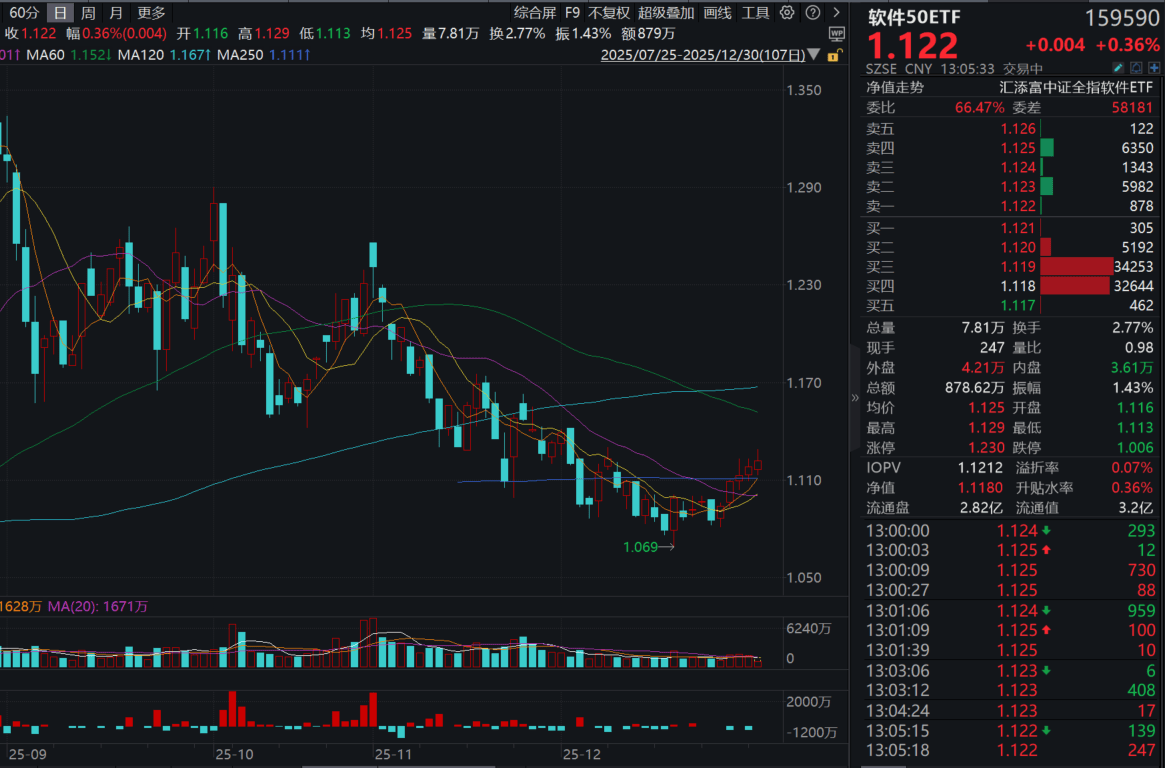
Meta收购Manus,AI Agent时代来了?软件50ETF(159590)冲击五连阳,信创50ETF(560850)再度飘红!
Sou Hu Cai Jing· 2025-12-30 05:24
Group 1: Company News - Meta has completed the acquisition of AI startup Butterfly Effect, which developed the AI agent Manus, marking its third-largest acquisition since inception, following WhatsApp and Scale AI [3] - After the merger, Butterfly Effect will continue to operate independently at the company, team, and product levels while integrating deeply with Meta's core global consumer products [3] - StarRing Technology and Haiguang Information have set a new performance record in the international TPC-DS benchmark test with their ArgoDB solution based on Haiguang's 7000 series processors, improving the previous record by 62%, indicating a significant leap in China's core information technology capabilities [4] Group 2: Market Insights - The market perspective indicates that the penetration and transformation of AI across various industries is just beginning, with expectations for international funds to gradually return to Chinese assets by 2025 [5] - Major AI application platforms such as Google, Meta, Apple, ByteDance, Tencent, and OpenAI are highlighted as critical entry points for investment in the coming year [5] - According to Founder Securities, the investment cycle in the tech industry follows a pattern of "hard three years, soft three years, and another three years of business model," with 2026 anticipated to be the investment year for AI applications due to continuous model improvements and cost reductions in computing power [5][7]

港股午评 恒生指数早盘涨0.44% 6只新股挂牌首日涨跌不一
Jin Rong Jie· 2025-12-30 05:04
Group 1 - The Hang Seng Index rose by 0.44%, gaining 113 points to reach 25,749 points, while the Hang Seng Tech Index increased by 1.04% [1] - Six new stocks were listed on the Hong Kong Stock Exchange with mixed performance; for instance, 英矽智能 (03696) surged over 34%, 美联股份 (02671) rose by 30%, and 迅策 (03317) saw a slight decline of 0.08% [1] - Baidu Group-SW (09888) led blue-chip gains with a 6.8% increase, driven by its expansion into the UK with autonomous vehicles and the anticipated ramp-up of its self-developed AI chip, Kunlun [1] Group 2 - 力勤资源 (02245) saw a rise of over 6% due to disruptions in the nickel market from Indonesian policies, with its fire refining project expected to be fully operational by 2026 [2] - 迈富时 (02556) increased by over 10% as it collaborates with Baidu and other tech companies, marking a pivotal point for the AI Agent's widespread adoption [2] - 英诺赛科 (02577) rose by over 9%, with its gallium nitride products meeting critical demands across multiple sectors [2] - 中伟新材 (02579) gained nearly 7% after signing a strategic cooperation framework agreement with 欣旺达 to jointly develop new precursor materials for solid-state batteries [2] - 亚太卫星 (01045) increased by 5%, operating multiple satellites including Asia-Pacific 5C as a subsidiary of China Satellite Communications [2] - 同源康医药-B (02410) rose by over 2% as it initiated Phase I/II clinical trials for TYK-01054 capsules, targeting advanced solid tumors [2] Group 3 - 昭衍新药 (06127) experienced a decline of over 6% as its controlling shareholder plans to reduce holdings by up to 14.98 million A-shares [3]

恒生指数早盘涨0.44% 6只新股挂牌首日涨跌不一
Zhi Tong Cai Jing· 2025-12-30 04:25
Market Overview - The Hang Seng Index rose by 0.44%, gaining 113 points to close at 25,749 points, while the Hang Seng Tech Index increased by 1.04%. The morning trading volume reached 96.5 billion HKD [1]. New Listings - Six new stocks were listed on the Hong Kong Stock Exchange with mixed performance: - Inspur Intelligent (03696) surged over 34% - Meilian Holdings (02671) rose by 30% - Xunce (03317) briefly fell below issue price, down 0.08% - Woan Robotics (06600) remained unchanged - Linqingxuan (02657) increased by over 14% - Wuyi Vision (06651) gained over 18% [1]. Notable Stocks - Baidu Group-SW (09888) led blue-chip stocks with a 6.8% increase, driven by its expansion into the UK with autonomous vehicles and the anticipated ramp-up of its self-developed AI chip, Kunlun [1]. - Liqin Resources (02245) also saw a rise of over 6%, influenced by policy disruptions in the nickel market in Indonesia, with its pyrometallurgical project expected to be fully operational by 2026 [1]. Collaborations and Innovations - Maifushi (02556) experienced a surge of over 10% due to deep collaborations with Baidu and other tech companies, marking a potential turning point for AI Agent adoption [2]. - InnoScience (02577) rose by over 9%, with its gallium nitride products meeting core demands across multiple sectors [3]. - Zhongwei New Materials (02579) increased by nearly 7% after signing a strategic cooperation framework agreement with Xinwanda (300207) to jointly develop new precursor materials for solid-state batteries [3]. - Asia Pacific Satellite (01045) rose by 5%, operating multiple satellites including Asia Pacific 5C as a subsidiary of China Satcom (601698) [3]. Clinical Developments - Tongyuan Kang Pharmaceutical-B (02410) saw an increase of over 2% as it initiated Phase I/II clinical trials for the TYK-01054 capsule, targeting advanced solid tumors [4]. Shareholder Actions - Zhaoyan New Drug (603127) (06127) fell by over 6% as its controlling shareholder plans to reduce holdings by up to 14.98 million A-shares [5].
Meta收购Manus,交易金额或达数十亿美元,后者将继续在新加坡运营
Sou Hu Cai Jing· 2025-12-30 04:13
Core Insights - Meta is acquiring Manus for several billion dollars as part of its AI business strategy, which has become a primary focus for CEO Mark Zuckerberg [1][5] - Manus will continue to operate independently in Singapore, with its CEO, Xiao Hong, becoming Meta's Vice President [1][4] - The acquisition is seen as a significant move for Meta in the AI Agent space, allowing it to leverage Manus's established technology and user base [5][6] Group 1: Acquisition Details - The acquisition was officially announced on December 29, with both companies expressing excitement about the integration [1] - Manus has developed a leading autonomous general Agent capable of performing complex tasks such as market research and data analysis, serving millions of users globally [1][2] - Meta aims to expand Manus's services to more enterprises and integrate them into its product offerings, including Meta AI [2] Group 2: Manus's Background and Technology - Since its launch in early 2025, Manus has processed over 147 trillion tokens and created more than 80 million virtual computers [2] - Manus focuses on building general AI Agents to help users efficiently complete research and automation tasks, ensuring that user experience remains unaffected post-acquisition [4] - The company has demonstrated creativity in UI/UX design and has capabilities for multi-model collaboration, which are crucial for maintaining competitive advantages [5] Group 3: Strategic Implications for Meta - The acquisition reflects Meta's aggressive positioning in the AI Agent market, especially following developments from competitors like OpenAI [5][6] - By acquiring a proven product like Manus, Meta can quickly close the generational gap in autonomous task execution and enhance its Llama ecosystem [5] - The move is also indicative of Zuckerberg's concerns about the future and the need for Meta to adapt to the evolving AI landscape [5]


Meta新任副总裁:Manus创始人肖弘,90后
猿大侠· 2025-12-30 04:11
Core Insights - Meta has officially acquired AI startup Manus, with its founder, Xiao Hong, becoming a Vice President at Meta, marking a significant milestone for Chinese tech entrepreneurs [2][41] - The acquisition amount is rumored to be in the billions, making it Meta's third-largest acquisition to date, following WhatsApp and Scale AI [4][5] - Manus achieved an impressive annual recurring revenue (ARR) of $100 million within just eight months of operation [6] Group 1: Manus's Performance and Technology - Manus has a 2.5% automation rate, ranking it as the state-of-the-art (SOTA) in the remote labor index (RLI) published by Scale AI [10][11] - The RLI evaluated real outsourcing projects across various industries, with a total value exceeding $140,000, representing over 6,000 hours of human professional work [12][13] - Manus's unique capability to extract underutilized potential from large models has contributed to its standout performance in the AI agent market [16] Group 2: Financial and Market Impact - Manus generated $125 million in revenue within its first year, showcasing its strong monetization capabilities [17][20] - Meta's investment in Manus is seen as a strategic move to enhance its AI offerings and compete with major players like OpenAI, Google, and Microsoft, as it plans to invest $600 billion in U.S. infrastructure projects over the next three years [22][24] - The acquisition is expected to improve Meta's financial statements by integrating a mature product that has already established a subscription model [24] Group 3: Company Background and Funding - Manus was originally founded in China but relocated to Singapore, with additional offices in San Francisco and Tokyo, expanding its workforce to 105 employees [26][27] - Prior to the acquisition, Manus underwent four funding rounds, with its valuation reaching nearly $500 million before being acquired by Meta [29][32] - The early investors, including Benchmark Capital and Sequoia China, are likely to see significant returns from this acquisition [32] Group 4: Future Prospects - Meta has assured existing Manus users that services will continue as usual and that the team will remain intact [34] - Manus's technology is expected to be integrated into Meta's existing products, enhancing functionalities across platforms like Facebook, Instagram, and WhatsApp [38] - Manus plans to open a new office in Paris, indicating ongoing global expansion in the AI agent market [39][40]

Manus被Meta并购,金额或超50亿美金,背后逻辑在于「补齐执行力」
3 6 Ke· 2025-12-30 02:59
Core Insights - Manus, an emerging player in the AI Agent sector, has announced its acquisition by Meta, which will enhance Meta's ecosystem by adding execution capabilities for AI applications [1][4] - The acquisition is expected to provide Manus with the resources to scale its operations while maintaining its operational agility and decision-making processes [5] Group 1: Acquisition Details - The acquisition price is estimated to be between $4 billion and $5 billion, with negotiations completed in less than ten days, indicating a rapid transaction process [4] - Manus has processed over 147 trillion tokens and created more than 80 million virtual computers since its launch [2] Group 2: Strategic Implications - The partnership will allow Manus to serve millions of businesses and billions of users on the Meta platform, enhancing the practical application of AI capabilities [3] - Meta aims to integrate Manus's execution abilities into its platforms like WhatsApp and Instagram, enabling users to perform tasks directly, such as booking flights and hotels [4] Group 3: Market Positioning - The collaboration is seen as a strategic move by Meta to strengthen its position against competitors like OpenAI and Anthropic in the AI Agent space [4] - By leveraging Meta's resources, Manus can focus on product iteration and development without the burden of financing and computational resource procurement [5]

Manus官宣加入Meta!公司将保持独立运作,90后创始人肖弘将出任Meta副总裁
Jin Rong Jie· 2025-12-30 02:53
12月30日,Manus在官网宣布将加入Meta。据介绍,Manus将继续通过app和网站为用户提供产品和订阅 服务,同时公司将继续在新加坡运营。 另据晚点LatePost报道,Meta以数十亿美元收购开发AI应用Manus的公司蝴蝶效应。在Meta收购前, Manus正以20亿美元估值进行新一轮融资。收购完成后,蝴蝶效应公司将保持独立运作,创始人肖弘出 任Meta副总裁。 Manus首席执行官肖弘表示:"携手Meta使我们能够在不改变Manus运作方式和决策机制的前提下,在更 强大、更可持续的基础上发展。我们对Meta与Manus合作的前景充满期待。我们将继续迭代产品,为用 户提供超预期的服务——这是Manus从上线至今得以存在和发展的根本原因。" 真格基金官微也发布消息,真格基金合伙人刘元发文称:"这是Meta自成立以来第三大并购,仅次于 WhatsApp和Scale AI。" 3月,Manus发布后不久,由于还处于内测阶段,用户需要邀请码才能体验产品,"一码难求"的局面也 使Manus受到争议。 4月,Manus宣布完成由Benchmark领投的7500万美元融资,估值达5亿美元,投资引发美国政府机构审 ...
Meta史上第三大并购!目标是Manus
Shang Hai Zheng Quan Bao· 2025-12-30 02:13
12月30日,硅谷科技巨头Meta、通用人工智能初创公司Manus以及真格基金纷纷宣布,Meta将收购Manus。收购后,Manus的产品使用不受影响,并将继 续在新加坡运营。 Manus表示,被Meta收购,是对公司在AI Agent领域里工作的认可。自发布以来,公司专注于构建通用型AI Agent,帮助用户高效完成研究、自动化和复 杂任务。面对全球越来越多用户的使用需求,团队持续迭代产品,努力使Manus在实际使用中更实用、更可靠。根据12月初统计的数据,上线至今, Manus已处理超过147万亿个token,并创建了超过8000万台虚拟计算机。 Meta在新闻稿中表示,"我们很高兴地宣布,Manus将加入Meta,为数十亿用户带来领先的Agent服务,并为使用我们的产品的企业创造更多机会。我们将 继续运营和销售Manus服务,同时将其集成到我们的产品中。" Meta介绍,Manus已构建出领先的自主通用智能体之一,能够独立执行市场调研、编程和数据分析等复杂任务。Manus目前已为全球数百万用户和企业提 供日常服务。后续,Manus将为Meta的消费者和企业产品(包括Meta AI)提供通用Agent。 ...
Manus 团队加入 Meta,一群年轻人的十年
Xin Lang Cai Jing· 2025-12-30 02:08
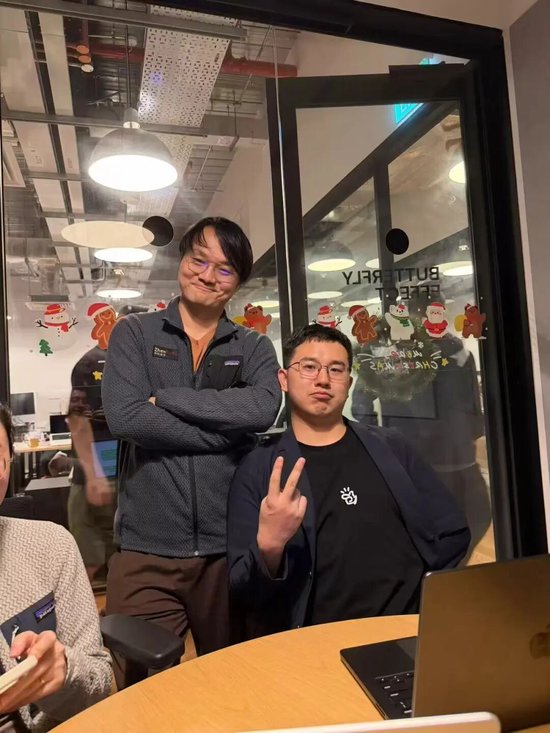
Core Insights - Manus, a Chinese startup, is set to join Meta, marking Meta's third-largest acquisition since its inception, following WhatsApp and Scale AI [1][9] - The acquisition will allow Manus to maintain independent operations while integrating deeply with Meta's core global consumer products [1][9] - Manus has achieved significant milestones, processing over 147 trillion tokens and creating more than 80 million virtual computers since its launch [6][14] Company Background - Founded by Xiao Hong and his early partners from Huazhong University of Science and Technology, Manus has evolved from humble beginnings to create a product that has garnered global attention [1][10] - The team has focused on understanding user needs and engineering excellence, which are seen as critical success factors in the AI era [1][9] Product Development - Manus specializes in building general-purpose AI agents that assist users in research, automation, and complex tasks, continuously iterating to enhance practicality and reliability [6][14] - The product has set records for user and revenue growth in the global AI market since its release [1][9] Strategic Vision - The partnership with Meta is expected to solidify Manus's strategic position in AI applications, transforming advanced AI capabilities into scalable and reliable systems [6][14] - Manus aims to expand its services to millions of businesses and billions of users on the Meta platform while ensuring that user experience remains unaffected [7][14] Industry Impact - The success of Manus serves as an inspiration for a new generation of young entrepreneurs in the AI era, reinforcing the belief that dedicated individuals can achieve remarkable success on the international stage [2][11] - The continuous support from Zhenge Fund over the past decade highlights the potential of young teams to innovate and compete globally [2][11]
2025年第51周:数码家电行业周度市场观察
艾瑞咨询· 2025-12-30 00:07
Industry Environment - In 2025, a stark contrast is observed between the "Six Little Dragons" in Hangzhou and the "Invisible Champions" in Shenzhen, with Hangzhou focusing on narrative and traffic operation while Shenzhen emphasizes technical refinement and a pragmatic approach [3] - The AI landscape is witnessing a competition akin to the Android vs. Apple battle, with the launch of the open-source AI Agent model AutoGLM by Zhiyu, which supports cross-device operations and aims to prevent AI monopolies [4] - The AI glasses market is experiencing intense competition, with major players like Google and Alibaba entering the fray, focusing on vertical scenarios and data control, despite consumer hesitance [5] - The evolution of IoT in China is shifting towards emotional value, driven by the "loneliness economy," with AI emotional products gaining traction among young consumers [6] - The humanoid robot sector is facing scrutiny over its reliance on remote control rather than autonomous intelligence, with significant discrepancies between market sentiment and actual order volumes [8] AI Transformation in Healthcare - The modern healthcare system is grappling with digital transformation challenges, necessitating a comprehensive overhaul of data governance and decision-making processes to effectively integrate AI [9] AI Unicorn IPO Race - Domestic AI unicorns MiniMax and Zhiyu are preparing for IPOs in Hong Kong, marking a shift from technology to commercialization, with significant backing from industry giants [10] AI Content Creation - The rise of "manga dramas" as a new content form is driven by AI technology, significantly lowering production costs and attracting major IP and platform players [12] AI Companion Toys Market - The AI companion toy market is rapidly growing but facing challenges of high return rates due to low emotional connection and user experience issues [13] Small Home Appliances Industry - The small home appliance sector is experiencing a bifurcation, with companies like Delmar adjusting strategies amid declining performance, while others expand production and explore overseas markets [14] AI Model Competition - The AI model landscape is diversifying into three camps, with ByteDance's Doubao leading in user engagement, DeepSeek excelling in technology, and Alibaba's Tongyi Qianwen focusing on practical applications [16] Future of AI - The year 2026 is projected to be pivotal for AI, transitioning to an "AI-native" era characterized by natural language interaction and autonomous task completion [17] AI Agent Development - The AI Agent market is expected to grow significantly, with applications across various sectors, although companies face challenges in implementation and compliance [18] Humanoid Robot Development - Japan is re-entering the humanoid robot development race, aiming for prototype release by 2030, intensifying global competition in the sector [19] AI Toys and Emotional Economy - Major tech companies are entering the AI toy market, which is projected to grow significantly, but face challenges related to pricing and user experience [21] AI Mapping Services - AI is becoming central to the mapping industry, with major players like Baidu and Gaode launching AI strategies, but user experience and privacy concerns remain critical issues [22] AI Investment Trends - The AI investment landscape is evolving, with figures like Duan Yongping advocating for rational participation and practical applications of AI technology [31] Apple’s Entry into Robotics - Apple is accelerating its entry into the humanoid robot market, aiming to leverage its brand and manufacturing capabilities, despite facing significant challenges [32] Robotics and AI Commercialization - Companies like Yundongchu Technology are securing funding to advance embodied intelligence technologies and expand market applications [34]