
供应链金融

Search documents
工行无锡宜兴支行成功投放供应链金融贷款1000万元
Jiang Nan Shi Bao· 2025-06-11 08:29
Core Insights - The Industrial and Commercial Bank of China (ICBC) Wuxi Yixing Branch is committed to serving the real economy by focusing on the development of key industries in the city, particularly in supply chain finance [1] - The bank successfully provided 10 million yuan in digital supply chain financing to an upstream supplier in the wire and cable industry, injecting financial support into the stability of the industrial chain [1] - The wire and cable industry is crucial for the national economy, and the stability of its supply chain is vital for infrastructure construction and industrial production [1] Industry Challenges - Upstream suppliers in the wire and cable sector are often small and medium-sized enterprises (SMEs) that face difficulties in obtaining affordable financing, which restricts their development and impacts the smooth operation of the entire supply chain [1] - The bank proactively engaged with leading enterprises in the local wire and cable industry to provide financial support to these SMEs through supply chain finance loans [1] Financial Solutions - The financing process leverages the credit of core enterprises in the supply chain and utilizes the bank's self-developed digital supply chain product, ICBC e-credit, to enable a fully online application, review, disbursement, and repayment process [1] - Suppliers can quickly access low-cost financing without needing additional collateral, significantly enhancing the accessibility of financing [1] Technological Integration - The bank employs financial technology advantages, including big data risk control models and blockchain technology, to ensure the authenticity of trade backgrounds and reduce business risks [2] - The digital supply chain platform can connect directly with core enterprises' ERP systems, allowing for real-time sharing of transaction data and dynamic monitoring of fund flows, ensuring that credit funds are accurately directed towards the real economy [2] Future Plans - The bank plans to expand cooperation with core enterprises in key industries such as manufacturing, agriculture, and construction, providing customized financial solutions for upstream and downstream clients in the industrial chain [2] - The goal is to build an ecosystem of "integration of production and finance, symbiosis, and win-win" [2]

供应链金融,真的是万恶之源?
Hu Xiu· 2025-06-09 11:11
看到网上都在讨论车企供应链金融的问题,各种链,舆论的导向就是大厂对中小供应商的压榨。 毛利率,对吧,毛利率对应了商业模式,从毛利率能看出这是不是个好生意。 毛利率高,说明企业要么有核心技术,要么有品牌溢价,要么有垄断性资源,对吧。 然后还看什么?帐期,对么? 帐期的本质是什么?是议价能力,是行业地位,是话语权,咱们不仅要看上游应付的帐期,还要看下游 应收的帐期。 最好的模式是什么?就是上游的应付能拖得长长的,下游的应收一秒不等,甚至预付款到账才发货。 那帐期这个东西,本质就是一种折扣啊,资金有成本有收益嘛,对吧。 我要来了180天帐期,实际上就是货款有便宜了3%-5%,所以本质就是一种溢价能力。 其实这一切的一切,归根结底就两个字——帐期。 一夜之间好像帐期变成了一个很坏的东西,供应链金融也变成了一个剥削的工具。 可是咱们现在换个角度想一想,当你去看一家企业的投资价值的时候,去做尽职调查的时候,会看什 么? 所以帐期是万恶之源么?杜绝的了么?如果没有帐期了,会怎么样? 如果没有帐期了,大家就会直接卷价格啊。 因为这就是一个市场行为,有的是人想进供应商库主动给帐期呢,别说180天了,360天都能给。 作为中小供 ...
21专访丨中企云链董事长刘江:发展供应链金融需秉持契约精神
2 1 Shi Ji Jing Ji Bao Dao· 2025-06-09 04:16
Core Insights - The chairman of Zhongqi Yunlian, Liu Jiang, discussed the importance of digital financial solutions in addressing financing bottlenecks for enterprises, particularly through the use of electronic receivables certificates [2][4] - Liu emphasized the need for core enterprises to adhere to contractual obligations to protect the interests of small and medium-sized enterprises (SMEs) [2][5] Digitalization and Platformization Trends - The industry is experiencing two major trends: digitalization, which addresses information asymmetry, and platformization, which connects core enterprises, financial institutions, and SMEs [3][4] - Digital technologies enhance information transmission, allowing banks to better serve SMEs in the real economy [3] Regulatory Changes and Industry Evolution - Recent regulatory changes have led to greater recognition of supply chain finance, encouraging banks and core enterprises to participate in this business model [4] - The regulations emphasize "subject credit," "data credit," and "material credit," aiming to collaboratively resolve financing challenges for enterprises [4] Importance of Contractual Integrity - Liu highlighted the need for the industry to uphold the spirit of contracts, urging large enterprises to fulfill their agreements with SMEs to facilitate financing from banks [5][7] - The health of the supply chain finance industry relies on maintaining this contractual integrity, supported by regulatory oversight [7] Operational Challenges - There are operational pain points, such as banks requiring suppliers to open accounts at multiple banks, which complicates financing for SMEs [6] - Some banks do not provide financing to individual businesses, indicating a need for better communication with regulatory bodies to improve services for these entities [6] Recommendations for High-Quality Development - The industry should focus on maintaining the spirit of contracts and ensuring that large enterprises act as responsible "chain leaders" [7] - Continuous regulatory oversight is essential to ensure the effective application of supply chain finance tools and to mitigate potential abuses [7]
沂链通供票小课堂:沂链通供票平台具有供票融资功能吗?
Sou Hu Cai Jing· 2025-06-09 01:58
Core Insights - The article highlights the advantages of the Yichain Tong supply chain bill platform, which is the first public service platform for supply chain bills initiated by local government, providing comprehensive online services for electronic commercial bills throughout their lifecycle [1][12] - The platform addresses the financing challenges faced by small and medium-sized enterprises (SMEs) by offering features such as instant fund availability, access to numerous financial institutions, free inquiries, and user-friendly operations [2][12] Financing Features - Yichain Tong offers a direct financing function based on real trade backgrounds and debt relationships, matching financing products and services between financial institutions and bill-holding enterprises [1][12] - The platform provides a "second-level discount" function for SMEs, allowing them to access bank discount information directly and complete the entire discount process online [4][12] - Enterprises can initiate online inquiries to multiple banks with a single click, enabling rapid matching with discount banks and quick fund disbursement [5][12] Lifecycle Management - Yichain Tong supports the entire lifecycle management of supply chain bills, including issuance, acceptance, endorsement, discounting, pledge, and payment, catering to diverse payment and settlement needs of enterprises [6][12] - The bills can be fractionally issued and circulated, enhancing liquidity, protecting creditor rights, and improving capital efficiency without occupying bank credit or requiring collateral [7][12] Real-World Applications - A core enterprise utilized the Yichain Tong platform to issue supply chain bills for paying upstream suppliers, who could then split and transfer the bills to secondary suppliers or quickly complete discount financing on the platform [8][12] - An upstream supplier converted accounts receivable into supply chain bills by submitting trade background information online, allowing for automatic review and instant fund disbursement [9][12] Industry Recognition - The Yichain Tong platform has surpassed a supply bill business scale of 20 billion yuan, ranking among the top five nationwide, and has established partnerships with several banks to create a comprehensive supply bill ecosystem [10][12]

稳定币,新交易场景的一般等价物
2025-06-09 01:42
稳定币,新交易场景的一般等价物 20250608 摘要 稳定币作为数字货币与法定货币的交易媒介,提升了交易的便捷性和流 动性,类似于支付宝在淘宝中的作用,简化了数字货币的交割流程。 香港推出稳定币条例旨在促进虚拟资产交易市场发展,并应对国际贸易 支付体系的不确定性,稳定币或能承担新的支付体系作用。 稳定币产业链分为一级市场(发行方、托管行、资产管理方)和二级市 场(交易所、做市商),各方通过发行、托管、资产管理和交易等环节 盈利。 稳定币发行方采用零息负债和投资收益息差模式,通过发行稳定币获取 零息负债,并将资金投资于低风险资产以获取利息收入,如 Circle 的 USDC 储备资产利息收入。 稳定币市场呈现高度集中化趋势,USDT 和 USDC 等头部稳定币占据市 场主导地位,发行方需增强信用背书并披露资产结构以增强市场信心。 未来围绕真实贸易场景可能衍生出更多供应链金融需求,具有贸易场景 的平台与稳定币结合,可产生融资融券等金融业务,投资价值巨大。 具有信用背书的大型机构参与稳定币发行至关重要,能增强市场信心, 提高用户信任度,这些机构更有可能占据重要市场份额,影响行业竞争 格局。 Q&A 什么是稳定币, ...
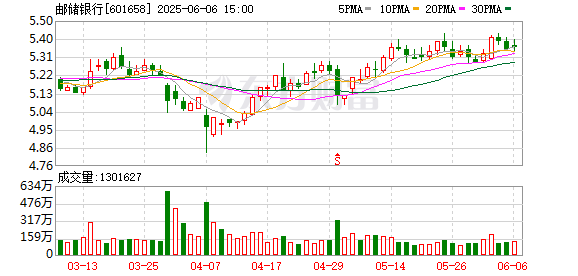
邮储银行创新数据信用模式 构建产业协同新生态
Zheng Quan Ri Bao· 2025-06-08 14:39
Group 1 - Postal Savings Bank of China (PSBC) achieved a significant breakthrough in supply chain finance by successfully implementing the first logistics scene脱核 "U factoring" financing business in the country, based on the logistics cost settlement scenario between a core enterprise and its upstream carriers [2] - The innovative use of historical transaction data for credit approval allows enterprises to obtain loans without collateral, significantly speeding up the loan disbursement process, which is particularly beneficial for small and micro enterprises facing limited financing channels [2] - The new financing model has been recognized by core enterprises, as it does not occupy the credit limit of PSBC and does not require additional guarantee agreements, thus helping upstream enterprises solve funding issues while reducing cooperation costs [2] Group 2 - The trend of online and脱核 supply chain finance is becoming a key development direction in the industry, with PSBC transforming core enterprises from traditional "guarantors" to "data providers," thereby maximizing the value of core enterprise credit resources [3] - PSBC aims to strengthen the supply chain by investing in financial technology to support the digital transformation of industries, contributing to the optimization and high-quality development of the real economy [3]

比亚迪,真的会是下一个“恒大”吗?
海豚投研· 2025-06-04 11:37
Core Viewpoint - The article discusses the concerns surrounding BYD's debt levels and the implications of its aggressive pricing strategy in the context of the automotive industry, particularly in light of comparisons to Evergrande's financial troubles. Debt Analysis - BYD's debt stands at 594.3 billion, with a debt ratio of approximately 75%, which is considered medium to high within the automotive sector [2][3] - Compared to new energy vehicle companies like NIO and Zeekr, which have debt ratios exceeding 85%, BYD's debt level is relatively moderate [3][5] - Traditional automakers like Volkswagen and Jianghuai also have debt ratios around 70%, indicating that BYD's debt is not out of line with industry standards [3] Comparison with Evergrande - The article highlights the differences between BYD and Evergrande, emphasizing that BYD's high debt is primarily operational rather than reliant on high-interest debt [5][6] - Evergrande's financial issues stemmed from high-interest debt and a lack of trust from investors, leading to a vicious cycle of cash flow problems [5][6] Operational Debt vs. Interest-Bearing Debt - BYD's operational debt, mainly accounts payable, allows for flexibility in payment terms without incurring interest, contrasting sharply with Evergrande's reliance on high-interest loans [7][8] - The operational debt structure provides BYD with a competitive edge, allowing it to manage cash flow effectively while maintaining strong bargaining power with suppliers [7][8] Supply Chain Financing - BYD utilizes a supply chain financing model known as "D-Link," which allows suppliers to receive payment through electronic promissory notes, effectively reducing the need for high-interest loans [15][16] - This model is common in the industry, but BYD's scale makes its accounts payable appear more significant, leading to scrutiny [21][23] Risks and Market Position - The reliance on high sales volumes is critical for BYD's operational model, as any decline in sales could trigger cash flow issues and impact its ability to meet obligations [27][35] - The article notes that while BYD is currently in a strong market position, any significant drop in sales could lead to a financial crisis similar to that of Evergrande [27][35] Pricing Strategy - BYD's recent price cuts are seen as a strategic move to maintain market share amid increasing competition, particularly from rivals like Geely [36][39] - The company maintains a relatively high gross margin, allowing it to engage in price wars without immediate financial distress [39][41] Conclusion - The article concludes that while BYD's debt levels are concerning, they are fundamentally different from Evergrande's issues, and the company's strong market position and operational strategies provide a buffer against potential financial crises [50]

中汽协发倡议,众专家亮观点(五)| 张君毅:一切高速发展均应以保证质量为前提
Jing Ji Guan Cha Bao· 2025-06-04 02:23
Core Viewpoint - The Chinese automotive industry is facing a new wave of price wars initiated by some companies, which has raised concerns about unhealthy competition and its impact on profit margins, product quality, and consumer safety [2][4][10]. Group 1: Price War Initiation and Industry Response - A significant price reduction campaign was launched by certain car manufacturers starting May 23, leading to a chain reaction of similar actions by other companies [4]. - The China Automotive Industry Association issued an initiative on May 31 to maintain fair competition and promote healthy industry development, which was supported by the Ministry of Industry and Information Technology [2][4]. Group 2: Structural Issues in the Automotive Industry - The price war reflects multiple structural contradictions, including the withdrawal of subsidies leading to increased costs for consumers, which has heightened market competition [5]. - As of April 2025, passenger car inventory reached 3.5 million units, with new energy vehicle inventory hitting a historical peak of 850,000 units, prompting companies to lower prices to clear stock [6]. - Rapid technological advancements are causing older models to become obsolete quickly, adding pressure on manufacturers [6]. Group 3: Financial Pressures and Market Dynamics - The financial burden on small and medium-sized enterprises has increased due to unregulated supply chain financing, leading to a pressing need for timely payments [7]. - Despite some companies showing higher profit margins than overseas counterparts, the overall market is experiencing significant challenges, with many small suppliers exiting the market [7]. Group 4: Recommendations for Industry Stakeholders - The government should enhance regulations and monitoring to prevent unfair competition and promote quality over price [12][13]. - Automotive companies are encouraged to shift from price competition to value competition, focusing on technological innovation and market differentiation [14][15]. - Suppliers should collaborate with manufacturers to establish stable pricing agreements and engage in joint technology development to alleviate cost pressures [18][22].
华菱钢铁: 关于子公司深圳华菱商业保理有限公司股权调整暨关联交易的公告
Zheng Quan Zhi Xing· 2025-06-03 12:15
Group 1 - The company plans to transfer 51% equity of its subsidiary, Shenzhen Hualing Commercial Factoring Co., Ltd. (Hualing Factoring), to four core steel subsidiaries, increasing their combined ownership to 60% [1][2] - The transaction involves Hualing Xiangtan Steel Co., Ltd., Hualing Lianyuan Steel Co., Ltd., Hengyang Hualing Steel Pipe Co., Ltd., and Yangchun New Steel Co., Ltd. acquiring 20%, 20%, 10%, and 1% of Hualing Factoring respectively [1][2] - The total transaction amount for the transfer of 9% equity from Hunan Steel Group to Yangchun New Steel is 44.0529 million yuan, accounting for 0.08% of the company's latest audited net assets [2][3] Group 2 - Hualing Factoring was established in July 2015 with a registered capital of 50 million yuan and is primarily engaged in supply chain finance and factoring services [3][4] - The company reported total assets of 283,896.18 million yuan and net assets of 48,926.33 million yuan in the most recent unaudited financial data [4] - Hunan Steel Group, the controlling shareholder of the company, has total assets of 20,855,120.16 million yuan and a net profit of 84,600.44 million yuan in the latest financial period [6] Group 3 - The purpose of the equity transfer is to enhance the collaboration between Hualing Factoring and core steel subsidiaries, thereby improving the competitiveness of the steel industry [7] - The pricing for the equity transfer is based on the net asset value assessed as of March 31, 2025, with a total valuation of 29,368.62 million yuan for the transferred shares [8][10] - The independent directors have reviewed the transaction and concluded that it is fair and does not harm the interests of the company or minority shareholders [12]

工行落地首单财务公司承兑供应链票据有限追索服务贴现业务
Zhong Guo Jin Rong Xin Xi Wang· 2025-06-03 09:34
转自:新华财经 6月3日,中国工商银行股份有限公司票据营业部及广东分行与供应链金融科技平台简单汇合作,成功为 TCL空调器(九江)有限公司办理了财务公司承兑供应链票据有限追索服务的全国首单贴现业务。 工商银行与TCL集团合作,率先落地供应链财票有限追索服务的贴现业务。作为我国消费电子与半导体 制造业龙头,TCL集团年票据签发量超千亿元,本次申请贴现的TCL空调器(九江)有限公司,所属行 业为家用空气调节器制造,是专精特新中小企业,通过有限追索服务,不仅获得了工商银行高效优质的 票据融资支持,还实现了应收票据科目的终止确认,和被追索风险的彻底释放,有效压降"两金"、降低 资产负债率、优化财务报表。 此次落地市场首单供应链财票有限追索服务贴现业务,是工商银行践行金融工作政治性、人民性,助力 国家重点战略发展的又一有力实践。今年以来,工商银行票据营业部持续推出"星火燎原"计划、"票聚 链通"行动和一系列创新产品与服务工具,积极发挥票据支持"两重"发展和供应链金融的优势效能,写 实写好"五篇大文章"。下一步,工商银行票据营业部将继续充分运用有限追索服务等创新工具,更好服 务实体经济高质量发展。(邓侃) 编辑:李一帆 ...
