
内卷式竞争

Search documents
新势力车企7月放榜:零跑首破5万大关,小米汽车同比翻三倍
Ge Long Hui A P P· 2025-08-01 12:37
Group 1: Company Performance - Xiaopeng Motors achieved a record monthly delivery of 36,717 vehicles in July, marking a 229% year-on-year increase and a 6% month-on-month increase, with total deliveries for the year reaching 233,906 units, up 270% [1][4] - Leap Motor's July deliveries reached 50,129 units, a year-on-year increase of over 126%, marking its first time surpassing 50,000 units in a month, with total deliveries for the year at 271,793 units [4][7] - Xiaomi Motors reported over 30,000 vehicle deliveries in July, tripling from 10,000 units in the same month last year, with production capacity expected to ramp up significantly [7][10] - Li Auto delivered 30,731 vehicles in July, a 39.74% year-on-year decrease from 51,000 units in the same month last year, with total cumulative deliveries reaching 1,368,541 units [12] - NIO delivered 21,017 vehicles in July, with year-to-date deliveries of 135,167 units, reflecting a 25.2% year-on-year increase [12][14] Group 2: Market Trends - The automotive industry is experiencing a price war, with over 60 models having price cuts in the first four months of 2025, escalating to over 100 models in May [15][17] - The China Automotive Association noted that July's retail sales for narrow passenger vehicles were approximately 1.85 million units, a 7.6% year-on-year increase, while new energy vehicle sales are expected to reach 1.01 million units, with a penetration rate of about 54.6% [18]






头部平台为何大额补贴?下半年如何反内卷?国家发改委回应
Nan Fang Du Shi Bao· 2025-08-01 11:47
Core Viewpoint - The National Development and Reform Commission (NDRC) emphasizes the need to combat "involutionary" competition in the market, which has been highlighted as a significant issue affecting various industries and is expected to be a focus for the second half of the year [1][4][7]. Group 1: Definition and Understanding of "Involutionary Competition" - "Involutionary" competition refers to inefficient and forced competition that does not lead to industry growth, often resulting in price wars that harm quality and service [3][4]. - The term has gained traction in government discussions, although it lacks a precise definition [3][4]. - Experts suggest that if competition does not lead to profit growth for the industry but results in price reductions, it can be classified as "involution" [4]. Group 2: Causes of "Involutionary Competition" - Factors contributing to "involutionary" competition include insufficient domestic demand, oversupply, and government subsidies that exacerbate capacity excess [5][6]. - Companies often engage in price-cutting to maintain market share, leading to a vicious cycle of competition [5]. - Some firms resort to cost-cutting measures that harm the supply chain, reflecting outdated business practices [5]. Group 3: Strategies to Combat "Involutionary Competition" - The NDRC plans to revise pricing laws to clarify standards for identifying unfair pricing practices, focusing on behaviors that exclude competitors or monopolize markets [7][8]. - There will be targeted investigations into industries with significant "involutionary" competition to encourage compliance with pricing norms [8]. - Emphasis will be placed on fostering innovation and preventing blind imitation in emerging sectors while addressing low-level, homogeneous competition in traditional industries [8][9]. Group 4: Recommendations for Future Actions - Experts recommend that authorities focus on expanding domestic demand to help companies escape the "prisoner's dilemma" of "involutionary" competition [9][10]. - A market-oriented approach is suggested for effectively addressing the issues of "involutionary" competition [10].
破除“内卷式”竞争、制止新兴领域盲目跟风,国家发展改革委发声
2 1 Shi Ji Jing Ji Bao Dao· 2025-08-01 09:49
Core Viewpoint - The National Development and Reform Commission (NDRC) emphasizes the need to prevent blind following and chaotic competition in emerging sectors while addressing low-level, homogeneous construction in traditional sectors to avoid "involution" competition [2][3][4]. Group 1: Economic Policy and Competition - The NDRC is committed to stopping blind following and chaotic competition in emerging fields, while also preventing low-level, homogeneous construction in traditional sectors [2][4]. - The NDRC has established a mechanism for regular communication with private enterprises, addressing concerns about "involution" competition and taking measures such as revising laws and enhancing industry self-discipline [2][3]. - The NDRC aims to combine effective market mechanisms with proactive government actions to optimize market competition order and prevent disorderly competition [3][4]. Group 2: Industry Insights and Challenges - The phenomenon of "blind following" in emerging sectors is attributed to multiple economic factors, including the uncertainty of technology routes and market prospects, which allows for speculative capital investments [4]. - Local governments often simplify policies to focus on "investment quantity assessments," leading to multiple similar projects in the same region, reflecting a lack of precise evaluation of industrial rules and regional capacity [4]. - The NDRC's approach aims to guide the market back to an "innovation-driven" essence, avoiding the vicious cycle of low-level repeated construction in emerging industries [5].
焦点访谈丨谋篇布局“十五五” 如何更好擘画未来发展新蓝图?
Yang Shi Xin Wen· 2025-08-01 08:45
Group 1 - The core viewpoint of the article emphasizes the importance of the upcoming "14th Five-Year Plan" and the strategic direction for the "15th Five-Year Plan" in the context of China's economic development [1][3] - The meeting highlighted that the "15th Five-Year Plan" period is crucial for achieving socialist modernization and that it will face various risks and challenges while leveraging its advantages [3][5] - The analysis indicates that China is currently in a strategic opportunity period, coinciding with the fourth industrial revolution, which presents a chance for comprehensive advancement despite competitive pressures and geopolitical risks [7][9] Group 2 - The meeting outlined guiding principles for economic and social development during the "15th Five-Year Plan," focusing on safety, new productive forces, and comprehensive human development [9][11] - The economic growth rate for the first half of the year was reported at 5.3%, and the meeting emphasized the need for proactive macroeconomic policies to address uncertainties in the second half of the year [11][16] - The continuation of the "Four Stabilities" policy was reaffirmed, emphasizing stability in employment, enterprises, markets, and expectations, while also calling for flexibility and foresight in policy implementation [14][16] Group 3 - The meeting stressed the importance of expanding domestic demand and promoting consumption, particularly in the service sector, to enhance economic resilience [22][32] - It was noted that deepening reforms is essential to drive growth, including fostering new competitive industries and establishing a unified national market [24][26] - The meeting addressed the need to combat "involutionary competition," which disrupts fair market practices, and emphasized the importance of guiding enterprises towards healthy competition [26][28] Group 4 - The meeting called for high-level opening-up to stabilize foreign trade and investment, with a focus on integrating domestic and foreign trade [30][32] - It highlighted the necessity of ensuring quality in urban renewal and employment support for key demographics, indicating a shift towards enhancing social welfare [32][34] - The emphasis was placed on mobilizing all stakeholders, including entrepreneurs, to actively participate in market competition and leverage opportunities presented by the new five-year plan [34][36]
国家发改委:选“内卷”问题较突出行业,针对性开展成本调查
Nan Fang Du Shi Bao· 2025-08-01 06:01
Core Points - The National Development and Reform Commission (NDRC) is addressing the issue of low-price disorderly competition among enterprises, emphasizing the need for lawful governance in this area [1][3] - Healthy competition is essential for market economy, providing consumers with price benefits; however, excessive competition can lead to negative outcomes such as quality decline and infringement [3][4] Summary by Sections Governance Measures - The NDRC is implementing measures to regulate low-price disorderly competition, including revising the pricing law to clarify standards for identifying unfair pricing behaviors [3] - The focus will be on practices that aim to eliminate competitors or monopolize the market through below-cost pricing, with services also included in the scope of regulation [3] Policy Implementation - The NDRC plans to enhance policy promotion and conduct targeted cost investigations in industries with significant "involution" competition issues [4] - The goal is to encourage enterprises to self-regulate their pricing behaviors and maintain orderly market competition [4]
事关国补、内卷式竞争、人工智能+,发改委最新发声
Di Yi Cai Jing· 2025-08-01 04:57
Group 1 - The National Development and Reform Commission (NDRC) is focusing on stabilizing employment, expanding domestic demand, and ensuring economic growth through a comprehensive policy toolbox [1][2] - The NDRC plans to distribute a fourth batch of 690 billion yuan in subsidies for consumption, completing the annual target of 3000 billion yuan [2] - The NDRC emphasizes the importance of artificial intelligence (AI) in enhancing productivity and efficiency across various industries, with a focus on commercializing AI applications [3] Group 2 - The central government is addressing issues of low-price disorderly competition and is committed to regulating such practices to ensure fair market competition [4][5] - The NDRC is revising the pricing law to clarify standards for identifying unfair pricing behaviors, particularly targeting predatory pricing below cost [5] - The NDRC aims to combine effective market mechanisms with proactive government intervention to improve market order and encourage high-quality competition [5]
价格法修订,筑牢“反内卷”关键防线
Sou Hu Cai Jing· 2025-08-01 04:51
Core Viewpoint - The recent revision of the Price Law in China aims to address the issue of "involution" in market competition, particularly in the context of food delivery platforms and other sectors, by implementing stricter regulations on pricing practices and promoting fair competition [1][2]. Group 1: Background and Context - The "subsidy" war among food delivery platforms has brought "involution" competition into public view, prompting the government to take significant reform measures [1]. - The Price Law, in effect since 1998, has played a crucial role in resource allocation and consumer protection, and its first revision seeks to adapt to new economic realities, including digital and platform economies [1][2]. Group 2: Key Changes in the Price Law - The revision includes ten main points focusing on improving government pricing regulations, clarifying standards for unfair pricing practices, and enhancing legal responsibilities for price violations [2]. - The changes aim to regulate typical issues such as predatory pricing, price discrimination, and price gouging [2]. Group 3: Positive Transformations - The revision shifts the role of consumers from passive recipients to active participants in the pricing process, allowing them to influence pricing mechanisms [3]. - It aims to better protect the rights of workers, particularly in flexible employment sectors, by curbing vicious price wars and redirecting funds towards production and research [4]. - The revision also adapts price governance to address new economic developments, including algorithmic pricing discrimination and platform responsibilities, ensuring a fairer competitive environment [5][6]. Group 4: Implications for Economic Development - The changes are expected to foster a market environment that prioritizes quality over low-cost competition, enabling companies to focus on technological innovation and enhancing overall industry competitiveness [6]. - The revision serves as a critical measure against market chaos and supports high-quality economic development by promoting a fair competition order [6].
国家发改委答中证报记者问:完善政企常态化沟通交流机制,促进民营经济高质量发展
Zhong Zheng Wang· 2025-08-01 04:33
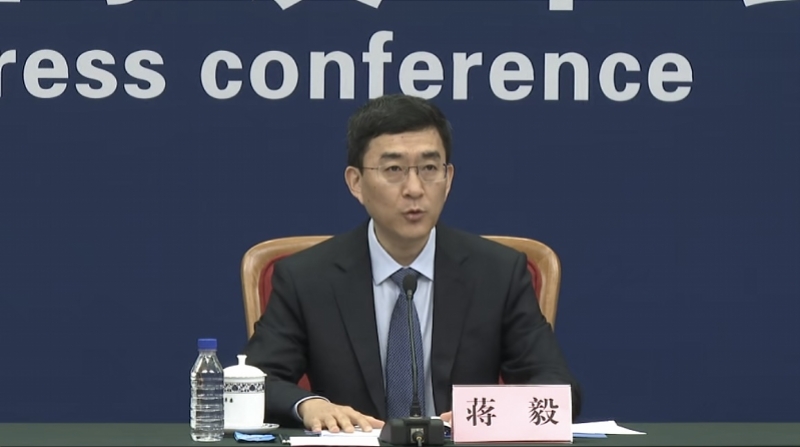
除了上述17场座谈会外,蒋毅介绍,两年多来,国家发展改革委的所有党组成员和各业务司局通过各种 方式与民营企业座谈交流500余次,省、市、县各级发展改革部门召开民营企业座谈会2万余次,民营经 济发展综合服务平台上线半年多来收到问题诉求超过2400项。 8月1日,国家发展改革委政策研究室主任、新闻发言人蒋毅在国家发展改革委新闻发布会上回答中国证 券报.中证金牛座记者提问时表示,2023年6月,国家发展改革委建立与民营企业常态化沟通交流机制。 两年多来,国家发展改革委主任郑栅洁共主持召开了17场座谈会、与近80家民营企业面对面交流。 "民营企业座谈会听取的意见建议,正在转化为实实在在的政策举措。"蒋毅举例介绍,对企业普遍关心 的"内卷式"竞争问题,国家发展改革委高度重视座谈会上反映的问题、提出的建议,正在统筹采取修订 法律、出台政策、完善标准、强化行业自律等举措,加快推动整治"内卷式"竞争问题。 蒋毅表示,常态化听取企业对经济形势和行业发展的意见建议,掌握第一手真实情况,是宏观层面制定 规划、政策的重要基础。下一步,国家发展改革委将坚持和完善政企常态化沟通交流机制,持续深入听 取民营企业意见建议,坚持点面结合解决实 ...
国家发改委:正统筹采取多种举措,加快推动整治“内卷式”竞争问题
news flash· 2025-08-01 03:50
8月1日,国家发展改革委就当前经济形势和经济工作举行新闻发布会。国家发展改革委政策研究室主 任、新闻发言人蒋毅在会上表示,对企业普遍关心的"内卷式"竞争问题,发改委高度重视民营企业座谈 会上反映的问题、提出的建议,正在统筹采取修订法律、出台政策、完善标准、强化行业自律等举措, 加快推动整治"内卷式"竞争问题。 ...
美团呼吁抵制“内卷式”竞争 共建行业良好生态
news flash· 2025-08-01 02:29
智通财经8月1日电,美团官微今日发文称,外卖平台补贴近日引发社会高度关注,美团对此高度重视, 将坚决规范促销行为,杜绝不正当竞争行为,推动建立公平有序行业秩序,促进各方互利共赢。美团承 诺从自身做起,并积极呼吁行业共同构建良好生态,促进餐饮服务行业规范健康持续发展。美团表示, 开展补贴活动将严格遵守相关法律法规,不强制或变相强制商家参加补贴活动,切实保障商家自主定价 权。 美团呼吁抵制"内卷式"竞争 共建行业良好生态 ...
