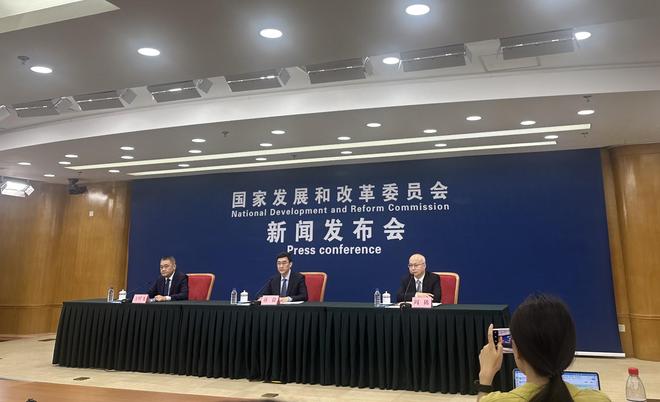
低价无序竞争

Search documents
泥坑打架,哪有赢家
Jing Ji Ri Bao· 2025-12-08 22:17
Core Viewpoint - The article discusses the phenomenon of "involution" in various industries, characterized by chaotic competition that undermines cost and quality standards, prompting calls for reform and regulatory action to address low-price disorderly competition [1][2]. Industry Overview - Over 20 national and local industry associations have called for a "counter-involution" movement across sectors including steel, automotive, photovoltaic, catering, finance, logistics, and beauty services, indicating widespread concern about the impact of this competition on industry transformation and development [1]. - The current competitive landscape has shifted from external expansion to internal exploration, leading to intensified competition among domestic firms as external competitors diminish [2]. Competitive Dynamics - The average gross profit margin for five leading wind power companies has plummeted from 19.2% in 2021 to 5.5% in 2024, with many firms reportedly operating at a loss [3]. - Quality and safety standards are under threat as companies cut costs in materials and processes to remain competitive, resulting in a significant number of substandard products in the market [3]. - Research and development expenditures among 30 major photovoltaic companies fell by 18.12% year-on-year in the first half of 2025, jeopardizing the industry's innovation capabilities [4]. Types of Competition - The article identifies four distinct forms of competition within the current landscape: - **Rule-breaking competition**: Involves illegal practices such as false advertising and substandard products, which undermine market fairness [5]. - **Internal consumption competition**: Characterized by homogenous competition in a limited market, leading to price wars without significant technological advancements [5]. - **Strategic investment competition**: Involves companies accepting short-term losses for long-term market positioning [5]. - **Innovation-driven price reduction**: Results from technological advancements that lower costs, indicating a healthy competitive environment [6]. Regulatory and Governance Actions - The government aims to create a fair competitive environment while companies focus on innovation and efficiency [8][12]. - New policies are being implemented to address issues such as "below-cost sales" and to enhance the regulation of unfair pricing practices [9]. - Industry associations are playing a crucial role in promoting self-regulation and rational pricing among companies [10]. Future Outlook - Despite the current challenges, companies express optimism about future growth, particularly in the renewable energy sector, with projections for significant increases in installed capacity by 2035 [12]. - Companies are adapting by focusing on cost efficiency, technological advancements, and exploring new markets, indicating a shift towards a more sustainable competitive strategy [11][12].
X @外汇交易员
外汇交易员· 2025-09-15 07:15
Market Regulation & Competition - Focus on rectifying disorderly low-price competition among enterprises, especially in "involution" prone areas, using legal and regulatory measures [1] - Strengthen the self-regulatory role of industry associations to guide enterprises in improving product quality [1] - Promote the orderly exit of outdated production capacity [1] - Continue to carry out special actions to regulate law enforcement involving enterprises [1] Unified Market Construction - Improve the fiscal and tax system, statistical accounting system, and credit system to facilitate market unification [1] - Focus on rectifying irregularities in government procurement bidding and strengthen the fairness review of winning bid results [1] - Focus on rectifying irregularities in local investment promotion and formulate a unified national list of local investment promotion behaviors [1] - Facilitate the path for export products to be sold domestically [2]
广东快递反内卷开启新一波涨价:单票成本不得低于1.4元
Nan Fang Du Shi Bao· 2025-08-06 04:29
Core Viewpoint - The express delivery industry is experiencing a new round of price increases, with the base price in Guangdong province raised to 1.4 yuan per ticket starting August 4, 2023, in response to ongoing "involution" competition and regulatory pressures [1][2][3]. Group 1: Price Adjustments - The base price for express delivery in Guangdong has been adjusted to not be lower than 1.4 yuan per ticket, with penalties for non-compliance [1]. - Major express companies, including the "Tongda system," have begun implementing price increases, particularly for special items weighing 0.1 kg, with increases ranging from 0.4 to 0.5 yuan [1][3]. - The price adjustment comes after a period of declining prices, where some companies reported monthly ticket prices dropping below 2 yuan [1][7]. Group 2: Industry Context - The express delivery sector has been plagued by "low-price competition," leading to reduced profit margins for delivery points and lower service quality [3][4]. - Regulatory bodies have emphasized the need to address "involution" and low-price competition, with recent meetings highlighting the importance of maintaining a healthy market order [2][5]. - The central government has initiated measures to combat low-price competition, aiming to guide companies towards rational pricing and improved service quality [2][6]. Group 3: Market Dynamics - The express delivery market is heavily influenced by e-commerce, with companies historically lowering prices to gain market share, resulting in a vicious cycle of reduced profits and service quality [3][4]. - Recent data indicates that the average ticket price for express delivery has been declining, with a reported 4% decrease year-on-year in 2023 [6][7]. - The industry is expected to see a shift from price competition to value competition, driven by regulatory support and a focus on service quality [7].
国家发改委:修订价格法整治低价无序竞争
Zhong Guo Hua Gong Bao· 2025-08-05 02:43
Core Viewpoint - The National Development and Reform Commission (NDRC) is accelerating the revision of the pricing law to address low-price disorderly competition and promote orderly competition within industries [1] Group 1: Pricing Law Revision - The NDRC is working on a draft revision of the pricing law that clarifies the standards for identifying unfair pricing behaviors such as low-price dumping [1] - The focus will be on addressing behaviors that aim to eliminate competitors or monopolize the market through below-cost pricing [1] - The scope of low-price dumping regulations will now include services, and the draft is currently open for public consultation [1] Group 2: Policy Implementation and Industry Oversight - The NDRC plans to enhance policy promotion and reminders, targeting industries with significant "involution" competition issues [1] - There will be targeted cost investigations to understand production and operational conditions, encouraging companies to self-regulate their pricing behaviors [1] - The NDRC emphasizes that competition must adhere to rules and boundaries to prevent quality decline, service reduction, and infringement issues that harm consumer rights and hinder industry development [1] Group 3: Future Directions - The NDRC will continue to enforce laws and regulations to comprehensively address low-price disorderly competition [1] - Clear governance measures will be established to guide companies towards scientific and rational pricing, effectively regulating market price order and promoting orderly competition within industries [1]
公平竞争,做大外卖“蛋糕”
Ren Min Ri Bao· 2025-08-04 04:40
Group 1 - The core viewpoint emphasizes the need for regulating low-price disorderly competition to correct market failures and establish a fair competitive environment for various business entities in the national unified market [1][2] - Major food delivery platforms, including Meituan, Ele.me, and JD.com, have publicly committed to adhering to relevant laws and resisting unfair competition practices [1][2] - The recent surge in promotional activities like "0 yuan purchase" and "1 cent grab" reflects the intense competition among platforms for user traffic and market share in local life services [1][2] Group 2 - Disorderly competition is detrimental not only to the industry's healthy development but also to the platforms themselves, potentially distorting market consumption structures and impacting normal business operations [2] - Rational competition is essential for creating greater value, as irrational competition leads to a lose-lose situation, while rational competition can enhance overall productivity and benefit both consumers and businesses [2] - The new Anti-Unfair Competition Law, effective from October 15, prohibits platform operators from forcing or indirectly compelling merchants to sell products below cost, aiming to maintain market order [3]
持续补充完善扩内需政策工具箱
Jin Rong Shi Bao· 2025-08-04 02:54
Economic Overview - The GDP growth for the first half of the year is 5.3%, which is an increase of 0.3 percentage points compared to the same period last year and the full year [2] - The contribution rate of final consumption to economic growth reached 52% in the first half of the year, with a second-quarter contribution rate of 52.3%, up 0.6 percentage points from the first quarter [3] Consumption Expansion - The total retail sales of consumer goods increased by 5% in the first half of the year, with a growth rate 0.4 percentage points higher than the first quarter and 1.3 percentage points higher than the same period last year [3] - The "old-for-new" policy has driven sales exceeding 1.7 trillion yuan, with retail sales of home appliances and communication equipment increasing by 30.7% and 24.1% respectively [3] Policy Implementation - The National Development and Reform Commission (NDRC) plans to implement a fourth batch of 690 billion yuan in special bonds for consumer goods by October, completing a total of 3 trillion yuan for the year [3] - The NDRC aims to enhance consumer capacity, cultivate new growth points in service consumption, and optimize supply to encourage consumption [4] Artificial Intelligence Initiatives - The NDRC is promoting the "Artificial Intelligence +" initiative to enhance efficiency and optimize experiences across various industries [5] - The focus is on large-scale commercial applications of AI, leveraging China's complete industrial system and large market scale [5] Competition Regulation - The NDRC is addressing low-price disorderly competition, which can harm consumer rights and hinder industry development [7] - The revision of the pricing law aims to clarify standards for identifying unfair pricing behaviors, including low-cost dumping [7]
公平竞争,做大外卖“蛋糕”(经济时评)
Ren Min Ri Bao· 2025-08-03 21:46
Group 1 - The core viewpoint emphasizes the need for regulating low-price disorderly competition to correct market failures and establish a fair competitive environment for various business entities in a unified national market [1][2] - Major food delivery platforms, including Meituan, Ele.me, and JD.com, have collectively called for the standardization of industry competition, pledging to adhere to relevant laws and eliminate unfair competition practices [1][2] - The recent surge in promotional activities like "0 yuan purchase" and "1 cent grab" reflects the intense competition among platforms for user traffic and market share in the local life service sector [1][2] Group 2 - Disorderly competition is detrimental not only to the healthy development of the industry but also to the platforms themselves, potentially distorting market consumption structures and impacting normal business operations [2] - Rational competition is essential for creating greater value, as irrational competition leads to a lose-lose situation, while rational competition can enhance overall productivity and benefit both consumers and businesses [2] - The newly revised Anti-Unfair Competition Law will take effect on October 15, explicitly prohibiting platform operators from forcing or indirectly forcing merchants to sell products below cost, thereby disrupting market order [3]


无序竞争无赢家,以为“低价”把命搭
Sou Hu Cai Jing· 2025-08-01 18:09
Group 1 - Major food delivery platforms, including Meituan, Ele.me, and JD, have called for a halt to irrational competition and excessive subsidies, emphasizing the need for a fair and orderly industry environment [2][4][6] - The National Development and Reform Commission has announced plans to regulate low-price competition and guide companies towards rational pricing to promote orderly competition in the market [8] - The recent subsidy wars have led to significant increases in consumer health issues, with reports of emergency room visits rising due to excessive consumption driven by promotional activities [9][10] Group 2 - The competition among platforms has intensified, with a reported investment of 25 billion yuan in the second quarter alone, indicating a fierce battle for market share in the instant retail ecosystem [11] - Platforms are adopting various strategies to enhance service and operational efficiency, such as Meituan's dynamic subsidy model and JD's focus on quality dining, while also facing the challenge of sustaining these subsidy costs in the long term [12] - Experts suggest that the unsustainable nature of the subsidy wars may lead to a shift towards service premium models, urging platforms to better meet consumer needs and stimulate merchant engagement for industry growth [12]

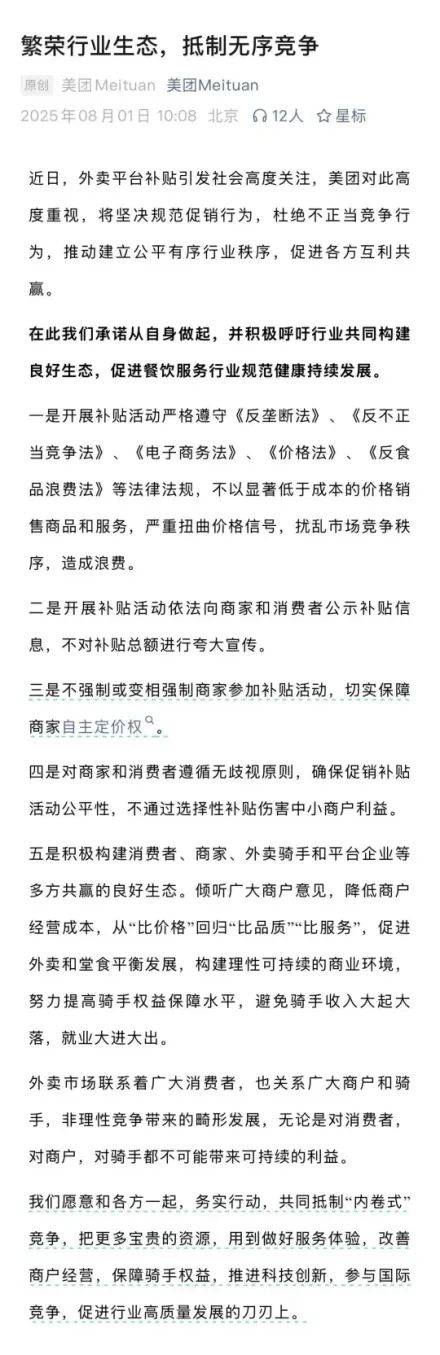
刚刚,国家发改委回应经济领域热点问题!
Jin Rong Shi Bao· 2025-08-01 08:50
Group 1: Economic Development and Investment - The National Development and Reform Commission (NDRC) has completed the allocation of the "two重" construction project list amounting to 800 billion yuan, with 735 billion yuan of central budget investment also largely allocated [2] - The NDRC plans to enhance coordination and resource allocation to accelerate project construction and ensure high-quality implementation of the "two重" initiatives [2] - A total of 690 billion yuan in special bonds for consumer goods replacement has been allocated, with plans for a fourth batch of 690 billion yuan in October, completing the annual target of 300 billion yuan [2] Group 2: Consumer Spending and Economic Contribution - In the first half of the year, the total retail sales of consumer goods increased by 5%, with final consumption contributing 52% to economic growth [4] - The "old for new" policy has driven sales exceeding 1.7 trillion yuan, with significant growth in retail sales of home appliances and new energy vehicles [4] - Various departments have implemented significant policies and activities to boost consumption, enhancing the overall consumption environment [4] Group 3: Artificial Intelligence Initiatives - The NDRC is promoting the "Artificial Intelligence+" initiative to enhance efficiency and optimize experiences across various sectors [3] - The focus is on scaling commercial applications of AI, leveraging China's complete industrial system and large market scale [3] - The NDRC aims to improve the AI innovation ecosystem by increasing policy support and establishing a collaborative governance framework [3] Group 4: Competition Regulation - The NDRC is addressing low-price disorderly competition to protect consumer rights and ensure fair market practices [6] - A revision of the pricing law is underway to clarify standards for identifying unfair pricing behaviors, including predatory pricing [6] - The NDRC will conduct targeted investigations in industries with significant "involution" competition issues to promote rational pricing [6]
国家发改委将对内卷行业展开摸底调查
Zhong Guo Jing Ying Bao· 2025-08-01 07:53
Group 1 - The National Development and Reform Commission (NDRC) is addressing the issue of excessive competition in certain industries by conducting targeted cost investigations to understand the operational conditions of enterprises and encourage them to self-regulate pricing behaviors [2][3] - The NDRC emphasizes that while competition is essential for market economy, excessive and disorderly low-price competition can lead to negative outcomes such as quality decline and infringement, harming consumer rights and dragging down industry development [2][3] - The NDRC is accelerating the revision of the pricing law, which will clarify standards for identifying unfair pricing behaviors, focusing on practices that aim to eliminate competitors or monopolize markets, including the regulation of service pricing under low-price dumping [2][3] Group 2 - The NDRC plans to strengthen policy promotion and reminders, targeting industries with significant issues related to excessive competition, and will conduct cost investigations to ensure enterprises adhere to proper pricing practices [3] - A mechanism for regular problem collection, verification, and reporting will be established to hold accountable those obstructing the construction of a unified market, with severe cases being reported to relevant authorities for strict accountability [3] - The focus on institutional development includes achieving uniformity in property rights protection, market access, fair competition, and social credit quality standards, as well as creating a list of behaviors that hinder a unified market and fair competition [4]