创新药出海

Search documents
“硬科硬客”2025年会闭门研讨之三|中国创新药远征:从“出海”潮到全球竞争力重构
Zhong Guo Jing Ying Bao· 2025-09-18 22:37
作为科创板迈向"新高地"暨"硬科硬客"2025年会的重要内容之一,9月10日,君实生物(688180.SH)、 皓元医药(688131.SH)、药康生物(688046.SH)、美迪西(688202.SH)、迈威生物(688062.SH) 等科创板创新药领域龙头上市公司高管,逾50家机构投资者参与了创新药产业链的高层次闭门研讨会。 会议围绕中国创新药出海的核心能力、国际竞争力现状及未来发展方向进行深入研讨。 与会嘉宾认为,中国创新药已具备从"1到10"的全球竞争力,尤其在ADC、双抗等工程化领域国际领 先,但在"0到1"的原始创新方面仍需努力。出海,成为行业共识,企业呼吁政策进一步支持破解"出 海"难题。 "君实生物是最早把国际化当作自己重要战略的本土企业之一,特瑞普利单抗也是第一个获得美国FDA 批准上市的中国自研自产PD-1产品,目前已经在40个国家和地区获批。"李鑫坦言,产品出海是高成本 的事情,需要满足国际上未被满足的需求,同时要应对FDA等海外监管机构的严格审评,包括临床和生 产端。 皓元医药董事长兼总经理郑保富从产业链角度分析:"创新药是我们CRO(定制研发机构)、CDMO (医药合同定制研发生产企 ...


从数据透视中国创新药加速“跑”向世界 中国药企展现国际前沿创新能力
Yang Shi Wang· 2025-09-18 07:23
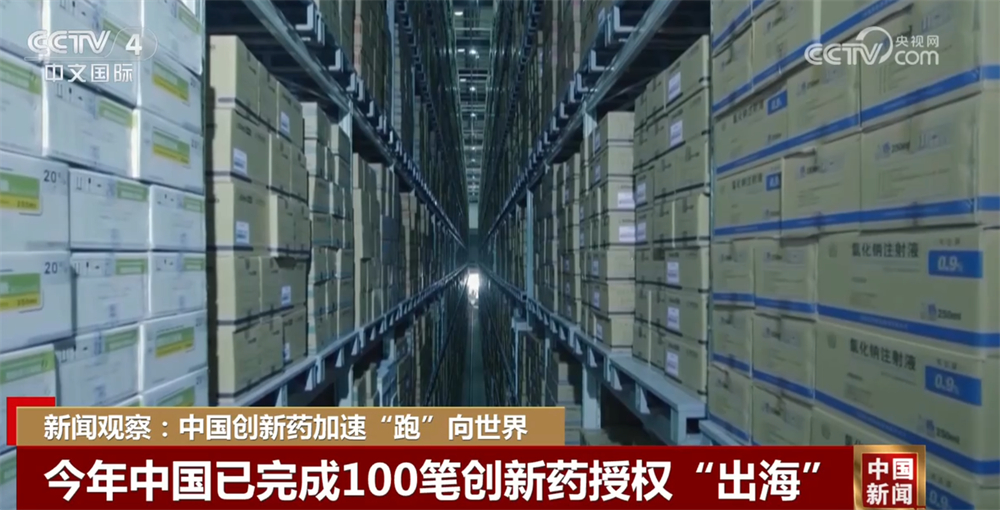
2024年中国药企完成超90笔海外授权交易,总交易金额超519亿美元,参与了全球约三分之一的大型授权交易。今年上半年,中国创新药 授权出海交易已超过50起,总金额超过660亿美元。近年来,中国生物医药产业快速崛起并在这两年进入收获期,中国药企和科研机构正展现 出国际前沿的原始创新能力。 和黄医药临床开发高级副总裁范颂华称:"从中国产业融合来讲,确实这十年的发展或者二十年的发展也让中国诞生了越来越多具有国际 视野的中国研究者,并且中国产生的数据也越来越得到美国FDA(食品药物管理局)的认证。" 央视网消息:今年以来,中国创新药"出海"步伐持续加快。数据显示,2025年上半年创新药对外授权总金额已超过660亿美元,超过2024 年全年519亿美元的交易总额,其中多笔交易金额超过10亿美元,展现出中国创新药实力的显著提升和全球化进程的提速。 近日,在上海张江生物医药创新基地,恒瑞医药与英国葛兰素史克公司完成包含5亿美元首付款、潜在120亿美元里程碑付款及销售分成的 合作交易,这是今年以来中国第100笔对外授权交易。 江苏恒瑞医药股份有限公司总裁冯佶称:"中国的研发已经得到了全球的认可,很多大公司都在中国看什么样的产 ...


中国创新药企“闯美”,如何预防政策风险?
Hu Xiu· 2025-09-18 06:03
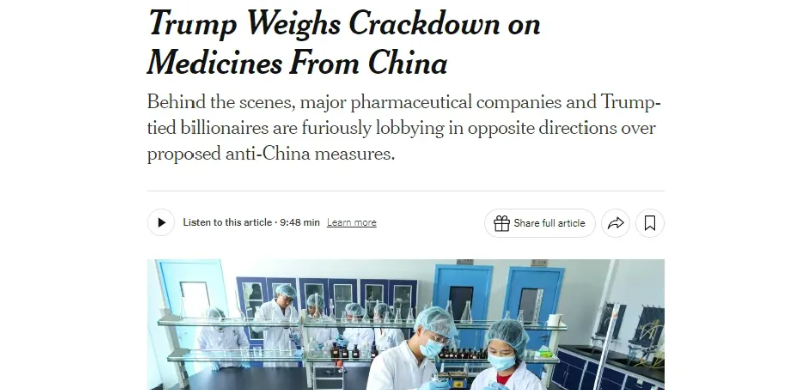
Core Viewpoint - The Trump administration is drafting an executive order that will impose three major restrictions on commercial transactions involving Chinese innovative drug patents or rights, focusing on national security reviews by the Committee on Foreign Investment in the United States (CFIUS) [1][2]. Summary by Sections Executive Order Details - The draft includes three main provisions: 1. Inclusion of Chinese innovative drug BD transactions in the CFIUS mandatory review list, ending the previous "low-risk automatic exemption" practice [2]. 2. FDA will implement "racial sensitivity supplementary reviews" for drugs relying on Chinese clinical data, requiring at least 20% comparative data from non-Asian populations [2]. 3. Establishment of a "key drug domestic production fund" to provide production subsidies for 15 categories of drugs, including antibiotics and acetaminophen, while implementing a "domestic priority" principle in federal procurement [2]. Market Reaction - The market reacted swiftly to the policy risks, with the Hong Kong innovative drug index (HK1105) dropping 3.82% on September 11, 2025, and the A-share innovative drug sector (BK1106) declining 2.17%, with over 80% of stocks in the sector experiencing pullbacks [3]. - The following day, the indices showed signs of recovery, indicating investors' responses to policy uncertainties and rational corrections [3]. Globalization Trends - Despite the geopolitical risks, the trend of Chinese innovative drugs going global remains intact, with total license-out transactions to Europe and the U.S. reaching $9.43 billion as of September 2025 [3]. - Major transactions include a $950 million licensing deal between BeiGene and Royalty Pharma, and a $6 billion global licensing agreement between 3SBio and Pfizer, highlighting a shift towards milestone payments and regional licensing [3]. Industry Challenges - The domestic market faces challenges, with annual growth in medical insurance fund spending (approximately 12%) lagging behind the growth in innovative drug R&D investment (approximately 25%) [4]. - The average reduction in medical negotiations remains high at 54%, and commercial health insurance coverage for innovative drugs is below 15%, creating a supply-demand imbalance that necessitates going global [4]. Risk Resilience Assessment - Goldman Sachs has categorized Chinese innovative drug companies into three risk resilience tiers based on their sensitivity to policy changes and operational capabilities [4][5]. - Companies with mature global layouts exhibit the strongest resilience, while those heavily reliant on domestic markets show the weakest resilience [5][10]. Strategic Defense Framework - A three-dimensional defense system is proposed to address risks associated with the executive order, focusing on transaction review, data compliance, and supply chain security [13]. - Strategies include conducting national security risk pre-assessments for transactions over $50 million and establishing partnerships with U.S. law firms to navigate regulatory challenges [14][15]. Conclusion - The construction of a quantifiable "risk resilience index" is essential for Chinese innovative drugs in the global 2.0 era, emphasizing the need for companies to embed policy hedging clauses in transaction structures and consider racial diversity data in clinical stages [23].



创新药“出海”趋势不可逆,港股创新药精选ETF(520690)止跌反弹,盘中最高涨超2%
Xin Lang Cai Jing· 2025-09-18 05:23
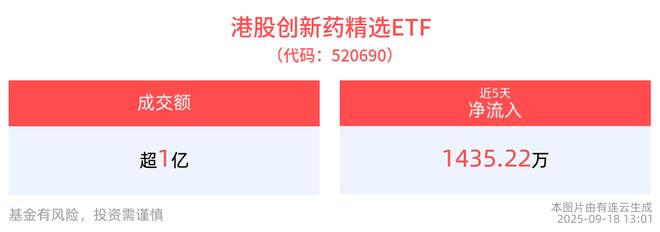
Group 1 - The Hang Seng Hong Kong Stock Connect Innovative Drug Select Index increased by 0.38%, with notable gains from companies such as Hengrui Medicine (+5.42%) and Junshi Biosciences (+3.48%) [2] - The Hong Kong Innovative Drug Select ETF (520690) rose by 0.97%, with a current price of 1.04 yuan, and has accumulated a total increase of 4.15% since its inception [2] - The trading activity for the Hong Kong Innovative Drug Select ETF was robust, with a turnover rate of 35.03% and a transaction volume of 132 million yuan [2] Group 2 - In the first half of 2025, the total amount of overseas licensing for Chinese innovative drugs approached 66 billion USD, nearing the total for the entire year of 2024 [3] - The acceleration of innovative drug research and development is expected due to policy support, which will help companies complete clinical trials faster and bring products to market sooner [3] - The global pharmaceutical transaction volume reached 456 deals, a 32% year-on-year increase, with upfront payments totaling 11.8 billion USD, a 136% increase [4] Group 3 - The top ten weighted stocks in the Hang Seng Hong Kong Stock Connect Innovative Drug Select Index account for 78.87% of the index [5][6] - The recent net inflow of funds into the Hong Kong Innovative Drug Select ETF was 3.076 million yuan, with a total of 14.35 million yuan net inflow over the past five trading days [4]
华创医药 | 2025年我们做了什么
华创医药组公众平台· 2025-09-18 03:41
Core Viewpoint - The Chinese innovative drug industry is gradually catching up with Europe and the United States in terms of technology, with some targets and technical pathways already leading globally. The number and value of new drugs authorized for overseas markets continue to increase, leading to world-class pricing and non-linear investment elasticity. The domestic market is experiencing strong growth in demand, with domestic new drug sales continuing to rise, and several innovative pharmaceutical companies have turned losses into profits, entering a stable growth phase [2]. Group 1: Innovative Drugs - The innovative drug sector is witnessing a significant increase in sales driven by strong domestic demand, with a number of innovative companies achieving profitability [2]. - The trend of domestic innovative drugs going overseas is accelerating, with increasing numbers and values of new drug authorizations [2]. - The industry is positioned for a "Davis double" effect, where both performance and valuation are expected to improve [2]. Group 2: High-Value Medical Consumables - The orthopedic sector is expected to see mild price reductions, while domestic replacements continue to grow, and overseas business progresses rapidly [2]. - The neurosurgery and neurointervention fields are stabilizing after centralized procurement, with new products expected to contribute to growth [2]. Group 3: Medical Devices - The medical device sector is experiencing a high-speed growth in bidding data, with companies entering a destocking phase, which is expected to improve performance in the second half of the year [2]. - The low-value consumables sector is seeing continuous product upgrades and accelerated expansion into overseas markets [2]. Group 4: Blood Products - The supply side of the blood products industry is increasingly concentrated among state-owned enterprises, leading to a clearer competitive landscape [2]. - The demand side is expected to upgrade towards new products, gradually improving the industry's overall health [2]. Group 5: API (Active Pharmaceutical Ingredients) - The industry is at an upward turning point due to the end of a capital expenditure peak, combined with three growth drivers: new high-end market products, integrated consolidation and overseas expansion, and cost-leading CDMO [2]. - Leading companies are expected to see explosive growth in revenue and profits in the medium term [2]. Group 6: CXO (Contract Research Organization) - The CXO sector is seeing a revival in A+H financing activity, with multiple significant business developments enhancing market confidence [2]. - The focus is on optimizing the supply-side landscape and increasing market share for leading CRO companies [2]. Group 7: Traditional Chinese Medicine and Retail Pharmacy - The traditional Chinese medicine sector is showing signs of recovery, with friendly pricing for new drugs, while the retail pharmacy sector is influenced by supply-side adjustments and business model upgrades [2]. - The performance of offline pharmacies is expected to improve in the second half of 2025, with leading chains like YaoXingTang making progress in store upgrades [2]. Group 8: Research Reports - A series of in-depth research reports on various companies and sectors within the pharmaceutical and medical device industries have been published, highlighting their growth potential and market positioning [3][4].


20cm速递丨科创创新药ETF(589720)盘中涨超3%,去年“924行情”以来跑赢主要港股创新药指数,机构:中国创新药出海产业趋势不可逆转
Mei Ri Jing Ji Xin Wen· 2025-09-18 03:40
Group 1 - The core viewpoint is that the trend of Chinese innovative drugs going global is irreversible, with a significant increase in global pharmaceutical transactions and upfront payments [1] - In the first half of 2025, the ADC (antibody-drug conjugate) sector is expected to perform well, with notable advancements from companies like Junshi Biosciences and Baillie Gifford [1] - Domestic companies have mastered the technology for small nucleic acid drugs and are advancing overseas development, exemplified by the collaboration between Wobang Pharmaceutical and Novartis [1] Group 2 - The performance of the Science and Technology Innovation Drug Index has outperformed major Hong Kong innovative drug indices since the "924 market" rally, indicating strong market resilience [2] - During the market rebound from September 24, 2024, to September 16, 2025, the respective growth rates of the Science and Technology Innovation Drug Index, Hong Kong Innovative Drug Index, and Hang Seng Hong Kong Stock Connect Innovative Drug Index were 126.7%, 123.8%, and 112.7% [2] - The Science and Technology Innovation Drug ETF focuses on innovative drug companies in the STAR Market, tracking a representative index of 30 high-quality companies [1]
九洲药业(603456):CDMO主业提质扩量,看好后续业务放量节奏
GOLDEN SUN SECURITIES· 2025-09-18 01:14
Investment Rating - The report maintains a "Buy" rating for the company [6] Core Views - The CDMO (Contract Development and Manufacturing Organization) business is showing improvement, with a positive trend in performance and a recovery in the industry [1][2] - The company reported a revenue of 1.381 billion yuan in Q2 2025, a year-on-year increase of 7.15%, and a net profit attributable to shareholders of 276 million yuan, up 15.70% year-on-year [1] - The company is well-positioned in the global biopharmaceutical supply chain, benefiting from the increasing demand for innovative drugs from China [1][2] Summary by Sections Financial Performance - In H1 2025, the CDMO segment achieved revenue of 2.29 billion yuan, a year-on-year increase of 16.3%, while the API (Active Pharmaceutical Ingredient) segment saw a revenue decline of 28.5% to 520 million yuan [2] - The gross profit margin for H1 2025 was 37.5%, an increase of 2.2 percentage points, and the net profit margin was 18.3%, up 1.1 percentage points [3] - The company’s domestic revenue was 580 million yuan, down 5.83% year-on-year, while overseas revenue was 2.29 billion yuan, up 6.62% year-on-year [3] Project Pipeline and Client Acquisition - The company has a robust project pipeline with 1,214 projects under contract, including 90 Phase III clinical projects and 38 commercial projects [2] - The company has introduced over ten new clients in the formulation CDMO business and has over 100 active formulation projects [2] Capacity Expansion and Strategic Initiatives - The company is advancing its global R&D capabilities and production capacity, with ongoing construction of a GMP production line for peptides expected to be operational by the end of 2025 [3] - The company is enhancing its international strategy to increase customer loyalty globally [3] Profit Forecast - The profit forecast for the company has been adjusted, with expected net profits of 949 million yuan, 1.041 billion yuan, and 1.184 billion yuan for 2025, 2026, and 2027 respectively, reflecting year-on-year growth rates of 56.5%, 9.8%, and 13.7% [3]

科技核心资产月报:产业趋势延续,重视内部高低切-20250918
Bank of China Securities· 2025-09-18 00:23
Core Insights - The report emphasizes that there is no need for pessimism in the technology sector, particularly regarding AI, and highlights the importance of "high-low switching" in investment strategies [5][9][10] AI Industry Chain Trends - The AI industry chain has shown significant price increases since April 9, 2025, with overseas computing power prices rising by 221%, while domestic computing power, AI edge, and AI application prices have increased by 57%, 47%, and 27% respectively, indicating a higher cost-performance ratio for domestic segments [9][10] - North American cloud service providers have maintained strong capital expenditures, with a year-on-year increase of 81.43% to reach $86.2 billion by Q2 2025, supporting sustained high demand for computing power [26][29] - AI applications are entering a performance verification phase, with the monthly inference volume of the Gemini large model increasing to 480 trillion tokens, a 50-fold increase from a year ago, indicating accelerating demand for AI applications [31][32] Pharmaceutical Sector - The innovative pharmaceutical industry is experiencing a recovery driven by both international expansion and favorable policies, with the number of approved innovative drugs in 2024 expected to reach 48, more than five times that of 2018 [5][14] New Consumption Trends - The transformation of the economic structure is catalyzing new consumption trends, with industry revenue growth showing an upward trend since 2024, particularly in "cost-effective" consumption, entertainment economy, and outdoor sports [5][16] High-End Manufacturing - The military industry has seen a reduction in relative returns following the completion of significant events, while the robotics sector is experiencing positive catalysts, particularly with Tesla's upcoming proposals and ambitious production targets [5][17][19] AI Edge Products - The global sales of AI smart glasses reached 870,000 units in Q2 2025, a year-on-year increase of 222%, driven by products from major brands like Ray-Ban and Xiaomi [19][22] - New AI mobile phones and other consumer electronics are being launched, with significant advancements in features and capabilities, indicating a robust market for AI-integrated devices [20][22]
创新药“出海”趋势不可逆
Zheng Quan Ri Bao· 2025-09-17 16:11
Core Insights - The trend of Chinese innovative drugs "going global" is accelerating, with total foreign licensing amounts nearing $66 billion in the first half of 2025, approaching the total for 2024, indicating significant improvement in China's innovative drug capabilities and globalization efforts [1] - Concerns exist regarding increased policy barriers in overseas markets and the potential loss of core assets for domestic companies due to premature or excessive foreign licensing [1] - The "going global" strategy is now seen as a strategic choice for companies rather than a temporary measure, reflecting an irreversible trend in the industry [1] Group 1: Clinical Value as a Key Factor - Clinical value remains the fundamental basis for the success of innovative drugs in international markets, despite stricter regulations [2] - Multinational pharmaceutical companies view the introduction of Chinese innovative drugs as a strategy to enrich their product pipelines and mitigate patent expiration risks [2] - China ranks second globally in the number of new drugs under development, with over 20% of the global total, and several innovative drugs have successfully entered international markets [2] Group 2: Evolving Collaboration Models - The traditional model of one-time rights transfer to multinational companies is evolving; Chinese companies are now engaging in deeper collaborations through regional licensing, co-development, and revenue-sharing [3] - The "NewCo" model allows companies to not only receive licensing fees but also participate in long-term revenue sharing through equity stakes and phased payments [3] - This shift signifies a transformation from being mere participants in the supply chain to becoming co-creators in the value chain [3] Group 3: Positive Feedback Loop for Domestic Innovation - The revenues generated from international licensing are reinvesting into domestic R&D, enhancing pipeline development and improving trial design and compliance through overseas experience [4] - The recognition of companies' "going global" capabilities by capital markets is driving resources towards high-quality innovative projects, creating a positive cycle of innovation and capital feedback [4] - The "going global" strategy is now a critical measure of China's pharmaceutical innovation's ability to compete globally, with policy barriers and asset loss risks serving as tests of innovation quality rather than outright denials of the strategy [4][5]
突然,史诗级暴涨!
Ge Long Hui· 2025-09-17 11:17
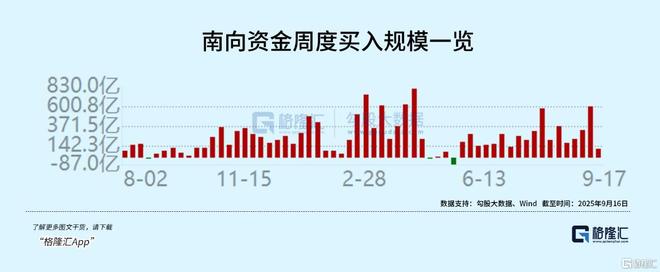
Core Viewpoint - The resurgence of Chinese technology assets is driven by multiple favorable factors, leading to significant gains in Hong Kong tech stocks, particularly Alibaba and Tencent, which have seen substantial increases in their market valuations [2][3][10]. Group 1: Positive Developments - Alibaba's Tongyi Model holds a 17.7% market share in China's enterprise-level large model market, ranking first as of September 2025 [4]. - The Hong Kong government is facilitating financing for mainland tech companies and promoting secondary listings for overseas firms, enhancing the attractiveness of Hong Kong as a return destination for Chinese concept stocks [5]. - Major Chinese tech firms are significantly increasing their capital expenditures in AI, with total spending expected to reach $32 billion in 2025, more than doubling from $13 billion in 2023 [6]. Group 2: Market Dynamics - The market is anticipating a Federal Reserve rate cut, with a 100% probability of a 25 basis point cut in September and over 80% for cuts in October and December, which is expected to positively impact Hong Kong stocks [7]. - Southbound capital inflows into Hong Kong stocks reached a weekly net purchase of 60.82 billion HKD, marking an 84% increase week-on-week and the highest net inflow since May [7][9]. Group 3: Recovery Trends - The Hong Kong tech index and the Hang Seng biotech index have rebounded over 100% from their lows in 2024, with many companies seeing their stock prices double [10][13]. - The revenue growth rates for the Hang Seng Index and the Hang Seng Tech Index in Q2 2025 were 2.45% and 14.43%, respectively, with the tech sector's net profit growth at 29.67% [15]. Group 4: Growth Opportunities - The global AI technology revolution is providing new growth avenues for tech companies, with significant investments in large model development across various sectors [16][17]. - Chinese innovative drugs have seen a substantial increase in overseas licensing deals, with 83 transactions amounting to $84.53 billion as of August 2025, reflecting a significant rise in global market presence [19][20]. Group 5: Investment Outlook - The current financial health of tech and biotech companies is stronger than during the 2021 bubble, with diversified growth engines and improved financial structures [22][23]. - The valuation of these companies remains attractive compared to similar firms in the US, with potential for further appreciation as their growth in AI and international markets unfolds [23][24].