机器学习

Search documents
光大保德信一带一路混合A:2025年第二季度利润387.8万元 净值增长率4.41%
Sou Hu Cai Jing· 2025-07-21 10:19
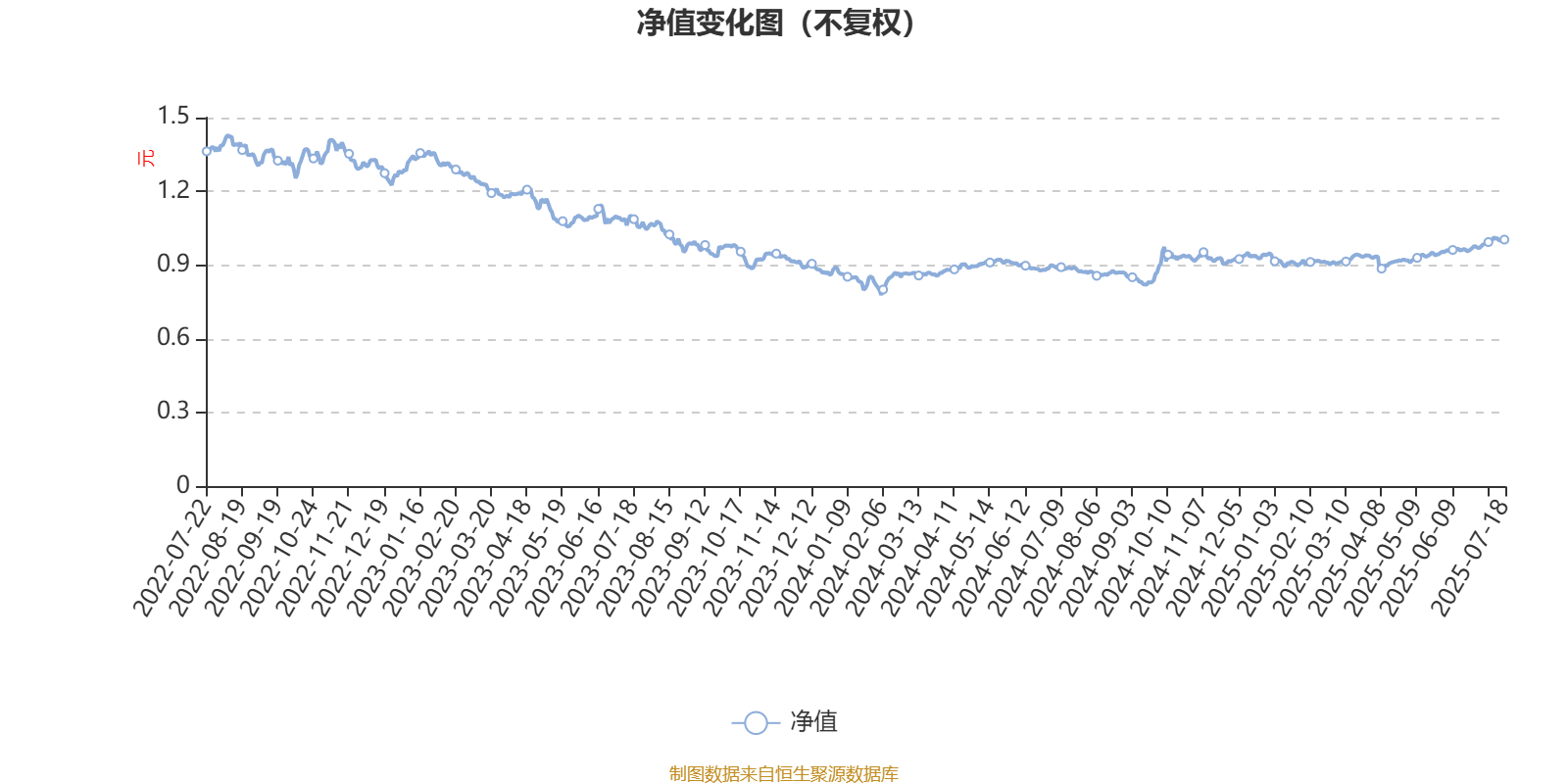
AI基金光大保德信一带一路混合A(001463)披露2025年二季报,第二季度基金利润387.8万元,加权平均基金份额本期利润0.0418元。报告期内,基金净值 增长率为4.41%,截至二季度末,基金规模为8918.35万元。 该基金属于偏股混合型基金。截至7月18日,单位净值为1.004元。基金经理是朱剑涛,目前管理8只基金。其中,截至7月18日,光大保德信诚鑫混合A近一 年复权单位净值增长率最高,达57.06%;光大保德信多策略智选18个月混合最低,为4.87%。 基金管理人在二季报中表示,本基金结合机器学习模型,按产品合同与风格库要求,在限定股票池内选取预期收益高的股票,同时控制好策略组合与基准的 风险偏离,构建组合。机器学习模型的输入数据,除了常用的选股指标,例如:估值、成长、量价等,还会借助机器算力,让模型从不同类型输入数据中去 学习挖掘低相关性的选股因子,并根据市场风格变化自学习合适的因子配比权重。 截至7月18日,光大保德信一带一路混合A近三个月复权单位净值增长率为9.61%,位于同类可比基金367/615;近半年复权单位净值增长率为9.97%,位于同 类可比基金329/615;近一年复权单位净 ...

小微企业融资开启新气象!技术升级解码小微企业信用
Sou Hu Cai Jing· 2025-07-18 10:03
Core Viewpoint - The financing challenges faced by small and micro enterprises in China are a long-standing concern, but recent government policies have increased support, leading to significant growth in inclusive finance for these businesses [1][3]. Group 1: Financing Growth and Structure - As of February 2025, the balance of inclusive loans for small and micro enterprises reached 33.9 trillion yuan, with a year-on-year growth rate of 12.6%, surpassing the overall loan growth by 5.7 percentage points [3]. - The balance of credit loans reached 9.4 trillion yuan, with a year-on-year growth of 25.8%, and credit loans now account for 27.6% of inclusive loans, an increase of 2.9 percentage points from the previous year [3]. Group 2: Challenges in Credit Assessment - Small and micro enterprises often lack standardized financial reporting, making it difficult to collect and integrate data from various operational aspects [4]. - Traditional credit assessment models rely heavily on strong collateral and static financial data, which do not adequately reflect the dynamic and flexible nature of small and micro enterprises [6]. Group 3: Innovations in Credit Evaluation - Recent efforts by relevant departments and banks have focused on improving credit assessment for small and micro enterprises by increasing the dimensions of evaluation, addressing the information asymmetry between banks and enterprises [8]. - The use of big data, machine learning, and artificial intelligence has enabled financial institutions to create more comprehensive and accurate credit profiles for small and micro enterprises, enhancing the efficiency of the credit approval process [8]. Group 4: Successful Initiatives - The "Silver Tax Interaction" initiative allows small and micro enterprises with good tax credit ratings to convert their tax credit into financing credit, improving their access to loans and reducing banks' risk management costs [10]. - The "Credit Easy Loan" platform integrates various credit information sources, facilitating easier access for financial institutions to obtain multi-dimensional credit data, thus supporting the development of pure credit and rapid approval financing products [10]. Group 5: Future Outlook - The deep application of digital credit technologies is reshaping the financing ecosystem for small and micro enterprises, leading to improved approval efficiency and reduced risk management costs for financial institutions [10]. - As technology advances and data value is fully realized, the credit profiles of small and micro enterprises will become clearer, injecting vitality into their innovative aspirations and laying a solid foundation for high-quality economic development in China [10].

天桥脑科学研究院与AAAS宣布 2024 年 AI 驱动科学大奖获奖名单
Tai Mei Ti A P P· 2025-07-18 04:59
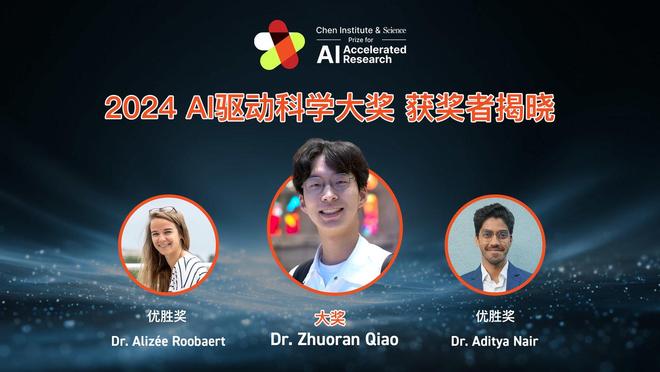
Core Points - The Tianqiao and Chrissy Chen Institute and the American Association for the Advancement of Science (AAAS) announced the winners of the inaugural "AI-Driven Science Award" aimed at recognizing innovative research utilizing AI for scientific discoveries [2] - The total cash prize of $50,000 will be shared among the three winners, with their research papers published in the journal Science [2] Winners and Research Highlights - Grand Prize Winner: Dr. Zhuoran Qiao, a machine learning scientist and founder of Chai Discovery, recognized for his groundbreaking work in biochemistry using AI [3] - Honorable Mentions: - Dr. Aditya Nair, a postdoctoral researcher at Caltech and Stanford, focusing on the integration of AI and neuroscience [4] - Dr. Alizée Roobaert, a researcher at the Flanders Marine Institute, who developed innovative AI solutions to monitor ocean climate dynamics [4] Research Contributions - Dr. Qiao's research involves using generative AI to predict protein folding and create dynamic models that demonstrate how folded proteins change over time and interact with smaller molecules, providing a powerful new tool for drug discovery [5][6] - Dr. Nair's work reveals hidden interactions among neurons that form persistent patterns, which can encode and regulate long-lasting psychological or emotional states, mediated by neuropeptides [7] - Dr. Roobaert's high-resolution model of coastal carbon absorption integrates global satellite data and 18 million data points from coastal CO2 measurements, offering a comprehensive overview of the ocean's health and its role in climate science [8] Award Structure and Future Events - Dr. Qiao receives a cash prize of $30,000, while Dr. Nair and Dr. Roobaert each receive $10,000, with their papers published in the online version of Science [9] - All winners will receive a five-year subscription to Science and become honorary Chen Scholars [9] - The winners will present their research at the inaugural "AI-Driven Science Symposium" in San Francisco on October 27-28, 2025, alongside Nobel laureates and other leading scholars [9] Future Opportunities - The application window for the 2025 AI-Driven Science Award will open in August, inviting young scientists working in AI-related fields to apply [11]
ICML 2025杰出论文出炉:8篇获奖,南大研究者榜上有名
自动驾驶之心· 2025-07-16 11:11
Core Insights - The article discusses the recent ICML 2025 conference, highlighting the award-winning papers and the growing interest in AI research, evidenced by the increase in submissions and acceptance rates [3][5]. Group 1: Award-Winning Papers - A total of 8 papers were awarded this year, including 6 outstanding papers and 2 outstanding position papers [3]. - The conference received 12,107 valid paper submissions, with 3,260 accepted, resulting in an acceptance rate of 26.9%, a significant increase from 9,653 submissions in 2024 [5]. Group 2: Outstanding Papers - **Paper 1**: Explores masked diffusion models (MDMs) and their performance improvements through adaptive token decoding strategies, achieving a solution accuracy increase from less than 7% to approximately 90% in logic puzzles [10]. - **Paper 2**: Investigates the role of predictive technologies in identifying vulnerable populations for government assistance, providing a framework for policymakers [14]. - **Paper 3**: Introduces CollabLLM, a framework enhancing collaboration between humans and large language models, improving task performance by 18.5% and user satisfaction by 17.6% [19]. - **Paper 4**: Discusses the limitations of next-token prediction in creative tasks and proposes new methods for enhancing creativity in language models [22][23]. - **Paper 5**: Reassesses conformal prediction from a Bayesian perspective, offering a practical alternative for uncertainty quantification in high-risk scenarios [27]. - **Paper 6**: Addresses score matching techniques for incomplete data, providing methods that perform well in both low-dimensional and high-dimensional settings [31]. Group 3: Outstanding Position Papers - **Position Paper 1**: Proposes a dual feedback mechanism for peer review in AI conferences to enhance accountability and quality [39]. - **Position Paper 2**: Emphasizes the need for AI safety to consider the future of work, advocating for a human-centered approach to AI governance [44].

小哥硬核手搓AI桌宠!接入GPT-4o,听得懂人话还能互动,方案可复现
量子位· 2025-07-16 07:02
Core Viewpoint - The article discusses the creation of an AI pet named Shoggoth, inspired by the Pixar lamp robot, which utilizes GPT-4o and 3D printing technology to interact with humans in a pet-like manner [1][48]. Group 1: AI Pet Development - Shoggoth is designed to communicate and interact with users, potentially replacing traditional stuffed toys as childhood companions [5][52]. - The robot's structure is simple, featuring a base with three motors and a 3D-printed conical head, along with a flexible tentacle system inspired by octopus grabbing strategies [8][10]. - The robot can adapt to various object sizes and weights, capable of handling items up to 260 times its own weight [8]. Group 2: Control and Interaction Mechanisms - Shoggoth employs a dual-layer control system: low-level control using preset actions and high-level control utilizing GPT-4o for real-time processing of voice and visual events [25][26]. - The robot's perception includes hand tracking and tentacle tip tracking, using advanced models like YOLO for 3D triangulation [30][33]. - A 2D mapping system simplifies the control of tentacle movements, allowing users to manipulate the robot via a computer touchpad [22][24]. Group 3: Technical Challenges and Solutions - Initial designs faced issues with cable entanglement, which were addressed by adding a cable spool cover and calibration scripts to improve tension control [14][16][17]. - The design also required reinforcement of the "spine" structure to prevent sagging under its own weight [18]. - The final model successfully transitioned from simulation to real-world application, validating the effectiveness of the control strategies implemented [38]. Group 4: Creator Background - The creator, Matthieu Le Cauchois, is an ML engineer with a background in reinforcement learning, speech recognition, and NLP, having previously founded an AI company [39][41]. - His work includes various innovative projects, showcasing his expertise in machine learning and robotics [46][48].

刘璐也被Meta挖走了!华南理工校友,创造了4o吉卜力爆款
猿大侠· 2025-07-15 15:28
Core Viewpoint - The article discusses the recent hiring of Lu Liu and Allan Jabri from OpenAI by Meta, highlighting the strategic move by Meta to bolster its AI capabilities and regain trust after the Llama 4 release. Group 1: Lu Liu's Background and Achievements - Lu Liu, a notable researcher, previously worked at OpenAI where she led the development of the popular "Ghibli style" image generation feature, which gained over 130 million users and generated more than 700 million images in its first ten days [24][28]. - Liu graduated with a GPA of 3.84 from South China University of Technology and has a strong academic background, including a PhD in machine learning from the University of Technology Sydney [9][13]. - Her research focuses on meta-learning, few-shot learning, and graph neural networks, with significant contributions to privacy-preserving applications in edge computing [14][20]. Group 2: Meta's Strategic Moves - Meta is aggressively recruiting talent from OpenAI, with a focus on individuals who have a strong background in AI research, particularly those involved in the development of advanced models like GPT-4o [6][37]. - The hiring of Liu and Jabri is part of a broader strategy by Meta to enhance its AI capabilities and achieve its open-source goals, potentially ahead of the release of GPT-5 [7][22]. - The article notes that Meta's "superintelligent lab" now includes a significant number of researchers from OpenAI, indicating a targeted effort to consolidate AI talent [38]. Group 3: Industry Implications - The article suggests that Meta's recruitment strategy may reflect broader challenges within OpenAI to retain top talent, as evidenced by the ongoing departures of key researchers [39][40]. - The competitive landscape in AI research is intensifying, with companies like Meta actively seeking to acquire expertise from leading organizations to strengthen their positions in the market [37][41].

ICML 2025杰出论文出炉:8篇获奖,南大研究者榜上有名
机器之心· 2025-07-15 05:37
Core Insights - The article discusses the announcement of the best paper awards at ICML 2025, highlighting the significance of the conference in the AI research community [3][4]. - A total of 8 papers were awarded, including 6 outstanding papers and 2 outstanding position papers, with notable contributions from researchers at Nanjing University [4]. Submission Statistics - This year, ICML received 12,107 valid paper submissions, with 3,260 accepted, resulting in an acceptance rate of 26.9% [5]. - The number of submissions increased significantly from 9,653 in 2024, indicating a growing interest in the AI field [5]. Outstanding Papers - **Paper 1**: "Train for the Worst, Plan for the Best: Understanding Token Ordering in Masked Diffusions" explores the performance of masked diffusion models (MDMs) compared to autoregressive models (ARMs), demonstrating that adaptive token decoding can significantly enhance MDMs' performance [10][12][13]. - **Paper 2**: Investigates the impact of predictive technologies on welfare distribution in the context of fairness, providing a framework for policymakers to make principled decisions [17][19]. - **Paper 3**: Introduces CollabLLM, a training framework that enhances collaboration between humans and large language models, achieving an 18.5% improvement in task performance [22][26][27]. - **Paper 4**: Proposes a minimal algorithm task to quantify the creative limits of current language models, arguing for the superiority of multi-token methods over next-token prediction [28][32][34]. - **Paper 5**: Discusses conformal prediction from a Bayesian perspective, offering a practical alternative for uncertainty quantification in high-risk scenarios [35][39]. - **Paper 6**: Addresses score matching with missing data, providing methods to handle incomplete datasets effectively [40][44]. Outstanding Position Papers - **Position Paper 1**: Advocates for a dual feedback mechanism in peer review processes to enhance accountability and quality in AI conference submissions [49][51][53]. - **Position Paper 2**: Emphasizes the need to prioritize the impact of AI on the future of work, suggesting comprehensive support for transitions in labor markets affected by AI [54][56][58].

新型存储,谁最有希望?
半导体行业观察· 2025-07-15 01:04
Core Insights - Storage technology is essential for modern computing systems, evolving from basic data storage to advanced applications like in-memory computing, which enhances efficiency by reducing data transfer between processors and memory [1][3] - Emerging non-volatile memory (eNVM) technologies, such as ReRAM, MRAM, FeRAM, and PCM, are promising alternatives to traditional volatile memory, maintaining data integrity even when power is lost [3][4] - The transition from traditional digital computing to brain-inspired computing is driven by the need for more efficient architectures that can handle the demands of AI and ML applications [25][28] Group 1: Emerging Storage Technologies - eNVMs are capable of retaining data without power, unlike traditional RAM, and include various architectures that are being explored for their potential in AI and ML [3][4] - The development of new materials and device architectures is crucial for advancing eNVMs, with a focus on overcoming challenges related to performance and scalability [3][10] - The integration of two-dimensional materials in storage devices is expected to revolutionize the field, offering high density and low power consumption [11][21] Group 2: Non-Volatile Memory in Post-CMOS Era - Non-volatile memory is seen as a key player in the post-CMOS microelectronics era, addressing the limitations of the von Neumann architecture and enabling new computing paradigms [5][8] - The current landscape of non-volatile memory research dates back to the 1960s, with significant advancements made in recent years, particularly in flash memory technology [5][8] - The future of non-volatile memory includes a focus on flexible and wearable electronics, driven by the demand for devices that can withstand mechanical stress while retaining data [15][16] Group 3: Challenges and Opportunities - The transition to brain-inspired computing architectures presents both opportunities and challenges, particularly in terms of energy efficiency and system performance [25][28] - Key challenges include material synthesis, manufacturing precision, and the integration of new storage technologies with existing CMOS processes [19][20][22] - Addressing these challenges is essential for the advancement of storage technologies, which are critical for the future of computing, AI, and advanced sensing applications [29][30]
刘璐也被Meta挖走了!华南理工校友,创造了4o吉卜力爆款
量子位· 2025-07-15 00:34
Core Viewpoint - Liu Lu, a notable researcher from OpenAI, has joined Meta, which indicates a strategic talent acquisition by Meta to enhance its AI capabilities, particularly in the wake of challenges faced by its Llama 4 release [1][6][34]. Group 1: Liu Lu's Background and Achievements - Liu Lu is a graduate of South China University of Technology and has a strong academic background, including a GPA of 3.84 in her undergraduate studies [3][9]. - She has previously worked at Google, contributing to the development of the Gemini model, and later led the image generation work for GPT-4o at OpenAI, which became widely popular for its "Ghibli style" feature [4][21][23]. - The "Ghibli style" feature generated over 700 million images within the first ten days of its release, showcasing its immense popularity [26]. Group 2: Meta's Talent Acquisition Strategy - Meta has been aggressively recruiting talent from OpenAI, with Liu Lu being one of the key figures, alongside Allan Jabri, who was also part of the GPT-4o core architecture team [5][30]. - This recruitment strategy appears to be part of a broader effort by Meta to build a strong AI team, as evidenced by the growing list of Chinese researchers joining from OpenAI [34][35]. - The current roster of Chinese talent at Meta includes ten individuals, with eight coming from OpenAI, highlighting a focused approach to acquiring top talent in the AI field [35]. Group 3: Implications for the AI Industry - The shift of talent from OpenAI to Meta raises questions about the competitive landscape in the AI industry, particularly regarding the retention of talent at OpenAI [38][39]. - Meta's strategy to recruit from OpenAI may signal a shift in the balance of power within the AI sector, as it seeks to enhance its capabilities and regain trust following previous setbacks [7][34]. - The ongoing recruitment efforts suggest that Meta is not only interested in immediate gains but is also looking to establish a long-term competitive advantage in AI development [34][40].

THPX信号源:AI技术提升XAUBTC黄金交易的精准度
Sou Hu Cai Jing· 2025-07-14 05:43
Core Insights - The rapid development of artificial intelligence (AI) technology is providing new perspectives and tools for gold trading, particularly through the THPX signal source, which enhances the precision of XAUBTC trading [1][12] - THPX signal source utilizes advanced AI algorithms and machine learning to analyze financial market data, offering accurate trading signals and improving decision-making for investors [5][10] - The integration of big data analysis within THPX significantly enhances the efficiency and accuracy of XAUBTC gold trading by providing real-time and precise trading signals [5][12] AI and Machine Learning in Trading - AI technology plays a crucial role in improving the accuracy and efficiency of trading decisions by analyzing vast amounts of historical data and market trends [7][12] - Machine learning algorithms demonstrate significant advantages in data analysis and prediction, enabling quick identification of market trends and trading signals [6][12] - The adaptive nature of these algorithms allows for continuous optimization of trading strategies, ultimately leading to higher returns for investors [7][12] Risk Management and Market Insights - THPX signal source employs multi-layered data analysis and predictive models to effectively mitigate potential losses from market volatility [6][12] - The system's real-time market dynamic capture enhances trading strategies and provides a solid foundation for risk management [6][12] - By integrating various data sources, THPX offers deep insights into market trends and potential trading opportunities, thereby improving overall investment returns [5][12] Future Trends in Gold Trading - The future of gold trading will be profoundly influenced by big data and blockchain technology, promoting greater transparency and efficiency in transactions [7] - The combination of AI and machine learning will further enhance market prediction capabilities, aiding investors in analyzing market dynamics more effectively [7][12]