
经济全球化

Search documents
《坚定不移推进高水平对外开放》:中国坚持经济全球化正确方向 反对“筑墙设垒”、“脱钩断链”,反对单边制裁、极限施压
news flash· 2025-07-15 07:06
《坚定不移推进高水平对外开放》:中国坚持经济全球化正确方向 反对"筑墙设垒"、"脱钩断链",反 对单边制裁、极限施压 金十数据7月15日讯,《求是》杂志将发表中共中央总书记、国家主席、中央军委主席习近平的重要文 章《坚定不移推进高水平对外开放》。文章强调,经济全球化是社会生产力发展的客观要求和科技进步 的必然结果,为世界经济增长提供了强劲动力,促进了商品和资本流动、科技和文明进步、各国人民交 往。当前,单边主义、保护主义加剧,多边主义、自由贸易受到严峻挑战。中国坚持经济全球化正确方 向,推动贸易和投资自由化便利化,反对保护主义,反对"筑墙设垒"、"脱钩断链",反对单边制裁、极 限施压。坚持真正的多边主义,推动普惠包容的经济全球化,积极参与全球经济治理,致力于建设开放 型世界经济。 (新华社) ...
2025 年全球经济:动荡变革中探寻稳健增长路径
Sou Hu Cai Jing· 2025-07-15 03:25
Group 1: Global Economic Overview - The global economy is facing complex challenges, including the aftermath of the pandemic, geopolitical conflicts, energy structure adjustments, and technological revolutions, leading to uncertain market conditions [1] - Inflation remains a significant issue for major economies, with the U.S. core PCE above the 2% target and the Eurozone struggling with energy price volatility and weak manufacturing [3] - The International Bank for Settlements highlights interconnected challenges such as weak potential output growth, increasing fiscal vulnerabilities, and rising credit and liquidity risks in the non-bank financial sector [3] Group 2: China's Economic Performance - In 2024, China's GDP reached 134.9 trillion yuan, growing at a rate of 5%, with primary, secondary, and tertiary industries growing at 3.5%, 5.3%, and 5% respectively [4] - The consumer market is recovering, with significant growth in tourism and sales of upgraded consumer goods like electric vehicles and smart home products, indicating the release of domestic market potential [4] - High-tech manufacturing and equipment manufacturing saw value-added growth of 8.9% and 7.7%, respectively, outpacing overall industrial value-added growth [4] Group 3: Challenges in China's Economy - The real estate market is still adjusting, with some companies facing unresolved debt risks and local government fiscal sustainability under pressure [5] - Despite global demand slowdown affecting foreign trade, exports of "new three items" (electric vehicles, lithium batteries, solar batteries) increased by 28.7%, showcasing the competitiveness of Chinese manufacturing [5] Group 4: Investment Strategies - Investors are advised to diversify asset allocation, with a noticeable structural trend in the stock market where consumer recovery and tech growth sectors alternate in leading performance [6] - The bond market remains stable under expectations of monetary policy easing, with government bonds and high-grade credit bonds still holding certain allocation value [6] - Commodity markets are experiencing volatility due to geopolitical factors and supply chain restructuring, with gold gaining appeal as a safe-haven asset [6] Group 5: Future Economic Outlook - The future of the global economy is uncertain, influenced by the Federal Reserve's interest rate decisions, the effectiveness of China's growth policies, and the resolution of the European energy crisis [7] - China aims to deepen its domestic demand strategy and promote technological innovation, contributing to high-quality development amid a complex international environment [7] - The country advocates for inclusive economic globalization and strengthens cooperation through initiatives like the Belt and Road, aiming to enhance the global economic governance system [7]

王毅同印度外长苏杰生会谈:两国关系不针对第三方,也不应受第三方干扰
中国基金报· 2025-07-14 14:06
Core Viewpoint - The essence of China-India relations is to coexist harmoniously and achieve mutual success, emphasizing the importance of trust and cooperation over competition [4][5][6] Group 1: Current International Context - The international landscape is undergoing profound changes, with unilateral protectionism and hegemonic actions posing severe challenges to the world [4] - Both countries are major emerging economies and Eastern civilizations, which should focus on mutual respect, trust, and cooperation [4] Group 2: Historical Significance and Future Direction - This year marks the 75th anniversary of China-India diplomatic relations, which have shown a positive trend that should be cherished [5] - The leaders of both nations have reached important consensus during their meetings, which should guide the future development of bilateral relations [6] Group 3: Cooperation and Multilateralism - Both countries support multilateralism and aim to promote a more just and reasonable international order [5] - China is willing to work with India to maintain a stable and open international environment for trade and global supply chains [5] Group 4: Bilateral Relations and Strategic Autonomy - India views China as a development partner rather than a competitor, focusing on long-term cooperation and mutual benefits [6] - India emphasizes its strategic autonomy and independent foreign policy while seeking to strengthen coordination in multilateral fields [6]
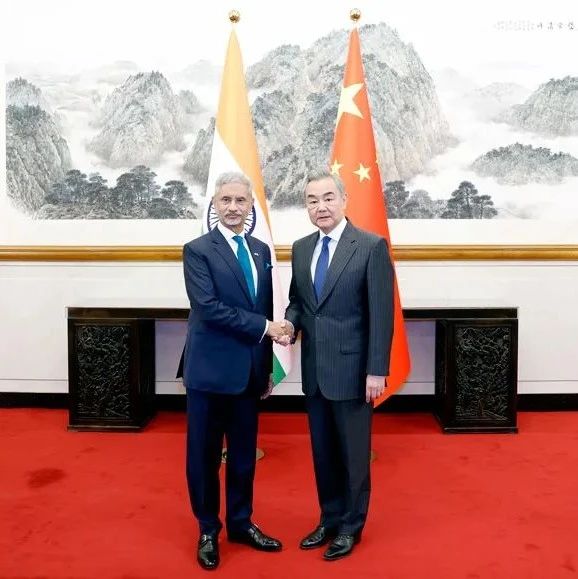
【王毅同印度外长苏杰生会谈】7月14日讯,2025年7月14日,中共中央政治局委员、外交部长王毅在北京同印度外长苏杰生举行会谈。王毅表示,两国关系有自身历史逻辑和内生动力,不针对第三方,也不应受第三方干扰。双方应相互信任而不是相互猜疑,相互合作而不是相互竞争,相互成就而不是相互消耗。中方愿同印方加强沟通协调,共同维护多边贸易体制、全球产供链稳定和开放合作的国际环境,推动平等有序的世界多极化和普惠包容的经济全球化,携手维护“全球南方”共同利益,促进地区和平稳定和发展繁荣。
news flash· 2025-07-14 13:47
Core Viewpoint - The meeting between Wang Yi and Indian Foreign Minister S. Jaishankar emphasizes the importance of mutual trust and cooperation between China and India, aiming to strengthen bilateral relations without interference from third parties [1] Group 1: Bilateral Relations - Wang Yi highlighted that the relationship between China and India has its own historical logic and internal dynamics, which should not be influenced by external factors [1] - The focus should be on mutual trust rather than suspicion, cooperation instead of competition, and achieving mutual benefits rather than causing mutual depletion [1] Group 2: Global Cooperation - Both sides expressed a willingness to enhance communication and coordination to maintain a multilateral trade system and ensure the stability of global supply chains [1] - The discussion included promoting a multipolar world and inclusive economic globalization, while safeguarding the common interests of the "Global South" [1] Group 3: Regional Stability - The meeting aimed to foster regional peace, stability, and development prosperity through collaborative efforts between China and India [1]
(和音)两个“坚定不移” 持续增强中国发展的动能与韧性——读懂中国经济何以破浪前行①
Ren Min Ri Bao· 2025-07-13 21:59
Group 1 - The core strategy of China focuses on "steadfastly managing its own affairs" and "steadfastly expanding high-level opening-up," which enhances the country's development momentum and resilience [1][2] - Recent international events in China, such as the 20th China Western International Expo with over 350 billion RMB in investments, highlight China's commitment to high-quality development and international cooperation [1] - China's internal development is crucial for maintaining future growth and stability, with a strong emphasis on expanding domestic demand as a strategic move to create new opportunities for international cooperation [2] Group 2 - China's commitment to high-level opening-up is a conscious adherence to the principle of promoting reform and development through openness, creating conditions for better management of its own affairs [3] - Historical evidence shows that countries embracing openness tend to have stronger sustainable development resilience, as seen in China's compliance with WTO commitments and proactive engagement in international trade agreements [4] - The ongoing reforms and measures to enhance the business environment, such as the implementation of the Foreign Investment Law and the establishment of free trade zones, are essential for aligning with international standards and addressing reform challenges [4] Group 3 - China's approach to development emphasizes that greater openness leads to greater development, positioning the country as a key player in maintaining a multilateral trade system amid global challenges [5] - The commitment to mutual benefit and shared success in development remains unchanged, with China continuing to navigate through international uncertainties with confidence [5]
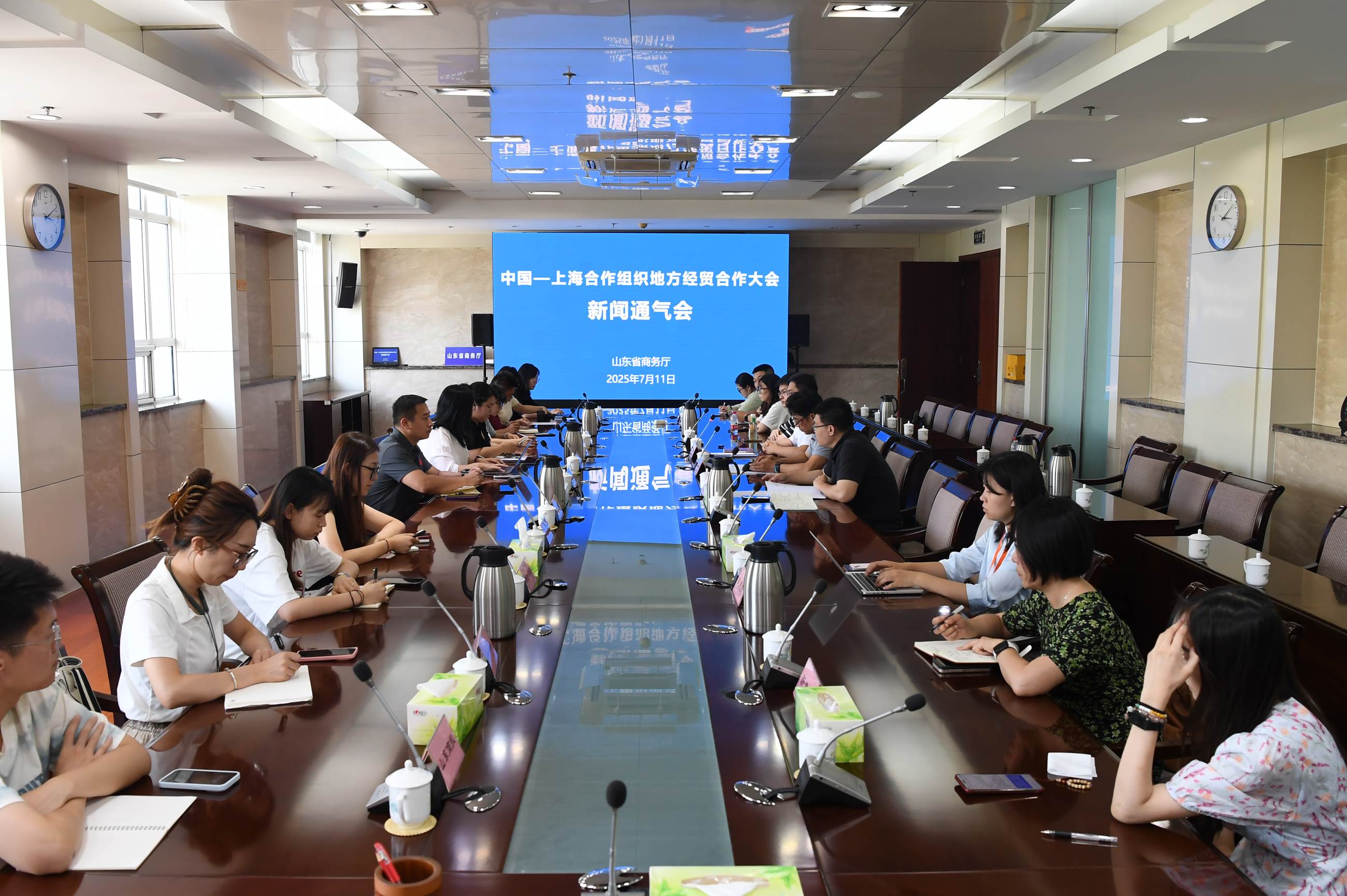
中国—上海合作组织地方经贸合作大会将在青岛举行
Qi Lu Wan Bao· 2025-07-11 09:47
Core Points - The China-Shanghai Cooperation Organization Local Economic and Trade Cooperation Conference will be held from July 17 to 18 in Qingdao, focusing on regional cooperation and innovative development [1][3] - The event aims to create a platform for economic cooperation between Shandong and SCO member countries, contributing to economic globalization and an open world economy [1][3] Group 1 - The conference is organized by the Shandong Provincial Government, with the Shandong Provincial Department of Commerce and Qingdao Municipal Government as co-organizers [1][3] - Nearly 100 guests are expected to attend, including foreign and domestic guests, with confirmed participation from the SCO Secretary-General and leaders from nine SCO member states [3] - The conference will feature nine main activities, including an opening ceremony, leadership meetings, themed dinner exchanges, and various international cooperation dialogues focusing on logistics, new energy, equipment manufacturing technology, and digital economy [3] Group 2 - A special initiative document will be released during the conference, along with a research report and the selection of exemplary case studies [3] - The event will also include supporting activities such as the 2025 Shandong-Hong Kong-Macau Technology Innovation Cooperation Exchange and the SCO Marine Internet of Things Industry Development International Exchange [3] - The conference is seen as a significant step for Shandong Province to actively engage in the national strategy of opening up, leveraging the platform advantages of the SCO demonstration zone [3]
应变求新看广东
Jing Ji Ri Bao· 2025-07-10 21:58
Core Viewpoint - The article highlights the resilience and adaptability of Chinese foreign trade enterprises in response to the ongoing challenges posed by unilateral tariff policies from the U.S. government, showcasing strategies such as brand development, market diversification, technological innovation, and supply chain restructuring to maintain competitiveness and growth. Group 1: Company Strategies - Guangdong enterprises are proactively addressing tariff risks, with many having anticipated these challenges and initiated countermeasures early on [2] - Foster Fluid Technology Co., Ltd. has successfully expanded its foreign trade revenue from $2 million in 2023 to $10 million last year, with foreign trade accounting for about 15% of total business [2] - Many companies, including DiFan Electric Co., Ltd., are choosing to absorb tariff costs rather than relocate production, indicating a strong market position and customer relationships [3] - Guangzhou Vision Technology Co., Ltd. has maintained over $20 billion in revenue for four consecutive years, with overseas revenue reaching $4.35 billion in 2024, a nearly 17% increase [3][4] Group 2: Innovation and Market Expansion - Companies are focusing on technological innovation to enhance competitiveness, with many participating in trade fairs to showcase their products' advantages [5] - Nanyang Electric Co., Ltd. emphasizes the importance of R&D, dedicating 15% of its revenue to innovation, and plans to leverage its technological edge to enter the U.S. market [6] - Guangdong Lingdu Intelligent Technology Co., Ltd. has developed a high-altitude cleaning robot that has been exported to over 20 countries, highlighting the potential for market expansion beyond the U.S. [8] Group 3: Brand Development and Domestic Market Focus - Many foreign trade enterprises are shifting their focus to domestic markets, supported by government initiatives to enhance brand recognition and competitiveness [10][12] - Companies like Guangdong Jianshu Technology Co., Ltd. are developing their own brands to reduce reliance on foreign orders, reflecting a strategic pivot towards domestic sales [12] - The Guangdong government is actively supporting enterprises in brand-building efforts, with platforms like "Dongguan Quality" helping local brands gain visibility [12][14] Group 4: Policy Support and Future Outlook - Shenzhen Customs is optimizing internal sales processes to facilitate companies' integration into the domestic market, enhancing operational efficiency [14] - The article concludes that Guangdong's foreign trade enterprises are evolving proactively, turning challenges into opportunities for global market expansion [14]

李强同埃及总理马德布利会谈
news flash· 2025-07-10 16:51
李强表示,中方始终把发展对埃关系放在中国中东外交的优先位置。去年,中埃共同庆祝建立全面战略 伙伴关系10周年,习近平主席同塞西总统两度会晤,为中埃关系发展指明了方向。明年,我们又将迎来 两国建交70周年。在这承前启后的重要时间节点,中方愿同埃方保持高层密切交往,加强战略对话沟 通,夯实政治互信,深化务实合作,在实现现代化的道路上努力相互成就,更好造福两国人民。 李强指出,中方愿同埃方加强发展战略对接,在高质量共建"一带一路"框架下促进投资合作扩容增效, 推动双边贸易优化发展,拓展新能源、电动汽车、人工智能、数字经济等新兴领域合作,落实好改善民 生项目,打造更多合作亮点和经济新增长点。加强人文交流互鉴,深化文化、旅游、媒体、青年、地方 等领域合作,进一步筑牢两国友好合作的民意基础。中方支持埃及在国际和地区事务上发挥更大作用, 愿同埃方在联合国、上海合作组织等多边框架内密切协调配合,践行真正的多边主义,维护经济全球化 和国际经贸秩序,捍卫广大发展中国家的共同利益,促进中东地区和世界和平稳定。 当地时间7月10日,国务院总理李强在开罗同埃及总理马德布利举行会谈。 会谈后,两国总理共同见证签署电子商务、绿色低碳、发展 ...
李强会见埃及总统塞西
证监会发布· 2025-07-10 11:11
Core Viewpoint - The meeting between Chinese Premier Li Qiang and Egyptian President Sisi highlights the strengthening of China-Egypt relations, emphasizing mutual support and cooperation in various fields, particularly under the Belt and Road Initiative [1][2]. Group 1: Bilateral Relations - The relationship between China and Egypt has flourished under the strategic guidance of their leaders, with a focus on celebrating the 70th anniversary of diplomatic ties next year [1]. - Egypt expresses strong support for the One China principle and aims to enhance high-level exchanges with China [2]. Group 2: Areas of Cooperation - Both countries are committed to deepening collaboration in trade, investment, renewable energy, infrastructure, and tourism, with Egypt welcoming more Chinese enterprises to its market [2]. - China is keen to strengthen cooperation in various sectors including trade, finance, manufacturing, new energy, technology, and culture, encouraging Chinese companies to invest in Egypt [1]. Group 3: Regional Stability and Multilateral Cooperation - China and Egypt aim to maintain close communication to address regional conflicts, particularly in the context of the ongoing humanitarian crisis in Gaza [1]. - Both nations are committed to promoting true multilateralism and enhancing cooperation within platforms such as the United Nations, BRICS, and the Shanghai Cooperation Organization [1].

李强会见埃及总统塞西
news flash· 2025-07-10 09:36
Core Viewpoint - The meeting between Chinese Premier Li Qiang and Egyptian President Sisi highlights the strengthening of China-Egypt relations, with a focus on enhancing cooperation across various sectors and addressing regional conflicts [1] Group 1: Bilateral Relations - China and Egypt aim to celebrate the 70th anniversary of diplomatic relations next year, reinforcing traditional friendship and political mutual trust [1] - The two countries are committed to supporting each other on core interests and enriching the comprehensive strategic partnership [1] Group 2: Economic Cooperation - China expresses willingness to enhance cooperation in areas such as trade, finance, manufacturing, new energy, technology, and culture under the Belt and Road Initiative [1] - There is an encouragement for more capable Chinese enterprises to invest in Egypt [1] Group 3: Regional Stability - The current international situation is characterized by increased turmoil, particularly in the Middle East and North Africa, with ongoing conflicts needing resolution [1] - China and Egypt are committed to maintaining close communication to address the humanitarian crisis in Gaza and work towards a comprehensive and just resolution of the Palestinian issue [1] Group 4: Multilateral Cooperation - Both countries aim to strengthen communication and coordination on multilateral platforms such as the United Nations, BRICS, and the Shanghai Cooperation Organization [1] - The focus is on promoting true multilateralism and advancing a multipolar world and inclusive economic globalization [1]