
中美经贸关系

Search documents
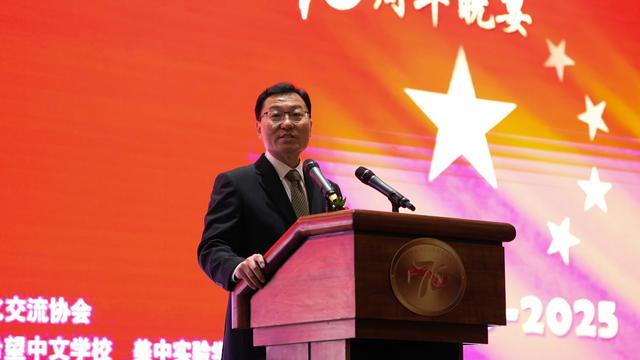
谢锋:美方应尊重事实,停止散布“台湾地位未定”谬论
Bei Jing Ri Bao Ke Hu Duan· 2025-09-29 05:00
Core Viewpoint - The speech by Chinese Ambassador to the U.S. Xie Feng emphasizes the importance of stable Sino-U.S. relations, highlighting mutual interests and cooperation opportunities despite existing differences [2] Group 1: Sino-U.S. Relations - The current state of Sino-U.S. relations is described as generally stable, guided by the strategic leadership of the two countries' leaders [2] - There is a recognition of broad common interests and extensive cooperation potential between China and the U.S. [2] - The ambassador stresses the necessity of respecting each other's core interests and significant concerns, particularly regarding social systems and development paths [2] Group 2: Taiwan Issue - The ambassador reiterates that Taiwan is an inseparable part of China's territory, marking the 80th anniversary of Taiwan's return to China as a significant historical event [2] - He calls for the U.S. to respect this fact and cease spreading the notion of "uncertain status of Taiwan" [2] Group 3: Economic Relations - The essence of Sino-U.S. economic relations is characterized as mutually beneficial, with the ambassador stating that trade wars yield no winners [2] - He advocates for equality, respect, and reciprocity as effective means to address issues between the two nations [2] Group 4: Future Cooperation - The ambassador expresses hope for the U.S. to take practical actions to align with China, emphasizing the importance of implementing the leaders' consensus [2] - He calls for adherence to the principles of mutual respect, peaceful coexistence, and win-win cooperation to enhance understanding and strengthen collaboration [2]

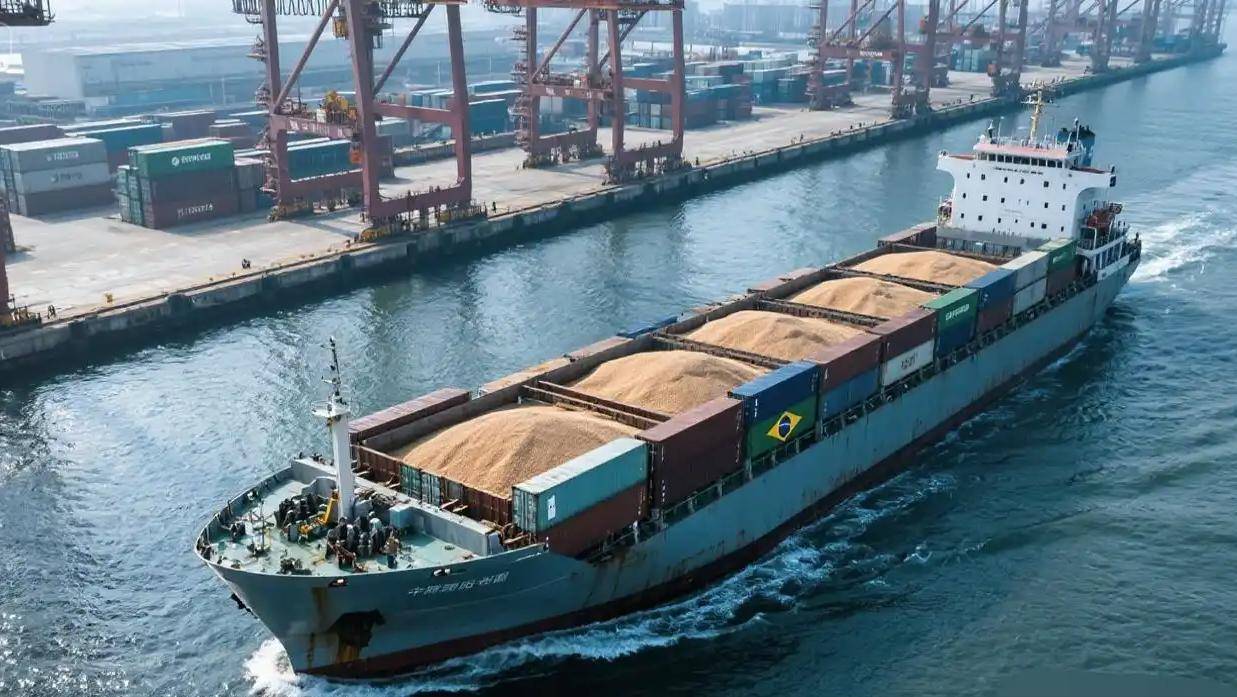
求购无果后,特朗普发现不妙,中方买了10船大豆,但不是美国的
Sou Hu Cai Jing· 2025-09-27 03:42
Core Insights - The article highlights the shift in China's soybean import strategy, moving from the U.S. to South America, particularly Argentina and Brazil, following the cancellation of Argentina's soybean export tax [1][5][13] - The U.S. soybean industry, heavily reliant on China as a key market, faces significant challenges as China diversifies its suppliers, leading to a potential decline in U.S. agricultural income [3][9][11] Group 1: Market Dynamics - In 2023, one in four soybeans exported from the U.S. went to China, with the trade value exceeding $10 billion [3] - China's recent contracts for 650,000 tons of South American soybeans signal a strategic pivot, occurring just after Argentina's policy change [1][5] - The U.S. soybean prices are projected to drop by 40% by 2025 compared to two years prior, exacerbating the financial strain on American farmers [7] Group 2: Competitive Landscape - The U.S. soybean price is approximately 20% higher than Brazilian soybeans due to a 25% punitive tariff, impacting competitiveness [7][11] - Brazil's logistical advantages, including shorter shipping times and efficient supply chains, have made it a more attractive supplier for China [7][9] - The article emphasizes that market choices are driven by price, quality, and logistics rather than political rhetoric, highlighting a shift in purchasing behavior [9][11] Group 3: Implications for U.S. Agriculture - The article suggests that U.S. farmers are facing a crisis as their traditional market in China is being eroded by competitive alternatives [7][13] - The political pressure from U.S. leaders, including former President Trump, may not effectively influence China's market decisions, which are based on economic realities [9][11] - The need for the U.S. to adapt to market dynamics and recognize the importance of competitive pricing and quality in regaining access to the Chinese market is underscored [11][13]
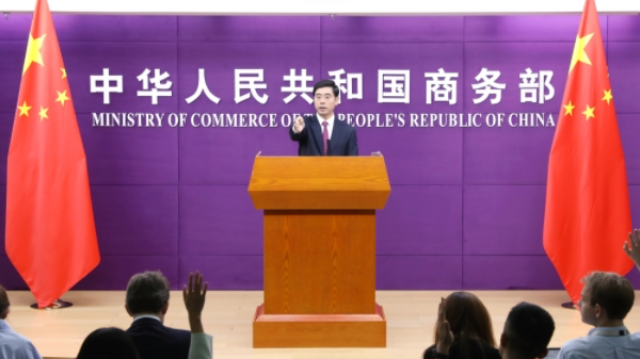
商务部回应中美大豆贸易:美方应取消相关不合理关税为扩大双边贸易创造条件
Xin Hua Wang· 2025-09-25 09:57
Group 1 - The core viewpoint emphasizes that the U.S. should take proactive measures to eliminate unreasonable tariffs on soybean trade to create conditions for expanding bilateral trade [1] - The spokesperson highlighted that the vitality of China-U.S. relations lies at the local level, with state and provincial economic cooperation being an essential part of the overall economic relationship [1] - The current major obstacle affecting normal economic cooperation between China and the U.S. is unilateral restrictions imposed by the U.S., and there is a call for both sides to work towards creating favorable conditions for stable and sustainable development of their economic relationship [1] Group 2 - There is an ongoing negotiation regarding China purchasing more Boeing airplanes, which is reportedly in its final stages [1] - The essence of China-U.S. economic relations is mutual benefit, with both countries having extensive common interests and broad cooperation space in the economic field [1]
商务部回应购买波音飞机谈判进展
第一财经· 2025-09-25 08:25
Core Viewpoint - The essence of China-U.S. economic and trade relations is mutual benefit and win-win cooperation, with significant common interests and broad cooperation space between the two countries [1] Group 1: Economic Cooperation - The biggest obstacle affecting normal economic and trade cooperation between China and the U.S. is the unilateral restrictive measures imposed by the U.S. [1] - There is a call for the U.S. to engage with China to create favorable conditions for the stable, healthy, and sustainable development of China-U.S. economic and trade relations [1]


李成钢国际贸易谈判代表兼副部长会见国际工商界代表团
Shang Wu Bu Wang Zhan· 2025-09-25 05:45
Core Points - The meeting on September 24 involved Li Chenggang, the international trade negotiation representative and vice minister, discussing Sino-US economic and trade relations with representatives from the international business community [1] - Topics included the development of foreign enterprises in China, indicating a focus on enhancing foreign investment and cooperation [1] Group 1 - The meeting aimed to address Sino-US economic and trade relations [1] - Discussions included the development of foreign enterprises in China, highlighting the importance of foreign investment [1]
王文涛召开部分在美中资企业圆桌会
券商中国· 2025-09-24 15:13
Core Viewpoint - The meeting held by Wang Wentao, Minister of Commerce, in New York emphasized the importance of maintaining and expanding practical cooperation between Chinese enterprises in the U.S. and their American counterparts, amidst challenges posed by unilateralism and protectionism [1] Group 1: Meeting Overview - The roundtable included representatives from over ten Chinese enterprises in the U.S. across various sectors such as finance, logistics, cross-border e-commerce, petrochemicals, telecommunications, rail transit, auto parts, new energy, and pharmaceuticals [1] - Wang Wentao highlighted the strategic guidance from the leaders of both countries, which has clarified the principles and direction for the development of Sino-U.S. economic and trade relations [1] Group 2: Challenges and Recommendations - The current global trade landscape is facing severe impacts from unilateralism and protectionism, necessitating that enterprises adapt to the situation and focus on diversified layouts and compliant operations [1] - Companies are encouraged to seek certainty amid uncertainty, collaborate closely, and oppose internal competition and external pressures [1] Group 3: Government Support - The Ministry of Commerce is committed to stabilizing Sino-U.S. economic and trade cooperation and safeguarding the legitimate rights and interests of Chinese enterprises [1] - Efforts will be made to create a favorable environment for mutual cooperation between enterprises from both countries [1]
“坚定维护中国企业正当权益” 商务部在纽约召开部分在美中资企业圆桌会
Di Yi Cai Jing· 2025-09-24 15:09
Group 1 - The Ministry of Commerce of China held a roundtable meeting in New York with Chinese enterprises in the U.S., discussing business conditions and cooperation proposals in various sectors including finance, logistics, and new energy [1] - Wang Wentao emphasized the importance of the strategic guidance from the leaders of both countries for the development of Sino-U.S. economic and trade relations, highlighting previous agreements that have helped stabilize these relations [1] - The meeting addressed the challenges posed by unilateralism and protectionism in the global trade landscape, urging companies to adapt and seek certainty amid uncertainties [1] Group 2 - Recent talks between China and the U.S. in Madrid focused on economic issues, including the TikTok situation, with both sides reaching a basic framework consensus on cooperation to resolve these issues and reduce investment barriers [3][4] - The Chinese government reiterated its stance against politicizing economic and technological issues, emphasizing the need for a fair business environment for Chinese companies operating in the U.S. [3][4] - The discussions included a commitment to provide an open, fair, and non-discriminatory business environment for Chinese enterprises, which is crucial for the stability and sustainability of Sino-U.S. economic relations [4]
中美经贸关系的“温度计”
Sou Hu Cai Jing· 2025-09-24 04:15
Core Viewpoint - TikTok is emerging as a "thermometer" for Sino-U.S. economic relations, highlighting the need for an open, fair, and non-discriminatory business environment to stabilize relations between the two countries [2] Group 1: Trade Relations - Over the past 40 years, Sino-U.S. trade has surged by more than 270 times, with projections for 2024 nearing $688.3 billion [2] - U.S. exports to China support millions of jobs, indicating the vitality of the Chinese market [2] Group 2: Political Challenges - The U.S. has increasingly politicized trade, using "security" as a justification for restrictions on various sectors, including semiconductors and social media platforms [2] - Actions taken by the U.S. not only hinder Chinese companies but also adversely affect American firms, disrupting global supply chains [2] Group 3: Future Cooperation - China maintains a clear stance that differences can be resolved through dialogue and expresses a reluctance to engage in trade wars, while firmly upholding its bottom line [2] - Historical evidence suggests that Sino-U.S. cooperation is mutually beneficial, presenting opportunities rather than burdens [2]

中经评论:稳定中美经贸关系离不开良好营商环境
Jing Ji Ri Bao· 2025-09-24 00:06
Group 1 - The core viewpoint of the articles emphasizes the importance of stable Sino-U.S. economic and trade relations, highlighting the need for a fair and non-discriminatory business environment for Chinese companies investing in the U.S. [1][3] - The bilateral trade volume between China and the U.S. has increased over 270 times since the establishment of diplomatic relations, reaching nearly $688.3 billion in 2024, with mutual investment stock exceeding $260 billion [1] - U.S. companies benefit significantly from cooperation with China, with a substantial portion of U.S. exports going to China, supporting nearly a million jobs domestically [1] Group 2 - Recent unilateral and protectionist measures by the U.S. against Chinese companies, justified under the guise of "national security," have included export controls and restrictions on normal investment operations [2] - The semiconductor industry, which relies on close cooperation between U.S. and Chinese firms, has been adversely affected by these restrictions, ultimately harming U.S. interests [2] - China advocates for equal dialogue to resolve trade differences and emphasizes that it does not wish to engage in a trade war, while also asserting its commitment to protecting national development rights [2][3] Group 3 - During recent Sino-U.S. trade negotiations, the Chinese team demonstrated a spirit of equality and respect, acknowledging progress while expressing serious concerns over unilateral trade restrictions [3] - The U.S. has indicated a welcome for Chinese investment, yet Chinese companies continue to face increasing scrutiny and restrictions in the U.S. market [3] - A stable Sino-U.S. economic relationship is deemed essential for both nations and the global economy, necessitating actions from the U.S. to create a conducive business environment [4]
经济日报:稳定中美经贸关系离不开良好营商环境
Jing Ji Ri Bao· 2025-09-23 23:44
Core Points - The recent phone call between the leaders of China and the U.S. emphasizes the importance of a stable economic relationship and the need for a fair business environment for Chinese companies investing in the U.S. [1] - The bilateral trade volume has increased over 270 times since the establishment of diplomatic relations, reaching nearly $688.3 billion in 2024, with mutual investment stock exceeding $260 billion [1] - The U.S. benefits significantly from trade with China, with a large portion of U.S. exports going to China, supporting nearly a million jobs domestically [1] Group 1 - The U.S. has implemented unilateral and protectionist measures against Chinese companies under the guise of "national security," including export controls and restrictions on investment [2] - The semiconductor industry, which relies on close cooperation between U.S. and Chinese firms, has been adversely affected by these restrictions, ultimately harming U.S. interests [2] - China advocates for resolving trade differences through equal dialogue and does not wish to engage in a trade war, while also emphasizing the need to protect its development rights [2] Group 2 - During recent trade discussions, the Chinese team demonstrated a spirit of equality and respect, acknowledging progress while expressing concerns over unilateral trade restrictions [3] - China supports companies like TikTok in seeking solutions through market-based negotiations, provided they comply with Chinese laws and principles of interest balance [3] - A stable economic relationship requires the U.S. to translate commitments into actions, recognizing that a good business environment is mutually beneficial [3]