
反洗钱

Search documents
现金买黄金超10万元将需上报
21世纪经济报道· 2025-07-02 04:21
Core Viewpoint - The People's Bank of China has introduced new regulations requiring reporting of cash transactions exceeding 100,000 RMB or equivalent foreign currency in the gold and diamond sectors, effective from August 1, 2025, to combat money laundering and terrorist financing risks [3][6]. Group 1: Regulatory Framework - The new regulations are part of the "Anti-Money Laundering and Anti-Terrorist Financing Management Measures for Precious Metals and Gemstone Practitioners" [3][6]. - The regulations apply to various institutions involved in precious metals and gemstones, including the Shanghai Gold Exchange and the China Jewelry Association [6]. - The measures aim to establish a systematic regulatory framework to mitigate risks associated with large cash transactions in the precious metals and gemstones market [6]. Group 2: Reporting Requirements - Institutions must report any cash transaction of 100,000 RMB or more within five working days of the transaction [10]. - All suspicious transactions, regardless of amount, must be reported immediately [10]. - Transaction records and customer identity information must be retained for at least ten years [9][10]. Group 3: Risk Management and Compliance - Institutions are required to conduct customer due diligence based on the risk profile of the client before or after transactions [7]. - A risk-based approach will be adopted, with enhanced scrutiny for high-risk institutions and simplified measures for low-risk entities [7]. - Institutions must establish internal controls for anti-money laundering, appoint dedicated personnel, and conduct regular risk assessments [7][8]. Group 4: Legal and Operational Implications - The regulations impose legal responsibilities on regulatory personnel and self-regulatory organizations, with severe penalties for violations [10]. - Group entities must coordinate their anti-money laundering efforts, ensuring compliance across all branches [10].


8月1日起实施!现金买黄金、钻石超过10万元需上报
Guang Zhou Ri Bao· 2025-07-01 16:38
Core Points - The People's Bank of China has issued new regulations to enhance anti-money laundering (AML) measures for precious metals and gemstones, raising the threshold for reporting large transactions from 50,000 RMB to 100,000 RMB, effective from August 1, 2025 [1][2]. Group 1: Regulatory Changes - The new regulation requires reporting of cash transactions of 100,000 RMB or more, or equivalent foreign currency, within five working days to the Anti-Money Laundering Monitoring and Analysis Center [2]. - The previous threshold for reporting was set at 50,000 RMB or equivalent to 10,000 USD, indicating a significant increase in the reporting limit [2]. Group 2: Institutions Covered - The regulations apply to all institutions engaged in the spot trading of precious metals and gemstones within the People's Republic of China [3][4]. - Various entities, including financial institutions and businesses involved in the sale and pawn of gold and gemstones, are required to comply with the new AML obligations [4]. Group 3: Industry Context - The precious metals trading sector is considered a high-risk area for money laundering and terrorist financing due to large transaction amounts and high liquidity [4]. - The evolving complexity of money laundering techniques necessitates stricter regulations to ensure financial security and stability [4].
贵金属、宝石买卖现金交易超10万元需上报,反洗钱监管再扩围
Bei Jing Shang Bao· 2025-07-01 13:02
Core Viewpoint - The People's Bank of China has issued the "Management Measures for Anti-Money Laundering and Anti-Terrorist Financing for Precious Metals and Gemstone Practitioners," which will take effect on August 1, 2025, enhancing the anti-money laundering regulations in the precious metals and gemstones industry [1][4]. Summary by Relevant Sections Regulatory Changes - The new regulations expand the scope of anti-money laundering obligations to cover the entire supply chain of precious metals and gemstones, including trading, processing, and recycling [8][11]. - The threshold for reporting large transactions has been raised from 50,000 RMB to 100,000 RMB, requiring practitioners to report cash transactions that meet or exceed this amount [4][5]. Compliance Requirements - Practitioners must adhere to the "Know Your Customer" principle, conducting due diligence based on customer characteristics and transaction nature, particularly for transactions of 100,000 RMB or more [4][10]. - Customer identity information must be collected and retained for at least 10 years after the business relationship ends, an increase from the previous 5-year requirement [5][10]. Industry Impact - The regulations are expected to fill existing regulatory gaps in cash transactions within the precious metals sector, which is often associated with high risks of money laundering and terrorist financing [7][9]. - The broad definition of "precious metals and gemstones" includes all aspects of the industry, significantly increasing the number of entities subject to these regulations [8][11]. Reporting Obligations - Practitioners are required to submit suspicious transaction reports if they suspect any connection to money laundering activities, regardless of the transaction amount [10][12]. - The management of large and suspicious transaction reporting may be facilitated through industry associations, which could help streamline compliance for numerous small businesses [11][12]. Recommendations for Implementation - Industry experts suggest that practitioners should enhance their internal controls and compliance systems to meet the new regulatory requirements effectively [12]. - There is a call for increased collaboration with regulatory bodies to improve data sharing and transaction monitoring capabilities [12].
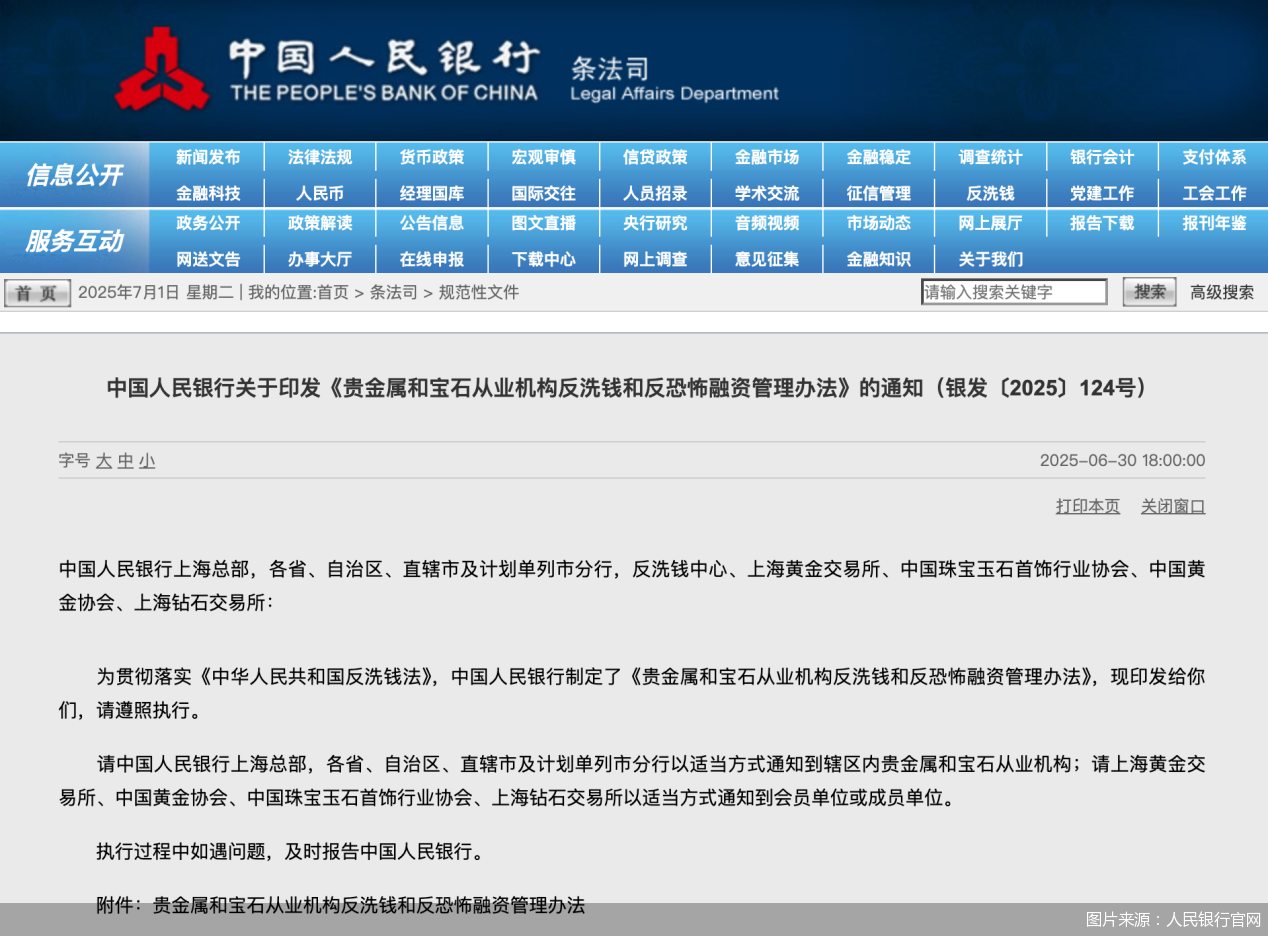
央行:贵金属和宝石机构买卖10万元以上须履行反洗钱义务
2 1 Shi Ji Jing Ji Bao Dao· 2025-07-01 09:47
Core Viewpoint - The People's Bank of China has issued a new regulation aimed at preventing money laundering and terrorist financing in the precious metals and gemstones sector, effective from August 1, 2025, requiring institutions to report large cash transactions of 100,000 RMB or more within five working days [1][3]. Group 1: Regulatory Framework - The new regulation establishes a systematic regulatory framework to mitigate risks associated with money laundering and terrorist financing in the precious metals and gemstones market [1]. - Precious metals include gold, silver, platinum, and their various forms, while gemstones refer to natural stones like diamonds and jade [1]. - Institutions involved in precious metals and gemstones trading, such as the Shanghai Gold Exchange and the China Gemstone and Jewelry Trade Association, are required to comply with the new regulations [1]. Group 2: Risk Management and Compliance - The regulation outlines seven characteristics of suspicious transactions, including sudden large transactions from inactive accounts and significant discrepancies in physical inventory [2]. - Institutions must conduct customer due diligence based on the risk profile of the client before or after transactions, especially for cash transactions of 100,000 RMB or more [2][3]. - A risk-based approach is mandated, with enhanced scrutiny for high-risk institutions and simplified measures for low-risk entities [3]. Group 3: Operational Requirements - Institutions are required to establish internal controls for anti-money laundering, appoint dedicated personnel, and conduct regular risk assessments, with a maximum cycle of three years [3]. - Any suspicious transaction, regardless of amount, must be reported immediately, and customer identity and transaction records must be retained for at least ten years [3]. - Special measures are mandated for transactions involving entities on terrorist lists or under UN sanctions, requiring immediate cessation of services and restrictions on fund transfers [3]. Group 4: Legal Accountability - The regulation includes a mechanism for accountability, imposing penalties on regulatory personnel, self-regulatory organization staff, and institutions for violations, with severe cases referred to judicial authorities [4].
九泰基金管理有限公司关于提请投资者及时更新相关信息等事宜的公告
Zhong Guo Zheng Quan Bao - Zhong Zheng Wang· 2025-06-29 22:41
Group 1 - The company emphasizes the importance of updating personal identification documents to comply with anti-money laundering regulations and to ensure uninterrupted service for clients [1][2] - Investors are advised to update their personal information, including financial status and investment preferences, to protect their rights [2][3] - The company collects and processes personal information from institutional clients to comply with legal and regulatory requirements [3][4] Group 2 - The company announces a communication method for convening a meeting of fund shareholders to discuss the continuous operation of the Jiutai Yingtai Quantitative Stock Fund due to its net asset value falling below 500 million yuan for 60 consecutive working days [8][54] - The meeting will allow shareholders to vote on the proposal to continue the fund's operation, with voting open from July 4, 2025, to July 30, 2025 [9][14] - Various voting methods are provided, including paper voting, SMS voting, and telephone voting, to facilitate shareholder participation [15][19][21] Group 3 - The company outlines the conditions for the validity of the meeting, requiring that the votes represent at least half of the total fund shares held by shareholders as of the registration date [50] - The company will ensure that the voting process is supervised and notarized to maintain transparency [42][50] - In case the meeting cannot be successfully held, the company may reconvene the meeting within three to six months [51][52]
农行济南城东支行:金融知识进社区 反洗钱宣传暖人心
Qi Lu Wan Bao· 2025-06-29 10:55
Core Viewpoint - Agricultural Bank of China is actively engaging with the community to promote anti-money laundering and financial safety awareness, demonstrating its commitment to serving the public and enhancing financial literacy [1][2]. Group 1: Community Engagement - The bank's staff initiated a promotional activity outside a convenience store, showcasing its proactive approach to financial education [1]. - The collaboration with the convenience store owner highlights the bank's strategy to extend its services beyond traditional banking environments [1][2]. Group 2: Financial Literacy Promotion - The promotional materials were designed to be easily understood, making complex financial concepts accessible to the general public [1]. - Residents showed interest and engagement, indicating the effectiveness of the bank's outreach efforts in raising awareness about financial scams [2]. Group 3: Commitment to Social Responsibility - The bank's mission includes serving agriculture, the real economy, and the public, which is reflected in its community-focused initiatives [2]. - The activity exemplifies the bank's dedication to protecting the financial interests of the public and fulfilling its social responsibilities as a state-owned enterprise [2].

中国民生银行潍坊昌邑支行:织密金融安全网 共筑商圈“防护盾”
Qi Lu Wan Bao· 2025-06-27 08:32
Core Viewpoint - The recent anti-money laundering (AML) awareness campaign by Minsheng Bank in Weifang Changyi aims to enhance the understanding of AML among business personnel and merchants, thereby strengthening financial risk prevention and maintaining a sound market economy order [1][2]. Group 1: Campaign Details - The campaign titled "Anti-Money Laundering Knowledge into Business Circles, Together Protecting Financial Security" was conducted in the Changyi West City Market [1]. - Minsheng Bank set up a main promotional area in the core region of the business circle, displaying prominent anti-money laundering slogans and informative exhibition boards [1]. - Bank staff distributed carefully crafted anti-money laundering brochures and explained the basic knowledge, typical cases, and social hazards of money laundering to merchants and consumers [1]. Group 2: Risk Awareness and Education - The campaign addressed common risks in the business circle, such as frequent cash transactions, account leasing, and suspicious fund transfers, using real cases of virtual currency money laundering and illegal fundraising [1]. - Merchants were advised to avoid casually helping others with fund transfers and to report any suspicious activities to financial institutions or regulatory bodies [1]. Group 3: Interactive Engagement - An interactive Q&A session was held, featuring a "mini-class" on anti-money laundering, where bank staff answered merchants' questions regarding account management and large transaction reporting [2]. - Customized anti-money laundering knowledge manuals were distributed to facilitate ongoing learning for merchants [2]. Group 4: Impact and Future Plans - The campaign reached over 30 merchants, distributed more than 40 promotional materials, and provided over 20 consultations, effectively increasing the awareness and participation of the business community in anti-money laundering efforts [2]. - Minsheng Bank plans to deepen cooperation with the business circle, regularly conduct anti-money laundering education, innovate promotional methods, and expand outreach to foster a clear financial ecosystem [2].

澳洲楼市反洗钱大变革!新规下,房产中介不查客户身份也能成交?
Sou Hu Cai Jing· 2025-06-24 12:40
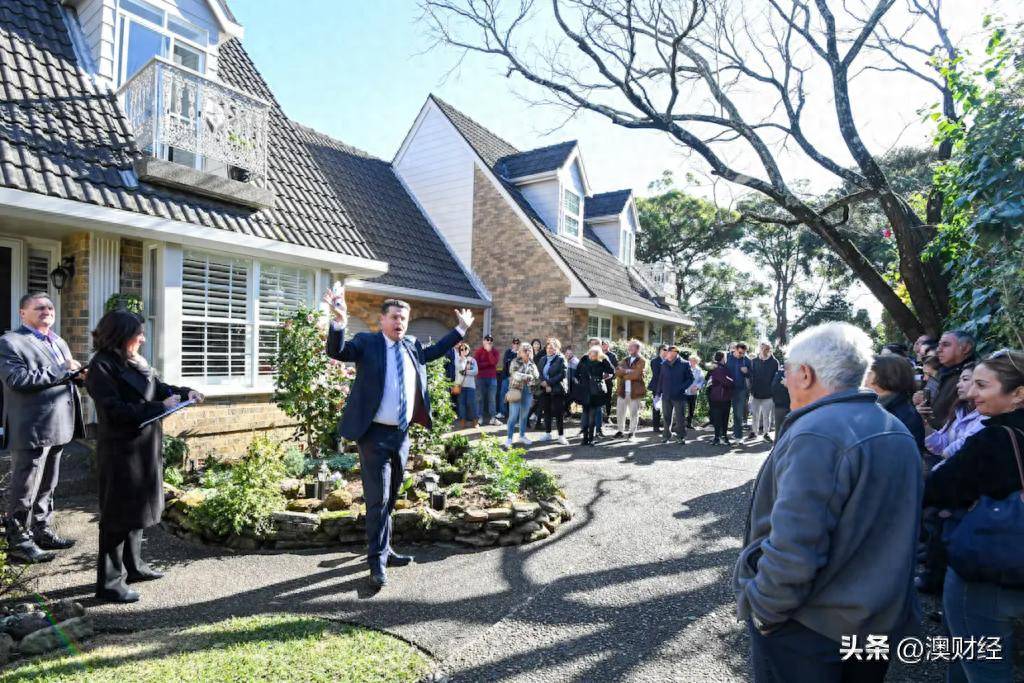
Core Points - The Australian real estate industry is set to undergo significant anti-money laundering reforms, with a consensus reached that real estate agents do not need to halt transactions if clients refuse to provide identity information [1][3] - The reforms, known as "Tranche 2," will take effect on July 1, 2025, and aim to address the real estate sector's vulnerability to money laundering [3] Group 1: Regulatory Overview - Approximately 90,000 businesses across various sectors, including real estate companies, will be required to fulfill Know Your Customer (KYC) obligations similar to those of banks [1] - AUSTRAC's national manager for policy rules and guidance, Daniel Mossop, emphasized the need for a balance between strict enforcement and avoiding excessive burdens on the industry [6] - Companies must demonstrate reasonable efforts to understand their clients, even if clients refuse to provide information, and must submit a Suspicious Matter Report (SMR) when necessary [6][3] Group 2: Compliance and Industry Response - The new regulations allow other parties involved in transactions, such as lawyers or title transfer agents, to conduct identity verification, provided there is a written arrangement and information sharing before settlement [7] - The compliance market for identity verification is rapidly growing, with companies like PEXA and ConnectID developing verification services to meet the rising demand [8] - PEXA's strategic and delivery manager, Kate Camilleri, indicated that commercializing identity verification is a direction the company is pursuing, despite opposition from competitors like InfoTrack [8]
中信银行贵阳分行:当“贵马遇见反洗钱”,赛事流量秒变宣传增量
Zhong Guo Jin Rong Xin Xi Wang· 2025-06-20 12:15
Group 1 - The core viewpoint of the news is that the Guizhou branch of China CITIC Bank conducted a large-scale anti-money laundering (AML) promotional event during the 2025 Guiyang Marathon to enhance public awareness of risk prevention and fulfill its obligations in AML promotion [1][2] - The event was guided by the Anti-Money Laundering Department of the People's Bank of China and featured innovative planning and interactive knowledge designs, effectively increasing public recognition of AML knowledge [1][2] - The promotional activities included various interactive points such as a risk identification zone, a safety commitment photo spot, a knowledge consultation station, and a quiz on AML knowledge, which engaged thousands of participants [1][2] Group 2 - The event leveraged the national significance of the Guiyang Marathon to maximize the social impact of AML promotion, with over ten thousand participants engaging in interactive experiences and consultations [2] - Following this event, the Guizhou branch of China CITIC Bank plans to further implement the requirements of the People's Bank and the head office regarding the new AML law, continuously innovating educational methods and deepening the effectiveness of the promotion [2]
