社会融资规模

Search documents
【金融街发布】人民银行:9月末广义货币(M2)余额同比增长8.4%
Xin Hua Cai Jing· 2025-10-15 14:17
Core Insights - The People's Bank of China reported that by the end of September 2025, the total social financing scale reached 437.08 trillion yuan, marking an 8.7% year-on-year increase [1][2] - In the first three quarters of 2025, the cumulative increase in social financing was 30.09 trillion yuan, which is 4.42 trillion yuan more than the same period last year [1][4] - The broad money supply (M2) stood at 335.38 trillion yuan, reflecting an 8.4% year-on-year growth [1][5] Social Financing Scale - As of September 2025, the social financing scale stock was 437.08 trillion yuan, with a year-on-year growth of 8.7% [2] - The breakdown of financing includes: - RMB loans to the real economy at 267.03 trillion yuan, up 6.4% - Foreign currency loans equivalent to 1.18 trillion yuan, down 18% - Trust loans at 4.5 trillion yuan, up 5.7% - Government bonds at 92.55 trillion yuan, up 20.2% [2][3] Financing Structure - By the end of September, RMB loans accounted for 61.1% of the total social financing scale, down 1.3 percentage points year-on-year [3] - Government bonds saw an increase in their share to 21.2%, up 2.1 percentage points year-on-year [3] Cumulative Increase in Social Financing - The cumulative increase in social financing for the first three quarters was 30.09 trillion yuan, with a notable increase in government bond financing by 4.28 trillion yuan [4] - RMB loans to the real economy increased by 14.54 trillion yuan, which is a decrease of 8.51 trillion yuan compared to the previous year [4] Money Supply - The broad money supply (M2) reached 335.38 trillion yuan, with an 8.4% year-on-year increase [5] - Narrow money (M1) was at 113.15 trillion yuan, up 7.2%, while cash in circulation (M0) was 13.58 trillion yuan, reflecting an 11.5% increase [5] Deposit and Loan Growth - By the end of September, total deposits (including foreign currency) were 332.18 trillion yuan, with RMB deposits at 324.94 trillion yuan, both showing year-on-year growth [6] - In the first three quarters, RMB loans increased by 14.75 trillion yuan, with household loans rising by 1.1 trillion yuan [8] Foreign Currency Deposits - Foreign currency deposits reached 1.02 trillion USD, marking a 20% year-on-year increase, with an addition of 165.8 billion USD in the first three quarters [7] Interbank Market Rates - The average weighted interest rate for interbank RMB market lending was 1.45% in September, slightly higher than the previous month but lower than the same period last year [10] Foreign Exchange Reserves - As of September, the national foreign exchange reserves stood at 3.34 trillion USD, with the RMB exchange rate at 7.1055 per USD [11] Cross-Border RMB Settlement - In the first three quarters, cross-border RMB settlement under current accounts amounted to 13.06 trillion yuan, with direct investment settlements at 6.04 trillion yuan [12]

【新华解读】前三季度社融增超30万亿:直接融资拉动作用明显 债券融资占比超过4成
Xin Hua Cai Jing· 2025-10-15 14:15
Core Viewpoint - The People's Bank of China reported significant growth in credit and social financing in the first three quarters, indicating strong financial support for the real economy, with a notable shift towards direct financing channels [1][2][4]. Group 1: Credit and Social Financing - In the first three quarters, new RMB loans increased by approximately 14.75 trillion yuan, with a monthly increase of about 1.29 trillion yuan in September [4]. - The total social financing scale reached 437.08 trillion yuan by the end of September, growing by 8.7% year-on-year, which is 0.7 percentage points higher than the previous year [2]. - Direct financing has become a significant contributor to social financing, with government bonds net financing reaching about 11.46 trillion yuan in the first three quarters, an increase of 4.28 trillion yuan year-on-year [2][3]. Group 2: Monetary Supply and Loan Structure - By the end of September, M2 grew by 8.4% year-on-year, while M1 increased by 7.2%, indicating a recovery in corporate and consumer demand [3]. - The M1-M2 spread narrowed to 1.2%, reflecting improved business activity and a rebound in personal consumption [3]. - The proportion of RMB loans in the total social financing increment fell to 48.3%, with over half of the new social financing coming from diverse channels such as government and corporate bonds [2]. Group 3: Sector-Specific Insights - Key industries like equipment manufacturing and high-tech manufacturing maintained strong growth, driving corporate financing demand [5]. - The implementation of personal consumption loan subsidies and adjustments in housing purchase policies in major cities have led to a recovery in personal loan demand, particularly in the real estate sector [6][7]. - The average interest rates for new corporate loans and personal housing loans remained low at around 3.1%, which is significantly lower than the previous year [7]. Group 4: Non-Bank Deposits and Market Dynamics - In the first three quarters, RMB deposits increased by 22.71 trillion yuan, with non-bank financial institution deposits growing faster than household deposits [8]. - The increase in non-bank deposits is attributed to a reallocation of assets by residents in response to changing return rates, rather than a direct correlation with stock market fluctuations [8].
专家:利率机制对实体经济的传导效应进一步提升
Xin Hua Cai Jing· 2025-10-15 14:15
Core Viewpoint - The People's Bank of China reported that as of the end of September, the total social financing stock exceeded 430 trillion yuan, indicating a substantial financial scale that meets the financing needs of the real economy, aligning with the shift from high-speed to high-quality economic development [1] Financial Metrics - As of September, M2 balance surpassed 330 trillion yuan, while the balance of RMB deposits exceeded 320 trillion yuan and loan balance exceeded 270 trillion yuan [1] - The average weighted interest rate for newly issued corporate loans and personal housing loans in September was approximately 3.1%, which is about 40 and 25 basis points lower than the same period last year, respectively [1] Economic Context - Current macroeconomic conditions are characterized by insufficient demand, low inflation, and low interest rates, with private sectors being more sensitive to interest rates [1] - The financial impact on the real economy will primarily occur through interest rate pathways, emphasizing the importance of understanding interest rate implications and the coordination between different market rates [1]
货币市场日报:10月15日
Xin Hua Cai Jing· 2025-10-15 14:09
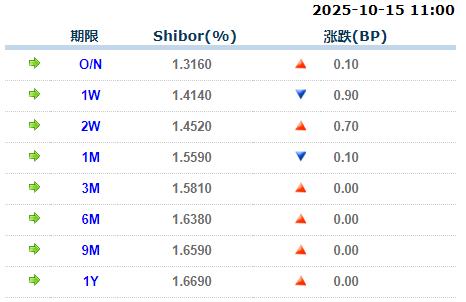
Group 1 - The People's Bank of China conducted a 435 billion yuan reverse repurchase operation with a rate of 1.40%, maintaining the previous level, resulting in a net injection of 435 billion yuan into the market [1] - The Shanghai Interbank Offered Rate (Shibor) for short-term instruments remained stable, with a slight decline in the 7-day Shibor [1][2] - The overnight Shibor increased by 0.10 basis points to 1.3160%, while the 7-day Shibor decreased by 0.90 basis points to 1.4140% [2][3] Group 2 - In the interbank pledged repo market, various rates showed narrow fluctuations, with DR007's transaction share rising to 4.5% [5] - The weighted average rates for DR001 and R001 decreased by 0.0 basis points and 0.2 basis points, respectively, with transaction volumes dropping by 901 billion yuan and 456 billion yuan [5] - The overall funding environment was balanced and slightly loose, with overnight rates declining further after the open market operations [10] Group 3 - As of October 15, 120 interbank certificates of deposit were issued, with an actual issuance volume of 114.59 billion yuan [11] - The trading sentiment for primary certificates was generally average, while secondary certificates showed moderate trading sentiment with yields continuing the upward trend from the previous day [11] - The weighted average interest rates for various maturities showed slight increases compared to the previous day, indicating a tightening of spreads between different maturities [11] Group 4 - The People's Bank of China reported that by the end of September 2025, the total social financing scale was 437.08 trillion yuan, a year-on-year increase of 8.7% [13] - The broad money supply (M2) reached 335.38 trillion yuan, growing by 8.4% year-on-year [13] - The average interest rate for newly issued corporate loans was approximately 3.1%, down about 40 basis points from the previous year, indicating a continued low interest rate environment [13]

前三季度新增社融超30万亿元,背后信号很大
2 1 Shi Ji Jing Ji Bao Dao· 2025-10-15 13:54
Core Insights - The People's Bank of China reported that the total social financing increased by 4.42 trillion yuan year-on-year, reaching 30.09 trillion yuan in the first three quarters of 2025, indicating a robust financial support for the real economy [1][11] - Government bond issuance has accelerated, significantly contributing to the social financing scale, with net financing of government bonds reaching 11.46 trillion yuan, an increase of 4.28 trillion yuan year-on-year [1][12] - The structure of financing shows that loans to the real economy accounted for 61.1% of the total social financing stock, while government bonds represented 21.2%, reflecting a shift towards more diversified financing channels [2][11] Financing Structure - By the end of September, the balance of RMB loans to the real economy was 61.1% of the total social financing stock, down 1.3 percentage points year-on-year [2] - The balance of corporate bonds accounted for 7.7%, down 0.3 percentage points year-on-year, while government bonds increased to 21.2%, up 2.1 percentage points year-on-year [2] - Non-financial corporate stock financing reached 316.8 billion yuan, an increase of 1.463 billion yuan year-on-year, indicating a growing reliance on equity financing [1] Deposit and Loan Trends - By the end of September, the balance of RMB deposits was 324.94 trillion yuan, growing by 8% year-on-year, with household deposits increasing by 12.73 trillion yuan [4][6] - The balance of loans was 270.39 trillion yuan, with a year-on-year growth of 6.6%, and the average interest rate for new loans was approximately 3.1%, down 40 basis points from the previous year [7][11] - The phenomenon of "deposit migration" is observed, where residents shift their savings into higher-yielding assets, influenced by changing interest rates [4][6] Monetary Policy and Economic Outlook - The M2 money supply reached 335.38 trillion yuan, growing by 8.4% year-on-year, supported by proactive fiscal policies and moderately loose monetary policies [9][11] - The narrowing gap between M1 and M2 indicates increased business activity and consumer demand, suggesting a recovery in the economy [9][11] - Experts predict that the fourth quarter will see continued monetary support for the real economy, with fiscal policies also playing a significant role in sustaining economic growth [12]

前三季度新增社融超30万亿元,背后信号很大
21世纪经济报道· 2025-10-15 13:50
Group 1 - The core viewpoint of the article highlights the significant increase in social financing scale in the first three quarters of 2025, with a total increment of 30.09 trillion yuan, which is 4.42 trillion yuan more than the same period last year [1] - The report indicates that the balance of social financing stock reached 437.08 trillion yuan by the end of September, reflecting a year-on-year growth of 8.7%, maintaining a high growth rate [1][2] - Government bonds have played a crucial role in supporting the social financing scale, with net financing of 11.46 trillion yuan, which is an increase of 4.28 trillion yuan compared to the previous year [1][2] Group 2 - The structure of financing shows that the balance of RMB loans to the real economy accounted for 61.1% of the total social financing stock, which is a decrease of 1.3 percentage points year-on-year [2] - The increase in direct financing channels has led to over half of the new social financing being provided by non-loan sources, indicating a shift towards more diversified financing methods [2] - Banks are not only the main players in credit issuance but also significant participants in bond investments, holding about 70% of government bonds and 20% of corporate credit bonds [2] Group 3 - The article discusses the phenomenon of "deposit migration," where residents shift their savings from banks to other assets due to changes in asset return rates [3][6] - The total balance of deposits in both domestic and foreign currencies reached 332.18 trillion yuan by the end of September, with a year-on-year growth of 8.3% [4] - The increase in non-bank financial institution deposits is attributed to the trend of residents reallocating their assets in response to market conditions [6] Group 4 - By the end of September, the balance of loans in both domestic and foreign currencies was 274.33 trillion yuan, with a year-on-year growth of 6.5% [7] - The weighted average interest rate for newly issued corporate loans was approximately 3.1%, which is 40 basis points lower than the same period last year [7] - The article notes that the M1-M2 spread has narrowed significantly, indicating improved business activity and consumer demand [9] Group 5 - The overall financial scale in China is substantial, with social financing stock exceeding 430 trillion yuan and M2 balance over 330 trillion yuan [11] - The current macroeconomic environment is characterized by insufficient demand, low inflation, and low interest rates, which affects private sector financing behavior [11] - Future financial impacts on the real economy will primarily be through interest rate pathways, emphasizing the importance of interest rate coordination across different financial markets [12]
前三季度新增社融超一半来自非贷款渠道 金融支持实体经济更多元
2 1 Shi Ji Jing Ji Bao Dao· 2025-10-15 13:23
Core Viewpoint - The People's Bank of China (PBOC) reported that the total social financing scale increased significantly in the first three quarters of 2025, indicating robust financial support for the real economy, with government bonds playing a crucial role in this growth [1][3][12]. Financing Data - The total social financing scale increased by 30.09 trillion yuan in the first three quarters of 2025, which is 4.42 trillion yuan more than the same period last year [1]. - The balance of social financing stock reached 437.08 trillion yuan by the end of September, reflecting a year-on-year growth of 8.7% [3]. - The net financing from government bonds was 11.46 trillion yuan, an increase of 4.28 trillion yuan year-on-year, highlighting the government's active role in financing [1][3]. Loan and Deposit Trends - By the end of September, the balance of loans in both domestic and foreign currencies was 274.33 trillion yuan, with a year-on-year growth of 6.5% [9]. - The balance of RMB deposits was 324.94 trillion yuan, growing by 8% year-on-year, with household deposits increasing by 12.73 trillion yuan [5][6]. - The phenomenon of "deposit migration" was noted, where residents shifted their savings into other assets due to changing return rates, indicating a reallocation of household assets [6][8]. Monetary Policy and Economic Impact - The M2 money supply reached 335.38 trillion yuan, growing by 8.4% year-on-year, supported by proactive fiscal policies and moderately loose monetary policies [10][12]. - The M1-M2 gap has narrowed significantly, suggesting increased business activity and consumer demand [10]. - Experts suggest that the financial system's support for the real economy extends beyond loans, emphasizing the importance of observing a broader range of financing channels [4][12]. Future Outlook - The internal and external environments are stabilizing, with positive changes in corporate operations, consumer spending, and trade, providing a foundation for achieving economic and social development goals [13]. - The PBOC aims to maintain ample liquidity and guide financial institutions to increase credit supply, ensuring that the growth of social financing aligns with economic growth targets [12][13].
央行重磅数据发布
Zhong Guo Ji Jin Bao· 2025-10-15 13:06
Group 1 - The People's Bank of China reported that the total social financing scale exceeded 30 trillion yuan in the first three quarters of the year, reaching 30.09 trillion yuan, an increase of 4.42 trillion yuan compared to the same period last year [1] - The growth rates of social financing and broad money (M2) remained high, indicating that monetary finance continues to create a favorable environment for economic recovery [1] - The narrow money (M1) growth rate showed a significant rebound, reaching 7.2% by the end of September, reflecting increased business activity and consumer demand [1][8] Group 2 - Government bonds and corporate bonds contributed over 40% of the new social financing, with net financing from government bonds at 11.46 trillion yuan, an increase of 4.28 trillion yuan year-on-year [4] - The proportion of new social financing from RMB loans decreased to 48%, indicating a shift towards more diversified financing channels [4] - The average proportion of bonds in bank assets is around 25%, with banks being major participants in both credit issuance and bond investments [4] Group 3 - The growth of RMB loans remained stable, with new loans in September amounting to approximately 1.29 trillion yuan, despite a decrease in growth rate to 6.6% [6] - The structure of loans continued to optimize, with inclusive small and micro loans growing by 12.2% year-on-year [6] - Loan interest rates remained low, with the weighted average interest rate for new corporate loans at about 3.1%, down approximately 40 basis points from the previous year [6] Group 4 - The M1 growth rate has been rising, with a notable increase of 7.1 percentage points from the year's low in February, indicating a recovery in economic activity [9] - The "scissors difference" between M1 and M2 has narrowed, suggesting improved business operations and consumer investment [9] - The concept of "deposit migration" reflects a reallocation of residents' assets based on changes in return rates, rather than a direct impact on the stock market [10]
前三季度新增社融超一半来自非贷款渠道,金融支持实体经济更多元
2 1 Shi Ji Jing Ji Bao Dao· 2025-10-15 12:41
业内专家认为,近年来随着直接融资加快发展,单一的贷款指标越来越难以完整反映金融支持实体经济的成效。事实上,今年前三季度,超过 一半的新增社融由贷款以外的、更为丰富、多元化的融资渠道提供。因此,建议更多观察社融等更全面的统计指标,以多元化的视角科学看待 金融支持力度。 数据还显示,9月末社会融资规模存量为437.08万亿元,同比增长8.7%,增速延续高位。分析人士指出,今年以来政府债券发行提速,企业发 债和股权融资渠道也更加畅通,直接融资对社会融资规模的拉动作用明显。其中,政府债券对社会融资规模发挥主要支撑作用。 "特别是国债和特殊再融资债券发行进度较快,用于支持'两重''两新'、置换地方政府隐性债务等,对扩内需、保民生、防风险、促发展发挥了 积极作用。"上述分析人士还称,同时,受益于政策端对科创债、民企债的支持力度加大,叠加发债利率处于低位,企业发债融资增多,社会 融资规模快速增长也有较强支撑。 从结构看,9月末对实体经济发放的人民币贷款余额占同期社会融资规模存量的61.1%,同比低1.3个百分点;企业债券余额占比7.7%,同比低 0.3个百分点;政府债券余额占比21.2%,同比高2.1个百分点;非金融企业境 ...
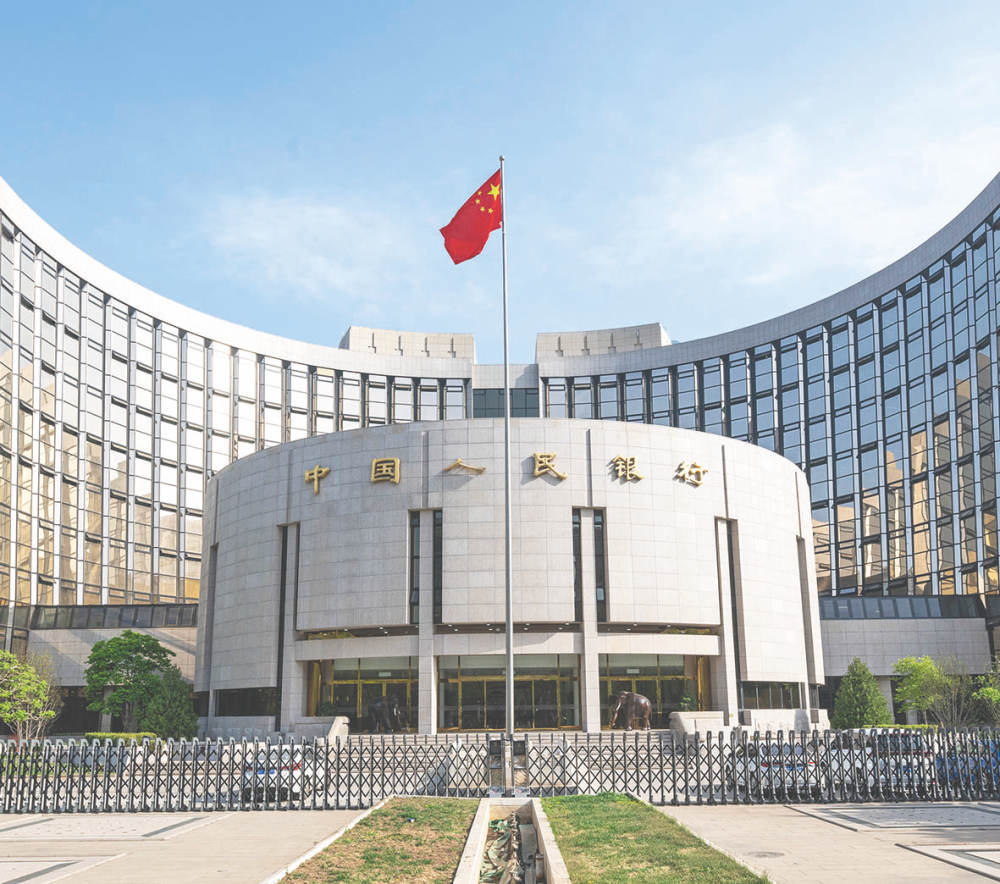
央行重磅数据发布
中国基金报· 2025-10-15 12:28
Core Viewpoint - The People's Bank of China reported that the total social financing scale exceeded 30 trillion yuan in the first three quarters of the year, indicating a robust monetary environment supporting economic recovery [2][10]. Group 1: Financial Statistics - In the first three quarters, the total social financing scale reached 30.09 trillion yuan, an increase of 4.42 trillion yuan compared to the same period last year [2]. - RMB loans increased by 14.75 trillion yuan, while RMB deposits rose by 22.71 trillion yuan [2]. - As of the end of September, the year-on-year growth rate of social financing stock was 8.7%, up 0.7 percentage points from the previous year [2]. Group 2: Direct Financing and Debt Contribution - Government bonds and corporate bonds contributed over 40% of the new social financing, with net financing from government bonds at 11.46 trillion yuan, an increase of 4.28 trillion yuan year-on-year [10]. - Corporate bond financing reached 1.57 trillion yuan, supported by favorable policies and low issuance rates [10]. - The proportion of net financing from government and corporate bonds rose to 43% in the first three quarters [10]. Group 3: Credit Growth and Structure - The growth rate of new RMB loans fell to 6.6% by the end of September, but adjusted for local special bond replacement, the growth rate was approximately 7.7% [12]. - Personal consumption loan subsidies and service industry loan subsidies contributed to a recovery in credit demand [12]. - The balance of inclusive small and micro loans reached 36.09 trillion yuan, growing by 12.2% year-on-year, while medium to long-term loans in the manufacturing sector reached 15.02 trillion yuan, growing by 8.2% [12]. Group 4: M1 and Economic Activity - M1 growth reached 7.2% by the end of September, a significant increase from earlier in the year [15]. - The narrowing gap between M1 and M2 indicates improved business activity and a recovery in personal consumption demand [15]. - The recent changes in M1 statistics include both corporate and personal demand deposits, reflecting a more active financial environment [15][16]. Group 5: Future Economic Outlook - Experts suggest that the current macroeconomic environment is characterized by insufficient demand, low inflation, and low interest rates [13]. - The financial impact on the real economy will primarily occur through interest rate channels, emphasizing the importance of monitoring interest rate dynamics [13]. - The fourth quarter is expected to see continued monetary policy support for the real economy, with fiscal policies also actively contributing to investment [16].