
贸易逆差

Search documents
关税突发!特朗普宣布:50%、25%、15%!
天天基金网· 2025-07-31 05:45
Group 1 - The article discusses the recent announcement by President Trump regarding new tariffs on imports from South Korea, India, and Brazil, indicating a significant shift in trade policy [1][2][3] - South Korea will face a 15% tariff, while India will see a 25% tariff on its exports to the U.S., with Trump citing high tariffs and non-tariff barriers as reasons for the changes [2][3] - Brazil's tariffs will increase to 50%, with specific exemptions for certain products like wood pulp and oil [2][3] Group 2 - Starting August 1, the U.S. will impose a 50% tariff on various semi-finished copper products and copper-intensive derivatives, which could impact industries reliant on these materials [3][4] - The announcement led to a significant drop in copper prices, with New York copper futures falling nearly 20% [4]

特朗普:对印度商品征收25%关税
智通财经网· 2025-07-30 22:48
Group 1 - The U.S. will impose a 25% tariff on goods from India starting August 1, which is lower than the previously threatened 26% but significantly higher than the average import tariff of 2.4% on Indian goods in recent years [1] - In 2022, the total value of U.S. imports from India was nearly $90 billion, with major imports including smartphones, chemicals, plastics, leather products, agricultural products, and metal products [1] - The Indian government is currently assessing the impact of the announced tariffs and remains committed to negotiating a fair and balanced bilateral trade agreement with the U.S. [1] Group 2 - Trump indicated that dozens of countries may face a baseline tariff level of up to 20%, which is an increase from the previously announced 10% [2] - Economists have questioned the motivation behind Trump's tariff policies, suggesting that importing goods from countries with lower labor costs allows U.S. consumers to purchase finished products at lower prices [3] - A report from Yale University indicates that the actual tariff rate faced by U.S. consumers is currently 18.2%, the highest since 1934, with potential losses of up to $2,400 per household by 2025, not accounting for the new 25% tariff on Indian goods [3]
特朗普称美国将对印度施加25%关税及“惩罚” 指印方是俄罗斯能源大买家
Hua Er Jie Jian Wen· 2025-07-30 19:18
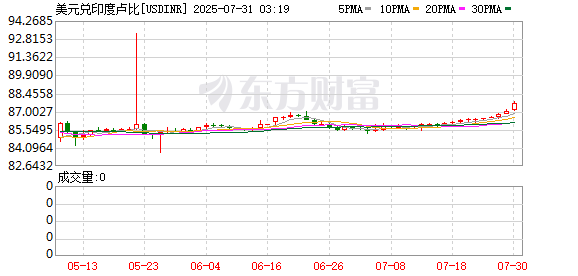
Core Viewpoint - The ongoing trade negotiations between the US and India have officially broken down, leading to President Trump's decision to impose a 25% tariff on Indian goods starting August 1, which he claims is a response to India's high tariffs and non-tariff barriers [1][6][10] Trade Relations - The US is India's largest trading partner, with an estimated goods trade volume of approximately $128.8 billion in 2024, and India having a trade surplus of $45.8 billion with the US [8] - Trump's tariffs are significantly higher than those imposed on other countries, such as 20% on Vietnam and 15% on Japan and the EU, putting India at a competitive disadvantage [7] Economic Impact - Following the announcement of tariffs, the Indian rupee depreciated, with the exchange rate dropping to 87.87 against the dollar, marking a five-month low [4] - Analysts predict that India's export prospects and investment attractiveness will suffer, especially if exemptions for key industries like smartphones are removed [7] Geopolitical Context - A major reason for the tariffs is India's continued purchase of energy and military equipment from Russia, with over one-third of India's oil imports and 36% of its weapons coming from Russia [9] - The trade negotiations have been complicated by agricultural disputes, as the US seeks greater access to India's agricultural market, which India is reluctant to open due to food security concerns [10] Future Outlook - Despite the breakdown in negotiations, experts suggest that trade disputes and bargaining may continue, influenced by both economic and geopolitical factors [7]
特朗普称美国将对印度施加25%关税及“惩罚”,指印方是俄罗斯能源大买家
Hua Er Jie Jian Wen· 2025-07-30 16:29
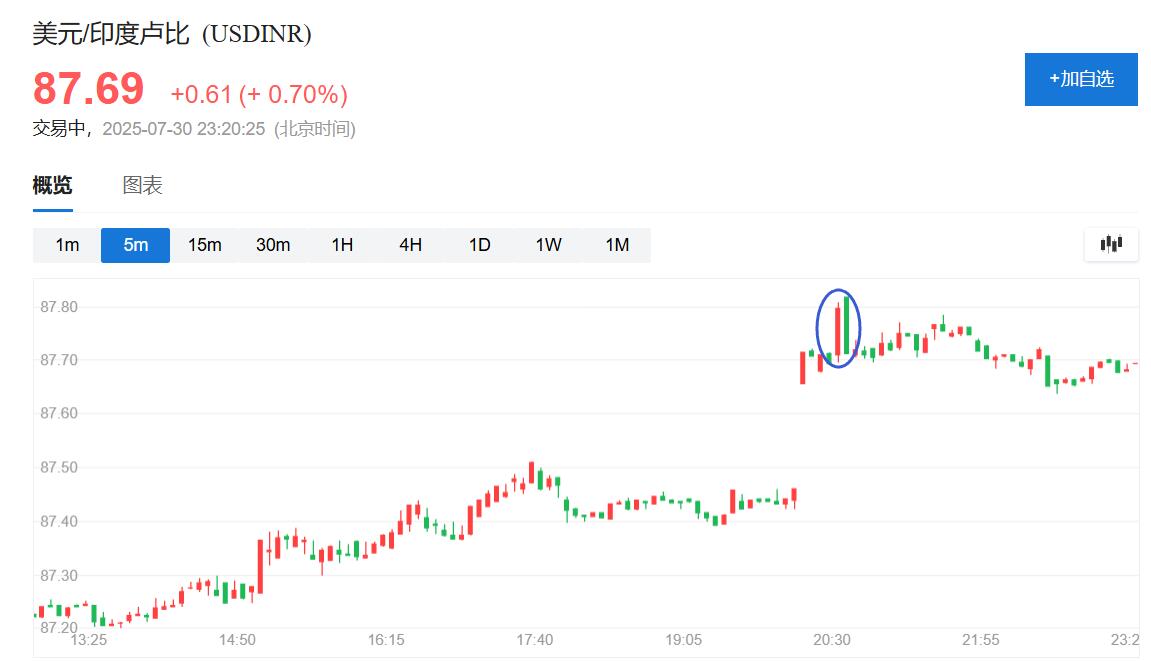
Core Viewpoint - The ongoing trade negotiations between the US and India have officially broken down, leading to President Trump's decision to impose a 25% tariff on Indian imports starting August 1, citing India's high tariffs and non-tariff barriers as significant issues [1][5]. Trade Relations - The US-India trade deficit is highlighted, with Trump stating that the trade imbalance is substantial, and India's tariffs are among the highest globally [1][5]. - The US is India's largest trading partner, with projected goods trade of approximately $128.8 billion in 2024, and India having a trade surplus of $45.8 billion with the US [6]. Tariff Implications - The 25% tariff on India is notably higher than tariffs imposed on other countries, such as 20% on Vietnam and 15% on Japan and the EU, placing India at a competitive disadvantage [6]. - The imposition of tariffs has led to a depreciation of the Indian Rupee, which fell to a five-month low against the dollar [2]. Geopolitical Factors - A significant reason for the tariff imposition is India's continued purchase of energy and military equipment from Russia, with over one-third of India's oil imports and 36% of its weapons coming from Russia [7]. - Trump's previous threats included imposing secondary tariffs on countries purchasing Russian oil unless a ceasefire agreement was reached in Ukraine [7]. Agricultural Negotiations - Trade negotiations have stalled primarily due to disagreements in the agricultural sector, where the US seeks greater access while India prioritizes food security and the interests of small farmers [8]. - Despite some concessions from India on tariffs for specific products, the overall trade deficit remains a concern for the US, which aims to reduce the $45.8 billion deficit with India [8].
特朗普宣布对印度征收25%关税 外加一项“惩罚”!
Jin Shi Shu Ju· 2025-07-30 14:42
Core Points - President Trump announced that India will face a 25% tariff starting August 1, which is slightly lower than the previously announced 26% tariff [1] - The tariff is part of Trump's broader strategy to address what he perceives as unfair trade practices and to reduce the significant trade deficit with India [1][2] - Trump criticized India's high tariffs and non-tariff trade barriers, labeling them as some of the highest in the world [1] Group 1 - The 25% tariff on India is part of a punitive measure due to India's trade practices and its purchases of military equipment and energy from Russia [1] - Trump emphasized the need to reduce the trade deficit with India, which he described as "huge" [1] - The White House has not clarified what specific penalties Trump referred to regarding India's actions [1] Group 2 - Economists have questioned the motivations behind the tariffs, suggesting that importing goods from lower-cost countries allows American consumers to purchase products at lower prices [2] - There is uncertainty about whether American workers are willing or able to take on low-skill jobs that are typically outsourced [2] - Trump's recent threats to impose secondary tariffs on countries purchasing Russian oil and gas could significantly impact major trading partners like India and Brazil [2]
特朗普宣布对印度征收25%关税,外加一项“惩罚”!
Jin Shi Shu Ju· 2025-07-30 14:29
Group 1 - President Trump announced that India will face a 25% tariff starting August 1, which is slightly lower than the previously announced 26% tariff [1] - The tariff is part of Trump's broader strategy to address what he perceives as unfair trade practices and India's significant trade deficit with the U.S. [1] - Trump criticized India's high tariffs and non-tariff trade barriers, stating they are among the highest in the world [1] Group 2 - Economists have questioned the motivations behind the tariffs, suggesting that importing goods from lower-cost countries allows American consumers to purchase products at lower prices [2] - There is uncertainty regarding whether American workers are willing or able to take on low-skill jobs that are typically outsourced [2] - Trump's recent threats to impose additional tariffs on countries purchasing Russian oil and gas could significantly impact major trade partners like India and Brazil [2]
特朗普威胁印度:征收25%的关税
Zhong Guo Xin Wen Wang· 2025-07-30 13:41
Core Viewpoint - President Trump threatens to impose a 25% tariff on Indian products exported to the U.S., citing high tariffs and strict non-tariff barriers from India as reasons for the trade imbalance [1] Trade Relations - The U.S. and India have engaged in multiple rounds of trade negotiations to address contentious issues, particularly concerning U.S. agricultural products and dairy market access [1] - Despite some progress in negotiations, Indian officials have resisted opening their domestic market to imports of wheat, corn, rice, and genetically modified soybeans, arguing that these imports threaten the livelihoods of millions of Indian farmers [1] Economic Impact - The anticipated new tariffs are expected to affect India's exports to the U.S., where the current trade deficit for the U.S. with India stands at $45.7 billion [1]
轮到印度了,特朗普威胁:再不达成协议,印度关税就会是25%
Hua Er Jie Jian Wen· 2025-07-30 09:13
尽管特朗普尚未像对待其他十几个贸易伙伴那样,发出一封设定新关税的正式信函,但此次威胁并非空 穴来风。 他曾在今年4月2日将针对印度进口商品的关税设定为26%,随后才暂停了所谓的"对等"征税。 随着美国与欧盟、日本、英国等主要伙伴达成贸易协议,美国总统特朗普将焦点转向印度,发出迄今最 明确的关税威胁,称如果无法达成协议,他准备对印度进口商品征收高达25%的关税。 当地时间周二,当被问及印度是否将面临20%至25%的关税时,特朗普回答说:"是的,我认为是这 样",并补充道,"他们将支付25%"。这一言论迅速加剧了外界对谈判前景的担忧,尽管他同时表示印 度是他的"朋友"。 与此同时,美国贸易代表 Jamieson Greer 周一在接受媒体采访时则透露,达成一项难以捉摸的印度贸易 协议将需要两国之间进行更多讨论。他表示,美方当然愿意继续与印度方面会谈,并承认印度"已表达 了开放部分市场的强烈兴趣"。 美方最新表态发生在印度商务部长上周释放乐观信号之后,当时印方表示有希望在特朗普设定的8月1日 最后期限前与美国达成协议。 贸易逆差与关税壁垒成美方核心关切 此前环球时报报道称,印度财政部长西塔拉曼在接受专访时表示,农业 ...
【环球财经】进口减少致美国6月份国际商品贸易逆差显著下降
Xin Hua Cai Jing· 2025-07-30 07:30
新华财经纽约7月30日电(记者刘亚南)美国商务部下属普查局(U.S. Census Bureau)29日发布的初步 数据显示,由于进口明显减少,美国6月份国际商品贸易逆差从5月份调整后的964亿美元降为860亿美 元,降幅达104亿美元,显著低于市场预期的990亿美元。 数据显示,美国6月份商品进口金额为2642亿美元,环比减少115亿美元。同期,美国商品出口金额为 1782亿美元,环比降幅仅为11亿美元。 据报道,6月份美国工业制品进口金额降至2021年以来的最低水平,汽车进口也出现下降。 受关税政策影响,美国月度国际商品贸易逆差在2024年下半年维持在1000亿美元左右,但从12月份明显 升高,并在今年4月份达到创纪录的1620亿美元。 分析人士认为,美国6月份国际商品贸易逆差的下降是进口商囤货需求从4月份开始大幅下降的持续,这 一数据有利于美国二季度GDP增长数据的改善。 (文章来源:新华财经) ...