产教融合

Search documents
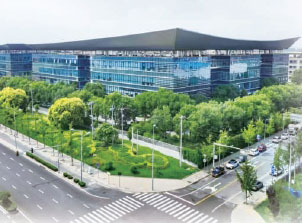
哈尔滨工业大学北京研究院落地石景山区
Zhong Guo Jing Ji Wang· 2025-12-17 04:26
作为首都中心城区,石景山区正紧抓机遇,深入实施城市更新和产业转型发展战略,全区二、三产业占 比实现从7:3到1:9的成功反转,2024年数字经济占地区生产总值比重达到57.4%,全区地区生产总值达 到1312.9亿元、同比增长6.5%;2025年前三季度,石景山区地区生产总值达到1040.7亿元、同比增长 7.2%。面向"十五五",石景山区正加速构建"主导+特色+未来"梯次发展的现代化产业体系,在人工智 能、科幻游戏、工业互联网、虚拟现实等方向形成鲜明特色,聚焦"北京未来数字空间创新试验区"建 设,着力打造北京国际科技创新中心"京西创新发展核心引擎",持续增强区域发展能级和核心竞争力。 石景山区委书记常卫表示,石景山区高度重视高校科研院所对区域经济高质量发展的驱动作用,统筹推 进教育科技人才一体发展,以科技创新引领产业创新,打造首都西部创新发展新高地。随着哈尔滨工业 大学北京研究院落地,双方将以国家重大战略需求和首都高质量发展需要为牵引,推动产教学研深度融 合,携手将研究院打造成前沿科技创新的"策源地"、成果转化的"加速器"、人才集聚的"强磁场"和开放 合作的"会客厅",为区域产业升级注入强劲动力,为学校拓展 ...
产教融合 协同育人:泸州银行成都分行携手西南民族大学共建金融实践教育基地
Jin Rong Jie· 2025-12-17 04:00
Group 1 - The signing and awarding ceremony for the "Smart Financial Industry-Academia-Research Collaborative Innovation Practice Education Base" between Luzhou Bank Chengdu Branch and Southwest Minzu University School of Economics took place in Chengdu, emphasizing the importance of this base in implementing the university's "characteristic Minzu strategy" and deepening practical education reforms [1] - Luzhou Bank's representative highlighted the bank's development history, business layout, and outreach, proposing a vision of creating a platform for financial talent cultivation that aligns with industry needs through the base [1] - The Secretary of the Party Committee of the School of Economics at Southwest Minzu University stated that the collaboration is a key practice for promoting "industry-academia-research application" innovation, aiming to build a dual empowerment platform for students and faculty to cultivate application-oriented talents suited for the smart financial era [1] Group 2 - A student representative expressed that the base provides opportunities to engage with industry frontiers, motivating students to connect theoretical knowledge with practical needs [2] - During a discussion session, representatives from the Chengdu Branch addressed students' concerns regarding the financial industry's prospects, graduate school plans, and internship opportunities, encouraging continuous learning to adapt to industry changes [2] - The Chengdu Branch committed to exploring student social practices and collaborative projects in response to the university's request for a "dual-teacher dual-competence" faculty development, marking a deep consensus in talent cultivation, faculty development, and industry service [2]
周红波到在宁高校调研科技成果转化工作
Nan Jing Ri Bao· 2025-12-17 02:36
Group 1 - The core message emphasizes the importance of integrating education, technology, and talent development to support the construction of a modern industrial system in Nanjing [1] - Nanjing Agricultural University is recognized for its contributions to national food security and high-quality agricultural development, focusing on key areas such as crop variety cultivation and pest management [1] - The city aims to enhance agricultural innovation by fostering collaboration between universities and local enterprises, particularly in fields like smart agriculture and ecological agriculture [1] Group 2 - Nanjing University of Information Science and Technology is accelerating the development of its "Meteorology+" and "Information+" disciplines, which are closely linked to local industrial development and public welfare [2] - The university is encouraged to strengthen cooperation with the Jiangbei New Area and relevant research platforms to promote the industrialization of advanced technology [2] - The city plans to optimize its open innovation ecosystem and deepen collaboration among government, industry, academia, and research institutions to foster independent technological innovation and talent development [2]
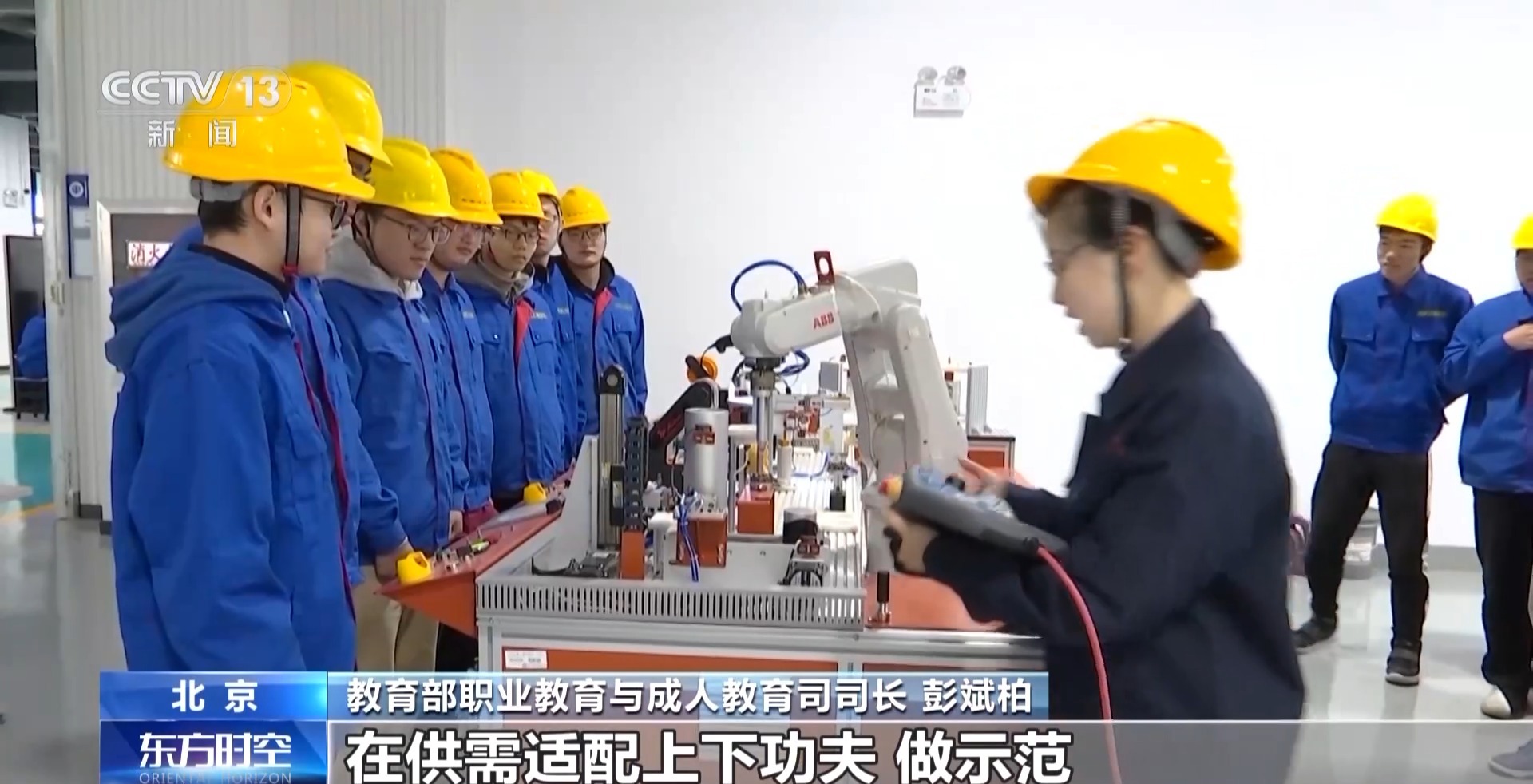
“新双高”来了!职业教育再升级
Yang Shi Xin Wen· 2025-12-16 16:09
Core Viewpoint - The Ministry of Education is advancing the second phase of the "Double High Construction Plan" to enhance vocational education, focusing on cultivating high-level skilled talents to support the transformation of the manufacturing industry. Group 1: Overview of the "Double High Construction Plan" - The second phase of the "Double High Construction Plan" includes 220 schools, with 60 high-level vocational schools and 160 high-level professional groups, aimed at transforming vocational education to better serve and support industry needs [1][5] - The professional groups are aligned with national strategic emerging industries and advanced manufacturing, with 77.9% of them addressing these sectors [1] Group 2: Key Elements of Talent Development - The plan emphasizes the need for a talent supply mechanism that quickly matches industry demands, focusing on five key elements: professional courses, teaching materials, teachers, and practical training [3][7] - A new evaluation system for vocational schools will assess their educational quality, service capabilities, and contributions to society [5] Group 3: Case Studies of Successful Implementation - Jiangsu Agricultural and Forestry Vocational Technical College has reformed its curriculum to align with industry needs, resulting in a significant increase in student enrollment in agricultural machinery programs [8][10] - The college's graduates are now highly sought after, with many securing jobs in leading agricultural machinery companies, earning starting salaries around 6,000 yuan [18] Group 4: Innovative Teaching Methods - Chengdu Aviation Vocational Technical College has introduced digital textbooks that simulate real-world aircraft assembly processes, enhancing students' learning experiences [20][24] - The college has developed 3,570 new forms of teaching materials, including interactive and digital formats, to facilitate better learning outcomes [26] Group 5: Industry Collaboration and Impact - Wenzhou Vocational Technical College has actively engaged in industry collaboration, providing over 1,500 technical services to local businesses, resulting in efficiency gains exceeding 4.6 billion yuan [31] - Shaanxi Railway Engineering Vocational Technical College has integrated real-world engineering projects into its curriculum, partnering with over 400 leading companies to create specialized training programs [39][41]

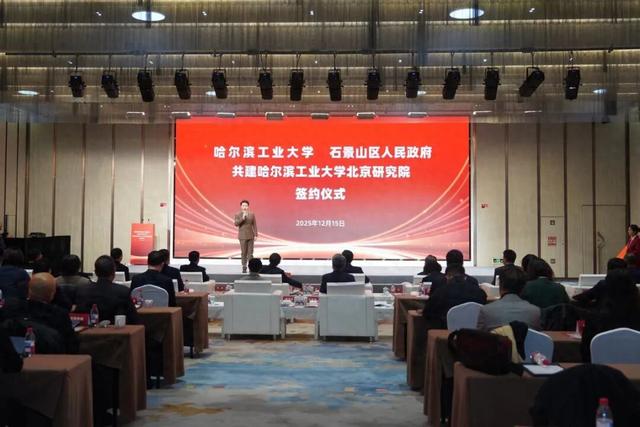
哈尔滨工业大学北京研究院在石景山区揭牌
Bei Jing Ri Bao Ke Hu Duan· 2025-12-16 07:30
Core Viewpoint - The establishment of the Harbin Institute of Technology Beijing Research Institute represents a strategic collaboration between Harbin Institute of Technology and the Shijingshan District government, aimed at enhancing technological innovation and regional economic development [3][9]. Group 1: Collaboration and Objectives - The research institute aims to serve as a model for university-local government cooperation, focusing on strategic planning, resource investment, and efficient mechanism construction [5]. - The partnership is intended to strengthen the integration of education, technology, and talent development, positioning the institute as a hub for high-level talent cultivation and a platform for emerging industry development [5][7]. Group 2: Regional Economic Development - Shijingshan District emphasizes the role of higher education and research institutions in driving high-quality regional economic development, with a focus on technological innovation leading industrial innovation [7]. - The district has successfully transformed its industrial structure, with the ratio of secondary to tertiary industries shifting from 7:3 to 1:9, and its GDP surpassing 100 billion yuan for the first time in 2022 [10]. - By 2024, the digital economy is projected to account for 57.4% of the district's GDP, with a total GDP of 1,312.9 billion yuan, reflecting a year-on-year growth of 6.5% [10]. Group 3: Strategic Importance - The research institute's establishment is seen as a significant milestone in deepening strategic cooperation between the university and the district, contributing to national strategic needs and the capital's development [9]. - The collaboration aims to explore a model of collaborative innovation between industry and academia, enhancing the region's competitiveness and development capabilities [9][10].
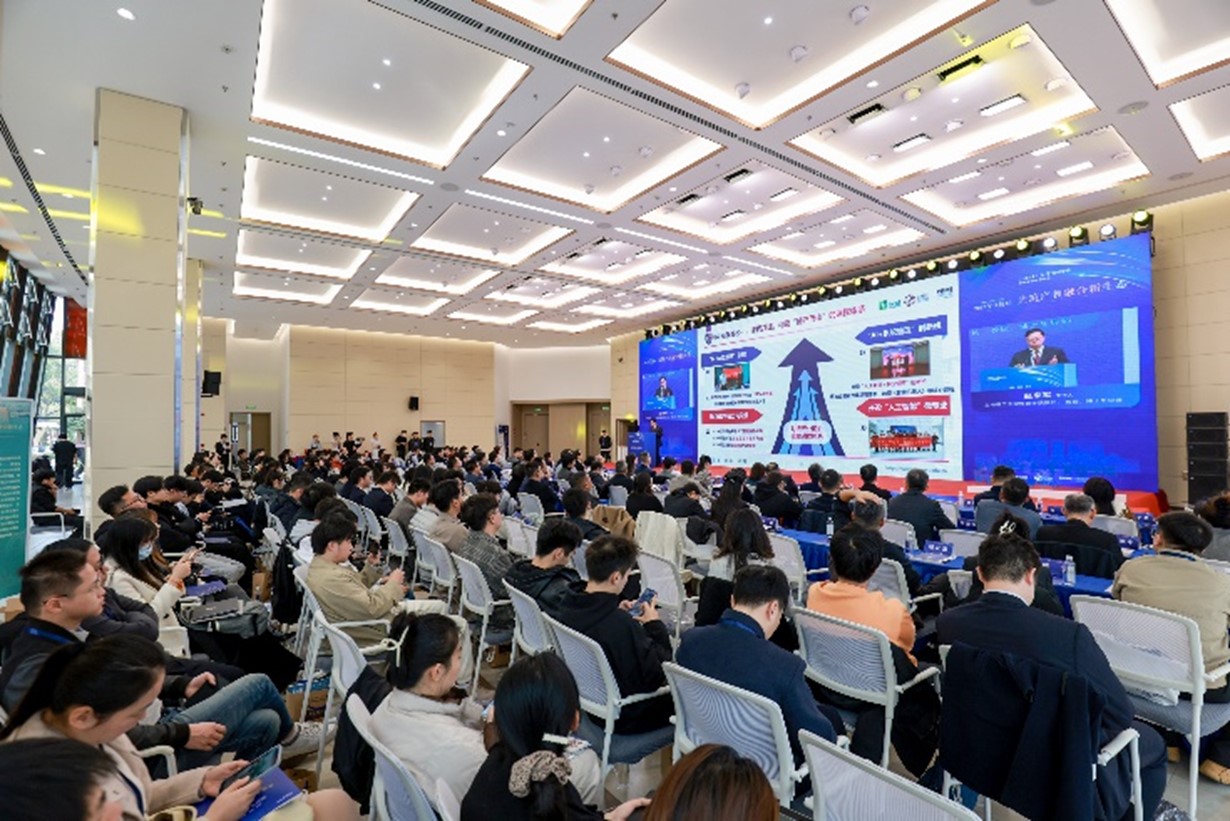
上理工管理学院举办年度论坛 共筑产教融合新生态
Yang Shi Wang· 2025-12-16 06:27
管理学院院长赵来军作学院2025年度产教融合专题报告。他表示,学院紧跟学校综合改革部署,确立"系统+科技+商学"育人新定位,构建"AI-SMART"五阶 递进式人才培养模式,通过课程共建、场景教学、双师协同与平台共创等方式,持续提升人才培育质量与社会服务效能,逐步形成特色鲜明的"上理管院模 式"。学院紧密关注产业前沿,已在低空经济等新兴领域设立人才培训基地,并与多家金融机构共建特色班级与实训平台。未来,学院将进一步深化"校-企- 研"联动机制,拓展国际合作,以人工智能为驱动,重塑商科人才培养体系。 12月12日下午,上海理工大学管理学院在军工路校区成功举办"破界·融合·智创 共筑产教融合新生态"2025年度论坛。上海理工大学党委书记王凌宇及多位知 名校友出席。学校相关职能部处负责人、管理学院党政领导及近200名师生与校友代表现场参加,论坛同时吸引超过两万人次在线观看直播。 王凌宇在致辞中指出,面对教育、科技、人才一体化发展的时代要求,学校以建设引领行业产业技术进步的一流创新型理工科大学为定位,全面深化教育综 合改革,着力培养高素质卓越工程创新人才。他充分肯定了管理学院在"院为主体"改革中的先行探索,强调学院通 ...
张贵民受聘首都医科大学药学院研究生产业导师
Qi Lu Wan Bao· 2025-12-16 06:03
张贵民以《生命的中医药思考》为题,为师生带来一场内容翔实、见解深刻的专题报告。张贵民从中医 药理论精髓与现代生命科学的结合点出发,分享了对于中医药理论与生命健康的深刻见解,内容生动详 实,引发了在场师生的浓厚兴趣。在互动交流环节,与会学生积极提问,张贵民就"如何高效学习中医 药"等问题进行了细致解答,强调"以问题为导向"的学习方法的重要性,鼓励学生在实践中深化理论认 知,提升解决实际问题的能力。 鲁南制药集团相关负责人表示,此次活动,不仅强化了鲁南制药集团与首都医科大学药学院之间的深入 合作,也为构建校企协同、供需匹配的高质量药学人才培养体系奠定了坚实基础。 首都医科大学药学院相关负责人指出,深化产教融合、加强校企协同是推动药学高等教育创新发展的重 要路径。希望以此为契机,进一步推动双方在产学研用方面的协同融合,实现资源共享、优势互补,进 一步拓展与鲁南制药集团在科研攻关、成果转化及人才培养等多领域的战略协作,共同为药学人才培养 和医药健康事业发展注入新动能。 12月12日,首都医科大学药学院研究生产业导师聘任仪式举行。鲁南制药集团党委书记、董事长、总经 理张贵民受聘为首都医科大学药学院研究生产业导师。 ...
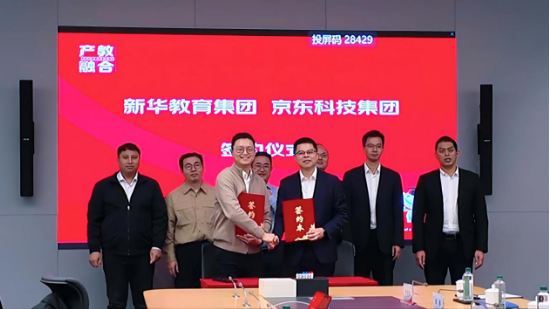
中国东方教育与京东科技集团达成战略合作 共筑产教融合新生态
Xin Lang Cai Jing· 2025-12-15 09:13
Core Viewpoint - China Oriental Education (00667.HK) has signed a strategic cooperation agreement with JD Technology Group to enhance vocational education and align it with industry needs, focusing on talent cultivation and course development [1][10]. Group 1: Strategic Cooperation - The partnership will focus on building industry colleges, talent training, course development, and internship employment [1][10]. - Both parties aim to create an integrated e-commerce talent training system that includes course learning, practical training, skill certification, and employment output [11][12]. Group 2: Educational Innovation - The collaboration will emphasize the development of e-commerce specialty programs and the formulation of digital economy talent training plans [11][12]. - Discussions at the "JD Industry College Strategic Cooperation Exchange Conference" highlighted innovative models for school-enterprise cooperation and modern industry college construction [12]. Group 3: Industry Integration - The cooperation is seen as a significant step towards deepening the integration of education and industry, aligning educational content with technological advancements in the industry [15]. - China Oriental Education aims to provide a learning platform that closely meets the real needs of enterprises, contributing to the cultivation of skilled talents [15].
全国低空经济行业产教融合共同体2025年度理事大会在济南召开
Zhong Guo Min Hang Wang· 2025-12-15 07:39
Core Insights - The conference focused on the theme "Unite and Start a New Journey," emphasizing the importance of the low-altitude economy and the integration of education and industry [1] - The National Low Altitude Economy Industry Education-Integration Community aims to enhance high-skilled talent supply for regional economic development [1] Group 1: Community Achievements - As of now, the community has 119 member units across 22 provincial-level administrative regions [2] - The community successfully held three sessions of the "Low Altitude Economy Development Seminar" and six sessions of the "Hundred Cities, Hundred Schools, Hundred Lectures" activities [2] - The community published two industry talent supply and demand lists and established the first low-altitude economy city-level education-industry joint community in Jinan [2] Group 2: Future Plans - The community's 2026 work plan was discussed, focusing on further integration of education and industry [3] - The community aims to address integration challenges with practical measures and gather quality resources with an open approach [3] - The successful hosting of the conference is expected to enhance consensus on low-altitude economic integration and outline the community's development blueprint for 2026 [3]
房山 打造独具历史沉淀的新质智造产业新城
Bei Jing Ri Bao Ke Hu Duan· 2025-12-14 23:40
Group 1: Core Development Strategy - The article emphasizes the commitment of Fangshan District to high-quality development under the guidance of Xi Jinping's thought, focusing on innovation, education, ecology, and culture as key drivers [1] - Fangshan aims to build a "new quality intelligent manufacturing industrial city" and a "cultural integration zone" by leveraging its educational and ecological resources [1] Group 2: Education and Talent Development - Fangshan is enhancing its educational and technological capabilities by expanding the Liangxiang University Town, increasing the student population from 46,000 in 2021 to 63,000, and attracting 549 industry-leading talents [6] - The establishment of new campuses for Beijing University of Technology and Beijing Petroleum and Chemical Institute is expected to further boost local talent reserves [6] Group 3: Technology and Innovation - The district has been approved as a national technology transfer center for green energy, enhancing its capacity for technology commercialization [7] - A total of 410 technology achievements have been identified for commercialization this year, with 22 successfully transformed locally, indicating a strong integration of technology and industry [7] Group 4: Industrial Development - Fangshan is focusing on green energy and new materials as its primary industries, supported by various government policies and collaborations with 36 universities and research institutions [10] - The district is developing a "materials valley" by leveraging its academic resources and has attracted nearly 150 quality enterprises in the new materials sector [10] Group 5: Infrastructure and Urban Development - Fangshan is enhancing its urban infrastructure, with significant upgrades in transportation and public services, including the construction of new schools and hospitals [15][16] - The district is implementing a comprehensive urban renewal strategy, with 236 key projects covering an area of 11.31 million square meters [15] Group 6: Cultural and Ecological Integration - The district is promoting cultural tourism by integrating historical and natural resources, with initiatives like the construction of the Liuli River Archaeological Park and various cultural events [12][13] - Fangshan aims to create a beautiful city that harmonizes culture and nature, enhancing its appeal as a tourist destination [12] Group 7: Community Well-being - Fangshan is prioritizing community needs by improving housing, education, and healthcare services, with a focus on enhancing the quality of life for residents [15][17] - The district has successfully completed the construction of 4,126 units of affordable housing, achieving the highest rate of public rental housing in the city [17]