Agent

Search documents
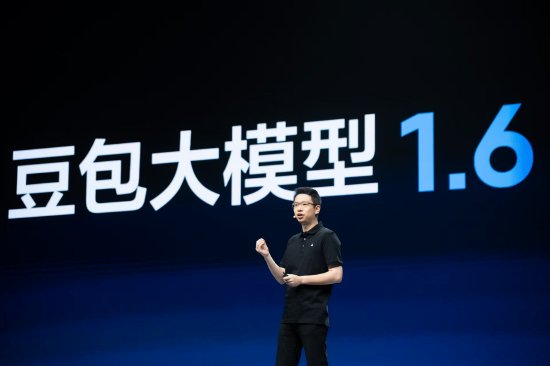
字节跳动推出豆包大模型1.6和视频模型Seedance 1.0,后者首次登顶全球视频生成竞技榜
Xin Lang Ke Ji· 2025-06-11 04:33
Core Insights - ByteDance's Volcano Engine launched new AI models including Doubao 1.6 and Seedance 1.0 pro, emphasizing the company's commitment to innovation and long-term investment in AI technology [1][2] - Doubao 1.6 model achieved top rankings in various authoritative assessments, showcasing its capabilities in complex reasoning and multi-turn dialogue [1][2] - Doubao models are widely adopted across major industries, serving 9 out of the top 10 global smartphone manufacturers and 70% of critical banks in China [2] Model Performance and Features - Doubao 1.6 supports multi-modal understanding and graphical interface operations, enabling it to perform real-world tasks such as hotel bookings and receipt organization [1][2] - Seedance 1.0 pro generates high-quality 1080P videos with seamless transitions, ranking first in international assessments for video generation tasks [2] - Doubao models have seen a significant increase in usage, with daily token consumption exceeding 16.4 trillion, a 137-fold increase since its initial launch [2] Pricing and Cost Efficiency - Doubao 1.6 introduced a pricing model based on input length, significantly reducing costs to 0.8 yuan per million tokens for input and 8 yuan for output in the most used input range [3] - Seedance 1.0 pro offers competitive pricing at 0.015 yuan per thousand tokens, making it the lowest in the industry for video generation [3] Technological Advancements - The Volcano Engine upgraded its AI cloud-native services, launching several new tools and frameworks to support Agent development and application [3] - ByteDance's AI programming product TRAE has over 1 million monthly active users, indicating strong internal adoption among engineers [4] - The transition to an AI-driven era is expected to redefine development paradigms, with Agents becoming proactive executors of complex tasks [4]

华泰证券今日早参-20250611
HTSC· 2025-06-11 01:23
Group 1: Communication Industry - Broadcom's CPO (Co-Packaged Optics) has made significant progress, launching a single-channel 200G CPO product series in May and delivering the Tomahawk 6 (TH6) switch chip in June, which supports both conventional and CPO versions [2] - The report anticipates that technology giants like Broadcom and NVIDIA will accelerate the advancement of CPO technology, fostering a mature ecosystem within the industry [2] - The outlook for the CPO industry is positive, with opportunities expected for related passive optical devices, optical chips, and optical engines, recommending companies such as Tai Chen Guang and Tianfu Communication, while suggesting to pay attention to Zhongji Xuchuang and New Yi Sheng [2] Group 2: Multi-Financial Industry - In May, the ETF market saw a total asset scale increase of 1.6%, with stock ETFs rising by 0.9%, indicating a stable growth trend despite market fluctuations [3] - Bond funds reached a record high with a net asset value of 284.1 billion, growing by 15% month-on-month, and their market share increased by 0.8 percentage points to 6.9% [3] - The report highlights the implementation of the "Action Plan for Promoting High-Quality Development of Public Funds," which aims to enhance the scale and proportion of equity investments in public funds, suggesting that stock ETFs may experience rapid growth opportunities [3] Group 3: Electronics and Computing Industry - The outdoor sports trend and the rapid growth of social media content are driving the transition of action cameras and panoramic cameras from niche products to mainstream creative tools for outdoor enthusiasts and short video users [4] - Key players in this emerging market include Ying Shi Innovation, GoPro, and DJI, with the industry expected to evolve towards "all-in-one" personal imaging devices [4] - Competition is shifting from hardware specifications to multi-dimensional competition involving AI, software ecosystems, and differentiated innovation capabilities [4] Group 4: Financial Engineering - The LLM-FADT strategy, based on the open-source model Qwen3-8b, has shown significant improvement over the previous BERT-FADT strategy, with annualized excess returns of 12.16% for the LLM-FADT Top25 CSI 300 index combination and 18.53% for the LLM-FADT healthcare sector combination [6] - The report emphasizes the effectiveness of the enhanced strategy in stock selection, particularly in the context of the healthcare sector [6] Group 5: Transportation Industry - The aviation sector is expected to perform well due to strong demand during the summer travel season and favorable oil exchange rates, with a long-term supply growth slowdown improving supply-demand dynamics [11] - The report recommends high-dividend Hong Kong road stocks, highlighting the stability of the road sector's performance and suggesting a focus on companies like China National Aviation and China Eastern Airlines [11] - The easing of tariffs has significantly boosted shipping rates, although market expectations may have already priced this in, leading to increased volatility in the sector [11]
环球问策|智源研究院王仲远:当前正是AI产品爆发的“前夕”
Huan Qiu Wang· 2025-06-10 04:42
Core Insights - The article discusses the advancements in AI large models, particularly the transition from text-based training to true multimodal capabilities, marking 2023 as a significant year for "Agent" products in the industry [1][3]. Group 1: Development of Large Models - The release of GPT-3 and GPT-4 has heightened awareness of the capabilities of large models, leading to a surge in innovative Agent products [1]. - The development direction of large models has focused on reinforcement learning to enhance training and reasoning, with examples like GPT-3 and DeepSeek R1 [3]. - The scaling law for large models remains valid, and achieving data quality comparable to human-generated data could enable self-learning capabilities in AI [3]. Group 2: Emergence of Agent Products - The industry is witnessing the emergence of various Agent products, with the potential for "killer applications" as foundational large model technologies mature [3][4]. - The introduction of "Wujie," a series of large models by Zhiyuan Institute, includes four models aimed at advancing physical AGI [4]. - RoboBrain 2.0, part of the "Wujie" series, has shown significant improvements in task planning accuracy and spatial intelligence performance [4]. Group 3: Entrepreneurial Opportunities - There is potential for one-person startups or small teams to create unique products based on large models if they possess deep domain knowledge [4]. - The article emphasizes the importance of specialized knowledge in entering the Agent field, rather than pursuing general applications [3]. Group 4: Industry Environment and Support - The article calls for a supportive environment from government and institutions to foster innovation and address risks in the rapidly evolving AI landscape [5]. - It advocates for a balanced view of industry development, encouraging collaboration between new research institutions, universities, and enterprises to stimulate innovation [5].
AI展望:NewScaling,NewParadigm,NewTAM
HTSC· 2025-06-10 01:43
Group 1: Global AI Outlook - The report highlights a new paradigm in AI development characterized by new scaling, new architecture, and new total addressable market (TAM) opportunities [1] - The demand for computing power is expected to rise due to advancements in both training and inference processes, potentially unlocking new TAMs [1][3] - The report maintains a positive outlook on AI industry investments, anticipating that global AI applications will enter a performance harvesting phase [1] Group 2: Model Development - The pre-training scaling law is anticipated to open a new starting point for model development, with significant innovations in architecture being explored [2][23] - The report notes that the classic transformer architecture has reached a parameter scale bottleneck, with existing public data nearly exhausted [2][20] - Major tech companies are experimenting with new architectures, such as Tencent's Hunyuan TurboS and Google's Gemini Diffusion, which may accelerate scaling law advancements [23][24] Group 3: Computing Power Demand - The report identifies a clear long-term upward trend in computing power demand, driven by both training and inference needs [3][32] - New scaling paths are emerging in the post-training phase, with ongoing exploration of new architectures that may reignite pre-training demand narratives [3][33] - The deployment of large-scale computing clusters, such as OpenAI's StarGate, is expected to support the exploration of pre-training [38] Group 4: Application Development - The report indicates that the rapid advancement of agent applications is leading to a performance harvesting phase for global AI applications [4][67] - The commercialization of agent products is accelerating, with domestic AI applications quickly iterating and entering the market [4][67] - The report emphasizes that agent applications are evolving from simple tools to complex solutions, with significant growth expected in various sectors [5][68] Group 5: Business Model Transformation - The shift from traditional software delivery to outcome-based delivery is highlighted as a key trend, with quantifiable ROI accelerating the adoption of agent applications [5] - Specific sectors such as consumer-facing scenarios (advertising, e-commerce) and AI in marketing/sales are expected to lead in commercialization due to their inherent advantages [5][67] - The report notes that AI applications in HR are transitioning from efficiency tools to strategic hubs, indicating a broader transformation in business models [5][67]




张津剑:投资中的频率与频谱 | 42章经
42章经· 2025-06-08 08:11
Group 1 - The core argument of the article is that the current state of human attention is deteriorating, leading to a loss of independent judgment and increasing societal fragmentation, while AI, through its attention mechanisms, is becoming more focused and goal-oriented [1][4][24] - The article discusses the differences between human and AI attention mechanisms, highlighting that AI can enhance its capabilities through computational power, while humans must rely on focus and restraint [1][4][6] - It emphasizes the importance of attention management for entrepreneurs and investors, suggesting that those who can concentrate their attention effectively will find more opportunities in the evolving landscape [15][20][40] Group 2 - The article explains the concept of attention as a filtering mechanism that helps humans process information amidst noise, likening it to a signal processing system [4][8][10] - It presents the idea that human perception is limited compared to processing and output capabilities, with a significant gap between the amount of information received and what can be acted upon [6][7] - The phenomenon of "herding" behavior is discussed, where individuals tend to follow trends rather than making independent decisions, leading to market bubbles and volatility [12][14] Group 3 - The article posits that the future of AI will involve a combination of sensors, agents, and embodied intelligence, which will allow for a broader spectrum of perception and processing capabilities [35][36] - It critiques current projects that are still centered around human capabilities, advocating for a shift towards an AI-centered approach in organizing work [37][38] - The unique values of humans in the AI era are identified as the ability to create demand and the capacity for aesthetic judgment, which AI lacks [39][44]

AI 狂卷 Agent,腾讯杠上字节
3 6 Ke· 2025-06-04 03:54
Core Insights - The article discusses the competitive landscape between Tencent and ByteDance in the AI model space, particularly focusing on the launch and integration of the DeepSeek R1 model by both companies, highlighting the ongoing price war and the anticipation for the next model, R2 [1][2][3] Group 1: Product Developments - Tencent quickly integrated the upgraded DeepSeek R1 model into multiple products, showcasing its commitment to AI advancements [1] - ByteDance's Volcano Engine also announced the integration of DeepSeek R1 and launched a promotional campaign offering new customers a 50% discount [2] - The R1 model has shown significant improvements in deep thinking capabilities, outperforming domestic models and nearing international standards [2] Group 2: Strategic Moves - Both Tencent and ByteDance are focusing on developing AI agents and intelligent systems to enhance enterprise applications, with Tencent upgrading its large model knowledge base to an agent development platform [3][4] - Tencent's strategy includes accelerating AI innovation, application, knowledge base construction, and infrastructure upgrades to integrate AI into various industries [4][5] - ByteDance is also pursuing a dual approach with both general and vertical AI agents, aiming to provide tailored solutions for different industries [10] Group 3: Market Competition - The competition between Tencent and ByteDance is intensifying, particularly in the automotive sector, where both companies are vying for partnerships with major car manufacturers [12][13] - Tencent has established a significant presence in the automotive industry, collaborating with over 100 clients, while ByteDance has formed alliances with multiple automotive manufacturers [12][13] - The article emphasizes the importance of AI applications in the automotive sector as a key battleground for both companies [12][13]


裁员了,很严重,大家做好准备吧!
猿大侠· 2025-06-04 02:55
Core Viewpoint - The article emphasizes the urgency for technology professionals to adapt to the rapid growth of AI applications, highlighting the need for skills in AI model development and application to avoid job displacement and to seize high-paying opportunities in the industry [1][2]. Group 1: Industry Trends - The demand for AI talent is surging, with major companies like Alibaba and ByteDance actively hiring AI model developers while simultaneously laying off traditional tech roles [1]. - There is a growing consensus among large firms regarding the urgency of accelerating AI application deployment, shifting focus from traditional coding skills to AI model experience [1][2]. Group 2: Learning Opportunities - The article promotes a free training program aimed at equipping participants with AI model application development skills, emphasizing the importance of understanding AI principles, application technologies, and practical project experience [2][4]. - The training includes live sessions with industry experts, covering typical business scenarios, technical architecture, and core principles of AI model technologies such as RAG, Agent, and Transformer [2][11]. Group 3: Career Development - The program offers insights into current job market trends for AI model roles, including salary expectations and career progression strategies from the perspective of hiring managers [6]. - Participants will have access to internal referral opportunities, enhancing their chances of securing high-paying job offers directly from major companies [6][8]. Group 4: Practical Application - The training includes hands-on experience with popular AI applications, allowing participants to build a portfolio of practical projects that can be showcased in job applications [8][11]. - The course aims to bridge the gap between technical knowledge and real-world application, helping participants to effectively implement AI solutions in various business contexts [4][11].

微信正在忙什么?从招聘信息看微信战略战术背后的逻辑与细节
Hu Xiu· 2025-06-04 02:04
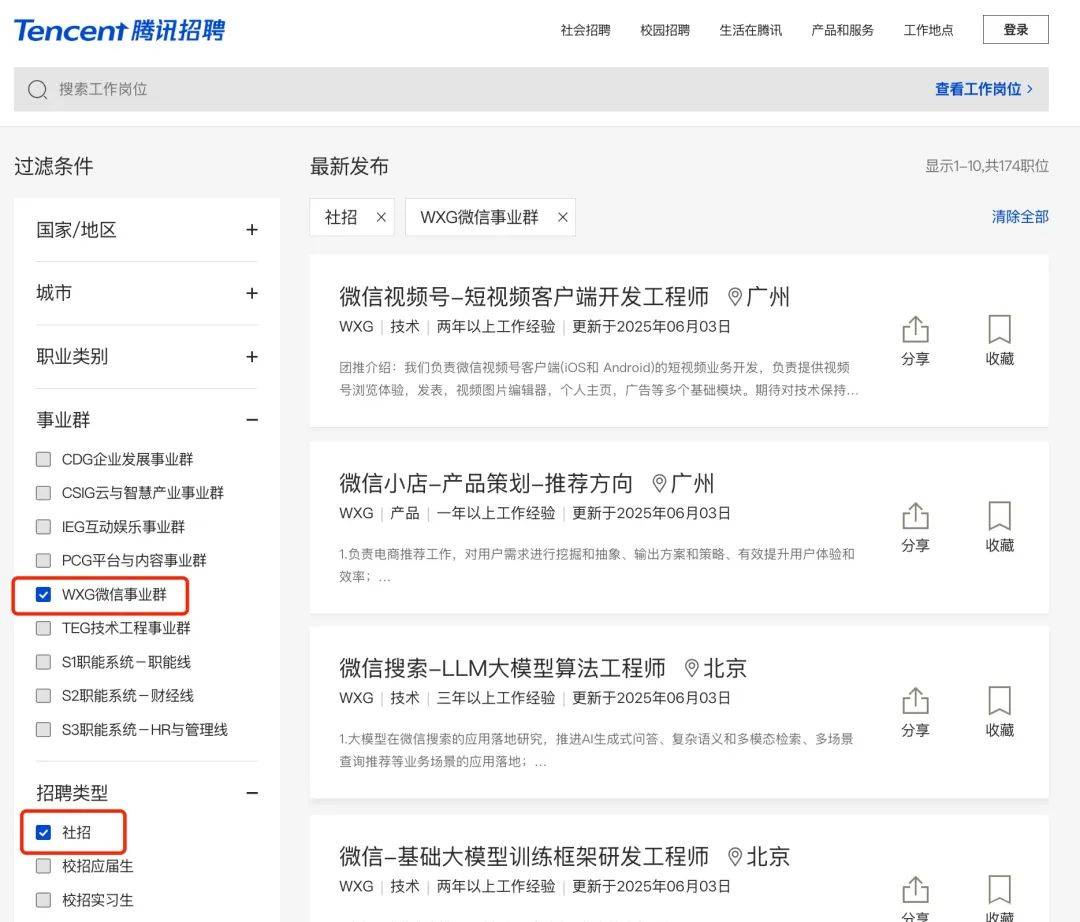
Core Insights - The article discusses the recruitment strategy of WeChat, highlighting its focus on AI and the implications for its business model and growth potential [2][12]. Group 1: Recruitment Data Analysis - WeChat has 170 job openings available for public viewing, which can be filtered by various criteria such as business group and job type [4][5][6]. - The recruitment data reveals that WeChat is actively hiring across multiple departments, with a significant number of positions related to AI and machine learning [30][31][56]. - The majority of job openings are located in Guangzhou, followed by Beijing, Shenzhen, and Chengdu, reflecting the strategic importance of these locations for talent acquisition [22][24]. Group 2: AI Integration - Approximately 50 job positions are directly related to AI, with an additional 30 in broader AI-related fields, indicating a comprehensive approach to AI integration across WeChat's services [30][31]. - WeChat is not only focusing on large models but is also developing smaller models for deployment on client-side applications, showcasing a dual approach to AI [46][47]. - The recruitment data suggests that WeChat is building its own foundational models, which may involve complex training processes, rather than solely relying on existing large models [34][41]. Group 3: Business Lines and Growth Strategy - The recruitment focus on enterprise WeChat, which has the highest number of job openings, indicates a strategic push to enhance its capabilities in this area [55][60]. - WeChat's small store initiative is also highlighted, with a significant number of positions aimed at product planning and operations, reflecting its ambition in the e-commerce space [72][73]. - The search function within WeChat is being prioritized, with 27 job openings specifically for technical roles, emphasizing the importance of technology in enhancing search capabilities [100][102]. Group 4: Overall Implications - The extensive recruitment across various departments suggests that WeChat is preparing for significant growth and transformation, particularly in AI and e-commerce [60][64]. - The focus on detailed job descriptions and requirements indicates a desire to reduce information asymmetry between the company and potential candidates, which may enhance recruitment efficiency [11][12]. - The strategic emphasis on AI and e-commerce positions WeChat to compete more effectively against rivals in the digital landscape, particularly in areas like enterprise solutions and online retail [64][95].
六大主流Agent横向测评,能打的只有两个半
Hu Xiu· 2025-06-02 09:45
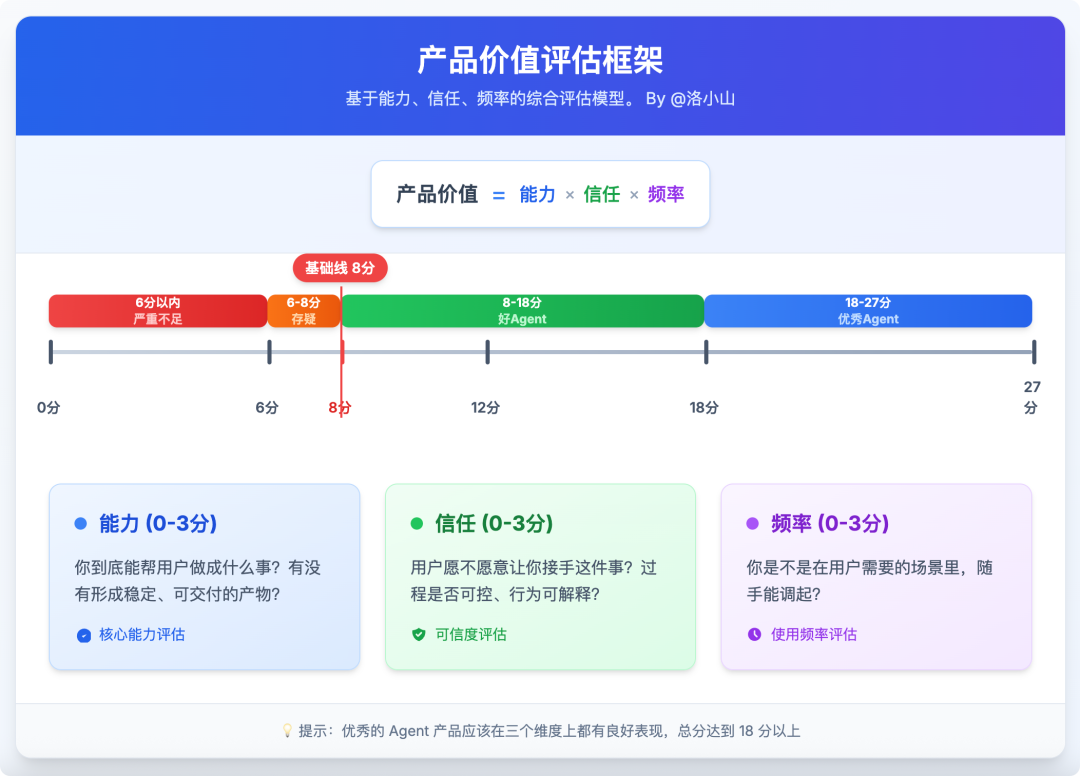
Group 1 - The future of AI Agents is anticipated to be significant over the next decade, with increasing acceptance from users for longer AI processes and cheaper tokens [1][4]. - Various Agent products have transitioned from demos to business/consumer applications, indicating a growing market [5]. - The evaluation of Agent products can be framed using the formula: Product Value = Capability × Trust × Frequency, with a baseline score of 8 indicating a good Agent [7][8]. Group 2 - The evaluation criteria for Agents include their ability to complete tasks, the trust users have in them, and how frequently they can be utilized in daily scenarios [9][11]. - Not all Agents will survive; those that can effectively balance these three dimensions will have a better chance of remaining relevant [13][14]. - The analysis of specific Agents reveals varying levels of capability, trust, and frequency, impacting their overall value [15][16]. Group 3 - Manus is noted for its rapid rise and fall, demonstrating the importance of user confidence in repeated usage [18][26]. - The product's ability to execute tasks was rated low due to its limited integration into daily workflows and inconsistent results [28][30]. - Despite its shortcomings, Manus highlighted a new paradigm for Agents, emphasizing the need for complete action chains rather than just conversational capabilities [30][32]. Group 4 - Douzi Space is recognized for its comprehensive task execution but struggles with user retention [35][37]. - It has a clear path for improvement and a solid framework, scoring 12 points in the evaluation [38][40]. - The potential for Douzi Space to become a leading Agent application is noted, contingent on its ability to integrate into user workflows effectively [41][44]. Group 5 - Lovart stands out as a productivity tool that effectively delivers results, scoring 18 points in the evaluation [45][54]. - It simplifies the design process by autonomously managing tasks, showcasing a high level of capability and trust [51][55]. - The product's reliance on user input for frequency remains a limitation, but its overall performance is highly regarded [58]. Group 6 - Flowith Neo offers a unique interaction model, allowing users to visualize processes, but may not be suitable for all users [60][68]. - Its ability to handle concurrent tasks and maintain context is a significant strength, scoring 9 points overall [73][66]. - The product's complexity may deter less experienced users, limiting its frequency of use [70]. Group 7 - Skywork is identified as a strong contender in the office application space, outperforming Manus in user experience [77][78]. - It effectively integrates user needs into its task execution, providing a structured approach to generating reports and presentations [82][89]. - Skywork's ability to deliver reliable outputs and maintain user trust positions it as a valuable tool in the market, scoring 18 points [101][100]. Group 8 - Super Magi represents a different category of Agents, focusing on operational efficiency within business systems [103][104]. - Its ability to automate routine tasks and integrate seamlessly into existing workflows enhances its utility [126][127]. - The product's performance in executing specific tasks reliably contributes to its high trust score, also rated at 18 points [128]. Group 9 - The overall analysis indicates that the sustainability of Agents in the market will depend on their ability to deliver consistent, reliable results while maintaining user trust [139][140]. - The distinction between generalist and specialist Agents is emphasized, with specialist Agents likely to have a competitive edge due to their focused capabilities [171][172]. - The evolving landscape of AI models raises questions about the future relevance of specialized Agents as general models become more capable [141][142].
“AI过时了,现在都在投Agent”
虎嗅APP· 2025-06-01 14:06
Core Viewpoint - The article discusses the emergence of the "Agent" technology as a significant trend in the AI sector, highlighting its potential to become the next "super APP" by 2025, driven by technological advancements and market demand [2][17]. Group 1: Technological Advancements - In 2025, Agent technology is expected to achieve significant progress, with companies like OpenAI, Cursor, and Manus making breakthroughs through Reinforcement Learning Fine-Tuning (RFT) and environmental understanding [2][7]. - The evolution from programming agents to general-purpose agents and the potential of vertical products like Vantel and Gamma demonstrate the expanding capabilities of Agent technology [2][7]. - Specific applications, such as Sweet Spot for grant applications and Gamma for AI-assisted PPT creation, showcase the enhanced functionality and user experience of Agent products [7][8]. Group 2: Market Potential and Commercialization - 2025 is viewed as the year of commercialization for Agent AI, with applications expanding across various sectors, including office and vertical agents [5][8]. - The financing landscape for AI Agents has been robust, with over 66.5 billion RMB raised in 2024, and significant investments in areas like autonomous driving and humanoid robots [5][10]. - Investment strategies focus on the practical implementation of technology and market feedback, with a strong emphasis on the commercial viability of vertical applications [5][10]. Group 3: Industry Trends and Policy Support - The development of the Agent sector is bolstered by favorable national policies, technological advancements, and increasing market demand, leading to a growing market size and diverse product needs [9][10]. - The enthusiasm from investment institutions has surged, with a notable increase in project activity and a shift towards early-stage investments in AI applications [9][10]. - Major companies in the Agent space have attracted significant funding, such as OpenAI's acquisition of Windsurf for $3 billion and Cursor's $900 million funding round [10]. Group 4: Future Outlook - The Agent sector is poised for historic growth in 2025, benefiting from the release of large model technology and a decrease in AI inference costs [6][9]. - The integration of Agents into various industries, including power, finance, and manufacturing, is already underway, indicating a trend towards normalization of Agent applications [6][8]. - The potential for Agents to evolve into super applications hinges on their ability to solve specific problems and integrate seamlessly with existing software ecosystems [18][19].