
数字化转型

Search documents
数字化转型加速激发新活力,美团面向老字号免费开放AI工具
Sou Hu Cai Jing· 2026-02-09 05:54
Core Insights - The conference on February 6, 2026, focused on the theme "Innovation while Upholding Tradition" and aimed to discuss digital transformation and AI strategies for traditional Chinese brands [1] Group 1: Digital Transformation Initiatives - The China Commercial Federation and Meituan have launched a digitalization initiative for traditional brands, providing free digital service packages to dozens of brands over three years [1] - A total of 206 traditional restaurant brands and 6,027 stores have completed their online integration, covering 234 cities nationwide [1] - The search volume for traditional brands on Meituan and Dianping has increased nearly ninefold in the past year, with order volume rising by 34% and annual transaction growth rate stabilizing at over 27% [1] Group 2: AI Integration in Operations - Over half of traditional brands are utilizing AI tools to assist in operational decision-making, combining traditional experience with data-driven insights [4] - Meituan's AI tools, such as the "Smart Steward," have helped over 1.5 million users with reservations, significantly reducing manual data collection time for store managers [3][4] - The "Smart Ordering" feature enhances customer experience by allowing pre-ordering during wait times, improving table turnover rates and reducing labor costs [3] Group 3: Future Directions and Support - Meituan has launched the "AI Toolbox for Traditional Dining," offering free access to core AI tools and one-on-one business optimization services [6] - The company aims to provide not just traffic support but also ensure predictable growth by enhancing collaboration in scenarios, experiences, and technology [8]


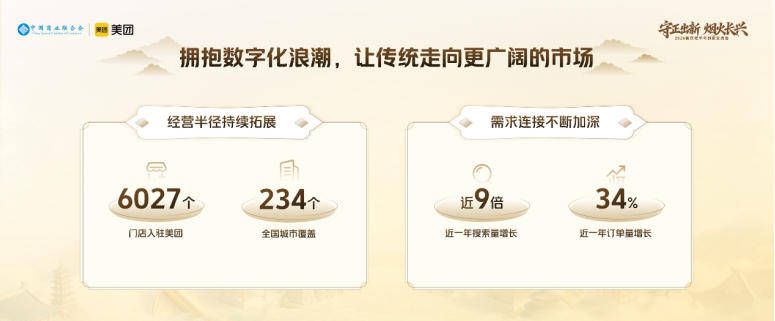
美团副总裁魏巍:老字号对年轻消费群体的吸引力增强,近一年搜索量增长近9倍
Xin Lang Cai Jing· 2026-02-09 04:00
Core Insights - The 2026 Restaurant Old Brand Innovation Exchange Conference was held in Beijing, revealing significant advancements in the online presence of traditional dining brands [1][2] - There is a notable increase in the appeal of old brands to younger consumers, with search volume on Meituan and Dianping increasing nearly 9 times and order volume growing by 34% over the past year [1][2] - The annual compound growth rate of transaction value for these brands remains stable at over 27%, with consumers aged 35 and below accounting for 48.5% of the customer base [1][2] Transformation Paths - The transformation of old brands is occurring through three main pathways: 1. Omnichannel integration, exemplified by Ziguangyuan's collaboration with Meituan, which has led to a 7-fold increase in annual sales of its yogurt product [1][2] 2. Monetization of cultural value, as demonstrated by Quanjude's "Sky Four Courtyards" concept, which has increased average transaction value by 25% and repurchase rate by 18% [1][2] 3. Accelerated digital transformation, with AI tools becoming essential for operational efficiency; Meituan's AI dining assistant "Smart Manager" has assisted over 1.5 million users in making reservations [1][2]
十年回A路越走越窄,“准万亿”天津银行的心病
Bei Jing Shang Bao· 2026-02-09 03:43
Core Viewpoint - Tianjin Bank is facing significant challenges as it approaches its 30th anniversary, particularly regarding its long-delayed A-share listing and the need for performance recovery and digital transformation [1][3][15] Group 1: A-Share Listing Challenges - Tianjin Bank has been unable to obtain the necessary external approvals for its A-share listing since initiating the process in 2015, making it the only city commercial bank among the four directly governed municipalities that has not yet listed on A-shares [3][5] - The bank's A-share listing journey has been prolonged, with the IPO market for banks in A-shares experiencing a significant slowdown, leading to a lack of new listings since 2022 [3][5] - The bank's market valuation has declined significantly since its initial public offering in Hong Kong, with its market capitalization dropping from 445.69 billion HKD at listing to approximately 143.9 billion HKD by February 2026 [5][6] Group 2: Financial Performance and Growth - Tianjin Bank's net profit has fluctuated over the past decade, peaking at 49.16 billion CNY in 2015 before entering a period of volatility post-listing, with a notable decline to 31.96 billion CNY in 2021 [7][8] - As of the end of Q3 2025, the bank reported a net profit of 35.27 billion CNY, reflecting a year-on-year growth of 5.47%, indicating a potential recovery trend [8][9] - The bank's total assets reached 968.9 billion CNY by Q3 2025, marking a 4.63% increase from the beginning of the year, positioning it close to the 1 trillion CNY milestone [8][9] Group 3: Strategic Shift in Lending - The bank has shifted its focus from rapid personal loan growth to increasing corporate lending, responding to risks associated with its previous aggressive expansion in personal loans [10][12] - By the end of 2024, personal loans accounted for only 21.5% of the bank's total loans, down from a peak of 43.3% in 2019, while corporate loans rose to 73.6% [12][13] - The bank's corporate lending strategy is closely aligned with regional economic development, focusing on key industries such as leasing, environmental management, and retail [13][14] Group 4: Future Directions and Innovations - As it approaches its 30th anniversary, Tianjin Bank is exploring new growth avenues, including a partnership in consumer finance with JD Group, aiming to leverage technology and customer resources [15][16] - The bank is also enhancing its governance by recruiting external talent for key management positions, aiming to strengthen its operational capabilities and support its transformation [15][16] - The focus on digital transformation is critical, with initiatives to streamline processes and improve service efficiency, particularly for small and medium-sized enterprises [16][17]

锚定农业农村现代化 北京农商银行 金融服务乡村振兴纪实
Jin Rong Jie Zi Xun· 2026-02-09 02:06
Core Viewpoint - The 20th Central Committee's Fourth Plenary Session emphasizes the strategic deployment for accelerating agricultural and rural modernization, highlighting its significance for China's overall modernization and economic development [1] Group 1: Agricultural Modernization and Financial Support - The "14th Five-Year Plan" has solidified the foundation for China's economic development, ensuring food security for over 1.4 billion people and improving farmers' living standards [1] - Beijing Rural Commercial Bank has invested over 680 billion yuan in rural revitalization loans, consistently achieving "excellent" ratings in financial service assessments for rural revitalization over the past five years [1] Group 2: Innovative Financial Services - The bank has introduced the "Rural Revitalization Financial Assistant" model, deploying 132 financial assistants across various districts to provide tailored financial services directly to rural areas [2] - The "Nongqing Station" initiative serves as a comprehensive rural financial service center, offering a range of services beyond basic banking, with 21 stations established by the end of 2025 [2] Group 3: Channel Development and Emergency Response - The bank is expanding its rural financial convenience stores, aiming for over 1,400 locations by the end of 2025 to meet diverse financial needs in rural areas [3] - During the 2023 flood disaster, the bank quickly implemented a special financial service plan, providing nearly 100 million yuan in support to over 60 affected entities [3] Group 4: Community Support and Economic Development - The bank collaborates with local hospitals to provide medical services in rural areas and assists in marketing agricultural products to enhance farmers' income [4] - It has launched various innovative financing products tailored to the agricultural sector, including the "Phoenix Flying" brand, which encompasses 29 specialized financing products [5][6] Group 5: Digital Transformation and Technological Empowerment - The bank is leveraging digital technology to reshape financial services for agriculture, with multiple projects included in a national financial technology initiative [7][8] - It has developed a credit rating system integrating big data and risk control models, successfully rating over 12,819 rural households by the end of 2025 [8] Group 6: Future Outlook - The bank aims to continue enhancing its product service system and deepening the application of financial technology to provide convenient and high-quality financial services to more agricultural stakeholders [9]
内蒙古东胜区:环境聚势 活力迸发
Huan Qiu Wang· 2026-02-09 01:25
Core Viewpoint - The focus of the report is on the high-quality development of Dongsheng District in Ordos City, Inner Mongolia, emphasizing the continuous optimization of the business environment, activation of investment opportunities, and strengthening of innovation capabilities to foster economic growth and attract investment [1]. Business Environment Optimization - The business environment is crucial for attracting and retaining businesses, with a recent meeting involving over 30 young private entrepreneurs and district officials discussing policies aimed at talent recruitment, enterprise support, and innovation [2]. - The introduction of a "no human intervention, immediate approval" service for individual business registrations has significantly improved efficiency, allowing entrepreneurs to obtain business licenses in under 10 minutes [4][5]. - The total number of market entities in Dongsheng has grown to 128,600, ranking 22nd among China's top 100 districts for investment potential, reflecting the district's efforts to lower market entry barriers and stimulate market vitality [5]. Government Services and Support - Dongsheng District has implemented a series of measures to enhance government services, including a "one-stop" service model, strict time limits for approvals, and flexible enforcement policies to reduce burdens on businesses [7]. - The district has actively engaged in communication with enterprises to understand their needs and provide tailored support, including a special action plan to alleviate business difficulties [7]. Investment Attraction and Project Support - The district has adopted a proactive approach to investment attraction, with leaders visiting key cities to engage with potential investors in strategic industries such as renewable energy and high-end manufacturing [8]. - A recent financing event resulted in a notable signing amount of 2.268 billion yuan, showcasing the district's ability to facilitate efficient connections between funding and projects [8]. - Dongsheng provides comprehensive support for major projects, from planning and approval to construction and operation, ensuring a streamlined process for investors [9][11]. Innovation Environment - The establishment of the Ordos Wanjie Intelligent Computing Center, a 1 billion yuan investment project, highlights the district's commitment to building advanced computing infrastructure and fostering partnerships with various enterprises [15]. - The district has seen significant advancements in technology and innovation, with numerous high-tech companies emerging and collaborations with educational institutions to address local industry challenges [19]. - The implementation of the "Talent Strong District" policy has successfully attracted over 11,300 high-level talents, contributing to a total talent pool exceeding 89,000 [19].
【展望二〇二六】推动全球经济在调整中前行
Sou Hu Cai Jing· 2026-02-08 23:18
Core Viewpoint - The global economy is at a critical crossroads as it enters 2026, facing long-term low growth risks despite resilience shown in 2025 against U.S. tariff increases. Investment stagnation and limited fiscal space remain significant issues, with a complex interplay of resilience, risks, and restructuring expected throughout 2026 [1]. Economic Growth and Manufacturing - In 2025, the global economy maintained growth despite significant U.S. tariff hikes, supported by stable consumer spending and declining inflation. However, the manufacturing sector showed weak recovery, with the global manufacturing PMI averaging 49.6%, indicating a slight improvement from 2024 [2]. - Regional disparities in manufacturing performance were evident, with Asia and Africa showing PMIs above 51% and 50%, respectively, while Europe and the Americas remained below 50%, particularly the Americas at below 48% [2]. Inflation and Trade - Global inflation eased to approximately 3.4% in 2025, down from peaks between 2021 and 2023, providing central banks with more policy space, although living costs continue to rise, affecting low-income groups [3]. - Global trade grew by 3.8% in 2025 despite adverse policy environments, driven by "front-loading" behaviors due to anticipated tariff increases. However, this trend may pressure trade growth in 2026 [3]. Debt and Economic Forecasts - Global debt reached $345.7 trillion by September 2025, 3.1 times the global GDP, with developed markets' debt hitting a historical peak of $230.6 trillion, raising systemic risk concerns [3]. - Major international economic institutions predict a slowdown in global economic growth for 2026, with the IMF forecasting a growth rate of 3.3% and the UN projecting 2.7%, both lower than 2025 estimates [4]. Emerging Markets and Regional Growth - Emerging markets and developing economies are expected to remain key growth drivers, with a growth rate of 4.2% in 2025 and projections of over 4.0% for 2026-2027 [5]. - The Asian economy is anticipated to continue driving global recovery, with growth rates of 4.4% in East Asia and 5.6% in South Asia for 2026 [6]. Trade Growth and Protectionism - Global trade growth is expected to slow to 2.2% in 2026, with the WTO predicting a more pessimistic 0.5% growth, indicating a potential stagnation in trade dynamics [6]. - The uncertainty surrounding U.S. tariff policies remains a significant downside risk for the global economy in 2026, with trade tensions likely to persist [7]. Geopolitical Risks and Debt Concerns - Geopolitical tensions and protectionism are major risks for 2026, with the U.S. tariff policies impacting global trade norms and creating uncertainty [7]. - The debt situation in developed countries remains precarious, with the U.S. federal debt nearing $39 trillion, while developing countries face significant debt repayment challenges [8]. Technological Advancements - The AI revolution is accelerating its penetration into the real economy, with predictions that AI will contribute approximately 0.5% to global economic growth annually from 2025 to 2030 [9]. - Investment in digital transformation is becoming a new engine for global investment, despite a decline in foreign direct investment overall [9]. Regional Economic Integration - Regional economic integration is advancing, with agreements like RCEP enhancing trade facilitation and industrial chain integration, creating new opportunities for global economic growth [10]. Global Economic Landscape - The global economic landscape in 2026 will be shaped by various factors, including China's focus on domestic demand and innovation, U.S. tariff policies, and the structural opportunities presented by AI and green industries [11].
“黑灯”车间里 AI读懂每一只叶片
Xin Lang Cai Jing· 2026-02-08 21:39
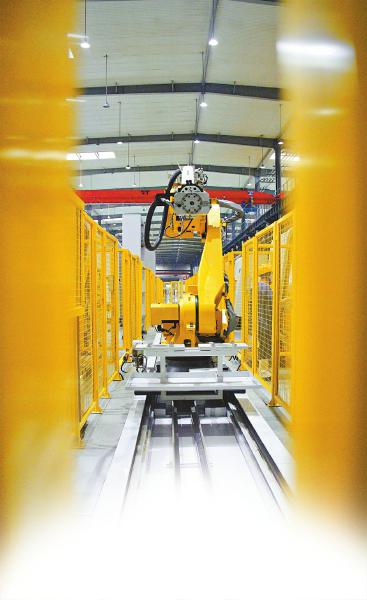
-1 KI HINGHITE STAR the state of the status and a ware a 110 430 7 11 GD GD CED 450 PATT C e S C9 S T y ● □四川日报全媒体记者 陈丽霏"慧眼" ●加工精度稳定控制在0.03毫米以内,产品合格率稳定在99.8%以上 ●车间24小时自主运行,智慧供料仅需 40秒,产线人均效率提升650% ●系统如同行车记录仪,能完整追溯叶片尺寸的细微偏差或质量预警 "智脑" ●精准捕捉、实时核算生产成本,并转化为清晰的可视化图表 ●不仅能监控设备是否在运转,更能判断运转是否经济 ●所有生产行为都转化为成本流,推动决策从凭感觉转向靠数据驱动 "我们的核心目标,是让生产线自己认识不同的叶片,实现全流程智能衔接与决策。"数字化与智能制造部副部长 王琨回忆当时情形。一支百余人的技术团队接下这个重担,历时8个月,在一体化智能设计、多品种柔性混线控制 等关键技术上取得突破。2022年8月,国内首个叶片加工无人车间及首条"黑灯产线"在这里投入运行。 老厂名片 AI"慧眼" 东方汽轮机厂始建于1966年,隶属于中国东方电气集团,是我国从事电 ...
陈冬梅:企业健康保障 迎来历史性发展机遇
Xin Lang Cai Jing· 2026-02-08 20:36
Core Viewpoint - The development of corporate health insurance in China is transitioning from an "administrative cost" to a "strategic investment," presenting a historic opportunity for growth [1][2] Group 1: Strategic Importance of Corporate Health Insurance - Corporate health insurance serves as a bridge between national basic security and individual protection, addressing challenges such as aging population, chronic disease burden, and rising medical costs [1] - It plays a crucial role in enhancing the social security network and supports high-quality economic development, with its value extending beyond traditional welfare [1] - The strategic significance is highlighted in three areas: 1. Building a multi-tiered insurance system to supplement basic medical insurance and alleviate fiscal pressure on the state [1] 2. Acting as a core competitive advantage for companies to attract and retain talent, as employee health directly impacts innovation and operational efficiency [1] 3. Utilizing risk-sharing mechanisms to stabilize labor cost expectations and enhance economic resilience [1] Group 2: Digital Transformation and Future Trends - The social security policy in China is shifting from "broad coverage" to "optimized structure," creating a historic opportunity for corporate health insurance [2] - Digital transformation is driving corporate health insurance from "post-event compensation" to "full-cycle health management" encompassing prevention, treatment, and rehabilitation [2] - Insurance companies can leverage big data for precise pricing and AI to optimize claims processes, developing diversified innovative products to meet new demands such as chronic disease management and mental health [2] - The white paper provides a comprehensive overview of the current state, policy environment, and practical cases of corporate health insurance, offering guidance for optimizing insurance systems and serving as a catalyst for industry innovation and institutional design [2]
北京经营主体发展质量全国“三连冠”
Xin Lang Cai Jing· 2026-02-08 18:30
Core Insights - Beijing's market regulation efforts have shown significant results, with a focus on enhancing the vitality of business entities and improving development quality, which has ranked first in the nation for three consecutive years [1][2] Group 1: Business Entity Growth - In 2025, Beijing saw the establishment of 380,100 new business entities, bringing the total to 2,869,700, a year-on-year increase of 6.83%, with over 40% being technology-based enterprises [1] - The survival rate of enterprises has remained above 75% for the past three years, indicating a robust business environment [1] Group 2: Regulatory Innovations - Beijing has introduced a series of local standards for business registration services and innovative models for equity trust property registration, enhancing the regulatory framework [1] - The city has implemented 20 new regulations for business premises registration and launched a "cloud service" for credit repair, benefiting 80,000 business entities [1] Group 3: Safety and Quality Regulation - The food safety regulatory framework has been strengthened, with a full-chain supervision mechanism and a lifecycle management system for pharmaceuticals successfully launched [2][4] - The city has approved 34 innovative drugs and medical devices, and the advertising industry has seen an 8.2% increase in revenue [2] Group 4: Consumer Protection and Market Order - Efforts to protect consumer rights and maintain market order include the crackdown on deceptive practices in live commerce and the establishment of a monitoring platform for live e-commerce [2][6] - Beijing plans to build 100 consumer rights protection service stations and 50 consumer education bases to enhance consumer satisfaction [5] Group 5: Future Regulatory Focus - In 2026, the focus will be on addressing public concerns and high-quality development needs, including safety assessments for old elevators and enhancing the functionality of electronic scales [3][4] - The city aims to deepen the digital transformation of market regulation, improving databases for business entities and regulatory subjects to enhance oversight capabilities [6]
多家银行上调动账短信通知门槛
Zheng Quan Ri Bao· 2026-02-08 16:52
本报记者 彭妍 近期,部分银行相继上调存取款等动账短信通知的起点金额。例如,招商银行近日在官网发布公告称,自2026年3月16日 起,该行将优化账户变动短信通知服务。调整后,对未开通账户变动短信通知服务的客户,该行将不再发送单笔5000元(含) 以下的经人行大小额系统汇入汇款交易通知短信。招商银行提示,客户可通过招商银行App、个人银行PC版或网点渠道办理账 户变动短信通知服务,或通过招商银行App开通免费消息中心功能。 同日,平果国民村镇银行也通过微信公众号发布公告,自2026年2月10日起将个人账户短信通知交易金额起点调整至200元 (含)。对于调整原因,该行表示,此举是为向客户提供更优质的金融服务,同时顺应金融科技的发展趋势。 另据记者梳理,去年以来,已有包括中国银行、民生银行、广东华兴银行、湖北银行、甘肃银行等在内的十余家银行,陆 续提高了银行卡交易免费短信通知的门槛。 南开大学金融学教授田利辉在接受《证券日报》记者采访时表示,此类调整是推动渠道迁移的关键性市场信号,是通过价 格杠杆清晰地引导用户行为。传统短信通知模式作为外购、被动、单向的通信管道,正被银行自有、交互、可运营的数字化平 台所替代。长远 ...
