碳中和

Search documents
钢铁ETF(515210)近20日资金净流入超10亿元,资金积极布局,产业集中度提升
Mei Ri Jing Ji Xin Wen· 2026-01-26 03:16
Group 1 - The long-term trend in the steel industry is expected to be an increase in industry concentration and promotion of high-quality development [1] - Demand for steel is anticipated to gradually bottom out, with limited downward pressure; the negative impact of the real estate sector on steel demand has significantly weakened [1] - Steel demand from infrastructure and manufacturing sectors is expected to grow steadily [1] Group 2 - Approximately 60% of steel companies are currently operating at a loss, indicating a prolonged period of micro-profitability in the industry [1] - Market-driven supply adjustments are beginning to occur, suggesting a gradual recovery in the steel industry's fundamentals [1] - If supply policies are implemented, the contraction of industry supply may accelerate, leading to quicker progress in industry recovery [1] Group 3 - Under stricter environmental regulations and the context of ultra-low emissions and carbon neutrality, leading companies are expected to demonstrate enhanced competitive advantages and profitability [1] - The steel ETF (515210) tracks the CSI Steel Index (930606), which reflects the overall performance of listed companies in the steel industry [1] - The index covers various sub-sectors, including general steel and special steel, capturing the cyclical characteristics and market dynamics of the steel industry [1]
政策驱动治理升级,环境监测潜能释放
GOLDEN SUN SECURITIES· 2026-01-26 03:10
Investment Rating - The report maintains a "Buy" rating for the environmental sector, indicating a positive outlook for investment opportunities in this industry [4]. Core Insights - The environmental monitoring sector is expected to benefit from dual policy and demand drivers, with new guidelines promoting the integration of pollution site remediation and development, creating multiple growth opportunities in soil remediation and environmental consulting [1][12]. - The report highlights the release of guidelines for air quality performance grading, which aims to incentivize green transformation in key industries, thus providing growth opportunities in air pollution control and environmental monitoring [1][20]. - The environmental sector has shown strong performance, outperforming the broader market indices, with significant gains in various sub-sectors such as monitoring, water treatment, and energy conservation [3][24]. Summary by Sections Investment Views - The report discusses the recent issuance of guidelines by three departments to enhance the connection between pollution site remediation and development, marking a shift in China's approach to soil remediation [9][12]. - It emphasizes the importance of differentiated management in air quality performance grading, which encourages advanced enterprises to innovate and improve their environmental performance [13][20]. - The current macroeconomic environment, characterized by historically low interest rates, presents a favorable backdrop for investing in high-dividend and growth-oriented companies within the environmental sector [22]. Market Performance - The environmental sector has outperformed major indices, with a reported increase of 4.72% compared to a 0.84% rise in the Shanghai Composite Index [24]. - Notable sub-sector performances include monitoring (5.55%), energy conservation (7.99%), and solid waste management (5.67%) [24]. - Top-performing stocks in the environmental sector include Xuelang Environment (39.12%), Xuedilong (13.17%), and Longjing Environmental Protection (11.70%) [24]. Industry News - The report notes the release of the 2026 version of hazardous waste management guidelines, aimed at improving the classification and management of hazardous waste [35]. - It highlights the recognition of several companies as zero-carbon factories in Henan Province, reflecting ongoing efforts in energy efficiency and carbon reduction [36]. - The report also mentions the selection of key enterprises in Shanxi Province's industrial chain, indicating a focus on enhancing regional industrial capabilities [36].
贵金属延续强势,化工板块集体大涨
Dong Zheng Qi Huo· 2026-01-26 01:31
1. Report Industry Investment Ratings Not provided in the given content. 2. Core Views of the Report - The dollar index is expected to weaken in the short - term due to increased domestic conflicts over illegal immigration in the US [11][12]. - US stocks are expected to maintain high - level volatility during the earnings season, with increased volatility [16][17]. - Precious metals are likely to see increased short - term volatility, and investors should be aware of the risk of a pullback after a continuous sharp rise [20]. - The bond market is experiencing a short - term rebound, and it is more cost - effective to short after the upward momentum fades [21][22]. - The stock index long - position strategy should be continued [23][24]. - Coking coal is expected to be weak and volatile in the short - term as supply is at a high level and downstream restocking has ended [25][26]. - Steel prices are expected to be volatile before the Spring Festival, and it is recommended to hedge inventory at high prices if there is a price rebound [31]. - Palm oil is likely to be easy to rise and difficult to fall in the short - term, and the price of soybean oil is expected to be supported before the US biofuel policy is released [35]. - The outlook for soybean meal exports is not optimistic, and the 5 - month contract is likely to be weak if there are no major abnormalities in South American production [37][38]. - The domestic sugar market is expected to be weakly volatile in the short - term due to seasonal supply pressure and limited demand [42]. - Zhengzhou cotton is expected to be adjusted in a volatile manner before the Spring Festival, with long - term bullish views unchanged [47]. - Copper prices are likely to be volatile in the short - term, and it is recommended to wait and see in the short - term and look for opportunities to go long at low prices in the medium - term [51]. - Lead prices are expected to be in low - level volatility, and it is recommended to wait and see both unilaterally and in arbitrage [53][54]. - Zinc prices are expected to remain in high - level volatility, and it is recommended to wait and see unilaterally, pay attention to long - position opportunities in the far - month contracts for arbitrage, and wait and see in the domestic - foreign arbitrage [57]. - Lithium carbonate prices are likely to be easy to rise and difficult to fall, and a bullish strategy is recommended with attention to position control and risk management [60][61]. - Tin prices are expected to be in wide - range volatility in the short - term, and attention should be paid to the implementation of supply recovery expectations and consumption recovery [65]. - Nickel prices are expected to be easy to rise and difficult to fall, and it is recommended to look for opportunities to go long at low prices [66][67]. - EU carbon prices are expected to be strong in the short - term [68][69]. - Oil prices are expected to be supported by short - term geopolitical conflicts and supply disruptions [71][72]. - The bottle - chip market is expected to see a mild recovery in processing fees around the Spring Festival [76]. - The container shipping index is expected to be weakly volatile in the short - term [78]. 3. Summary by Directory 3.1 Financial News and Comments 3.1.1 Macro Strategy (Foreign Exchange Futures - US Dollar Index) - Europe is estimated to need $1 trillion to restructure its defense industry. The shooting of a US citizen by ICE has intensified domestic conflicts over illegal immigration, causing the dollar index to weaken. The Trump administration is expected to maintain a tough stance on illegal immigration, and market volatility will remain high. The dollar index is expected to weaken in the short - term [9][11][12]. 3.1.2 Macro Strategy (US Stock Index Futures) - The final value of the University of Michigan Consumer Sentiment Index in the US in January was 56.4, reaching a five - month high. The preliminary value of the US S&P Global Manufacturing PMI in January was 51.9. The US economy shows resilience, and the Fed is unlikely to cut interest rates in the short - term. The market is worried about the Fed's independence, and US stocks are expected to maintain high - level volatility during the earnings season [13][14][16]. 3.1.3 Macro Strategy (Gold) - The US is expected to obtain "sovereignty" over the area where the US military base on Greenland is located. The preliminary value of the US S&P Global Manufacturing PMI in January was 51.9. The New York Federal Reserve Bank conducted a "rate check" on the US dollar/yen exchange rate. Precious metals continued to rise strongly on Friday, reaching a new high. The market is trading on the safe - haven and de - dollarization needs caused by the tense situation between the US and Europe. The sharp rise of the yen and the fall of the dollar after the US and Japan jointly signaled to intervene in the foreign exchange market boosted the precious metals. However, the short - term market is dominated by sentiment and funds, and the risk is increasing. Precious metals are likely to see increased short - term volatility, and investors should be aware of the risk of a pullback [18][19][20]. 3.1.4 Macro Strategy (Treasury Bond Futures) - The central bank conducted a 7 - day reverse repurchase operation of 125 billion yuan, with a net investment of 38.3 billion yuan. The bond market continued to strengthen, mainly due to the alleviation of previous concerns. However, there are still long - term negative factors, and it is more cost - effective to short after the upward momentum fades [21][22]. 3.1.5 Macro Strategy (Stock Index Futures) - The CSRC issued a guidance on the performance comparison benchmark for public funds. Due to strong bullish expectations, funds flowed into small - cap stocks, causing market differentiation. The regulatory authorities are expected to take stricter and more precise measures to limit excessive speculation, and the market is likely to remain in high - level volatility. It is recommended to continue to hold the long - position strategy for the stock index [23][24]. 3.2 Commodity News and Comments 3.2.1 Black Metals (Coking Coal/Coke) - The coking coal price in the Changzhi market remained stable. The supply in some areas increased slightly, while the downstream restocking ended, and the market sentiment declined. Coking coal is expected to be weak and volatile in the short - term [25][26]. 3.2.2 Black Metals (Rebar/Hot - Rolled Coil) - The global crude steel output in 2025 was 1.849 billion tons. In mid - January 2026, the daily output of key steel enterprises decreased slightly, and the inventory increased. Before the Spring Festival, steel prices are expected to be volatile and may rebound slightly. It is recommended to hedge inventory at high prices if there is a price rebound [27][29][31]. 3.2.3 Agricultural Products (Soybean Oil/Rapeseed Oil/Palm Oil) - The EU plans to gradually phase out soybean biofuels. The establishment of the Southeast Asian Sustainable Aviation Fuel Council. The actual soybean crushing volume of domestic oil mills increased, and the estimated volume for the next week is higher. The palm oil market is supported by inventory reduction and Ramadan expectations, and the price of soybean oil is expected to be supported before the US biofuel policy is released [32][34][35]. 3.2.4 Agricultural Products (Soybean Meal) - The US weekly soybean export sales reached the highest level of the year. The domestic oil mill soybean crushing volume increased, and it is expected to remain high. The outlook for soybean meal exports is not optimistic, and the 5 - month contract is likely to be weak if there are no major abnormalities in South American production [36][37][38]. 3.2.5 Agricultural Products (Sugar) - The amount of sugar waiting to be shipped at Brazilian ports increased. The sugar production in the central and southern regions of Brazil decreased in the second half of December. The domestic sugar market is under seasonal supply pressure, and the demand is limited. It is expected to be weakly volatile in the short - term [39][41][42]. 3.2.6 Agricultural Products (Cotton) - The import of Indian cotton yarn decreased, while the import of polyester - cotton blended yarn increased. The EU's clothing import rebounded in November 2025, and the import from China increased. The US cotton export signing reached a new high, but the export progress is still behind. Zhengzhou cotton is expected to be adjusted in a volatile manner before the Spring Festival, with long - term bullish views unchanged [43][44][47]. 3.2.7 Non - ferrous Metals (Copper) - Chilean contractor protests blocked access to mines. Tibet Julong Copper's second - phase project was put into operation. The Chilean Mining Association warned that it will take several years for copper supply to increase. The short - term macro factors support copper prices, but the fundamental factors may suppress price increases. Copper prices are likely to be volatile, and it is recommended to wait and see in the short - term and look for opportunities to go long at low prices in the medium - term [48][50][51]. 3.2.8 Non - ferrous Metals (Lead) - The LME lead spread was at a discount. The production of primary lead was stable, the profit of secondary lead refineries narrowed, and the consumption of lead batteries was weak. The social inventory increased, and lead prices are expected to be in low - level volatility. It is recommended to wait and see both unilaterally and in arbitrage [52][53][54]. 3.2.9 Non - ferrous Metals (Zinc) - A gold mine in Mexico was temporarily shut down. The LME zinc spread was at a discount, and MMG's zinc ore output in the fourth quarter of 2025 increased. The zinc concentrate port inventory increased, the smelting profit improved slightly, and the demand was affected by multiple factors. Zinc prices are expected to remain in high - level volatility. It is recommended to wait and see unilaterally, pay attention to long - position opportunities in the far - month contracts for arbitrage, and wait and see in the domestic - foreign arbitrage [55][56][57]. 3.2.10 Non - ferrous Metals (Lithium Carbonate) - The retail and wholesale volume of new - energy passenger vehicles in the first 18 days of January 2026 decreased year - on - year. Lithium carbonate prices rose sharply last week. The demand is strong, and the inventory is low. It is recommended to take a bullish strategy with attention to position control and risk management [58][60][61]. 3.2.11 Non - ferrous Metals (Tin) - The first domestic satellite computing power module was launched. The LME tin spread was at a discount, and the inventory increased. The import of tin concentrate in December increased year - on - year. The supply is expected to increase in 2026, but there are uncertainties. The demand is weak, and tin prices are expected to be in wide - range volatility in the short - term [62][63][65]. 3.2.12 Non - ferrous Metals (Nickel) - The port logistics of the Indonesian Qing Shan Industrial Park was suspected of monopoly. The nickel ore production quota in Indonesia is expected to be adjusted, and the global primary nickel gap is expected to be more than 100,000 metric tons. The raw material price rose, and the demand for nickel salt increased. Nickel prices are expected to be easy to rise and difficult to fall, and it is recommended to look for opportunities to go long at low prices [66][67]. 3.2.13 Energy Chemicals (Carbon Emissions) - The closing price of the EUA main contract decreased. The EU carbon price remained high and volatile last week. The CoT data helped boost the market. The carbon price is expected to be strong in the short - term [68][69]. 3.2.14 Energy Chemicals (Crude Oil) - The production of a Kazakhstani oil field was delayed due to a power failure and export problems. The number of US oil rigs increased. The oil price rose on Friday, supported by the risk of supply disruptions and the increase in diesel cracking spreads [70][71][72]. 3.2.15 Energy Chemicals (Bottle Chips) - The export quotation of bottle - chip factories continued to rise. The polyester raw material price rose strongly, and the bottle - chip factory quotation increased. The market trading atmosphere was fair, and the downstream was cautious. The industry operating rate decreased, and the inventory pressure was transferred smoothly. The processing fee is expected to recover mildly around the Spring Festival [73][75][76]. 3.2.16 Shipping Index (Container Freight Rates) - Wildfires and rough seas restricted the operation of some ports in Chile. The short - term market is weak, and the European - line futures are expected to be weakly volatile. Attention should be paid to whether the index will be higher due to container dumping and late ship departures [77][78].
光大证券晨会速递-20260126
EBSCN· 2026-01-26 01:29
Market Overview - The current phase of the A-share bull market has likely broken through the second consolidation phase and entered the third upward phase, with a potential short-term high forming in the 4200-4300 point range [2] - Historical patterns suggest that after reaching this range, a pullback may occur, stabilizing at the upper boundary of the second consolidation phase before initiating a new upward trend [2] Investment Strategy - It is recommended to maintain a steady approach and hold stocks through the holiday season, as the market is expected to remain volatile leading up to the Spring Festival [3] - Historical data indicates that the probability of major indices rising in the 20 trading days before the Spring Festival is less than 50%, while the post-holiday period shows a higher likelihood of upward movement [3] Bond Market Insights - The secondary market for publicly listed REITs has shown an upward trend, with the CSI REITs index closing at 806.72, reflecting a weekly return of 2.09% [5] - The total issuance of credit bonds increased by 16.29% week-on-week, with 366 bonds issued totaling 385.863 billion [6] - The convertible bond market continued to rise, driven by strong underlying stock performance, suggesting potential upward valuation [7] Banking Sector Analysis - The 2025 annual report on the banking industry's wealth management market indicates an increase of nearly 3.3 trillion in wealth management scale, with "fixed income +" products becoming a significant growth driver [9] - The report also notes that the yield on wealth management products has fallen below 2%, reflecting a shift towards net value operation [9] Company-Specific Research - Hangzhou Bank reported a revenue growth of 1.1% and a net profit growth of 12.1% for 2025, maintaining a double-digit growth rate [13] - China Merchants Bank showed a slight recovery in revenue and profit growth, supported by government policies aimed at promoting consumption and investment [14] - Nanjing Bank achieved a revenue of 55.5 billion, with a year-on-year growth of 10.5%, indicating a stable operational performance [15] Industry Trends - The commercial aerospace sector is emerging as a strong market theme, with space photovoltaic technology being a key beneficiary, driven by Elon Musk's plans [10] - The strategic value of deep-sea resources is highlighted amid geopolitical tensions, with China National Offshore Oil Corporation positioned as a leader in marine resource development [11] - The fourth quarter of 2025 saw a significant increase in holdings of non-ferrous metal stocks, particularly in lithium and aluminum [12]
基础化工行业周报:五部门出台零碳工厂建设意见,美国拟敲定年度生物燃料配额
Huaan Securities· 2026-01-26 00:24
Investment Rating - The industry investment rating is "Overweight" [2] Core Insights - The chemical industry is experiencing a dual drive of cyclical recovery and growth, with a focus on organic silicon, PTA, polyester filament, caprolactam, spandex, vitamins, sweeteners, refrigerants, and phosphorus chemicals [5][6] - The organic silicon industry is entering a recovery phase, driven by new applications in sectors like new energy vehicles and photovoltaics, with significant improvements in supply-demand dynamics expected [5][6] - The PTA/polyester filament industry is seeing a reduction in capacity expansion, leading to a new cycle of prosperity due to improved domestic and external demand [6] - The refrigerant market is entering a high prosperity cycle due to quota policies and stable demand growth from sectors like heat pumps and cold chain logistics [7] - The synthetic biology sector is poised for explosive growth as fossil-based materials face disruptive challenges, with a focus on energy efficiency and carbon tax costs [8] - OLED technology is rapidly penetrating various markets, supported by government policies aimed at fostering the new display industry [9] - The demand for high-frequency and low-loss electronic resins is increasing due to the rise of AI infrastructure and low-orbit satellite communications [10] - The electronic chemicals sector is benefiting from the expansion of wafer production capacity, with increasing demand for key materials in the semiconductor industry [11] Summary by Sections Industry Performance - The chemical sector ranked 4th in overall performance with a weekly increase of 7.29%, outperforming the Shanghai Composite Index by 6.45 percentage points [20][21] Key Industry Dynamics - The Ministry of Industry and Information Technology has issued guidelines for zero-carbon factory construction, aiming to establish a benchmark by 2027 across various industries [35] - The U.S. government plans to finalize the annual biofuel blending quota, maintaining high growth targets for the biofuel industry [35]
用电量屡创新高 我国电力保供底气从何而来?
Yang Shi Wang· 2026-01-26 00:07
Core Insights - The article discusses the challenges and strategies for ensuring stable electricity supply during winter, highlighting record electricity loads and the need for tailored solutions across provinces [1][2][3][4][5] Group 1: Winter Electricity Supply Challenges - In 2026, national electricity load reached a winter peak of 1.417 billion kilowatts, marking the first time it surpassed 1.4 billion kilowatts [1] - Winter electricity supply faces unique challenges compared to summer, including lower water storage for hydropower, adverse weather affecting wind and solar energy, and natural disasters like freezing conditions [1] Group 2: Provincial Strategies for Electricity Supply - Due to the vast geographical differences and varying energy resources across provinces, a "one province, one policy" approach is necessary for effective electricity supply management [2] Group 3: Confidence in Electricity Supply - The confidence in electricity supply stems from significant advancements in power generation capacity, a robust high-voltage transmission network, and improved local distribution networks [3] Group 4: Changes in Energy Structure - Coal power remains a dominant energy source in the short to medium term, despite a gradual decrease in its share, with projections indicating it will still account for over 60% of electricity generation for the foreseeable future [4] Group 5: Role of Electricity in AI Development - The importance of electricity is underscored in the context of AI development, as sufficient power supply is crucial for supporting AI technologies, especially in comparison to the current state of the U.S. power grid [5]
碳中和领域动态追踪(一百六十九):商业航天赋能,太空光伏开启成长新篇
EBSCN· 2026-01-25 14:08
Investment Rating - The industry is rated as "Buy" with an expectation of leading market benchmark returns by over 15% in the next 6-12 months [6]. Core Insights - The commercial aerospace sector has emerged as one of the strongest market themes recently, with space photovoltaics being a core beneficiary [2]. - Recent catalysts in the commercial aerospace sector include the establishment of the Commercial Space Administration and the issuance of the "Action Plan for Promoting High-Quality and Safe Development of Commercial Aerospace (2025-2027)" [2]. - Elon Musk's announcement at the 2026 Davos World Economic Forum regarding Tesla and SpaceX's plan to build a total of 200GW photovoltaic capacity in the U.S. over the next three years is a key driver for stock price increases in the sector [3]. - The transition from ground-based photovoltaic applications to space photovoltaics represents a significant shift in usage scenarios, driving technological evolution and capacity expansion [4]. Summary by Sections Industry Overview - The commercial aerospace sector is experiencing rapid development due to policy support, increasing demand for low-orbit satellite constellations, and capital market activity [2]. - The demand for space photovoltaics is expected to grow significantly as commercial aerospace scales up [2]. Technological Development - The technology path for space photovoltaics has evolved through several iterations, leading to advancements in gallium arsenide technology and the development of ultra-thin P-type HJT and perovskite tandem technologies [4]. Investment Recommendations - Companies that have strategically positioned themselves in the space photovoltaics sector, such as Junda Co., Dongfang Risheng, JinkoSolar, and Trina Solar, are expected to gain first-mover advantages and valuation premiums [5]. - Continuous growth in demand for new technology production equipment related to space photovoltaics suggests investment opportunities in companies like Maiwei Co., Jiejia Weichuang, Aotwei, and Shuangliang Energy [5].




公用事业行业周报(2026.01.19-2026.01.23):火电电量降幅收窄,基金持仓底部提升-20260125
Orient Securities· 2026-01-25 13:12
Investment Rating - The report maintains a "Positive" outlook for the utility sector [8] Core Views - The growth rate of electricity generation is marginally declining, with a narrowing decrease in thermal power generation. In December 2025, the electricity generation of large-scale power plants increased by 0.1% year-on-year, a 2.6 percentage point improvement from November 2025, primarily affected by temperature factors [8][12] - Fund holdings in the utility sector have increased, with a focus on thermal power companies. As of the end of Q4 2025, the utility sector accounted for 1.25% of total fund equity investment, up by 0.10 percentage points from the previous quarter [11] - The performance expectations for the utility sector have reached a low point, making low-priced utility assets worth considering. The report indicates that the utility sector is still a quality dividend asset worth long-term allocation [8][11] Summary by Sections Electricity Generation - In December 2025, the year-on-year growth rates for various power sources were as follows: wind power +8.9%, solar power +18.2%, hydropower +4.1%, and nuclear power +3.1%. The decrease in thermal power generation was -3.2% [8][12][18] Fund Holdings - Fund holdings in the utility sector have increased, with the most significant increases in companies like Huaneng International (+1.1%), Anhui Energy (+0.9%), and Jintou Energy (+0.9%) [11][39] Market Dynamics - The report highlights that the average market clearing price for electricity in Guangdong increased by 4.5% year-on-year, while in Shanxi, it rose by 18.2% year-on-year [25][27] - Coal prices have weakened, with the Qinhuangdao Q5500 coal price at 685 CNY/ton, down 1.4% week-on-week [29][30] Investment Recommendations - The report recommends focusing on thermal power companies such as Jintou Energy, Huaneng International, Huadian International, Guodian Power, and Anhui Energy for potential investment opportunities [8][11] - For hydropower, it suggests investing in quality large hydropower companies like Yangtze Power and Guangxi Power [8] - For nuclear power, it recommends China General Nuclear Power as a long-term growth opportunity [8] - In the wind and solar sectors, it suggests waiting for the industry profit bottom to turn, with a focus on companies with a high proportion of wind power [8]




2026年市场展望与薪酬报告
Sou Hu Cai Jing· 2026-01-25 02:47
Core Insights - The 2026 talent market in China is entering a critical phase characterized by a paradox of "recruitment difficulties" and "employment challenges," driven by skill gaps, uneven regional resource allocation, and changing expectations of the new generation of employees [1][10]. Market Trends - The current job market is marked by a conservative attitude towards job mobility, with most job seekers unwilling to switch jobs unless presented with significantly better opportunities. The expectation for salary increases is generally capped at 5% for those not changing jobs, while non-monetary benefits like flexible work arrangements and skill development support are gaining importance [2][12]. - Despite a cautious overall sentiment, there is fierce competition for talent in emerging fields and key functions, particularly in AI, 5G, and industrial internet sectors, as well as in sales and life sciences roles [2][11]. Compensation Trends - Salary expectations for 2026 show a trend of "overall stability with localized breakthroughs," with most respondents anticipating salary increases in the range of 1%-3%. However, certain high-growth sectors like AI and advanced manufacturing may see increases exceeding 10% [3][31]. - Year-end bonuses are becoming more strategic and differentiated, aimed at retaining key talent rather than being a blanket benefit for all employees. The most attractive benefits now focus on autonomy and value addition, such as flexible working hours and paid learning leave [3][28]. Key Challenges - The impact of AI on the workplace is shifting from conceptual agreement to deep restructuring, with over 50% of employees feeling that current AI training does not meet actual job demands, particularly in digital and R&D sectors. Companies are encouraged to transition from "talent management" to "organizational capability architects" to enhance employee skills and organizational resilience [4][35]. - The need for a cultural shift towards trust and transparency in communication is emphasized, as organizations adapt to a hybrid workforce model that includes both human and AI collaboration [4][16]. Conclusion - The 2026 talent market in China is expected to progress with cautious optimism, requiring companies to balance cost control with innovation incentives. Employees must focus on continuous skill development, particularly in digital and AI-related fields, to thrive in the evolving workplace [5][19].

这家公司要捕集二氧化碳生产万物!首条工艺线在临港发布,何时商业化?
Xin Lang Cai Jing· 2026-01-24 15:26
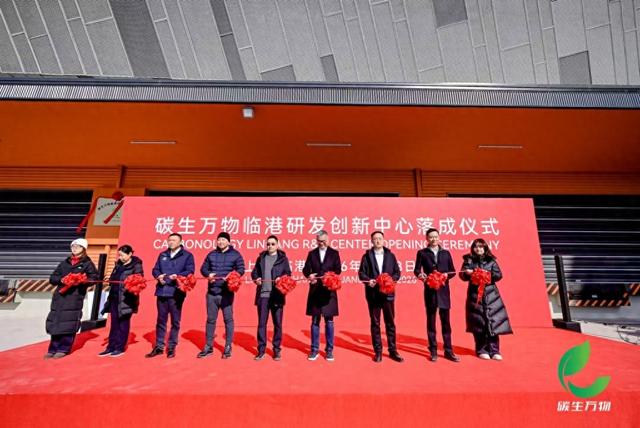
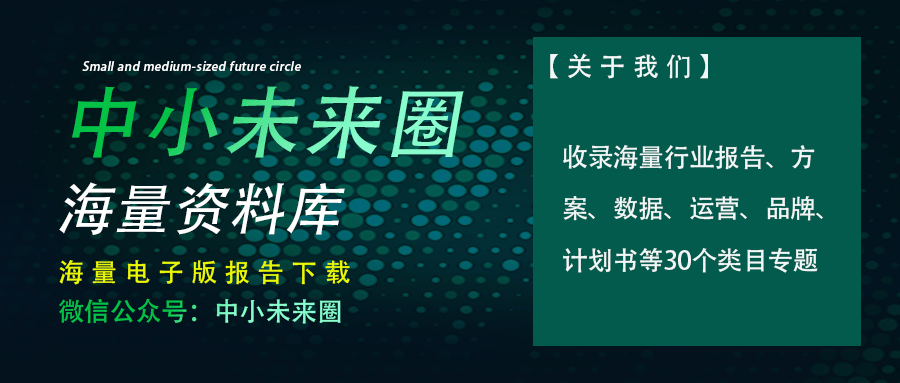
Core Viewpoint - Shanghai Carbon Life Technology Co., Ltd. (referred to as "Carbon Life") has officially launched its R&D innovation center in the Lingang New Area, with an investment of 300 million yuan, aimed at industrializing its core technologies [1][3]. Group 1: Company Overview - Carbon Life was founded in October 2024 by Ren Yuxiang and Zhang Hongxi, with Ren previously serving as the Vice President of Business Development at Tesla before leaving in 2020 [3]. - The company aims to capture carbon dioxide from the air, convert it into necessary products, and ultimately reduce reliance on fossil fuels [3][4]. Group 2: Technology and Projects - The company has announced its first production line, which is a key component of the world's first industrial project for sustainable aviation fuel (SAF) derived from direct air carbon capture (DAC) [4][6]. - Carbon Life plans to establish a pilot base in Ningxia by 2026 and aims to launch the first 50,000-ton commercial SAF project in 2027, focusing on technology industrialization and cost optimization [1][4]. Group 3: Market Focus and Challenges - The initial market focus is on sustainable aviation fuel (SAF), which is seen as having high market potential and green premium [6]. - Currently, global SAF production is less than 0.2% of total aviation fuel demand, facing challenges due to low production and high costs [6]. Group 4: Funding and Future Plans - In August 2025, Carbon Life completed an angel round of financing, raising several tens of millions of yuan to invest in technology upgrades, project construction, and market expansion [6].