
绿色低碳转型

Search documents
山东:2026年全省规模以上有色金属行业增加值同比增长5%左右
Xin Lang Cai Jing· 2026-01-07 11:00
Core Viewpoint - The Shandong Provincial Industrial and Information Technology Department has issued a work plan aimed at stabilizing growth in the non-ferrous metal industry, targeting a 5% increase in the industry's added value by 2026, with specific production and revenue goals for copper and aluminum sectors [1][2]. Group 1: Main Goals - By 2026, the added value of the non-ferrous metal industry in Shandong is expected to grow by approximately 5%, with cathode copper production reaching around 1.7 million tons, a 3% increase year-on-year [1] - Copper processing product output is projected to reach about 600,000 tons, reflecting a 4% year-on-year growth [1] - The total output value of the copper industry is anticipated to exceed 200 billion yuan, with leading levels in comprehensive energy consumption and recovery rates [1] - The aluminum industry is expected to achieve revenues exceeding 660 billion yuan, with over 35% of electrolytic aluminum production meeting benchmark energy efficiency standards [1] Group 2: Key Tasks - Establish a diversified recycling resource system, focusing on creating copper and aluminum recycling bases and enhancing recycling efficiency through platforms [2] - Strengthen overseas resource cooperation by signing long-term procurement agreements for copper and aluminum ores with countries like Chile and Guinea [2] - Develop specialized industrial clusters for copper and aluminum, enhancing competitiveness through high-end manufacturing and technological advancements [3] - Promote the extension of the industrial chain in both copper and aluminum sectors, focusing on high-end applications in renewable energy and electronics [4] Group 3: Innovation and Sustainability - Build collaborative innovation platforms to accelerate the transformation of scientific research into industrial applications, particularly in new materials [4] - Focus on overcoming technological bottlenecks in high-end materials and promote the use of AI in the non-ferrous metal industry to enhance production efficiency [4] - Implement green transformation initiatives to reduce energy consumption and emissions in the copper and aluminum industries [5] - Accelerate digital upgrades in the industry, fostering smart factories and digital workshops to improve operational efficiency [5] Group 4: Market Expansion - Promote the upgrade of bulk consumption in sectors like new energy vehicles and aerospace, ensuring the supply of high-performance copper and aluminum products [6] - Cultivate emerging consumer markets by expanding the use of aluminum in public facilities and packaging [6] - Encourage the export of high-end processed copper and aluminum products, supporting companies in entering international markets [6][7] Group 5: Support Measures - The provincial government will coordinate efforts across departments to implement the outlined tasks, ensuring financial support for equipment upgrades and technological improvements [7] - Utilize special long-term bonds and insurance policies to guide financial institutions in increasing credit support for enterprises [7]
洋山深水港集装箱吞吐量突破2870.6万标箱
Xin Lang Cai Jing· 2026-01-07 06:53
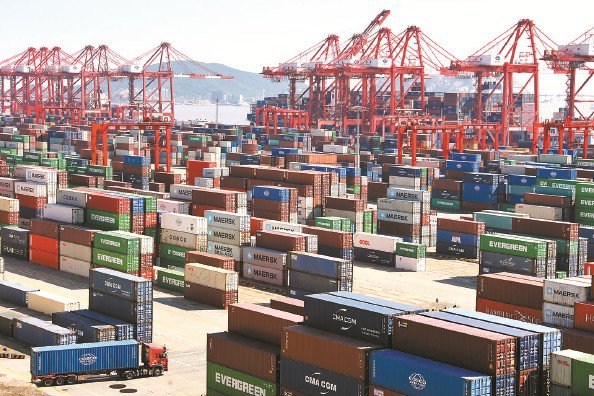
Core Insights - Shanghai Yangshan Deep-Water Port is projected to achieve a container throughput of 28.706 million TEUs in 2025, marking a year-on-year increase of 10.38% and solidifying its status as a top global container hub [2] - The port's share of Shanghai's total container throughput is expected to rise from 50.5% in 2024 to 52.2% in 2025, reflecting its growing importance in the region [2] - Yangshan Port has maintained the top position in the Global Port Performance Index (CPPI) for three consecutive years from 2022 to 2024, indicating significant operational efficiency improvements [2] Operational Efficiency - In 2025, Yangshan Port is expected to handle 9,181 international mainline container ships and 17,942 feeder container ships, representing increases of 3.2% and 8.7% respectively [2] - The implementation of innovative measures such as "dual navigation," "dual window departure," "dual berth operation," and "dual dock berthing" has significantly enhanced port navigation efficiency, with berth utilization rates stabilizing around 84% [2] - The port's innovative "three-set berthing" operation during all tidal periods has been conducted 227 times in 2025, saving an average of 2 hours per ship and unlocking an additional operational capacity of approximately 1.08 million TEUs [3] Economic Impact - The "three-set berthing" initiative has improved shoreline utilization by 5%, generating approximately 300 million RMB in main business revenue for the port and providing indirect economic benefits of around 8 million RMB to shipping companies [3] - Yangshan Port has established a refined forecasting mechanism in collaboration with meteorological departments to mitigate the impact of adverse weather conditions on operations, allowing for continued operations in winds up to level 9 [3] Green Transition - The port is accelerating its green and low-carbon transition, with a significant increase in the refueling of clean fuels such as LNG and methanol [3] - In 2025, LNG refueling volume is expected to exceed 700,000 cubic meters, reflecting a year-on-year growth of over 60%, while methanol refueling has also achieved breakthroughs [3] Future Development - The construction of the Xiaoyangshan North Operation Area is progressing smoothly, with two berths expected to be completed and put into operation by the end of this year, providing strong momentum for the future development of Yangshan Port [4]

江苏持续推进环评“放管服”改革,五年来共保障1600多个省级以上重大项目落地
Yang Zi Wan Bao Wang· 2026-01-07 05:07
Group 1: Core Insights - Jiangsu is focusing on "Beautiful Jiangsu Construction" as part of its "14th Five-Year Plan," emphasizing environmental quality improvement to support high-quality economic development [1] - The province has implemented measures to optimize environmental assessment and pollution discharge management, ensuring efficient project approvals and supporting over 1,600 major projects in the past five years [1] - Jiangsu's commitment to ecological protection is seen as a driver for sustainable economic growth, integrating high-level environmental protection with development goals [1] Group 2: Technological Innovation - Jiangsu is supporting 67 provincial ecological environment research projects, attracting nearly 100 million yuan in investments from enterprises, universities, and research institutions [2] - The province has developed practical technologies such as VOCs monitoring and water quality fingerprinting, which are being promoted across various regions [2] - Innovative clean production audit models have been introduced, with 11 units selected as national pilot projects, enhancing green low-carbon development in industries [2] Group 3: Green Finance - Jiangsu is enhancing coordination with financial institutions to optimize environmental economic policies and promote green finance for low-carbon transitions [3] - The province has launched various financial products, including "Environmental Loans" and "Environmental Foundation Loans," with total credit exceeding 10 billion yuan [3] - Jiangsu's ecological civilization initiatives are among the top in the country, with a focus on integrating environmental protection with economic development [3]
国家能源局发布重点行业标准
中国能源报· 2026-01-07 03:27
Core Viewpoint - The National Energy Administration has released a series of key industry standards aimed at regulating energy project planning, construction, and safety management, promoting new technologies and industries, and supporting energy efficiency and carbon emission management [1]. Group 1: Comprehensive Technical Specifications - The "Guidelines for Assessing the Capacity of Distributed Power Sources Connected to the Power System" standardizes the assessment of the capacity and available capacity for distributed power sources, enhancing the acceptance and configuration capabilities of the distribution network for distributed renewable energy [2]. - A series of safety production standardization implementation specifications for power generation enterprises have been established, covering various types of power generation including hydropower, gas, coal, and solar, aimed at improving safety management levels in power generation enterprises [2]. Group 2: Important Product Standards - The "Clean Low-Carbon Hydrogen Evaluation Standard" provides a lifecycle assessment method for hydrogen products, guiding hydrogen production enterprises in accurately defining carbon footprint accounting boundaries and promoting the transition to green and clean hydrogen production processes [5]. - The standards for "Green Ammonia" and "Green Methanol" aim to fill gaps in product evaluation and promote the green low-carbon transformation of the ammonia and methanol industries, supporting carbon trading market development [7][8]. Group 3: New Technologies, Industries, and Business Models - The "General Technical Conditions for Photovoltaic Power Plant Inspection Robots" standardizes the technical requirements and testing methods for inspection robots, enhancing the intelligent operation and maintenance of photovoltaic power plants [9]. - The "Deep Peak Regulation Capability Assessment Guidelines for Coal-Fired Power Generation Units" provide a framework for evaluating the peak regulation capabilities of coal-fired power plants, supporting the integration of renewable energy [11]. Group 4: Energy Efficiency and Carbon Emission Management Standards - The "Quantification Methods and Evaluation Standards for Carbon Emissions of Wind Power Projects" and "Photovoltaic Power Projects" establish guidelines for assessing the carbon emissions throughout the lifecycle of these projects, aiding in low-carbon management and industry development [12][13].
2026年铁矿石年报:供应潮生叠涌,需求微澜轻漾
An Liang Qi Huo· 2026-01-07 01:49
1. Report Industry Investment Rating No relevant content provided. 2. Core Viewpoints of the Report - In 2026, the global iron ore industry will enter a deep adjustment period characterized by "intensified supply relaxation, moderate demand recovery, and a downward shift in the price center," with an annual trend of "stable in the front and declining in the back" [2][34]. - The core contradiction in the industry will shift from "supply shortage" to "insufficient demand," and the focus of competition will be on high - grade resources, cost - control capabilities, and green and low - carbon transformation [2][34]. - Policy regulation will continuously guide the high - quality development of the industry, the profit distribution pattern of the industrial chain will tilt towards steel mills, and mining companies will face pressure from profit squeezing and intensified competition [2][34]. - ESG and geopolitical factors are becoming increasingly prominent as important variables in the industry's development [2][34]. 3. Summary by Relevant Catalogs 3.1 Iron Ore Annual Market Review - **Initial Surge Phase (Early January - Mid - February)**: Prices rose from about 780 yuan/ton to nearly 840 yuan/ton. The driving factors were the release of domestic steel mills' post - Spring Festival restocking demand, the decline in the shipment volume of Australian and Brazilian mines due to seasonal weather, and the market's optimistic expectations for the early - year growth - stabilization policies [3]. - **Decline and Adjustment Phase (Mid - February - Early June)**: Prices oscillated and declined from the high level, reaching an annual low of about 710 - 720 yuan/ton in early June. The reasons were the recovery of Australian and Brazilian shipments after the weather impact subsided, the release of new production capacity of the four major mines, the weak demand for construction steel, the squeeze on steel mill profits, and the increase in port inventories [4]. - **Oscillatory Recovery Phase (Early June - December)**: Prices gradually recovered from the low level and approached the high - level range of 830 yuan/ton at the end of the year. The drivers were the acceleration of domestic infrastructure project implementation, the launch of real - estate support policies, the expansion of steel production capacity in India and ASEAN, the slower - than - expected actual shipment volume of the Simandou project, and the market's optimistic expectations for demand recovery in the second half of the year [5]. 3.2 Supply Side - **Mainstream Mines**: In 2026, the supply of mainstream iron ore is expected to grow. In Oceania, Australia's total output is expected to reach 9.86 billion tons, with an increase of 167.8 million tons year - on - year. In South America, Brazil's total output is expected to reach 4.84 billion tons, with an increase of 50.6 million tons year - on - year [8][10]. - **Non - mainstream Mines**: In South Asia, India's iron ore output is expected to continue growing in 2026. With the implementation of the "National Steel Policy 2017," India's iron ore demand and output will be directly boosted, and its imports are expected to grow at an average annual rate of 80% [11]. - **Domestic Mines**: Affected by resource endowment and cost constraints, domestic production shows a slight downward trend. The "Cornerstone Plan" failed to achieve the goal of adding 100 million tons of iron concentrate in 2025, and the domestic mines' substitution effect on imported ores is limited, with the import dependence remaining above 80% [15]. 3.3 Demand Side - **Domestic Demand**: In 2025, China's iron ore demand was weak. The consumption of construction steel decreased significantly, while the demand for manufacturing steel showed structural growth. In 2026, domestic iron ore demand may be further squeezed, but the development of the manufacturing and emerging industries will provide some support [20][21]. - **Overseas Demand**: In 2026, overseas iron ore demand growth is relatively certain. India, ASEAN, and Africa will be the main growth points, while the EU and the US will show a "weak recovery" trend, and Japan and South Korea will have weak demand. The growth quality depends on the policy implementation and production capacity release of emerging economies [26][27]. 3.4 Inventory - The total global iron ore inventory is expected to increase by 8% - 10% year - on - year in 2026, approaching 1.5 billion tons at the end of the year. The inventory pattern will be characterized by "high - level pressure on the total amount and significant structural differentiation," which will continuously suppress prices [2][28]. 3.5 Supply - Demand Balance Sheet The report formulates a supply - demand balance sheet for iron ore to reflect the market supply and demand situation and makes corresponding forecasts for the iron ore supply and demand in 2024 [33]. 3.6 Conclusion and Outlook - **Conclusion**: The industry will enter a deep adjustment period in 2026, with the core contradiction shifting and the competition focus changing. Policy regulation will guide the industry's high - quality development, and ESG and geopolitical factors will have a greater impact [34]. - **Outlook**: The supply will be loose, the global iron ore output is expected to reach 26.78 billion tons, and the price center will decline. The Simandou project will reshape the supply pattern. The demand will show a moderate recovery, mainly from emerging economies. The profit distribution will tilt towards steel mills, and policies at home and abroad will have a complex impact on the industry [35][36].



央企集体布局!气凝胶产业步入资本快车道
Xin Lang Cai Jing· 2026-01-07 01:29
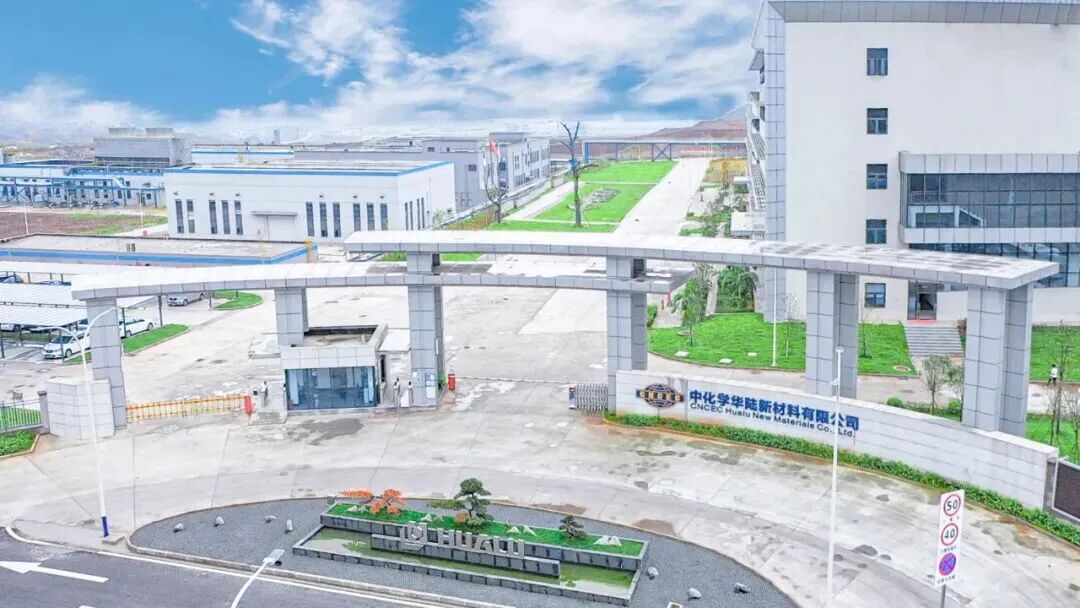
Core Insights - The recent A-round financing by Hualu New Materials, a subsidiary of China Chemical Engineering, marks a significant acceleration in the industrialization of aerogel, attracting investments from major state-owned enterprises [1][4]. Group 1: Capital Influx - The A-round financing attracted investments from prominent state-owned enterprises such as China Chemical New Materials Fund and China Petroleum Group Kunlun Capital, indicating strong industrial backing rather than just financial investment [4][12]. - The Chinese aerogel market has surpassed a critical threshold, with projections indicating it will capture a significant share of the global market by 2029, supported by favorable policies [4][12]. Group 2: Technological Breakthroughs - Historically known as a "noble material" due to high costs, aerogel is undergoing a transformation with advancements in raw material sourcing and drying technology, significantly reducing production costs [5][13]. - The introduction of atmospheric drying technology has led to a 40% reduction in production costs compared to five years ago, lowering the average price of aerogel from 500 RMB per square meter in 2018 to 250 RMB per square meter in 2023 [5][13]. Group 3: Application Scenarios - The demand for aerogel is diversifying across multiple sectors, including: - The electric vehicle industry, where aerogel insulation is becoming standard for battery packs, enhancing thermal resistance to over 800 degrees Celsius [6][14]. - The construction sector, where aerogel composite insulation boards are increasingly replacing traditional materials due to superior fire resistance and reduced thickness [6][14]. - Industrial insulation applications, where companies like Sinopec and PetroChina are utilizing aerogel to significantly reduce energy consumption and CO2 emissions [6][14][15]. Group 4: Challenges and Opportunities - Despite the promising outlook, the aerogel industry faces structural challenges, including high production costs and limited market penetration in construction [8][16]. - Environmental concerns related to solvent use in production processes are also significant, with each cubic meter of aerogel requiring 200 kg of solvents [8][16]. - The industry is exploring sustainable production methods, such as biomass-based aerogels, to address environmental issues and reduce reliance on petrochemical materials [8][16].
激活县域经济高质量发展新动能
Shan Xi Ri Bao· 2026-01-07 00:51
Core Viewpoint - The development of county economies in Shaanxi is a strategic approach to reduce urban-rural disparities and enhance regional economic quality, with a target county economic total of 1.68 trillion yuan by 2024 [1] Group 1: County Economic Development - Shaanxi has implemented targeted policies for high-quality county economic development, including "double ten measures" and tailored strategies for each county [1] - By 2024, the average county economic output is expected to exceed 20 billion yuan, with 27 counties achieving a GDP over 20 billion yuan [1] - The provincial government emphasizes the importance of new urbanization and rural revitalization, aiming to create a county economic system centered around county towns and small towns [1] Group 2: Cultural and Tourism Integration - Blue Tian County has successfully integrated cultural heritage with tourism, creating a unique cultural tourism experience that attracts visitors [2] - The county leverages its rich cultural background to develop a comprehensive tourism model that includes technology and industry [2] - The "14th Five-Year Plan" encourages the development of distinctive county economies, guiding high-quality economic growth [2] Group 3: Industry Specialization - Counties are focusing on specialized industries based on their resource advantages, with metal magnesium production and agricultural products leading the way [4] - For example, Fugu County is the largest global producer of metal magnesium, while Dali County's winter jujube production has surpassed 700,000 tons [4] - Counties are enhancing their industrial chains and value chains to find unique development paths [4] Group 4: Green Development - Shaanxi prioritizes ecological and green development, with initiatives like the integration of money oranges and selenium-rich tea to boost local economies [5] - The province aims for a green, low-carbon transformation in economic development, promoting a cycle where ecological benefits support economic growth [5] - Ankang City exemplifies this approach, with over 73% of its industrial output coming from green industries [6] Group 5: Enhancing Public Welfare - The county economy serves as a crucial link between urban and rural areas, focusing on improving the quality of life for residents [7] - Shaanxi has invested significantly in urbanization and public services, enhancing the living standards and infrastructure in counties [7] - Initiatives include vocational training for over 2.34 million people and the construction of over 6,000 educational institutions [8] Group 6: Future Outlook - Looking ahead to the "15th Five-Year Plan," Shaanxi aims to continue expanding county economies and improving public service equality [9]
上海洋山深水港2025年集装箱吞吐量再创历史新高
Zhong Guo Xin Wen Wang· 2026-01-06 12:50
上海洋山深水港2025年集装箱吞吐量再创历史新高 中新社上海1月6日电 (谢梦圆)记者6日从上海洋山港海事局获悉,2025年,上海洋山深水港集装箱吞吐 量突破2870.6万标准箱,同比增长10.38%,再次刷新历史纪录。 据悉,该港已连续三年(2022年至2024年)获全球港口效率排名第一。 来源:中国新闻网 编辑:万可义 广告等商务合作,请点击这里 本文为转载内容,授权事宜请联系原著作权人 中新经纬版权所有,未经书面授权,任何单位及个人不得转载、摘编或以其它方式使用。 关注中新经纬微信公众号(微信搜索"中新经纬"或"jwview"),看更多精彩财经资讯。 2025年,洋山深水港全年进出国际干线集装箱船舶9181艘次、内支线集装箱船舶17942艘次,同比分别 增长3.2%和8.7%。洋山港海事局通过深化实施"双向通航""双窗口离泊""双套泊作业""双档靠泊"等创新 举措,使得港口通航效率显著提升,码头泊位综合利用率持续稳定在84%左右,这一效率指标居于全球 领先水平。 面对有限的岸线资源,洋山港海事局创新实施全潮水时段"三套泊"作业(即允许3组船舶,以每组2艘的 形式同时靠泊或离泊操作)。这项高难度的协同作业 ...
国家能源局发布《分布式电源接入电力系统承载力评估导则》等重点行业标准
国家能源局· 2026-01-06 10:00
Core Viewpoint - The article discusses the recent announcement by the National Energy Administration regarding the issuance of key industry standards aimed at regulating energy project planning, construction, and safety management, as well as promoting new technologies and industries to support energy efficiency and carbon emission management [2] Group 1: Comprehensive Technical Specifications - The guideline for assessing the carrying capacity of distributed power sources connected to the power system is established, which aims to enhance the evaluation of distributed renewable energy integration and improve the capacity of the distribution network [3] - A series of safety production standardization implementation specifications for power generation enterprises have been released, covering various types of power generation including hydropower, gas, coal, photovoltaic, and wind power, to strengthen safety management and supervision [4][5] - The operational and maintenance regulations for special transmission channels have been defined, focusing on improving the efficiency and safety of large power grid operations [6] - Standards for the construction of basic geographic information databases for power engineering have been established to support the digitalization of power engineering [7][8] - The continuous mining machine excavation and mining technical specifications have been introduced to promote safe and efficient mining practices in coal enterprises [9][10] Group 2: Important Product Standards - The clean low-carbon hydrogen evaluation standard has been set to guide hydrogen production companies in accurately defining carbon footprint accounting boundaries and methods, promoting a shift towards greener hydrogen production processes [11] - A standard for evaluating green ammonia products has been established, filling a gap in the evaluation of green ammonia and supporting the industry's low-carbon transition [12] - The green methanol product evaluation standard has been introduced to regulate the technical requirements for green methanol, aiding in the industry's transition to low-carbon practices [13] - The B24 heavy marine fuel oil standard has been defined to support the production and sales of bio-marine fuels, guiding the industry's green transformation [14][15] Group 3: New Technologies, Industries, and Business Models - General technical conditions for photovoltaic power station inspection robots have been established, which will enhance the intelligent operation and maintenance of photovoltaic power stations [17] - Guidelines for assessing the deep peak-shaving capacity of coal-fired power units have been introduced, aimed at improving the utilization of renewable energy and reducing waste [18][19] - Design regulations for gas-insulated metal-enclosed transmission lines have been set to provide technical basis and standardize requirements for engineering applications [20][21] Group 4: Energy Efficiency and Carbon Emission Management Standards - The carbon emission quantification method and evaluation standard for wind power projects throughout their lifecycle have been established, providing a technical basis for accurate carbon accounting [22][23] - The carbon emission quantification method and evaluation standard for photovoltaic power projects have been defined, supporting low-carbon management in the industry [24][25] - The energy consumption status evaluation technical specification for coal-fired power plants has been introduced, aimed at optimizing energy consumption levels and supporting environmental upgrades [26][27]
外资眼中的“十五五”新机遇
Guo Ji Jin Rong Bao· 2026-01-06 07:51
Group 1: Economic Outlook and Confidence - In 2026, China is expected to enter a new phase of economic development under the "14th Five-Year Plan," with international attention on its resilience and potential despite global uncertainties [1] - Multiple foreign institutions have raised their forecasts for China's economic growth, with 67% of multinational executives optimistic about revenue growth in the next three to five years [1][2] - 94% of surveyed companies continue to invest in the Chinese market, and 75% plan to maintain or increase their investments in mainland China by 2025 [1] Group 2: Innovation and Collaboration - Multinational companies are shifting from simple market expansion to deep innovation collaboration, with 60% of surveyed German companies believing that their Chinese counterparts will become industry innovation leaders in the next five years [2] - The UK and China are expected to deepen cooperation in capital markets, green finance, and asset management, particularly in the Greater Bay Area and Yangtze River Delta [2] - A survey by Teneo indicates that global CEOs view China as a core market for investment due to its large market size and competitive advantages in technology innovation [2] Group 3: Industry Trends and Strategic Focus - Key industries such as biotechnology, green energy, and artificial intelligence are expected to drive demand and contribute to high-quality development during the "14th Five-Year Plan" [3][4] - Companies like DuPont and Honeywell emphasize the importance of innovation and collaboration in response to market demands, focusing on sustainable and high-quality development [3][4][5] - DHL highlights the growth potential in logistics driven by new productivity, digitalization, and green transformation, aligning with its corporate strategy [6] Group 4: Investment Opportunities - The Chinese market is seen as having a strong foundation for rebound, with domestic investors playing a crucial role due to high household savings rates [7] - The stock market is expected to benefit from structural improvements and supportive policies, with a focus on sectors like electric vehicles and pharmaceuticals [8][11] - Key trends for investment opportunities include industrial upgrades, artificial intelligence, and evolving consumer preferences, which may lead to the emergence of billion-dollar enterprises [11]