人形机器人量产

Search documents
机器人产业跟踪:人形机器人进入量产前夕,国内外景气度共振
Orient Securities· 2025-09-28 12:45
Investment Rating - The industry investment rating is "Positive" (维持) [7] Core Viewpoints - The humanoid robot sector is on the verge of mass production, with both domestic and international demand expected to resonate positively, creating investment opportunities in component manufacturing [10] - Major companies like Tesla are set to begin mass production, with ambitious targets to produce 100,000 units per month within five years, indicating a significant increase in investment and production capacity [10] - Domestic companies are also ramping up their technological capabilities, with several securing large orders, suggesting a robust growth trajectory for the humanoid robot market [10] Summary by Sections Investment Suggestions and Targets - The report suggests that leading companies in humanoid robots will drive the industry into mass production next year, benefiting component manufacturers with strong manufacturing and management capabilities. Recommended stocks include: - Top Group (拓普集团, 601689, Buy) - Sanhua Intelligent Control (三花智控, 002050, Buy) - Wuzhou New Spring (五洲新春, 603667, Buy) - Hengli Hydraulic (恒立液压, 601100, Not Rated) - Zhenyu Technology (震裕科技, 300953, Buy) [4] Industry Overview - The report highlights the increasing production capabilities of leading companies in the humanoid robot sector, with significant orders being placed, indicating a strong market outlook. For instance, Tesla plans to start production in early 2026, aiming for a monthly output of 100,000 units within five years [11] - Domestic companies like UBTECH and ZhiYuan are also making strides, with substantial orders and expectations for significant shipment volumes in the coming years [10][11]


中金 | 人机系列03:量产背后的硬件创新
中金点睛· 2025-09-25 23:57
Core Viewpoint - The global humanoid robot industry is at a critical transition from "prototype validation" to "mass production preparation," with significant improvements in control capabilities but hardware feasibility still constrained by bottlenecks [6][33]. Group 1: Key Innovations in Humanoid Robots - The report focuses on innovations in humanoid robots post-2025, emphasizing "lightweight and impact resistance" as key areas for development [2]. - The cycloidal gear reducer is identified as a potential solution for heavy-load scenarios, addressing the limitations of current reduction gear solutions [6][14]. - Lightweight materials such as magnesium alloys and PEEK are highlighted for their cost-performance balance, with magnesium alloys being significantly lighter than aluminum and steel [6][17]. Group 2: Challenges in Mass Production - The humanoid robot industry faces three main bottlenecks: transmission systems, endurance issues, and precision detection [6][33]. - Current transmission systems struggle to balance high load, impact resistance, and lightweight design, necessitating the exploration of cycloidal gear reducers for lower body applications [6][14]. - The endurance of mainstream humanoid robots (50-70 kg) is currently low, requiring innovations in material properties and processing to achieve lightweight designs [6][17]. Group 3: Material and Processing Innovations - Magnesium alloys are positioned as a preferred lightweight material due to their high strength-to-weight ratio and established applications in the automotive sector [17][18]. - PEEK materials, while offering superior mechanical properties, face challenges in cost and manufacturing barriers, limiting their widespread adoption [17][21]. - Metal Injection Molding (MIM) is recognized for its advantages in producing complex small parts, making it suitable for humanoid robot components [22][23]. Group 4: Sensor Technology Migration - Multi-sensor automotive-grade technology is migrating to humanoid robots, with rotary transformers expected to replace encoders in high-reliability applications [3][29]. - The rotary transformer is noted for its high precision and adaptability to harsh environments, making it suitable for critical joints in humanoid robots [25][29]. Group 5: Industry Trends and Future Outlook - The year 2026 is projected as a turning point for global humanoid robot mass production, with significant advancements expected in hardware capabilities [6][33]. - The report suggests that as the industry standardizes hardware design, processes like stamping may also migrate into humanoid robot manufacturing [33].

专访优必选副总裁、研究院院长焦继超:人形机器人量产不是数字堆积,而是技术、需求与成本的平衡
机器人圈· 2025-09-03 09:09
Core Viewpoint - Humanoid robots are transitioning from science fiction to reality, with significant advancements in artificial intelligence, precision control, and perception technologies, leading to unprecedented development opportunities in the industry [1][2]. Market Outlook - The global humanoid robot market is projected to exceed $15 billion by 2030, with a compound annual growth rate (CAGR) of 71% from 2021 to 2030 [1]. - Major tech companies like Microsoft, Nvidia, Amazon, OpenAI, and SoftBank are investing in or developing humanoid robots, indicating a competitive global landscape [1]. Company Developments - UBTECH, recognized as China's "first humanoid robot stock," went public on December 29, 2023, and is focusing on accelerating its industrialization process [1]. - The company has established partnerships with notable firms such as Dongfeng Liuzhou Motor, Geely, and BYD to implement its Walker S series robots in real manufacturing environments starting in 2024 [3]. Technological Advancements - UBTECH is shifting its focus from single-machine autonomy to "group intelligence," emphasizing the need for humanoid robots to work collaboratively in industrial settings [4]. - The company has developed the Co-Agent technology for its Walker S2 robots, enabling them to perform tasks like collaborative handling and quality inspection in a multi-robot environment [4]. Performance Metrics - In initial training phases, the Walker S1 robot demonstrated a 100% increase in efficiency and a 30% improvement in stability at BYD's factory [5]. - The company aims to enhance its robots' capabilities, including battery life and software stability, to adapt to complex tasks in industrial settings [5]. Production Goals - 2025 is anticipated to be the "year of mass production" for humanoid robots, with UBTECH planning to produce 1,000 units and deliver hundreds of them [7]. - Despite challenges in mass production, including hardware issues faced by competitors like Tesla, UBTECH remains optimistic about the market's growth potential [8]. Financial Performance - UBTECH reported a revenue of 621 million yuan in the first half of 2025, marking a 27.5% year-on-year increase, although it still faced a loss of 440 million yuan [8][9]. - The company prioritizes accelerating robot delivery and application over immediate profitability, believing that achieving cost reductions will lead to eventual breakeven [9]. Future Vision - UBTECH's CEO envisions a three-step approach for humanoid robots: first in industrial applications, then in commercial settings, and finally in domestic environments for companionship [9].
特斯拉“造人”带火稀土永磁
Shen Zhen Shang Bao· 2025-09-02 17:24
Group 1 - The core viewpoint is that humanoid robots are poised to create a trillion-dollar market, similar to the electric vehicle industry, as they transition from laboratory projects to mass production [2][6] - Tesla has optimistic production guidance for its humanoid robots, expecting to ramp up to a weekly production of 10,000 units by Q3 next year [2][3] - The competition in the humanoid robot sector is shifting from technological advancement to the ability to deliver products quickly [3][4] Group 2 - Tesla's Optimus V3 humanoid robot, set for release by the end of this year, will integrate advanced features such as the Grok voice assistant, marking a significant step towards mass production [3][4] - The demand for rare earth permanent magnets, essential for robot joints, is increasing, with prices rising over 10,000 yuan per ton since August [5][6] - The global market for magnetic materials used in robots is projected to exceed 5 billion yuan by 2025, driven by the surge in humanoid robot production [5][6] Group 3 - Key suppliers like Jinli Permanent Magnet and Zhenghai Magnetic Materials are positioning themselves to benefit from the rising demand for rare earth materials, with significant revenue growth expected in their robotics segments [5][6] - The structural demand for rare earth materials is expected to shift as humanoid robots become a major consumer, potentially surpassing the current demand from electric vehicles [6]

A股五张图:一个菜没点,完了还要搭一个?
Xuan Gu Bao· 2025-09-02 10:34
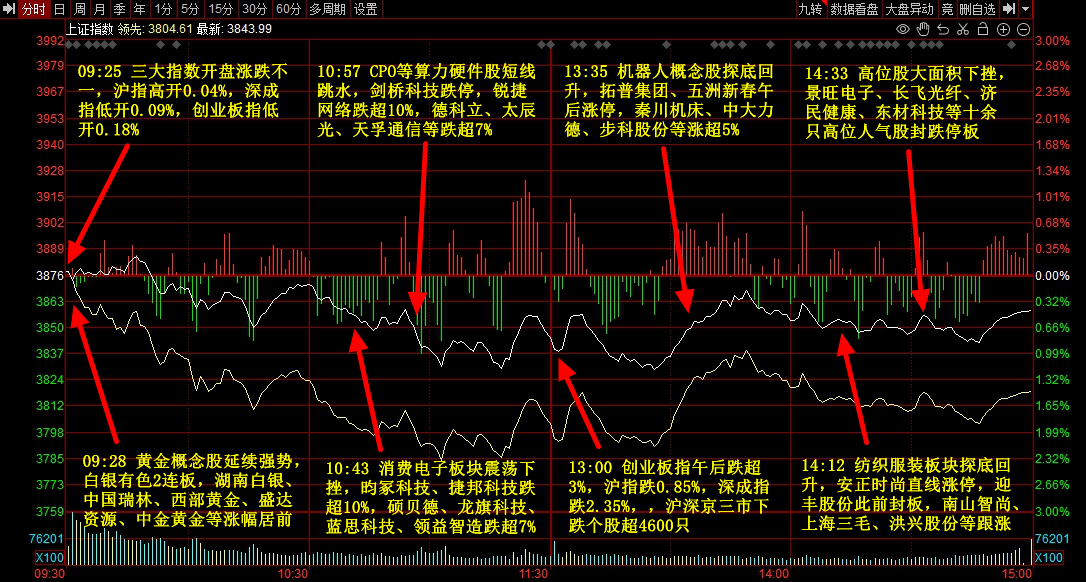
Market Overview - The market experienced a significant decline, with major indices such as the Shanghai Composite Index, Shenzhen Component Index, and ChiNext Index falling by 0.45%, 2.14%, and 2.85% respectively, leading to over 4,000 stocks declining and only about 1,200 stocks rising [3] - AI hardware stocks, which had previously surged, faced a collective drop, with many stocks hitting their daily limit down or falling over 10% [3][18] - Low-priced stocks showed resilience, with several stocks like Zhaoxin Co. and Baiyin Youse hitting their daily limit up [6][7] Low-Priced Stocks - Low-priced stocks continued to show strong performance for the second consecutive day, with Zhaoxin Co. achieving four consecutive limit ups and other stocks like Jinyun Tong and Dazhongnan also hitting their limits [6][7] - The market sentiment around low-priced stocks appears to be driven by speculative trading, particularly in the brokerage sector [9] Humanoid Robots - The humanoid robot sector saw a significant rebound in the afternoon, with stocks like Zhejiang Rongtai and Longxi Co. hitting their daily limits [11][12] - Despite an initial drop of 4%, the sector managed to recover and close with a slight gain of 0.23% [12] - Speculation around a potential meeting between a leading robot company and Tesla regarding optimistic production guidance for the next year fueled market interest [15][16] AI Hardware - AI hardware stocks faced a substantial downturn, with the CPO sector dropping by 6.47% and many stocks experiencing declines of over 10% [17][18] - This marked the first significant retreat for these previously strong-performing technology stocks, indicating a shift in market dynamics [18] Abstract Stocks - "Ma-character" stocks began to show upward movement during the market downturn, with several stocks experiencing notable gains [20][21] - Such stocks typically attract short-term speculative trading when the market lacks clear themes or strong performance [21][22]
专访优必选副总裁、研究院院长焦继超:人形机器人量产不是数字堆积
Mei Ri Jing Ji Xin Wen· 2025-09-02 00:55
Core Insights - Humanoid robots are transitioning from a novelty to practical applications in industries, driven by advancements in AI, precision control, and perception technologies [1][2] - The global humanoid robot market is projected to exceed $15 billion by 2030, with a compound annual growth rate of 71% from 2021 to 2030 [1] - Major tech companies like Microsoft, Nvidia, Amazon, and Tesla are investing heavily in humanoid robotics, indicating a competitive landscape [1][2] Industry Trends - The industry is moving from "single-machine autonomy" to "collective intelligence," which is seen as the future direction for industrial applications [2][3] - The complexity of humanoid robots arises from their interdisciplinary nature, combining mechanical engineering, electronics, computer science, AI, and new materials [3][4] - The focus has shifted from entertainment to practical manufacturing capabilities, with companies like UBTECH collaborating with major automotive firms to integrate humanoid robots into real-world manufacturing environments [4][5] Technological Developments - UBTECH has made significant improvements to its Walker S2 humanoid robot, including autonomous battery swapping technology and enhanced visual perception capabilities [4][6] - The company has initiated collaborative training programs for multiple robots to work together, addressing the need for efficiency in industrial settings [5][6] - The first phase of training has shown promising results, with efficiency improvements of 100% and stability enhancements of 30% in real-world applications [6][7] Production and Market Outlook - 2025 is anticipated to be a pivotal year for humanoid robot mass production, with UBTECH aiming to deliver hundreds of units and achieve a production capacity of 1,000 units [7][8] - Despite challenges in mass production, the overall sentiment in the industry remains optimistic, with expectations for significant growth driven by technological advancements and market readiness [7][8] - The company emphasizes that achieving mass production is not merely about numbers but requires a balance of technology, demand, and cost [7][8] Financial Performance - UBTECH reported a revenue of 621 million yuan in the first half of the year, marking a 27.5% year-on-year increase, while also reducing losses by 18.5% [7][8] - The focus remains on accelerating delivery and application of humanoid robots rather than immediate profitability, with a belief that achieving breakeven will follow successful deployment [8]

专访优必选副总裁、研究院院长焦继超:人形机器人量产不是数字堆积,而是技术、需求与成本的平衡
Mei Ri Jing Ji Xin Wen· 2025-09-01 15:00
Core Insights - Humanoid robots are transitioning from science fiction to reality, with significant advancements in AI, precision control, and perception technologies, leading to unprecedented development opportunities in the industry [2] - The global humanoid robot market is projected to exceed $15 billion by 2030, with a compound annual growth rate of 71% from 2021 to 2030 [2] - Major tech companies like Microsoft, Nvidia, Amazon, OpenAI, and SoftBank are accelerating their entry into the humanoid robot space through investments and independent development [2] Industry Trends - The industry is shifting focus from "single-machine autonomy" to "group intelligence," which is seen as the core direction for future industrial applications [3][4] - The complexity of humanoid robot technology spans multiple disciplines, including mechanical engineering, electronic engineering, computer science, AI, and new materials, making development challenging [4] Company Developments - UBTECH has established industrial scenarios as the primary application for humanoid robots, collaborating with major companies like Dongfeng Liuzhou Motor, Geely, and BYD to integrate its Walker S series robots into real manufacturing environments [5] - The company has made significant improvements to the Walker S2, including autonomous battery swapping technology and enhanced visual perception capabilities [6] Performance Metrics - In initial training phases, the Walker S1 robot improved efficiency by 100% and stability by 30% in BYD's factory [7] - UBTECH aims to deliver 1,000 humanoid robots by 2025, with plans to scale up to thousands by 2026 and tens of thousands by 2027 [8] Market Outlook - The humanoid robot industry is on the brink of mass production, with ongoing advancements in AI technology, hardware solutions, and algorithms driving down manufacturing costs [8] - Despite challenges in mass production, the overall market is expected to experience explosive growth, contingent on technological and market maturity [8][9] Future Vision - UBTECH's CEO envisions a three-step approach for humanoid robots: first in industrial applications, followed by commercial use, and finally in domestic settings for companionship [10]
A股机器人概念股今日整体上涨1.96%,板块内多只个股涨停
Xin Jing Bao· 2025-08-19 08:48
Group 1 - The overall performance of robotics concept stocks in the A-share market showed a positive trend, with a closing increase of 1.96% [1] - There are currently 568 stocks categorized under the robotics concept in the A-share market, with 344 stocks closing higher [1] - Several stocks, including DiAo Micro, Zhongke Haixun, and Guangdong Jianke, reached their daily limit up [1] Group 2 - Analysts from Wanlian Securities predict that 2025 will be the "year of mass production for humanoid robots," with China expected to lead the global humanoid robot industry due to supply chain cost reduction and innovative applications [2] - The humanoid robotics industry faces three core challenges: insufficient AI generalization capabilities, high costs of training with real-world data, and a gap between consumer price expectations and current costs [2] - The next 3 to 5 years are seen as a critical window for large-scale deployment, with industrial applications driving a surge in shipment volumes, while household adoption will depend on breakthroughs in general AI and cost reductions [2]
见证中国技术进阶的窗口
Ke Ji Ri Bao· 2025-08-18 01:18
Group 1 - The 2025 World Humanoid Robot Games is seen as a significant milestone for the global robotics industry, marking the transition from laboratory experiments to practical applications [1] - The events held in Beijing, including the robot marathon and the World Robot Conference, showcase China's growing influence and potential in setting future industry standards [1] - The performance of robots has evolved from basic movements to complex task execution, indicating a shift from single breakthroughs to comprehensive capability advancements [1] Group 2 - The competition serves as a "stress test" for robot capabilities, with various events assessing different aspects such as energy coordination and environmental perception [2] - Collaboration between universities and enterprises is highlighted, with institutions like Tsinghua University providing foundational research and companies like Tiangong and Yushu Technology driving practical applications [2] - Despite the progress, there remains room for improvement in robot agility and adaptability, emphasizing the importance of iterative learning and development in the technology [2]
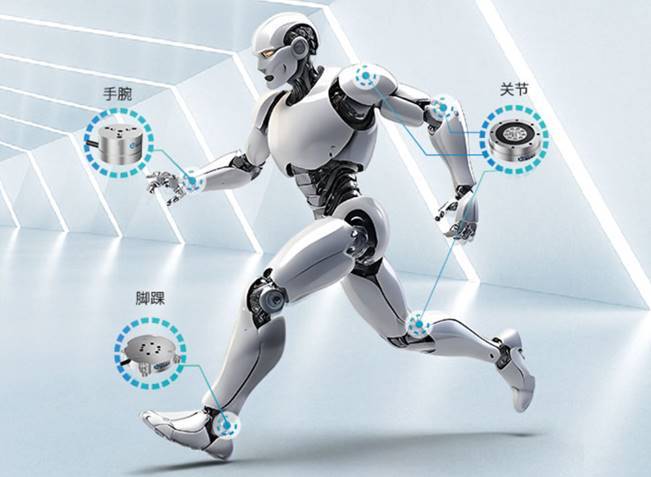
人形机器人商业化落地加速,带动传感器跨越产业化临界点
Huan Qiu Wang· 2025-08-18 01:05
Group 1 - The 2025 World Humanoid Robot Games showcased advanced robotics technology and is seen as a testing ground for core technologies in the field [1] - 2025 is widely regarded as the year of mass production for humanoid robots, leading to rapid growth for core component manufacturers alongside complete machine shipments [1] - Jiuding Investment announced a strategic acquisition of 53.29% stake in Nanjing Shenyuan Intelligent Technology for 213 million yuan, driven by optimism about the six-dimensional force sensor market [1] Group 2 - The six-dimensional force sensor market in China is expected to see a significant increase, with a projected 1100% year-on-year growth in shipments by 2024 and a rise in domestic production rate from 19% to 57.8% over four years [1] - Companies like Blue Dot Touch are achieving international standards in sensor precision and resolution, leading to a 30% to 40% reduction in sensor prices compared to overseas counterparts [1] - The commercialization of humanoid robots is accelerating, with medical rehabilitation robots completing 95% of rehabilitation actions and household service robots seeing a 300% increase in sales [3] Group 3 - Morgan Stanley analysts project that the Chinese robotics market will grow at an annual rate of 23%, potentially doubling in size within four years [3] - By 2024, China is expected to hold a 40% share of the global robotics market, valued at $47 billion, with projections to reach $108 billion by 2028 [3] - The growth in the robotics market is anticipated to drive the industrialization of core components like six-dimensional force sensors [3]