传统产业转型升级

Search documents
苦练内功把握发展主动权
Jing Ji Ri Bao· 2025-12-20 00:51
Group 1 - The central economic work meeting emphasizes the need to "practice internal skills" to respond to external challenges, providing important guidance for economic work in the coming year [1] - The global environment is characterized by rising unilateralism and protectionism, leading to significant challenges for international economic and trade order, which increases external pressure on China's development [1] - Domestic economic challenges include a prominent contradiction between strong supply and weak demand, with risks in key areas that can be addressed through focused efforts [1] Group 2 - The strategy focuses on expanding domestic demand to counter international market uncertainties, aiming to reshape new competitive advantages through a consumption-driven economic model [2] - Emphasis on strengthening the real economy by implementing a manufacturing powerhouse strategy, maintaining a reasonable proportion of manufacturing, and developing advanced manufacturing sectors [2] - The plan includes fostering emerging pillar industries such as new energy, new materials, and aerospace, while optimizing traditional industries through upgrades and brand building [2] Group 3 - The goal is to enhance independent innovation capabilities and seize the high ground in technological development by addressing key core technologies and shortening innovation cycles [3] - The strategy involves strengthening original and disruptive innovation to fundamentally resolve basic scientific issues and improve regional innovation systems [3] - The focus is on integrating innovation resources into enterprises and promoting deep integration of technological and industrial innovation [3]
石头里“蹦出”新产能——贵州传统产业转型升级焕发新活力
Ke Ji Ri Bao· 2025-12-08 10:03
Group 1: Technological Breakthroughs - The production of neodymium-iron-boron alloy ultra-fine permanent magnetic powder has achieved a particle size of 5-10 microns, showcasing high oxidation resistance and magnetic properties, which are essential for applications in information recording and anti-counterfeiting [2][3] - The company invests over 6% of its revenue annually in R&D and collaborates with Guizhou University for innovation, leading to the international competitiveness of its products since starting mass production in 2020 [3] Group 2: Process Innovations - The transformation of traditional quartz sand production into a green and environmentally friendly process has been achieved by investing 13.9% of total investment in dust removal equipment, resulting in a cleaner production environment [4] - The company has developed a unique water recycling system that ensures wastewater clarity exceeds national standards, contributing to sustainable production practices [4] - The production of frac sand, essential for increasing oil extraction, has broken the domestic monopoly, with daily production reaching 3,000 tons, indicating strong demand from major oil companies [4][5]
范波在张家港调研传统产业转型升级工作
Su Zhou Ri Bao· 2025-12-04 00:31
Group 1 - The core viewpoint emphasizes the importance of transforming and upgrading traditional industries to support high-quality development in Suzhou, aligning with national policies and local initiatives [1][2] - The focus is on promoting intelligent, green, and integrated industrial development, which is essential for optimizing traditional industries and strengthening the real economy [1][2] - The local government aims to create a first-class business environment to attract foreign investment and support sustainable development in enterprises like Shagang Group and Dow's Zhangjiagang production base [2] Group 2 - The initiative includes a systematic approach to advancing the "five revitalizations" in rural areas, with a strong emphasis on achieving common prosperity through industrial revitalization [1] - There is a call for local departments to concentrate efforts on economic growth, project production, and attracting high-quality investments as the year-end approaches [2] - The importance of adhering to central and provincial policies for technological upgrades and the development of smart, green, and service-oriented manufacturing is highlighted [2]


苏州市委书记范波在张家港调研传统产业转型升级工作
Zheng Quan Shi Bao Wang· 2025-12-03 00:31
Core Viewpoint - The article emphasizes the importance of transforming and upgrading traditional industries in Suzhou, focusing on intelligent, green, and integrated development to support high-quality economic growth [1] Group 1: Economic Strategy - The Suzhou municipal government is prioritizing new industrialization to optimize and enhance traditional industries, thereby solidifying the foundation of the real economy [1] - There is a call for local departments to concentrate efforts on economic development, particularly in project production and expansion, as well as attracting significant investments [1] Group 2: Action Plans - The government is implementing the "Three Services" special action and the "Double Comparison, Double Observation" initiative for major projects to ensure the completion of annual targets [1] - Emphasis is placed on the urgency of these actions as the year-end approaches, highlighting the need for focused execution [1]
传统产业升级也是新质生产力主战场
Jing Ji Ri Bao· 2025-11-29 00:17
Core Viewpoint - The article emphasizes the importance of optimizing China's economic structure through the transformation and upgrading of traditional industries, which is essential for building a modern industrial system [1][2]. Group 1: New Quality Productivity - New quality productivity is defined as an advanced state of productivity that aligns with new development concepts, essential for both the cultivation of emerging industries and the upgrading of traditional industries [1]. - Traditional industries account for approximately 80% of key manufacturing indicators such as value added and employment, highlighting their critical role in economic growth and job creation [1]. Group 2: Regional Development Strategies - Development strategies must be tailored to local conditions, leveraging regional comparative advantages to avoid ineffective blind pursuit of emerging industries [2]. - Different regions should adopt varied strategies based on their resource endowments, industrial foundations, and stages of development to achieve a smooth transition between old and new driving forces [2]. Group 3: Upgrading Traditional Industries - The direction for upgrading traditional industries includes high-end, intelligent, and green transformations, necessitating technological innovations to overcome existing bottlenecks [2]. - The integration of traditional industries with technologies such as artificial intelligence and big data is crucial for enhancing product value and achieving economic and ecological benefits [2]. Group 4: Innovation and Market Development - Accelerating the formation of suitable production relations for innovation is vital, which includes deepening reforms and building a unified national market to attract advanced production factors [3]. - Establishing regional technology innovation platforms is essential for promoting the application of research outcomes and enhancing market vitality through effective government and market interactions [3].
【新华解读】10月份我国规上工业企业利润走势怎么看?
Xin Hua Cai Jing· 2025-11-27 13:44
Core Viewpoint - The profit of large-scale industrial enterprises in China increased by 1.9% year-on-year from January to October, maintaining growth for three consecutive months since August, despite a 5.5% decline in October [1][2]. Group 1: Profit Performance - From January to October, the profit of large-scale industrial enterprises showed resilience and adaptability in the face of domestic and international challenges [1]. - In October, the profit growth rate slowed down due to factors such as base effect, production slowdown, and profit margin decline [1][4]. - The profit margin for large-scale industrial enterprises was 5.25% from January to October, a slight decrease of 0.01 percentage points compared to the first nine months [4]. Group 2: Production and Economic Indicators - In October, the industrial added value for large-scale enterprises grew by 4.9% year-on-year, but the growth rate decreased compared to September, influenced by fewer working days due to the National Day holiday [3]. - Accounts receivable for large-scale industrial enterprises increased by 5.1% year-on-year by the end of October, indicating an improvement in cash flow [4]. - The inventory of finished goods increased by 3.7% year-on-year by the end of October, reflecting a cautious outlook from enterprises regarding short-term market trends [4]. Group 3: Sector Analysis - From January to October, profits in the equipment manufacturing sector grew by 7.8%, contributing 2.8 percentage points to the overall profit growth of large-scale industrial enterprises [5]. - High-tech manufacturing profits increased by 8.0%, surpassing the average growth rate of all large-scale industrial enterprises by 6.1 percentage points [5]. - Traditional industries such as graphite and carbon products, as well as biochemical pesticides, saw profit growth rates exceeding 70%, indicating successful upgrades [5]. Group 4: Future Outlook - The profit growth rate for large-scale industrial enterprises is expected to improve in the coming months due to a favorable base effect and a reduction in the negative impact of price declines [5]. - Policy-driven financial tools are anticipated to support infrastructure, while external demand remains resilient, contributing to a continued recovery in profits [5].
独家专访格力电器董明珠:“十五五”要不断创新,不断以科技赋能
Jing Ji Wang· 2025-11-18 08:41
Core Viewpoint - Gree Electric Appliances, led by Chairman Dong Mingzhu, emphasizes continuous innovation and technological empowerment to transform and upgrade traditional industries during the 14th Five-Year Plan period [2] Group 1 - Gree Electric is focusing on a wide range of fields for future development [2] - The company aims to replace past technologies with new ones through innovation [2] - The transformation and upgrading of traditional industries is a key goal for Gree Electric [2]



利好!7部门印发!
Zheng Quan Shi Bao· 2025-11-17 09:49
Core Viewpoint - The Ministry of Commerce and six other departments have issued a notice to promote the high-quality development of the silk industry through the "East Silk West Solid" initiative, aiming to optimize the industry layout and establish a modern industrial system that balances development across eastern, central, and western regions by 2028 [1][5][10]. Summary by Sections Overall Requirements - The initiative aims to create a new development pattern where the eastern region leads in innovation, the central and western regions support production capacity, and there is collaboration between all regions. By 2028, the eastern region is expected to have around 10 leading enterprises with revenues exceeding 10 billion yuan, and over 20 well-known brands with independent intellectual property rights [5][6]. Key Tasks - **Enhancing Silk Supply Capacity**: Optimize the layout of sericulture regions and promote green, high-quality technology models. Implement projects to upgrade existing silk production capabilities and ensure stable supply of high-quality raw materials [6][7]. - **Improving Silk Processing Capabilities**: Support the upgrade of existing silk production lines and attract silk enterprises from the eastern region to establish processing parks in the west, enhancing production efficiency and product innovation [7][8]. - **Strengthening Dyeing and Finishing Capabilities**: Facilitate the transfer of dyeing and textile industries from the east to the west, focusing on technological upgrades and promoting green production practices [8][9]. Work Assurance - Local governments are encouraged to recognize the importance of the "East Silk West Solid" initiative, establish a coordination office, and develop work plans to ensure effective implementation. This includes creating tax incentives and financial support for key silk enterprises [10][11].
“老树”新代码:一场传统产业的内生裂变
2 1 Shi Ji Jing Ji Bao Dao· 2025-11-13 00:51
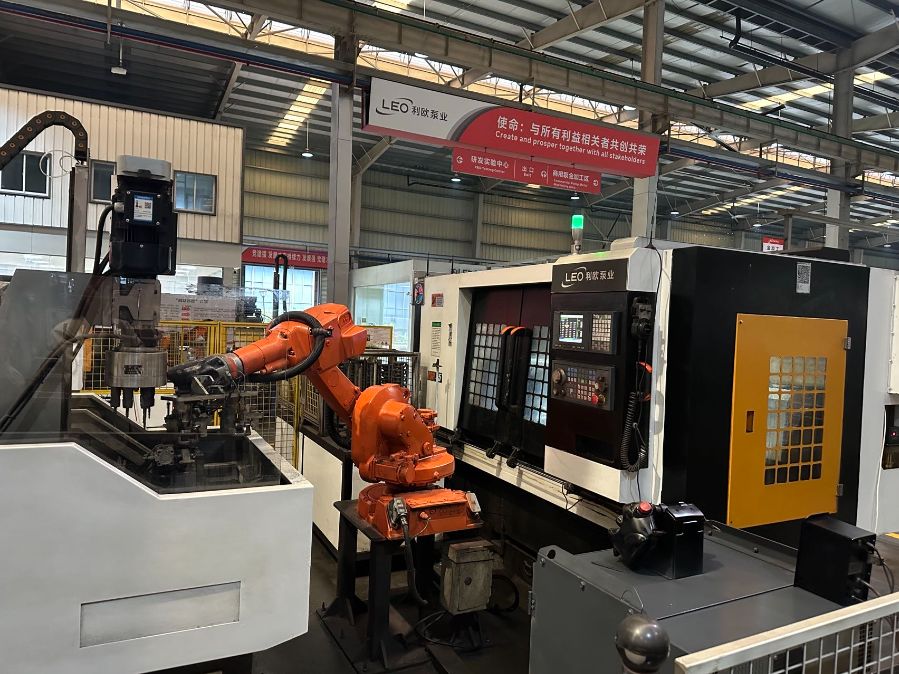
Core Insights - Traditional industries are not only being reshaped by the new economy but are also the most "evolutionary" part of the modern industrial system, particularly in Zhejiang where traditional industries are undergoing significant internal transformation [1][2] - The "15th Five-Year Plan" emphasizes optimizing and upgrading traditional industries, enhancing the competitiveness of key sectors such as mining, metallurgy, chemicals, textiles, machinery, and construction [1] - The transformation of traditional industries involves both technological and model innovations, with companies like Liou Pump Industry and Puyuan Woolen Sweater focusing on smart manufacturing and digital trade to create new growth opportunities [1][2] Group 1: Technological Innovation in Traditional Industries - The coupling of technological and market innovation is crucial for traditional industries, allowing companies to enhance their R&D capabilities while restructuring their branding and distribution channels [2] - Liou Pump Industry, a leading company in the pump manufacturing sector, has undergone a significant transformation from traditional manufacturing to becoming a provider of computing power support equipment, showcasing a structural shift in the industry [2][4] - The implementation of a 5G and digital twin smart factory at Liou Pump Industry allows for real-time monitoring of production processes, enhancing efficiency and quality control [4][5] Group 2: Digital Trade and Brand Development - The establishment of the Puyuan Woolen Sweater digital trade platform marks a shift from manufacturing to branding and service, integrating B2B and B2C models to create a collaborative supply chain ecosystem [8][9] - The platform aims to facilitate cross-border trade, with plans to cover 72 countries and connect with 170 global warehouses, thereby promoting the "Puyuan Woolen Sweater" brand internationally [10] - AI tools are utilized in the digital trade platform to optimize design and manufacturing processes, enhancing the overall efficiency and traceability of products [11] Group 3: Broader Implications for the Industry - The transformation of traditional industries in Zhejiang serves as a model for digital transformation in China's manufacturing sector, with a focus on intelligent manufacturing, green manufacturing, and service-oriented manufacturing [7] - The provincial government aims to implement over 100 projects annually with a budget exceeding 1 billion yuan to support the internal transformation of traditional industries by 2027 [11]
我看“十五五”|黄群慧:传统产业转型升级将带来十万亿级增加值
Xin Jing Bao· 2025-11-07 03:52
Core Insights - The "15th Five-Year Plan" outlines a blueprint for China's development, emphasizing the importance of achieving socialist modernization during this critical period [2] - The plan highlights the need for a combination of effective markets and proactive government roles to enhance the socialist market economy [4][5] - Key goals include improving the quality of development, increasing consumer spending, and strengthening the national innovation system [5] Group 1: Economic Transformation - The deep transformation and upgrading of traditional industries are expected to generate an economic value increase of approximately 10 trillion yuan [6] - Traditional industries account for about 80% of the overall economic value, indicating their significance in the economy [6] - The plan emphasizes the need for digitalization, intelligence, greening, high-end development, and integration of traditional industries to adapt to new technological revolutions [6] Group 2: Innovation and Market Dynamics - The development of strategic emerging industries should be tailored to local conditions, focusing on resource endowments and technological capabilities [7] - Policies should encourage innovation and shift competition from price-based to value-based, enhancing brand and service experiences [8] - Strengthening market competition and regulatory frameworks is essential to foster a fair and sustainable market environment [8] Group 3: State-Owned Enterprises (SOEs) and Global Competitiveness - The plan aims to enhance the core functions and competitiveness of SOEs, focusing on strategic sectors vital to national security and public welfare [10] - Building world-class enterprises is a long-term goal, requiring continuous innovation and management improvements [11] - The emphasis is on aligning with global standards to enhance the international influence of Chinese enterprises [11]