
光伏治沙

Search documents
内蒙古能源集团主导实证 BC组件领跑光伏治沙新赛道
Xin Hua Cai Jing· 2025-09-12 08:09
Core Insights - A solar photovoltaic (PV) project led by Inner Mongolia Energy Group has achieved significant results in combating desertification in the Ulan Buh Desert, providing valuable data for solar project construction and technology selection in desert areas [1] Group 1: Project Overview - The project is located in a solar resource-rich area with approximately 3000 hours of annual sunlight, facing challenges such as low rainfall, high evaporation, and frequent sandstorms [1] - The project covers an area of 23,000 acres and includes a self-built testing platform for systematic comparison between Longi's BC second-generation Hi-MO 9 components and traditional TOPCon components [1] Group 2: Performance Metrics - From April to July 2025, the BC technology components outperformed TOPCon components by 2.45% in terms of power generation per kilowatt and by 9.05% in terms of power generation per unit area [1] - During June, which experienced 14 rainy days, the BC components maintained a stable advantage, achieving a cumulative power generation increase of 2.44% compared to the control components [1] Group 3: Implications for the Industry - The successful application of this technology represents a new solution for solar projects in desert areas, providing critical decision-making support for large-scale solar desertification projects currently in implementation [1] - This project sets a technical benchmark for the construction and operation of renewable energy bases in "deserted" regions of China [1]

从“碗底有沙”到“眼底尽绿” 内蒙古上演“绿色嬗变”
Zhong Guo Qing Nian Bao· 2025-09-06 23:19
Core Viewpoint - Inner Mongolia has successfully transformed desert areas into green oases over several decades, significantly improving the ecological environment and reducing sandstorms [1][2]. Group 1: Environmental Transformation - The region of Inner Mongolia, particularly the Alxa League, has seen a remarkable change from severe desertification to lush greenery, aided by initiatives like the "Ten Major Conduits" project which addresses ecological issues affecting the Yellow River [1][2]. - The annual sediment inflow into the Yellow River has decreased from 27 million tons to 4 million tons due to comprehensive management efforts in the "Ten Major Conduits" area [2]. Group 2: Innovative Management Techniques - A combination of engineering and biological measures has been employed for desertification control, including water conservation projects and the introduction of photovoltaic technology for sand control [2]. - New pipeline water delivery technology has been implemented to provide a sustainable water source for ecological restoration, addressing the critical issue of water scarcity [2]. Group 3: Community Involvement and Economic Development - Local youth, like Wang Gang, are actively participating in desertification control efforts, establishing cooperatives to maximize economic benefits from sustainable practices such as the cultivation of Haloxylon ammodendron and its associated products [3][4]. - The cooperative model has expanded from 3 to 15 households, demonstrating a successful community-driven approach to both environmental restoration and economic development [4]. Group 4: Future Goals and Achievements - Inner Mongolia's desertification control efforts are aligned with the philosophy of "lucid waters and lush mountains are invaluable assets," with significant daily progress reported in land restoration [4]. - In 2023, the region achieved an average of 40,000 acres of desertification control per day, with plans to increase this to 60,000 acres per day in 2024 [4].


甘肃如何在沙漠养了50万头羊?
3 6 Ke· 2025-09-01 09:58
Core Viewpoint - The integration of photovoltaic (PV) technology with ecological restoration in Gansu has transformed desert areas into productive pastures, creating a sustainable model that combines energy production with environmental benefits [1][8]. Group 1: Photovoltaic Industry Development - Gansu has established a robust photovoltaic power generation industry, with an installed capacity exceeding 36 million kilowatts, equivalent to the output of 1.8 Three Gorges Dam projects at full capacity [11]. - The region's flat terrain and abundant sunlight make it particularly suitable for solar energy production [10]. - The PV projects have significantly reduced desertification, with over 10,000 acres of desert being treated through PV installations [36]. Group 2: Ecological Restoration - The PV installations have led to a remarkable ecological transformation, increasing vegetation coverage from a low level to over 80% in some areas [27]. - The environmental improvements include a 30% reduction in water evaporation and a 30-60% increase in soil moisture content [18][35]. - The introduction of PV technology has created a microclimate conducive to plant growth, allowing for the successful cultivation of drought-resistant plants [25]. Group 3: Sustainable Agricultural Practices - The "PV sheep" model has emerged, where livestock graze on the vegetation growing beneath the PV panels, creating a symbiotic relationship between renewable energy production and livestock farming [40]. - As of 2024, the number of "PV sheep" in regions like Jiuquan has surpassed 500,000, contributing to local economies [43]. - This model not only provides income for local herders but also involves them in the maintenance of the PV systems, enhancing the overall sustainability of the project [44]. Group 4: Broader Renewable Energy Landscape - Gansu's renewable energy portfolio includes wind and hydropower, with wind energy capacity exceeding 30 million kilowatts [56]. - The province's hydropower potential is significant due to its location along the upper reaches of the Yellow River, contributing to a diverse energy mix [58]. - By mid-2025, Gansu's total renewable energy capacity is projected to exceed 80 million kilowatts, with renewables accounting for over 40% of the province's total electricity generation [59]. Group 5: Historical Context and Future Implications - The transformation of Gansu's environment reflects a long-standing Chinese tradition of actively modifying nature to improve living conditions [66]. - The success of the "PV pasture" model demonstrates a new approach to sustainable development, merging economic viability with ecological restoration [47][51]. - This innovative practice not only addresses environmental challenges but also aligns with national ecological strategies, showcasing a model for future renewable energy projects [50].
活力中国调研行|一张光伏板的沙漠“追光”记
Xin Hua She· 2025-08-31 00:51
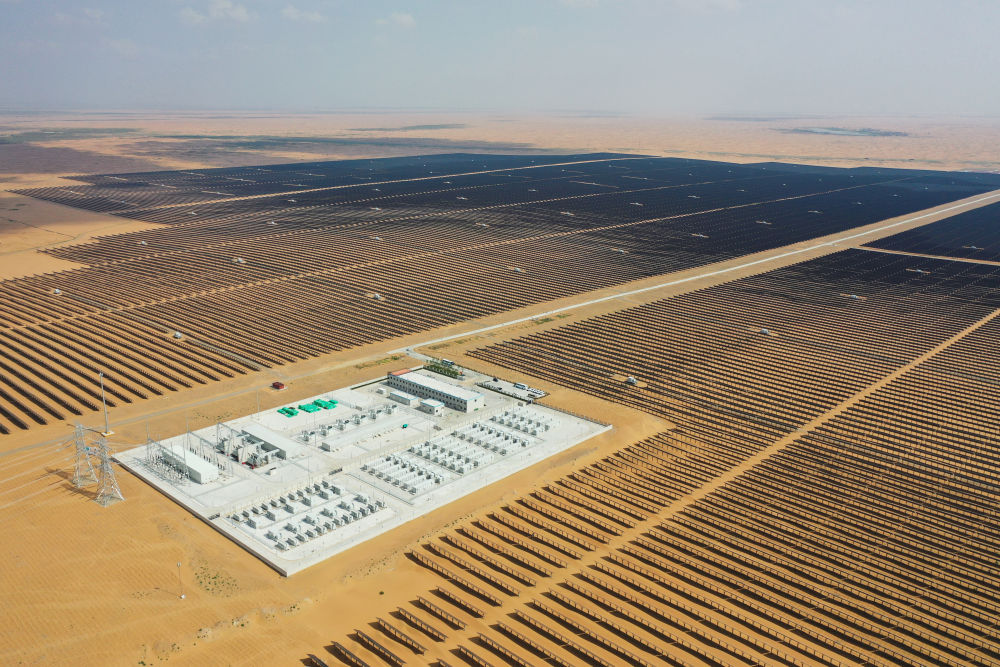
Core Viewpoint - The development of solar energy projects in the desert regions of Inner Mongolia is transforming barren land into productive green energy bases, showcasing the integration of renewable energy generation with ecological restoration efforts. Group 1: Solar Energy Projects - The Huadian Inner Mongolia Tengger "Shagohuang" New Energy Base has a solar project with a capacity of 2 million kilowatts, covering an area of approximately 53,800 acres, which can meet the electricity needs of 1.3 million households annually [2][4] - The production process at Inner Mongolia Xinyuan Silicon Material Technology Co., Ltd. involves high-purity polysilicon production, utilizing a self-developed silane fluidized bed process that significantly reduces electricity consumption and costs compared to traditional methods [1] Group 2: Ecological Restoration - The solar arrays in the Tengger Desert serve as an effective method for sand control, with photovoltaic supports acting as natural sand-fixing piles and creating a unique "desert microclimate" that improves the survival conditions for drought-resistant plants [4][5] - The integration of solar power generation with ecological governance is being implemented in the Ulan Buh Desert, promoting a model of "power generation on panels, planting between panels, and driving rural revitalization" [5][7] Group 3: Economic and Social Impact - The solar projects are creating numerous job opportunities, alleviating local employment pressures, and transforming the livelihoods of nearby farmers and herders through land transfer and tourism-related activities [7] - The combination of technological innovation and green transformation in solar energy is enabling a modern version of "turning sand into gold," converting desert areas into clean energy bases and ecological restoration sites [7]
活力中国调研行丨一张光伏板的沙漠“追光”记
Xin Hua Wang· 2025-08-30 23:26
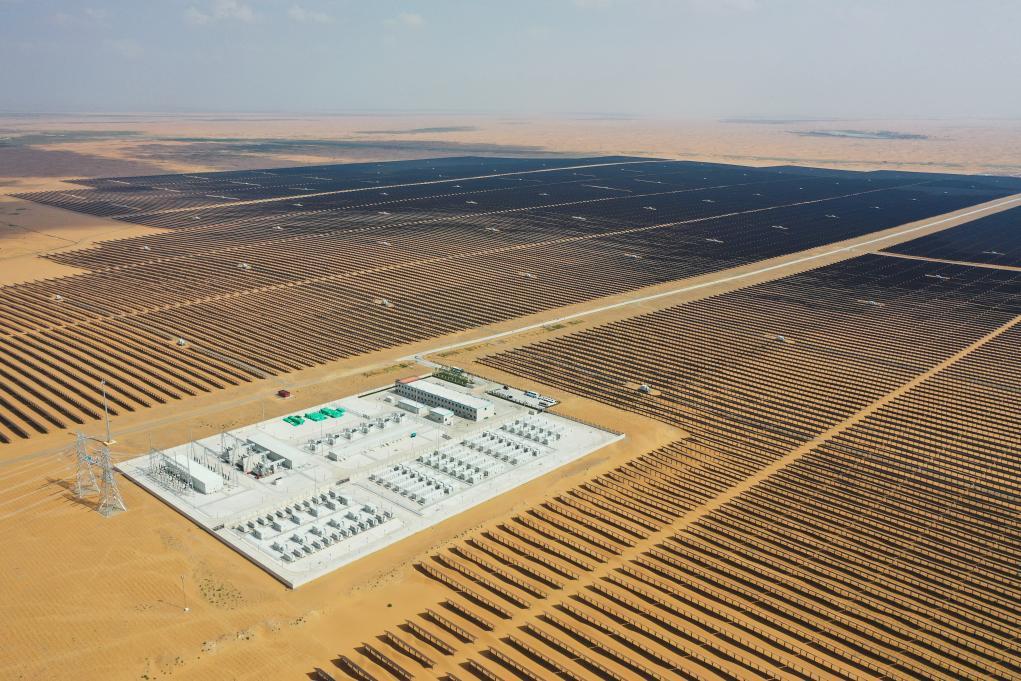
Core Viewpoint - The development of solar energy in the desert regions of Inner Mongolia is transforming barren land into productive green energy bases, showcasing the effectiveness of solar technology in ecological restoration and energy production [1][6]. Group 1: Solar Industry Development - Inner Mongolia's Xinyuan Silicon Material Technology Co., Ltd. produces high-purity polysilicon using innovative silane fluidized bed technology, significantly reducing energy consumption and costs compared to traditional methods [1]. - The region has over 70 solar enterprises, creating a complete solar industry chain from silicon material to solar panels, contributing to global solar energy supply [1]. - The Huadian Inner Mongolia Tengger "Shagao荒" New Energy Base has a 2 million kW solar project that can meet the electricity needs of 1.3 million households annually, covering an area of approximately 53,800 acres [2]. Group 2: Ecological Impact - The solar panels in the Tengger Desert help combat desertification by stabilizing sand and creating a unique microclimate that supports the growth of drought-resistant plants [4][6]. - The integration of solar energy projects with ecological restoration efforts, such as the "solar + vegetation" model, promotes both energy production and environmental sustainability [5]. - The solar projects not only improve the local ecosystem but also enhance the livelihoods of local communities by creating jobs and promoting tourism [6].
“光伏长城”让“死亡之海”变能源绿洲
Xin Hua She· 2025-08-28 01:32
Core Viewpoint - The construction of a "photovoltaic wall" in the Kubuqi Desert is a significant innovation that combines ecological restoration with renewable energy generation, showcasing a sustainable approach to combating desertification and promoting economic development [1][2][3]. Group 1: Project Overview - The Kubuqi Desert's Erdos North Central New Energy Base has a planned total installed capacity of 16 million kilowatts, including 8 million kilowatts of solar power, 4 million kilowatts of wind power, and 400,000 kilowatts of thermal power [3]. - The project aims to deliver approximately 36 billion kilowatt-hours of clean energy annually, reducing carbon dioxide emissions by 16 million tons [3]. - The "photovoltaic wall" spans about 400 kilometers in length and 5 kilometers in average width, integrating ecological restoration with renewable energy development [3]. Group 2: Ecological and Economic Benefits - The "photovoltaic + ecological restoration" model effectively reduces surface evaporation and wind speed, creating a favorable environment for plant growth beneath the solar panels [2]. - The project utilizes water from nearby coal mines for irrigation and maintenance, addressing the challenges of desertification while enhancing local agricultural productivity [2]. - The implementation of the project has led to the establishment of over 10,000 acres of high-standard farmland, increasing local farmers' income by 900 yuan per acre [5]. Group 3: Community and Global Impact - The project has created a dual-layer protective network against sand invasion, integrating the photovoltaic wall with a 420-kilometer shelter forest [4]. - Local communities benefit economically from the project, with increased tourism and agricultural opportunities arising from the solar energy initiatives [5]. - The Kubuqi Desert's management practices are being shared globally as a model for sustainable desertification prevention, highlighting the balance between ecological and economic goals [5].
(活力中国调研行)在沙地里“追风逐日”:从“金色沙海”到“绿色蓝海”
Zhong Guo Xin Wen Wang· 2025-08-24 11:20
Core Viewpoint - The transformation of the Keshan Sand Area from a "golden sandy sea" to a "green blue sea" through innovative solar energy and ecological restoration projects is highlighted, showcasing the integration of renewable energy with environmental sustainability [1][3]. Group 1: Solar Energy and Ecological Restoration - The vast desert areas in the Sanbei region are rich in solar energy resources, and photovoltaic (PV) technology is being utilized to combat desertification while generating electricity [3]. - The installation of PV panels not only generates power but also stabilizes sandy soil by reducing wind speed and preventing erosion, allowing for the cultivation of drought-resistant plants beneath the panels [3][5]. - The "shade effect" of the PV panels can effectively reduce surface water evaporation by 20% to 30%, contributing to improved ecological conditions [3]. Group 2: Project Development and Economic Impact - In 2023, a development agreement was signed between Keshan County and China General Nuclear Power Group for a comprehensive wind and solar integration project with a total capacity of 3 million kilowatts, including 1.4 million kilowatts of wind power and 1.6 million kilowatts of solar power [5]. - The project aims to treat 13.5 million acres of desert by 2024, while also innovating the "agriculture-solar complementary" industry by utilizing idle land between PV panels for planting high-quality forage [5]. - The local community benefits economically from the project, with compensation payments totaling 6.1 million yuan for land requisition, and local herders earning additional income through temporary work in the solar project area [5]. Group 3: Biodiversity and Ecological Balance - The installation of bird-friendly structures in the wind power project area promotes biodiversity by providing nesting opportunities for birds, thereby enhancing the ecological balance [7]. - The project has successfully integrated ecological restoration with renewable energy development, ensuring that wildlife habitats are preserved while minimizing operational disruptions [7]. - Ongoing monitoring and research on bird behavior and habitat preferences are being conducted to further enhance the coexistence of renewable energy infrastructure and local wildlife [7].
人物访谈丨在沙漠“种太阳”,分几步?
Zhong Guo Zi Ran Zi Yuan Bao· 2025-08-22 06:18
光伏治沙是防沙治沙的一种新措施。与传统的植树造林、扎草方格等治沙方式相比,光伏阵列只要稍加改造,就是不需要浇水的沙障,面板上发电、面 板下种植固沙植物,光伏板清洗又能对落水点周边进行集中补灌,使沙地具备发展生态产业的可能。 但沙漠戈壁荒漠地区气候干旱、水资源匮乏、植被稀疏、土壤易风蚀,生态破坏容易、修复难。光伏电站建设过程中难免会扰动脆弱的生态系统,破坏 植被和土壤结皮,如不科学修复,极易造成局部风蚀或风积现象,加剧风沙危害,直接影响光电转换效率和工作时长,并造成空气污染,影响人民生产生 活。 围绕光伏治沙的技术模式、综合效益、应用前景,记者近日采访了中国科学院新疆生态与地理研究所正高级工程师李生宇。 记者:防沙治沙尤其是光伏治沙原理和机制是什么? 李生宇:防沙治沙是采用物理、化学、生物等多种人工措施,防风固沙和增加地表植被覆盖,有效降低地表风沙活动,防控生产生活空间及基础设施风 沙危害。 近年来,光伏治沙或光伏+治沙逐渐发展成为一种新型治沙技术模式,受到业内广泛关注。在风沙地区建设光伏电站,光伏阵列成为气流运行障碍物, 大幅增加地表粗糙度,整体降低场站近地表风速,阵列遮阴减少土壤水分蒸发,使影响区土壤水分相 ...

“两山”理念20年丨光伏与草原的蓝绿交响
Zhong Guo Zi Ran Zi Yuan Bao· 2025-08-22 06:05
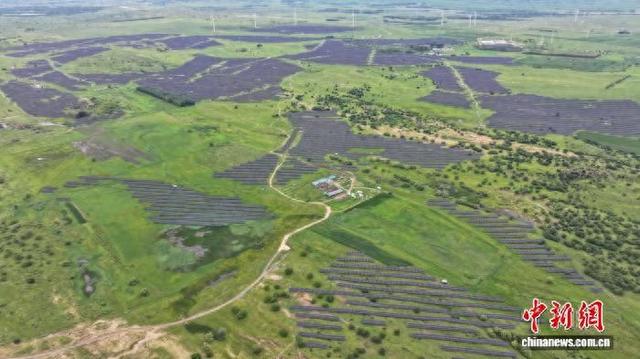
Core Viewpoint - The article discusses the integration of photovoltaic (PV) technology with desertification control in the "Three North" regions of China, emphasizing ecological protection and sustainable development through innovative practices [1][5][9]. Group 1: Project Overview - The project in Inner Mongolia's Xingan League, specifically in the Khorchin Right Banner, involves a PV installation with a capacity of 300,000 kW and an annual electricity generation of approximately 530 million kWh [6][15]. - The project employs a "grass-light complementary" ecological management approach, utilizing PV panels to provide shade and reduce temperature, while planting drought-resistant grasses in the gaps [6][15]. Group 2: Ecological Impact - The project has transformed previously barren sandy land into a green landscape, achieving a vegetation coverage rate of 70% within a year [17]. - The area treated for desertification has reached 583,000 acres in 2023, showcasing the effectiveness of the new model of "new energy desertification control" [15][19]. Group 3: Economic and Social Benefits - The project has created job opportunities for local herders, with about 10% of the construction work being done by them, earning around 200 yuan per day [19][21]. - The initiative aims to shift traditional extensive livestock farming to more sustainable practices, including the expansion of forage planting and the implementation of high-standard farmland projects [19][21]. Group 4: Future Prospects - The Xingan League plans to implement 21 new energy development projects by 2025, with an investment of 9.132 billion yuan, including seven PV projects [24]. - The region's rich renewable energy resources, including wind and solar, position it well for sustainable development and ecological restoration [23][24].
第三个全国生态日: 妙用光伏 点绿成"金"
Zhong Guo Xin Wen Wang· 2025-08-18 02:23
Group 1 - The article highlights the integration of photovoltaic (PV) technology with ecological restoration, emphasizing its role in transforming barren lands into productive areas while generating clean energy [1][2] - The "fishing and solar" model in Anji County demonstrates how PV panels can provide shade for fish farming, leading to increased fish growth and farmer income [1] - The Xinjiang mining project showcases the innovative use of PV technology for land restoration, combining solar energy generation with ecological recovery and livestock farming [1][2] Group 2 - In Qinghai Province, the implementation of PV technology has significantly improved local agriculture, turning desert areas into productive pastures and increasing farmers' incomes [3] - As of May this year, China's total installed PV capacity has surpassed 1 billion kilowatts, equivalent to approximately 48 Three Gorges Dam projects, contributing to the generation of 1.2 trillion kilowatt-hours of green energy annually [3]