存量时代

Search documents
越来越多商场,开始被抛弃了
创业邦· 2025-06-17 10:18
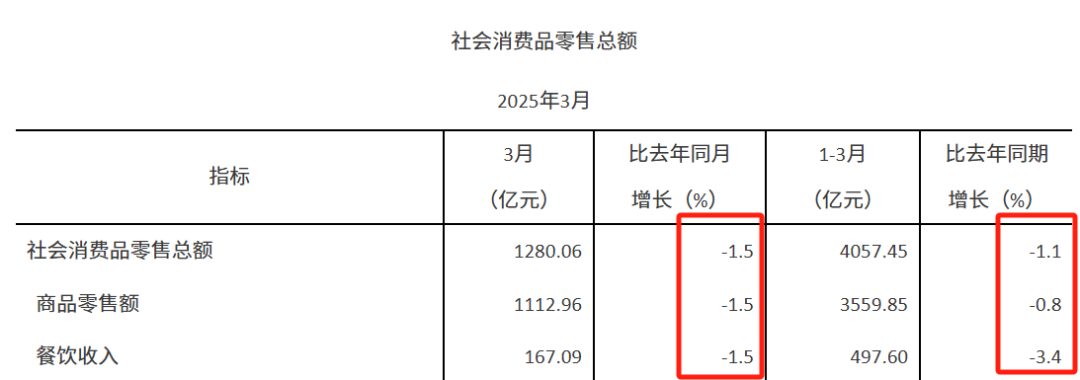
Core Viewpoint - Shanghai is experiencing a commercial supply surplus, with an increasing number of shopping centers opening but not translating into higher consumer spending [10][9][6]. Group 1: Commercial Landscape in Shanghai - Shanghai has over 400 shopping centers, with one large shopping center for every 80,000 people, compared to Tokyo's one for every 200,000 [3][4]. - The per capita commercial area in Shanghai is second only to Dubai and is three times that of Tokyo [5]. - In 2023, approximately 60 new commercial projects are expected to open in Shanghai, totaling over 3 million square meters [6]. Group 2: Consumer Spending Trends - In Q1 2023, Shanghai's total retail sales of consumer goods decreased by 1.5% year-on-year, indicating a decline in consumer demand despite the increase in shopping centers [9]. - The retail sales of goods and catering revenue also saw negative growth, with catering revenue down by 3.4% [9]. Group 3: Commercial Space Challenges - Many shopping centers are becoming abandoned or underperforming, with notable closures in prime areas like Lujiazui [13][14]. - The rapid turnover and high elimination rate of shopping centers are evident, with some large malls like Aegean Sea Shopping Center facing significant vacancy rates [18][22]. - The outdoor commercial spaces in some centers have vacancy rates exceeding 90% [22][31]. Group 4: Market Dynamics and Trends - The market is witnessing a transformation where some shopping centers are being repurposed or sold off due to financial pressures on developers [106][130]. - Major players like Wanda and Vanke are actively selling off commercial assets to improve liquidity, with Wanda selling nearly 90 Wanda Plazas since 2017 [108][113][122]. - The trend indicates a shift from expansion to efficiency, with a focus on core assets and high-quality developments [139][146].

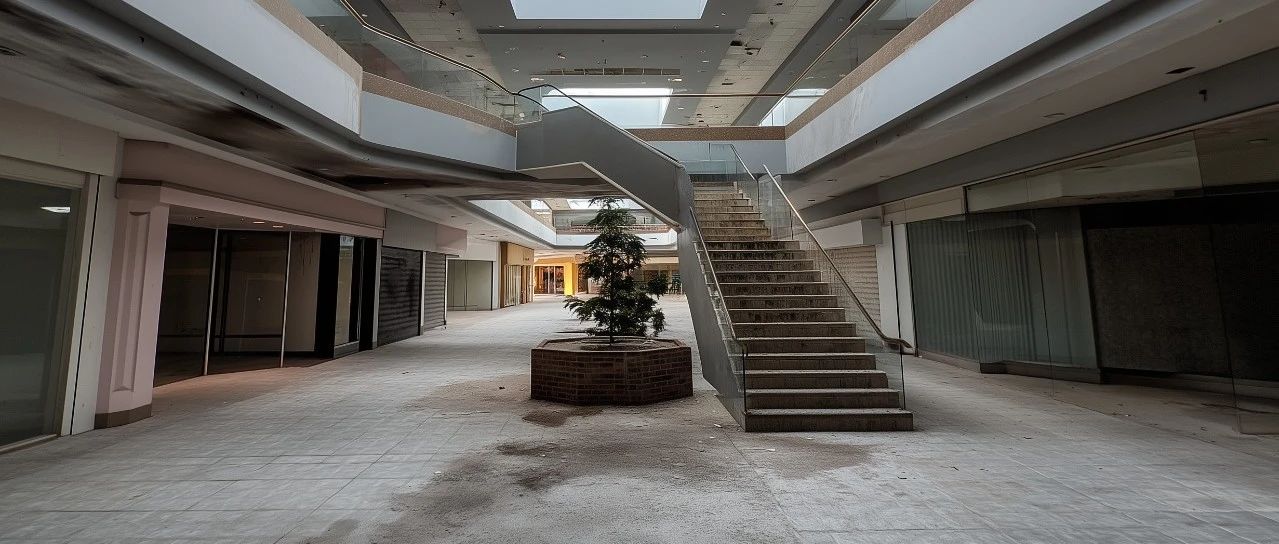
越来越多的商场,开始被抛弃了
Hu Xiu· 2025-06-17 00:09
Group 1 - Shanghai has over 400 shopping centers, with an average of one large shopping center for every 80,000 people, compared to Tokyo's one for every 200,000 people [1] - Shanghai's per capita commercial area is second only to Dubai and is three times that of Tokyo [2] - Despite reaching a high level of commercial development, Shanghai's commercial sector continues to expand [3] Group 2 - In 2023, approximately 60 new commercial projects are expected to open in Shanghai, totaling over 3 million square meters, with Minhang leading with 12 new openings exceeding 1 million square meters [4] - The retail sales growth rate in Shanghai for the first quarter of this year was negative, indicating a disconnect between the increase in shopping centers and consumer spending [5][8] - The total retail sales of consumer goods in March were 128 billion yuan, down 1.5% year-on-year, with a total of 4.06 billion yuan for the first quarter, also down 1.1% [7] Group 3 - Shanghai is entering a phase of oversupply in commercial space, leading to many shopping centers being abandoned or underperforming [8][9] - Numerous shopping malls in prime locations have closed, including well-known brands like Pacific Department Store and Isetan [10][11] - The opening of new malls has not translated into increased consumer traffic, resulting in many becoming deserted [12][13] Group 4 - The Aegean Shopping Center in Minhang, which opened in 2017, has seen a significant decline in outdoor retail space, with a vacancy rate of nearly 90% [22][29] - The area around Longbai, once bustling with foreign investment, has also seen a decline in activity, with many businesses closing [35][36] - Newer commercial developments, such as The Roof, are struggling to maintain consumer interest despite their architectural appeal [50][51] Group 5 - The once-thriving Qipu Road wholesale market has seen rental prices plummet from 70,000 yuan to 500 yuan per month, indicating a significant decline in demand [61][62] - Some shopping centers are now offering rent-free options, only requiring payment of property fees, highlighting the drastic changes in the market [90][93] - Successful transformations of some markets into high-end shopping areas contrast sharply with those that have failed to adapt [94][96] Group 6 - Wanda Group has sold off a significant number of its commercial assets, including over 30 Wanda Plazas in the past two years, due to high debt levels [100][102] - The company has shifted to a light-asset model, retaining operational rights while selling properties to insurance companies [109] - Other real estate companies, including Vanke and Shimao, are also divesting commercial assets to improve liquidity [115][118] Group 7 - The commercial real estate sector is transitioning from expansion to efficiency, with a focus on optimizing existing assets rather than acquiring new ones [129][130] - The market is witnessing a "new metabolism," where successful businesses adapt and thrive while others are left behind [131][134] - The competition in the commercial sector has entered a new phase, emphasizing the importance of consumer engagement and operational sustainability [136][138]


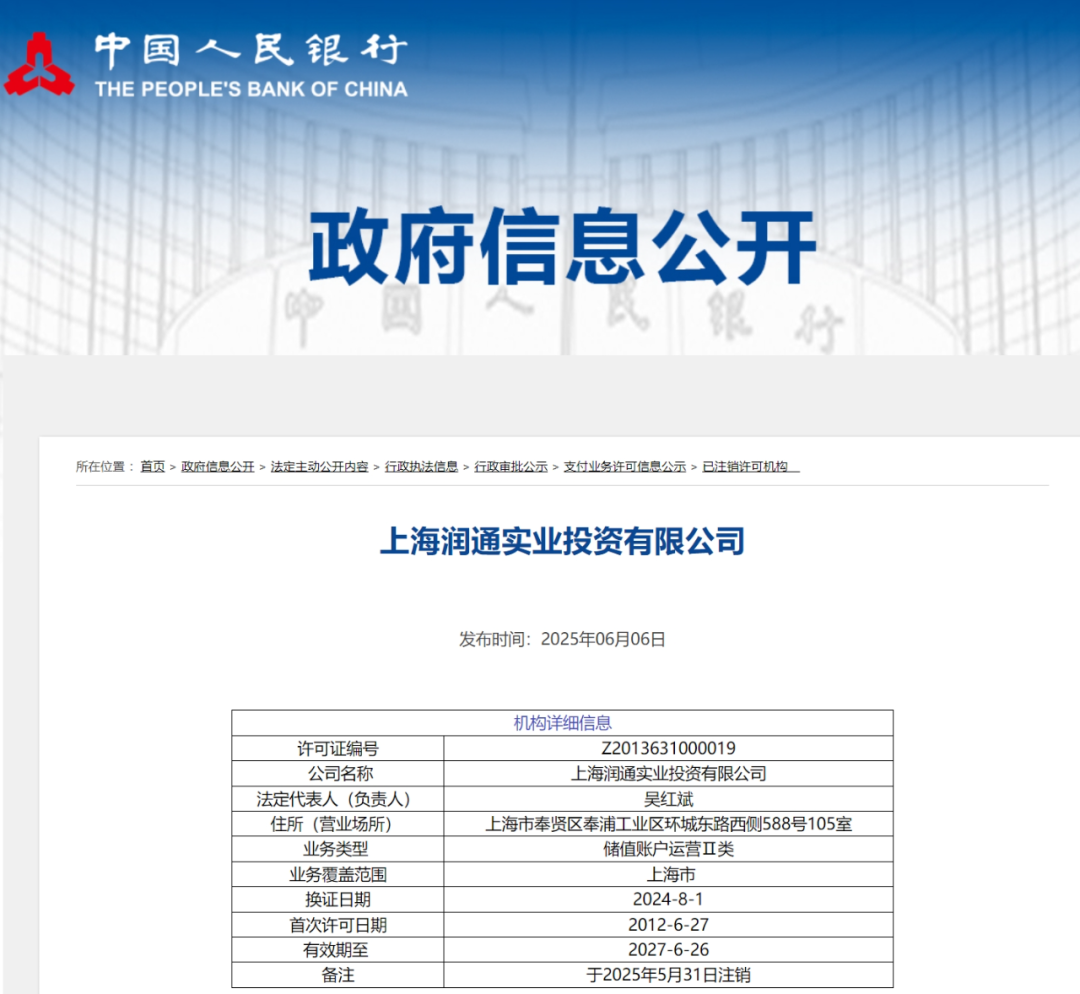
又一张牌照注销
Jin Rong Shi Bao· 2025-06-08 06:15
Core Viewpoint - The People's Bank of China has officially revoked the payment license of Shanghai Runtong Industrial Investment Co., marking the 102nd payment license cancellation in the industry [1] Company Summary - Shanghai Runtong Industrial Investment Co., established on September 21, 2006, had a registered capital of 100 million yuan and was initially licensed for prepaid card issuance and acceptance in June 2012 [4] - The company was operating under the license number Z2013631000019, with its legal representative being Wu Hongbin, and its business was primarily focused on the operation of stored value accounts in Shanghai [3] - The payment license was set to be valid until June 26, 2027, but it will be officially canceled on May 31, 2025 [3] Industry Summary - A significant proportion of recently revoked payment licenses belong to prepaid card institutions, which have struggled due to changes in the regulatory environment and increased competition from alternative payment methods [4] - Compliance is emphasized as a fundamental requirement for the survival of payment institutions, with experts highlighting the importance of risk control and adherence to regulations [5] - The overall growth rate of the payment industry is slowing, leading to intensified competition among payment institutions, which may result in lower profit margins and a need for diversification of services [5]
卑微如我,才是游戏公司今天最重要的人|深氪
36氪未来消费· 2025-06-05 11:57
Core Viewpoint - The article emphasizes the importance of game operation in the current market, highlighting that success or failure often hinges on effective player engagement and retention strategies in a saturated gaming environment [6][18][56]. Group 1: Game Operation and Player Engagement - The recent incident in "Battlefield 2" illustrates how crucial game operation is, as player dissatisfaction arose from perceived operational flaws despite the game's initial success [3][5]. - Tencent's strategic officer noted that stagnation in a game often points to issues within the operational team rather than the game itself, stressing the need for the right personnel to manage player engagement [15]. - The gaming industry is transitioning from a phase of rapid growth to one focused on retaining existing players, making player operation more critical than ever [17][18][19]. Group 2: Challenges in Player Retention - In 2024, China's gaming user growth was only 0.94%, indicating a shift towards a more competitive landscape where retaining existing players is paramount [17]. - Companies are now tasked with keeping older games engaging for long-term players, which presents unprecedented challenges for player operation roles [19][30]. - Effective player operation involves monitoring user behavior and intervening before players decide to leave, utilizing data-driven strategies to enhance user experience [28][30]. Group 3: Evolution of Game Operation - The evolution of player operation has been significant, moving from basic customer service to a comprehensive lifecycle management approach that addresses user needs at every stage [49][52]. - The cost of acquiring new players has increased dramatically, necessitating a focus on retaining existing users to justify the investment made in acquiring them [55][56]. - Companies are learning from successful long-standing games, implementing strategies to extend their lifecycle and maintain player interest [57][58]. Group 4: The Role of Player Operation Teams - Player operation teams are now expected to provide "exceeding expectations" services, creating emotional connections with players to enhance retention [43][48]. - Successful player operation involves not just addressing complaints but also proactively engaging with players through personalized interactions and community-building activities [43][44][67]. - The emotional aspect of player operation is highlighted, as operators often form bonds with players, which can lead to increased loyalty and reduced churn [66][72].



“二代”们到底在跟谁抢岗位?
虎嗅APP· 2025-05-09 10:47
Core Viewpoint - The article discusses the increasing presence of "second-generation" individuals, who benefit from their family backgrounds, in various industries and the implications for social mobility and competition among different talent levels [3][4][5]. Group 1: Impact of Second-Generation Individuals - The presence of second-generation individuals may block some social mobility opportunities, but their impact is not as significant on truly talented individuals [3][5]. - The real competition arises between those with average to above-average talent who are hardworking and second-generation individuals who may have less ability but possess advantageous backgrounds [4][5]. - In stable environments, second-generation individuals tend to thrive, as these settings often do not require high levels of creativity or innovation [6][8]. Group 2: Industry Dynamics - Second-generation individuals are less likely to engage in high-tech or entrepreneurial roles, which are typically reserved for highly talented or risk-taking individuals [5][6]. - Industries that have become stable and less dynamic tend to attract more second-generation individuals, leading to a reliance on background rather than merit [8][9]. - The construction industry serves as an example of a sector that has shifted from a growth phase to a stable phase, making it difficult for individuals without connections to succeed [8][9]. Group 3: Transparency and Fairness - The article emphasizes the importance of transparency and public accountability in mitigating the advantages held by second-generation individuals [11][12]. - Publicizing achievements and qualifications can create a system of checks and balances that holds individuals accountable, thereby increasing fairness in advancement opportunities [12][14]. - The trend towards transparency is seen as irreversible, reflecting societal progress and a growing consensus against nepotism [16][17].