
它经济

Search documents
沈阳昔日最大书店如今仅剩一层 辽宁消费放大招!|栋察楼市早报(12.17)
Sou Hu Cai Jing· 2025-12-17 01:43
Group 1: Decline of Physical Bookstores - The largest bookstore in Shenyang has reduced its operations to just one floor, with the second and third floors converted into free reading rooms [1][3] - The decline of physical bookstores is attributed to changing reading habits influenced by the internet and mobile devices, with a reported closure of 1,200 bookstores nationwide in the first half of 2025, a 61% decrease from 2019 [4] - The survival of physical bookstores is increasingly reliant on non-book-related services, such as cafes and cultural tourism, as traditional book sales diminish [6][9] - The shift in consumer behavior indicates that physical bookstores are becoming less relevant to younger generations, who view them as relics of the past [6][9] Group 2: Northeast Asia Pet Trading Center - The Northeast Asia Pet Trading Center project has been launched in Shenyang, aiming to create a comprehensive platform for live animal trading, smart warehousing, cross-border logistics, and financial services [19][20] - The pet market in China is experiencing significant growth, with an expected market size exceeding 400 billion yuan by 2027, driven by demographic changes and increased demand for companionship [19] - The project is designed to integrate the entire supply chain from breeding to sales, leveraging Liaoning's advantages in live animal resources and cross-border channels [20][23] - The center has already established partnerships with various e-commerce platforms and aims to enhance its service capabilities in the cross-border pet business [21][23] Group 3: Consumption Promotion in Liaoning - Liaoning province is launching a four-month consumption promotion campaign, featuring over 1,500 events to stimulate consumer spending during winter [14][15] - The campaign emphasizes cultural empowerment and technological enhancement, with a focus on traditional cultural themes and diverse consumer experiences [14][16] - Various local businesses are participating, offering discounts and special packages to attract consumers, including a chance to win a BMW car for participants [15][17] Group 4: Cultural Events in Shenyang - Shenyang will host six New Year concerts, featuring renowned orchestras and a variety of classical music pieces, enhancing the cultural landscape of the city [25][26] - The concerts will include performances by prestigious orchestras such as the Vienna Philharmonic and the Armenian National Philharmonic, showcasing a blend of classical and contemporary works [27][28] - These events aim to foster community engagement and celebrate the New Year through music, contributing to the city's cultural vibrancy [25][30]


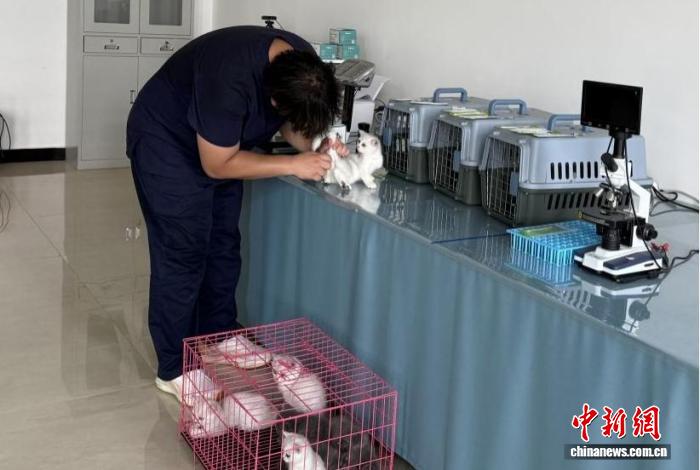
打造宠物产业示范区 东北亚宠物交易中心项目在沈阳市建成
Zhong Guo Xin Wen Wang· 2025-12-15 12:53
Core Insights - The Northeast Asia Pet Trading Center project has been officially completed in Shenyang, aiming to create a comprehensive platform integrating live animal trading, smart warehousing, cross-border logistics, financial services, and brand incubation [1] Group 1: Project Overview - The project aims to establish the first "front exhibition and back warehouse + industry-finance integration" pet industry demonstration zone in China, achieving full-chain integration from breeding to sales and domestic to cross-border trade [1] - The project leverages Liaoning Province's advantages in live animal resource supply and cross-border channels with neighboring countries such as Japan, South Korea, and Russia [2] Group 2: Operational Developments - The logistics company Zhongchu Development (Shenyang) has signed a strategic cooperation agreement with the Liaoning Free Trade Zone Shenyang area to promote the construction of a live pet industry belt in Liaoning Province [2] - The pet park has completed standardized trial operations for the entire live pet transportation process, ensuring a closed-loop management system from quarantine, packaging, shipping to receipt, with traceable transportation routes [2] Group 3: Economic Impact - The project has attracted multiple upstream and downstream enterprises, forming an initial industrial agglomeration effect [4] - Once the live pet e-commerce business scales up, it is expected to achieve a daily transportation volume of 500 pets and an annual revenue of 22.5 million yuan [4] - The project is also facilitating the establishment of Liaoning's first pet cross-border customs clearance location, creating efficient channels for domestic quality pet resources to "go out" and international brands to "come in" [4] - The project is anticipated to become a new engine for upgrading the regional pet industry and promoting the deep integration of the "pet economy" with the digital economy, injecting more market vitality and new industrial momentum into the revitalization of Northeast China [4]
宜兴丁蜀:生态蝶变引育“它经济”发展新引擎
Xin Hua Ri Bao· 2025-12-10 21:56
Core Insights - The "Liu Liu Island" in Yixing's Ding Shu Town has been developed as a pet-friendly outdoor camping paradise, marking a new opportunity in the "pet economy" sector [1][2] - The transformation of Lotus Pond from an ecological liability to a vibrant park has significantly improved the water quality of the Wuxi Port river system, now rated as Class II [2] Group 1: Ecological Transformation - The Lotus Pond area underwent five major projects to address environmental issues, including livestock farming regulation and agricultural pollution control [1] - An investment of 42 million yuan was made this year to create an ecological buffer zone, restoring the self-purification capacity of the water body over 692 acres [2] Group 2: Development of Liu Liu Island - Liu Liu Island consists of a camping area and a pet area, connected by a circular walking bridge, designed to meet urban residents' leisure needs [2] - The pet area includes designated activity zones and facilities such as a pet café and cleaning stations, promoting the "pet + consumption" model [2][3] Group 3: Economic and Cultural Integration - The island integrates local resources and explores new "pet +" business models, including a pet market and cultural products, enhancing the "pet economy" from a single industry to a full supply chain [3] - The Lotus Pond educational base has become an excellent site for social practice for primary and secondary schools, offering over 65 courses that connect students with nature [3] Group 4: Future Development Plans - Future plans include linking Liu Liu Island to the Taihu Wetland ecological corridor, enhancing the quality of life for residents [3] - The focus will be on deepening the integration of ecology, industry, and culture to uncover more rural resources and create new development engines [3]
智能喂食器忙出海“它经济”产值破百亿
Nan Fang Du Shi Bao· 2025-12-09 23:14
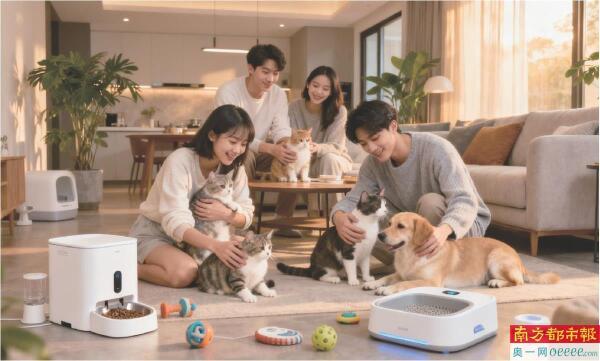
年轻群体"倒逼"产业升级 除了硬核的制造业,深圳还在探索宠物经济的"软服务"闭环。 当年轻人忙着"吸猫撸狗"汲取情绪价值,深圳正在这股热潮中迎来"它经济"的飞速发展。 12月7日,南都记者从深圳宝安区宠物产业高质量发展大会上获悉,作为新的消费增长极,深圳宠物经 济正呈现爆发式增长。 据大会现场披露的一组数据,2024年深圳宠物产业规模已超过100亿元,仅今年新注册的相关企业就达 到2.2万家。与此同时,目前深圳宠物行业相关企业总量已超10万家。 与传统印象中以食品、繁育为主的模式不同,依托电子信息产业优势,深圳正在智能喂食器、宠物医疗 器械等高附加值环节形成"智造"壁垒,一条覆盖"生老病死"全生命周期的产业链已然成型。 深圳"它经济"智造力量 "宠物经济连接着民生福祉与经济增长,融合了情感消费与科技制造。"深圳市市场监督管理局动物防疫 和监管处处长、深圳市宠物经济办公室主任刘泉在致辞中指出,深圳宠物产业已形成科技创新与市场驱 动并重的发展体系,正成为现代服务业与先进制造业融合发展的生动注脚。 在这一版图中,以产业大区宝安为例,其已成为深圳宠物经济的"硬核引擎"。 记者了解到,不同于单纯的消费市场,宝安区瞄准的 ...
宿迁抢抓风口竞逐“它经济”
Xin Hua Ri Bao· 2025-12-04 23:30
Core Insights - The pet economy in Suqian is rapidly growing, with a focus on a full lifecycle and supply chain approach, contributing to a robust industry ecosystem [1][2][3] Group 1: Industry Growth and Economic Impact - Suqian's pet industry cluster achieved a production value of 7 billion yuan in the first three quarters of this year, maintaining a strong growth trend [1] - The city has 56 pet food and product manufacturers, nearly 100 related industry chain companies, and over 400 pet e-commerce operators [1][2] - The local agricultural base supports the pet economy, with over 30,000 e-commerce companies and 130,000 online stores thriving [2] Group 2: Government Support and Policy Initiatives - Suqian has implemented various policies to support the pet industry, including the "Implementation Opinions on the Full Chain Development of the Pet Industry Cluster (2025-2027)" [3][4] - The city aims to grow the pet industry cluster to 20 billion yuan by 2027, focusing on pet food, e-commerce, pharmaceuticals, and services [3] - Financial incentives include rewards for industrial enterprises, technology upgrades, and support for creating "pet-friendly" spaces [4] Group 3: Company Innovations and Market Position - Companies like Zhongmiao Holdings are focusing on high-end pet food production, leveraging innovation and industry integration to gain market leadership [2] - The pet economy is seen as a new growth engine for the local economy, with significant potential for job creation and consumer spending [4]
发掘创新力量!“媒体+”首届大湾区宠物行业年度盛典奖项征集启动
Nan Fang Nong Cun Bao· 2025-11-27 14:06
Core Insights - The pet economy is emerging as a new growth engine in the consumer market, with the Greater Bay Area (GBA) positioned as a key driver for high-quality development in the pet industry [2][10]. Group 1: Event Overview - The inaugural Greater Bay Area Pet Industry Annual Awards collection ceremony was held in Guangdong, gathering experts, industry representatives, and investment institutions to witness a significant milestone in the industry's development [3][4]. - The event aims to leverage "media+" as a link to initiate a new chapter in industry benchmark selection, focusing on discovering innovative strengths within the sector [5][6]. Group 2: Industry Growth and Statistics - The GBA boasts 80 million high-consumption residents, a pet ownership penetration rate of 23.5%, and an annual growth rate exceeding 20%, consolidating its position as a leading area for pet industry innovation [10][11]. - The region accounts for 44% of the country's pet-related enterprises, making it a critical hub for the "it economy" [11][12]. Group 3: Award Collection Details - The award collection encompasses three main dimensions: academic research, cultural creativity, and industrial innovation, featuring seven core categories including an "Outstanding Paper Competition" and "Annual Innovation Technology Award" [17][18][20]. - The initiative aims to provide replicable "Bay Area solutions" for the industry's transition from quantitative growth to qualitative leaps [15][16]. Group 4: Event Highlights and Future Plans - The event will include a red carpet ceremony, high-end forums, and a pet carnival, enhancing consumer engagement through brand exhibitions and live streaming [41][43]. - Discussions on cross-industry collaborations, such as featuring pets in the Spring Festival Gala, were also highlighted, indicating the deep integration of pets into daily life and cultural events [49][50]. Group 5: Support and Collaboration - The event has garnered significant attention and support from industry insiders, with various associations pledging to assist in the preparation and execution of the awards [44][46]. - The collaboration aims to explore new pathways for integrating the pet industry with cultural sectors, enhancing public engagement and content dissemination [52][55].

从看门到家人,“它经济”比你想象更猛烈
Sou Hu Cai Jing· 2025-11-25 09:12
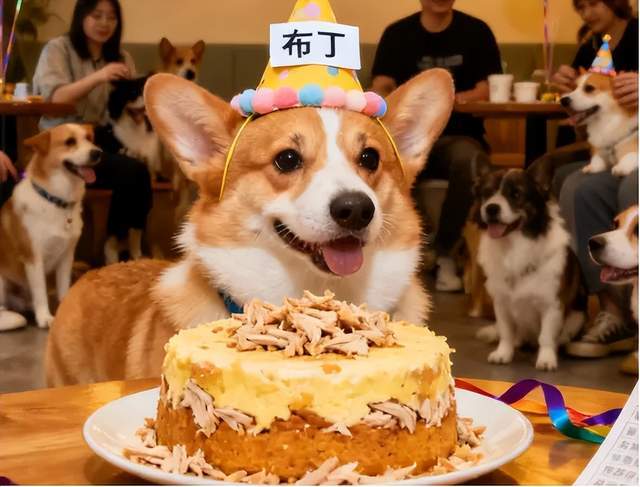
Core Insights - The Chinese pet industry is undergoing a profound transformation driven by emotional connections, technological empowerment, and cross-industry integration, leading to a "new consumption revolution" [3] - The market is rapidly approaching a trillion yuan scale, reshaping lifestyles and business logic [3] Industry Evolution - The evolution of pet ownership in China reflects a clear emotional upgrade path, transitioning from "tool-based" to "emotion-based" and now to "personification" and "pet-centric" models, where pets are seen as equal family members [3][9] - This shift in perception has led to a qualitative change in consumer behavior, with a growing willingness to invest in high-quality food, professional medical care, and thoughtful services [3] Technological Advancements - The proliferation of smart hardware is creating a new digital ecosystem for pet care, with devices like smart litter boxes and feeders enabling automated feeding, cleaning reminders, and health monitoring [5] - Advanced AI technologies allow for 24/7 behavior monitoring and health alerts, enhancing emotional connections between pets and their owners [5] Market Segmentation - The pet food market is experiencing a significant formula revolution, moving from traditional dry food to a diverse range of options including baked, air-dried, and freeze-dried products [5] - Functional products targeting specific life stages and health needs are becoming mainstream in the high-end market, with a growing variety of pet snacks and health supplements [5] Service Trends - The trend of "personification" in pet services is particularly evident, with customized services for events like birthday parties and advanced grooming options such as spa treatments and essential oil massages [7] - The industry is expanding its boundaries, with services like pet insurance, pet funerals, and pet parks emerging as new growth engines [7] Cross-Industry Integration - The concept of "Pet+" is integrating with various sectors, creating new business models and incremental markets, with 72 brands from 11 industries entering the pet space [7] - A "big pet ecosystem" is forming, where different industries leverage their strengths to enhance the pet market through technology transfer and shared user experiences [7] Emotional Value - The explosion of the pet consumption market in China is fundamentally a reconstruction of the value of "companionship," addressing the emotional needs of urban dwellers [9] - The industry's growth is a response to this emotional demand, focusing on health, longevity, and quality of companionship, reflecting a deeper connection between lives [9]
每四个养宠人就有一个00后,资本瞄上“它经济”新引擎
Di Yi Cai Jing· 2025-11-22 10:41
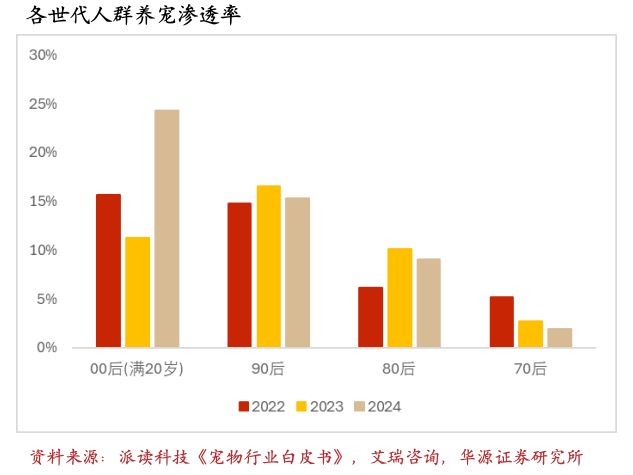
Core Insights - The Chinese pet market is experiencing rapid growth, with a compound annual growth rate (CAGR) of 13.3%, making it the fastest-growing pet market globally [1] - The pet industry in China has seen a compound growth rate of 10% over the past six years, significantly outpacing the growth of retail sales [1] - The rise of the post-2000 generation is a new growth driver, with an expected 20 million pet owners by 2024, representing a 164% year-on-year increase [1] Market Dynamics - The pet market in China is projected to exceed 300 billion RMB in 2024 and is expected to surpass 400 billion RMB by 2027, indicating a cumulative growth of approximately 33% over three years [4] - Five key drivers are identified for the explosive growth of the pet economy: economic growth and income increase, accelerated urbanization, demographic changes, shifts in consumer attitudes, and improvements in policies and social environments [4] Consumer Trends - The average annual spending per pet is currently 2,419 RMB, with the post-2000 generation showing a preference for "parenting-style" pet care, leading to increased demand for personalized pet products, medical care, insurance, grooming, photography, and social activities [1] - The penetration rate of pet ownership among the post-2000 generation is 24%, compared to only 9% for the post-1980 generation, highlighting a significant shift in pet ownership demographics [1] Industry Innovations - Five pet companies presented at the investment conference, focusing on key areas such as pet healthcare, food, smart hardware, and service chains [4] - Innovations include advancements in medical technology for pets, development of new pet food brands, and the introduction of smart hardware to enhance pet care experiences [4] Strategic Recommendations - Companies are encouraged to deepen collaboration across various dimensions, including technological research, industry chain synergy, and international expansion [5] - There is a strong emphasis on developing high-end, functional products and leveraging technology to create competitive advantages [5] - With over 60% of the pet market being online, businesses should utilize big data and AI to enhance operational efficiency and engage in precise marketing strategies [5]
【时代风口】“它”经济:千亿消费市场新赛道
Zheng Quan Shi Bao· 2025-11-17 17:09
Core Insights - The "pet economy" has emerged as a significant consumer sector in China, driven by changing family structures and consumption concepts, with a market size projected to reach 300.2 billion yuan in 2024, reflecting a 7.5% year-on-year growth [1][2] - The emotional bond between pets and owners is a key driver of this economic growth, as pets are increasingly viewed as family members and emotional companions [1][4] Group 1: Market Growth and Trends - The number of urban pets (dogs and cats) in China is expected to exceed 120 million by 2024, with a year-on-year increase of 2.1% [1] - The "pet economy" encompasses a full industry chain, including food, medical care, and equipment, reflecting a shift towards "humanization" of pets, where spending on pets parallels that of children [2] - The industry has attracted significant investment, leading to a more complete and specialized supply chain, from food development to medical and funeral services [2] Group 2: Emotional and Social Factors - The rise of single-person households and empty-nesters has created a demand for emotional companionship, with pets fulfilling this role [1][2] - The "pet economy" is characterized by strong anti-cyclical properties, as consumers are less likely to reduce spending on pets during economic downturns due to the emotional bonds formed [2] Group 3: Challenges and Concerns - The rapid growth of the "pet economy" has led to potential issues, including the creation of consumer bubbles driven by marketing tactics that prioritize profit over genuine pet needs [3] - Conflicts in public spaces due to pet ownership, such as issues related to leash laws and cleanliness, have become more common [3] - The lack of standardized regulations in the pet care industry, particularly in medical and grooming services, raises concerns about service quality and safety [3] Group 4: Future Directions - The "pet economy" represents a new form of emotional consumption, reflecting modern lifestyles and the need for responsible pet ownership [4] - There is a call for improved legislation and industry regulation, as well as public education on responsible pet care, to ensure the sustainable growth of the "pet economy" [4]
【时代风口】 “它”经济:千亿消费市场新赛道
Zheng Quan Shi Bao· 2025-11-17 16:57
Core Insights - The "pet economy" has emerged as a significant consumer sector in China, projected to reach a market size of 300.2 billion yuan in 2024, with a year-on-year growth of 7.5% [1][2] - The emotional connection between pets and their owners drives diverse consumer demands, as pets are increasingly viewed as family members and emotional companions [1][4] Group 1: Market Growth and Trends - The number of urban pets (dogs and cats) in China is expected to exceed 120 million by 2024, reflecting a growth rate of 2.1% [1] - The "pet economy" encompasses a full industry chain, including food, medical care, and equipment, driven by the emotional value pets provide [1][2] - The trend of "humanization" of pets is evident, with many young couples shifting their parenting investments from children to pets, leading to a rise in premium pet products and services [2] Group 2: Industry Dynamics - The growth of the pet population has led to a complete industry chain, attracting significant investment and resulting in a more specialized and professional market [2] - The pet economy is considered to be resilient and anti-cyclical, as consumers are unlikely to reduce spending on pets even during economic downturns [2] Group 3: Challenges and Concerns - The rapid growth of the pet economy has led to potential issues, including the creation of consumer bubbles driven by marketing tactics that promote unnecessary products [3] - Conflicts in public spaces due to pet ownership, such as issues related to leash laws and cleanliness, have become more common [3] - The lack of standardized regulations in the pet industry, particularly in medical and grooming services, raises concerns about service quality and safety [3] Group 4: Future Outlook - The pet economy represents a new form of emotional consumption, reflecting modern lifestyles and the need for emotional connections [4] - There is a call for improved legislation and industry regulation, as well as promoting responsible pet ownership to ensure a sustainable future for the pet economy [4]