智慧海关

Search documents
元旦假期部分要闻
Xin Lang Cai Jing· 2026-01-04 14:56
Group 1: Cross-Border Trade and Logistics - The State Council meeting emphasized the importance of cross-border trade facilitation in creating a top-tier business environment, focusing on efficient cross-border logistics and the integration of various transportation modes [1] - The meeting called for the promotion of green trade and the development of new business models such as cross-border e-commerce, while optimizing the regulation of special goods [1] - There is a push to enhance smart regulatory services, including the construction of smart customs and ports, and to advance the international trade "single window" for cross-border connectivity [1] Group 2: Hong Kong Stock Market Outlook - The Hong Kong stock market experienced a significant rise, with the Hang Seng Index increasing by 2.76% and the Hang Seng Tech Index by 4.00% as of January 2, 2026 [2] - A report from CITIC Securities indicates that a continued easing of global liquidity and supportive domestic financial policies are expected to drive market growth, with increased participation from individual investors [2] - The core logic supporting the bull market is anticipated to persist and even strengthen [2] Group 3: Public Fund Fee Reform - The China Securities Regulatory Commission announced the implementation of new regulations on public fund sales fees, effective January 1, 2026, marking the completion of a three-phase fee reform [3] - The reform is expected to save investors approximately 51 billion yuan annually, with an overall reduction in public fund fee levels by about 20% [3] Group 4: High-Quality Development of Power Grid - The National Development and Reform Commission and the National Energy Administration released guidelines for promoting high-quality development of the power grid, aiming for a new grid platform by 2030 [4] - Key targets include enhancing the capacity for resource optimization, with the "West-to-East Power Transmission" expected to exceed 420 million kilowatts and new inter-provincial power support capabilities of around 40 million kilowatts [4] - The guidelines also aim for renewable energy generation to account for approximately 30% of total power generation and to support over 40 million charging facilities [4] Group 5: Offshore RMB Exchange Rate - As of January 2, 2026, the offshore RMB rose above 6.97 against the US dollar, reaching a high of 6.9664, the highest since May 2023 [5] - In December 2025, the offshore RMB appreciated by 974 basis points, a 1.38% increase, with a total appreciation of 3,626 basis points or 4.94% for the year [5] Group 6: Warren Buffett's Retirement - Warren Buffett officially retired from his position as CEO of Berkshire Hathaway on December 31, 2025, while continuing to serve as chairman of the board and retaining a significant stake in the company [6] Group 7: U.S. Military Action in Venezuela - The U.S. military conducted a raid in Venezuela, capturing President Maduro and his wife, with plans to "manage" the country until a "safe" transition can be implemented [7]
经满洲里公路口岸年内进出口贸易值首次突破1000亿元
Sou Hu Cai Jing· 2025-12-30 04:10
Core Insights - The Manzhouli highway port has achieved a historic milestone by surpassing an import and export trade value of 100 billion yuan for the first time in its history, marking a significant achievement since its opening [1][3] - This achievement is seen as a reflection of the customs' efforts to translate national strategies into practical port operations, laying a solid foundation for the elevation of border opening capabilities during the 14th Five-Year Plan period [1][3] Group 1 - The Manzhouli Customs has implemented a multi-faceted approach to enhance the quality and stability of trade at the port, focusing on institutional innovation, efficient services, and smart regulation [3] - The customs has established a coordination mechanism involving "two countries and six parties" to address bottlenecks in customs clearance, ensuring efficient passage for 240,000 trucks this year [3] - Various facilitation measures have been tailored to support new growth points in foreign trade, including expedited declaration and priority inspection for traditional advantageous goods [3] Group 2 - The trade value through the Manzhouli highway port reached 102.02 billion yuan from January to November, reflecting a year-on-year growth of 26.3%, showcasing the port's strong radiating and resilient capabilities [3] - The customs aims to transform the port from a mere transit point to a comprehensive platform, enhancing high-quality development through efficient customs clearance and intelligent supervision [5]


张家港前11月外贸总值同比增长3.1%
Su Zhou Ri Bao· 2025-12-25 03:16
Core Insights - Zhangjiagang's foreign trade demonstrated resilience and growth in the first 11 months of the year, with a total trade value of 255.1 billion yuan, a year-on-year increase of 3.1%, and exports reaching 142.2 billion yuan, up 8.6% [1][2] Group 1: Trade Performance - The foreign trade in Zhangjiagang showed a steady increase despite global economic challenges, characterized by growth in foreign-invested and state-owned enterprises, as well as significant exports of machinery and lithium batteries [2] - Private enterprises led the trade with an import and export value of 127.2 billion yuan, accounting for 49.9% of the total foreign trade [2] - Exports of machinery products reached 45.95 billion yuan, increasing by 15.8%, while lithium-ion battery exports surged by 147.2% to 1.1 billion yuan [2] Group 2: Market Diversification - Zhangjiagang's trade with ASEAN and Brazil, its largest trading partners, saw substantial growth, with trade values of 44.07 billion yuan (up 20.7%) and 37.96 billion yuan (up 5.8%) respectively [2] - The total import and export value with countries involved in the Belt and Road Initiative reached 150.53 billion yuan, marking a 16% increase [2] Group 3: Customs Initiatives - Zhangjiagang Customs implemented various measures to enhance the business environment, including a 24-hour appointment system for customs clearance and targeted support for key enterprises [3] - The customs authority introduced a "smart customs" initiative to improve efficiency, including the establishment of virtual storage areas and streamlined logistics processes [3] - The AEO certification program has been a focus for Jin Gang Customs, with 18 AEO enterprises contributing 20% of the city's total trade volume [4]
“智慧海关”助力冰雪盛会“无感通关”
Xin Lang Cai Jing· 2025-12-23 14:58
中新网内蒙古新闻12月23日电 (记者 李爱平)日前,来自俄罗斯鄂木斯克市文艺代表团成员通过满洲 里公路口岸冰雪节团体专用通道快速通关。 为保障代表团顺利通关,满洲里十八里海关启用团体通关保障方案,提前对接外事部门,详细了解代表 团人员数量及行程,设立冰雪节专用通道,提供个性化通关服务。同时充分运用智慧卫检通道、智能验 核等"智慧旅检"手段,打造旅客"无感通关"体验。 随着冰雪经济深度发展和中俄互免签证等政策落地实施,满洲里口岸再次迎来新的发展机遇,据了解, 2025年该关共完成青少年研学团、中俄文化年、跨境游等5次大型团体展会保障,今年前11月累计监管 进出境旅客54万人次、同比增长7.08%。 "接下来,我们将持续推进'智慧海关'建设,优化监管流程,提升旅客体验感,让安全和高效成为海关 对外服务的亮眼名片。"满洲里十八里海关旅检一科科长张宝群介绍。(完) "专用通道速度很快,还有海关人员为我们引导,从这些服务我能感觉到这次冰雪节会办得很好。"鄂木 斯克市代表团领队娜塔莉亚对海关服务表示赞许。 12月18日至21日,满洲里海关所属满洲里十八里海关共保障俄罗斯7个政府代表团和2个文艺代表团共 298人快速通关 ...
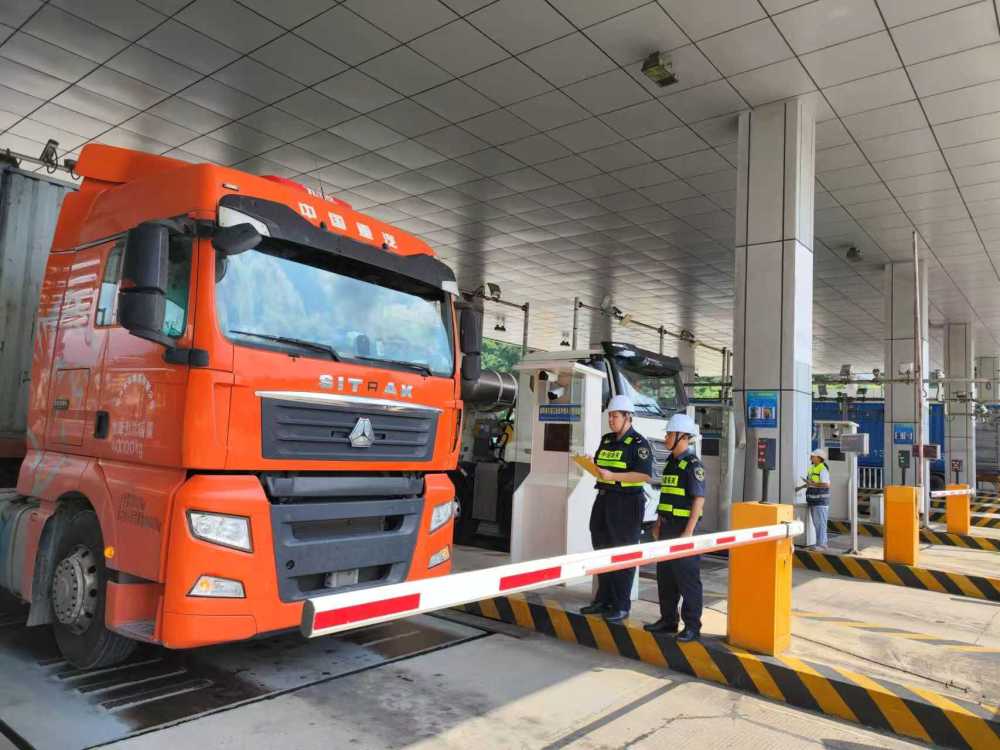
广西友谊关口岸海关监管进出境车辆突破百万辆
Xin Hua She· 2025-12-19 03:45
Core Insights - The Friendship Pass customs has achieved a significant milestone by monitoring its one millionth inbound and outbound vehicle in 2023, marking the first time this threshold has been crossed in a single year [1] - The total value of goods monitored by the Friendship Pass customs reached 545.17 billion yuan in the first eleven months of the year, reflecting a year-on-year increase of 28.6% [1] Group 1 - The Friendship Pass customs is a crucial hub for the Western Land-Sea New Corridor and serves as one of the most convenient land routes to ASEAN countries [1] - The customs has enhanced its inspection capacity by increasing the number of inspection spots from 28 to 76, thereby improving clearance efficiency [2] - Daily vehicle monitoring has exceeded 2,700, representing a growth of over 60% compared to the early stages of the 14th Five-Year Plan [1][2] Group 2 - The customs has implemented various technological advancements, including a smart logistics control platform and intelligent inspection systems, which have reduced cargo waiting times for inspections by 20% [2] - The Friendship Pass customs plays a vital role in the importation of fruits from ASEAN countries, ensuring the safety and freshness of imported products through strict quarantine measures [2] - The customs has adopted facilitation measures such as "two-step declaration" and "advance release" to further reduce waiting times for imported fruits by 20% [2]
我省首份报关单证自助打印落地郑州
Zheng Zhou Ri Bao· 2025-12-17 00:57
Core Insights - The implementation of self-service customs declaration document printing marks a significant advancement in the efficiency of foreign trade operations in Zhengzhou, allowing companies to manage documentation without needing to visit customs offices [1][2] Group 1: Service Implementation - Zhengzhou Antu Bioengineering Co., Ltd. successfully printed the first customs declaration document through a self-service method, indicating the official launch of this service in the province [1] - The new service allows companies to print customs documents with electronic seals from the "China International Trade Single Window," enhancing convenience and efficiency [1][2] Group 2: Operational Efficiency - Previously, companies had to send personnel to multiple customs locations to retrieve printed documents, a process that could take 2 to 4 working days; now, it can be completed in about 20 minutes [1] - The self-service module enables real-time, precise, and convenient access to customs documents, significantly improving data retrieval processes for businesses [1] Group 3: National Implementation and Future Prospects - The self-service printing service will be fully implemented across all customs in the country starting December 15, 2025, as part of a broader initiative by the General Administration of Customs [2] - The service reflects the ongoing efforts of Zhengzhou Customs to enhance smart customs construction and improve the cross-border trade environment in the province [2]

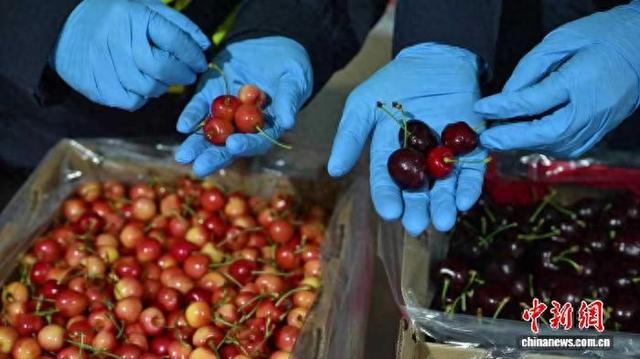
2025/2026年上海口岸海运智利樱桃进口季启幕
Zhong Guo Xin Wen Wang· 2025-12-15 03:24
Group 1 - The import season for Chilean cherries at Shanghai port for the 2025/2026 season has officially begun with the arrival of the first cargo ship carrying 20.9 tons of fresh cherries [1][3] - Shanghai Customs has implemented advanced information technology and intelligent supervision methods to enhance the efficiency and safety of the customs clearance process for imported cherries [3] - A total of 31 "Cherry Express" ships are expected to dock at Shanghai Yangshan Port before the 2026 Spring Festival, with plans to deliver 250,000 tons of high-quality cherries, which is estimated to be 2 to 3 times the import volume of the previous cherry season [3] Group 2 - The establishment of a bilateral recognition model for temperature monitoring of Chilean fruits has significantly improved customs clearance speed and trade facilitation [3] - The "smart customs" initiative allows for real-time online information queries, contributing to a more efficient customs process for imported fruits [3] - The measures implemented by customs, such as "immediate inspection upon arrival," have helped maintain the freshness of imported cherries [3]
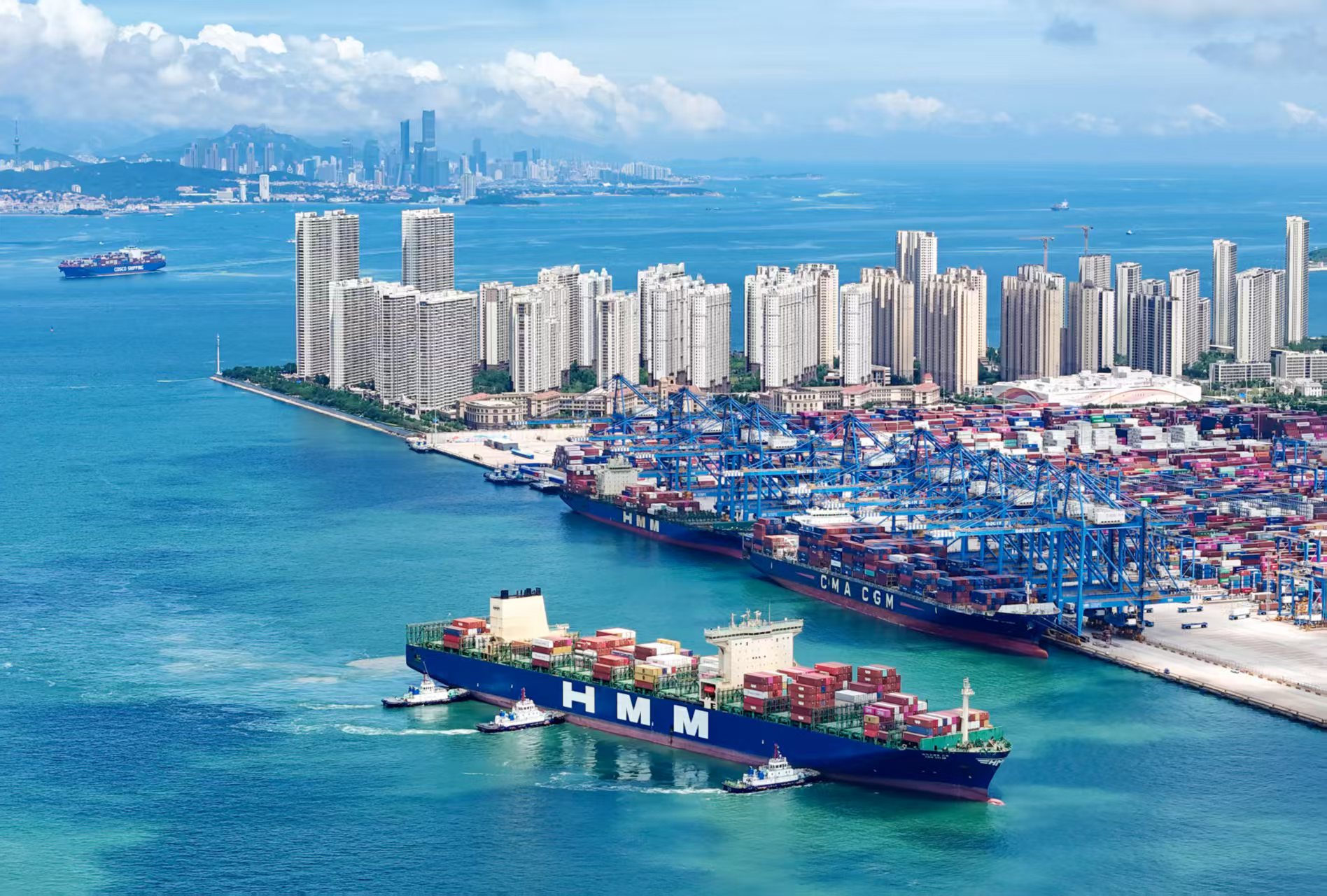
“关港通2.0”上线 青岛自贸片区“区关港”协同机制再升级
Xin Hua Cai Jing· 2025-12-12 03:22
Core Insights - The "Guankong Tong 2.0" initiative has been officially launched, representing a significant upgrade from the previous version, "Guankong Tong 1.0," which was the first in the country to implement online processing for general cargo inspection and other innovative features [1][3] Group 1: Service Enhancements - "Guankong Tong 2.0" focuses on seven major services including cross-regional inspection, online vehicle booking, sample management, preliminary screening, quarantine processing, online seal purchasing, and internal notifications, enhancing the integration of on-site operations [3] - The initiative aims to streamline customs processes, allowing for efficient handling of goods, as demonstrated by the rapid clearance of two containers of dried chili from Southeast Asia within two days [3] Group 2: Smart Inspection Focus - The program emphasizes smart inspection for various cargo types, including grains, bulk minerals, cold chain products, hazardous materials, and consolidated shipments, providing tailored services and intelligent supervision [4] - For instance, the "Smart Cold Chain" service allows for accurate temperature monitoring of cold chain containers, significantly reducing inspection waiting times by 24-48 hours compared to previous methods [4] Group 3: Data Transmission and Security - "Guankong Tong 2.0" establishes a secure data transmission channel between customs and ports, ensuring safe data exchange and efficient processing of business transactions [5] - The initiative includes a dual authentication mechanism and an intrusion defense system to protect critical documents, enhancing the overall security and efficiency of the customs process [5] Group 4: Comprehensive Online Management - The program aims for full online management of the customs process, focusing on key areas such as grains, bulk minerals, cold chain products, hazardous materials, and consolidated shipments, thereby addressing challenges in customs clearance for major commodities [5] - By leveraging technology and optimizing processes, "Guankong Tong 2.0" enhances the efficiency of cargo flow and precision in supervision, benefiting enterprises through collaborative innovation [5]

苏州工业园区海关智慧监管赋能“灯塔工厂”提质增效
Xin Hua Ri Bao· 2025-12-11 21:46
Core Insights - The company, Mondelez International, has established itself as the first "end-to-end lighthouse factory" in the global snack and biscuit industry, joining the World Economic Forum's global "lighthouse factory" network in 2023 [1] - The Suzhou factory has five fully automated production lines with an annual production capacity exceeding 100,000 tons, producing popular brands such as Oreo, Chips Ahoy, and others [1] - The company's export value increased by 3.2% year-on-year in the first eleven months of the year, indicating strong demand in overseas markets [1] Group 1 - The Suzhou factory is recognized for its advanced smart manufacturing capabilities, representing the pinnacle of modern factory technology [1] - Mondelez has been investing heavily in digital transformation to optimize quality across the entire production process and enhance brand value [1] - The company has transitioned from a linear supply chain to an intelligent supply ecosystem through smart logistics [1] Group 2 - The "Hui Guan Tong" smart customs declaration platform supports efficient customs clearance for the lighthouse factory, enhancing operational efficiency [2] - The customs authority has introduced a "cloud issuance" function for inspection and quarantine certificates, allowing for rapid processing of documentation [2] - The Suzhou Industrial Park Customs is focused on continuously upgrading the "Hui Guan Tong" platform to improve customs efficiency and support companies in expanding their overseas markets [2]

退税无纸化应用首月 精准服务畅享智慧海关红利
Sou Hu Cai Jing· 2025-12-08 10:48
中新网黑龙江新闻12月8日电(吴佳凝)2025年11月1日-30日全国海关推广退税无纸化应用实施首月,哈尔 滨海关所属绥芬河海关办理无纸化退税7笔,退还税款132.29万元。 11月12日,哈尔滨海关所属绥芬河海关通过无纸化方式为黑龙江某企业办理完成三笔退税业务,退还税 款约7.6万元,全程用时约2个工作日。这是11月退税无纸化应用以来,黑龙江省首次办理上述业务。 应用上线前,企业需要在多部门间多次往返递交材料,对实时办理进度也不掌握。退税无纸化实现了相 关信息在海关、国库、银行之间的电子化流转,纳税人通过"单一窗口"向海关发送退税申请后,足不出 户就能完成手续办理。 "我们的时间成本压缩了80%以上!"丰盈经贸有限公司的相关负责人于大洋还提到,"新功能刚上线时 我还担心不会操作,海关工作人员帮我们梳理操作要点,还针对我们公司常遇到的问题给出了清晰的指 引。" 绥芬河海关以解决企业"急难愁盼"问题为导向。绥芬河海关验估科副科长陈蓉蓉表示,"我们对政策宣 传进行了优化,主动摸排辖区内符合条件的单位,'对症开方'开展'送政策上门'服务。并加强与国库和 税务等部门的沟通联系,畅通办理渠道,切实帮助企业解决通关实际问 ...