
气候融资

Search documents
COP30各方呼吁加强行动加快议程 争取达成实质性进展
Yang Shi Xin Wen· 2025-11-17 21:22
Core Points - The COP30 conference has entered its second week, with high-level meetings officially opening on the 17th, attended by key representatives including Brazil's Vice President Geraldo Alckmin and UNFCCC Executive Secretary Simon Steele [1] - Alckmin emphasized the need for practical actions to combat climate change and reaffirmed Brazil's commitment to a just energy transition and eliminating illegal deforestation by 2030, maintaining a 50% reduction in deforestation achieved so far [1] - COP30 President Andre Correa D'Alago indicated that negotiations will accelerate to ensure substantial progress before the conference concludes, aiming for the first set of proposals by the 19th and a second set by the 21st, focusing on climate financing and reducing fossil fuel use [1] Summary by Categories Climate Action - Brazil's commitment to a just energy transition and the elimination of illegal deforestation by 2030 was reiterated, with a focus on maintaining a 50% reduction in deforestation [1] Conference Progress - The COP30 President announced that negotiations will be expedited to achieve tangible outcomes, with specific deadlines for proposal submissions set for the 19th and 21st [1] Key Issues - The conference will prioritize discussions on climate financing and the reduction and cessation of fossil fuel usage as critical areas of focus [1]
联合国贸发会议:气候融资需更好支持发展中国家|绿色金融周报
2 1 Shi Ji Jing Ji Bao Dao· 2025-11-17 11:53
Group 1: Climate Financing - The UN Conference on Trade and Development emphasizes the need for better climate financing support for developing countries, highlighting a significant gap between the $100 billion climate financing commitment achieved in 2022 and the $1.3 trillion target set for 2024 COP29 [2] - The report calls for systemic reforms in the international financial architecture to increase non-debt financing and improve the operations of multilateral development banks, enabling developing countries to become co-creators of rules rather than mere rule-takers [2] Group 2: Carbon Reduction Pathways - The Beijing Green Finance and Sustainable Development Research Institute released a study outlining carbon reduction pathways for six high-carbon industries from 2020 to 2060, providing a reference for financial institutions and third-party evaluations of corporate transformation plans [3] - The study suggests using a 2-degree scenario as a benchmark for assessments, aligning with China's "3060" dual carbon strategy goals, and aims to mitigate the risk of "false transformation" being included in financial support [3] Group 3: Blue Economy Financial Support - The Guangdong Province has opened a public consultation for the "Blue Industry Financial Support Guidelines," which aims to support sustainable development in marine industries, including fisheries, tourism, and marine renewable energy [4] - The guidelines provide operational principles for government, financial institutions, and enterprises, promoting standardization in blue finance and addressing challenges in identifying, quantifying, and qualifying blue economic activities [4] Group 4: Carbon Market Activity - The national carbon market reported a highest price of 62.48 yuan/ton and a closing price increase of 4.12% over the previous week, with a total trading volume of 16,774,989 tons and a total transaction value of approximately 1 billion yuan [5] - Cumulative trading volume in the national carbon market reached 795,940,642 tons with a total transaction value of approximately 53.29 billion yuan as of November 14, 2025 [5] Group 5: Green Financial Instruments - Shanghai Pudong Development Bank issued its first green financial bond of the year, totaling 20 billion yuan with a fixed interest rate of 1.73%, indicating market confidence in green financial instruments [6] - The issuance aims to provide long-term funding support for green projects, reflecting the growing recognition of green finance in the market [6] Group 6: Biodiversity Financing - The first biodiversity-linked loan in Ya'an, Sichuan Province, was issued for 478 million yuan, utilizing a combination of policy-based financial tools and market financing to meet project funding needs [7] - This loan integrates biodiversity impact assessments to monitor ecological effects, promoting a win-win scenario for ecological protection and industrial development [7]
胡彬:气候融资转向公平有效新方向
Jing Ji Ri Bao· 2025-11-17 00:03
Core Viewpoint - The COP30 conference in Brazil marks a critical juncture in global climate governance, focusing on the urgent need for a new climate financing system that is sufficient, equitable, and accessible to meet the funding gap required to achieve the Paris Agreement's temperature control goals [1][2]. Climate Financing Transition - The past decade has seen developed countries fail to fulfill their annual commitment of $100 billion in climate funding, leading to a significant imbalance in funding structures, particularly in adaptation investments [2][3]. - COP30 signifies a new phase of systematic restructuring in climate financing, with discussions centered around the "Baku-Belém Climate Financing Roadmap" aimed at significantly increasing global climate funding targets [2]. Balancing Fairness and Efficiency - Key disagreements between developed and developing countries revolve around responsibility definitions, funding nature, and usage priorities [3]. - Developed nations emphasize mobilizing private capital and market mechanisms, while developing countries insist on the primary responsibility of developed nations to provide funding as per the Paris Agreement [3]. - There is a critical shortage of funds for vulnerable nations to adapt to climate change, and high-risk countries struggle to access favorable funding due to debt and credit issues [3]. Innovative Financing Approaches - A shift from "aid logic" to "investment logic" in global climate financing is emerging, characterized by three main trends [4]. - The integration of public and private sectors is becoming the dominant model, with emerging market countries leveraging sovereign funds to attract international capital [4]. - Regional cooperation mechanisms are accelerating, with initiatives led by countries in Latin America, Africa, and ASEAN to create localized financing solutions [4]. - The deep integration of market mechanisms and financial tools is evident, with initiatives like the "Global Carbon Market Alliance" aiming to standardize and enhance transparency in carbon credits [4]. China's Role in Climate Financing - As a major developing country, China advocates for multilateralism and equitable cooperation in addressing climate financing challenges [6]. - China proposes establishing a "Global South Climate Financing Coordination Mechanism" to enhance collective bargaining power among developing nations [6]. - Sharing experiences in green finance, such as green credit and bonds, can help improve project transparency and reduce financing costs for partner countries [6]. - China aims to promote market connectivity and activate carbon asset potential by aligning carbon market standards with BRICS and ASEAN countries [6]. Conclusion - Climate financing serves as a "glue" for uniting climate action consensus and a "catalyst" for accelerating green transitions, with COP30 indicating a historic evolution in the global climate financing system [7].
气候融资转向公平有效新方向
Jing Ji Ri Bao· 2025-11-16 22:08
Core Viewpoint - The COP30 conference in Brazil is a pivotal moment for global climate governance, focusing on the urgent need for a new climate financing system to meet the significant funding gap required to achieve the Paris Agreement's temperature control goals [1][2]. Climate Financing Transition - The past decade has seen developed countries fail to meet their annual commitment of $100 billion for climate funding, leading to a structural imbalance in funding, particularly in adaptation efforts [2][3]. - COP30 marks a new phase in climate financing, with discussions centered on the "Baku-Belém Climate Financing Roadmap" aimed at significantly increasing global climate funding targets [2]. Balancing Fairness and Efficiency - Key disagreements exist between developed and developing countries regarding responsibility, funding nature, and usage focus, with developed nations emphasizing private capital mobilization while developing nations insist on their primary funding responsibility [3]. - There is a critical shortage of funds for vulnerable countries to adapt to climate change, and high-risk regions struggle to access favorable funding due to debt and credit issues [3]. - Unilateral measures, such as carbon border adjustment mechanisms, are viewed by developing countries as potential new "green trade barriers," exacerbating feelings of unfairness [3]. Innovative Financing Approaches - A shift from "aid logic" to "investment logic" in global climate financing is emerging, characterized by three main trends: - The integration of public and private sectors as the dominant model, utilizing risk-sharing and return assurance mechanisms to attract private capital [4]. - The rise of regional cooperation mechanisms, with initiatives led by countries in Latin America, Africa, and ASEAN to better meet local needs and enhance funding efficiency [4]. - The deep integration of market mechanisms and financial tools, exemplified by the "Global Carbon Market Alliance" initiative, which aims to standardize and enhance transparency in carbon credits [4]. China's Role in Climate Financing - China, as a major developing country, advocates for multilateralism and equitable cooperation in addressing climate financing challenges [6]. - The establishment of a "Global South Climate Financing Coordination Mechanism" is proposed to enhance collective bargaining power among developing nations [6]. - China aims to share its experiences in green finance, such as green credit and bonds, to improve project transparency and reduce financing costs for partner countries [6]. - Bilateral and regional collaborations, such as those between China and Brazil, are encouraged to promote innovative financing models that convert ecological assets into development capital [6]. Conclusion on Climate Financing - Climate financing serves as a "glue" for uniting climate action consensus and a "catalyst" for accelerating the green transition, with COP30 indicating a historic evolution in the global climate financing system [7].
巴西政府希将“永远的热带雨林基金”打造成气候融资新典范
Shang Wu Bu Wang Zhan· 2025-11-13 16:29
Core Viewpoint - The Brazilian government aims to establish the "Forever Amazon Fund" (TFFF) as a new model for climate financing, moving beyond mere donations to investment that provides returns to investors while funding rainforest protection [1] Group 1 - President Lula emphasized the insufficiency of donations alone to meet actual needs, highlighting that developed countries pledged $100 billion annually at COP15 in 2009, which has yet to be fulfilled [1] - TFFF is designed as an investment mechanism rather than a donation fund, indicating a shift in approach to climate financing [1] - A portion of the returns generated from TFFF investments will be allocated to support countries that protect rainforests [1]
联合国贸发会议报告呼吁 加强气候融资对接发展中国家需求
Sou Hu Cai Jing· 2025-11-11 22:44
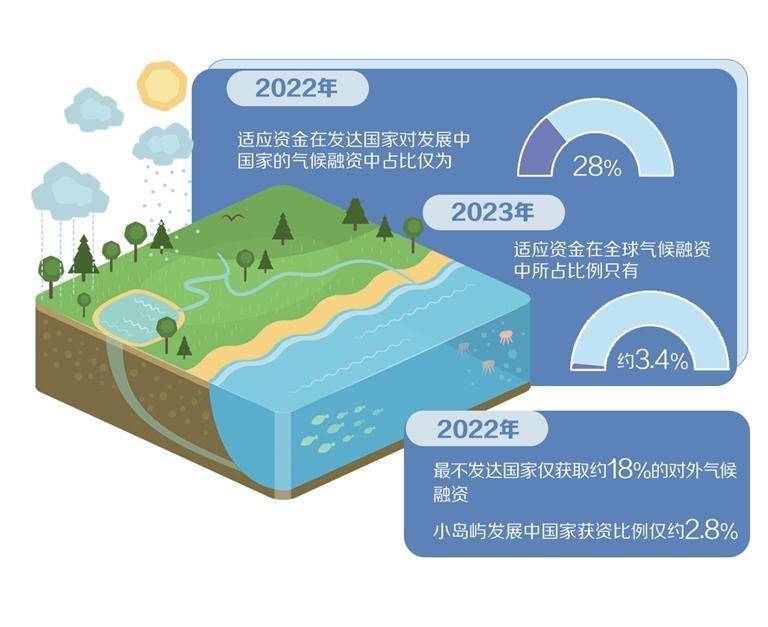
Core Insights - The report by the United Nations Conference on Trade and Development emphasizes the need for systemic reform of the international financial system to mobilize $1.3 trillion annually for climate financing, particularly for developing countries [2][4] Financing Needs and Current Gaps - Despite achieving the $100 billion climate financing commitment in 2022, there remains a significant gap compared to the $1.3 trillion target set for 2024, indicating that the current financing is insufficient to meet the needs of developing countries [2][3] - Adaptation funding, a crucial component of climate financing, constituted only 28% of climate financing from developed to developing countries in 2022, and dropped to approximately 3.4% in 2023, highlighting the challenges in attracting private capital for adaptation efforts [2][3] Structural Issues in Financial Architecture - The report identifies structural limitations in the international financial architecture as a barrier to developing countries accessing necessary funds for climate action, including high capital costs, unsustainable debt, and complex financing procedures [3][4] - Developing countries often lack central bank swap lines and rely on institutions like the International Monetary Fund, which come with stringent macroeconomic conditions, exacerbating their financial vulnerabilities [3][4] Recommendations for Reform - To achieve the $1.3 trillion climate financing goal by 2035, the report advocates for comprehensive reforms in the international financial architecture, focusing on enhancing financial stability, expanding climate and development financing, and improving global financial governance equity [4][5] - The report suggests increasing public international financing, promoting non-debt financing options, and reforming multilateral development banks to better support climate and green structural transitions [5] - It also calls for a more equitable governance structure in institutions like the IMF and World Bank, enhancing the representation of developing countries in decision-making processes [4][5]

联合国贸发会议报告呼吁——加强气候融资对接发展中国家需求
Jing Ji Ri Bao· 2025-11-11 22:11
Core Insights - The report by the United Nations Conference on Trade and Development emphasizes the need for systemic reform of the international financial system to mobilize $1.3 trillion annually for climate financing, particularly for developing countries [1][4] Financing Needs and Current Status - The report highlights that the commitment to mobilize $100 billion in 2022 does not meet the climate financing needs of developing countries, which are significantly below the $1.3 trillion target set for 2024 [1] - Adaptation funding, crucial for climate financing, constituted only 28% of climate financing from developed to developing countries in 2022, and dropped to approximately 3.4% in 2023, indicating a lack of private capital attraction [1] Challenges in Fund Distribution - The "loss and damage" fund initiated at COP28 has seen limited commitments and disbursements, with a distribution system still under development, leading to a mismatch between actual needs and available funds [2] - The most vulnerable countries received only about 18% of external climate financing in 2022, with small island developing states receiving merely 2.8% [2] Structural Limitations of Financial Architecture - The report identifies structural limitations in the international financial architecture as a barrier to climate financing, including high capital costs, unsustainable debt, limited fiscal space, and complex financing procedures [3] - Developing countries face high borrowing costs and currency risks due to a lack of central bank swap lines, which limits their ability to invest in climate transition [3] Recommendations for Reform - To achieve the $1.3 trillion climate financing goal by 2035, systemic and structural reforms of the international financial architecture are necessary, focusing on financial stability, climate and development financing, and equitable global financial governance [4] - The report advocates for a more equitable international financial safety net, increased public international financing, and reforms in multilateral development banks to better support climate and green transitions [5] - It also calls for a re-evaluation of sovereign debt restructuring mechanisms to view climate and development investments as "rational expenditures" rather than "debt risks," aiming for sustainable financing sources for developing countries [5]
《联合国气候变化框架公约》第三十次缔约方大会在巴西贝伦开幕
人民网-国际频道 原创稿· 2025-11-11 09:52
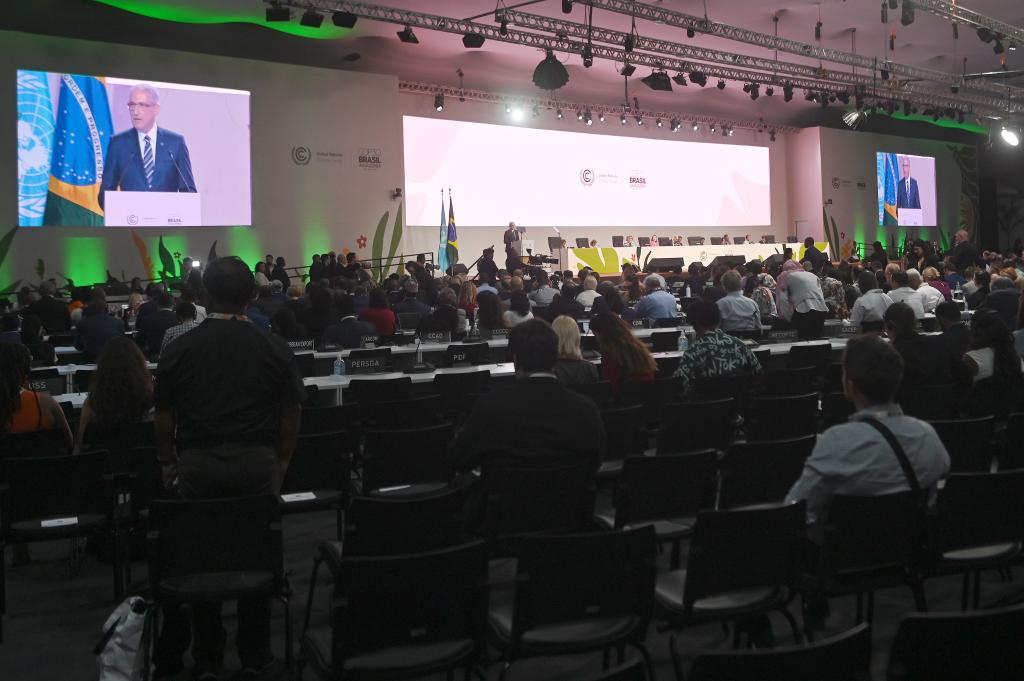
Core Points - The 30th Conference of the Parties (COP30) to the United Nations Framework Convention on Climate Change has opened in Belem, Brazil, focusing on climate change issues such as energy transition, climate financing, and adaptation [1][3] - The conference aims to unite countries to find common solutions to the climate crisis and accelerate a just transition [1][3] Group 1: Conference Objectives and Highlights - COP30 President Andre Correa Dourado emphasized the urgent need for an action agenda to address the global climate crisis, aiming to integrate climate action with economic activities and job creation [3] - The Executive Secretary of the UNFCCC, Simon Steele, noted that the Paris Agreement is making tangible progress, with expectations of a 12% reduction in greenhouse gas emissions by 2035 based on new national contributions [3] Group 2: Participation and Activities - The conference is expected to last until November 21, attracting representatives from over 190 countries and regions, including government officials, international organizations, scientists, entrepreneurs, and NGOs [4] - The "China Corner" series of events commenced, featuring discussions on ecological civilization, climate change responses, and South-South cooperation, highlighting China's achievements in energy transition and carbon management [5]

推动全球气候治理进入新阶段——联合国气候变化贝伦大会前瞻
Xin Hua She· 2025-11-11 06:17
Core Points - The COP30 conference is taking place in Belem, Brazil, marking the 10th anniversary of the Paris Agreement, with a focus on new Nationally Determined Contributions (NDCs) [1][2] - The conference aims to foster international cooperation to address climate change and is seen as a potential turning point in global climate governance [1][5] NDC Submission and Progress - The new round of NDCs is expected to be a focal point of the Belem conference, but progress has been slow, with less than one-third of parties submitting updated contributions that include 2035 reduction targets [2][4] - Current commitments, if fully implemented, are projected to lead to a global temperature increase of 2.3 to 2.5 degrees Celsius, exceeding the Paris Agreement's 2 degrees Celsius target [4] Financing and Equity Issues - A key agenda item is bridging the gap between developed and developing countries regarding emissions reduction and funding, with a target of providing $1.3 trillion annually to developing nations by 2035 [6][8] - Developed countries are urged to raise $300 billion annually, while developing countries need a fair climate justice framework post-COP30 [6][8] South-South Cooperation - The conference highlights South-South cooperation, with Brazil inviting multiple countries to collaborate on protecting the Amazon rainforest and promoting renewable energy in impoverished regions [9][11] - China's contributions to climate change efforts, particularly in South-South cooperation, are expected to be a significant focus, with China having signed numerous cooperation agreements with developing countries [11][12] Multilateralism and Global Leadership - Multilateralism is emphasized as a priority for the conference, with South-South cooperation seen as a vital practice of multilateralism [12] - The role of China as a key leader in global climate governance and a supporter of multilateralism is highlighted [12]
各界期待把绿色承诺变成切实行动
Jin Rong Shi Bao· 2025-11-11 01:26
Group 1 - Brazil's President Lula signed a law to temporarily move the capital from Brasília to Belém from November 11 to 21 for the COP30 conference, highlighting the importance of the event [1] - COP30 aims to transform commitments into actionable steps, focusing on collaboration for a prosperous, safe, and resilient future [1][3] - The conference will address significant issues such as climate financing, with a target of at least $300 billion annually from developed countries to support developing nations by 2035 [3][8] Group 2 - The financing gap for climate adaptation is substantial, with developing countries facing an annual shortfall of $187 billion to $359 billion [2] - The "Baku to Belém roadmap" aims to achieve a target of $1.3 trillion in climate financing, emphasizing the need for increased investment in sustainable development [3][8] - COP30 is expected to push for more ambitious emission reduction targets aligned with net-zero goals, particularly in key sectors like energy and agriculture [4][9] Group 3 - The past decade has seen challenges in global climate governance, with significant events like the U.S. withdrawal from the Paris Agreement impacting progress [5][6] - The establishment of the "loss and damage" fund during COP27 reflects a growing recognition of the need for financial mechanisms to support vulnerable countries [6] - COP30 is positioned as an "implementation COP," focusing on translating commitments into tangible outcomes and fostering broader participation from various stakeholders [9][10]