
消费欺诈

Search documents
太平鸟旧款服装当新款卖?消费者要退一赔三被拒,商家:今年生产的
Xin Lang Cai Jing· 2025-08-06 04:53
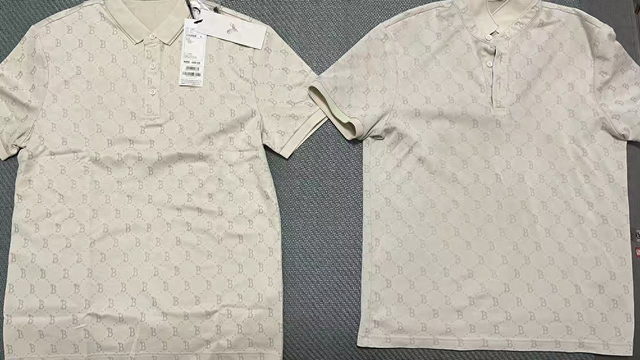
Core Viewpoint - The case involves a consumer complaint against Taiping Bird for allegedly misrepresenting an old polo shirt as a new model, raising concerns about false advertising and consumer rights [1][3][13] Group 1: Consumer Complaint Details - A consumer named Mr. Zhou purchased a polo shirt labeled as a "new model" from Taiping Bird's official flagship store but found it identical to a shirt he bought the previous year [1][3] - Mr. Zhou claims that the labeling of the shirt as a new model misled him, leading him to demand a refund and compensation, which was denied by the company [1][8] - The customer service of Taiping Bird acknowledged that the shirt was indeed an old model but justified the "new" label by stating it was a new production batch for 2025 [10][12] Group 2: Company Response and Justification - Taiping Bird's customer service explained that the shirt was marked as a new model due to improvements in fabric or because it was newly produced, despite being an old design [10][12] - The company maintained that the product description as a "summer new model" was accurate based on its production year, leading to confusion regarding the distinction between design and production year [10][12] Group 3: Legal Implications - Legal experts indicated that advertising must not contain false or misleading content, and misrepresenting an old product as new could violate consumer protection laws [13] - According to Chinese consumer protection laws, if fraud is established, consumers are entitled to triple the amount of their purchase as compensation [13]


多地消协发布上半年消费者投诉情况:预付式消费、老年人遭欺诈等问题突出
Sou Hu Cai Jing· 2025-07-29 04:21
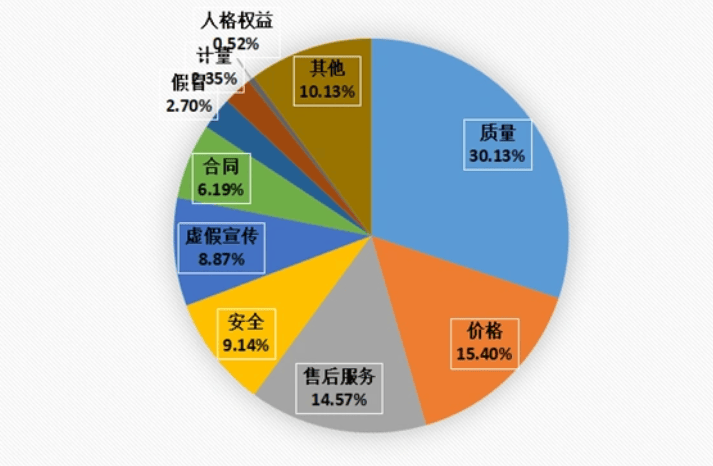
Group 1 - Consumer complaints in various regions have highlighted issues such as fraud, false advertising, and prepaid consumption since July 2025 [1] - In Hunan, consumer complaints increased by 23.02% year-on-year, with a total of 20,726 complaints received in the first half of 2025 [2][4] - Quality issues accounted for 30.13% of complaints in Hunan, with price and after-sales service issues following at 15.4% and 14.57% respectively [4] Group 2 - In Hunan, the medical beauty sector saw 213 complaints, primarily due to false advertising and misleading promotional tactics [6] - In Shaanxi, a total of 7,789 complaints were received, with after-sales service and quality issues being the main focus [7][9] - In Guangdong, consumer complaints rose by 30.34% to 538,852, with service-related complaints making up 52.97% of the total [10][12] Group 3 - In Sichuan, 33,824 complaints were received, with prepaid consumption and fraud against the elderly being significant issues [13] - In Tianjin, 4,327 complaints were processed, with after-sales service issues being a major concern [14][15]
维护“一老一小”消费权益 广东将重点监管“水弹枪”玩具等
Nan Fang Ri Bao Wang Luo Ban· 2025-07-10 08:05
Group 1 - The article highlights the rise of scams targeting the elderly and children, particularly in the context of the "silver economy" and the popularity of certain children's toys [2][3] - As of the end of 2024, China's elderly population aged 60 and above is expected to exceed 310 million, accounting for 22% of the total population, leading to increased health consumption demands [2] - The Guangdong Provincial Market Supervision Administration has reported 184 cases of false advertising related to elderly medicines and health products this year, indicating a significant issue in consumer protection [2] Group 2 - Popular children's toys, such as "real cooking" kitchen toys and water guns, often lack necessary safety certifications and pose multiple safety hazards, including burns and chemical exposure [3] - Manufacturers and sellers are evading regulations by labeling products as suitable for ages 14 and above, using misleading marketing tactics, and fabricating production addresses [3] - The Guangdong market supervision authorities are increasing inspections around schools and e-commerce platforms to ensure compliance and protect children from unsafe products [3]
别拿古法技艺当流量幌子
Xiao Fei Ri Bao Wang· 2025-06-19 02:50
Core Viewpoint - The rise of short videos showcasing traditional craftsmanship has led to a surge in consumer interest, but many products marketed as traditional art are actually mass-produced modern items, misleading consumers [1][2]. Group 1: Industry Concerns - The commercialization of traditional craftsmanship is driven by economic interests, leading to a dilution of its cultural value and potential consumer mistrust [2]. - The distinction between traditional craftsmanship and modern techniques should not be conflated, yet some businesses misrepresent mass-produced items as rare high-end art [2]. Group 2: Recommendations for Platforms - Short video platforms should take responsibility by implementing strict vetting processes for merchants and streamers, ensuring compliance and authenticity in content [3]. - Establishing a robust after-sales service system, including third-party verification for jewelry and collectibles, is essential to enhance consumer trust [3]. Group 3: Regulatory Actions - The Central Cyberspace Administration of China has initiated a three-month campaign to address malicious marketing practices in the short video sector, aiming to protect consumer rights and promote healthy industry development [3].
网上“买买买”,权益保护要跟上(法治聚焦)
Ren Min Ri Bao· 2025-06-16 22:13
Core Viewpoint - The rapid development of online consumption has raised higher demands for improving consumption models, enhancing consumption efficiency, and protecting consumer rights [2] Group 1: Online Consumption and Consumer Rights - Online shopping has become a significant way for consumers, emphasizing the need for trust and comfort in transactions [2] - The Supreme People's Court has released typical civil cases related to online consumption to address new issues and respond to public concerns [2] Group 2: Case Study on Live Streaming Marketing - A case involved a seller who misrepresented the material of a bracelet during a live stream, leading to a court ruling that the seller must honor a "fake compensation ten times" promise, resulting in a compensation of 10,000 yuan [3][4] - The ruling highlights the importance of accountability in live streaming marketing, where consumer trust is heavily influenced by the host's claims [4] Group 3: Ticket Purchase and Refund Policies - A case regarding concert ticket refunds revealed ambiguities in refund rules, where a consumer was partially refunded despite the platform's unclear terms [6][7] - The court ruled in favor of the consumer, emphasizing that ambiguous terms should be interpreted in a way that protects consumer rights [6][7] Group 4: Return Policies for Online Purchases - A case involving a handbag purchase showed that a seller's refusal to accept a return based on unclear terms was deemed invalid, leading to a full refund for the consumer [8][9] - The ruling reinforced the seven-day no-reason return policy, ensuring consumers can make purchases with confidence [9]
假防晒衣“热”销,消费欺诈终究见不得光
Nan Fang Du Shi Bao· 2025-06-09 15:21
Core Viewpoint - The market for sunscreen clothing is plagued by counterfeit products that do not meet national standards, leading consumers to unknowingly purchase ineffective items [1][2]. Group 1: Market Issues - Many sunscreen garments labeled as such fail to effectively block ultraviolet rays, resulting in consumer deception [1]. - The production and sales of fake sunscreen clothing involve fraudulent practices, with manufacturers not adhering to the national standard GB/T 18830—2009 [2]. - Despite lacking proper branding and product information, some counterfeit sunscreen clothing achieves impressive sales figures, with one model reportedly selling over 300,000 units annually [1]. Group 2: Regulatory Response - Following media exposure, local authorities have initiated inspections and product seizures, marking the beginning of actions against fraudulent companies [2]. - Consumers who purchase counterfeit sunscreen clothing are entitled to legal compensation, which can be three times the purchase price or a minimum of 500 yuan [2]. Group 3: Recommendations for Prevention - Increased consumer education on identifying genuine sunscreen clothing is necessary to combat fraud [3]. - Enhanced regulatory oversight of live-streaming e-commerce platforms is essential to ensure accountability [3]. - There should be a greater emphasis on random inspections of both online and offline sunscreen clothing sales to enforce laws against counterfeit products [3].