生态环境法典

Search documents
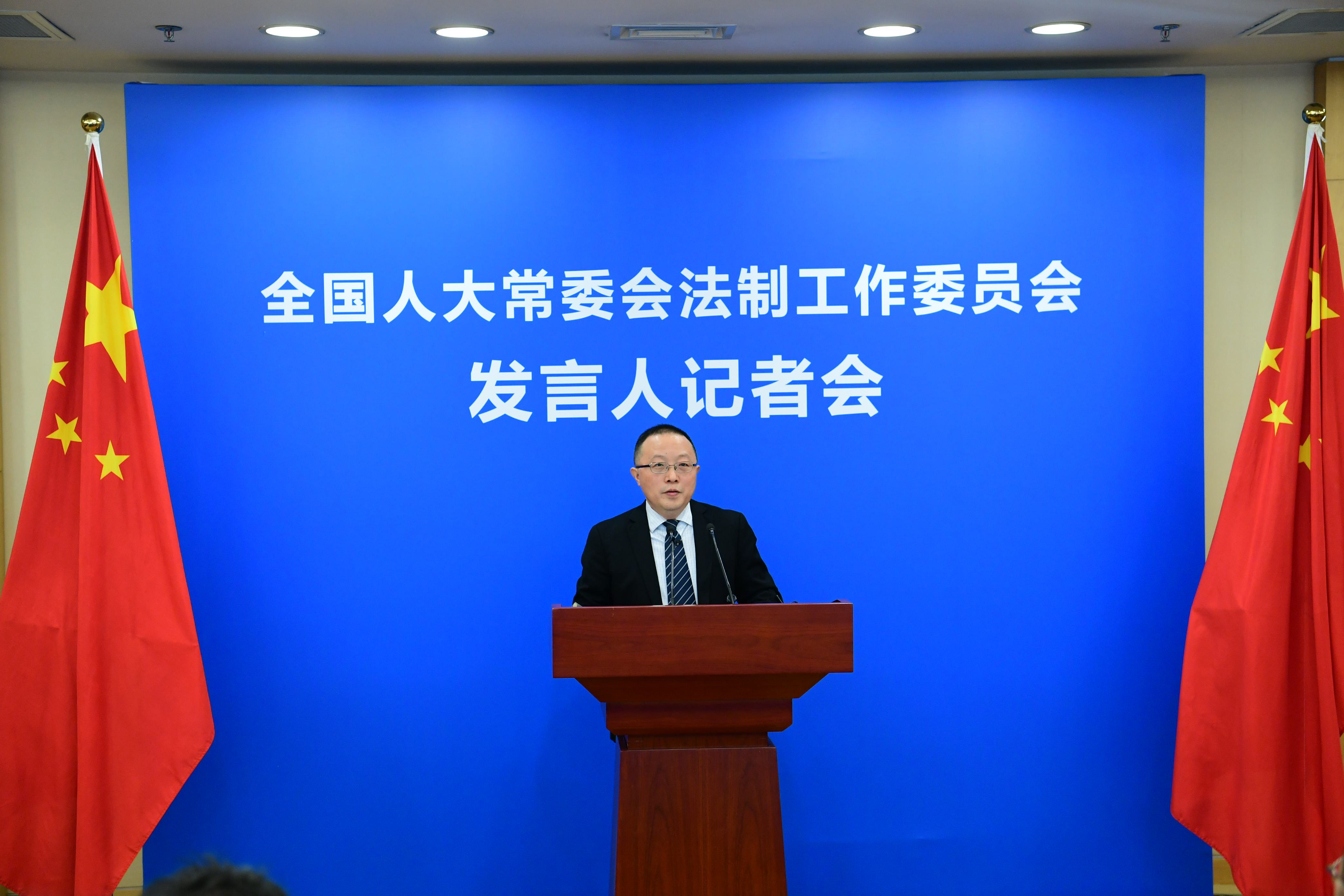
全国人大常委会法工委答一财:生态环境法典要落实过罚相当
Di Yi Cai Jing· 2025-10-23 03:33
Core Viewpoint - The compilation of the Ecological Environment Code is progressing, aiming to implement the principle of proportionality in penalties to avoid "heavy penalties for minor offenses" and "light penalties for major offenses" [1][4]. Summary by Sections Legislative Progress - The 18th meeting of the 14th National People's Congress Standing Committee will be held from October 24 to 28 in Beijing, where the draft of the Ecological Environment Code will undergo a second review [1]. - The initial review of the Ecological Environment Code draft took place in April 2025, with modifications based on feedback from various stakeholders [1]. Key Modifications Proposed - The draft will further implement the principle of proportionality in penalties [1][4]. - There will be a balance in legal responsibilities among similar violations [1][4]. - Dynamic adjustments will be made based on changes in the general and pollution prevention sections [1]. - Legal responsibilities related to ecological protection and green low-carbon development will be enhanced [1]. - Specific issues such as groundwater protection, oil fume pollution, and light pollution will have improved legal responsibilities [1]. Structural Changes - The first chapter will be renamed "General Principles of Legal Responsibility," and the second chapter will be renamed "Specific Legal Responsibilities" [1]. - The first section of the second chapter will be divided into three sections: "Ecological Environment Impact Assessment and Monitoring," "Pollutant Discharge Permits and Outlets," and "Other Provisions" [1]. Enforcement Considerations - General provisions for heavier penalties, lighter penalties, and non-penalties will be added [5]. - The five-year accountability period for administrative penalties will be clarified for violations causing environmental pollution and ecological damage [5]. - Adjustments will be made to penalty standards based on different violators and circumstances [5]. - Legal responsibilities related to pollutant discharge outlets, ecological environment impact reports, and ecological accidents will be unified [5]. - Responsibilities for monitoring by waste management units will be balanced [5]. - Penalty amounts for radioactive pollution prevention will be adjusted based on those for hazardous waste violations [5].

生态环境法典不是简单的“合订本”
Ren Min Ri Bao· 2025-10-08 07:08
Core Viewpoint - The construction of a legal foundation is essential for advancing ecological civilization and environmental protection, ensuring the preservation of natural resources and contributing to a harmonious coexistence between humans and nature [1][3]. Legislative Developments - The 17th meeting of the 14th National People's Congress Standing Committee reviewed drafts of the Ecological Environment Code, which is China's second law named as a "code" [1]. - The Ecological Environment Code draft consists of five parts and was first submitted for review in April this year, marking a significant step in the legal governance of ecological environment [1][2]. Legal Framework and Implementation - Over the years, China has established a series of legal systems for environmental protection, enhancing the legal foundation for ecological governance and reinforcing the legal guarantees for building a beautiful China [2]. - The Ecological Environment Code is not merely a compilation but adopts a moderate codification model, incorporating mature and clear rules from pollution prevention and other areas [2]. Enforcement and Public Awareness - Continuous efforts in ecological civilization law enforcement include special actions by public security agencies to combat wildlife crimes and significant numbers of public interest lawsuits handled by procuratorial organs [3]. - The judiciary has adjudicated a substantial number of environmental resource cases, and various public awareness activities have been conducted to promote the concept of ecological protection [3].
筑牢法治基石,守护绿水青山(说道)
Ren Min Ri Bao· 2025-09-28 22:28
Core Viewpoint - The establishment of the Ecological Environment Code is crucial for enhancing the legal framework for ecological civilization and environmental protection in China, ensuring the preservation of natural resources and promoting harmonious coexistence between humans and nature [1][3]. Legislative Progress - The 17th meeting of the 14th National People's Congress Standing Committee reviewed drafts of the Ecological Environment Code, which is China's second law named as a "code" and consists of five parts [1]. - The legislative process began with a public consultation after the initial review in April this year, indicating a significant step towards improving the legal governance of ecological issues [1]. Legal Framework and Challenges - Given China's vast territory and diverse ecological conditions, the Ecological Environment Code will not merely be a compilation of existing laws but will adopt a moderate codification approach [2]. - The code will incorporate established regulations from pollution prevention and other areas while allowing for flexibility in addressing regional ecological differences and emerging issues like climate change and green development [2]. Enforcement and Public Awareness - Continuous efforts in law enforcement, judicial processes, and public legal education are essential for advancing ecological civilization [3]. - Recent initiatives include the prosecution of 74,000 public interest lawsuits related to ecological and resource protection from January 2024 to May 2025, and the resolution of 219,000 environmental resource cases by courts [3]. - Public awareness campaigns have been conducted through various community activities, reinforcing the concept that "clear waters and lush mountains are invaluable assets" [3].
生态环境法典总则编、生态保护编和绿色低碳发展编草案拟提请二审
Yang Shi Xin Wen· 2025-09-05 07:32
Core Viewpoint - The National People's Congress Standing Committee is advancing the legislative process for the Ecological Environment Code, with drafts for the General Principles, Ecological Protection, and Green Low-Carbon Development sections set for second review [1][2][3] Group 1: General Principles of Ecological Environment Code - The second review draft aims to improve legislative purposes and definitions related to ecological environment [1] - It will enhance content regarding ecological and environmental supervision and judicial guarantees [1] - The draft will introduce provisions for "three water coordination" [1] - It will refine the ecological environment monitoring system and environmental impact assessment system [1] - The draft will also improve related ecological protection compensation systems [1] Group 2: Ecological Protection Section - The second review draft seeks to align with existing laws and ongoing legislative efforts, simplifying and improving the content [2] - It will set health, safety, and livability requirements for urban and rural greening [2] - The draft will enhance mechanisms for realizing the value of ecological products [2] - It will introduce targeted regulations for plateau, southwest karst regions, and desert ecosystems [2] - The draft will further refine regulations for water resource protection and sustainable use [2] - It will clarify seasonal differential control measures within nature reserves [2] Group 3: Green Low-Carbon Development Section - The second review draft will improve general provisions for green low-carbon development [3] - It will encourage the promotion of recycled materials and support for consumer goods exchange programs [3] - The draft will clarify the establishment of a carbon emission trading market and strengthen data quality management [3]
生态环境部:生态环境法典(草案)具有五方面亮点
Zhong Guo Xin Wen Wang· 2025-05-28 01:33
Core Viewpoint - The draft of the Ecological Environment Code is a significant political and legislative task determined by the Central Committee of the Communist Party of China, marking a major decision in the construction of the rule of law in China [1][2] Summary by Relevant Sections Highlights of the Ecological Environment Code - The draft maintains continuity by preserving effective institutional measures that have been tested in practice, such as chapters on ecological impact assessments and pollution prevention [1] - It addresses practical issues by granting independent law enforcement powers to county-level ecological environment bureaus, enhancing grassroots enforcement efficiency [2] - The draft enhances systematization by removing redundant and contradictory clauses from existing environmental laws, improving the overall coherence and coordination of the legal system [2] - It introduces innovative measures by elevating certain reform initiatives, such as central ecological environment protection inspections and ecological damage compensation, to the level of legal provisions [2] - The draft demonstrates foresight by making pioneering provisions for emerging areas like climate change, which currently lack specific legal regulations, thus laying a foundation for future institutional development [2]
全国人大常委会2025年度立法工作计划公布,金融法安排初次审议
Di Yi Cai Jing· 2025-05-14 09:10
Legislative Work Plan Overview - The National People's Congress (NPC) Standing Committee has announced the legislative work plan for 2025, which includes 14 bills for continued review and 23 bills for initial review [2][3] Continued Review Bills - The 14 bills for continued review include significant laws such as the Representative Law (amendment), Private Economy Promotion Law, Infectious Disease Prevention Law (amendment), and Financial Stability Law [2][3] Initial Review Bills - The 23 bills for initial review encompass a wide range of topics, including the Ecological Environment Code, National Development Planning Law, and Financial Law, indicating a focus on environmental and financial regulations [3][4] Financial Law Development - The Financial Law is highlighted as a crucial piece of legislation aimed at providing a foundational legal framework for financial activities, addressing existing legislative gaps and regulatory blind spots [4] Legislative Clean-up Initiatives - The NPC Standing Committee plans to initiate a comprehensive legal clean-up in 2025 to address inconsistencies and improve the legal framework, ensuring a more coherent legal system [6] Strengthening Review Mechanisms - The legislative work plan emphasizes enhancing the record review system, including the establishment of a unified platform for legal documents and improved coordination among relevant agencies [5]
人工智能立法将视情审议,全国人大常委会年度立法计划公布
Nan Fang Du Shi Bao· 2025-05-14 08:05
Legislative Work Plan Overview - The National People's Congress Standing Committee plans to continue reviewing 14 legal proposals and initiate the review of 23 new legal proposals in 2025 [1][2] Key Legal Proposals - The initial review includes significant laws such as the Ecological Environment Code and the Public Interest Litigation Law, which are aimed at enhancing environmental protection and public interest [2][3] - The Ecological Environment Code draft consists of five sections with a total of 1188 articles, focusing on pollution prevention, ecological protection, and green development [3] - The Public Interest Litigation Law aims to address the fragmented legal framework currently in place and adapt to evolving public interests [3] Artificial Intelligence Legislation - The legislative plan emphasizes the need for research and drafting of laws related to the healthy development of artificial intelligence, with a focus on regulating emerging technologies [4] - Previous regulations, such as the "Measures for the Identification of Generative Artificial Intelligence Content," are part of ongoing efforts to establish a legal framework for AI [4] Constitutional Implementation - The plan includes establishing a reporting system for constitutional implementation and enhancing the review of constitutionality in legislative processes [5][6] - It aims to ensure that all proposed laws undergo constitutional scrutiny to maintain the integrity of the legal framework [6] Strengthening Review Mechanisms - The legislative plan proposes improvements to the record review system, including the establishment of a unified platform for legal documents and regulations [7] - It emphasizes the importance of local legislative work and the sharing of best practices among local governments [7]
人大常委会丨用最严格制度、最严密法治保护生态环境——全国人大常委会组成人员分组审议生态环境法典草案
Xin Hua Wang· 2025-04-30 22:01
Group 1 - The core viewpoint of the article emphasizes the significance of the ecological environment code as the second law named "code" in China, following the Civil Code, which aims to protect the ecological environment through strict systems and legal frameworks [1] - The draft code consolidates existing ecological environment laws and summarizes effective practices into legal provisions, enhancing pollution prevention measures [1] - The draft suggests a coordinated governance approach for water, air, and soil pollution, highlighting the importance of multi-department collaboration for effective source prevention [1][2] Group 2 - The draft code addresses agricultural non-point source pollution, primarily caused by the use of fertilizers and pesticides, and suggests further regulations to tackle this issue [2] - A shift from single ecological element protection to a systematic protection approach is proposed, emphasizing the need for comprehensive ecological system protection [2] - The draft code includes a separate section on green low-carbon development, indicating a comprehensive approach to production and consumption processes, with a call for more detailed regulations on "green consumption" [3] Group 3 - Concerns regarding proportional penalties for environmental damage have been raised, with suggestions to ensure that penalties are appropriate to the severity of the violations [3] - The draft adopts a "moderate codification" model, creating a dual legal source structure of "code + individual laws," which requires careful coordination with other legal frameworks [3] - The drafting process encourages public participation and the incorporation of expert opinions to enhance the scientific and practical applicability of the law [3]
生态环境法典草案首次审议 专家解析三大看点
Zhong Guo Xin Wen Wang· 2025-04-30 14:24
Core Viewpoint - The draft of the Ecological Environment Code has been submitted for its first review by the National People's Congress, marking it as China's second law named as a "code" following the Civil Code, aiming to create a comprehensive and unified legal system for ecological environment protection [1] Group 1: Emphasis on Human-Centric Approach - The draft consists of 1,188 articles divided into five sections, with a notable focus on "protecting public health and ecological environment rights" in its legislative purpose, reflecting a human-centric legislative approach [2] - The pollution prevention section, comprising 525 articles, is positioned immediately after the general principles, highlighting the importance of addressing environmental pollution that directly affects human health [2] - Specific regulations are introduced to tackle common environmental issues faced by citizens, such as odor, noise, and smoke emissions from restaurants, aiming to resolve practical concerns [2] Group 2: Addressing New Issues and Challenges - The draft addresses contemporary environmental challenges by including a dedicated section on "other pollution prevention," which covers new areas such as chemical substances and electromagnetic radiation [3] - Provisions for the recycling of retired wind and solar equipment are included, reflecting the rapid development of new industries and their associated pollution issues [3] - The establishment of a separate section for green and low-carbon development is a significant innovation, showcasing China's unique approach to balancing environmental protection and economic development [3][4] Group 3: Global Perspective - The drafting of the code not only focuses on domestic practices but also considers global environmental issues, aiming to contribute Chinese wisdom and solutions to international ecological governance [5] - Detailed regulations on the risk management of new pollutants align with global trends, including a registration system for new chemical substances and international cooperation on climate change [6] - The code's compilation is receiving significant international attention, emphasizing China's role in leading changes in the global ecological governance system [6]
生态环境法典将带来哪些改变?专家详解
Di Yi Cai Jing· 2025-04-29 03:02
Core Viewpoint - The compilation of the Ecological Environment Code is a significant legislative effort aimed at modernizing China's ecological environment legal system, integrating over 30 existing laws and numerous regulations into a cohesive legal framework [2][3]. Group 1: Legislative Framework - The Ecological Environment Code is positioned as a key legislative measure to fulfill constitutional tasks related to ecological civilization and national responsibilities [2]. - The code aims to systematically integrate over 30 existing ecological environment laws, more than 100 administrative regulations, and over 1,000 local regulations into a unified legal text [2][3]. - The compilation process is based on the achievements of ecological civilization legal practices since the 18th National Congress of the Communist Party of China [2]. Group 2: Content and Structure - The code will address various ecological elements such as air, water, and soil, promoting integrated protection and systematic governance [3]. - It will include general institutional norms for ecological environment, optimize pollution prevention regulations, and establish principles for green low-carbon development and climate change response [3]. - The code will maintain openness and compatibility by incorporating essential elements from existing laws related to natural resources and biodiversity [3]. Group 3: Impact on Legislation and Enforcement - The enactment of the Ecological Environment Code is expected to reduce the number of existing ecological environment laws, leading to the revision or repeal of certain administrative regulations [6]. - A unified legal basis will enhance the authority of ecological environment enforcement, reducing disputes arising from unclear or conflicting regulations [7]. - The code will promote systematic protection of the ecological environment, emphasizing the integrity and interconnectivity of ecosystems [7].