
生物多样性金融

Search documents
天津加速推动绿色金融实践
Xin Hua Cai Jing· 2025-11-14 00:56
Group 1 - Tianjin Rongcheng United Steel Group has transformed from a high-energy consumption and high-emission enterprise to a model for green transformation in Tianjin, utilizing a water purification system for fish farming [1] - The company has improved its "green" level by collecting, purifying, and reusing resources such as wastewater and waste gas in its production process [1] - Tianjin Rural Commercial Bank issued a transformation financial loan of 80 million yuan to the steel group to promote the rational use of residual heat and energy resources [1] Group 2 - As of September this year, the balance of green loans in Tianjin reached 847.8 billion yuan, a 19% increase from the beginning of the year, with an average annual increase of over 100 billion yuan since 2021 [1] - Tianjin has been innovative in green finance, launching transformation financial standards for the chemical industry and becoming one of the first pilot cities for transformation financial standards in the steel industry [1] - The city has also developed standardized processes for green leasing services and established a standardized information platform for green leasing [1] Group 3 - Tianjin's first "biodiversity + sustainable development linked loan" was issued recently, with 10 million yuan allocated for a crab-rice symbiosis project near Qilihai Wetland [2] - The project represents a typical example of biodiversity agriculture in Tianjin, supported by a tailored loan scheme from Weihai Bank [2] - The practice of green finance in Tianjin is attracting a number of green industry projects, enhancing the scale of green industries such as new energy, energy conservation, and ecological agriculture [2]
拥抱变局 共创未来
Sou Hu Cai Jing· 2025-10-30 08:15
Group 1: Economic Outlook and Global Cooperation - The 2025 Bund Summit in Shanghai focused on the theme "Embracing Change: New Order, New Technology," discussing economic, financial, and governance issues amid global restructuring and technological revolution [1] - The International Monetary Fund (IMF) projects a 4.5% economic growth rate for the Asia-Pacific region in 2025, with China's growth forecast at 4.8%, reflecting an increase of 0.8 percentage points from previous estimates [2] - Global financial leaders emphasized the importance of cooperation and shared opportunities, highlighting China's commitment to high-quality development and mutual benefits in international relations [2] Group 2: Green Finance and Environmental Leadership - The release of the "Natural and Biodiversity Finance" report at the summit showcased China's role in ecological protection and financial innovation [3] - China is recognized as a global leader in clean energy technologies, including solar, wind, and electric vehicles, contributing significantly to global climate change efforts [3][4] - The development of biodiversity-friendly financial products, such as loans for offshore photovoltaic projects, illustrates China's commitment to integrating ecological and economic interests [3] Group 3: Technological Innovation and Economic Transformation - Discussions at the summit highlighted China's advancements in artificial intelligence and the importance of data-driven industries for economic transformation [5] - The shift from cash to digital payments in China has revolutionized consumer behavior and accelerated financial inclusion, showcasing the impact of fintech on the economy [6] - Experts noted that China's strong emphasis on technology research and development is crucial for achieving high-quality economic growth, with a focus on nurturing engineering talent and entrepreneurial spirit [6][7] Group 4: International Relations and Collaborative Opportunities - Former U.S. Treasury Secretary Robert Rubin emphasized the benefits of constructive U.S.-China relations, advocating for collaboration in addressing challenges like AI, climate change, and terrorism [7] - The summit reflected a collective understanding that global cooperation is essential for navigating future challenges and achieving sustainable development [7]
构建生物多样性金融 多维度支撑体系
Jin Rong Shi Bao· 2025-10-28 00:36
Core Insights - The report titled "Natural and Biodiversity Finance: Theory and Practice" was released at the 2025 Bund Annual Conference, outlining China's achievements in financial support for biodiversity, establishing a multi-dimensional support system for global biodiversity governance [1] Group 1: Standard System Improvement - Biodiversity finance has been integrated into the sustainable finance framework, with the 2025 revised "Green Finance Support Project Directory" establishing a separate category for "Ecological Protection, Restoration, and Utilization," which supports activities related to nature and biodiversity [2] - Approximately 20% to 30% of green finance business is directed towards biodiversity-related activities, with the scale continuing to expand [2] - The People's Bank of China is developing specific biodiversity finance standards, resulting in a draft "Biodiversity Finance Directory" that includes 87 items across four categories, adding 24 new items compared to the previous directory [2] Group 2: Financial Product Innovation - Financial institutions in China are launching diverse products to attract social capital for biodiversity protection, integrating biodiversity into the green finance policy framework [3] - Innovative financial products include GEP pledge loans, wetland carbon credit loans, and biodiversity performance-linked loans, with breakthroughs in bond issuance for biodiversity-themed green bonds [3] - The ecological compensation mechanism is being advanced, with projects like the Yuanbao Maple project in Guizhou generating over 2000 yuan per mu in annual income, providing a replicable model for ecological project profitability [3] Group 3: Information Disclosure and Risk Assessment - Financial institutions and local governments are exploring assessment methods for nature-related financial risks, embedding biodiversity sensitivity into the entire credit process [4] - The 2025 "Sustainable Development Report Preparation Guidelines" released by the Shanghai and Shenzhen stock exchanges reference the international TNFD framework, laying the groundwork for nature-related information disclosure [4] - 33 companies, including Mengniu and CATL, have joined the TNFD pilot, gradually aligning with international standards [4] Group 4: International Cooperation - China's role in global biodiversity finance governance is evolving from a "participant" to a "co-builder," having chaired the COP15 and facilitated the "Kunming-Montreal Global Biodiversity Framework" [5] - The establishment of the Kunming Biodiversity Fund has projects covering 15 developing countries across six continents [5] - The People's Bank of China is promoting the inclusion of natural and biodiversity issues in G20 sustainable finance discussions, with bilateral cooperation deepening with countries like the UK, EU, and Singapore [6]
人民银行南平市分行 推动生物多样性金融从“概念”走向“实践”
Zheng Quan Ri Bao Zhi Sheng· 2025-10-25 16:39
Core Viewpoint - The People's Bank of China Nanjing Branch is actively integrating biodiversity protection with financial support, promoting innovative financial products and mechanisms to enhance biodiversity conservation efforts in Nanping City [1][2][3][4] Group 1: Financial Support for Biodiversity - The People's Bank of China Nanjing Branch has established a platform for financial institutions to increase credit investment in biodiversity, facilitating the transition from concept to practice in biodiversity finance [1] - As of the end of August, the loan balance related to biodiversity in Nanping City reached 14.062 billion, with sustainable agriculture at 3.424 billion, sustainable forestry at 6.323 billion, and other categories contributing to the total [2] Group 2: Policy and Mechanism Innovation - The bank organized a seminar to discuss the implementation of biodiversity financial service standards and has developed several innovative policies, including guidelines for water rights collateral loans [2] - Financial institutions are encouraged to include biodiversity loan growth metrics in their performance evaluations, enhancing service quality and responsiveness [3] Group 3: Financing Ecological Resources - The bank has guided financial institutions to innovate credit products using ecological rights such as water rights and carbon credits as collateral, facilitating significant loans for projects like the Dahuangpao Beverage Company [4] - A total of 226 million was allocated to improve forest quality, covering an area of 104,200 acres, supporting ecological industries such as bamboo substitution for plastics [4]


邮储银行滨州市分行发力生物多样性金融,赋能绿色生态与普惠发展
Qi Lu Wan Bao Wang· 2025-10-24 05:51
Core Viewpoint - Postal Savings Bank of China (PSBC) is actively responding to biodiversity protection and green development requirements by focusing on organic agriculture, green energy, and environmental protection, providing financial support for local biodiversity conservation and economic development [1][2] Group 1: Financial Support Initiatives - PSBC has optimized its credit allocation structure to support key areas of biodiversity protection, particularly in biomass energy utilization facilities, with a loan balance of 135 million yuan as of the end of September [1] - The bank has also invested in public environmental sectors such as water supply, sewage treatment, and heating, with loan balances of 33 million yuan for water supply, 126 million yuan for heating, and 1.9 million yuan for sewage treatment [1] Group 2: Service Model and Inclusive Finance - The bank has enhanced its service efficiency by collaborating with agricultural departments and guarantee institutions to address financing challenges for operational entities, resulting in 27 loans totaling 81 million yuan for a beef breeding project [1] - Additionally, PSBC partnered with a local agricultural company to provide 52 loans amounting to 9.84 million yuan to support upstream and downstream agricultural stakeholders, ensuring smooth financing channels for agricultural entities [1] Group 3: Future Plans - PSBC plans to further deepen its biodiversity financial services by optimizing credit processes and products, and expanding support areas to contribute more to local biodiversity protection and green inclusive development [2]

威海银行落地天津市首笔 “生物多样性+可持续发展挂钩”贷款
Qi Lu Wan Bao· 2025-10-22 06:56
Core Insights - Weihai Bank has successfully implemented Tianjin's first "Biodiversity + Sustainable Development Linked" loan, amounting to 10 million yuan, marking a significant breakthrough in green finance innovation [1] - The loan supports a crab-rice symbiosis project in Tianjin, which is a typical example of ecological agriculture, contributing to the maintenance of wetland ecosystem balance and biodiversity protection [1] Group 1 - The loan is tailored to the needs of the enterprise, providing financial support to expand breeding scale and improve product quality while offering interest rate discounts if production targets are met [1] - The project utilizes the natural symbiotic relationship between crabs and rice, forming an efficient ecological cycle that is crucial for regional biodiversity [1] Group 2 - Weihai Bank plans to deepen its exploration in the field of biodiversity, continuously enriching its green financial products and services to promote the synergy between ecological protection and industrial development [2]
香港金管局启动可持续金融分类目录第二阶段咨询|绿色金融周报
2 1 Shi Ji Jing Ji Bao Dao· 2025-10-20 12:28
Core Insights - The rapid development of the green finance market has led to an increase in relevant information and data, with a focus on the latest trends and practices in the field [1] Group 1: Sustainable Finance Initiatives - The Hong Kong Monetary Authority has launched the second phase of public consultation for the "Hong Kong Sustainable Finance Classification Directory," expanding the coverage from 4 to 6 industries and from 12 to 25 economic activities, introducing definitions for "transformation" and "climate change adaptation" [2] - The Central Securities Depository has released a revised disclosure indicator system for green finance, enhancing the compatibility of environmental benefit disclosure standards for green bonds and loans, and providing a unified basis for market application [3] - The China Securities Regulatory Commission reported that the disclosure rate of sustainable reports among listed companies is expected to reach 34.7% in 2024, with mandatory disclosures starting in 2026 for certain companies [4] Group 2: Market Developments and Innovations - A seminar on the innovative application of the Common Green Taxonomy (CGT) reached consensus on expanding the taxonomy to include low-carbon mining and green shipping, and promoting the visibility and investability of green products [5][6] - The national carbon market saw a price fluctuation with a peak of 58.20 yuan/ton and a total trading volume of 11,808,565 tons last week, indicating active market engagement [7] - Gansu Province has launched its first biodiversity loan product, "Borrowing for Pasture," aimed at supporting ecological protection and restoration, marking an innovative financial practice in biodiversity finance [8] - The Macau International Carbon Emission Trading Exchange has officially launched its new green asset trading platform, enhancing the efficiency and transparency of carbon asset transactions [9]
发挥绿色金融作用 助力经济社会发展全面绿色转型——《金融时报》访中国人民银行研究局负责人
Jin Rong Shi Bao· 2025-10-20 08:37
Core Insights - The People's Bank of China (PBOC) has implemented a series of practical measures to promote high-quality development of green finance during the 14th Five-Year Plan period, establishing a comprehensive framework for standards, tools, cooperation, and effectiveness [1] Group 1: Green Finance Standards - A multi-field standard system is gradually being established, with 1 national standard, 9 industry standards, and over 30 green finance standards under research. The first national green finance standard, "Green Finance Terminology," is set to be published by 2025 [2] - The green finance support project directory has expanded the scope of green finance to include trade and consumption, achieving full-chain coverage from production to consumption [2] Group 2: Transition Finance Standards - Transition finance standards have made significant breakthroughs, with the PBOC prioritizing support for advanced technologies and significant carbon reduction benefits. Transition finance standards for steel, coal power, building materials, and agriculture have been piloted in over 20 provinces, with approximately 67 billion yuan in transition loans issued by August 2025 [3] - The second batch of transition finance standards for metallurgy, petrochemicals, and other industries is being developed, with local standards and enterprise transition planning manuals being created to support regional green finance [3] Group 3: Biodiversity and Blue Finance Standards - A biodiversity finance and blue finance standard system is being gradually established, with over 20 provinces piloting biodiversity finance directories to promote a "nature-benefiting" transition [4] - Blue finance standards are under development and will be piloted in coastal areas [4] Group 4: Green Finance Tools - The demand for green finance has increased, leading to the development of a diverse range of green financial products. The PBOC has utilized structural monetary policy tools to provide low-cost funding for carbon reduction projects, with over 1.38 trillion yuan in carbon reduction loans issued by mid-2025 [5] - The green loan balance is approximately 42.39 trillion yuan, and the green bond balance exceeds 2.2 trillion yuan, positioning China among the top globally in these areas [6] Group 5: Risk Management - The PBOC has conducted climate risk stress tests and assessments to enhance financial institutions' risk management capabilities, ensuring the stability of the green finance market [7] Group 6: International Cooperation - China has taken a leading role in the G20 sustainable finance working group, producing key documents such as the G20 Sustainable Finance Roadmap and the G20 Transition Finance Framework [8] - The PBOC has actively promoted the alignment of green finance standards with international standards and participated in multilateral cooperation platforms to facilitate cross-border capital flow into green sectors [9] - Ongoing bilateral cooperation in green finance with countries like the UK, Singapore, and Australia is being implemented, along with sustainable investment capacity-building initiatives in emerging economies [9]
金鹏辉:可持续金融为上海国际金融中心勾勒新前景
Xin Lang Cai Jing· 2025-10-16 06:53
Core Viewpoint - The 2025 Sustainable Global Leaders Conference highlights the importance of sustainable finance as a manifestation of sustainable development principles, covering areas such as green finance, transition finance, and biodiversity finance [1][3]. Group 1: Challenges in Sustainable Finance - Sustainable finance faces significant challenges compared to traditional finance, including a lack of market mechanisms and information asymmetry [3][6]. - Companies undergoing green transitions may experience short-term operational difficulties due to high technology upgrade costs, leading to conflicts of interest that hinder effective market incentives [6][7]. - The absence of clear quantitative indicators and evaluation methods for most ESG factors contributes to insufficient information disclosure by financial institutions and companies, exacerbating issues of information asymmetry [6][7]. Group 2: Achievements in Sustainable Finance - China has established a diversified development framework for sustainable finance, with a focus on green finance, supported by transition finance and biodiversity finance [6][7]. - The Shanghai Stock Exchange, Shenzhen Stock Exchange, and Beijing Stock Exchange have released guidelines for sustainable development reporting, with some A-share companies required to disclose ESG reports starting in 2026, covering 450 companies that represent 51% of total market capitalization [7][8]. Group 3: Future Opportunities in Sustainable Finance - Sustainable finance is expected to present significant growth opportunities and become a major driving force for the transformation of the global financial system, particularly for Shanghai as an international financial center [3][6]. - Key areas for Shanghai to focus on include enhancing the internationalization of green finance, supporting the development of carbon trading markets, strengthening the implementation of transition finance, and promoting the deep integration of technology and green finance [8][9][10].

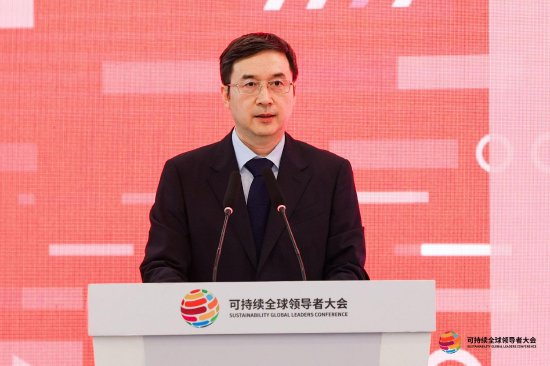
金鹏辉:可持续金融蕴藏着巨大增长机遇 有望成为全球金融体系转型推动力
Xin Lang Cai Jing· 2025-10-16 06:45
Core Insights - The 2025 Sustainable Global Leaders Conference is scheduled to take place from October 16 to 18 in Shanghai, focusing on sustainable finance and its challenges [1][3] - Jin Penghui, Director of the Shanghai Headquarters of the People's Bank of China, highlighted the significant progress in sustainable finance globally, emphasizing its public product attributes and the challenges of market mechanism deficiencies and information asymmetry [1][3] Group 1: Sustainable Finance Development - China, as the world's second-largest economy, is actively promoting the development of sustainable finance, establishing a diversified development pattern with green finance as the main focus, supported by transition finance and biodiversity finance [3] - The Shanghai Stock Exchange, Shenzhen Stock Exchange, and Beijing Stock Exchange have issued guidelines for listed companies on sustainable development reporting, with 450 listed companies expected to disclose ESG reports starting in 2026, representing 51% of total market capitalization [3] Group 2: Future Opportunities - Jin Penghui believes that sustainable finance holds significant growth opportunities and is likely to drive the transformation of the global financial system [3] - Recommendations for Shanghai include enhancing the internationalization of green finance, supporting the development of carbon trading markets, strengthening the implementation of transition finance practices, and promoting the integration of technology with green finance [3]