
综合成本率

Search documents
中国平安(02318):中国平安(601318):1H25:NBV强劲增长,OPAT提升
HTSC· 2025-08-27 05:29
Investment Rating - The investment rating for the company is "Buy" [9][7] Core Insights - The company reported a strong growth in new business value (NBV) of 39.8% year-on-year, driven primarily by rapid growth in the bancassurance channel [3][2] - The operating profit after tax (OPAT) increased by 3.7% year-on-year, indicating stable core profit growth despite a decline in net profit due to investment volatility and one-off factors [5][2] - The comprehensive cost ratio (COR) for property insurance improved significantly, decreasing by 2.6 percentage points to 95.2% [4][2] Summary by Sections Financial Performance - The company's net profit for 1H25 was RMB 68.047 billion, a decrease of 8.8% year-on-year, primarily due to investment fluctuations and one-off factors [2] - The NBV for life insurance increased by 39.8% year-on-year, with the bancassurance channel seeing a remarkable growth of 168.6% [3] - The property insurance premium grew by 7.1%, with the COR improving to 95.2% [4] Profitability Metrics - The OPAT for 1H25 was RMB 39.825 billion, reflecting a 3.7% increase year-on-year [5] - The life insurance OPAT grew by 2.5%, while the investment performance saw a significant increase of 24.3% [5] Investment Returns - The non-annualized net investment return rate was 1.8%, a decrease of 0.2 percentage points year-on-year, while the non-annualized comprehensive investment return rate rose to 3.1%, an increase of 0.3 percentage points [6] Earnings Forecast and Valuation - The EPS estimates for 2025, 2026, and 2027 have been adjusted to RMB 6.71, RMB 7.25, and RMB 7.87 respectively, reflecting a downward adjustment due to investment volatility [7] - The target price based on DCF has been raised to RMB 76 and HKD 75, maintaining the "Buy" rating [7][9]

阳光保险(06963.HK):盈利基本符合预期 寿险NBV及CSM余额快速增长
Ge Long Hui· 2025-08-25 03:32
Core Viewpoint - Sunshine Insurance reported a year-on-year increase of 7.8% in net profit attributable to shareholders for the first half of 2025, reaching 3.39 billion yuan, with life insurance and property insurance net profits growing by 5.6% and 2.6% respectively [1][2] Group 1: Performance Summary - The net business value (NBV) of life insurance increased by 47.3% year-on-year to 4.01 billion yuan, with individual insurance and bank insurance channels growing by 23.5% and 53% respectively [1] - The comprehensive cost ratio (CoR) for property insurance improved by 0.3 percentage points to 98.8%, with claims and expense ratios showing mixed trends [2] - Sunshine Insurance's total insurance premium income rose by 2.5% year-on-year to 25.27 billion yuan, with a notable increase in non-auto insurance premiums [2] Group 2: Investment and Valuation - The internal value of Sunshine Group grew by 11.0% to 128.49 billion yuan, while net assets decreased by 10.1% to 55.84 billion yuan due to the impact of interest rate declines [2] - The company is currently trading at 0.38x and 0.33x P/EV for 2025 and 2026 estimates, with a target price of 4.60 HKD and a potential upside of 2.7% [2]
中金:维持阳光保险(06963)跑赢行业评级 目标价4.60港元
智通财经网· 2025-08-25 01:49
Core Viewpoint - The report from CICC maintains the profit forecast for Sunshine Insurance for 2025-2026, with a target price of HKD 4.60, indicating a potential upside of 2.7% based on the current trading multiples of 0.38x/0.33x P/EV for 2025e and 2026e [1] Group 1: Life Insurance Performance - Sunshine Life's new business value (NBV) increased by 47.3% year-on-year to CNY 4.01 billion in 1H25, with individual insurance and bank insurance channels growing by 23.5% and 53% respectively [2] - The contract service margin (CSM) balance for Sunshine Life reached CNY 56.08 billion, reflecting a 10.3% increase from the end of the previous year [2] - The product structure has improved significantly, with over 50% of individual insurance channel products being floating income and protection-type products [2] Group 2: Property Insurance Performance - Sunshine Property's original insurance premium grew by 2.5% year-on-year to CNY 25.27 billion in 1H25, with non-auto insurance premiums increasing by 12.5% [3] - The combined ratio (CoR) improved by 0.3 percentage points to 98.8%, with the loss ratio and expense ratio changing by +2.5 percentage points and -2.8 percentage points respectively [3] - The combined ratio for auto insurance decreased by 1.6 percentage points to 98.1%, with the proportion of household vehicle premiums increasing by 3 percentage points [3] Group 3: Investment Performance - The net and total investment yields for Sunshine were 3.8% and 4.0% respectively in 1H25, showing stable performance despite a high base effect from bond investments in 1H24 [4] - The asset allocation saw an increase in stock proportion by 1.8 percentage points compared to the end of the previous year, along with an increase in long-duration interest rate bonds to optimize the duration structure and cost-revenue matching [4] Group 4: Group Value Growth - The intrinsic value of Sunshine Group reached CNY 128.49 billion in 1H25, marking an 11.0% increase from the end of the previous year [5] - The net assets amounted to CNY 55.84 billion, primarily due to the use of a 60-day moving average of government bond yield curves for discounting traditional insurance reserves [5]
上市险企缘何不再披露月度保费?
Jin Rong Shi Bao· 2025-08-20 01:59
Core Viewpoint - The practice of monthly premium disclosure by listed insurance companies in China has been broken, with major companies like China Life, China Ping An, and China Pacific Insurance no longer releasing this data [1][2]. Group 1: Reasons for Stopping Monthly Premium Disclosure - Regulatory bodies do not mandate insurance companies to disclose monthly premium income, allowing companies to have discretion over such disclosures [1][2]. - The implementation of new accounting standards (IFRS 17) has changed the way premium income is recognized, making previous data incomparable [1][2]. - Monthly premium income can fluctuate significantly due to various factors such as seasonality, marketing activities, and new product launches, which may not accurately reflect the long-term operational performance of insurance companies [2][3]. Group 2: Alternative Metrics for Evaluating Insurance Companies - Consumers should focus on the solvency adequacy of insurance companies, which indicates their ability to meet payout obligations under extreme risk scenarios [3][4]. - Investors should pay attention to indicators such as new business value, channel efficiency, comprehensive cost ratio, and investment return rate, which can be found in annual and semi-annual reports [3][4]. - Monitoring regulatory penalties against insurance companies can provide insights into their business quality and compliance levels [3][4].



上市险企缘何不再披露月度保费?
Jin Rong Shi Bao· 2025-08-19 01:03
Core Viewpoint - The practice of monthly premium disclosure by listed insurance companies in China has been broken, with major companies like China Life, China Ping An, and China Pacific Insurance no longer publishing this data [1][2]. Group 1: Reasons for Stopping Monthly Premium Disclosure - Regulatory bodies do not mandate insurance companies to disclose monthly premium income, allowing companies to have discretion over such disclosures [1][2]. - The implementation of new accounting standards (IFRS 17) has changed the way premium income is recognized, making previous data incomparable [1][2]. - Monthly premium income can fluctuate significantly due to various factors, such as seasonal trends and marketing activities, which may not accurately reflect the long-term operational stability of insurance companies [2][3]. Group 2: Alternative Metrics for Evaluating Insurance Companies - Consumers should focus on the solvency adequacy of insurance companies, which indicates their ability to meet obligations under extreme risk scenarios [3][4]. - Investors should pay attention to indicators such as new business value, channel efficiency, comprehensive cost ratio, and investment return rate, which are available in annual and semi-annual reports [3][4]. - Monitoring regulatory penalties against insurance companies can provide insights into their business quality and compliance levels [3][4].
同比大增!非上市财险公司上半年狂赚92.6亿元
Guo Ji Jin Rong Bao· 2025-08-12 13:48
Core Insights - Non-listed property insurance companies reported strong performance in the first half of 2025, with total insurance revenue of 259.49 billion yuan, a year-on-year increase of 7.5%, and net profit of 9.26 billion yuan, up 75.2% [1][4] Group 1: Financial Performance - Among the 76 non-listed property insurance companies, 68 achieved profitability, representing nearly 90% of the total [2] - The insurance industry achieved original premium income of 3.74 trillion yuan in the first half of 2025, a year-on-year growth of 5.3%, with property insurance companies generating 964.5 billion yuan, up 5.1% [4] - China Life Property Insurance led non-listed companies with premium income of 59.27 billion yuan and net profit of 2.43 billion yuan, the only company exceeding 2 billion yuan in net profit [4] Group 2: Profitability and Cost Ratios - 14 non-listed property insurance companies reported net profits exceeding 100 million yuan, while 14 others turned losses into profits compared to the previous year [5] - Over 60% of companies saw a decrease in comprehensive cost ratios compared to the previous year, indicating improved profitability [5] - China Fishery Mutual's comprehensive cost ratio significantly dropped from 279.69% to 94.82%, contributing to a net profit of 20 million yuan [5] Group 3: Losses and Challenges - Eight non-listed property insurance companies reported net losses, a decrease from the previous year, with the largest losses from Qianhai Insurance, Modern Insurance, and Taiping Technology [6][7] - Qianhai Insurance has faced continuous solvency issues, with a comprehensive cost ratio of 244.05% and a risk rating downgraded to C class [7] - New entrant Dongwu Insurance reported minimal revenue of 1.9 million yuan and a net loss of 1.848 million yuan, highlighting challenges faced by smaller companies in achieving scale and competitive advantages [8]
2025上半年财险公司利润榜&成本率榜(非上市):国寿财产第一,英大财产超10亿,中华联合、鼎和财产超5亿...
13个精算师· 2025-08-07 10:24
Core Viewpoint - The non-listed property insurance companies achieved a net profit of 92.5 billion yuan in the first half of 2025, marking a significant increase of 75% year-on-year, driven by improved investment returns and reduced cost ratios [6][7][9]. Group 1: Profit Performance - 68 out of 76 non-listed property insurance companies reported profits, with a total profit exceeding 90 billion yuan [1][6]. - China Life Property Insurance ranked first with a net profit of 24.28 billion yuan, a year-on-year increase of 6.83 billion yuan [18][20]. - Other major companies like Yingda and China United also saw profit growth, contributing to the overall positive trend in the industry [13][21]. Group 2: Investment Returns and Cost Ratios - Investment returns increased significantly, with over 60% of companies reporting a decrease in cost ratios [9][12]. - The average investment return rose from 1.27% in the first half of 2024 to 1.59% in the first half of 2025, an increase of approximately 0.32 percentage points [10][12]. - The comprehensive cost ratio improved, with 64% of companies reporting a decrease, leading to enhanced underwriting profits [12][26]. Group 3: Companies Turning Profitable - 15 companies turned losses into profits, primarily due to reduced claims ratios and improved investment returns [24][26]. - Companies like Yongcheng Insurance and Ansheng Tianping saw significant improvements in their comprehensive cost ratios, contributing to their turnaround [26][31]. Group 4: Loss-Making Companies - Eight companies reported losses, with Qianhai United leading the loss list at 0.51 billion yuan, continuing a trend of consecutive losses [28][31]. - The high comprehensive cost ratio of 244% for Qianhai United indicates ongoing challenges in managing underwriting losses [31][35].


市场向好增厚投资收益,非上市险企上半年成绩单亮眼
Shang Hai Zheng Quan Bao· 2025-08-07 00:04
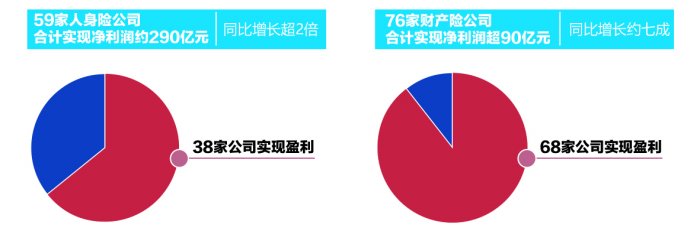
截至8月6日,已披露2025年二季度偿付能力报告的135家非上市险企合计净利润约380亿元,同比实现翻 倍。其中,59家人身险公司合计净利润同比增长超2倍,76家财产险公司合计净利润同比增长约七成。 分析来看,取得良好业绩可归结为资产和负债两端同步改善:资产端受益于资本市场向好,投资收益增 厚;负债端得益于"报行合一"等政策压降费用成本。市场人士认为,资负两端共振向好,有望带动上市 险企业绩整体实现较快增长,新业务价值、综合成本率等核心业务指标也有望得到改善。 非上市险企业绩整体回暖 上半年,人身险业和财产险业非上市公司业绩整体回暖。 135家非上市险企上半年盈利情况 (截至8月6日) 郭晨凯 制图 ◎记者 何奎 今年上半年,非上市险企整体业绩亮眼。 上市险企整体业绩有望增长 非上市险企业绩整体实现较快增长,传递出保险行业整体回暖的积极信号。市场人士认为,在资产和负 债两端共振向好背景下,上市险企整体业绩也有望实现较快增长。 广发证券研报认为:寿险业方面,资负联动有望扩大行业利润水平;财险业方面,保费增速回暖, COR(综合成本率)改善,赔付率有望在高基数下改善,费用率持续优化。 数据显示,59家人身险公司合 ...


“另类”增资获批,锦泰保险将位仍空缺,寻求突围靠什么
Bei Jing Shang Bao· 2025-07-10 13:32
Core Viewpoint - The recent capital increase of Jintai Insurance through capital reserve conversion signals a shift in funding strategies among insurance companies, highlighting the need for self-sustaining growth amid market challenges [1][3][4]. Group 1: Capital Increase Details - Jintai Insurance's registered capital has been approved to increase from 2.379 billion to 3.188 billion yuan through capital reserve conversion, maintaining existing shareholder ratios [3][4]. - The company plans to convert part of its capital reserve formed from stock premium issuance and asset appreciation into registered capital, with a proposed share increase of 808 million shares [3][4]. - This method of capital increase does not involve external funding but rather adjusts the internal financial structure, which is simpler and suitable for short-term capital needs [4][5]. Group 2: Financial Performance and Management Challenges - Jintai Insurance has experienced a decline in net profit, from 78 million yuan in 2023 to 52 million yuan in 2024, primarily due to deferred tax impacts [6][8]. - The company has been without a general manager for two years, which may affect operational efficiency and strategic execution [6][7]. - The comprehensive cost ratio for Jintai Insurance reached 102.68% in Q1 2025, indicating that premium income is not covering expenses, which poses risks to its solvency [8][9]. Group 3: Market Position and Strategic Focus - Jintai Insurance is focusing on diversifying its product offerings, with non-auto insurance premiums now exceeding 50% of total premiums, driven by growth in health, liability, and accident insurance [10][11]. - The company aims to enhance its competitive edge by optimizing its business structure and leveraging technology for better risk management and operational efficiency [11][12]. - Jintai Insurance is committed to a differentiated development strategy, targeting specific market segments to capture untapped opportunities while maintaining compliance and internal controls [11][12].

前海财险治理挑战:超50%股权被冻结 总经理离任
Zhong Guo Jing Ying Bao· 2025-06-27 19:11
Core Viewpoint - Qianhai Insurance is facing significant operational challenges, including a 30% discount on the auction of 20% of its shares, the resignation of its general manager, and ongoing issues with solvency and profitability [1][9]. Group 1: Shareholding and Financial Issues - 20% of Qianhai Insurance's shares held by Jushenghua will be auctioned at a starting price of 30.8 million yuan, reflecting a 30% discount from the assessed value of 44 million yuan [1]. - As of the first quarter of 2025, nearly 38% of Qianhai Insurance's shares are frozen due to a court ruling related to a debt dispute involving Jushenghua and Baoneng Group [2]. - The company has been unable to collect overdue premiums totaling 127.87 million yuan from its shareholders, leading to a debt restructuring plan [3]. Group 2: Management Changes - General Manager Li Gongni resigned for personal reasons after serving for less than a year and a half, with Chairman Huo Jianmei taking over as the interim head [4][5]. - Li Gongni faced regulatory penalties prior to his departure, including a fine of 60,000 yuan for various compliance issues [6]. Group 3: Operational Performance - Qianhai Insurance has reported continuous losses since its establishment, with net profits showing a downward trend from 2016 to 2024, except for 2016 and 2022 [8]. - The company's comprehensive cost ratio reached 201.56% as of the first quarter of 2025, significantly higher than the industry average, contributing to its financial struggles [8]. - The solvency rating has been downgraded to C since the first quarter of 2022, indicating ongoing financial instability [9].