
财政科学管理

Search documents
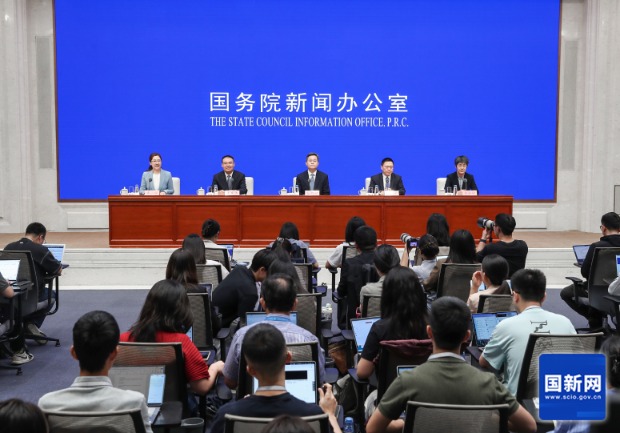
财政部:积极培育新兴产业和未来产业 持续推动制造业转型升级
智通财经网· 2025-11-07 10:56
Core Viewpoint - The report emphasizes the acceleration of new growth momentum in China's economy through enhanced fiscal policies, support for innovation, and investment in key industries, while ensuring the stability of employment and market expectations [1][3]. Group 1: Fiscal Policy and Economic Growth - The fiscal policy is increasingly proactive, focusing on stabilizing employment, businesses, and market expectations, while promoting economic recovery [3][4]. - A total of 300 billion yuan in special bonds is allocated to support the replacement of consumer goods, which is expected to stimulate significant retail sales [4][15]. - The central government plans to increase its technology funding to 398.12 billion yuan in 2025, a 10% increase from the previous year, focusing on core technology and strategic industries [5][21]. Group 2: Investment and Consumption - The government aims to enhance domestic demand by boosting consumption and effective investment, with a focus on key sectors and weak links [13][16]. - The issuance of special bonds has accelerated, with 5.55 billion yuan issued in the first half of the year, completing 42.7% of the annual target [16]. - The manufacturing sector is expected to see a 10.3% increase in industrial investment, driven by government support for technological upgrades [17]. Group 3: Employment and Social Welfare - The central government allocated 667.4 billion yuan for employment support, with 6.95 million new urban jobs created in the first half of the year [27][28]. - Education spending increased by 5.9% to 2.15 trillion yuan, with a focus on improving quality and access to education [29][30]. - Basic public health service funding reached 804.35 billion yuan, enhancing health management and disease prevention efforts [32][33]. Group 4: Risk Management and Financial Stability - The government is implementing measures to mitigate financial risks, including the management of local government debt and the promotion of real estate market stability [7][9]. - A comprehensive approach to fiscal management is being adopted, including reforms in tax systems and budget execution to ensure effective use of resources [7][12]. Group 5: Innovation and Technology - The report highlights the importance of integrating technological innovation with industrial development, with a focus on enhancing research capabilities and supporting key technology projects [20][21]. - Funding for basic research is set to increase by 12.1%, emphasizing the need for original innovation and support for research institutions [21][22]. Group 6: Environmental and Social Development - The government is committed to ecological protection and sustainable development, with significant funding allocated for pollution control and ecosystem restoration [38][39]. - Social welfare programs are being expanded, with increased support for vulnerable populations and efforts to improve living standards [34][35].
财政部:严格落实过紧日子要求,确保财政资金更多用在发展所需、民生所盼上
Sou Hu Cai Jing· 2025-11-07 09:51
Core Viewpoint - The Ministry of Finance has released a report on the implementation of China's fiscal policy for the first half of 2025, emphasizing the need to enhance fiscal management effectiveness and level [1] Group 1: Fiscal Management and Reforms - The Ministry plans to strengthen scientific fiscal management and deepen the implementation of various fiscal and tax reforms [1] - Key areas of focus include budget coordination, zero-based budgeting, fiscal transfer payment systems, consumption tax reform, and standardizing tax incentive policies [1] Group 2: Oversight and Accountability - There will be an increase in financial supervision efforts, ensuring thorough auditing and accountability at local and departmental levels [1] - The Ministry aims to enhance the management and utilization of fiscal funds, improving budget constraints and the enforcement of fiscal laws and regulations [1] Group 3: Fiscal Discipline - The Ministry will strictly adhere to the principle of "tightening the belt," ensuring that fiscal funds are allocated more towards development needs and public welfare [1]
蓝佛安:将不新增隐性债务作为“铁的纪律”
Jin Rong Shi Bao· 2025-11-03 11:17
Core Viewpoint - The article emphasizes the importance of proactive fiscal policy in driving economic growth and structural optimization during the 14th Five-Year Plan period, highlighting the need for effective responses to complex changes in the development environment [1] Group 1: Expansion of Domestic Demand - The government aims to fully expand domestic demand and support the construction of a strong domestic market by increasing residents' income and optimizing income distribution [2] - Policies such as fiscal subsidies and loan interest discounts will be utilized to cultivate new consumption growth points and create new consumption scenarios [2] - The use of special bonds and long-term special government bonds will be optimized to encourage private capital participation in major project construction [2] Group 2: Technological Independence and Innovation - The focus is on supporting high-level technological self-reliance and accelerating the development of new productive forces by increasing investment in technology [3] - The government will enhance the allocation and management of central fiscal science and technology funds to improve the effectiveness of innovation investments [3] - Traditional industries will be optimized while new and future industries are cultivated to promote deep integration of technological and industrial innovation [3] Group 3: Improvement of People's Livelihood - The government prioritizes employment and supports enterprises in stabilizing and expanding jobs, addressing employment issues for key groups [4] - There will be an emphasis on enhancing social security networks and improving public health service systems [4] - Policies will be implemented to optimize the supply of elderly care and childcare services, contributing to overall social welfare [4] Group 4: Urban-Rural Integration and Regional Development - The government will promote urban-rural integration and expand modernization development space by supporting rural revitalization and enhancing agricultural productivity [5] - Investment in rural infrastructure and public services will be prioritized to create livable and workable rural areas [5] - The strategy includes implementing regional coordinated development to optimize economic development space [5] Group 5: Fiscal Management and Debt Risk Prevention - The government aims to enhance fiscal governance effectiveness through reforms and strengthened supervision [6] - A focus on optimizing the tax structure and improving the fiscal relationship between central and local governments will be pursued [6] - Measures will be taken to prevent and resolve local government debt risks, including strict regulations against the creation of new hidden debts [6]
财政部:稳妥推进财税体制改革,提高财政科学管理水平
Di Yi Cai Jing· 2025-09-22 11:13
Core Viewpoint - The report emphasizes the importance of prioritizing the "three guarantees" (basic living needs, education, and healthcare) at the grassroots level while advancing fiscal reforms and improving financial management [1] Group 1: Fiscal Reforms - The report calls for a steady advancement of fiscal and tax system reforms to enhance the scientific management of finances [1] - It highlights the need for progress in areas such as budget integration, zero-based budgeting reform, tax system reform, local tax system development, non-tax revenue management, and improving the transfer payment system [1] - There is a focus on guiding local governments to deepen fiscal management pilot programs to elevate systematic, refined, standardized, and rule-of-law levels [1] Group 2: Financial Risk Management - The report stresses the importance of better coordinating development and security while effectively preventing and mitigating fiscal risks [1] - It instructs local authorities to implement a series of incremental debt support policies and manage hidden debt replacement, financing platform reform, and accountability for illegal borrowing [1] - There is a call for strengthening the full-process management of special bonds [1] Group 3: Prioritization of "Three Guarantees" - Local governments are urged to consistently prioritize the "three guarantees" to ensure a solid foundation for grassroots financial stability [1] - The report emphasizes the need for thorough assessment and appropriate responses to various factors affecting fiscal revenue and expenditure to ensure budget balance and stable financial operations [1]
全国一般公共预算收入预计达106万亿元 国家财政实力持续增强
Zhong Yang Ji Wei Guo Jia Jian Wei Wang Zhan· 2025-09-13 01:18
Core Insights - The financial strength of the country has significantly increased during the "14th Five-Year Plan" period, with a notable rise in both revenue and expenditure [3][4][5] - The government has prioritized social welfare, with substantial allocations for education, social security, healthcare, and housing [4] - Fiscal reforms are being actively pursued to enhance efficiency and effectiveness in budget management and tax systems [5] Revenue and Expenditure - National general public budget revenue is expected to reach 106 trillion yuan, an increase of 17 trillion yuan or approximately 19% compared to the "13th Five-Year Plan" period [3] - General public budget expenditure is projected to exceed 136 trillion yuan, marking an increase of 26 trillion yuan or 24% from the previous period [3] Social Welfare Investments - Total fiscal investment in social welfare is nearing 100 trillion yuan, with specific allocations including 20.5 trillion yuan for education, 19.6 trillion yuan for social security and employment, 10.6 trillion yuan for healthcare, and 4 trillion yuan for housing [4] - The government has introduced initiatives such as 1 billion yuan for childcare subsidies and 200 million yuan for free preschool education [4] Fiscal Policy and Management - The deficit ratio has increased from 2.7% to 3.8%, with a further rise to 4% this year, indicating a proactive fiscal policy [4][5] - The government has implemented measures such as issuing long-term special bonds and replacing hidden debts to alleviate local financial pressures [5] Future Outlook - The Ministry of Finance aims to enhance macroeconomic regulation, deepen fiscal and tax reforms, and improve fiscal management to support the goal of building a modern socialist country [5]


财政部:“十四五”时期我国财政的民生导向更加鲜明
Xin Hua Cai Jing· 2025-09-13 01:18
Core Insights - The Chinese government has allocated significant financial resources for public welfare during the "14th Five-Year Plan" period, with total fiscal spending nearing 100 trillion yuan across various sectors [1][3][4]. Fiscal Strength and Budget Allocation - The national general public budget revenue is expected to reach 106 trillion yuan during the "14th Five-Year Plan," an increase of 17 trillion yuan or approximately 19% compared to the "13th Five-Year Plan" [4]. - Total public budget expenditure is projected to exceed 136 trillion yuan, marking an increase of 26 trillion yuan or 24% from the previous five-year period [4]. - Key allocations include 20.5 trillion yuan for education, 19.6 trillion yuan for social security and employment, 10.6 trillion yuan for health care, and 4 trillion yuan for housing security [1][3]. Economic Policy and Development - Fiscal policies have become more proactive and precise, enhancing macroeconomic stability and supporting healthy economic growth [4][5]. - The government is focusing on counter-cyclical adjustments to smooth short-term fluctuations while promoting long-term development [4]. Social Welfare and Public Services - The government is committed to improving living standards, with initiatives such as 1 billion yuan for childcare subsidies and 200 million yuan for free preschool education [3]. - The fiscal strategy emphasizes that the most significant allocations are directed towards improving the welfare of the population [5]. Risk Management and Financial Stability - The government has implemented measures to manage local government debt and ensure financial stability, including a five-year transfer payment of nearly 50 trillion yuan to local governments [5]. - Efforts are being made to stabilize the real estate market and reform small financial institutions to mitigate risks [5]. Fiscal Reform and Governance - Ongoing fiscal reforms aim to optimize resource allocation, enhance efficiency, and ensure fairness in tax structures [5][6]. - The government is focusing on a systematic and standardized approach to fiscal management, extending oversight from budget preparation to fund utilization across all levels of government [6]. International Cooperation - The Ministry of Finance is actively engaged in international financial cooperation, contributing to global economic governance and supporting initiatives like the Belt and Road [6].
全省财政科学管理试点推进会议召开许昆林出席并讲话
Xin Hua Ri Bao· 2025-08-28 23:17
Group 1 - The meeting focused on advancing the pilot work of scientific financial management to consolidate and expand the economic recovery, contributing to the national development framework [1][2] - Emphasis was placed on understanding the significance of scientific financial management and enhancing the systematic, refined, standardized, and legal levels of financial management [1] - The provincial government aims to improve the efficiency of fiscal policies and optimize the structure of fiscal expenditures, while deepening zero-based budgeting reforms [2] Group 2 - The government plans to enhance the management of fiscal resources by implementing a comprehensive budget system and improving the management of special funds [2] - There is a commitment to ensure the effective use of limited fiscal funds in critical development areas and urgent public needs [2] - The meeting highlighted the importance of collaboration across different levels of government to address challenges and ensure the pilot work yields tangible results [2][3]
激活财政新动能!1—7月江苏一般公共预算支出同比增长2%
Sou Hu Cai Jing· 2025-08-28 02:10
Core Viewpoint - Jiangsu Province's fiscal performance in the first seven months of 2025 shows a slight increase in both revenue and expenditure, indicating a focus on enhancing fiscal management and supporting economic development [1]. Fiscal Performance - General public budget revenue reached 680.139 billion yuan, a year-on-year increase of 1.5% [1] - General public budget expenditure totaled 834.365 billion yuan, a year-on-year increase of 2%, achieving 54% of the annual budget, which is 0.5 percentage points faster than the same period in 2024 [1]. Resource Allocation - The province has intensified fiscal resource coordination, prioritizing key areas through zero-based budgeting reforms and optimizing expenditure structures [2]. - Social spending amounted to 649.925 billion yuan, accounting for 77.9% of total public budget expenditure, with significant growth in education (5.5%), social security (6.8%), health (12.5%), and housing security (5.2%) [2]. Investment and Innovation - Special funds of 28.3 billion yuan were allocated for transportation projects, including major rail and waterway construction [2]. - Over 2 billion yuan was allocated to support manufacturing innovation and digital transformation initiatives [2]. Support for Foreign Trade and Employment - The province implemented measures to stabilize foreign trade and employment, including financial support for trade exhibitions and export credit insurance [3]. - A total of 10.032 billion yuan was reduced in unemployment insurance fees to alleviate operational costs for businesses [3]. Market Vitality Initiatives - Jiangsu's fiscal policies have been designed to stimulate market activity, including the provision of interest subsidies and loans to small and micro enterprises [4]. - The province launched consumption promotion policies, distributing 4.79 billion yuan in lottery vouchers to boost consumer spending [4]. Financial Group Formation - The establishment of the Jiangsu National Financial Investment Group aims to enhance the province's financial landscape and strengthen fiscal capacity [5]. Direct Financial Support - A new implementation plan for direct financial support to enterprises has been established, allowing for rapid access to funds without application requirements [6]. Governance and Management Improvements - Jiangsu is advancing fiscal management reforms, including zero-based budgeting and enhanced digital platforms for real-time financial data monitoring [7]. - The province is also working on legislative measures to improve financial supervision and performance evaluation systems [7].
全面科学管理,激活财政新动能
Xin Hua Ri Bao· 2025-08-27 23:26
Core Viewpoint - Jiangsu Province's fiscal performance in the first seven months of the year shows a slight increase in both revenue and expenditure, indicating a focus on effective financial management to support economic growth [1] Group 1: Fiscal Performance - The general public budget revenue reached 680.139 billion yuan, a year-on-year increase of 1.5% [1] - The general public budget expenditure totaled 834.365 billion yuan, with a year-on-year growth of 2% and completion of 54% of the annual budget [1] Group 2: Focus on Key Areas - Fiscal resources are being prioritized for key sectors, with 649.925 billion yuan allocated to livelihood expenditures, accounting for 77.9% of total expenditures [2] - Significant growth in key areas: education (5.5%), social security (6.8%), health (12.5%), and housing security (5.2%) [2] - Investment in transportation and water conservancy projects includes 28.3 billion yuan for transportation and 10.245 billion yuan for water conservancy [2] Group 3: Support for Foreign Trade and Employment - Implementation of measures to stabilize foreign trade and employment, including a reduction of 10.032 billion yuan in unemployment insurance fees [3] - Support for foreign trade enterprises through funding for participation in domestic and international exhibitions [3] Group 4: Market Vitality Initiatives - Introduction of innovative fiscal policies to enhance market vitality, including 906 million yuan in interest subsidies to encourage bank loans to enterprises [4] - Launch of consumption promotion policies, including 117.6 million yuan in subsidies for cultural and sports events [4] Group 5: Establishment of Investment Group - Formation of the Jiangsu National Financial Investment Group to enhance the province's financial landscape and support market-oriented investments [5] Group 6: Direct Financial Support - Implementation of a "direct access" policy for fiscal funds, allowing eligible projects to receive funding without application processes [6] Group 7: Scientific Management and Governance - Focus on improving fiscal management through zero-based budgeting reforms and enhanced collaboration between fiscal and tax systems [7] - Development of a digital platform for real-time monitoring and analysis of fiscal data to improve resource allocation [7]
1—7月全省一般公共预算支出同比增长2%全面科学管理,激活财政新动能
Xin Hua Ri Bao· 2025-08-27 23:16
Core Insights - Jiangsu's general public budget revenue from January to July reached 680.14 billion yuan, a year-on-year increase of 1.5%, while expenditures totaled 834.37 billion yuan, up 2% year-on-year, completing 54% of the annual budget [1] Group 1: Fiscal Management and Budget Allocation - Jiangsu has intensified fiscal resource coordination, prioritizing key areas through zero-based budgeting reforms and optimizing expenditure structures to support high-quality development [2] - Social spending accounted for 77.9% of total public budget expenditures, with education, social security, health, and housing support seeing growth rates of 5.5%, 6.8%, 12.5%, and 5.2% respectively [2] - The province allocated 28.3 billion yuan for transportation projects and 10.245 billion yuan for major water conservancy projects, supporting significant infrastructure developments [2] Group 2: Support for Trade and Employment - Jiangsu implemented measures to stabilize foreign trade and employment, providing financial support to foreign trade enterprises and reducing unemployment insurance fees by 10.032 billion yuan from January to July [3] - The province received 11.1 billion yuan in special long-term bonds for equipment upgrades, supporting 292 projects [3] Group 3: Market Activation Policies - The provincial finance department introduced innovative measures to enhance policy supply and service efficiency, stimulating business vitality [4] - By the end of July, 9.06 billion yuan in interest subsidies were disbursed, facilitating loans of 113.2 billion yuan to 4,370 enterprises [4] - The province launched new consumption promotion policies, distributing 4.79 billion yuan in consumer vouchers to boost spending [4] Group 4: Financial Group Establishment - The establishment of the Jiangsu Guojin Investment Group aims to enhance the provincial financial landscape through market-oriented equity investments [5] Group 5: Direct Financial Support Initiatives - Jiangsu developed a "direct access" scheme for fiscal funds, allowing eligible projects to receive financial support without application processes, enhancing efficiency [6] Group 6: Governance and Management Improvements - The province is advancing fiscal scientific management through zero-based budgeting reforms and enhancing fiscal data monitoring and analysis capabilities [7] - Legislative efforts are underway to improve financial supervision and integrate various oversight mechanisms [7]