
财金联动

Search documents
山东深化财金联动支持人才事业发展
Qi Lu Wan Bao· 2026-02-26 11:45
Core Viewpoint - The Shandong Provincial Government has introduced measures to implement a more proactive and effective talent policy, supported by significant financial investment, aiming to enhance the integration of education, technology, and talent development. Group 1: Financial Support and Investment - During the "14th Five-Year Plan" period, Shandong's fiscal spending on education, technology, and talent is expected to reach approximately 1.5 trillion yuan, a 31.4% increase compared to the "13th Five-Year Plan," accounting for 25% of total fiscal expenditure [1] - In the previous year, Shandong was the first in the nation to introduce 30 fiscal policies supporting the integrated development of education, technology, and talent, directing 81% of funding in these areas towards key development sectors [1] Group 2: Resource Coordination and Efficiency - The government aims to strengthen the coordination of central funds with provincial budgets and various financial resources to ensure robust funding support for talent development [2] - A total of 3.7 billion yuan has been invested in talent entrepreneurship projects across 49 enterprises, with provincial government investment funds supporting 312 high-level talent projects, amounting to 37.8 billion yuan, which has attracted 147.8 billion yuan in social capital [2] Group 3: Industry Demand and Educational Integration - A multi-level support system for higher education disciplines will be established, promoting the integration of academic programs, talent cultivation, and industry development to meet market demands [3] - The government will enhance support for strategic emerging industries and future industries, focusing on converting talent advantages into core driving forces for industrial development [3] Group 4: Empowerment and Innovation Ecosystem - The government plans to expand the autonomy of research project funding management and improve financial services for the commercialization of scientific achievements [3] - A performance evaluation mechanism will be developed to align with the laws of talent development, emphasizing demand orientation, innovation quality, and contribution effectiveness [3]
真金白银力挺民营企业!江苏20条措施含“金”量十足
Xin Hua Ri Bao· 2026-02-11 02:00
Core Viewpoint - Jiangsu province is focusing on enhancing financial services for the private economy, which contributes nearly 60% to the regional GDP, through a set of measures aimed at improving financing access and support for private enterprises [1] Group 1: Financing Access and Support - The measures address key issues in financial services for private enterprises, emphasizing the need for a comprehensive financial service system and multiple financing channels [2] - A dual approach of online and offline services will be implemented to create a "fast track" for financing, with a focus on digital transformation and AI integration in financial services [2] - By 2025, the provincial government aims to help 89,000 enterprises secure credit amounting to 613.6 billion yuan [2] Group 2: Financial Service Infrastructure - The establishment of 105 financial service points for private enterprises is planned, with a goal of providing additional financing of no less than 100 billion yuan by 2026 [3] - The measures include promoting a financial advisor system to enhance service delivery to private enterprises [3] Group 3: Financial Product Diversification - The measures encourage a variety of financial products tailored to the lifecycle of enterprises, including equity financing, bond issuance, and innovative financial products [4] - The province aims to significantly increase the issuance of corporate bonds by private enterprises, with a reported sixfold increase in new bond issuance [4] Group 4: Targeted Financial Solutions - The measures emphasize the importance of tailored financial solutions for different types of enterprises, promoting innovative credit products and mechanisms such as investment-loan linkage [5] - A coordinated financial service mechanism will be established to guide banks in setting annual service goals for private enterprises [5] Group 5: Financial Support and Risk Mitigation - The measures highlight the need for a robust support system for private enterprises, including financial assistance and risk monitoring [6] - A comprehensive policy framework has been established to support private enterprises through various financial incentives, including interest subsidies and direct funding [6] Group 6: Credit Repair and Stability - The measures include provisions for supporting the credit repair of enterprises, aiming to restore confidence among private businesses [7] - Continuous efforts will be made to expand access to credit for small and micro private enterprises, enhancing the quality and efficiency of financing [7]
广西财政收支增速连续12个月“双增长”
Sou Hu Cai Jing· 2026-01-07 00:38
Core Insights - In 2025, the region's fiscal departments are expected to achieve a "double growth" in both revenue and expenditure for 12 consecutive months, with general public budget revenue reaching 192.05 billion yuan, a year-on-year increase of 4.6%, and expenditure reaching 674.218 billion yuan, a year-on-year increase of 4.2% [1][2] Fiscal Performance - General public budget revenue is projected to exceed 190 billion yuan and expenditure to surpass 670 billion yuan, marking the first time in nearly six years that both revenue and expenditure have shown continuous growth for 12 months [1] - The region has allocated over 37.3 billion yuan to support major projects, including the Pinglu Canal and the Beibu Gulf International Gateway Port [1] Economic Empowerment - A series of tax reduction and fee reduction measures are expected to inject vitality into the business sector, with preliminary estimates indicating that over 26 billion yuan in tax reductions and refunds will support technological innovation and manufacturing development in 2025 [2] - The government has facilitated the issuance of subsidized loans exceeding 115.1 billion yuan, benefiting over 44,000 businesses and reducing financing costs by over 1.2 billion yuan [2] Innovation and Development - The region aims to allocate 150 billion yuan annually, totaling nearly 450 billion yuan over three years, to support the development of new productive forces through 11 policy measures [2] - Investment in digital infrastructure is set to increase by 133.3%, with 700 million yuan allocated for artificial intelligence capabilities and international cooperation [2] Social Welfare - In 2025, total spending on people's livelihoods is expected to reach 539.235 billion yuan, a year-on-year increase of 4.3%, accounting for 80% of general public budget expenditure [3] - Expenditure in key areas such as transportation, energy conservation, and social security is projected to grow at double-digit rates, enhancing the quality of life for residents [3]
经济大省挑大梁!山东一般公共预算收入破7000亿元大关
Qi Lu Wan Bao· 2025-12-25 05:12
Core Viewpoint - The Shandong provincial government has reported significant growth in fiscal revenue and expenditure during the "14th Five-Year Plan" period, highlighting the province's commitment to economic development and public welfare [1][2]. Fiscal Revenue and Expenditure - Shandong's general public budget revenue has exceeded 700 billion yuan, increasing from 656 billion yuan at the end of the "13th Five-Year Plan" to 771.2 billion yuan in 2024, with an average annual growth rate of 4.1% [2]. - The general public budget expenditure has risen from 1.12 trillion yuan at the end of the "13th Five-Year Plan" to 1.31 trillion yuan in 2024, with an average annual growth rate of 3.9% [2]. Support for High-Quality Development - The province has established 208 provincial government investment funds, supporting 1,858 projects with a total investment of 236.8 billion yuan, which has attracted 576.7 billion yuan in social capital [3]. - From 2021 to 2024, Shandong has implemented tax reductions and exemptions totaling over 700 billion yuan, enhancing corporate profitability and market vitality [3]. Strategic Financial Policies - Shandong has introduced a series of fiscal policies to support major national strategies, including 38 measures for the Yellow River strategy and 46 for green and low-carbon development, cumulatively raising approximately 500 billion yuan for these initiatives [4]. - The province has allocated 3.756 trillion yuan for rural revitalization and invested 712.8 billion yuan in technological innovation, which is 2.2 times the amount during the "13th Five-Year Plan" [4]. Social Welfare and Public Services - Public spending on social welfare has increased from 891.4 billion yuan in 2020 to over 1 trillion yuan in 2024, maintaining a stable proportion of around 80% of total expenditures [6]. - The province has implemented 20 key livelihood projects annually to address public concerns and ensure that benefits reach the people effectively [6]. Fiscal Management and Reforms - Shandong has been recognized for its advanced fiscal management performance for three consecutive years, reflecting improvements in budget management and fiscal stability [7][8]. - The province is one of only two in the country designated as a comprehensive pilot for fiscal science management, focusing on zero-based budgeting and digital finance [8].
坚持“三个坚持”深化“四个联动”!山东“财金联动”赋能高质量发展
Qi Lu Wan Bao· 2025-12-25 04:34
Core Viewpoint - The Shandong provincial government is actively enhancing financial reform and development during the 14th Five-Year Plan period, focusing on innovative financial collaboration to drive high-quality growth [1][2]. Group 1: Financial Reform Strategies - The provincial finance department emphasizes a combination of effective markets and proactive government actions, aiming to innovate investment methods and enhance resource allocation efficiency [1]. - Key strategies include: 1. Adopting market-oriented approaches to improve resource allocation efficiency through financial subsidies, loan interest discounts, guiding funds, and equity investments [1]. 2. Fostering win-win scenarios by aligning fiscal and financial policies to direct financial resources effectively towards high-quality development [1]. 3. Implementing a systematic design to integrate support for development, ensuring smooth flow of production factors and maximizing market potential [1]. Group 2: Implementation of Financial Collaboration - The initiative has strengthened four types of collaboration: 1. Institutional collaboration by supporting eight provincial financial enterprises to develop a full range of financial products, forming the "Shandong Financial Enterprise Alliance" [2]. 2. Policy collaboration through the introduction of 29 supportive measures for financial collaboration, extending into various sectors such as technology, culture, and rural revitalization [2]. 3. Provincial, municipal, and county collaboration to gather resources for major projects, resulting in significant investments of 950 billion yuan in equity and debt, and 3,758 billion yuan in new loans in 2023 [2]. 4. Market collaboration by organizing project roadshows and resource matching, attracting central financial enterprises and banks to participate in financial collaboration [2]. Group 3: Future Outlook - The financial collaboration model has become a hallmark of Shandong's fiscal strategy, with plans for continued enhancement to contribute more effectively to the province's high-quality development [3].
烟台财金联盟县域行走进莱山,财金联动共促区域高质量发展
Qi Lu Wan Bao Wang· 2025-10-24 00:54
Core Insights - The Yantai Financial Alliance conducted a field research activity in Laishan District, focusing on regional economic development and financial resource alignment [1][11]. Group 1: Project Visits - The first stop was the Five Color Cultural Square Phase II, where the innovative positioning of a "park-style cultural and commercial complex" was discussed [3]. - At the China Data Port, the group explored the "four-in-one" functional framework for data aggregation, processing, trading, and ecological empowerment, and reached a consensus on collaboration in data assetization and financial support for the digital economy [5]. - The visit to the CIMC "Zero Carbon" Intelligent Manufacturing Industrial Park highlighted its development path through a "chain-style" cluster, focusing on high-end marine engineering equipment and offshore new energy devices [7]. Group 2: Community and Industrial Development - The group visited the Jungle Coffee in Donggou Village, showcasing a model for rural tourism transformation by revitalizing idle collective assets and creating a blend of cultural and natural leisure spaces [9]. - The final stop was the Binhai Industrial Park, where plans for a "Binhai Smart Medical Industrial Park" were discussed, emphasizing the integration of medical research and pharmaceutical enterprises [11]. Group 3: Strategic Consensus - The activity deepened the understanding of regional industrial layout and real needs, fostering a strategic consensus on "financial and economic linkage, regional win-win" [11]. - The Yantai Financial Group aims to leverage this opportunity to enhance its comprehensive financial service advantages and create replicable models for "financial + regional" collaboration to support county-level economic development [11].


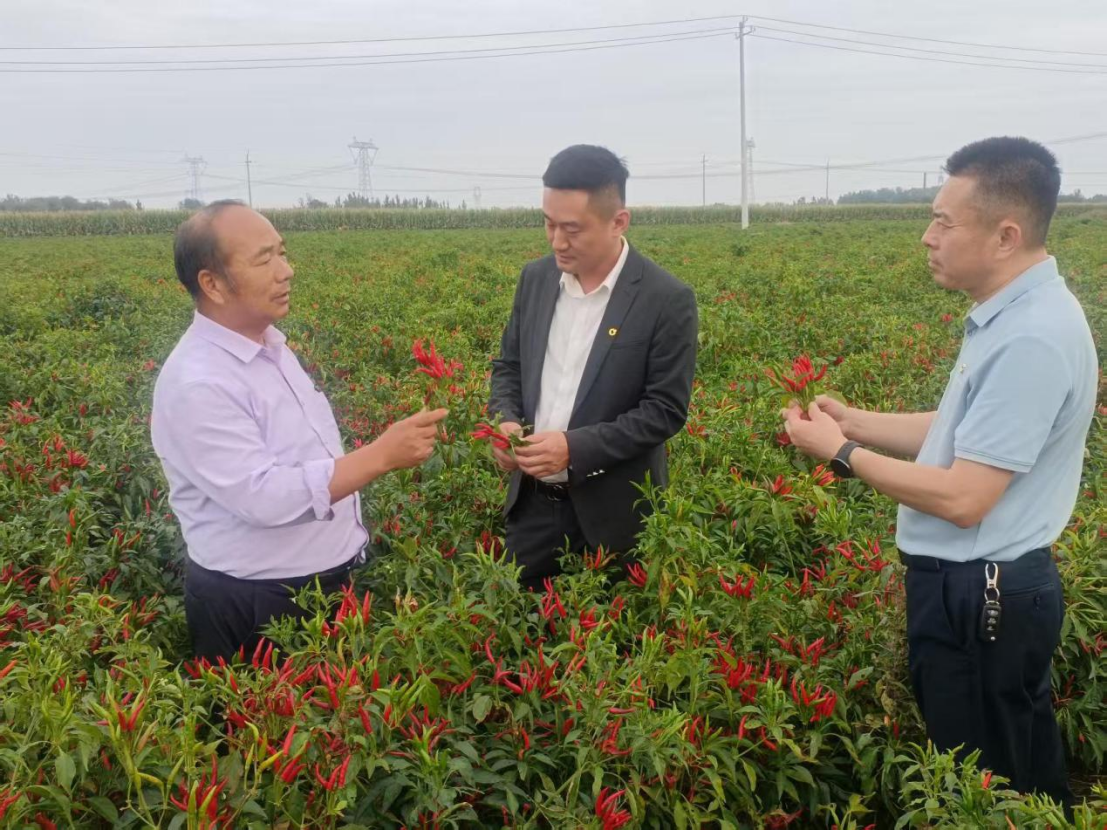
中国人寿财险山东省聊城市中心支公司护航特色农产品发展——阳谷朝天椒撑起“火红”产业与“红火”日子
Qi Lu Wan Bao· 2025-10-10 00:23
Core Viewpoint - The article highlights the development of a comprehensive insurance system for the chili pepper industry in Yanggu County, Shandong Province, aimed at mitigating risks associated with chili pepper cultivation and enhancing the economic stability of local farmers [1][5][16]. Group 1: Industry Overview - Yanggu County's chili pepper, known as "the first spicy pepper in northern China," benefits from a unique climate and fertile soil, contributing to its distinct quality [3]. - The region has a long history of chili pepper cultivation, dating back over 300 years, with a rich cultural heritage surrounding its production [3]. Group 2: Insurance Development - In response to the risks faced by chili pepper farmers, China Life Insurance has established a specialized insurance service team to develop tailored insurance products for the chili pepper industry [5][14]. - The insurance products include commercial chili planting insurance that covers various natural disasters and pest outbreaks, providing compensation based on different growth stages of the chili plants [8][9]. Group 3: Risk Management - The insurance model combines weather index insurance and pest index insurance, utilizing satellite monitoring to trigger automatic claims when specific weather thresholds are exceeded [9]. - The cost of insurance is set at 78.75 yuan per acre, offering risk coverage of 1,500 yuan, which helps farmers manage their investment costs effectively [9]. Group 4: Comprehensive Support Services - The insurance offerings have expanded to include processing and storage insurance, covering risks such as equipment failure and product spoilage, thereby supporting the entire chili pepper supply chain [14]. - Additionally, employer liability insurance has been introduced to protect workers and mitigate operational risks for cooperatives [14]. Group 5: Brand Protection and Market Challenges - To combat brand infringement issues, China Life Insurance has launched a geographical indication infringement loss insurance, helping chili producers manage intellectual property risks [13]. - The company is also working on developing food safety liability insurance and product quality assurance insurance to further support the chili pepper industry [16].

激活财政新动能!1—7月江苏一般公共预算支出同比增长2%
Sou Hu Cai Jing· 2025-08-28 02:10
Core Viewpoint - Jiangsu Province's fiscal performance in the first seven months of 2025 shows a slight increase in both revenue and expenditure, indicating a focus on enhancing fiscal management and supporting economic development [1]. Fiscal Performance - General public budget revenue reached 680.139 billion yuan, a year-on-year increase of 1.5% [1] - General public budget expenditure totaled 834.365 billion yuan, a year-on-year increase of 2%, achieving 54% of the annual budget, which is 0.5 percentage points faster than the same period in 2024 [1]. Resource Allocation - The province has intensified fiscal resource coordination, prioritizing key areas through zero-based budgeting reforms and optimizing expenditure structures [2]. - Social spending amounted to 649.925 billion yuan, accounting for 77.9% of total public budget expenditure, with significant growth in education (5.5%), social security (6.8%), health (12.5%), and housing security (5.2%) [2]. Investment and Innovation - Special funds of 28.3 billion yuan were allocated for transportation projects, including major rail and waterway construction [2]. - Over 2 billion yuan was allocated to support manufacturing innovation and digital transformation initiatives [2]. Support for Foreign Trade and Employment - The province implemented measures to stabilize foreign trade and employment, including financial support for trade exhibitions and export credit insurance [3]. - A total of 10.032 billion yuan was reduced in unemployment insurance fees to alleviate operational costs for businesses [3]. Market Vitality Initiatives - Jiangsu's fiscal policies have been designed to stimulate market activity, including the provision of interest subsidies and loans to small and micro enterprises [4]. - The province launched consumption promotion policies, distributing 4.79 billion yuan in lottery vouchers to boost consumer spending [4]. Financial Group Formation - The establishment of the Jiangsu National Financial Investment Group aims to enhance the province's financial landscape and strengthen fiscal capacity [5]. Direct Financial Support - A new implementation plan for direct financial support to enterprises has been established, allowing for rapid access to funds without application requirements [6]. Governance and Management Improvements - Jiangsu is advancing fiscal management reforms, including zero-based budgeting and enhanced digital platforms for real-time financial data monitoring [7]. - The province is also working on legislative measures to improve financial supervision and performance evaluation systems [7].
1—7月全省一般公共预算支出同比增长2%全面科学管理,激活财政新动能
Xin Hua Ri Bao· 2025-08-27 23:16
Core Insights - Jiangsu's general public budget revenue from January to July reached 680.14 billion yuan, a year-on-year increase of 1.5%, while expenditures totaled 834.37 billion yuan, up 2% year-on-year, completing 54% of the annual budget [1] Group 1: Fiscal Management and Budget Allocation - Jiangsu has intensified fiscal resource coordination, prioritizing key areas through zero-based budgeting reforms and optimizing expenditure structures to support high-quality development [2] - Social spending accounted for 77.9% of total public budget expenditures, with education, social security, health, and housing support seeing growth rates of 5.5%, 6.8%, 12.5%, and 5.2% respectively [2] - The province allocated 28.3 billion yuan for transportation projects and 10.245 billion yuan for major water conservancy projects, supporting significant infrastructure developments [2] Group 2: Support for Trade and Employment - Jiangsu implemented measures to stabilize foreign trade and employment, providing financial support to foreign trade enterprises and reducing unemployment insurance fees by 10.032 billion yuan from January to July [3] - The province received 11.1 billion yuan in special long-term bonds for equipment upgrades, supporting 292 projects [3] Group 3: Market Activation Policies - The provincial finance department introduced innovative measures to enhance policy supply and service efficiency, stimulating business vitality [4] - By the end of July, 9.06 billion yuan in interest subsidies were disbursed, facilitating loans of 113.2 billion yuan to 4,370 enterprises [4] - The province launched new consumption promotion policies, distributing 4.79 billion yuan in consumer vouchers to boost spending [4] Group 4: Financial Group Establishment - The establishment of the Jiangsu Guojin Investment Group aims to enhance the provincial financial landscape through market-oriented equity investments [5] Group 5: Direct Financial Support Initiatives - Jiangsu developed a "direct access" scheme for fiscal funds, allowing eligible projects to receive financial support without application processes, enhancing efficiency [6] Group 6: Governance and Management Improvements - The province is advancing fiscal scientific management through zero-based budgeting reforms and enhancing fiscal data monitoring and analysis capabilities [7] - Legislative efforts are underway to improve financial supervision and integrate various oversight mechanisms [7]