适老化

Search documents
为老年人营造良好数字消费环境
Jing Ji Ri Bao· 2025-10-22 00:03
Core Insights - The article highlights the increasing challenges faced by the elderly in navigating digital platforms, emphasizing the need for "age-friendly" designs to protect them from financial traps and enhance their digital experience [1][2] Group 1: Elderly Internet Usage - As of June this year, the number of internet users aged 60 and above in China reached 161 million, with an internet penetration rate of 52.0% among this demographic [1] - The elderly have become a significant segment of new internet users, engaging in activities such as live shopping, online gaming, and short video consumption [1] Group 2: Challenges in Digital Platforms - Many companies prioritize younger users in their app updates, often neglecting the specific needs of elderly users, leading to complex interfaces and unclear instructions [1] - Features like default selections and small font sizes can confuse elderly users, while anxiety-inducing pop-ups may lead to unintended financial commitments [1] Group 3: Market Opportunities - The elderly demographic represents a vast market with substantial consumption potential, suggesting that companies should simplify their offerings and create a "pure mode" to reduce marketing pressures on older users [2] - By focusing on the needs of elderly consumers, companies can enhance user loyalty and tap into the potential of the silver economy, which could serve as a new growth avenue [2] Group 4: Regulatory Recommendations - There is a call for regulatory bodies to establish clear standards for information disclosure and choice processes in digital consumption, particularly to combat misleading services targeting the elderly [2] - Ensuring a safe digital environment for older adults is essential for bridging the digital divide and allowing them to enjoy the benefits of smart living [2]
人口老龄化时代的数智医疗服务
Xin Hua Ri Bao· 2025-10-21 22:57
Core Insights - The Chinese government is prioritizing the development of smart healthcare services, particularly in the context of an aging population, with policies aimed at integrating digital technologies into healthcare delivery [1][2][3] Group 1: Policy and Strategic Framework - The "Healthy China 2030" initiative emphasizes the importance of smart healthcare and the integration of internet technologies into health services [1] - The 20th National Congress report highlights the need to address population aging as a national strategy, with projections indicating that by 2050, the elderly population will reach 487 million, accounting for 34.9% of the total population [2] Group 2: Technological Advancements - Smart healthcare technologies, including AI, IoT, and wearable devices, are increasingly being utilized for disease prevention and chronic disease management, providing personalized health insights [3] - AI technologies, such as those developed by AliveCor, can predict health risks and offer tailored advice, enhancing the management of conditions like cardiovascular diseases among the elderly [3] Group 3: Challenges in Implementation - There exists a digital divide between older and younger populations, with only 23% of individuals over 60 able to independently complete online health services, indicating a need for more user-friendly interfaces [4] - The integration of medical, nursing, and rehabilitation services remains insufficient, leading to fragmented care for elderly patients [4] - Healthcare professionals often lack adequate training in using smart healthcare technologies, which hampers their ability to assist elderly patients effectively [4] Group 4: Future Directions - Future smart healthcare services should focus on user-friendly design, integration of services, and enhanced training for healthcare providers to better meet the needs of the elderly population [5][6]
老年人旅游不贪便宜了
经济观察报· 2025-10-08 07:03
Core Viewpoint - The article highlights the transformation of the elderly travel market, showcasing a shift from budget-focused travel to a preference for high-quality experiences among the new generation of retirees [2][4][5]. Group 1: Market Trends - During the National Day holiday, there was a significant increase in travel among the elderly, with Ctrip reporting over a 22% growth in travel orders for the silver-haired demographic in 2024 compared to 2023 [2]. - The age group of 61-65 years showed the highest growth rate at 58% year-on-year, indicating a robust demand for travel experiences among this segment [2]. - The elderly population in China has reached 310 million, marking a shift towards a more mature travel market that is becoming a new blue ocean for cultural and tourism consumption [2][7]. Group 2: Changing Consumer Behavior - The motivations for elderly travel have evolved, with a focus on social interaction, self-fulfillment, and health and wellness, rather than merely sightseeing [5][6]. - Elderly travelers are increasingly willing to pay for better experiences, prioritizing quality over cost [5][7]. - The preference for slower-paced, immersive travel experiences is becoming mainstream, with many elderly tourists rejecting rushed itineraries [6][7]. Group 3: Product Development and Services - Travel companies are responding to the growing silver-haired market by developing tailored products, such as Ctrip's "Old Friends Club" and cultural travel experiences from other agencies [13]. - There is a trend towards personalized travel itineraries that cater to the specific needs of elderly travelers, moving away from standardized offerings [13]. - The importance of emotional support and companionship during travel is increasingly recognized, with a focus on enhancing the overall travel experience [13][10]. Group 4: Infrastructure and Accessibility - The article discusses the need for improved accessibility in tourist destinations, with examples of successful adaptations such as mountain elevators and supportive infrastructure in scenic areas [9]. - Travel companies are also adapting their services to include medical support and comfortable transportation options for elderly travelers [10][11].


银发旅行热:消费升级、适老化与新蓝海
Jing Ji Guan Cha Bao· 2025-10-08 06:08
Core Insights - The silver-haired population in China is increasingly engaging in travel, with a significant rise in travel orders for this demographic, particularly among those aged 61-65, which saw a 58% year-on-year increase [1][2] - The shift in travel preferences indicates that older travelers are no longer seeking budget options but are willing to pay more for quality experiences [2][4] - The aging population is projected to reach 22% by 2024 and over 32% by 2035, highlighting the growing importance of the silver economy in the travel sector [4] Travel Trends - The motivations for travel among the elderly include social interaction, self-fulfillment, and health and wellness, with a preference for slow-paced, immersive experiences rather than rushed sightseeing [3][4] - There is a notable trend towards diverse destination choices, including cultural and historical sites, alongside natural attractions [3][4] Market Opportunities - The travel industry is responding to the needs of the silver-haired demographic by developing tailored products and services, such as comfortable itineraries and specialized travel guides [8][9] - Companies like Ctrip and Zhongxin Tourism are innovating with offerings like "parent travel guardians" and high-end cultural products to cater to the desires of older travelers [9] Service Enhancements - There is a growing expectation for travel services to provide emotional support and companionship, alongside practical assistance with technology and travel logistics [6][7] - The design of travel products for seniors should focus on personalized experiences rather than standardized packages, ensuring a consistent service quality throughout the journey [7][9] Future Outlook - The silver economy is anticipated to thrive, with projections indicating that by 2050, a significant portion of the population will be over 60, making this demographic a mainstream market [9]
家具适老化让养老变“享老”
Xin Lang Cai Jing· 2025-09-25 22:44
Core Insights - The National Standard for "Aging-Friendly Furniture Design Guidelines" has been approved and will be implemented on February 1, 2026, aiming to enhance the compatibility of furniture products with the needs of the elderly and improve their quality of life [1] Industry Overview - The aging population in China is rapidly increasing, with projections indicating that by the end of 2024, there will be 310 million people aged 60 and above, accounting for 22% of the total population [1] - The demand for safe, convenient, and comfortable living environments is rising among the elderly, prompting furniture companies to seize market opportunities by launching products tailored to this demographic [1] - Approximately 45,000 companies in China are involved in the aging-friendly furniture sector, with over 7,200 new companies established this year, reflecting an 18.6% year-on-year growth [1] Market Characteristics - The majority of companies in the aging-friendly furniture industry are relatively new, indicating that the market is still in its early development stage [2] - The industry exhibits a diverse and rapidly evolving ecosystem, with companies transitioning from traditional furniture manufacturing, extending their services to home renovation, or integrating smart technologies into furniture design [2] Challenges and Growth Issues - There are significant growth challenges within the aging-friendly furniture sector, including a lack of proper understanding among consumers regarding what constitutes aging-friendly design [3] - Many consumers mistakenly equate aging-friendly furniture with basic modifications, failing to recognize the importance of addressing psychological and emotional needs [3] - The market is also plagued by low-quality products and "pseudo-aging-friendly" items due to the entry of inexperienced companies lacking professional design and construction teams [3] Importance of Standards - The introduction of the "Guidelines" is crucial as it provides comprehensive requirements for furniture design, covering aspects such as color, structure, safety, and smart features [4] - The guidelines aim to shift the industry focus from merely accommodating to precisely adapting to the needs of the elderly, offering clear directions for manufacturers and helping consumers identify quality products [4] Future Development - To fully realize the potential of the aging-friendly furniture industry, collaboration across policy, market, and social dimensions is essential [5] - Policies could include certification incentives for products that exceed basic standards, while market initiatives might involve creating experience zones for elderly consumers [5] - Socially, media campaigns are needed to reshape perceptions of aging-friendly furniture as a means to enhance quality of life rather than merely catering to health issues [5]
适老化需求潜力待释放 天坛家具探索多元路径
Bei Jing Shang Bao· 2025-09-18 08:41
Core Insights - The demand for age-friendly products is increasing due to the growing elderly population, with Beijing's elderly population projected to exceed 10 million by mid-century [1] - The design of age-friendly furniture should focus on safety, comfort, convenience, sustainability, and multifunctionality, rather than complete redesign [4][5] - The transition from "elderly furniture" to "age-friendly furniture" has improved consumer acceptance, particularly in the B2B market [5] Market Demand and Trends - As of 2024, Beijing has 5.14 million residents aged 60 and above, accounting for 23.5% of the total population, an increase of 192,000 from 2023 [1] - The market for age-friendly products is still underdeveloped, with only about 5% of households having completed age-friendly renovations [9] - There is a growing interest in multifunctional and aesthetically pleasing age-friendly products, driven by the active "60s generation" [9] Company Strategies - Tian Tan Furniture has been focusing on age-friendly products for over ten years, employing a dual strategy of new product development and the adaptation of existing furniture [4][5] - The company has served around 5,000 families in the past two years, with approximately 9% of these services addressing the needs of elderly consumers [5] - Future developments may incorporate smart technology to enhance the functionality of age-friendly furniture, such as self-adjusting seats and obstacle-sensing cabinets [9] Industry Innovations - The industry is moving towards integrating traditional craftsmanship with modern design, as seen in products showcased by Jin Yu Group at trade fairs [10] - The shift towards "de-labeling" age-friendly products is evident, with consumers preferring items that blend functionality with everyday aesthetics [9]


老,无所“依”|青山资本2025年度研究报告
首席商业评论· 2025-09-16 04:16
Core Insights - The article discusses the profound and rapid aging of the population in China, highlighting the complexities and internal diversities within the elderly demographic, which is often overlooked by society and market research [4][10][18]. Group 1: Demographic Changes - The median age in developed economies has increased from 30 to 43 years over the past 50 years, with projections indicating it will reach 47 years by 2075. Emerging economies have seen a rise from 19 to 30 years [5]. - Global life expectancy has risen from 62 to 75 years in the last 50 years, with developed economies seeing an increase from 72 to 82 years [8]. - By the end of 2024, China's population aged 60 and above is expected to reach 310 million, accounting for 22% of the total population, marking the country’s entry into a deeply aging society [10]. Group 2: Aging Process and Definitions - Aging is a natural biological process experienced by nearly all animals, characterized by various physiological changes [12]. - The definition of "elderly" has evolved over time, with the World Health Organization defining elderly individuals as those aged 60 and above, while in developed countries, the age is often set at 65 [14]. Group 3: Internal Diversity of the Elderly Population - The elderly population in China is marked by significant internal diversity, with varying experiences and backgrounds leading to different consumption behaviors and needs [16][18]. - Historical events, such as the Great Chinese Famine and the Cultural Revolution, have created distinct generational experiences that influence the current elderly population's values and consumption patterns [20][21]. Group 4: Economic Disparities - There is a stark disparity in income among retirees in China, with pensions for civil servants being 28 times higher than those for rural residents [24]. - The elderly population's wealth is substantial, with the total wealth of individuals aged 60 and above in China reaching 78.4 trillion yuan, averaging 264,000 yuan per person [25]. Group 5: Consumption Patterns - The elderly consumer market is complex and multifaceted, with a significant portion of the population exhibiting low consumption levels despite the overall market potential [28][69]. - Many elderly individuals prioritize essential spending and exhibit high price sensitivity, often focusing on tangible benefits rather than abstract services [60][63]. Group 6: Digital Engagement - Approximately 52% of elderly individuals in China are internet users, indicating a significant digital divide where many remain disconnected from online resources [71]. - The COVID-19 pandemic has accelerated digital engagement among the elderly, with many being forced to learn to use smartphones for essential services [78]. Group 7: Market Opportunities - The elderly market presents a vast opportunity for businesses, but it requires a nuanced understanding of the diverse needs and preferences within this demographic [28][69]. - Companies must focus on tailored services and products that address the specific challenges faced by different segments of the elderly population, rather than adopting a one-size-fits-all approach [69].

百度发布“AI助老智能体” 助力老年人跨越数字鸿沟
Zhong Guo Jin Rong Xin Xi Wang· 2025-09-12 13:08
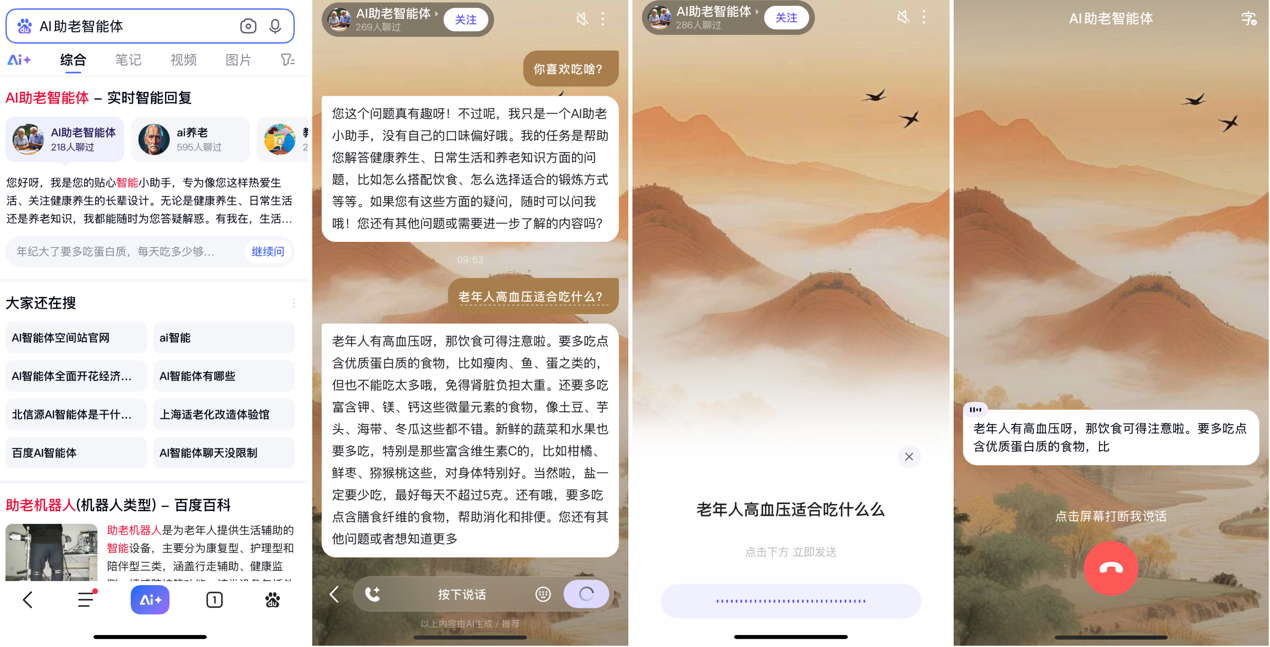
Core Viewpoint - The "AI Elderly Assistance Public Welfare Program" has been officially launched to help the elderly overcome the digital divide and improve their quality of life through AI applications and volunteer activities [1][3]. Group 1: Program Overview - The program aims to address the challenges faced by the elderly in accessing and utilizing technology, particularly in navigating complex online information [1]. - The "AI Elderly Assistance Intelligent Agent" has been introduced, which integrates knowledge dissemination, health management, and emotional companionship, addressing over 1,000 common questions relevant to individuals aged 60 and above [1][3]. Group 2: Activities and Initiatives - The program includes the "Warm Family Letters · Wisdom Inheritance" AI innovation application competition, which seeks innovative products suitable for the elderly [3]. - Ten AI series courses have been developed, and 500 units of the Xiaodu Smart Screen have been donated to support elderly universities and communities [3]. - Volunteers from Baidu's "Xiaohao Shi" organization are conducting AI public lectures and providing training on the use of the Xiaodu Smart Health Screen in various communities [3]. Group 3: Future Plans - The program plans to expand its reach to multiple provinces, elderly universities, communities, and nursing institutions, aiming to cover hundreds of thousands of elderly individuals [3]. - The initiative seeks to provide replicable practical samples for promoting positive aging and healthy aging [3].

农行济南历下科技城支行:贴心服务暖胸怀,金融桥梁“无障碍”
Qi Lu Wan Bao· 2025-08-29 07:37
Core Insights - Agricultural Bank of China (ABC) is exemplifying its commitment to "age-friendly and barrier-free" services through the actions of its employee Xiao Guo, who provided meticulous assistance to a wheelchair-bound customer, earning high praise from the customer and their family [1][2] Group 1: Service Excellence - Xiao Guo proactively identified the needs of the disabled customer upon arrival and assisted in navigating the wheelchair through the bank's barrier-free entrance [1] - The employee guided the customer to the "Love Window" for priority service, ensuring an efficient and smooth transaction process [1][2] - Xiao Guo employed a "hands-on guidance + paper documentation" approach to assist the customer with potential difficulties in using smart devices, confirming each transaction step clearly [2] Group 2: Customer Care - After completing the banking services, Xiao Guo helped organize the customer's documents and coordinated with family members to ensure the customer was safely returned to their vehicle [2] - The family expressed deep gratitude for the attentive service, highlighting the warmth and care provided throughout the visit [2] Group 3: Future Initiatives - ABC's Jinan Lixia Technology City branch plans to enhance its "age-friendly service demonstration site" by integrating smart technology and personalized services [2] - The branch aims to introduce more tailored financial products to fulfill its commitment to support the elderly and vulnerable populations [2] - The entire staff is dedicated to conveying the warmth of ABC and contributing to social welfare through financial services [2]

(活力中国调研行)开拓市场“新蓝海” 福建福安传统产业以“新”提质
Zhong Guo Xin Wen Wang· 2025-08-22 04:14
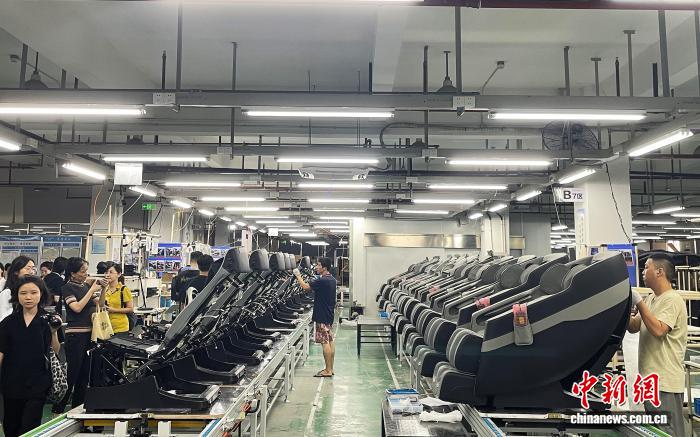
Core Viewpoint - The traditional massage equipment industry in Fuan is evolving through innovation, aiming to explore new market opportunities and enhance product offerings to meet diverse consumer needs [1][4]. Industry Overview - Fuan has 253 massage equipment production and supporting enterprises, with 38 of them being large-scale companies. The total industry chain output value is projected to reach approximately 22 billion yuan in 2024, with large-scale enterprises contributing 1.699 billion yuan [1]. - The industry has established a complete supply chain from raw material procurement to product sales, with 80% of raw materials sourced locally. Products are exported to over 50 countries and regions, including Europe, Australia, South America, the Middle East, and Southeast Asia [4][7]. Company Innovations - Fujian Glory Health Technology Co., Ltd. is focusing on customized products for the U.S. market, enhancing precision and comfort compared to traditional massage devices. The company produces over 50 types of products, with an annual output of 300,000 massage chairs, aiming for a revenue of 277 million yuan in 2024 [2][4]. - The company is shifting from product-oriented to customer-oriented strategies, responding to market diversity and targeting the mid-to-high-end market [2]. Market Trends - The rise of the silver economy and increasing health consumption demands are driving some manufacturers to develop "age-friendly" products, including traditional Chinese medicine smart health equipment and rehabilitation aids [2][4]. - The industry is witnessing a significant focus on developing products with health and wellness features, particularly for the elderly population, which is seen as a new economic opportunity [4][7]. Technological Advancements - Fuan's massage equipment industry has over 2,200 effective patents, covering key technologies such as smart sensing, human-computer interaction, and health data analysis, enabling a comprehensive system from technology research to market application [7]. - The local government is promoting the transformation of the massage equipment industry towards high-end, intelligent, and standardized development through the establishment of industrial parks and supportive policies [7].