通用智能

Search documents
蛋白质基座的GPT时代来了?!
量子位· 2025-08-10 04:11
Core Viewpoint - The article discusses the introduction of AMix-1, a new protein foundation model developed by Tsinghua University's Intelligent Industry Research Institute and Shanghai Artificial Intelligence Laboratory, which marks a significant advancement in protein modeling akin to the transition from BERT to GPT in NLP [1][2][10]. Group 1: Technological Advancements - AMix-1 utilizes a systematic methodology based on Scaling Law, Emergent Ability, In-Context Learning, and Test-time Scaling to create a versatile protein foundation model [1][2][11]. - The model has demonstrated the ability to autonomously learn and design new proteins, significantly enhancing its capabilities as training progresses [3][4][18]. - AMix-1 has achieved a 50-fold increase in the activity of optimized variant proteins through rigorous wet lab testing [6][40]. Group 2: Model Capabilities - AMix-1 exhibits four key "superpowers": predictable growth, emergent understanding of protein structures, in-context learning for design, and test-time scaling for enhanced performance with increased validation resources [8][17][30]. - The model's emergent ability allows it to develop a "structural perception" capability autonomously as training loss decreases, leading to a qualitative leap in understanding protein folding and spatial structures [19][21]. - In-context learning enables AMix-1 to generate new proteins based on examples without requiring additional training, streamlining the design process [22][27]. Group 3: Experimental Validation - The EvoAMix-1 method allows for sustainable expansion of model capabilities during testing, demonstrating strong performance across various tasks [31][33]. - The model's ability to iteratively improve protein designs through a feedback loop from testing results showcases its potential for continuous optimization [41][43]. - A virtual biological laboratory has been developed to support the protein generation and evolution work facilitated by AMix-1, making protein modification as simple as interacting with a conversational AI [44][46].


爆冷,首届大模型争霸,Grok 4下出“神之一手”?DeepSeek、Kimi惨遭淘汰
3 6 Ke· 2025-08-07 01:16
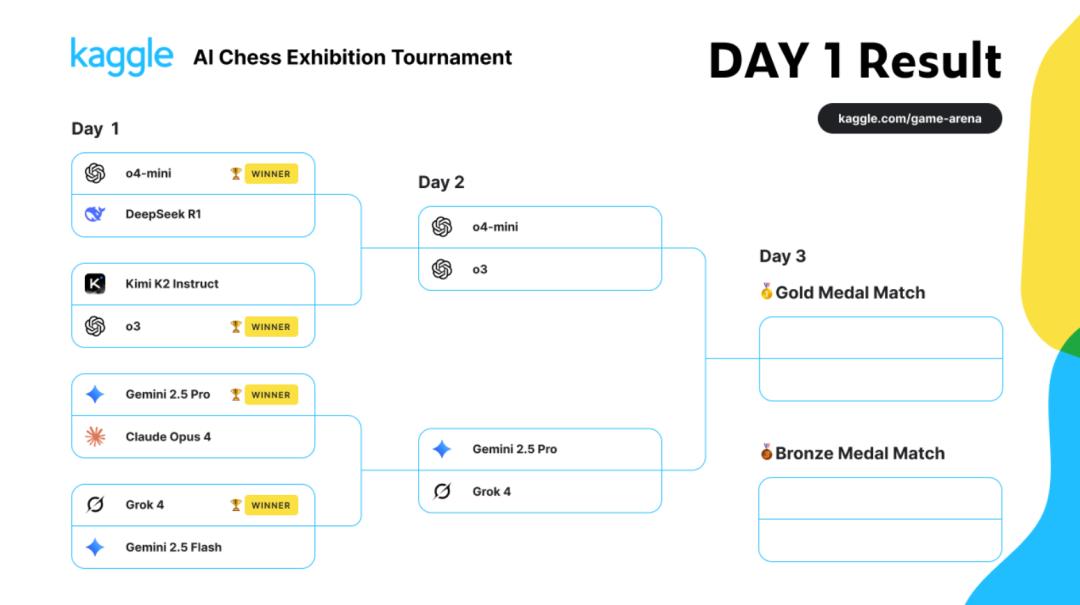
Group 1 - The core event is the first global AI chess championship organized by Google's Kaggle, featuring eight top language models competing against each other [1][3] - The competition includes both closed-source models like Gemini 2.5 Pro and OpenAI's o4-mini, and open-source models like DeepSeek R1 and Kimi K2 Instruct [1] - The tournament format is a knockout stage, with the first round resulting in four models advancing with a dominant 4-0 score [2][3] Group 2 - The semi-finals are set to take place the following day, featuring matchups between OpenAI's o3-mini and o3, and Gemini 2.5 Pro against Grok 4 [5] - The competition is hosted on a specially designed platform called "Game Arena," which aims to evaluate the models' performance in a gaming context [3][21] - The significance of the tournament extends beyond chess skills, serving as a test for AI's overall understanding and reasoning capabilities [21][22] Group 3 - Kimi K2 was disqualified due to illegal moves, while o3 advanced without contest [9][10] - DeepSeek R1 struggled in the middle game, leading to its defeat against o4-mini, which maintained a steady performance [11][13] - Claude 4 Opus fought hard but ultimately lost to Gemini 2.5 Pro after making a critical mistake [14][15] Group 4 - Grok 4 demonstrated exceptional performance, effectively identifying and exploiting weaknesses in its opponent, Gemini 2.5 Flash, winning decisively [17][20] - The tournament is seen as a testing ground for AI's strategic reasoning and adaptability in complex scenarios [21][22] - Kaggle's evaluation criteria include hundreds of unpublicized matches, indicating that the current tournament is just an initial assessment of general intelligence [22]

安徽:未来产业已来 青年“加速进场”
Zhong Guo Qing Nian Bao· 2025-08-03 01:59
Group 1: Future Industry Development in Anhui - Anhui is accelerating the layout of a future industry system focusing on innovation, quality project introduction, and talent cultivation, with an aim to form a competitive and self-controlled industry by 2027, targeting a scale of over 200 billion yuan and 500 billion yuan by 2030 [1][2] - The province is concentrating on seven key areas including quantum technology, aerospace information, general intelligence, low-carbon energy, life sciences, advanced materials, and future networks, along with third-generation semiconductors and blockchain [1][2] - The future industry in Anhui is characterized by high technological content, long transformation cycles, significant R&D investment, and high policy demand [1][2] Group 2: Quantum Technology and Nuclear Fusion - Anhui has established a strategic action plan for the commercial application of nuclear fusion energy, aiming for a three-step development strategy involving experimental, engineering, and commercial reactors [2][3] - The province has nearly 60 nuclear fusion energy enterprises, covering the entire industry chain from superconducting wire production to main equipment manufacturing [3] - Quantum technology is being applied in various fields, with over 70 quantum industry chain enterprises in Hefei, focusing on quantum computing, communication, and precision measurement [4][5] Group 3: Talent Development and Youth Involvement - The influx of young talent into future industries is notable, with companies like Zhixiang Future actively recruiting professionals from diverse backgrounds to enhance their AI capabilities [5][6] - Local enterprises are implementing training programs to develop skilled workers, with a focus on integrating local youth into the workforce [6][7] - The aerospace sector in Hefei is also expanding, with initiatives aimed at nurturing young scientists and providing them with practical applications in the industry [6][7] Group 4: Industry Integration and Innovation - Companies in Anhui are increasingly interconnected, with products becoming essential components in future industry supply chains, such as the IC carrier board produced by Chip聚德科技 [7][8] - The development of ultra-thin flexible glass by 中建材玻璃新材料研究院集团 showcases the province's innovation capabilities, with a significant proportion of the research team being young professionals [8][9] - The government is supporting future industries through the implementation of the "Anhui Province Future Industry Development Action Plan," which includes measures for technology innovation and industry clustering [9]
AI比人类还聪明!马斯克预测:不到两年AI将超越人类个体智慧,2030年前超越全人类智能总和【附人工智能行业市场分析】
Sou Hu Cai Jing· 2025-07-15 04:28
Group 1 - Tesla CEO Elon Musk predicts that AI intelligence will surpass individual human intelligence in less than two years and exceed the total human intelligence in about five years [2] - Musk emphasizes the current AI capabilities have surpassed most humans but not the top individuals or specialized teams, indicating a trajectory of "accelerating returns" driven by improvements in computing power, algorithms, and data [2] - The AI industry is rapidly transforming the world, with breakthroughs in large models enabling machines to possess language, vision, and reasoning capabilities, leading to trillion-dollar applications in areas like autonomous driving and smart manufacturing [3] Group 2 - The US and China are leading the global AI race, holding over 80% of AI patents and 90% of unicorn companies, with the US excelling in foundational research and hardware ecosystems, while China focuses on application-driven innovation [3] - As of Q1 2024, China's AI core industry scale is nearing 600 billion RMB, with a total of 478 large AI models released, ranking second globally after the US [6] - Experts suggest that AI technologies, particularly large models, are crucial for driving high-quality economic development in China, advocating for increased investment in foundational research to create a virtuous cycle between AI research and application [6]

李飞飞的世界模型,大厂在反向操作?
虎嗅APP· 2025-06-06 13:56
Core Viewpoint - The article discusses the emergence of World Labs, a startup founded by AI expert Fei-Fei Li, focusing on developing the next generation of AI systems with "spatial intelligence" and world modeling capabilities. This shift signifies a new direction in AI development beyond traditional language models [2][3]. Group 1: Company Overview - World Labs was founded in 2024 by Fei-Fei Li and has quickly raised approximately $230 million in funding, achieving a valuation of over $1 billion, making it a new unicorn in the AI sector [2]. - The company has attracted significant investment from major players in the tech and venture capital space, including a16z, Radical Ventures, NEA, Nvidia NVentures, AMD Ventures, and Intel Capital [2]. Group 2: Importance of World Modeling - Fei-Fei Li emphasizes the importance of world modeling, which refers to AI's ability to understand the three-dimensional structure of the real world, moving beyond mere language processing [9][10]. - The concept of world modeling is likened to how humans perceive and interact with their environment, integrating visual, spatial, and motion information to create a comprehensive understanding of the world [10][12]. Group 3: Key Technologies for World Modeling - Several key technologies are being explored to enable AI to understand and reconstruct three-dimensional worlds, including: - Neural Radiance Fields (NeRF), which allows AI to reconstruct a 3D world from 2D images [17]. - Gaussian Splatting, which enhances rendering speed and efficiency for real-time applications [19]. - Diffusion Models, which improve AI's ability to understand and generate three-dimensional content [20]. - Multi-view data fusion, enabling AI to integrate information from various angles to form a complete understanding of objects [21]. - Physics simulation and dynamic modeling, allowing AI to predict and understand the movement and interaction of objects in the real world [23]. Group 4: Applications of World Modeling - The applications of world modeling technology are extensive, including: - In the gaming industry, AI can automatically generate realistic 3D environments from images or videos [25]. - In architecture, AI can quickly create detailed spatial structures, significantly reducing design time [26]. - In robotics, enhancing robots' spatial understanding allows them to navigate and interact with their environment more effectively [26]. - Digital twins can be created for factories, buildings, and cities, enabling simulations for testing and optimization [27]. Group 5: Challenges Ahead - Despite the promising direction of world modeling, several challenges remain: - Data availability is crucial; AI requires extensive and diverse real-world data to learn effectively [31]. - Computational power is a significant barrier, as many current technologies demand high resources, making large-scale deployment challenging [32]. - Generalization ability is limited; AI models often struggle to adapt to unfamiliar environments [33]. Group 6: Future Vision - Fei-Fei Li envisions a future where AI not only sees and reconstructs the world but also participates in it, enhancing human capabilities rather than replacing them [42][43]. - The ultimate goal of AI development is to achieve General Artificial Intelligence (AGI), which requires spatial perception, dynamic reasoning, and collaborative abilities [46][47].

围观具身智能学术争论:机器人技术拐点仍未到来,行业需要纠偏
Di Yi Cai Jing· 2025-05-24 02:29
Core Viewpoint - The debate highlights the tension between technological idealism and practical realities in the robotics industry, particularly regarding the value of "special task research" in advancing embodied intelligence [1][11]. Group 1: Perspectives on Special Task Research - Xu Huazhe argues that while "special task research" is beneficial to the discipline, it has little utility in advancing embodied intelligence [2][3]. - Zhou Boyu counters that seemingly useless special tasks can drive scientific progress and are foundational to the development of embodied intelligence [2][3]. - The core disagreement revolves around the significance of targeted research for the industry, with Xu emphasizing the importance of standardized datasets and general models, while Zhou advocates for the necessity of addressing specific industrial needs [2][3]. Group 2: Industry Implications and Technical Challenges - The discussion has resonated with industry professionals, who recognize the importance of both technological iteration and practical engineering capabilities in the current stage of embodied intelligence [6][8]. - Zhang Lei, CEO of Hangzhou Taiwei Cloud Innovation, emphasizes the need for repeated training on specific tasks and scenarios, highlighting the importance of addressing practical engineering details [6][8]. - The complexity of training robots in real-world scenarios is underscored, with the need for a balance between real and simulated data to achieve accuracy and effectiveness [7][8]. Group 3: Industry Growth and Future Directions - The robotics industry in China is experiencing significant growth, with projections indicating that financing will exceed 60.5 billion to 71.5 billion yuan by April 2025, reflecting a 2-3 times increase from previous months [11]. - The VLA (Vision-Language-Action) model has become a focal point for companies showcasing their capabilities, although concerns are raised about the overemphasis on language understanding at the expense of practical applications [12]. - Both Xu and Zhou agree on the need for a long-term perspective in the industry, emphasizing that the competition and collaboration in robotics will be defined by attention to practical engineering details rather than just impressive demonstrations [12].

全球首个《人形机器人智能化分级》标准正式发布
机器人圈· 2025-05-23 12:24
Core Viewpoint - The establishment of the world's first "Humanoid Robot Intelligence Grading" standard (T/CIE 298-2025) aims to enhance the evaluation framework for humanoid robots, transitioning the industry from a "function-oriented" approach to "intelligent evolution" [1][2][6]. Group 1: Standard Development - The new standard was developed by leading organizations including the Beijing Humanoid Robot Innovation Center and various enterprises and research institutions, addressing the lack of evaluation standards in the humanoid robot industry [1][2]. - The standard introduces a "four-dimensional five-level" evaluation framework, creating a grading system from L1 to L5 for intelligent capabilities [2][3]. Group 2: Evaluation Framework - The evaluation framework consists of four core capability dimensions: Perception and Cognition (P), Decision Learning (D), Execution Performance (E), and Collaboration Interaction (C) [2][3]. - The standard provides 22 primary indicators and over 100 technical clauses, along with a common safety baseline and typical application scenarios, serving as a reference for product design and performance benchmarking [3]. Group 3: Capability Descriptions - Perception and Cognition: Humanoid robots should acquire, process, and understand environmental and self-state information, enabling reasoning and knowledge application [3][4]. - Decision Learning: Robots must utilize methods like large models and reinforcement learning to achieve precise perception, logical reasoning, and dynamic decision-making [4]. - Execution Performance: Robots should support precise control of joint movements and complex task execution, including mobility and dynamic balance [4]. - Collaboration Interaction: Robots must communicate and collaborate safely and efficiently with humans and other intelligent agents [5]. Group 4: Future Implications - The implementation of the grading standard is expected to facilitate the transition from "demonstrative intelligence" to "general intelligence" in humanoid robots, enabling large-scale applications across various sectors such as special operations, logistics, industrial manufacturing, education, and healthcare [6][8]. - The standard aims to provide a unified technical language and evaluation tools for the industry, promoting market order and guiding technological development [6][8].