
2030愿景

Search documents
专访丨中国是沙特旅游业发展的重要合作伙伴——访沙特旅游大臣艾哈迈德·哈提卜
Xin Hua Wang· 2025-11-11 00:55
Core Insights - Saudi Arabia views China as a crucial partner in the development of its tourism industry, which is a key pillar of the "Vision 2030" initiative [1][2] - The goal is to attract 5 million Chinese tourists by 2030, with an overall target of 150 million visitors, including 50 million international tourists [1][2] Group 1: Tourism Development Goals - Saudi Arabia aims to receive 116 million visitors in 2024, with 30 million being international tourists, exceeding initial projections [1] - The target for 2030 has been revised to 150 million visitors, including 50 million international tourists [1] Group 2: Collaboration with China - Saudi Arabia has established a representative office in China and maintains close cooperation through chambers of commerce and committees [2] - Regular flights exist between major Chinese cities and Saudi Arabia, and partnerships with Chinese tourism platforms are in place to enhance market promotion [2] - The number of Chinese tourists visiting Saudi Arabia is expected to rise to 500,000 by 2025, up from approximately 100,000 three years ago [2] Group 3: Infrastructure and Services - Saudi Arabia is making significant efforts in infrastructure and service improvements to cater to the needs of Chinese tourists [2] - Chinese companies are playing a vital role in the construction of tourism and hotel projects in Saudi Arabia, particularly in infrastructure and large cultural tourism projects [2]
中国是沙特旅游业发展的重要合作伙伴——访沙特旅游大臣艾哈迈德·哈提卜
Xin Hua She· 2025-11-10 13:57
Group 1 - The core viewpoint is that Saudi Arabia views China as a crucial partner in the development of its tourism industry, which is a key pillar of the "Vision 2030" initiative [1][2] - Saudi Arabia aims to attract 5 million Chinese tourists by 2030, with an overall target of 150 million tourists, including 50 million international visitors [1] - The country has launched several tourism projects, including the Red Sea tourism project and new destinations like AlUla and Diriyah, alongside infrastructure developments such as Riyadh Air and King Salman International Airport [1] Group 2 - Saudi Arabia has established a representative office in China and has regular flights between cities like Beijing and Shanghai, indicating strong bilateral tourism cooperation [2] - The number of Chinese tourists visiting Saudi Arabia is expected to rise from 100,000 three years ago to 500,000 by 2025, reflecting significant growth potential [2] - Chinese companies are playing a vital role in the construction of tourism and hotel projects in Saudi Arabia, particularly in infrastructure and large cultural tourism projects [2]
首届中埃投资论坛在开罗举行
Xin Hua Wang· 2025-11-10 03:20
Core Points - The first China-Egypt Investment Forum was held in Cairo, attracting over 200 Chinese and Egyptian companies to explore new investment cooperation opportunities [1] - Egypt aims to enhance cooperation with China in investment and trade, focusing on attracting more Chinese enterprises to invest in Egypt and expanding joint production and export bases [1] - China has been Egypt's largest trading partner for 13 consecutive years, with nearly 200 companies established in the China-Egypt Suez Economic and Trade Cooperation Zone [1] - The forum included discussions on investment policies and business environments, as well as sub-forums on textiles, machinery, new energy, and digital economy [1] Investment and Trade Cooperation - Egypt's Minister of Investment and Foreign Trade emphasized the importance of balancing trade and investment relations to support local manufacturing and increase product value [1] - The Chinese Deputy Minister of Commerce highlighted the significance of the China-Egypt partnership in achieving mutual development and stability in investment cooperation [1] - The Chinese Ambassador to Egypt noted that China is one of the most active and fastest-growing investors in Egypt, aligning the Belt and Road Initiative with Egypt's Vision 2030 [1] Forum Activities - The forum was co-hosted by the Chinese Embassy in Egypt, the Egyptian Investment and Free Zones Authority, and the Egyptian Entrepreneurs Association [1] - It featured the first meeting of the China-Egypt Investment Working Group and the intergovernmental coordination committee for the Suez Economic and Trade Cooperation Zone [1]
沙特,正在蜕变!
Huan Qiu Shi Bao· 2025-11-05 14:28
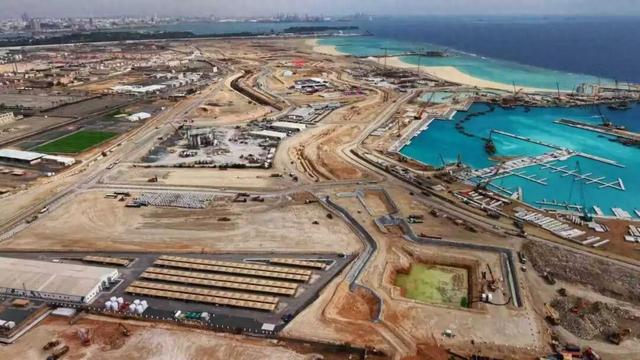
Core Insights - Saudi Arabia is undergoing significant transformation under the "Vision 2030" initiative, aiming to diversify its economy away from oil dependency and promote modernization [4][9] - The "New Future City" project in Jeddah exemplifies the integration of Chinese technology in construction, showcasing advancements in smart city development [5][4] - The introduction of policies to attract multinational companies has led to the establishment of regional headquarters in Saudi Arabia, exceeding initial targets [7][4] Group 1: Economic Diversification - The "Vision 2030" initiative was launched in response to the 2014 oil price crash, aiming to reduce reliance on oil and promote economic diversification through 96 specific goals [4][9] - As part of this vision, Saudi Arabia has successfully attracted around 660 international companies to establish regional headquarters, surpassing the goal of 500 by 2025 [7] - The collaboration with Asian countries, particularly China, has intensified, with Chinese companies playing a crucial role in infrastructure projects [4][5] Group 2: Technological Integration - The "New Future City" project incorporates advanced technologies such as real-time 3D visualization and AI, tailored to local climate and cultural needs [5][4] - Chinese technology is now preferred over traditional Western methods, providing customized solutions for construction in Saudi Arabia [5] - The integration of smart technologies is evident in projects like autonomous vehicles being tested in smart city environments [7][8] Group 3: Cultural and Social Changes - The transformation includes a focus on women's empowerment, with initiatives aimed at increasing female participation in the workforce, projected to reach a labor participation rate of 37% by 2024 [9] - Traditional and modern elements coexist in Saudi society, with young people blending cultural heritage with contemporary lifestyles [2][11] - The tourism sector is being revitalized by combining traditional culture with modern tourism strategies, enhancing Saudi Arabia's global image [11]

ETF及指数产品网格策略周报(2025/11/5)
华宝财富魔方· 2025-11-05 09:40
Core Viewpoint - The article discusses investment opportunities in ETFs that align with China's economic and military development plans, particularly focusing on the military, new economy sectors, and Saudi Arabia's economic diversification efforts [3][4][6][8]. Group 1: Military Sector ETF - The Military Leaders ETF (512710.SH) is expected to benefit from China's 2025 defense budget of 1.81 trillion yuan, which represents a 7.2% increase year-on-year, marking a historical high. However, this budget still accounts for less than 1.3% of China's GDP, significantly lower than the U.S. and Russia [3][4]. - The ETF tracks the CSI Military Leaders Index, investing in leading companies in aerospace, missiles, and drones, which are poised to gain from a new round of military procurement cycles [4][5]. Group 2: New Economy ETF - The Hang Seng New Economy ETF (513320.SH) aligns with the "14th Five-Year Plan" that emphasizes high-level technological self-reliance and the capture of opportunities from the new technological revolution [6][7]. - This ETF tracks the Hang Seng Hong Kong Stock Connect New Economy Index, covering sectors such as the internet, semiconductors, innovative pharmaceuticals, and new energy, which are expected to benefit from China's industrial upgrade and technological development [6][7]. Group 3: Saudi Arabia ETF - The Saudi ETF (159329.SZ) is linked to Saudi Arabia's Vision 2030 plan, which aims to reduce oil dependency and diversify the economy [8][9]. - The ETF's holdings reflect this diversification, with over 40% in the financial sector and more than 20% in consumer and technology sectors, while traditional fossil fuels account for only about 10% [8][9].

ETF及指数产品网格策略周报-20251105
HWABAO SECURITIES· 2025-11-05 09:02
Group 1 - The report outlines a grid trading strategy, which is essentially a high buy low sell trading approach that capitalizes on price fluctuations without predicting market trends, making it suitable for volatile markets [4][12] - Characteristics of suitable grid trading targets include selecting on-market assets, stable long-term trends, low transaction costs, good liquidity, and high volatility, with equity ETFs being identified as appropriate for this strategy [4][12] Group 2 - The report highlights key ETFs for grid trading strategies, including the Military Industry Leader ETF (512710.SH), which is expected to benefit from a new round of military procurement driven by the "14th Five-Year Plan" and the upcoming "15th Five-Year Plan," with a projected defense budget of CNY 1.81 trillion for 2025, a 7.2% increase year-on-year [4][13] - The Hang Seng New Economy ETF (513320.SH) is noted for its potential to capture the benefits of China's industrial upgrade and technological development, tracking the Hang Seng New Economy Index, which includes leading companies in internet, semiconductors, innovative pharmaceuticals, and new energy sectors [5][16] - The Saudi ETF (159329.SZ) is recognized as a tool to capture long-term economic transformation opportunities under Saudi Arabia's "Vision 2030," which aims to diversify the economy away from oil dependency, with over 40% of its holdings in the financial sector and significant allocations in consumption and technology [6][18]
启动近十年,“2030愿景”让沙特蜕变
Huan Qiu Shi Bao· 2025-11-05 02:55
本报赴沙特特派记者 郝瑞敏 当飞机的起落架在沙特吉达市阿卜杜勒-阿齐兹国王国际机场的跑道上轻轻触地时,舷窗外的阿拉伯半 岛正被清晨的阳光镀上一层金褐色。《环球时报》记者回想起十年前见到的沙特,脑海中浮现的总是一 幅遥远而固化的图景——身着传统白袍的男性、披着黑色罩袍的女性、在广袤沙漠间延伸的石油管道, 以及一种与现代快节奏生活大相径庭的从容。而此次沙特之行中,当记者看到施工中的吉达"新未来 城"、对话首都利雅得的青年男女时,过去的印象正逐渐被打破。这背后,是沙特自2016年开启的"2030 愿景"转型大计。而这场观察"变化"的旅程,从落地的第一分钟就已开始。 "新未来城"用上中国技术 进入入境大厅,没有想象中长长的人工查验队伍,取而代之的是一排电子签证机,屏幕上用阿拉伯语和 英语清晰标注着操作步骤。当《环球时报》记者按指引完成护照扫描、面部信息录入、指纹采集、费用 支付等流程并拿到电子签证单时,仅过去了5分钟。随后,海关查验环节更是"无缝衔接"。海关官员接 过记者的护照,扫描签证单上的二维码,屏幕上立即出现入境信息。没有多余询问,他便微笑着将护照 递回,说道:"欢迎来到吉达。"吉达是沙特第二大城市、第一大港, ...
记者手记:启动近十年,“2030愿景”让沙特蜕变
Huan Qiu Shi Bao· 2025-11-04 22:53
Core Insights - Saudi Arabia is undergoing significant transformation under the "Vision 2030" initiative, aiming to diversify its economy away from oil dependency and promote social reforms [3][5][6] Group 1: Economic Transformation - The "Vision 2030" plan includes 96 specific goals to reshape the country's development path, focusing on reducing oil reliance and enhancing economic diversification [3] - As part of this vision, Saudi Arabia has introduced the "Regional Headquarters Program," attracting multinational companies to establish regional offices, exceeding its target of 500 companies by 2025 with around 660 companies already onboard [5] - The construction of "New Future City" is a key project that integrates green energy, smart technology, and ecological living, showcasing the shift towards modern urban development [3][4] Group 2: Technological Integration - Chinese technology is playing a significant role in the development of Saudi projects, particularly in construction, where real-time 3D visualization and virtual reality are utilized to enhance project presentations [4] - The collaboration between Saudi Arabia and China extends to various sectors, including artificial intelligence and smart city initiatives, indicating a strong partnership in technological advancement [5] Group 3: Social Reforms - The labor participation rate of eligible women in Saudi Arabia is projected to reach 37% by 2024, reflecting significant progress in women's empowerment as part of the "Vision 2030" strategy [6] - Reforms have led to increased opportunities for women in various fields, including technology and entrepreneurship, marking a shift in societal norms [6] Group 4: Cultural Integration - Saudi Arabia is blending traditional culture with modern tourism and cultural industries, as seen in the popularity of historical sites like Jeddah's Old Town, which received over 2.5 million visitors last year [7][8] - The younger generation is actively engaging in cultural preservation while integrating modern elements, indicating a dynamic cultural landscape [8] Group 5: Challenges and Opportunities - Despite the progress, challenges remain, such as the low contribution of high-tech industries to the economy and the need for improved efficiency in departmental coordination [8] - The private sector's contribution to GDP stands at 47%, which is below the targets set in the "Vision 2030" plan, highlighting the need for continued efforts in economic diversification [8]
沙特投资大臣:“2030愿景”目标的85%已完成或正在按计划实现
Shang Wu Bu Wang Zhan· 2025-10-28 04:35
(原标题:沙特投资大臣:"2030愿景"目标的85%已完成或正在按计划实现) 阿拉比亚新闻网10月26日报道,沙特投资大臣哈立德·法利赫周日表示,截至 2024 年底,沙特 "2030 愿景"目标的85%已经完成或正在按计划实现。 法利赫在利雅得举行的财富全球论坛上表示:"我们在经济和社会转型方面取得了显著进展。截至 2024年底,我们85%的举措已经完成或正在按计划实现,大多数目标都已达到或超过。" 法利赫在本周开幕的未来投资倡议 (FII) 年度会议前夕介绍了进展情况,并补充说,目前已有 675 家公司将地区总部设在利雅得。敦促跨国公司将其中东总部迁至利雅得是 2030 计划的一部分。 "2030愿景"包括一系列举措,旨在使沙特经济多元化,摆脱对石油的依赖,实现社会现代化,并将 其定位为全球投资和旅游中心。 ...
低油价冲击沙特“2030愿景”
Zhong Guo Hua Gong Bao· 2025-10-22 02:36
石油输出国组织(OPEC)的增产计划本身也引发争议。据路透社援引消息人士称,沙特希望大幅提高产 量配额,且增幅远超俄罗斯的预期。此类举措虽可能帮助沙特夺回市场份额,却会给油价带来额外下行 压力。对此,OPEC已公开驳斥路透社相关报道,称"日增产50万桶"的说法"完全不实"。这场分歧凸显 出沙特面临的核心困境:其财政健康依赖稳定的油市,但为维护长期市场影响力制定的生产策略,却可 能牺牲短期油价稳定。 沙特阿拉伯宏伟的"2030愿景"正遭遇冰冷财政现实的冲击。近日,惠誉评级公司发出警告,随着油价走 软与政府支出激增,沙特政府面临的财务风险不断上升,该国的经济去石油计划恐受威胁。 惠誉表示,沙特最终需通过"适度削减支出、稳定石油收入、持续扩大非石油收入"来实现财政收紧。但 该国经济对油价波动的脆弱性依然显著,尽管"2030愿景"的核心目标之一是打破对原油的依赖,但就目 前而言,沙特的财政状况仍受制于油价涨跌。 数据清晰且残酷地揭示了沙特当前的困境:沙特预计2025年预算赤字将达到GDP的5.3%,几乎是年初 2.3%预测值的两倍。惠誉指出,赤字恶化主要源于石油收入下滑,尽管非石油收入保持稳定,但不足 以填补石油收入 ...