产业转型升级

Search documents
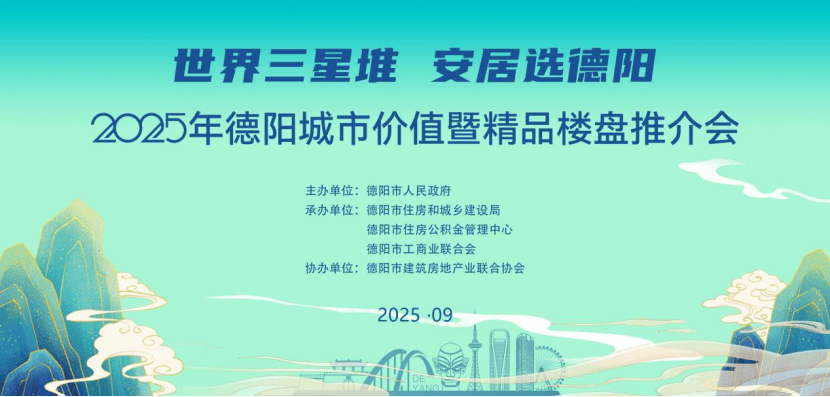
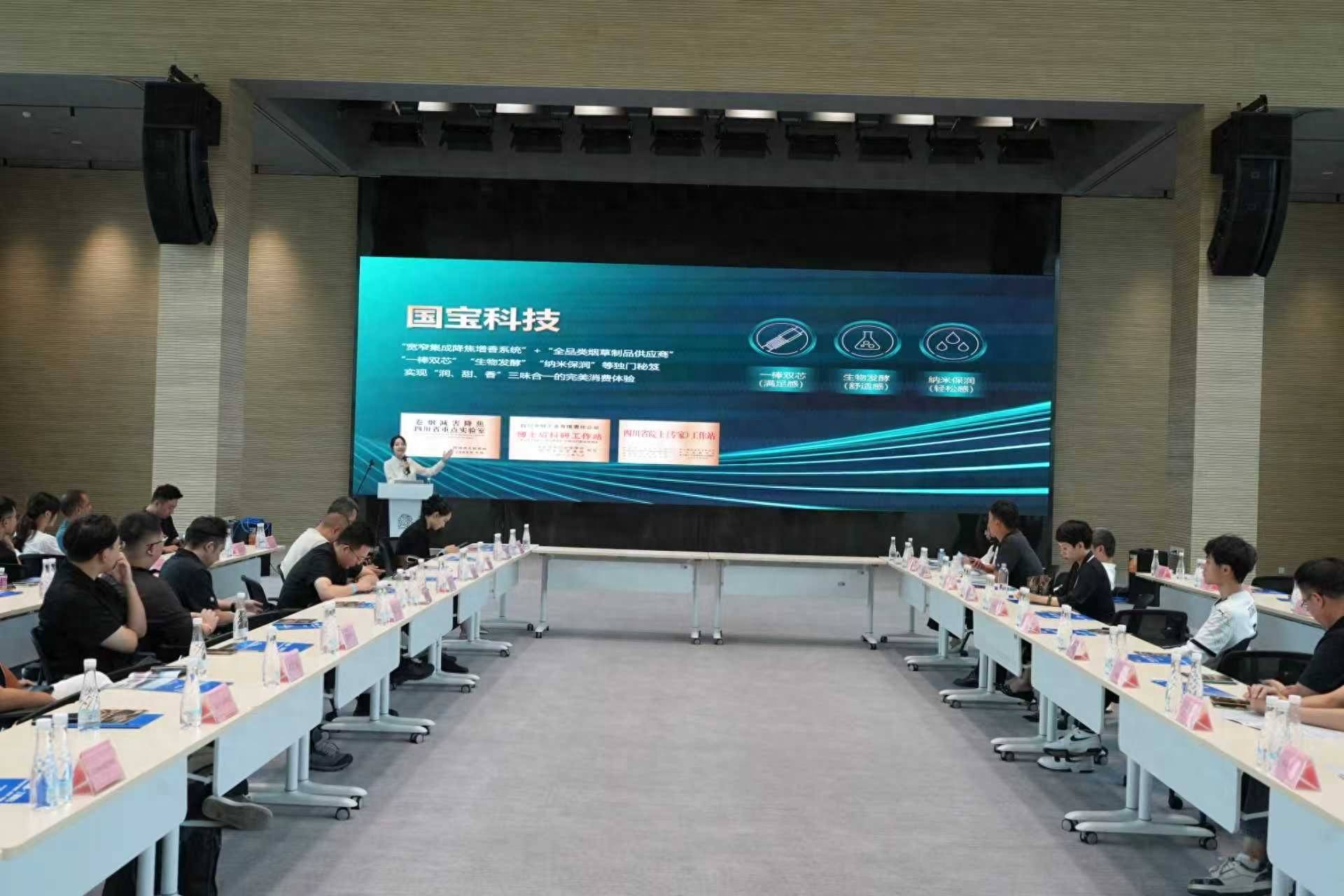
“世界三星堆 安居选德阳”2025年德阳城市价值暨精品楼盘推介会(甘肃兰州站)成功举行
Sou Hu Cai Jing· 2025-09-20 11:56
Core Points - The event "World Sanxingdui, Choose Deyang for Living" aims to showcase Deyang's urban charm and development potential to residents of Lanzhou and the Northwest region [1][10] - Deyang and Lanzhou share a historical connection rooted in ancient Chinese civilization, with both cities being significant industrial bases during the Third Front construction period [3][5] - Deyang is positioned as a livable, business-friendly, and tourist-friendly city, with a modern industrial system and a strong job market [7][8] Urban Development - Deyang has a permanent population of 3.456 million and is the closest prefecture-level city to Chengdu, with a travel time of just 23 minutes by high-speed train [7] - The city offers over 500 public services that can be accessed online, enhancing the convenience for residents [7] - Deyang's industrial output exceeds 480 billion, with over 1,600 industrial enterprises, making it a key player in China's major equipment manufacturing sector [7] Cultural and Tourism Aspects - Deyang is the birthplace of ancient Shu civilization, featuring significant cultural sites and natural landscapes, contributing to its appeal as a tourist destination [8] - The city is developing a new cultural tourism framework centered around the Sanxingdui site and aims to establish itself as an international tourism city [8] Real Estate Market - Deyang is actively promoting its real estate market to meet diverse housing needs, showcasing 16 premium real estate projects during the promotional event [10] - The city is focused on creating a stable and healthy real estate environment for investors and homebuyers [10] Community Engagement - The promotional event included local specialties and cultural products, providing an immersive experience for attendees [12] - Activities such as "Full Moon Mid-Autumn Festival Welcoming National Day" were organized to engage with local communities [14]

以高质量发展降低资源环境代价
Jing Ji Ri Bao· 2025-09-20 01:42
Core Viewpoint - High-quality development is the primary task for building a modern socialist country, emphasizing the need for coordinated advancement of high-quality development and high-level protection to enhance green development momentum and reduce resource and environmental costs [1][2]. Group 1: Economic and Environmental Context - China's rapid economic growth since the reform and opening-up has come at a significant cost to natural resources and the environment, leading to increasing constraints on sustainable development due to resource shortages and environmental degradation [1]. - The country faces high dependence on foreign energy resources, which exposes it to international market price fluctuations and impacts energy supply security [1]. - Severe environmental pollution issues, including air, water, and soil pollution, threaten public health and hinder sustainable economic development [1]. Group 2: Green Transformation and Development - The current phase of economic and social development in China is focused on accelerating green and low-carbon high-quality development, with ecological civilization construction facing unprecedented challenges [2]. - A comprehensive green transformation of the economy and society is necessary, emphasizing the importance of a green development philosophy and mechanisms across all sectors, including planning, investment, and consumption [2]. - The goal is to establish a green, low-carbon, circular economic system that limits economic activities and human behaviors within the capacity of natural resources and ecological environments [2]. Group 3: Industrial Upgrading and New Production Forces - There is a need for comprehensive industrial transformation and upgrading, which includes phasing out outdated production capacity and promoting the green, intelligent, and digital transformation of traditional industries [2]. - Strategic emerging industries, such as energy conservation, high-end equipment manufacturing, and new-generation information technology, are identified as future growth engines due to their low resource consumption and high added value [2]. - The development of new productive forces centered on technological innovation is crucial for leading production method changes and accelerating the upgrade of traditional industries while fostering new industries [3].
穗恒运A(000531) - 000531穗恒运A投资者关系管理信息20250919
2025-09-19 09:44
Group 1: Company Performance and Projects - The company is actively seeking new development projects in line with national energy policies, focusing on "electricity, heat, hydrogen, and storage" sectors [1] - Recent projects include the East District Gas Power and Shantou Photovoltaic projects, with ongoing developments in Knowledge City Gas Power and other energy-related projects [1] - The company has invested in modern hydrogen technology, holding a 45% stake in a joint venture with a registered capital of CNY 13 million [2] Group 2: Share Buyback and Stock Performance - The company approved a share buyback plan on December 18, 2024, with a budget of CNY 50 million to CNY 100 million, aiming to maintain company value and shareholder rights [2][4] - As of March 17, 2025, the company repurchased 9,597,000 shares, representing 0.92% of total shares, at prices ranging from CNY 5.74 to CNY 6.49 per share, totaling CNY 59,766,205 [2][4] - The company's stock price has fallen below net asset value, prompting discussions on further buybacks or potential increases in shareholding by major shareholders [4] Group 3: Corporate Governance and Investor Relations - The company has established a risk control and compliance committee to enhance operational standards and reduce business risks [3] - Continuous efforts are being made to improve communication with investors and the market, aiming to enhance understanding and recognition of the company's value [3] - The company has maintained a consistent cash dividend policy for 13 years, emphasizing commitment to shareholder returns [3]

线下拓展+线上展销 成都酒水饮料产业加快“出川出海”
Sou Hu Cai Jing· 2025-09-19 09:04
Core Insights - The event aims to empower the beverage industry in Chengdu by facilitating direct communication between production and sales sectors, focusing on the transformation and upgrading of the industry [1][4] - Chengdu's liquor production area is a significant base for the liquor industry in Sichuan and nationwide, with nearly 40 production and trade enterprises participating in the event [1][4] Group 1: Industry Development - The Chengdu beverage industry is at a critical stage for quality improvement and efficiency enhancement, with the event designed to connect local production enterprises with various sales channels such as restaurants, supermarkets, and e-commerce [4][6] - The "Chenggong Jingxiao· Industrial Taobao" platform has been launched to facilitate product display and sales, allowing enterprises to join for free and promoting Chengdu's quality products to broader markets [1][10] Group 2: Production and Sales Interaction - Production enterprises expressed a need for more sales channels, particularly in e-commerce, to enhance product promotion and visibility [6][8] - Local supermarkets are encouraged to collaborate with production enterprises to expand their sales reach, with companies like Hongqi Chain offering support to local businesses [8][10] Group 3: Event Highlights - The event featured an immersive factory tour showcasing the whiskey production process, highlighting the establishment of China's first whiskey tourism experience center [3] - Several production companies showcased their products on-site, emphasizing their unique stories and awards, aiming to deepen ties with local culture and businesses [8]

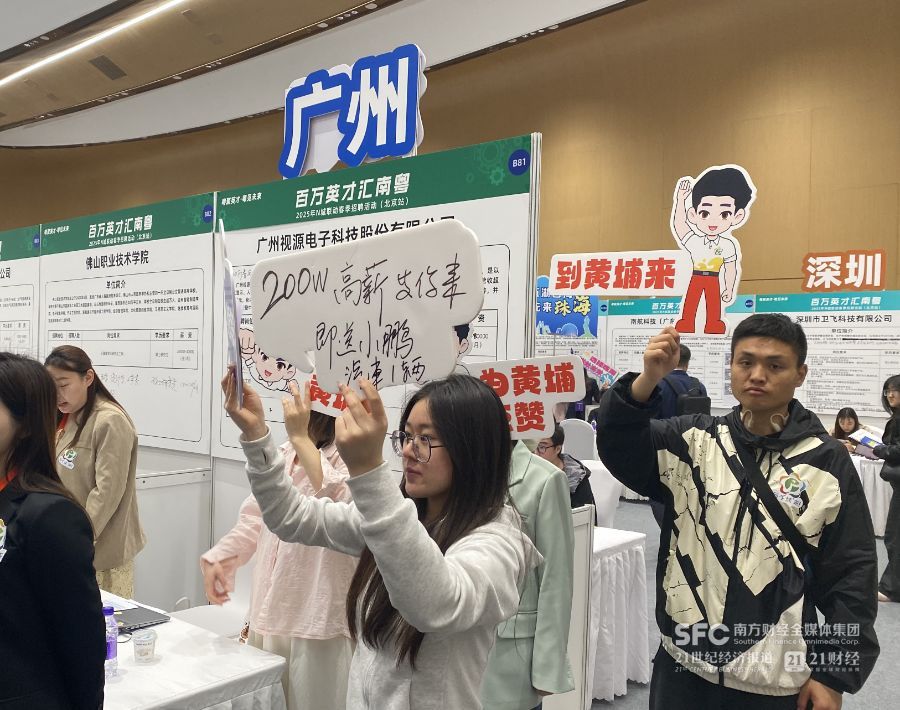
超8万个岗位释放!这场秋招“头炮”创规模新高
2 1 Shi Ji Jing Ji Bao Dao· 2025-09-19 04:32
Core Insights - The "Million Talents Gather in South Guangdong" 2025 N-City Linked Autumn Recruitment Event will officially launch in late September, with the Beijing-Tianjin-Hebei region's universities as the starting point, co-hosted by Guangzhou, Qingyuan, and Meizhou [1] - Guangzhou has attracted over 2,400 enterprises, releasing more than 80,000 job positions, with a record high recruitment scale [2][3] Recruitment Scale and Participation - Guangzhou is offering over 70,000 job positions, significantly increasing participation from spring recruitment with over 700 additional enterprises and a net increase of over 10,000 job positions [2] - More than 1,500 enterprises will participate in on-site recruitment, providing a total of 66,200 job positions [1][2] Quality of Job Positions - The recruitment event features a diverse array of high-quality job opportunities, including positions for R&D engineers, electrical engineers, algorithm engineers, product managers, and various professional roles such as doctors and teachers [3][6] - The proportion of high-education positions has significantly increased, with 7,881 positions for PhDs, 13,611 for Master's degrees, and 39,780 for Bachelor's degrees [4][5] Strategic Industry Focus - The recruitment aligns closely with Guangdong's 20 strategic industry clusters and Guangzhou's "12218" modern industrial system, ensuring a precise match between university talent and industry needs [7][10] - Specialized recruitment sessions are tailored to attract talent for strategic emerging industries such as intelligent connected vehicles, modern finance, and biomedicine [9][10] Employer Participation - The event features participation from various leading enterprises, including Fortune 500 companies and national manufacturing champions, providing a robust selection of job opportunities [3][6] - Notable participating companies include GAC Group, Guangzhou Pharmaceutical Group, and Xpeng Motors, among others [3]
花王生态工程股份有限公司关于向全资子公司增资的公告
Shang Hai Zheng Quan Bao· 2025-09-18 19:33
Group 1 - The company will increase its capital in its wholly-owned subsidiary, Suzhou High-tech Zone Chenshun Haijing Management Consulting Co., Ltd., by RMB 150 million [3][5] - The increase in capital has been approved by the company's board of directors and does not require shareholder approval [3][6] - This capital increase is not considered a related party transaction or a major asset restructuring [4][7] Group 2 - The registered capital of the subsidiary will increase from RMB 10 million to RMB 160 million after the capital increase [5] - The funds for the capital increase will come from the company's own funds [8] - The investment is aimed at accelerating the company's strategic planning and is expected to enhance its overall competitiveness [8][9] Group 3 - The company plans to provide guarantees for its subsidiaries in 2025, with a total expected guarantee amount of RMB 550 million [12][13] - The guarantees will support the subsidiaries' business development and funding needs [26] - The board of directors has approved the guarantee plan, which will be submitted for shareholder approval [14][27] Group 4 - The company intends to change its name to Danyang SynGen Intelligent Technology Co., Ltd. to better align with its business transformation [51][54] - The name change is part of the company's strategy to enhance brand recognition and market influence [54][56] - The proposed name change and amendments to the company’s articles of association will require shareholder approval [52][56] Group 5 - The company has proposed to reappoint Lixin Zhonglian Accounting Firm as its auditor for the 2025 fiscal year [59][68] - The audit fee for 2025 is expected to be around RMB 1.5 million, which is consistent with the previous year's fees [67] - The decision to reappoint the auditor has been approved by the board and will be submitted for shareholder approval [69][70]

广东南控一号产业投资基金招GP
FOFWEEKLY· 2025-09-17 10:07
Core Viewpoint - Guangdong Nankong No.1 Industrial Investment Partnership (Limited Partnership) is actively promoting industrial transformation and upgrading in Foshan's Nanhai District by recruiting excellent institutions for its sub-fund management [1] Group 1: Fund Overview - The Nankong Mother Fund has a total scale of 2 billion yuan and operates in a market-oriented manner [1] - The fund is established by Guangdong Nankong Holding Group and its subsidiary, Guangdong Nankong Venture Capital Fund Management Co., Ltd., which also manages the fund [1] Group 2: Investment Focus - The sub-funds will focus on strategic pillar industries such as machinery equipment, automotive, and home furnishings, as well as strategic emerging industries like new energy, new materials, next-generation electronic information, and new biomedicine [1] - Key areas of investment also include digital economy and intelligent robotics [1] Group 3: Investment Mechanism - The Nankong Mother Fund will engage in equity investment by co-founding private equity funds with social capital or by increasing capital and acquiring equity in already established private equity funds [1]

应用场景超800个、打造上千智能工厂 AI赋能产业转型升级
Yang Shi Xin Wen Ke Hu Duan· 2025-09-17 07:56
Core Insights - The press conference highlighted the progress of central enterprises in achieving high-quality development during the "14th Five-Year Plan" period [1] Group 1: Industrial Transformation and Upgrading - The pace of industrial transformation and upgrading has accelerated significantly during the "14th Five-Year Plan" [1] - The "AI+" initiative has deployed over 800 application scenarios [1] Group 2: Digital Transformation - The digital transformation initiative has established 1,854 smart factories [1] - Energy consumption per unit of output and carbon dioxide emissions per unit of output have decreased by 12.8% and 13.9%, respectively [1] Group 3: Characteristics of Central Enterprises - High-end, intelligent, and green development has become a prominent feature of central enterprises [1]
从郑煤机到中创智领,改变的是什么?
Sou Hu Cai Jing· 2025-09-17 03:07
Group 1 - The core viewpoint of the articles emphasizes the strategic transformation and rebranding of companies in Henan, particularly the renaming of Zhengzhou Coal Mining Machinery Group to Zhongchuang Zhiling Group, which signifies a fundamental reshaping of future positioning and strategic layout [1][2][3] - Zhongchuang Zhiling Group aims to accelerate the upgrade of high-end equipment and intelligent manufacturing industries, aspiring to become a globally competitive industrial intelligent technology group valued at hundreds of billions [1] - The company has signed cooperation agreements with major firms like Lenovo, Deloitte, and Huawei to promote industrial intelligence development through technology research, talent cultivation, and market expansion [1] Group 2 - The trend of renaming among listed companies in Henan reflects a broader strategic transformation, allowing companies to reshape their brand image and adapt to global market competition [2][3] - In the first half of the year, Henan's A-share listed companies reported total revenue of 508.77 billion and net profit of 44.80 billion, indicating growth in both revenue and profit [3] - The collective rebranding efforts of Henan companies are aimed at enhancing their international appeal and competitiveness, contributing to the formation of a collective brand effect on the international stage [3]

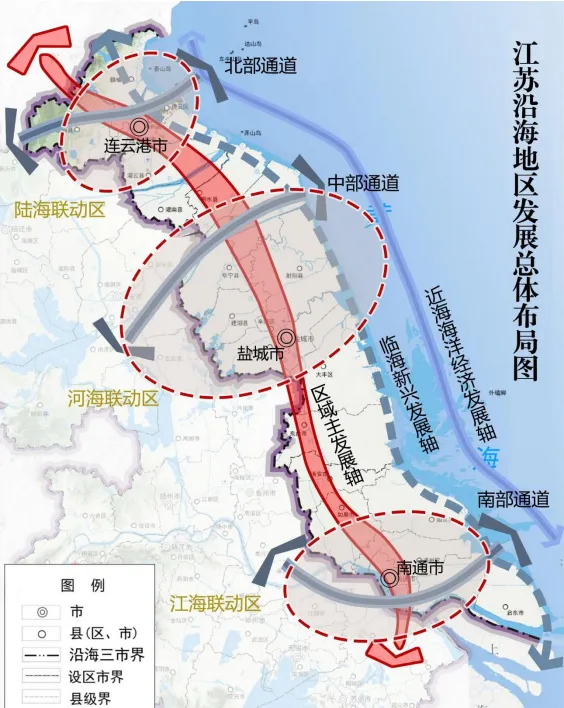
“短板”破万亿,沿海大省再踩油门
Mei Ri Jing Ji Xin Wen· 2025-09-16 14:48
Core Viewpoint - Jiangsu province is focusing on enhancing its coastal economic development to leverage its marine resources and improve its position in the national marine economy landscape, as it has lagged behind other provinces despite its rich marine resources and strategic location [1][3][4]. Economic Overview - The national marine economy is projected to exceed 10 trillion yuan in 2024, accounting for 7.8% of the GDP, with Jiangsu's marine economy recently surpassing the 1 trillion yuan mark, reaching 10046.2 billion yuan [1][4]. - Jiangsu ranks sixth in marine economic output among provinces, trailing behind Guangdong, Shandong, Fujian, Zhejiang, and Shanghai [1][4]. Development Challenges - Jiangsu's coastal cities (Nantong, Yancheng, Lianyungang) account for nearly one-third of the province's land area and about one-quarter of its population, yet their GDP contribution is only 18.1%, falling short of the 20% target set for 2025 [3][4]. - The marine economy's contribution to Jiangsu's GDP is only 7.3%, which is below the national average and significantly lower than Guangdong's marine economic output [9]. Industry Structure - Jiangsu's marine economy is heavily weighted towards secondary industries, with insufficient development in the tertiary sector, particularly in marine services [9][10]. - The province has a strong foundation in traditional marine industries, such as shipbuilding and marine engineering, leading the nation in several key metrics [11]. Transformation and Innovation - The provincial government is emphasizing technological innovation as a key driver for transforming the marine industry, aiming to establish Jiangsu as a hub for marine economic development and technology transfer [10][12]. - The "14th Five-Year Plan" for marine economic development outlines the need for a modern marine industry system, focusing on traditional industry transformation and the enhancement of emerging industries [10]. Regional Collaboration - Jiangsu's coastal cities need to identify and amplify their comparative advantages to enhance their contributions to the marine economy [15][16]. - The recent coastal and marine spatial planning aims to create a cohesive development framework, promoting collaboration among the three coastal cities to optimize resource allocation and enhance overall competitiveness [18][22].