京津冀协同发展

Search documents
京雄城际运行五载运送旅客超1300万人次
Xin Lang Cai Jing· 2025-12-27 23:52
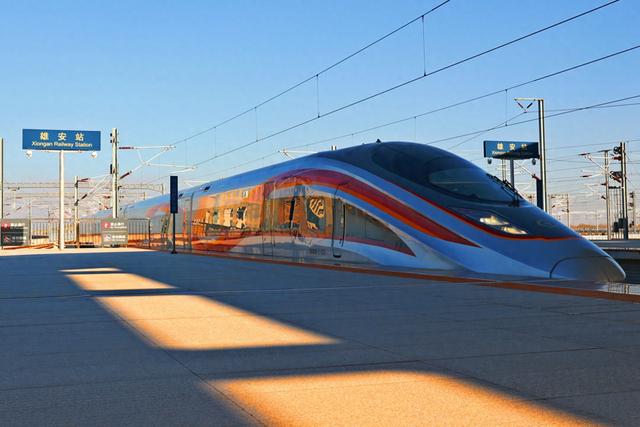
Core Insights - The Beijing-Xiong'an Intercity Railway has celebrated its fifth anniversary, having transported over 13 million passengers since its inception, with daily train services increasing from 32 to 59, highlighting its role as a vital transportation link in the Beijing-Tianjin-Hebei region [1][2] Group 1: Operational Highlights - The railway connects Beijing with Xiong'an New Area and Daxing International Airport, creating a multi-dimensional transportation network that enhances business travel and international connectivity [2] - The fastest travel time from Xiong'an Station to Daxing International Airport is now 19 minutes, providing efficient options for travelers [2] Group 2: Service Enhancements - Daxing Airport Station has implemented service upgrades, including improved signage systems and the addition of free charging stations, facilitating seamless transfers between high-speed rail and air travel [2] - The "Xingxin Xiangyin" initiative has been established to enhance cooperation between the railway and airport, ensuring a smooth transition for passengers [2] Group 3: Future Developments - The upcoming opening of the Tianjing-Xiong'an Intercity Railway by the end of 2023 will further enhance connectivity between Beijing and Tianjin, establishing a new high-speed rail corridor [2] - Future projects, such as the Beijing-Hong Kong High-Speed Railway and the Xiong'an-Xinzhou Railway, will strengthen Xiong'an's connections to East China, South China, and Central regions, emphasizing the railway's growing importance in the transportation network [2]
京津冀城市群水源涵养功能区监测研究站投用
Xin Lang Cai Jing· 2025-12-27 21:47
Core Viewpoint - The establishment of the Beijing-Tianjin-Hebei urban agglomeration water source conservation monitoring research station marks a significant advancement in ecological monitoring and research capabilities in the Hebei province, providing essential technological support for sustainable development initiatives [1][2]. Group 1: Monitoring Research Station Overview - The monitoring research station, led by the Hebei Academy of Sciences, is located in Weichang Yudao Kou Town, covering an area of 13.99 acres with a building area of 2,875 square meters [1]. - Equipped with advanced facilities such as a standard meteorological station and evaporation infiltration testing field, the station can monitor various ecosystems within a 100-kilometer radius around the area [1]. Group 2: Ecological Focus and Research Goals - The station focuses on key ecological systems including forests, grasslands, farmland, sandy areas, and wetlands, aiming to enhance water source conservation, rehabilitate degraded land, and improve water quality [1][2]. - It employs an integrated "air-ground-network" monitoring technology system to address three major ecological governance challenges, including water source conservation, desertification control, and ecological assessment [2]. Group 3: Data Support and Environmental Impact - The research station will provide data support for the coordinated management of water resources in the Luan River and Chao River upstream, tracking flow dynamics through evaporation and water quality monitoring systems [2]. - The goal is to increase vegetation coverage in desertified areas from 35% to 75% by utilizing existing project experiences and dynamic monitoring techniques [2]. - The establishment of the station signifies a critical step for Hebei province in protecting water source conservation areas and promoting sustainable development, thereby providing robust ecological support for the coordinated development of the Beijing-Tianjin-Hebei region [2].


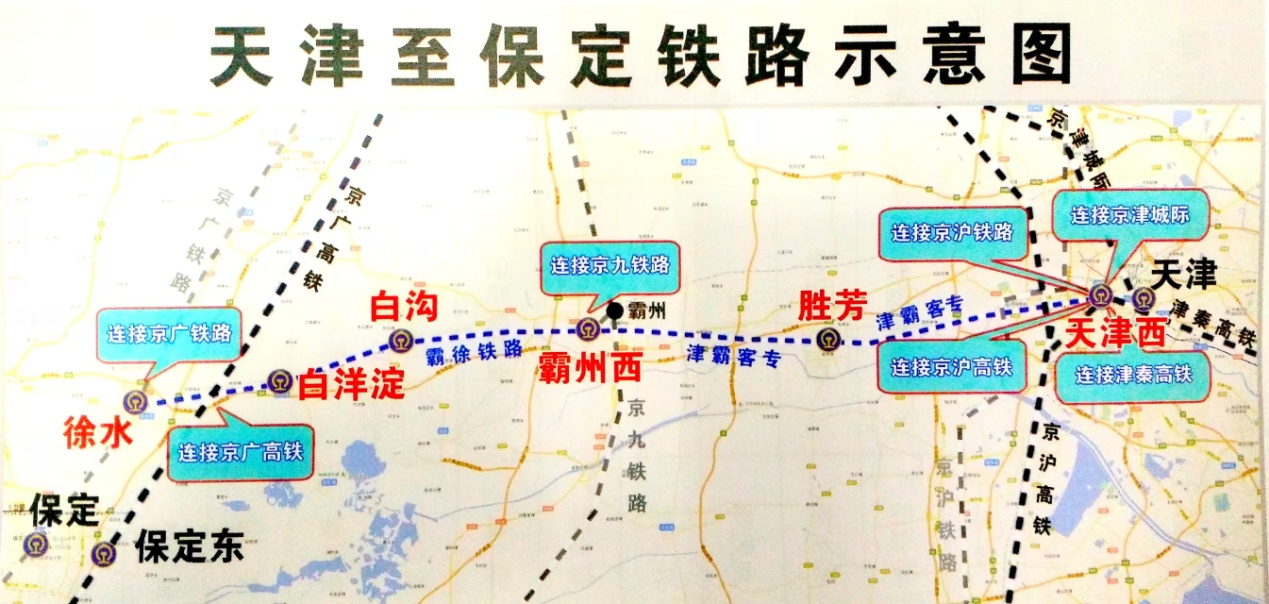
津保铁路开通运行10周年 赋能京津冀高质量发展
Zhong Guo Jing Ying Bao· 2025-12-27 16:05
Core Viewpoint - The Tianjin-Baoding Railway has significantly transformed regional transportation and facilitated the collaborative development of the Beijing-Tianjin-Hebei area over the past decade, marking a milestone in the region's integration and connectivity [2][3]. Group 1: Operational Growth - The railway's capacity has increased dramatically, with the number of trains rising from 4.5 pairs at the start to 48 pairs currently, representing a 970% increase [2]. - Daily passenger volume has grown from under 2,000 to 4,400, a 120% increase, with a peak of 60,200 passengers on October 3, 2025, setting a new record [2]. - By November 30, 2025, the total number of passengers transported reached 98.073 million, nearing 100 million, supporting the alleviation of non-capital functions and enhancing public travel convenience [2]. Group 2: Regional Impact - The opening of the Tianjin-Baoding Railway is a key milestone in the Beijing-Tianjin-Hebei collaborative development plan initiated in 2015, facilitating seamless connections with existing rail networks [3]. - Travel times have been significantly reduced, with journeys from Tianjin to Baoding cut from 2.5 hours to under 1 hour, and from Tianjin to Shijiazhuang reduced from 3 hours to 1.5 hours [3]. - The railway has played a crucial role in the emergence of the Xiong'an New Area, contributing to the deepening of collaborative development in the region [3][4]. Group 3: Future Prospects - The Tianjin-Baoding Railway is positioned to continue serving as a transportation hub, promoting new achievements and breakthroughs in the collaborative development of the Beijing-Tianjin-Hebei region in the new era [4].
京雄城际运行五载,累计运送旅客超1300万人次
Xin Lang Cai Jing· 2025-12-27 15:38
Core Viewpoint - The Beijing-Xiong'an Intercity Railway has celebrated its fifth anniversary, marking its significance as a vital transportation link between Beijing and the Xiong'an New Area, having transported over 13 million passengers in five years [1]. Group 1: Operational Highlights - The number of trains operating on the Beijing-Xiong'an Intercity Railway has increased from 32 to 59 daily since its inception [1]. - The railway connects key locations including Beijing West Station, Daxing Airport Station, and Xiong'an New Area, creating a multi-dimensional transportation network [7]. Group 2: Service Enhancements - Daxing Airport Station has implemented service upgrades, including improved signage systems and the addition of free charging facilities, enhancing the travel experience for passengers [9]. - The railway's integration with Daxing Airport facilitates efficient transfers between high-speed rail and air travel, supporting business travel and international exchanges [7]. Group 3: Future Developments - The upcoming opening of the Tianjin-Xiong'an Intercity Railway by the end of 2023 will further enhance connectivity between Beijing and Tianjin, establishing a new high-speed rail corridor [9]. - Future expansions, such as the Beijing-Hong Kong High-Speed Railway and the Xiong'an-Xinzhou Railway, will strengthen Xiong'an's connections to East China, South China, and central regions, highlighting the railway's growing importance in the network [9].
廊坊广电·关注丨【奋进“十四五”精彩新廊坊·权威发布】“十四五”时期我市科技创新能力显著增强
Xin Lang Cai Jing· 2025-12-27 11:30
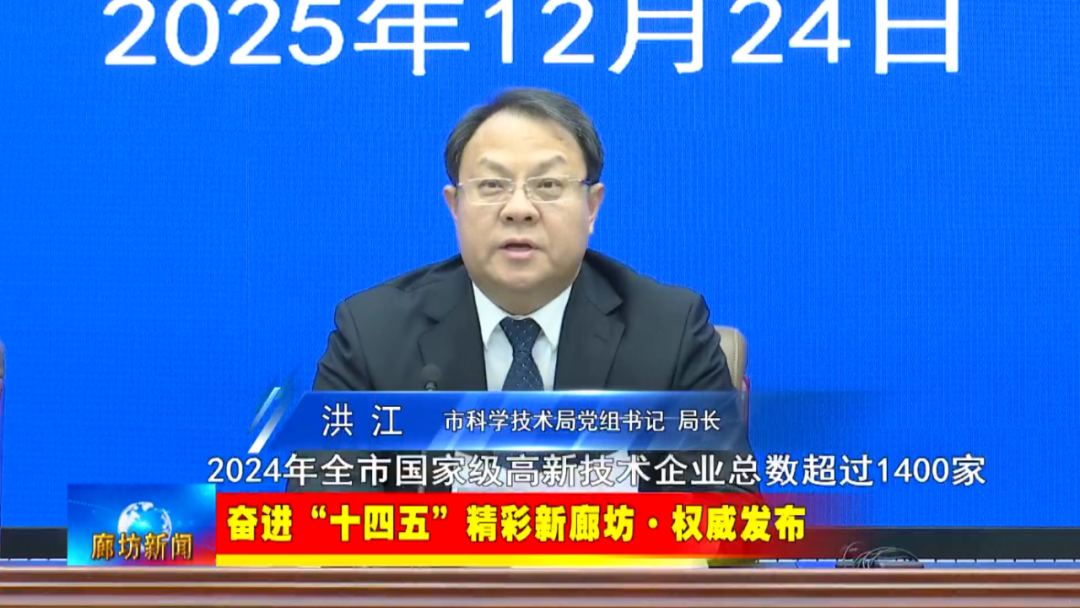
(来源:环京津新闻网) 日前,市政府新闻办公室举行"十四五"高质量发展成果廊坊答卷系列主题新闻发布会,市科学技术局负责人介绍,"十四五"时期,我市科技创新能力显著 增强,科技支撑引领经济社会发展的能力大幅提升。 发布会上,市科学技术局主要负责人从科技创新能力稳步提升、区域科技合作全面深化、科技支撑作用不断增强、创新创业环境持续优化四个方面进行发 布。 "十四五"时期,我市以科技创新引领新质生产力发展,不断释放创新潜能,县域创新领跑全省,创新主体量增质升。 市科学技术局党组书记、局长 洪江:市县域科技创新能力监测评价平均得分连续六年居全省首位,其中A类县7个,占比全省第一。2024年全市国家级高 新技术企业总数超过1400家,较"十三五"末增长超过50%,科技型中小企业突破万家,新增河北省科技骨干企业10家,总数居全省第2位。 我市还持续建强用好科技研发平台,全力推进科技创新与产业创新深度融合,为全市培育壮大战略性新兴产业、迭代升级传统优势产业、前瞻布局未来产 业提供强力支撑。 市科学技术局党组成员、副局长 周业飞:截至目前,重大科技成果转化项目已撬动我市企业新增研发投入7.08亿元,新增销售收入48.1亿元, ...
推动城市副中心高质量发展
Xin Lang Cai Jing· 2025-12-27 07:24
Group 1 - The construction of Beijing's urban sub-center is a significant national project aimed at enhancing the city's modern urban functions and quality of life [1][4] - The urban sub-center is tasked with relieving non-capital functions from the central urban area and optimizing the layout of the capital's urban functions [2][4] - The "Smart Beijing Innovation Center" is a key initiative for exploring digital economy and green development, focusing on data innovation and urban digitalization [2][4] Group 2 - The comprehensive transportation hub in the urban sub-center is crucial for implementing Beijing's overall urban planning and promoting regional collaboration [3] - The opening of the Beijing Tongzhou Station is a significant milestone, emphasizing safety and efficiency in transportation operations [3] - Continuous investment in major projects is necessary to enhance the urban sub-center's administrative, business, cultural, and technological functions [4] Group 3 - Cultural heritage preservation and the integration of historical and modern elements are essential for enhancing the cultural appeal of Tongzhou District [5] - The development of cultural facilities and community services is aimed at improving the quality of life for residents [5] - Regional collaboration with neighboring areas is vital for integrated development and improving transportation efficiency [5]
可知可感 城市立体生长
Bei Jing Wan Bao· 2025-12-27 06:48
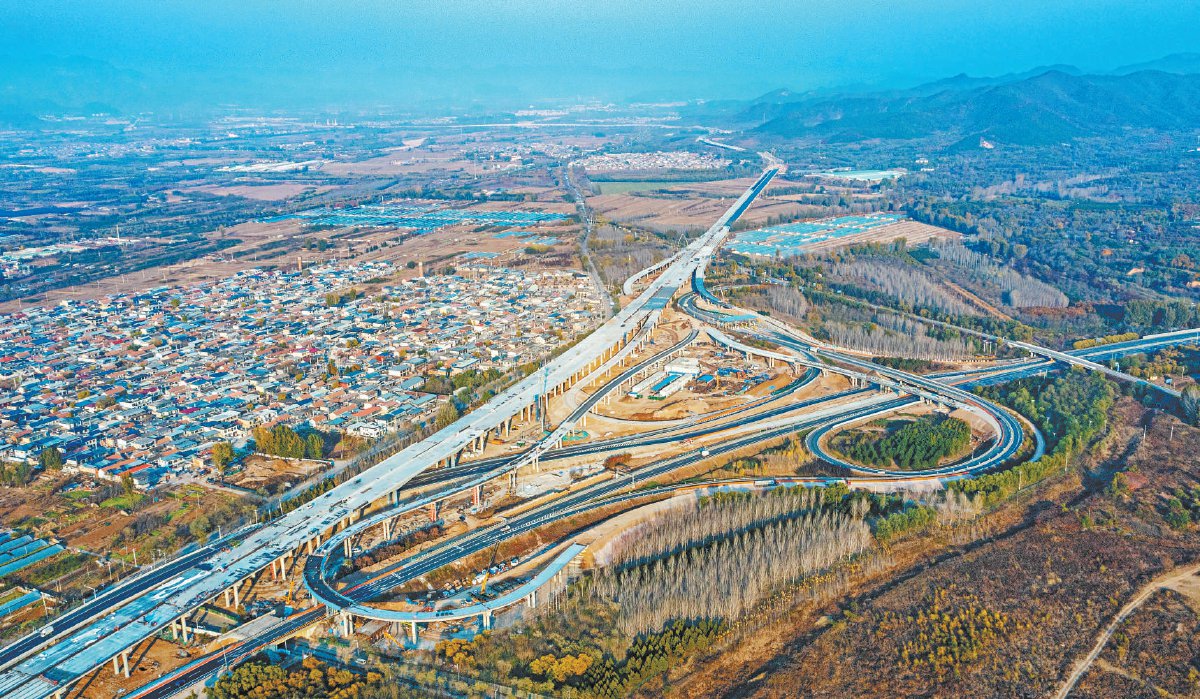
Group 1 - The construction of the Jingxi Fangshan 108 New Line Expressway is expected to significantly enhance disaster resilience and network robustness in the western mountainous areas of Beijing [2] - The Chengping Expressway (Beijing section) spans 34.8 kilometers, contributing to the increasingly interconnected highway network in the Beijing-Tianjin-Hebei region [3] - The opening of new subway lines, including the southern extension of Line 6, the middle section of Line 17, and Line 18, improves public transportation convenience for citizens [4] Group 2 - The cross-border subway Line 22 (Pinggu Line) in Hebei has begun track laying, marking the first intercity urban rail in the Beijing-Tianjin-Hebei area, with station construction approximately 80% complete [5] - The completion of the "Five Lakes and One Line" water damage restoration project along the Yongding River is nearing, while Line 22 is set to connect Yanjiao to the sub-center in just 9 minutes [6] - The Chengping Expressway, nearing completion, features significant bridge and tunnel construction, reducing travel time from Pinggu to Chengde by half [7] Group 3 - The newly opened Bayli Wangfujing Well-Town has become a popular destination for Beijing residents, reflecting the city's cultural and infrastructural development [9] - The Beijing Municipal Commission of Housing and Urban-Rural Development reported smooth progress on key projects, with 92 projects having commenced construction by the end of November [9]
文化中国行|千年文脉 活力运河⑦:一水通联 古运新帆
Xin Lang Cai Jing· 2025-12-27 00:11
Core Viewpoint - The article highlights the historical significance and current revitalization of the North Grand Canal, particularly the section in Xianghe, Hebei, emphasizing its cultural heritage and tourism potential as part of the Beijing-Tianjin-Hebei coordinated development strategy [1][5]. Historical Significance - The North Grand Canal, historically known as Baihe and Gu Shui, served as a crucial transportation route for grain from the south to the north during the Qing Dynasty, making Xianghe a vital hub for trade and transport [1][2]. - The establishment of water management institutions along the canal, such as the water office in Lujiawu during the Yuan Dynasty, played a significant role in maintaining the canal's functionality and supporting local settlements [2]. Cultural Heritage - The article describes the cultural activities associated with the North Grand Canal, including the performance of the national intangible cultural heritage, the "An Toutun Zhongfan," which attracts tourists and showcases local traditions [5][6]. - The historical sites, such as the Jinmen Dam, reflect ancient water management techniques and continue to inspire modern hydraulic engineering [3]. Tourism Development - The integration of tourism and cultural heritage is emphasized, with the North Grand Canal now serving as a tourist attraction, featuring boat tours and cultural markets that draw visitors from the Beijing-Tianjin-Hebei region and beyond [5][6]. - Recent initiatives, such as the "Beijing-Tianjin-Hebei Meat Pie Competition," aim to enhance the tourism experience by combining various cultural and culinary elements [6].

服务促升级 沃土催新绿
Xin Lang Cai Jing· 2025-12-26 22:04
数字,为这一派生机景象提供了最有力的注脚:"十四五"期间,红桥区民营经济增加值4年间增长超过 44%,年均增速高达9.6%。今年上半年,民营经济占全区地区生产总值的比重已达49.7%。这个沉甸甸 的数字,是民营经济活力最强劲的脉搏,是区域发展画卷上最亮眼的笔触,未来更加可期。 (来源:天津日报) 转自:天津日报 在红桥区,民营经济的活力,是能"听"到、"看"到的。 走进光荣道科技产业园,打桩机铿锵的节奏,仿佛是这片土地最强劲的心跳。艺点意创总部建设项目加 速推进,它将被打造为京津冀同城商务区蓝图上的又一科创地标。园区外,圣威科技获我市首例涉及生 态环境保护监测和调度的数据知识产权;异乡好居2025年交易规模超100亿元,3年间实现翻倍……这些 从红桥区的土壤里孕育、壮大的民营企业,正以肉眼可见的速度"拔节生长"。 红桥区民营经济快速崛起的秘诀何在?答案就写在政府从"管理者"到"服务者"的深刻角色转变之中。近 年来,一场以企业需求为中心、不断升级的"服务革命",正为这片区域的经济生态注入源源不断的暖 流。 服务的温度 从"企业找政策"到"政策找企业" 政策的生命力在于精准落地。"再好的政策,若躺在文件柜里,也只 ...
河北菜园供应北京菜篮 共享智造助企降本增效
Xin Lang Cai Jing· 2025-12-26 22:03
Group 1: Agricultural Development - Hebei has established a facility vegetable industry cluster around Beijing, achieving a 42.5% market share in Beijing's wholesale vegetable market by 2024 [5] - The province has cultivated nine key vegetable-growing counties, each with over 200,000 acres, and has built 183 vegetable bases in collaboration with Beijing, supplying over 500,000 tons annually [5] - Hebei promotes smart planting technologies, including intelligent temperature control and integrated water and fertilizer systems, to enhance traditional farming practices [5] Group 2: Urban Development - Shijiazhuang has constructed and opened 62 pocket parks this year, exceeding the target of 50, enhancing urban green spaces and improving residents' quality of life [8] - The parks are designed with unique themes, such as the "Lingyu Park," which integrates cultural elements into its landscape, promoting a blend of culture and environment [8] Group 3: Economic Growth and Innovation - Xiong'an New Area is progressing towards becoming a modern city with an annual investment of 200 billion yuan and a GDP growth rate of 17.1%, focusing on quality and sustainability [6] - Hebei's "shared intelligent manufacturing" initiative aims to upgrade county-level industrial clusters, addressing issues like small scale and low efficiency, with 107 clusters now covered by this model [10] - The province has established 194 shared factories, engaging 18,000 enterprises to improve operational efficiency, as seen in the Anping wire mesh cluster and Ningjin cable base [10] Group 4: Talent Acquisition - The 16th Hebei High-level Talent Introduction and Exchange Conference attracted over 13,000 talents from 263 universities, focusing on the province's eight key industries [11] - The event featured 25 quality technology projects for roadshows and invited financial institutions to facilitate collaboration, aiming to attract technology, projects, and capital to Hebei [11]