
指数化投资

Search documents
首只北证50指数增强基金发行
Xin Hua Wang· 2025-08-12 05:47
Core Insights - The North Exchange 50 Index has gained significant attention from investors, with a single-day increase of 3.39% on December 18, amidst ongoing market fluctuations [1] - The first enhanced index fund tracking the North Exchange 50 Index was launched on December 18, aiming to attract more diverse investors and improve liquidity in the North Exchange [2] - The North Exchange has become a hot investment spot this year, with multiple instances of impressive market performance [3] Group 1: Fund Launch and Strategy - The Chuangjin Hexin North Exchange 50 Enhanced Index Fund is the first of its kind in the market, with a fundraising period ending on March 15, 2024 [2] - The fund will utilize a quantitative multi-factor model for stock selection, focusing on companies with strong profitability, good growth potential, low valuations, and low debt ratios [2] - The fund managers, Dong Liang and Huang Xiaohu, aim to create a portfolio that delivers stable excess returns [2] Group 2: Market Performance and Investor Interest - The North Exchange 50 Index has experienced remarkable performance, including a single-day increase of 5.92% on September 4 and multiple days with increases exceeding 3% in late November [4] - The index reached a record single-day increase of over 10% on November 27, with trading volume hitting a historical high since the index's inception [4] - The growing interest in the North Exchange has led to several public funds applying for trading permissions, indicating a strong influx of institutional and individual investors [5] Group 3: Institutional Support and Future Outlook - Beijing State-owned Capital Operation Management Company has expressed confidence in the investment value of the North Exchange and plans to actively subscribe to the newly launched enhanced fund [5] - The company is also collaborating with Chuangjin Hexin to create a single asset management plan focusing on high-tech and medical industries, aiming to select leading companies in sectors with rising demand [5] - This strategic move is expected to enhance the attractiveness of the North Exchange and support the high-quality development of innovative small and medium-sized enterprises [5]


连续三周超30只新基募集,权益基金占比超八成
Guo Ji Jin Rong Bao· 2025-08-11 13:43
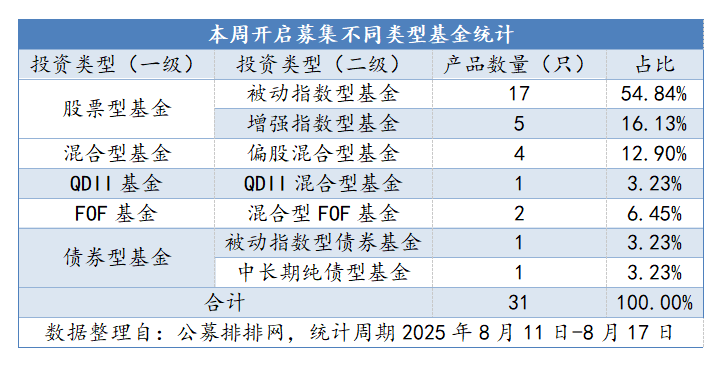
新基发行市场持续火爆。 公募排排网数据显示,本周(8月11日至8月17日)全市场共有31只新基启动募集,这已经是连续第 三周单周开募新基不低于30只。其中,权益基金占比超八成,股票型基金成募集主力。 对于这一现象,排排网旗下融智投资FOF基金经理李春瑜分析称,在资产配置需求升级背景下,投 资者愈发青睐运作透明、费率低廉的被动投资工具,指数基金特有的分散化投资优势恰好契合这一需 求。同时,监管层持续优化权益类公募发展环境,通过设立ETF绿色审批通道等举措,为指数化投资注 入政策动能。此外,在产业政策密集出台的窗口期,指数基金凭借其高效跟踪政策红利行业的能力,能 有效规避个股波动风险,因而获得避险资金的持续涌入。 除指数基金外,FOF基金发行也持续受到市场追捧。本周启动募集的新基中,有2只FOF基金,且 均为混合型FOF基金。今年以来,新发FOF基金数量已达36只,超过了去年全年的水平。 对此,李春瑜认为,市场环境持续优化, A股市场企稳向好,为FOF这类"专业买手"提供了更广阔 的投资运作空间。此外,FOF基金凭借其多资产配置能力,能够灵活布局港股、黄金等非A股资产及各 类ETF产品,在分散风险的同时增厚收益, ...
优化中长期资金入市机制:资本市场内在稳定性的资金支撑
GUOTAI HAITONG SECURITIES· 2025-08-08 15:10
Group 1: Current State of Long-term Funds in China - China's long-term funds, including social security and pension funds, have a significantly lower equity investment ratio compared to developed markets, with actual equity investment at only 12.8% against a policy cap of 25% for insurance funds[4] - The investment ratio of pension funds and enterprise annuities in equity assets is around 10%, well below the international average of 30%-50%[4] - The proportion of index-based investments, such as ETFs, in institutional portfolios is less than 15%, compared to 60% in the United States[4] Group 2: Policy Recommendations and Market Potential - The implementation of long-term assessment cycles and relaxation of investment restrictions could significantly increase the equity investment ratio of long-term funds in China[3] - The "Implementation Plan for Promoting Long-term Funds to Enter the Market" aims for public funds to increase their A-share holdings by at least 10% annually over the next three years, potentially adding over 100 billion yuan in long-term funds each year[15] - The report suggests enhancing product innovation and asset allocation systems to attract long-term funds, alongside tax incentives to encourage market entry[8] Group 3: Comparative Analysis with Developed Markets - In the U.S., long-term funds, particularly pension funds, have an equity investment ratio exceeding 80%, with a significant portion allocated to diversified assets like stocks and mutual funds[8] - European pension funds are increasing their equity allocations, focusing on long-term returns through diversified investments and strict regulations[8] - Japan's pension system, led by the Government Pension Investment Fund (GPIF), has become the largest public pension fund globally, emphasizing diversified and international investments[8]
王红履新深交所副理事长,强调吸引中长期资金通过ETF入市
Nan Fang Du Shi Bao· 2025-08-08 13:21
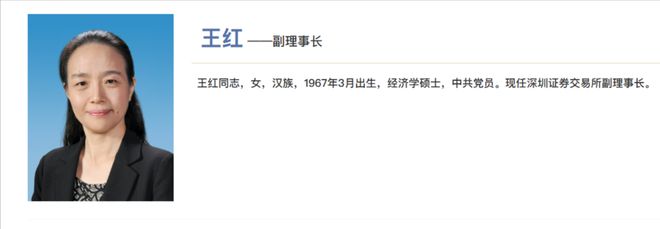
Group 1 - Wang Hong has been appointed as the Vice Chairman of the Shenzhen Stock Exchange, indicating a leadership change within the exchange [1] - The Shenzhen Stock Exchange's leadership team now consists of nine members, including Wang Hong as Vice Chairman [1] - Wang Hong has a long history with the Shenzhen Stock Exchange, having joined in 1992 and previously serving as Vice General Manager before moving to the Shanghai Stock Exchange [3] Group 2 - Wang Hong has emphasized the importance of supporting high-quality development of innovative enterprises through capital market reforms, particularly focusing on the Sci-Tech Innovation Board and the Growth Enterprise Market [3][4] - He has been a proponent of accelerating the reform of the Growth Enterprise Market and piloting the registration system, which was a significant step in capital market reform [4] - Wang Hong has highlighted the growing importance of ETFs as a key asset management tool, aiming to attract more long-term capital into the market through improved ETF mechanisms [4]
北交所指数策略专题报告:北证专精特新指数,小巨人引领“小市值、高研发、高成长”的超额收益新引擎
KAIYUAN SECURITIES· 2025-08-08 09:55
Group 1 - The report highlights the launch of the "Beijing Stock Exchange Specialized and Innovative Index," marking the beginning of a "dual-index era" for the exchange, with a focus on high innovation and growth potential in specialized and innovative enterprises [3][13] - The new index includes a higher proportion of companies from high-end manufacturing and TMT sectors compared to the existing Beijing Stock Exchange 50 Index, with respective increases of 14 percentage points and 4 percentage points [3][15] - As of August 1, 2025, the average market capitalization of the Beijing Stock Exchange 50 and the Specialized and Innovative Index is 6.195 billion and 4.711 billion respectively, with the latter having a higher price-to-earnings ratio of 67.81X compared to 47.92X for the former [3][20] Group 2 - The report indicates that the Specialized and Innovative Index has shown a revenue compound annual growth rate (CAGR) of 11.98% and a net profit CAGR of 3.11% from 2021 to 2024, outperforming the Beijing Stock Exchange 50 Index, which has a revenue CAGR of 6.19% and a negative net profit CAGR of -8.83% [26][64] - The profitability metrics for the Specialized and Innovative Index are strong, with a gross margin of 26.14%, a net profit margin of 9.90%, and a return on equity (ROE) of 10.12% for 2024, all exceeding the corresponding figures for the Beijing Stock Exchange 50 Index [29][67] - The report notes that the R&D expense ratio for the Specialized and Innovative Index ranges from 5.39% to 5.80% from 2021 to Q1 2025, averaging 5.69%, which is significantly higher than the 4.18% average for the Beijing Stock Exchange 50 Index [33][3] Group 3 - The report states that the Specialized and Innovative Index has achieved a return of 44.11% year-to-date as of August 1, 2025, outperforming other specialized and innovative indices [46][47] - The index primarily focuses on industries such as industrial, information technology, and materials, with respective company representation of 39.97% and 15.13%, which is higher than other specialized indices [49][50] - The liquidity of the Specialized and Innovative Index is noted to be higher than that of other indices, with a turnover rate of 5.92% as of August 1, 2025 [52][56] Group 4 - The report discusses the rapid growth of the ETF market in China, with personal holdings of stock ETFs increasing from 7.762 billion shares in 2015 to 742.781 billion shares by 2024, raising the share of personal holdings from 13.34% to 37.67% [5][83] - As of August 1, 2025, the number of products tracking the Beijing Stock Exchange 50 Index has increased to 59, with a total fund size reaching 11.322 billion [5][86] - The report anticipates that the arrival of index-based investment will enhance liquidity and restructure the ecosystem of the Beijing Stock Exchange, potentially leading to a revaluation of high-growth enterprises [5][90]
上证旗舰宽基指数体系产品再迎扩容
Zhong Guo Xin Wen Wang· 2025-08-08 08:00
Group 1 - The China Securities Regulatory Commission has approved the submission of the Shanghai Stock Exchange 380 ETF and 580 ETF by E Fund and Huaxia Fund, respectively, enhancing the investment tools available for the flagship broad-based index system [1][2] - The optimized SSE 380 Index is designed to represent mid-cap stocks in the Shanghai market, featuring 380 constituent stocks with a median market capitalization of approximately 18.36 billion [1] - The SSE 580 Index aims to reflect the overall performance of small-cap stocks in the Shanghai market, with a median market capitalization of about 8.25 billion and an annualized return of approximately 8.2% since its inception [2] Group 2 - The SSE 380 Index has improved representativeness, stability, and industry balance through stricter liquidity screening and ESG considerations, with a 3.2% increase in the weight of Sci-Tech Innovation Board securities [1][2] - The SSE 580 Index includes a significant proportion of companies from the Sci-Tech Innovation Board and specialized new enterprises, highlighting its focus on innovative small-cap stocks [2] - The flagship broad-based index system covers all listed companies in the Shanghai market, providing essential tools for investors to engage with core A-share assets, and the recent ETF submissions will facilitate targeted investments in mid-cap and small-cap growth enterprises [3]
“智胜市场”AI与量化协同赋能指数增强策略
Zheng Quan Ri Bao· 2025-08-08 07:17
Core Viewpoint - Index investing is experiencing significant growth, attracting both institutional and individual investors, with AI and quantitative models enhancing index strategies [1][5] Group 1: Index Investment Trends - The rapid development of index investing has transformed the product layout and competitive landscape of the public fund industry, driven by low costs, high transparency, and risk diversification [1][2] - The integration of AI technology and quantitative models in index-enhanced funds is creating new market opportunities, combining the advantages of passive investment with the potential for excess returns [1][3] Group 2: Regulatory and Policy Context - The China Securities Regulatory Commission's action plan aims to shift the focus of public funds from "scale" to "returns," aligning the interests of fund companies, managers, and investors [2] - The principles of index investing, such as diversification and cost reduction, are well-suited to this policy direction, enhancing investment efficiency and return stability [2] Group 3: Dynamic Risk Management - The newly launched CSI A500 Index is noted for its market representation and industry balance, with the upcoming index-enhanced fund utilizing quantitative models for stable excess returns [3][4] - The strategy focuses on precise stock selection and dynamic weight optimization through AI and quantitative methods, aiming to provide better risk-adjusted returns [3][4] Group 4: Quantitative Research Framework - The company has developed a comprehensive quantitative research framework that includes data collection, factor development, AI model construction, portfolio optimization, and trade execution [4] - Advanced technologies like large language models and graph neural networks are integrated into the research process to extract valuable signals from unstructured data [4] Group 5: Future Outlook - The future of index investing looks promising, with expectations of broader growth as China's capital markets mature and investor structures diversify [5][6] - Intelligent investment methods, such as index-enhanced strategies, are anticipated to provide investors with opportunities for returns beyond simple passive income [5][6] Group 6: Investor Guidance - Investors are advised to consider the quantitative research capabilities of fund managers, historical performance, and alignment with personal risk preferences when selecting index-enhanced funds [6] - Index investing is viewed as a crucial pathway for the public fund industry to uphold the principle of "investor interests first" [6]

北交所指数策略专题报告:北证专精特新指数:小巨人引领“小市值、高研发、高成长”的超额收益新引擎
KAIYUAN SECURITIES· 2025-08-08 07:14
Group 1 - The report highlights the launch of the "Beijing Stock Exchange Specialized and Innovative Index," marking the beginning of a "dual-index era" for the exchange, with a focus on high innovation and growth potential in specialized and innovative enterprises [3][12][38] - The Specialized and Innovative Index has a higher proportion of companies in high-end manufacturing and TMT sectors compared to the Beijing 50 Index, with respective increases of 14 percentage points and 4 percentage points [3][14] - The average market capitalization of the Specialized and Innovative Index is lower than that of the Beijing 50 Index, with values of 4.71 billion and 6.20 billion respectively, indicating a focus on smaller companies [3][19] Group 2 - The Specialized and Innovative Index has shown strong performance, achieving a year-to-date return of 44.11%, outperforming other specialized indices [4][38][41] - The index primarily focuses on industries such as industrial, information technology, and materials, with industrial companies making up 39.97% of the index [4][39] - The turnover rate of the Specialized and Innovative Index is higher than that of other indices, indicating better liquidity, with a turnover rate of 5.92% as of August 1, 2025 [4][40] Group 3 - The report notes a significant increase in the popularity of ETF investments, with the number of personal holdings rising from 7.76 billion to 742.78 billion from 2015 to 2024 [5][61] - The Beijing 50 Index fund has reached a scale of 11.32 billion, with an increasing number of tracking products, indicating a growing interest in index-based investments [5][65] - The report anticipates that the rise of index-based investments will enhance liquidity and restructure the ecosystem of the Beijing Stock Exchange, potentially leading to a revaluation of high-growth companies [5][70]
华夏基金半年净利11亿,ETF规模近8千亿,保持行业第一
Nan Fang Du Shi Bao· 2025-08-06 11:59
据公告,截至2025年6月末,华夏基金母公司管理资产规模为28512.37亿元,较去年末增加3867.06亿 元。 数据显示,截至8月6日,华夏基金管理公募产品规模20648.3亿元,较去年末增加3522.5亿元,增幅 20.6%,产品规模仅次于易方达基金(20992.9亿元)。其中,管理ETF规模7947.87亿元,较去年末增加 1362.1亿元,增幅20.7%,ETF规模依旧保持"一哥"地位。 8月6日,中信证券披露了"ETF一哥"华夏基金2025年半年度业绩快报。2025年上半年,华夏基金实现营 收42.58亿元,同比增长16.1%;净利润11.23亿元,同比增长5.7%,净利润增速低于营收。 在监管引导与市场需求双轮驱动下,近年来指数化投资不断升温,ETF规模接连上台阶,基金公司纷纷 押注ETF赛道。值半年报披露季,南都湾财社持续关注ETF"大厂"产品布局、盈利模式迭代与生态位变 化,为行业差异化转型提供路径参考。 基金公司综合指数显示,截至8月5日,华夏基金综合指数年内涨幅6.47%,在管理规模前十公司中排名 倒数第四;偏股型业绩指数方面,华夏基金偏股型指数年内涨幅10.42%,在偏股型产品规模前十 ...

一图看懂沪AAA科创债指数
Zhong Guo Ji Jin Bao· 2025-08-06 10:46
Core Viewpoint - The rapid development of the index system in China has led to an increasing acceptance of index-based investment, with a significant rise in the issuance of technology innovation bonds (科创债) and the establishment of related indices to facilitate investment opportunities in this sector [5][8][11]. Group 1: Technology Innovation Bonds - As of now, a total of 356 entities have issued 1,360 technology innovation bonds, with a total scale of CNY 1.95 trillion. The Shanghai and Shenzhen stock exchanges have issued 935 bonds, amounting to CNY 1.23 trillion, representing an increase of approximately 14.7 times and 13 times compared to the end of 2022, respectively [8]. - The supportive policies for technology innovation bond issuance have been frequent since 2025, enhancing long-term capital investment in hard technology sectors [10][11]. - The Shanghai Stock Exchange and China Securities Index Co. launched the Shanghai AAA Technology Innovation Company Bond Index in August 2023, which reflects the overall performance of technology innovation company bonds listed on the exchange [13]. Group 2: Investment Capacity and Quality - Currently, there are 795 technology innovation bonds with a total scale of CNY 1.1 trillion on the Shanghai Stock Exchange. The AAA technology innovation bond index includes 785 bonds, with a total scale of CNY 1.0943 trillion, accounting for 88% of the total market scale of technology innovation bonds [14]. - The issuers of the bonds in the index are all rated AAA, ensuring high credit quality, with implied ratings of AA+ and above [16]. - The index covers a wide range of issuers, including central and local enterprises as well as technology innovation private enterprises, addressing the challenges investors face in identifying risks and meeting investment thresholds [17]. Group 3: Investment Performance - In the current low-interest-rate environment, technology innovation bonds offer higher annualized returns compared to government bonds and money market funds, providing investors with a new asset allocation option that combines stable returns and policy benefits [18]. - Since the base date of June 30, 2022, the Shanghai AAA technology innovation bond index has outperformed the Shanghai market benchmark corporate bonds and the 5-year government bond index, with a cumulative increase of 14.4% and an annualized return of 4.3% as of July 31, 2025 [19][21]. Group 4: Market Recognition - There are currently three domestic ETFs tracking the Shanghai AAA technology innovation bond index, which have quickly reached their fundraising limits of CNY 3 billion since their public offering on July 7. The total scale of these products has now reached CNY 28.6 billion, indicating growing market recognition of the investment value of technology innovation bonds [24].
