科技金融

Search documents
兴银投资开业45天累计投放规模超60亿元
Xin Lang Cai Jing· 2026-01-04 12:25
Core Viewpoint - Xingyin Financial Asset Investment Co., Ltd. has been actively supporting traditional industries and emerging sectors since its establishment on November 16, 2025, with a cumulative investment exceeding 6 billion yuan by December 31, 2025 [1][3]. Group 1: Investment Focus - The company addresses challenges in traditional industries such as low operational efficiency and weak digital collaboration, as well as high technical barriers and slow R&D cycles in emerging industries [1][3]. - Initial projects funded by the company target sectors like semiconductors, photovoltaics, lithium mining, and engineering plastics, covering regions including Fujian, Guangdong, Shanghai, Anhui, and Shandong [1][3]. Group 2: Strategic Goals - The company aims to leverage the advantages of its parent bank's group operations and maintain differentiated competition, focusing on high-level technological self-reliance as its mission [1][3]. - Plans include increasing investments in fields such as new energy, new materials, artificial intelligence, biomedicine, and advanced manufacturing, while also applying for private equity investment licenses [1][3]. Group 3: Financial Services - The company is committed to enhancing the investment ecosystem and providing comprehensive financial services throughout the entire lifecycle for its clients [1][3].

平安产险乐陵支公司助力科技成果转化,科技保险为创新护航
Xin Lang Cai Jing· 2026-01-04 12:03
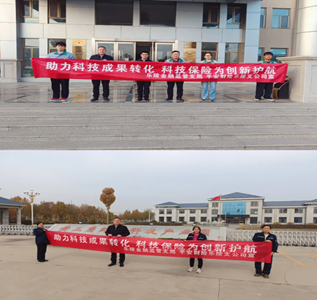
Core Viewpoint - The company is actively engaging in promoting financial support for technology-driven enterprises, aligning with national strategies for technological self-reliance and economic stability [1][3][5] Group 1: Company Initiatives - The company, under the guidance of the National Financial Supervision Administration, has launched a special policy promotion activity focused on technology finance to alleviate difficulties for enterprises and inject financial momentum into local development [1][3] - The company has implemented a "field visits + targeted Q&A" model to better understand the research and development status of enterprises [3][5] Group 2: Support for Enterprises - The company visited Shandong Sidair Agricultural Equipment Co., Ltd. and Shandong Yellow River Delta Environmental Technology Industrial Park Co., Ltd. to gain insights into their R&D challenges [3][5] - The introduction of insurance for losses related to the transformation of scientific and technological achievements aims to reduce concerns for research institutions and enterprises during the innovation process [3][5] Group 3: Future Plans - The company plans to leverage the current activity to reach more enterprises involved in the transformation of technological achievements, reinforcing its role as an economic "shock absorber" and social "stabilizer" [3][5] - The company aims to inject stronger and more sustainable financial vitality into the high-quality development of the local real economy [5]

【金融服务】交银理财完成新一代理财信息登记直联系统上线
Xin Lang Cai Jing· 2026-01-04 11:30
据介绍,理财登记中心新直联系统聚焦技术架构标准化、数据治理精细化、服务保障机制化三大核心维 度实现重点突破,为理财行业高质量发展注入关键动能。一是统一行业技术架构标准。通过推动直联系 统与数据交换平台业务架构、技术底座的融合共建,统一采用SDK接口技术规范,有效破解过往机构接 入标准不一、数据交换存在壁垒等问题,降低全行业机构系统对接的技术成本与适配难度,提升理财信 息登记领域整体运行效能。二是深化行业数据治理精细化水平。在原有登记报文基础上,进一步拓展销 售信息登记范围,新增销售人员分支机构管理、身份信息及奖惩投诉记录等登记报文,推动理财信息登 记实现从"基础覆盖"到"全景呈现"的跨越式升级,既为监管部门精准掌握行业运行动态、科学制定监管 政策提供全面数据支撑,也为机构规范内部管理、防控业务风险搭建标准化数据框架。三是优化行业服 务保障机制建设。在登记系统客户端增设"理财登记直联管理"模块,支持机构实时查询报文处理状态, 同时新增报文撤回功能,既为机构及时修正报送误差、规避数据错误风险提供便捷路径,也有效保障直 联系统整体处理性能稳定,避免因个别机构操作偏差影响行业数据报送秩序,服务优化筑牢行业信息登 记平 ...
工行武汉自贸分行:打造“追光逐梦”品牌,以高质量金融服务赋能区域发展
Zhong Guo Jin Rong Xin Xi Wang· 2026-01-04 10:50
转自:新华财经 同时,工行武汉自贸分行将志愿服务与社会公益作为展现文明形象、传递行业温情的窗口。常态化开 展"学雷锋活动月"、关爱留守儿童等志愿活动,坚持"走出网点、贴近群众",2025年组织外出金融服务 467场,为行动不便的老人及特殊群体提供上门服务83次,以实际行动诠释责任担当,用贴心服务温暖 社会民心。 未来,工行武汉自贸分行将继续深化"追光逐梦"品牌内涵,推动精神文明与经营发展互促共进,以更优 质的金融服务赋能东湖高新区科技创新与产业升级,为区域经济高质量发展贡献更大力量。(里安琪 崔静) 编辑:赵鼎 近年来,中国工商银行武汉自贸分行(以下简称"工行武汉自贸分行")立足东湖高新区(光谷)发展战 略定位,精心培育打造"追光逐梦"特色品牌,坚持精神文明建设与经营发展深度融合、同频共振,为高 质量服务区域经济社会发展注入持久而澎湃的精神动力与金融动能。 紧扣东湖高新区发展需求,工行武汉自贸分行全力做好科技金融、绿色金融、普惠金融、养老金融、数 字金融"五篇大文章"。 在科技金融领域,工行武汉自贸分行积极探索服务新模式,创新推出"科创云闪贷"等产品,着力破解科 创企业轻资产、高研发投入带来的融资难题,累计为 ...
贵州资本市场2025年“十件大事”发布
Sou Hu Cai Jing· 2026-01-04 09:45
Group 1 - The core viewpoint of the article emphasizes the commitment of Guizhou's capital market to steady progress and high-quality development, focusing on risk prevention, strong regulation, and comprehensive reform in investment and financing by 2025 [1] - Guizhou's capital market aims to achieve a solid foundation for the "14th Five-Year Plan" and a good start for the "15th Five-Year Plan" through collaborative efforts [1] Group 2 - Guizhou listed companies actively implement the central government's decision to stabilize the stock market, with measures including regular visits to address issues faced by listed companies and enhancing market value management [2] - In 2022, Guizhou listed companies executed cash dividends totaling 68.608 billion yuan, with mid-term dividends amounting to 30.653 billion yuan, leading the western provinces in both categories [2] Group 3 - The "15th Five-Year Plan" proposal includes specific deployments for capital market work, focusing on nurturing companies for listing and developing multi-level capital markets [3] Group 4 - A meeting summary was released to promote diversified resolution of capital market disputes, introducing 32 specific measures to enhance investor protection and resolve issues related to securities fraud [4] Group 5 - Zhongwei Co., Ltd. became the first "A+H" share listed company from Guizhou, raising 3.433 billion HKD, marking a significant milestone for the province's new energy materials sector [5] Group 6 - The bond market in Guizhou has seen breakthroughs with the issuance of the first technology innovation corporate bonds and other financial instruments aimed at supporting various high-tech sectors [6][7] Group 7 - Guizhou has approved two futures delivery warehouses, enhancing the standardization and competitiveness of agricultural industries such as pig and egg production [8] Group 8 - The "Four Libraries and One Alliance" service platform was launched to provide comprehensive support for equity financing, mergers and acquisitions, and bond projects, fostering a collaborative capital market ecosystem [9] Group 9 - Regulatory authorities have taken strict actions against financial fraud among listed companies, demonstrating a zero-tolerance policy towards such violations to ensure the long-term stability of the capital market [10] Group 10 - The Shanghai Securities Journal Guizhou Capital Market Service Center was established to enhance cooperation and improve the quality of capital market services in Guizhou [11]

跨越二十年:何以徽商?
Huan Qiu Wang· 2026-01-04 02:17
Core Viewpoint - Huishang Bank has successfully integrated its development with the economic growth of Anhui Province over the past 20 years, demonstrating the spirit of Huishang in the financial sector and contributing significantly to local economic development [1][3]. Group 1: Financial Contributions to Local Economy - Since its establishment, Huishang Bank has provided over 30 trillion yuan in financial support to Anhui Province during the 14th Five-Year Plan period, playing a crucial role in the province's economic transformation from an agricultural to an industrial powerhouse [3]. - The bank's total assets have exceeded 2.3 trillion yuan, with a net capital of over 170 billion yuan, while maintaining a declining trend in non-performing loans and improving risk control capabilities [3]. Group 2: Support for Innovation and Technology - Huishang Bank has issued over 210 billion yuan in technology loans, nearly 160 billion yuan in green credit, and over 170 billion yuan in inclusive microloans, demonstrating its commitment to nurturing technological innovation and supporting small and micro enterprises [4][11]. - The bank has developed a unique "Science and Technology Bank" model, focusing on providing tailored financial services to innovative enterprises, which has resulted in a significant increase in technology loan balances and the number of serviced technology companies [11][12]. Group 3: Expansion of Financial Services - Huishang Bank has expanded its personal financial services, growing its customer base from 19.5 million to 39 million in three years, indicating a strong market presence in Anhui [15]. - The bank has also launched various financial products, including "Technology Talent Loans" and "Technology R&D Loans," to support the entire lifecycle of technological enterprises [11][12]. Group 4: Strategic Goals and Future Directions - Looking ahead, Huishang Bank aims to deepen its focus on five key areas: technology finance, green finance, inclusive finance, pension finance, and digital finance, to enhance its role in optimizing the economic structure [12][16]. - The bank plans to continue innovating its financial services and products, aiming to create a comprehensive financial ecosystem that covers all aspects of lending, investment, and transaction services [16].

全方位助力“科技自立自强” 科技金融迈入深水区
Xin Lang Cai Jing· 2026-01-02 19:32
作为金融赋能科技产业发展的主力军,银行业通过金融资产投资公司(AIC)在股权投资、科创债发 行、理财资金配置等多重渠道积极布局,构建股、债、贷协同发力的立体化服务网络,其服务模式也正 经历一场从"信贷输血"到"全链条生态赋能"的深刻重构。 进入2026年,科技金融将迈入深化系统变革的关键阶段。聚焦"卡脖子"技术攻关与新兴产业培育,金融 体系亟待沿"点、线、面"路径实现精准滴灌与生态化布局,以更高效率、更低成本的资源配置,构建真 正适配新质生产力发展需求的现代科技金融生态。 构建全链条生态服务体系 回顾2025年,银行业赋能科技创新的逻辑与实践,实现了从传统"信贷输血"到"全链条生态赋能"的深刻 转变。 一方面,科技信贷投入持续加码,在组织架构上,专营化特征凸显,越来越多的商业银行成立科技支行 或科创金融服务中心,打造"敢贷、愿贷、能贷"的专业化前台。尤其人工智能、量子计算、生物医药等 新质生产力领域,成为金融机构竞逐焦点。 上海金融与发展实验室首席专家、主任曾刚表示,各家银行在AI领域业务布局上呈现出明显的"头部集 中、政策倾斜"特点。国有大行及股份制银行纷纷设立"科创金融中心"或"科技特色支行",在信贷资源 ...
理论学习丨党的二十届四中全会《建议》学习辅导百问(33-41)
Sou Hu Cai Jing· 2026-01-02 10:50
Group 1 - The core idea is to accelerate the establishment of a long-term mechanism for government debt management that aligns with high-quality development, emphasizing the need for effective debt management and risk prevention [2][3][4] - The Chinese government has strengthened local government debt management during the 14th Five-Year Plan period, optimizing special bond management and implementing a negative list for bond usage [3][4] - There is a need to improve the government debt management system, clarify the classification and functional positioning of government debt, and ensure sustainable debt limits [4][5] Group 2 - A long-term mechanism for preventing and resolving hidden debt risks is essential, requiring a comprehensive monitoring system and strict budget management for government expenditures [5][6] - Enhancing the management of local government special bonds is crucial, focusing on project approval processes and ensuring timely repayment to mitigate default risks [6] - The reform and transformation of local government financing platforms should be accelerated, ensuring they operate independently of government credit and adhere to market principles [6] Group 3 - The development of technology finance, green finance, inclusive finance, pension finance, and digital finance is a strategic deployment to better serve the real economy and meet the needs of high-quality economic development [7][8] - By June 2025, loans in the five key financial areas are expected to reach 105.7 trillion yuan, accounting for 38.8% of total loans, with a year-on-year growth of 14% [8][9] - The financial system should enhance its service capabilities and support for key sectors such as technology innovation and green development [9][10] Group 4 - The promotion of balanced development in imports and exports is essential for maintaining economic stability and responding to global trade challenges [24][25] - In 2024, China's goods trade is projected to reach 6.16 trillion USD, with a trade surplus of 992.2 billion USD, highlighting the need for balanced trade [24][25] - The focus on high-quality development necessitates increasing both export quality and import volume to meet domestic needs and enhance global cooperation [26][27] Group 5 - The push for digital trade innovation involves expanding market access in the digital sector and improving the regulatory framework for data flow [29][30] - Establishing high-level open platforms for digital trade is crucial, with initiatives like national digital trade demonstration zones to enhance competitiveness [30][31] - International cooperation in digital trade should be deepened, particularly with countries in ASEAN and BRICS, to foster a collaborative digital economy [31]

刘小涛走访慰问金融财税海关部门干部职工深化改革创新奋力担当作为 更好促进经济向新向优发展
Xin Hua Ri Bao· 2026-01-01 00:13
Group 1 - The provincial governor Liu Xiaotao visited financial, tax, and customs departments to express gratitude for their hard work over the past year and to convey New Year wishes [1][2] - Liu emphasized the importance of implementing the spirit of the 20th Central Committee's Fourth Plenary Session and the Central Economic Work Conference, focusing on economic development and high-quality growth [1] - The governor highlighted the need for the Jiangsu branch of the People's Bank to plan major financial reforms and support initiatives in technology, green finance, inclusive finance, pension finance, and digital finance [1] Group 2 - Liu acknowledged the effective tax collection and service improvements made by the provincial tax system, urging further efforts to enhance the business environment and stimulate innovation [2] - At the Provincial Finance Department, Liu stressed the importance of leveraging fiscal funds for significant projects and supporting key industries while managing expenditures effectively [2] - Liu commended the Nanjing Customs for its role in foreign trade and encouraged further reforms to enhance regulatory efficiency and support the province's economic development [2]
农行安徽分行:以科技金融之笔 绘就高质量发展新画卷
Zhong Guo Jin Rong Xin Xi Wang· 2025-12-31 14:11
转自:新华财经 近年来,中国农业银行安徽省分行(以下简称"农行安徽分行")以做好金融"五篇大文章"为抓手,深入贯彻落实国家创新驱动发展战略,对标安徽现代化产 业体系建设,制定实施"徽聚合力·农银助企"行动计划,通过运用产业金融服务平台,强化科技赋能,为新质生产力发展注入金融动能。截至2025年11月 末,该行战略性新兴产业贷款余额1759亿元,较2024年末增长404亿元;科技贷款余额722亿元,较2024年末增长193亿元。 在矿山智能化改造领域,农行淮南分行瞄准中感集团特码斯派克工业技术(安徽)有限公司(以下简称"特码斯派克")的行业突破性技术,量身定制金融服 务方案。2025年初,该行率先为企业提供票据金融服务,解决企业日常运营资金周转难题;随着企业规模扩大,又迅速对接信贷需求,于2025年9月成功发 放500万元短期流动资金贷款,为企业技术研发、市场拓展注入及时雨。目前,农行淮南分行正推进将其短期流动资金授信额度提升至1500万元的审批流 程,将以更大力度的金融支持,助力企业在矿山智能装备领域持续深耕。 在农行淮南分行的"精准滴灌"与大力支持下,目前,特码斯派克自主研发的"矿山智能换绳机器人成套装备" ...