
区域和双边贸易投资协定

Search documents
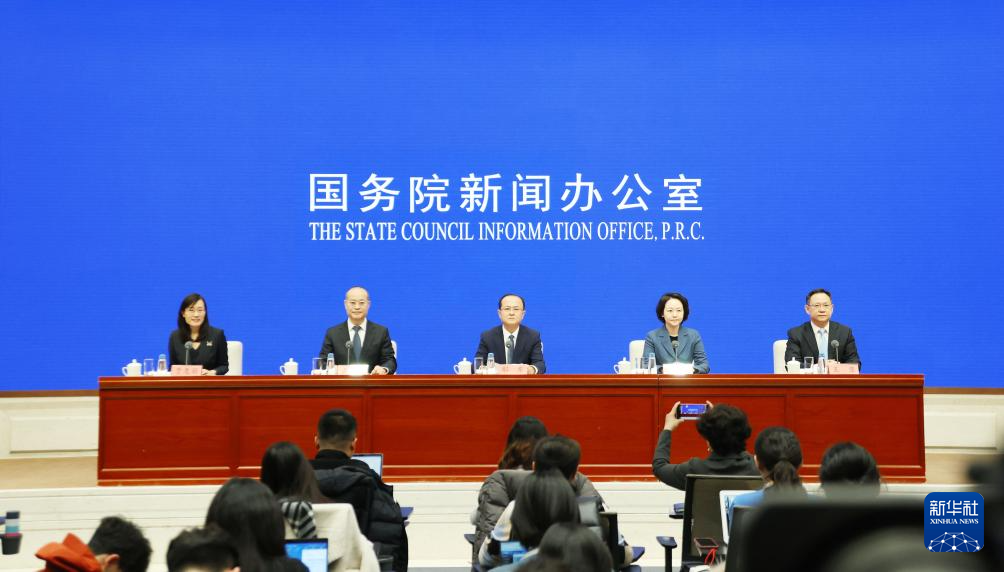
2026年如何提振消费、稳定外贸、拓展双向投资?国新办这场发布会回应关切
Xin Hua Wang· 2026-01-26 12:38
Group 1: Consumer Promotion - In 2026, the implementation of a consumption upgrade program will be optimized, focusing on the replacement of old consumer goods, particularly in the automotive, home appliance, and digital product sectors [3][4] - The service consumption sector will be enhanced through actions aimed at improving the supply levels in cultural entertainment, tourism, dining, and healthcare [3][4] - New growth points in service consumption will be cultivated, including transportation services, housekeeping, and inbound consumption, supported by relevant policies [3][4] Group 2: Foreign Trade Stability - The Ministry of Commerce will implement a series of policies to stabilize foreign trade, including promoting cross-border e-commerce and enhancing the "Export China" brand [5][6] - Service trade and digital trade will be key areas for innovation, with plans to establish national service trade innovation development demonstration zones [5][6] - Efforts will be made to expand the export of productive services and enhance the international capabilities of professional service institutions [5][6] Group 3: Foreign Investment Expansion - In 2026, there will be a focus on creating new advantages for attracting foreign investment, with plans to open up sectors such as telecommunications, healthcare, and education [7][8] - A national-level overseas comprehensive service platform will be established to provide a one-stop service for companies looking to invest abroad [8] - The Ministry of Commerce will accelerate the process of regional and bilateral trade investment agreements, enhancing market access and investment protection [7][8]

商务部:“量”“质”“效”并举 加快推进区域和双边贸易投资协定进程
Zhong Guo Jin Rong Xin Xi Wang· 2026-01-26 12:37
Core Viewpoint - The Chinese government aims to enhance foreign investment management and trade agreements by focusing on quantity, quality, and effectiveness, providing new opportunities for the world through China's development [1] Group 1: Quantity - China will continue to promote free trade cooperation with the Gulf Cooperation Council, Switzerland, South Korea, New Zealand, Pacific island countries, Central Asia, and African nations [1] - The focus will remain on countries involved in the Belt and Road Initiative to accelerate investment agreement negotiations and establish high-level investment corridors [1] Group 2: Quality - The government will actively expand autonomous opening-up, particularly in the service sector, to enhance market access and investment protection [1] - There will be an emphasis on incorporating high-level rules related to the digital economy and green economy into investment agreements [1] Group 3: Effectiveness - The implementation of agreements will be prioritized, leveraging international high-standard economic and trade rules to deepen domestic reforms [1] - The focus will be on aligning domestic regulations in areas such as property rights protection, industrial subsidies, environmental standards, labor protection, and government procurement [1] Group 4: Achievements - In 2025, the Ministry of Commerce aims to build a global high-standard free trade zone network, achieving significant results [1] - Higher levels of openness have been reached with the signing of the upgraded China-ASEAN Free Trade Area 3.0 protocol, which includes new rules on digital economy, green economy, supply chains, and standard cooperation [1] - Broader coverage has been achieved with positive outcomes in free trade processes with six Pacific island countries and the Republic of the Congo [1] - The government has successfully implemented trade or investment agreements with the Maldives and Tajikistan, and high-quality implementation of the RCEP has helped businesses enjoy policy benefits [1] - There is active engagement with CPTPP and DEPA to deepen domestic reforms and release institutional opening-up dividends, along with upgraded investment agreements with Kazakhstan and Russia [1]
理论学习丨党的二十届四中全会《建议》学习辅导百问(33-41)
Sou Hu Cai Jing· 2026-01-02 10:50
Group 1 - The core idea is to accelerate the establishment of a long-term mechanism for government debt management that aligns with high-quality development, emphasizing the need for effective debt management and risk prevention [2][3][4] - The Chinese government has strengthened local government debt management during the 14th Five-Year Plan period, optimizing special bond management and implementing a negative list for bond usage [3][4] - There is a need to improve the government debt management system, clarify the classification and functional positioning of government debt, and ensure sustainable debt limits [4][5] Group 2 - A long-term mechanism for preventing and resolving hidden debt risks is essential, requiring a comprehensive monitoring system and strict budget management for government expenditures [5][6] - Enhancing the management of local government special bonds is crucial, focusing on project approval processes and ensuring timely repayment to mitigate default risks [6] - The reform and transformation of local government financing platforms should be accelerated, ensuring they operate independently of government credit and adhere to market principles [6] Group 3 - The development of technology finance, green finance, inclusive finance, pension finance, and digital finance is a strategic deployment to better serve the real economy and meet the needs of high-quality economic development [7][8] - By June 2025, loans in the five key financial areas are expected to reach 105.7 trillion yuan, accounting for 38.8% of total loans, with a year-on-year growth of 14% [8][9] - The financial system should enhance its service capabilities and support for key sectors such as technology innovation and green development [9][10] Group 4 - The promotion of balanced development in imports and exports is essential for maintaining economic stability and responding to global trade challenges [24][25] - In 2024, China's goods trade is projected to reach 6.16 trillion USD, with a trade surplus of 992.2 billion USD, highlighting the need for balanced trade [24][25] - The focus on high-quality development necessitates increasing both export quality and import volume to meet domestic needs and enhance global cooperation [26][27] Group 5 - The push for digital trade innovation involves expanding market access in the digital sector and improving the regulatory framework for data flow [29][30] - Establishing high-level open platforms for digital trade is crucial, with initiatives like national digital trade demonstration zones to enhance competitiveness [30][31] - International cooperation in digital trade should be deepened, particularly with countries in ASEAN and BRICS, to foster a collaborative digital economy [31]

保障民生 助推升级——看2026年关税调整新亮点
Xin Hua She· 2025-12-31 22:52
Group 1 - The core viewpoint of the news is the announcement of the 2026 tariff adjustment plan by the State Council Tariff Commission, which will implement provisional import tariffs lower than the most-favored-nation rate on 935 items starting January 1, 2026 [1][6]. - The adjustment plan aims to lower tariffs on key components, advanced materials, and energy resources, which is expected to reduce costs for enterprises and promote technological self-reliance and modernization of the industrial system [6][10]. - The plan includes a focus on improving people's livelihoods by reducing tariffs on medical products such as artificial blood vessels and diagnostic kits, contributing to the health of the population and the construction of a healthy China [8][10]. Group 2 - The adjustment will also optimize tariff categories and annotations, increasing the total number of tariff items to 8,972, which is expected to promote the development of strategic emerging industries and enhance import-export management [10]. - China will continue to implement preferential tariff rates for certain imported goods from 34 trade partners under 24 free trade agreements, as well as maintain zero-tariff treatment for 100% of products from 43 least developed countries [10]. - The proactive approach in expanding high-standard free trade networks demonstrates China's commitment to global development amidst rising trade protectionism [10].
学习规划建议每日问答 | 如何理解加快推进区域和双边贸易投资协定进程
Xin Hua She· 2025-12-23 07:12
Core Viewpoint - The article emphasizes the importance of accelerating the process of regional and bilateral trade investment agreements in response to the changing landscape of international economic cooperation and competition, particularly in light of rising unilateralism and protectionism [1] Group 1: Current Status of Trade Agreements - China has signed 23 free trade agreements with 30 countries and regions, accounting for approximately 43% of its total foreign trade [2] - There are 111 effective bilateral investment agreements, with 92 signed with countries involved in the Belt and Road Initiative [2] - The Regional Comprehensive Economic Partnership (RCEP) has been signed and is the largest free trade area globally, significantly promoting regional trade and investment [2] Group 2: Strategic Focus Areas - The strategy focuses on expanding the coverage of trade investment agreements by increasing the network of high-standard free trade areas and negotiating with more global southern countries [2] - There is an emphasis on improving the quality of trade investment agreements by aligning with international high-standard economic and trade rules, increasing the proportion of zero-tariff products, and enhancing protections in various sectors [3] - The effectiveness of existing trade investment agreements will be strengthened through high-quality implementation, optimizing public services, and increasing the utilization rate of these agreements by enterprises [3]
学习规划建议每日问答丨如何理解加快推进区域和双边贸易投资协定进程
Xin Hua She· 2025-12-23 05:22
Core Viewpoint - The article emphasizes the importance of accelerating the process of regional and bilateral trade investment agreements in response to the changing landscape of international economic cooperation and competition, particularly in the context of rising unilateralism and protectionism [1] Group 1: Current Agreements and Impact - China has signed 23 free trade agreements with 30 countries and regions, accounting for approximately 43% of its total foreign trade [2] - There are 111 effective bilateral investment agreements, with 92 signed with countries involved in the Belt and Road Initiative [2] - The Regional Comprehensive Economic Partnership (RCEP) has become the largest free trade area globally, significantly promoting regional trade and investment [2] Group 2: Strategic Focus Areas - The focus is on expanding the coverage of trade investment agreements by negotiating with more countries and regions, enhancing cooperation potential, and broadening China's trade investment network [3] - There is an emphasis on improving the quality of trade investment agreements by aligning with international high-standard economic and trade rules, increasing zero-tariff product ratios, and enhancing protections in various sectors [3] - The implementation of existing trade investment agreements is crucial, with efforts to optimize public services, provide timely consultations, and enhance the utilization of free trade agreements by enterprises [4]
如何理解加快推进区域和双边贸易投资协定进程
Xin Hua She· 2025-12-23 05:21
Core Viewpoint - The article emphasizes the need to accelerate the process of regional and bilateral trade investment agreements in response to significant changes in international economic cooperation and competition, as well as challenges posed by unilateralism, protectionism, and hegemony [1] Group 1 - The proposal from the Central Committee highlights the importance of adapting to the profound changes in the global economic governance system and rules [1] - The rise of unilateralism, protectionism, and hegemony is creating severe challenges for the international economic and trade order [1] - These challenges are significantly squeezing the external development space for the country [1]
落细落实经济工作八项重点任务 实现“十五五”良好开局
Zheng Quan Shi Bao· 2025-12-11 18:36
Core Points - The Central Economic Work Conference held on December 10-11 outlines the economic work for 2025 and analyzes the current economic situation, setting specific policy arrangements and goals for 2026 [1] - The conference emphasizes the need for a "good start" to the 14th Five-Year Plan, with expectations for China's economic growth rate to be around 5% in 2026, as international organizations have raised their growth forecasts for China [1] Fiscal Policy - The fiscal policy for the 14th Five-Year Plan will continue to adopt a "more proactive" approach, maintaining necessary fiscal deficits while optimizing the structure of fiscal expenditures [2][3] - The fiscal deficit rate is expected to remain at or above 4%, with a total debt scale projected to increase from 12 trillion yuan this year [2][3] - There is a clear focus on "investing in people," with an emphasis on improving human capital and enhancing social welfare expenditures [3] Monetary Policy - The macroeconomic policy will adopt a more proactive stance, with monetary policy expected to remain "appropriately loose" and maintain ample liquidity [4][5] - The use of various policy tools, including interest rate cuts and reserve requirement ratio reductions, will be implemented flexibly and efficiently to support economic stability [4][5] - Structural monetary policy tools will be enhanced to support key areas such as expanding domestic demand and technological innovation [5] Domestic Demand Expansion - Expanding domestic demand is prioritized, with specific measures including the implementation of a plan to increase urban and rural residents' income and stabilize investment [6] - The focus on consumption and investment as key drivers for expanding domestic demand indicates a shift towards demand-side strategies [6] Innovation and Technology - The establishment of three international science and technology innovation centers in Beijing, Shanghai, and the Guangdong-Hong Kong-Macau Greater Bay Area is highlighted as a core strategy for fostering innovation [7][9] - The centers aim to leverage existing resources and address global technological competition, enhancing China's position in the global market [7][9] Market Reforms - The conference emphasizes the need for reforms to optimize the market environment, stimulate enterprise vitality, and deepen financial system support [10] - A key reform initiative includes the establishment of a unified national market, with a focus on improving the regulatory framework to support this goal [10] Capital Market Development - Continuous deepening of capital market reforms is emphasized, with a focus on enhancing the market's ability to serve technological innovation and the real economy [11][12] - The reforms will aim to improve the inclusiveness and coverage of the multi-tiered market system, facilitating the entry of long-term capital [12] Trade and Investment - The conference stresses the importance of promoting regional and bilateral trade and investment agreements to enhance cooperation and trade facilitation [14][15] - The focus on maintaining a multilateral trade system and expanding high-standard free trade agreements is seen as crucial for China's trade strategy [14][15] Real Estate Market Stability - The meeting underscores the importance of stabilizing the real estate market, with a particular emphasis on "de-stocking" as a key measure [16][17] - Encouraging the acquisition of existing housing for affordable housing purposes is identified as a significant strategy to address market challenges [17]
5个必须、8项任务,中央重要会议细化明年经济工作!最新看点来了
券商中国· 2025-12-11 15:19
Core Viewpoint - The Central Economic Work Conference outlines key tasks and policy arrangements for 2026, emphasizing the need for economic potential exploration, policy support, and reform innovation to achieve quality and reasonable growth in the economy [2][3]. Fiscal Policy - The fiscal policy for 2026 will maintain a "more proactive" stance, with a fiscal deficit rate expected to be no lower than 4%, reflecting the need to stimulate economic growth and address local fiscal challenges [3][4]. - The fiscal deficit for this year is set at 5.66 trillion yuan, a significant increase of 1 percentage point from the previous year, indicating a strong commitment to using fiscal tools to boost demand [3][4]. - There is a clear trend towards increasing spending on healthcare, education, and social security, highlighting a focus on "investing in people" [4][5]. Monetary Policy - The monetary policy will adopt a "more proactive" approach, with an emphasis on flexible and efficient use of tools like interest rate cuts and reserve requirement ratio adjustments to maintain liquidity [6][7]. - The expectation is for 1-2 instances of interest rate cuts and reserve requirement ratio reductions in 2026, with a focus on maintaining a stable financing environment [6][7]. - Structural monetary policy tools will be enhanced to support key areas such as domestic demand expansion and technological innovation [7]. Domestic Demand Expansion - Expanding domestic demand is prioritized, with specific policies aimed at increasing residents' income and stabilizing investment [8]. - The conference emphasizes the need for a plan to boost urban and rural residents' income, aligning with the broader goal of enhancing consumption capacity [8]. - Investment strategies will focus on increasing central budget investments and optimizing project implementation to stabilize investment levels [8]. Real Estate Market - The conference stresses the importance of stabilizing the real estate market, with "de-stocking" identified as a key strategy for 2026 [10][11]. - Measures will include city-specific policies to control new supply and encourage the acquisition of existing properties for affordable housing [11][12]. Capital Market Reforms - The conference highlights the need for continuous deepening of capital market reforms, focusing on enhancing the market's ability to support technological innovation and the real economy [13][14]. - Reforms will include improving the adaptability of capital market systems and encouraging long-term investments [13][14]. Innovation and Technology - The establishment of three major international technology innovation centers in Beijing, Shanghai, and the Guangdong-Hong Kong-Macau Greater Bay Area is emphasized as a core strategy for fostering new economic momentum [15][16]. - These centers will leverage existing research and development resources to enhance China's competitiveness in global technology [15][16][17]. Market Environment and Competition - The conference outlines plans to optimize the market environment and reduce "involution" competition, aiming to enhance economic vitality and support high-quality development [18][19]. - A nationwide unified market construction regulation is proposed to address existing regulatory gaps and improve market efficiency [18]. International Trade and Investment - The conference calls for promoting more regional and bilateral trade and investment agreements, reinforcing China's commitment to multilateral trade systems [20][21]. - The focus will be on expanding high-standard free trade agreements and enhancing trade relations with partners [20][21].

5个必须、8项任务!中央重要会议细化明年经济工作,有何亮点?
Zheng Quan Shi Bao· 2025-12-11 15:02
Economic Outlook - The Central Economic Work Conference outlined the economic work for 2025 and analyzed the current economic situation, emphasizing the need to fully tap economic potential and combine policy support with reform and innovation [1] - The conference set a target for China's economic growth rate around 5% for the coming year, with international organizations raising their growth forecasts for China [1] Fiscal Policy - The fiscal policy for the upcoming year will maintain a "more proactive" stance, with a fiscal deficit rate not lower than 4%, reflecting a significant increase from the previous year [3][4] - The total debt scale is expected to increase, with a focus on optimizing the fiscal expenditure structure and addressing local fiscal difficulties [3][4] Monetary Policy - The monetary policy will continue to be "appropriately loose," with an emphasis on flexible and efficient use of tools such as reserve requirement ratio cuts and interest rate reductions [6][7] - The central bank aims to maintain a stable exchange rate for the RMB, with expectations of a moderate appreciation against the USD [7] Domestic Demand Expansion - The conference prioritized "expanding domestic demand," with specific policies to implement a plan for increasing urban and rural residents' income and stabilizing investment [9][10] - The focus will be on enhancing consumer capacity and stimulating consumption through targeted actions [9] Real Estate Market - The meeting highlighted the importance of stabilizing the real estate market, with "de-stocking" as a key measure to address inventory issues [12][13] - Encouragement for the acquisition of existing housing for affordable housing purposes is seen as a vital strategy [13][14] Capital Market Reform - The conference emphasized the continuous deepening of capital market reforms, aiming to enhance the market's ability to serve technological innovation and the real economy [16][17] - Future reforms will focus on improving the inclusiveness and adaptability of the capital market, with an emphasis on long-term investments [17] Innovation and Technology - The establishment of three major international technology innovation centers in Beijing, Shanghai, and the Guangdong-Hong Kong-Macau Greater Bay Area is aimed at fostering innovation-driven growth [19][20] - These centers will leverage existing resources and strategic needs to enhance China's competitiveness in global technology [19] Trade and Investment - The meeting called for promoting more regional and bilateral trade and investment agreements, reinforcing China's commitment to multilateral trade systems [25][26] - The focus will be on expanding high-standard free trade agreements and enhancing trade with free trade partners [26][27]