
AI芯片

Search documents
百度突然飙升近8%,210亿估值芯片子公司或赴港IPO,年营收超摩尔线程
21世纪经济报道· 2025-12-05 09:51
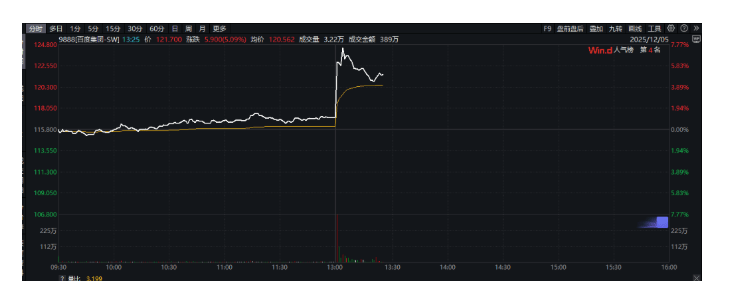
Core Viewpoint - Baidu's stock surged over 5% following news of its semiconductor subsidiary Kunlun Chip planning an IPO in Hong Kong, reflecting strong market interest in AI chip technology [1][3]. Group 1: Company Developments - Kunlun Chip recently raised $283 million, achieving a valuation of $2.97 billion (approximately 21 billion RMB) [3]. - Baidu holds a 59.45% stake in Kunlun Chip, which was incubated internally and completed its first round of independent financing in April 2021 with an initial valuation of around 13 billion RMB [3]. - The company is expected to generate over 1 billion RMB in revenue in 2024, surpassing other AI chip companies that have either filed for or completed IPOs [8]. Group 2: Market Performance - The Hong Kong stock market saw a rally in computing hardware stocks, with Baidu's shares rising nearly 8% at one point, closing at 121.6 HKD per share, giving it a market capitalization of 334.4 billion HKD [1][3]. - Other companies in the sector, such as InnoTek and Lenovo, also experienced significant stock price increases, indicating a broader positive sentiment in the AI hardware market [3]. Group 3: Future Projections - Morgan Stanley predicts that Kunlun Chip's revenue will increase from approximately 1.3 billion RMB in 2025 to 8.3 billion RMB in 2026, marking a sixfold growth [8]. - The new generation of Kunlun chips, including the M100 and M300 models, is set to be launched in 2026 and 2027, respectively, targeting large-scale inference and multimodal model training [8]. - Baidu's AI infrastructure, supported by Kunlun Chip and its cloud computing platform, is positioned to enhance AI capabilities across various industries, providing scalable and cost-effective solutions [9].


KVB plus:昆仑芯拟港股IPO,AI芯片赛道升温,百度生态迎来重估
Sou Hu Cai Jing· 2025-12-05 08:54
Group 1 - Kuanlun Chip, a subsidiary of Baidu, has officially initiated its listing process in Hong Kong, driven by the global computing power arms race and domestic substitution sentiment [2] - The company has selected an investment banking team and plans to submit its A1 form in Q1 2026, with a potential listing as early as early 2027. The latest financing round values the company at approximately 21 billion RMB (2.97 billion USD), an increase from the previous valuation of 18 billion RMB [2] - Following the news, Baidu's stock surged nearly 8% in Hong Kong, adding over 20 billion HKD to its market capitalization in a single day, indicating strong market support for the "AI infrastructure" narrative [2] Group 2 - Kuanlun Chip transitioned from a "self-use" model to external sales, with revenue expected to reach approximately 2 billion RMB in 2024, where external customer contributions will be less than 40%. By 2025, external orders are projected to exceed half of total revenue, with an anticipated annual revenue of over 3.5 billion RMB and a break-even point, marking a critical turning point for the IPO story [3] - At the Baidu World Conference in November, Kuanlun Chip launched two new products: the M100 for large-scale inference, set for mass production in early 2026, and the M300 aimed at multi-modal large model training and inference, expected to be available in early 2027, directly competing with mid-to-high-end GPUs from Nvidia [4] - With the introduction of new products and the demand for GPU replacements, Kuanlun Chip's revenue is forecasted to surge from 1.3 billion RMB in 2025 to 8.3 billion RMB in 2026, representing a sixfold increase and becoming a core growth engine for Baidu Smart Cloud over the next two years [4] Group 3 - Recent data from exchanges confirms the rising interest in "AI computing power," with domestic GPU companies like Moore Threads experiencing a 500% surge on their debut. Other companies such as Muxi, Suiyuan, and Biran are also expected to file for listings in the coming weeks [5] - The Hong Kong Stock Exchange has increased its exposure to hard technology, coupled with improved liquidity in the Hong Kong stock market, providing Kuanlun Chip with a valuable valuation premium window. Industry insiders suggest that if Kuanlun Chip successfully goes public, its market capitalization could reach between 30 billion and 100 billion HKD [5] Group 4 - Kuanlun Chip's IPO represents not just a financing event but also a shift in the narrative of domestic AI chips from "usable" to "effective and reliable." The company aims to overcome capacity and ecosystem bottlenecks, which will significantly influence its post-listing performance [7] - For Baidu, Kuanlun Chip's independent listing signifies the formal inclusion of "AI infrastructure" in its valuation framework, marking a comprehensive rewrite of the traditional search advertising narrative and the beginning of a new growth cycle [7]
昆仑芯拟赴港上市?百度一度涨超7%
Di Yi Cai Jing· 2025-12-05 08:29
Core Viewpoint - Kunlun Chip is preparing for an IPO in Hong Kong, with plans to submit its application to the Hong Kong Stock Exchange in Q1 2026 and aims to complete the IPO by early 2027, which has positively impacted Baidu's stock price [1][2]. Group 1: IPO Preparation - Kunlun Chip has initiated preparations for its Hong Kong IPO, with plans to submit the listing application as early as Q1 2026 and to complete the IPO by early 2027 [1]. - The company was previously known as Baidu's Intelligent Chip and Architecture Department and became an independent entity in 2021 [1]. Group 2: Product Development - Kunlun Chip has undergone three product iterations, with the first generation launched in 2020, the second in 2021, and the third generation P800 series achieving mass production in 2024 [2]. - The next generation M100 product is designed for large-scale inference scenarios and is expected to launch in 2026, while the M300 product for ultra-large-scale multimodal model training and inference is set for 2027 [2]. Group 3: Market Presence and Financial Outlook - Kunlun Chip has secured over a hundred clients, including major companies like China Merchants Bank and Geely, with deployment scales ranging from tens to thousands of units [2]. - Morgan Stanley projects that Kunlun Chip's revenue will surge from approximately 1.3 billion RMB in 2025 to 8.3 billion RMB in 2026, marking a sixfold increase [2]. - There are indications that Kunlun Chip may achieve breakeven this year, contrasting with other players in the AI chip industry [2]. Group 4: Application and Performance - Most inference tasks at Baidu are currently running on the P800 series, which has been effectively utilized for training multimodal models [3]. - The training cluster has expanded to over 10,000 cards, demonstrating high efficiency and cost-effectiveness compared to traditional GPU clusters [3].
“国产GPU第一股”摩尔线程上市首日收涨425.46%,中一签最高浮盈超28万元
Cai Jing Wang· 2025-12-05 07:49
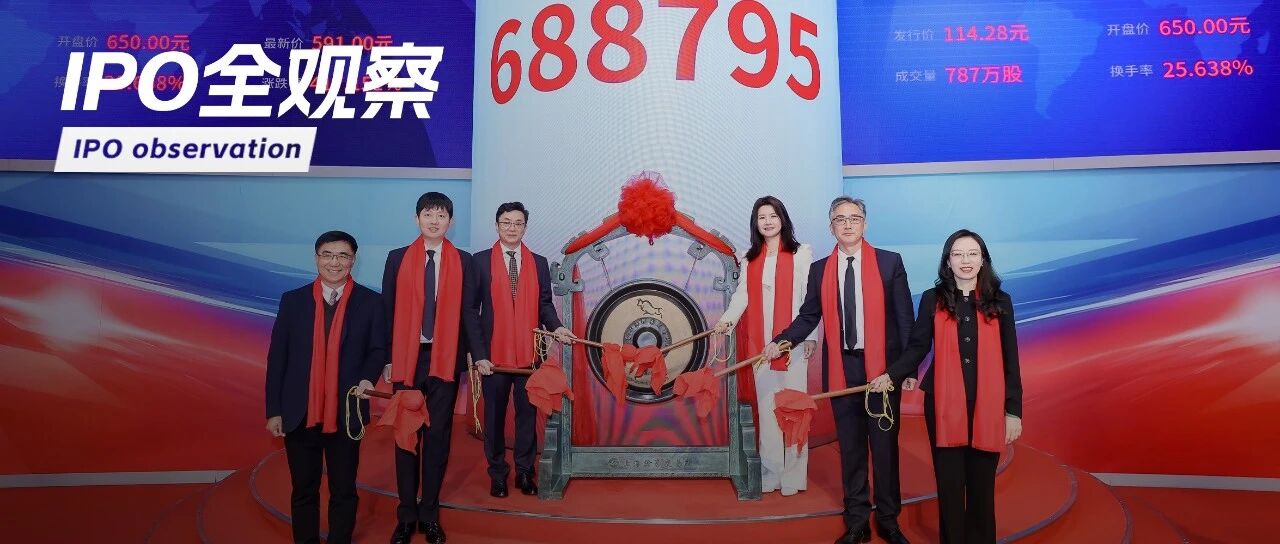
Company Overview - Moore Threads officially listed on the STAR Market on December 5, 2023, becoming the first domestic GPU stock, with an opening price of 650 CNY per share, a significant increase of 468.78% from the issuance price of 114.28 CNY [1] - The stock reached a peak of 688 CNY during trading, with a closing price of 600.5 CNY, resulting in a total market capitalization of 282.25 billion CNY [1] - The company raised approximately 7.9996 billion CNY in its IPO, with a net amount of 7.576 billion CNY after deducting issuance costs, primarily for R&D projects related to AI chips and graphics chips [1] Financial Performance - Moore Threads has shown rapid revenue growth, with a compound annual growth rate (CAGR) of 208.44% from 2022 to 2024, and reported revenue of 785 million CNY in the first three quarters of 2025, a year-on-year increase of 181.99% [2] - Despite the revenue growth, the company remains in a loss position, with net losses of 1.894 billion CNY, 1.703 billion CNY, 1.618 billion CNY, and 724 million CNY from 2022 to the first three quarters of 2025 [2] - The management anticipates achieving profitability by 2027 [2] Industry Outlook - The AI chip market in China is expected to grow rapidly, with a forecasted market size increasing from 142.54 billion CNY in 2024 to 1.3368 trillion CNY by 2029, representing a CAGR of 53.7% from 2025 to 2029 [2] - The GPU segment is projected to experience the fastest growth, with its market share expected to rise from 69.9% in 2024 to 77.3% in 2029 [2] - Globally, the GPU market is predicted to reach 36.119 trillion CNY by 2029, with China's GPU market size expected to reach 13.635 trillion CNY, increasing its global market share from 15.6% in 2024 to 37.8% in 2029 [3]
曝:百度昆仑芯拟赴港IPO
Sou Hu Cai Jing· 2025-12-05 05:53
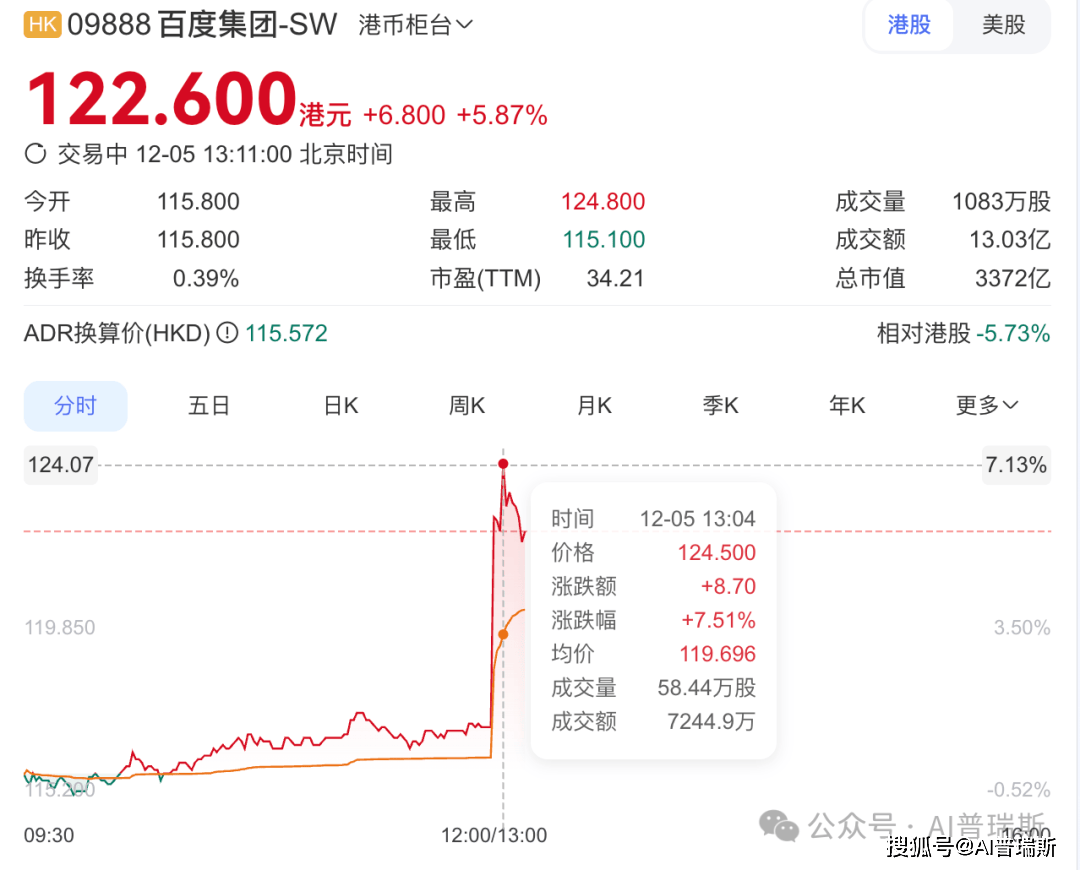
Group 1 - Kunlunxin, a subsidiary of Baidu focused on AI chips, is preparing for an IPO in Hong Kong and has completed a new financing round with a post-money valuation of approximately 21 billion RMB (about 3 billion USD) [1][2] - Following the news, Baidu's stock in Hong Kong surged by 7.51%, reaching a peak increase of 8.70 [2] - Kunlunxin is recognized as a key player in China's high-performance computing sector, with the latest financing involving multiple institutional investors and the IPO preparations in preliminary stages [2][3] Group 2 - The push for Kunlunxin's market entry is driven by the tightening of U.S. export restrictions on advanced semiconductors and the growing domestic demand for high-end AI chips, indicating a significant shift towards local supply chain alternatives [3] - In the past year, several Chinese AI chip companies, including Cambricon and Suirian Technology, have also sought to go public, reflecting an accelerated move of the domestic computing ecosystem towards capital markets to support larger R&D investments [3] - As of now, Baidu has not responded to inquiries regarding the IPO plans [3]

股价飙升近8%!百度昆仑芯被曝计划赴港IPO,估值近30亿美元
Sou Hu Cai Jing· 2025-12-05 05:39
Core Viewpoint - Baidu's AI chip subsidiary Kunlun Core is accelerating its preparations for an IPO in Hong Kong, with plans to submit its application by Q1 2026 and complete the IPO by early 2027, following a recent valuation of approximately 21 billion RMB (about 2.97 billion USD) [1][4] Group 1: Company Developments - Kunlun Core has initiated its IPO preparations, aiming for a listing on the Hong Kong Stock Exchange by early 2027, with a recent funding round valuing the company at around 210 billion RMB [1][4] - The company has shifted from being an internal department of Baidu to an independent entity, focusing on reducing reliance on its parent company and expanding its customer base [5] - In the past two years, Kunlun Core has increased its external sales efforts, targeting clients beyond internet companies, including state-owned enterprises and local government data center projects [5] Group 2: Financial Performance - Kunlun Core is currently in a phase of "investing for scale," with projected revenues of approximately 2 billion RMB and a net loss of around 200 million RMB for 2024 [5] - The company anticipates that over half of its revenue will come from external clients by 2025, with expectations to exceed 3.5 billion RMB in revenue this year and achieve breakeven [5] Group 3: Market Trends and Opportunities - The enthusiasm in the capital market for AI chips is increasing, as evidenced by the recent IPO of domestic GPU company Moore Threads, which saw its stock price surge significantly on its debut [4] - The demand for high-performance chips in China is rapidly growing, providing a favorable growth window for companies like Kunlun Core [6] Group 4: Product Development - Kunlun Core is expanding its product lineup, having recently launched two new AI chips: M100, focused on inference scenarios, and M300, designed for both training and inference tasks, with launches planned for early 2026 and 2027 respectively [6] - The company aims to capture a share of the high-value AI training computing market, indicating its ambition beyond just edge inference [6]
百度盘中涨近8%,报道称百度AI芯片业务昆仑芯计划在香港IPO
Hua Er Jie Jian Wen· 2025-12-05 05:10
Core Viewpoint - Kunlun Core plans to submit its IPO application to the Hong Kong Stock Exchange as early as the first quarter of next year, aiming to complete the IPO by early 2027 [1] Group 1 - Kunlun Core is targeting a listing on the Hong Kong Stock Exchange [1] - The company aims to submit its application no later than the first quarter of next year [1] - The completion of the IPO is expected by early 2027 [1]
市值2800亿,2025科创板迎来最大IPO!“中国英伟达”背后的资本天团
创业邦· 2025-12-05 04:47
Core Viewpoint - The article highlights the successful IPO of Moore Threads, marking it as the first domestic general-purpose GPU stock in China, with significant fundraising and market potential amidst the backdrop of increasing demand for AI chips and the exit of NVIDIA from the Chinese market [3][4][5]. Company Overview - Moore Threads, founded by Zhang Jianzhong, went public on the STAR Market with an issuance price of 114.28 CNY per share, raising 8 billion CNY, making it the largest IPO on the STAR Market in 2025 by fundraising amount [3][4]. - The company has a current market valuation of 280 billion CNY, with Zhang Jianzhong holding approximately 11% of the shares, translating to a personal wealth of 30.8 billion CNY [4][5]. Market Context - The exit of NVIDIA from the Chinese market due to U.S. export controls has created a significant gap in the AI chip market, with a projected shortfall of 16.8 billion USD in 2025 [5][39]. - Domestic AI chip companies, including Moore Threads, are facing challenges in meeting this demand due to supply chain limitations and the need for further technological advancements [5][39][42]. Financial Performance - Moore Threads has maintained high R&D investments, with projected losses of approximately 19 billion CNY, 17 billion CNY, and 16 billion CNY from 2022 to 2024, respectively [12][13]. - The company’s revenue has shown significant growth, with 2023 revenue reaching 785 million CNY, surpassing the total revenue of the previous three years [26]. Product Development - Moore Threads has developed a range of products, including general-purpose GPUs for AI computing and desktop GPUs, with a focus on rapid iteration and performance improvement [25][26]. - The latest product, the "Pinghu" S5000, has achieved a computing power of 32 TFlops, surpassing NVIDIA's A100 [25]. Competitive Landscape - The article discusses the emergence of four major domestic GPU companies, including Moore Threads, which are competing in the AI chip market, each with distinct focuses and product offerings [30][31]. - Despite the growth of domestic players, the market remains dominated by NVIDIA and AMD, with NVIDIA holding an 88% market share globally [48]. Investment and Support - Moore Threads has received substantial backing from government and venture capital, raising over 10 billion CNY prior to its IPO, with ongoing support from various institutional investors [12][19]. - The company has also benefited from government subsidies, totaling 585 million CNY over two and a half years [13][14]. Future Outlook - The article emphasizes that while the IPO is a significant milestone, it is merely the beginning of a long journey for Moore Threads and other domestic AI chip companies as they strive to compete with global giants [48].
“国产GPU第一股”摩尔线程上市首日涨超468%,资金盘中净申购规模最大的芯片ETF(159995)
Ge Long Hui· 2025-12-05 02:51
Core Insights - Moer Thread, known as the "first domestic GPU stock," saw a significant first-day listing increase of 468.78%, currently maintaining a rise of 425%, with a latest market capitalization of 280 billion yuan [1] - The market shows strong optimism towards the AI chip industry, as evidenced by the substantial market cap of Moer Thread exceeding 200 billion yuan, indicating a favorable outlook for domestic semiconductor chains and AI chips [1] - The demand for AI computing power is surging, leading to accelerated domestic semiconductor replacements, with forecasts suggesting a rapid expansion in GPU demand driven by the AI era [1] Industry Summary - According to Frost & Sullivan, the global GPU market is projected to grow at a CAGR of 24.5% from 2025 to 2029, with the Chinese market expected to grow even faster, from 142.5 billion yuan in 2024 to 1,336.8 billion yuan in 2029, reflecting a CAGR of 53.7% during the same period [1] - Domestic GPU manufacturers are anticipated to benefit significantly from this growth trend, as the market shifts towards local production and innovation in the semiconductor sector [1] Related Products and Market Performance - The largest chip industry ETF in the market, Chip ETF (159995), has seen a decline of 1.19%, with a total scale reaching 27.253 billion yuan, covering the entire chip industry chain [2] - The focus on semiconductor domestic replacement equipment and materials is represented by the Sci-Tech Innovation Board Semiconductor ETF (588170), which has decreased by 1%, including key stocks such as Zhongwei Company and Huahai Qingke [2]
越秀证券每日晨报-20251205
越秀证券· 2025-12-05 02:30
每日晨报│2025 年 12 月 5 日 主要市场指数表现 | | 收市价 | 上个交易日升 | YTD 升跌 | | --- | --- | --- | --- | | 恒生指数 | 25,935 | +0.68% | +29.29% | | 恒生科技指数 | 5,615 | +1.45% | +25.68% | | 国企指数 | 9,106 | +0.86% | +24.92% | | 沪深 300 | 4,546 | +0.34% | +15.54% | | 上证综合指数 | 3,875 | -0.06% | +15.63% | | 深证成份指数 | 13,006 | +0.40% | +24.89% | | 中小板指 | 7,904 | +0.26% | +23.85% | | 道琼斯指数 | 47,850 | -0.07% | +12.47% | | 标普 500 指数 | 6,857 | +0.11% | +16.59% | | 纳斯达克指数 | 23,505 | +0.22% | +21.72% | | 伦敦富时指数 | 9,710 | +0.19% | +18.82% | | CAC40 指数 ...