耐心资本

Search documents
清华大学田轩:构建长效激励制度,培育耐心资本生态
2 1 Shi Ji Jing Ji Bao Dao· 2025-10-23 05:55
Group 1 - The core viewpoint of the articles emphasizes the transition of China's capital market from "channel-based" to "institutional" opening, focusing on deepening reforms and optimizing the investment ecosystem to foster "patient capital" and enhance financial stability for high-quality economic development [1][2][6][13]. Group 2 - During the "14th Five-Year Plan" period, significant progress was made in the foundational institutional construction of the capital market, particularly with the comprehensive implementation of the registration system, which fundamentally reshaped the market ecology and improved the service for technological innovation and industrial upgrading [6][9]. - The registration system reform transitioned from a pilot on the Sci-Tech Innovation Board to full market coverage, establishing a stock issuance system centered on information disclosure [6]. - The merger and acquisition mechanism saw systematic innovation, with the introduction of the "Six Guidelines for Mergers and Acquisitions," leading to increased activity in M&A transactions, especially in strategic emerging industries [6][9]. - The rigid enforcement of the delisting system has significantly improved market clearing efficiency, with a notable increase in cases of delisting due to face value and financial issues [6][9]. Group 3 - Key challenges in achieving a high-quality dynamic balance between investment and financing include insufficient adaptability of institutional supply, structural barriers in long-term capital market entry, and a lack of maturity in market ecology [7][9]. - The investment structure is characterized by a high proportion of individual investors and short-term trading funds dominating institutional investors, leading to difficulties in realizing value investment principles [7][9]. - Recommendations for reform include optimizing policies for long-term capital market entry, encouraging the development of equity ETFs and pension target funds, and enhancing the quality of information disclosure and corporate governance [7][9]. Group 4 - The implementation of the new "National Nine Articles" has led to significant positive changes in corporate governance structures and investor return mechanisms, including the establishment of a dynamic stock repurchase mechanism and improved decision-making transparency [9][10]. - However, deep-seated contradictions remain, such as formalized governance mechanisms and increasing disparities in shareholder returns [9][10]. - Proposed solutions include establishing a market value management assessment system and promoting long-term capital entry to enhance market stability [9][10]. Group 5 - The capital market has made notable achievements in interconnectivity and product openness during the "14th Five-Year Plan," with China's large market size and economic growth potential being key advantages in attracting foreign long-term capital [13]. - To further enhance attractiveness, it is suggested to deepen capital market reforms, improve market transparency, and strengthen intellectual property protection [13][14]. - The transition from "channel-based" to "institutional" opening requires aligning specific rules with international standards, particularly in information disclosure and accounting standards [13][14].


清华大学田轩:构建长效激励制度,培育耐心资本生态
21世纪经济报道· 2025-10-23 05:50
Group 1 - The core viewpoint of the article emphasizes the transition of China's capital market from "channel-based" to "institutional" opening, focusing on optimizing the investment ecosystem and enhancing financial momentum for high-quality economic development [2][12] - During the "14th Five-Year Plan" period, significant progress was made in the foundational institutional construction of the capital market, particularly with the comprehensive implementation of the registration system, which fundamentally reshaped the market ecology [6][5] - The article identifies three major breakthroughs in the capital market during the "14th Five-Year Plan": the establishment of a stock issuance system centered on information disclosure, systematic innovation in the merger and acquisition mechanism, and the rigid enforcement of the delisting system [6][5] Group 2 - The article discusses the need to address core bottlenecks in achieving a high-quality dynamic balance between investment and financing, including insufficient adaptability of institutional supply and structural barriers for long-term capital entering the market [6][7] - Recommendations for reform include optimizing policies for long-term capital market entry, relaxing investment ratio restrictions for social security and insurance funds, and enhancing the quality of information disclosure and corporate governance [7][10] Group 3 - The implementation of the new "National Nine Articles" has led to significant positive changes in corporate governance structures and investor return mechanisms, such as the establishment of a dynamic stock repurchase mechanism [10][11] - However, deep-seated contradictions remain, including formalized governance mechanisms and uneven shareholder returns, necessitating the construction of a market value management assessment system [10][11] Group 4 - To cultivate "patient capital," the article suggests exploring tax incentives for institutional investors holding stocks for over five years and extending assessment periods for pension and insurance funds to five years or more [11][12] - The article emphasizes the importance of enhancing the transparency and fairness of the market to attract foreign long-term capital, leveraging China's large market size and growth potential [13][14]

专访田轩:构建长效激励制度 培育耐心资本生态
2 1 Shi Ji Jing Ji Bao Dao· 2025-10-22 14:56
Core Insights - The Chinese capital market is undergoing significant reforms as it transitions from the "14th Five-Year Plan" to the "15th Five-Year Plan," focusing on deepening institutional reforms and fostering "patient capital" for high-quality investment and financing [1][2] Group 1: Progress in Capital Market Reforms - The capital market has achieved notable progress in foundational institutional construction during the "14th Five-Year Plan," particularly with the comprehensive implementation of the registration system, which has fundamentally reshaped the market ecology [3][4] - Key breakthroughs include the transition to a registration-based issuance system, systematic innovation in merger and acquisition mechanisms, and the rigid enforcement of delisting regulations, which have collectively improved market efficiency [3][4] Group 2: Challenges in Balancing Investment and Financing - Despite advancements, the market faces challenges in achieving a high-quality dynamic balance between investment and financing, including structural barriers for long-term capital entry and a lack of maturity in market ecology [4][5] - The current investor structure is characterized by a high proportion of individual investors and short-term trading funds, which complicates the realization of value investment principles [4][5] Group 3: Recommendations for Reform - Recommendations for reform include optimizing policies for long-term capital entry, relaxing investment restrictions for social security and insurance funds, and enhancing the functionality of multi-tiered capital markets [5][6] - Emphasis is placed on improving information disclosure quality and corporate governance, as well as increasing delisting efficiency to encourage companies to focus on core competencies [5][6] Group 4: Enhancing Corporate Governance and Investor Returns - The implementation of the new "National Nine Articles" has led to significant improvements in corporate governance structures and investor return mechanisms, including enhanced cash dividend stability [7][8] - However, deep-seated contradictions remain, such as formalized governance mechanisms and uneven shareholder returns, necessitating the establishment of a market value management assessment system [7][8] Group 5: Attracting Long-term Foreign Capital - The Chinese capital market's significant advantages in attracting long-term foreign capital include its large market size and ongoing economic growth potential [10][11] - To further enhance attractiveness, continued reforms are needed to improve market transparency, strengthen intellectual property protection, and optimize the investment environment [10][11] Group 6: Cross-border Regulatory Cooperation - The establishment of a resilient risk monitoring and cross-border regulatory cooperation system is essential for effectively mitigating external shocks [12] - Recommendations include enhancing macro-prudential management frameworks for cross-border capital flows and improving collaboration with regulatory agencies in major economies [12]
金芙蓉基金剑指千亿 “耐心资本”赋能湖南高质量发展
Xin Hua Cai Jing· 2025-10-22 13:44
Core Viewpoint - The establishment of the Hunan Jin Furong Investment Fund aims to create a systematic and integrated fund matrix to support technological innovation, industrial upgrading, and the transformation of scientific achievements in Hunan Province [1][2]. Group 1: Fund Structure and Goals - The Jin Furong Fund operates under a "1+5+N" framework, where "1" represents the main fund, "5" refers to five major mother funds focusing on industrial guidance, technological innovation, infrastructure, social development, and other areas, and "N" indicates the establishment of multiple sub-funds [2][3]. - The total target scale of the fund matrix is set at 340 billion yuan, with the provincial government contributing 240 billion yuan and state-owned enterprises contributing 800 billion yuan [2][3]. - The fund aims to leverage government investment to attract social capital, enhancing the effectiveness of fiscal resources in key areas such as industry guidance and technological innovation [2][3]. Group 2: Operational Mechanism - The fund's operation is characterized by a clear division of responsibilities between the government and the market, allowing professional investment institutions to manage fund operations while the government focuses on macro-level guidance and ecosystem creation [4][5]. - A performance evaluation system will be implemented that emphasizes long-term indicators over short-term profits, encouraging investment in innovative projects [5][6]. - Leading venture capital institutions are actively participating in the management of sub-funds, enhancing the fund's operational capabilities [5][6]. Group 3: Investment Focus and Impact - The Jin Furong Fund has already invested in high-quality enterprises in sectors such as intelligent equipment, new materials, and biomedicine, with a significant portion being recognized as specialized and innovative small and medium-sized enterprises [7][8]. - Notable investments include the leading domestic manufacturer of photomask substrates, which is crucial for chip manufacturing, and a semiconductor equipment company that has successfully addressed key industry challenges [8][9]. - The fund aims to inject vitality into regional economic development by supporting various fields, including infrastructure and social development, thereby facilitating the transformation of innovative achievements in Hunan [9][10].
专访田轩:构建长效激励制度,培育耐心资本生态
2 1 Shi Ji Jing Ji Bao Dao· 2025-10-22 13:03
Core Viewpoint - The Chinese capital market is undergoing significant reforms as it transitions from the "14th Five-Year Plan" to the "15th Five-Year Plan," focusing on deepening institutional reforms and enhancing the investment ecosystem to foster "patient capital" and achieve high-quality balance in investment and financing [1][2]. Group 1: Achievements in Capital Market Reforms - The capital market has made notable progress in foundational institutional construction during the "14th Five-Year Plan," particularly with the comprehensive implementation of the registration system, which has fundamentally reshaped the market ecology [5]. - Key breakthroughs include the transition to a registration-based issuance system, the innovation of the merger and acquisition mechanism, and the rigid enforcement of the delisting system, which has significantly improved market clearing efficiency [5][6]. - The registration system's full implementation has had the most profound impact on the market ecology, enhancing information disclosure responsibilities and rationalizing pricing mechanisms, thereby positioning the capital market as a driver of technological innovation and industrial upgrading [5]. Group 2: Challenges and Core Bottlenecks - Despite the progress, challenges remain in achieving a high-quality dynamic balance between investment and financing, including insufficient adaptability of institutional supply and structural barriers for long-term capital entering the market [6][7]. - The market ecology is still maturing, with a high proportion of individual investors and a dominance of short-term trading funds among institutional investors, leading to difficulties in realizing value investment concepts [6][7]. - There is a lack of clear functional differentiation among various market segments, which complicates the positioning of different boards and their services for small and medium-sized enterprises [6][7]. Group 3: Recommendations for Future Reforms - To deepen reforms, it is essential to optimize policies for long-term capital entering the market, relax investment ratio restrictions for social security and insurance funds, and establish assessment mechanisms aligned with long-term return goals [7][8]. - Enhancing the quality of information disclosure and corporate governance, as well as improving delisting efficiency, will compel companies to focus on their core businesses and strengthen their competitive advantages [7][8]. - The establishment of a market-oriented mechanism for entry and exit will help attract high-quality companies and improve the overall investment environment [7][8]. Group 4: Enhancing Investor Returns and Governance - The implementation of the new "National Nine Articles" has led to significant positive changes in corporate governance structures and investor return mechanisms, including the establishment of dynamic stock repurchase mechanisms [8][9]. - However, deep-seated contradictions remain, such as formalized governance mechanisms and increasing disparities in shareholder returns, necessitating the construction of a value management assessment system [8][9]. - Future efforts should focus on improving internal controls, enhancing board independence, and aligning stock incentives with long-term performance to avoid governance failures [9][10]. Group 5: Attracting Long-term Foreign Capital - The Chinese capital market has made significant strides in interconnectivity and product openness, with its large market size and sustained economic growth potential being key advantages in attracting long-term foreign capital [11][12]. - To further enhance attractiveness, continued reforms to improve market transparency, strengthen intellectual property protection, and optimize the investment environment are necessary [11][12]. - Establishing a dynamic adjustment mechanism for information disclosure standards and aligning with international financial reporting standards will also be crucial for attracting foreign investment [13].

战略科学家、决策咨询专家献策“十五五”上海国际科创中心建设 布局“颠覆性创新”构建“热带雨林”
Jie Fang Ri Bao· 2025-10-22 01:40
Core Insights - The construction of the Shanghai International Science and Technology Innovation Center during the "14th Five-Year Plan" has made significant progress, with experts providing insights on future research and industrial directions for the "15th Five-Year Plan" [1] Group 1: Disruptive Innovation - Disruptive innovation is identified as a key variable for achieving leadership in technology, emphasizing the need for strategic agility in research to avoid "strategic missteps" [2] - High-risk, high-value scientific research should receive increased systematic support to foster disruptive innovation [2][3] - The role of enterprises as engines of industry is highlighted, with a focus on transforming research outputs into future industries [2] Group 2: Talent Development - The importance of attracting high-end talent to Shanghai is emphasized, with a vision to create a global talent hub [4] - Building an innovative community that links scientists, entrepreneurs, and investors is crucial for fostering disruptive innovation [5] - A comprehensive talent cultivation strategy is necessary to enhance the depth of talent reserves, focusing on nurturing young researchers and engineers [6] Group 3: Strategic Planning - Shanghai aims to leverage its internationalization to attract global talent and resources, positioning itself as a model for innovation [8] - The focus on six key future directions—future manufacturing, information, materials, energy, space, and health—will guide the construction of the international innovation center [9] - A diverse innovation ecosystem is essential, combining large enterprises with startups and fostering both original research and market-oriented development [10]
8个IPO项目!宁波“老牌”创投何以频频投在“风来前”?
Sou Hu Cai Jing· 2025-10-22 00:03
Core Insights - Dongyuan Venture Capital has successfully listed its investment project Nengzhiguang on the Beijing Stock Exchange, marking it as Ningbo's first A-share listing by 2025, increasing the number of listed companies in which Dongyuan has invested to eight [2] - The company has invested in over 30 enterprises across various sectors including advanced manufacturing, new energy, new materials, semiconductors, IT and software services, biomedicine, and energy conservation and environmental protection, demonstrating a preference for local enterprises and a long-term holding strategy [2][3] Company Overview - Established in May 2005 with a registered capital of 100 million yuan, Dongyuan Venture Capital is the first venture capital institution in Ningbo, with its equity structure showing that Ningbo Electronic Information Group holds 51.25% of the shares, followed by two state-owned enterprises [3] - The company has experienced significant growth, doubling its asset management scale since its inception, and has undergone three key phases: foundational exploration, industry focus, and platform operation [3] Investment Strategy - The decisive factor for investment decisions is the "scientific content" of the target enterprises, which has been a guiding principle since the company's early investments [3] - Dongyuan has adopted a "patient capital" approach, exemplified by its long-term investment in Jinlang Technology, which has yielded good returns for shareholders [4] - The company has shifted to a dual investment strategy since 2016, focusing on both early-stage and more mature projects, leading to successful investments in several notable listed companies [4] Market Positioning - Dongyuan Venture Capital strategically invests in industries before they experience significant growth, such as the solar energy sector, where Jinlang Technology achieved a market value of over 100 billion yuan shortly after its listing [7] - The company emphasizes the importance of understanding the target enterprises and their industries to capitalize on market opportunities effectively [7] Operational Challenges - The company faces challenges in exit strategies due to tightening IPO channels and a cooling primary market, which necessitates a focus on quality over quantity in investment decisions [7][8] - Dongyuan has developed internal standards for evaluating potential investments, considering factors such as the industry chain, local industrial support, and the characteristics of the founders [8] Future Outlook - Dongyuan plans to enhance its investment strategies by expanding long-term capital supply, innovating investment approaches, and improving exit mechanisms to strengthen the relationship between capital markets and quality enterprises [8]

杭州培育出AI“六小龙”,深圳能否捧出半导体“天团”?
Mei Ri Jing Ji Xin Wen· 2025-10-21 12:59
Core Insights - Shenzhen's semiconductor industry is experiencing a significant transformation, marked by a strong presence at the Bay Area Semiconductor Industry Ecological Expo, showcasing local innovations and technologies [1][2] - The industry is supported by a robust capital ecosystem, characterized by a collaboration between state-owned and market-oriented investment institutions, emphasizing the importance of "patient capital" [1][5][7] Industry Growth - The scale of Shenzhen's semiconductor and integrated circuit industry reached 256.4 billion yuan in 2024, reflecting a year-on-year growth of 26.8%, with the first half of 2025 showing a continued growth trend of 16.9% [3] - The industry structure has become more balanced, with significant growth across manufacturing, packaging, testing, and equipment sectors, all doubling in size since 2020 [3] Investment Ecosystem - The establishment of the Shenzhen Semiconductor and Integrated Circuit Fund, with a total scale of 5 billion yuan, highlights the role of state-owned capital in driving the semiconductor industry [4] - Shenzhen's investment landscape includes a variety of national and local guiding funds, with numerous state-owned platforms actively participating in the establishment of funds targeting the semiconductor sector [6][8] Strategic Collaboration - The investment strategy in Shenzhen focuses on long-term, strategic capital that aligns with the industry's needs, contrasting with the short-term capital approach seen in other regions [5][7] - The Bay Area Expo serves as a platform for connecting supply and demand, facilitating direct interactions between core procurement parties and exhibitors, enhancing the industry's collaborative ecosystem [10][11] Ecosystem Development - Shenzhen's semiconductor industry benefits from a dense network of high-tech enterprises, providing a complete supply chain and rich application scenarios, which fosters rapid innovation and iteration [11][12] - The region is evolving into a critical player in the global semiconductor landscape, with a focus on nurturing core enterprises that can drive the entire industry forward [13][14] Future Outlook - The ongoing development of the semiconductor sector in Shenzhen is expected to solidify its position as a global innovation hub, leveraging its technological and financial resources [12][15] - The region aims to cultivate a "semiconductor dream team," supported by a strong foundation of capital, talent, and technology [15]
共商长期突破机制,科学仪器国产化沙龙在京举行
仪器信息网· 2025-10-21 09:09
Core Viewpoint - The article emphasizes the importance of domestic innovation and collaboration in the high-end scientific instrument industry, highlighting the need for breakthroughs in core technologies and the integration of the industrial chain to promote the development of domestic high-end scientific instruments [2][9][23]. Summary by Sections Event Overview - The "2025 High-end Scientific Instrument Localization Technology and Industry Collaborative Innovation Salon" was held in Beijing, focusing on core technology breakthroughs, industrial collaboration, and policy recommendations in the high-end scientific instrument sector [2]. Keynote Report - The keynote speaker, Suo Jishuan, pointed out that scientific instruments are crucial for building a strong technological nation, but China heavily relies on imports for high-end instruments, which restricts technological innovation. He noted that despite government support since the "12th Five-Year Plan," there remains a gap between investment and actual industry needs [9][10]. - He introduced three development models: the "Zeiss model" focusing on key technologies, the "Thermo Fisher model" emphasizing platform development through mergers and acquisitions, and the "Danaher model" concentrating on forming leading enterprises [9][10]. Special Report - Han Li discussed the bottlenecks in the development of core components for high-end scientific instruments, stating that support for core component research is significantly lower than for complete systems, with only about 15% of funding allocated to core components [12][13]. - He highlighted the reliance on imports for many critical components and the need for a collaborative innovation platform involving government, research institutions, and enterprises to address these challenges [14]. Roundtable Discussion - The roundtable participants identified three main challenges in collaborative innovation: reliance on foreign technology for core components, a fragmented industrial ecosystem, and a lack of high-level talent in the field [16][17]. - They proposed solutions including policy guidance, collaboration between academia and industry, and leveraging AI technology to enhance efficiency and reduce dependency on manual operations [18][19]. Industry Expectations - The participants noted that current international trade restrictions present an opportunity for domestic scientific instrument development, urging the industry to focus on technological innovation and the leadership role of major enterprises [19][20]. - They called for sustained policy support for high-end instruments and emphasized the importance of building a robust talent pool and academic framework to achieve long-term industry growth [20][24]. Event Conclusion - Li Xin, Vice Chairman of the Beijing Association for Science and Technology, summarized the challenges and opportunities in the localization of high-end scientific instruments, noting that 70.9% of high-end instruments priced over 500,000 yuan are imported [23][24]. - She stressed the need for a systematic approach to innovation and collaboration across sectors to strengthen the foundation for technological self-reliance [24].

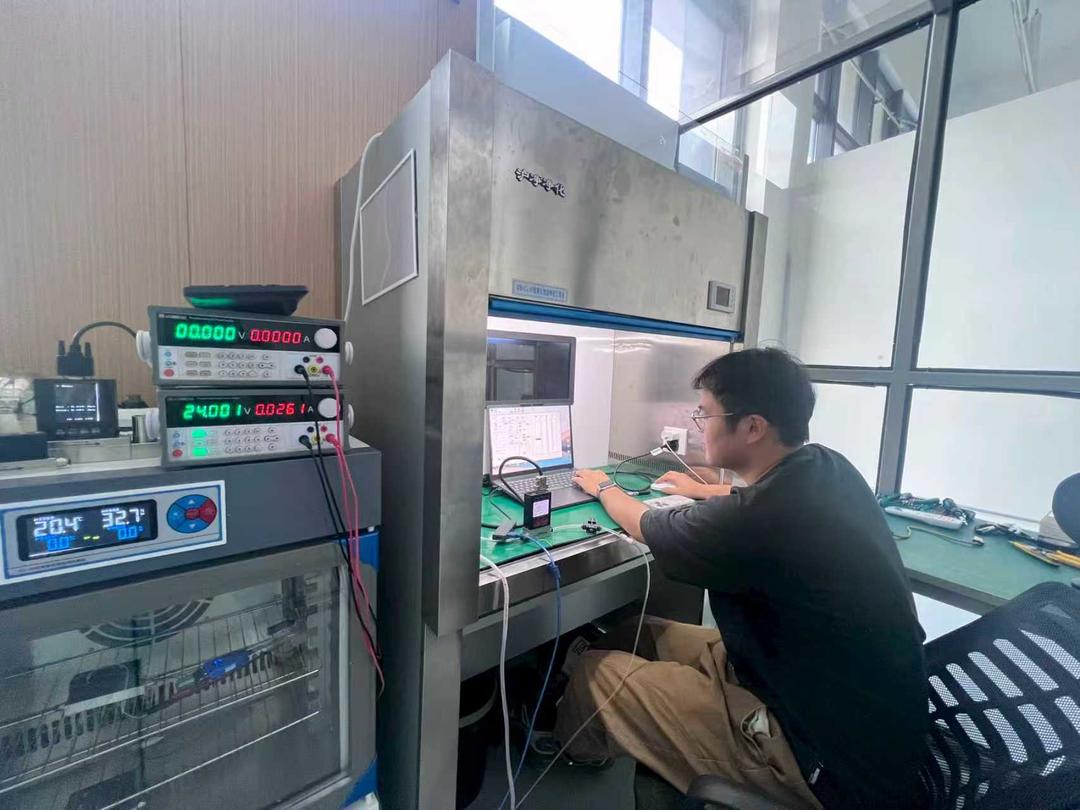
济宁这家企业以耐心资本赋能高端流控技术突围
Qi Lu Wan Bao Wang· 2025-10-21 04:55
Core Viewpoint - The article highlights the advancements and strategic positioning of Shandong Renyongde Industrial Technology Co., Ltd. in the high-precision fluid control module market, emphasizing its role in driving high-end manufacturing in China and its ambition to replace imported products in critical sectors like semiconductors and biomedicine [1][10]. Group 1: Company Overview - Shandong Renyongde focuses on high-precision fluid control technology, which is essential for high-end equipment in semiconductor, biomedicine, and aerospace industries [1]. - The company aims to establish a Chinese brand in the precision fluid control market, which has been dominated by a few foreign enterprises [3]. Group 2: Innovation and Development - The company has undergone a six-year journey of continuous research and development, achieving breakthroughs in algorithms and detection systems, which have led to significant improvements in product performance and cost-effectiveness [7]. - Renyongde's R&D team comprises two-thirds of its workforce, including executives from European and American companies, ensuring a strong focus on innovation and product quality [5]. Group 3: Market Position and Strategy - The company has successfully developed a range of products, including gas pressure flow controllers and electronic pressure sensors, achieving domestic substitution in various fields such as mass spectrometry and biocultivation [8]. - Renyongde is actively pursuing opportunities in the semiconductor market, aiming to develop flow controllers for lithography machines and aerospace applications, with a focus on high-end products rather than competing in low-end markets [10].