
首发经济

Search documents
多元活动助力,上海商业综合体实现客流销售“双丰收”
Guo Ji Jin Rong Bao· 2025-10-29 04:25
Core Insights - Shanghai's commercial entities are attracting foot traffic through unique activities and positioning, with Shanghai Hongqiao Hang Lung Plaza achieving significant sales growth during its anniversary celebration [1][4] - The introduction of the world-class Irish dance show "Riverdance" as an exclusive pre-show for its 30th anniversary China tour exemplifies the mall's innovative approach to creating unique experiences [4] - The mall emphasizes customer experience and resonance with inspiration, focusing on the alignment of brand quality and innovation with the mall's overall positioning and customer expectations [4][5] Sales Performance - Participating tenants in the anniversary celebration saw sales increase by nearly 40% compared to the same period last year [1] Event Strategy - A diverse range of activities, including performances, avant-garde theater, and youth DJ parties, were organized to engage different customer segments and maintain ongoing discussions during the event [4] - Exclusive product launches from luxury brands such as Cartier, Qilin, and Bulgari were featured, attracting significant consumer attention [4] Brand Ecosystem - The mall aims to balance international luxury brands with emerging local brands, creating a dynamic and vibrant brand ecosystem [4] - International luxury brands are seen as foundational, defining the quality and height of the shopping environment, while local brands inject freshness and appeal to younger, trendier customers [4] Future Brand Exploration - The mall is committed to exploring and discovering local emerging brands that align with future lifestyle trends and possess unique potential [5]



老凤祥涨2.02%,成交额8659.21万元,主力资金净流入2453.60万元
Xin Lang Cai Jing· 2025-10-29 03:14
Core Viewpoint - The stock price of Laofengxiang has shown fluctuations, with a recent increase of 2.02% on October 29, 2023, while the year-to-date performance reflects a decline of 5.06% [1][2]. Group 1: Stock Performance - As of October 29, 2023, Laofengxiang's stock price reached 49.58 CNY per share, with a trading volume of 86.59 million CNY and a turnover rate of 0.56%, resulting in a total market capitalization of 25.936 billion CNY [1]. - The stock has experienced a 1.43% increase over the last five trading days, a 4.47% decline over the last 20 days, and a 4.47% increase over the last 60 days [2]. Group 2: Financial Performance - For the first half of 2025, Laofengxiang reported a revenue of 33.356 billion CNY, representing a year-on-year decrease of 16.52%, while the net profit attributable to shareholders was 1.22 billion CNY, down 13.07% year-on-year [2]. - Cumulatively, Laofengxiang has distributed 8.606 billion CNY in dividends since its A-share listing, with 2.856 billion CNY distributed over the past three years [3]. Group 3: Shareholder Information - As of June 30, 2025, the number of shareholders for Laofengxiang increased by 15.31% to 48,700, with an average of 0 circulating shares per shareholder [2]. - The top ten circulating shareholders include Hong Kong Central Clearing Limited, which holds 5.2755 million shares, a decrease of 971,900 shares compared to the previous period [3].

兰生股份的前世今生:营收行业第一超同业均值,净利润领先同行近亿
Xin Lang Cai Jing· 2025-10-28 23:27
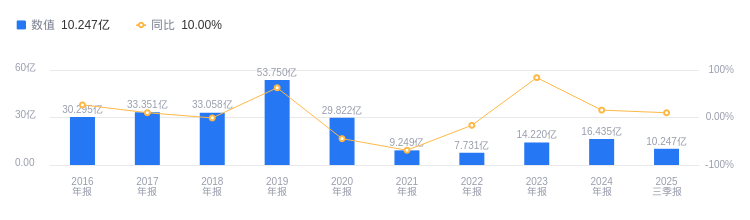
Core Viewpoint - Lansheng Co., Ltd. is a leading player in the domestic exhibition industry, with a comprehensive business model covering the entire exhibition industry chain, supported by rich resources from state-owned shareholders [1] Group 1: Business Performance - In Q3 2025, Lansheng achieved a revenue of 1.025 billion yuan, ranking first in the industry, significantly higher than the industry average of 541 million yuan and the median of 401 million yuan [2] - The company's net profit for the same period was 199 million yuan, also ranking first in the industry, far exceeding the industry average of 82.7 million yuan and the median of 40.3 million yuan [2] - The main business composition includes exhibition organization at 263 million yuan (47.59% of revenue) and exhibition hall operation services at 148 million yuan (26.79% of revenue) [2] Group 2: Financial Ratios - As of Q3 2025, Lansheng's asset-liability ratio was 26.24%, down from 27.93% year-on-year but still above the industry average of 23.24% [3] - The gross profit margin for the same period was 30.62%, slightly down from 31.23% year-on-year and below the industry average of 33.35% [3] Group 3: Executive Compensation - The chairman, Chen Xiaohong, received a salary of 1.233 million yuan in 2024, an increase of 205,000 yuan from 2023 [4] - The president, Bi Peiwen, saw his salary rise from 348,000 yuan in 2023 to 1.1197 million yuan in 2024 [4] Group 4: Shareholder Information - As of September 30, 2025, the number of A-share shareholders increased by 59.64% to 41,900 [5] - The average number of circulating A-shares held per shareholder decreased by 37.36% to 17,600 [5] Group 5: Future Outlook - Lansheng is expected to achieve revenues of 1.714 billion yuan, 1.845 billion yuan, and 1.987 billion yuan for 2025 to 2027, with year-on-year growth rates of 4.3%, 7.7%, and 7.7% respectively [6] - The projected net profit for the same period is 335 million yuan, 380 million yuan, and 429 million yuan, with year-on-year growth rates of 9.3%, 13.2%, and 12.9% respectively [6] - The company plans to explore various market opportunities, including the pet economy and transitioning to an AI service provider, while maintaining high dividend payouts [6]

米奥会展的前世今生:2025年三季度营收4.01亿行业排第二,净利润4025.94万排名居次席
Xin Lang Cai Jing· 2025-10-28 15:24
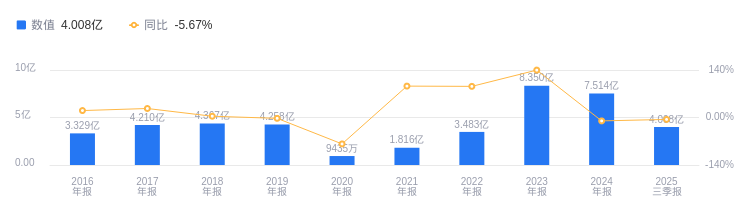
Core Viewpoint - Miaowei Exhibition is a leading cross-border exhibition service provider in China, focusing on self-organized exhibitions and offering comprehensive AI digital solutions for exhibition participation [1] Group 1: Business Performance - In Q3 2025, Miaowei Exhibition achieved revenue of 401 million yuan, ranking second in the industry, with the top competitor, Lansheng Co., generating 1.025 billion yuan [2] - The net profit for the same period was approximately 40.26 million yuan, also ranking second, while Lansheng Co. reported a net profit of 199 million yuan [2] Group 2: Financial Ratios - As of Q3 2025, the company's debt-to-asset ratio was 34.82%, higher than the previous year's 32.93% and above the industry average of 23.24% [3] - The gross profit margin was 47.05%, down from 50.17% year-on-year but still above the industry average of 33.35% [3] Group 3: Management Compensation - Chairman Pan Jianjun's salary for 2024 was 945,100 yuan, a slight increase from 943,300 yuan in 2023 [4] - General Manager Fang Huansheng's salary for 2024 was 633,600 yuan, a significant decrease from 1.2853 million yuan in 2023 [4] Group 4: Shareholder Information - As of September 30, 2025, the number of A-share shareholders decreased by 6.98% to 12,000, while the average number of shares held per shareholder increased by 7.36% to 14,400 [5] - The top ten circulating shareholders included the Jiashi Theme New Power Mixed Fund, which held 1.3794 million shares, down by 189,200 shares from the previous period [5] Group 5: Future Outlook - The company faced revenue and profit declines in H1 2025 due to the cancellation of some exhibitions, but expects recovery in H2 2025 as exhibition numbers increase [6] - Revenue projections for 2025 to 2027 are 920 million, 1.09 billion, and 1.3 billion yuan, with net profits of 180 million, 220 million, and 280 million yuan respectively [5][6]

入境游火了 上海市委常委答21: 前九月入境游超630万人次
2 1 Shi Ji Jing Ji Bao Dao· 2025-10-28 07:20
Group 1 - The total retail sales of consumer goods in Shanghai increased significantly, with a growth rate exceeding 10% in the third quarter of this year [1] - The 8th China International Import Expo will be held from November 5 to 10, with participation from 155 countries and regions, and over 4,108 foreign enterprises exhibiting [1] - The expo will feature a total exhibition area of over 430,000 square meters, setting a new record for scale [1] Group 2 - Shanghai has implemented various policies to stimulate consumption, including initiatives for the elderly economy, night economy, and service consumption, leading to significant sales boosts [2] - The "Five-Five Shopping Festival" contributed to a 10.2% increase in offline consumption, while the "Shanghai Summer" international consumption season saw a 72.4% increase in tax refund sales from July to September [2] - The upcoming expo will coincide with the "2025 Boutique Consumption Month" and various promotional activities to enhance the expo's impact on local consumption [2] Group 3 - New business models and consumption scenarios are being rapidly developed, with over 2,000 launch events held this year and 787 new stores opened in the first nine months [3] - E-commerce transactions in Shanghai exceeded 3.27 trillion yuan, with a year-on-year growth of 12.7%, and live-streaming retail sales reached 369 billion yuan, growing by 23.6% [3] - The city is enhancing its commercial infrastructure, with 23 new or renovated commercial projects completed this year [3] Group 4 - Service consumption is being expanded and improved, with the introduction of the "Le·Shanghai" service consumption vouchers boosting spending in dining, tourism, and entertainment [4] - Over 6.3 million inbound tourists visited Shanghai in the first nine months, with tourism consumption increasing by nearly 30% year-on-year [4] - The city hosted nearly 1,000 cultural exhibitions and events, attracting 40 million visitors, with significant attendance at major exhibitions like the "Ancient Egyptian Civilization Exhibition" [4]
首发经济票根经济放异彩,消费驶入新蓝海
Zheng Quan Shi Bao Wang· 2025-10-27 05:46
Core Viewpoint - The core focus of the article is on boosting consumption as a key task for economic work in 2025, with various measures being implemented to expand and enhance service consumption [1] Group 1: Policies and Measures - The Ministry of Commerce and nine other departments have issued measures to expand service consumption, including the development of new consumption scenarios and support for high-quality consumption resources [1] - Local governments are actively exploring new consumption models and scenarios to stimulate consumption potential, including the integration of commerce, tourism, culture, and sports [1] Group 2: Ticket Economy - The "ticket economy" is emerging as a new driver for cultural and tourism consumption, with events like the China-Arab Expo boosting local sales and hotel bookings significantly [2] - In Yinchuan, the key commercial area saw a 37.55% year-on-year increase in sales during the expo, with hotel bookings up by 25%, generating over 1 billion yuan in consumption [2] Group 3: First Release Economy - The "first release economy" is gaining traction, with significant openings in cities like Shenzhen and Hangzhou contributing to substantial retail sales [3] - The scale of China's first release economy has surpassed 1.5 trillion yuan in 2023, with projections of reaching 10 trillion yuan by 2025 [3] Group 4: New Consumption Leaders - The measures call for the cultivation of new consumption leaders, with companies like Bailian Group focusing on brand, digital, and professional commercial services [4] - Bailian Group has signed a strategic cooperation agreement to explore Korean cultural projects and IP development, aiming to introduce multiple Korean brands through various marketing formats [4] Group 5: Supporting New Leaders - To accelerate the development of new consumption leaders, there is a need to optimize the institutional environment, enhance intellectual property protection, and encourage collaboration between leading enterprises and SMEs [5] - The goal is to create a multi-dimensional ecosystem that fosters cross-industry integration and innovation [5]
巴比食品涨2.09%,成交额3831.89万元,主力资金净流出177.92万元
Xin Lang Cai Jing· 2025-10-27 03:30
Group 1 - The core viewpoint of the news is that Babi Food has shown a significant increase in stock price and positive financial performance, indicating potential growth in the company [1][2]. - As of October 27, Babi Food's stock price rose by 2.09% to 25.45 CNY per share, with a market capitalization of 6.097 billion CNY [1]. - The company has experienced a year-to-date stock price increase of 54.52%, with notable gains over various time frames: 2.09% in the last 5 days, 11.77% in the last 20 days, and 34.80% in the last 60 days [1]. Group 2 - Babi Food's main business involves the research, production, and sales of Chinese-style frozen food, with revenue composition being 90.39% from food, 6.17% from packaging and auxiliary materials, 3.34% from services, and 0.10% from other sources [1]. - For the first half of 2025, Babi Food achieved operating revenue of 835 million CNY, representing a year-on-year growth of 9.31%, and a net profit attributable to shareholders of 132 million CNY, reflecting an 18.08% increase [2]. - The company has distributed a total of 476 million CNY in dividends since its A-share listing, with 372 million CNY distributed over the past three years [2].

首发经济票根经济放异彩,消费驶入新蓝海丨探寻服务消费新势能
Zheng Quan Shi Bao Wang· 2025-10-27 01:56
Group 1 - The core focus of the economic work in 2025 is to boost consumption, as highlighted by the Ministry of Commerce and nine other departments in the policy measures aimed at expanding service consumption [1] - The measures include the development of new consumption formats, models, and scenarios, promoting innovative service consumption, and supporting high-quality consumption resources and well-known IP collaborations [1] - There is a growing demand for personalized, differentiated, and experiential consumption among consumers, but the current high-quality supply is insufficient, limiting competitive advantages [1] Group 2 - The integration of commerce, tourism, culture, sports, and health is being explored through large events to stimulate consumer activity, as seen in various cities [2] - The "ticket economy" is emerging as a new driver for cultural and tourism consumption, with significant sales increases reported during events like the China-Arab Expo [2] - Shanghai is focusing on upgrading the ticket economy through pilot activities to enhance consumer engagement [2] Group 3 - The "first release economy" is gaining traction, with significant consumer spending reported in cities like Shenzhen and Hangzhou during recent holidays [3] - The scale of the first release economy in China has surpassed 1.5 trillion yuan in 2023, with projections of reaching 10 trillion yuan by 2025 [3] - Local characteristics should be considered when developing the first release economy to avoid uniformity across cities [3] Group 4 - The policy measures call for the cultivation of new leading consumption enterprises, which have emerged through technological innovation and brand development [4] - Companies like Bailian Group are focusing on brand, digital, and professional commercial services, engaging in strategic partnerships to explore cultural projects and IP development [4] Group 5 - To accelerate the development of new leading consumption enterprises, it is essential to optimize the institutional environment, enhance intellectual property protection, and implement favorable tax and talent policies [5] - Encouraging leading enterprises to empower small and medium-sized enterprises can foster collaborative innovation across the industry chain [5]
首发经济票根经济放异彩,消费驶入新蓝海丨探寻服务消费新势能
证券时报· 2025-10-27 01:21
Group 1 - The core focus of the article is on boosting consumption as a key task for economic work in 2025, with various measures being implemented to expand service consumption and develop new consumption models and scenarios [1] - The Ministry of Commerce and other departments have issued policies to promote new consumption formats, emphasizing the integration of commerce, tourism, culture, sports, and health [1][3] - There is a growing demand for personalized and differentiated consumption experiences among consumers, but the supply of high-quality offerings is currently insufficient [1][6] Group 2 - The "ticket economy" is emerging as a new driver for cultural and tourism consumption, with initiatives like the "Enjoy Jin Feng · Ticket Economy" in Yinchuan leading to significant sales increases during events [3] - The report from the Ministry of Commerce and Fudan University indicates that the scale of the "first release economy" in China has surpassed 1.5 trillion yuan in 2023, with projections to reach 10 trillion yuan by 2025 [5] - Cities are encouraged to leverage local cultural resources and avoid a one-size-fits-all approach in developing the first release economy [6] Group 3 - The article highlights the emergence of new leading consumption enterprises through technological innovation and brand development, with companies like Bailian Group exploring collaborations with international brands [8] - The cultivation of new consumption leaders is seen as essential, with recommendations for optimizing the institutional environment and enhancing intellectual property protection [8]

中兴商业:前三季度扣非净利增长29.28% 业态、营销、场景创新升级见实效
Zheng Quan Shi Bao Wang· 2025-10-27 01:16
Core Viewpoint - Zhongxing Commercial reported a significant increase in net profit for the first three quarters of 2025, achieving a non-GAAP net profit of 57.33 million yuan, a year-on-year growth of 29.28%, indicating a notable improvement in profitability [2]. Group 1: Business Strategy and Performance - The "first-store economy" has become a key indicator of the core competitiveness of commercial entities and urban consumption vitality, with Zhongxing Commercial focusing on expanding its first-store matrix and innovating consumption scenarios to create a differentiated competitive advantage [3][4]. - The operation of the Shenyang Zhongxing Dinosaur Museum, the first dinosaur-themed museum located within a commercial complex in China, has successfully integrated cultural tourism and retail, becoming a popular landmark that drives family consumer traffic [3]. - Zhongxing Commercial has introduced a variety of first-store brands, including the first eco-friendly flagship store of Diconi and the first store of Elizabeth Arden in Liaoning, enhancing its product structure and aligning with consumer demands for quality and individuality [4][5]. Group 2: Marketing and Service Innovation - The company has shifted its retail identity from merely selling products to providing experiential scenarios, employing innovative marketing strategies to attract diverse consumer groups and enhance service experiences [6][7]. - The implementation of various themed events, such as music concerts and sports competitions, has effectively captured the interest of younger consumers, transforming shopping habits from "buying to browse" into "browsing to buy" [8]. Group 3: Digital Transformation and Efficiency - During the "14th Five-Year Plan" period, Zhongxing Commercial has made steady progress in digital transformation, enhancing operational efficiency and consumer experience through the integration of technology [9][10]. - The launch of the "Zhongxing Building+" mini-program and the first Douyin e-commerce live broadcast in the Shenyang business circle has created a new social ecosystem that effectively connects online and offline consumer experiences [9]. Group 4: Financial Performance and Future Outlook - In 2023, Zhongxing Commercial achieved a total merchandise sales volume of 3.243 billion yuan, a year-on-year increase of 28.13%, with net profit reaching 134 million yuan, marking a 56.90% growth [11]. - The company aims to solidify its leading position in Northeast retail by continuing to promote the first-store economy, digital transformation, and service system upgrades, contributing to the vitality of the regional consumer market [12].

