
低空经济

Search documents
傲势科技完成超3亿元D轮融资,金融城资本等机构投资
Sou Hu Cai Jing· 2026-02-10 07:58
2月9日,低空经济赛道在农历新年前迎来又一笔大额融资——成都工业无人机企业四川傲势科技有限公司(AOSSCI)宣布完成超3亿元D轮融资。 融资之外,傲势科技近期在多个维度的动态同样值得关注。 2026年1月19日,神舟二十号返回舱在东风着陆场成功着陆,这是我国首次无人化神舟飞船搜索回收任务。傲势XC系列无人机作为航天搜救体系无人机分 队的核心空中力量参与了此次任务,在零下23.8℃的极端严寒环境中,协助构建了"无人机搜索+无人车观察+地面处置"的无人化协同搜救体系。据公开信 在技术层面,傲势科技以"统一技术架构"为核心,通过架构标准化实现技术的快速复用、迭代与跨场景适配。目前,公司已构建覆盖1kg至300kg全量级的 产品矩阵,涵盖垂直起降(VTOL)、短距起降(STOL)、零长起降(ZLL)固定翼及多旋翼等多种机型,具备从飞行平台、任务载荷、指挥控制到综合 保障的全流程自主研发与交付能力,累计专利约200项。新资金将用于进一步优化产品性能与场景适配性,提升面向能源、林草、应急、水利等重点领域 的解决方案能力。 在绿色能源方面,将聚焦新能源产业生态融合与零碳技术创新,攻坚无人机新能源动力系统升级、绿电应用场景 ...


到2027年 全国低空公共航路地面移动通信网络覆盖率不低于90%
Jing Ji Guan Cha Wang· 2026-02-10 07:49
经济观察网 据央视新闻客户端消息,工业和信息化部、中央网信办、中央空管办等5部门今天联合发布 《关于加强信息通信业能力建设 支撑低空基础设施发展的实施意见》,通过充分发挥信息通信业能力 和资源优势,为低空经济健康有序发展提供坚实基础。 《意见》提出,到2027年,全国低空公共航路地面移动通信网络覆盖率不低于90%,多元融合感知方案 进一步完善成熟,低空导航服务水平持续提升,研制不少于10项信息类基础设施标准,面向城市治理、 物流运输、文旅等领域形成一批典型低空应用场景。 杜加懂表示,在低空通信方面,面向300米以下低空航路沿线、低空应用热点区域,充分利用现有5G等 移动通信网络基础设施,按需推动低空移动通信网络覆盖。综合采用地面移动通信、专用网络、卫星通 信等方式满足不同飞行范围、不同飞行高度、不同应用场景的业务需求。利用北斗地基增强系统和北斗 导航公共服务平台,通过5G等移动通信网络播发北斗定位增强信息。《意见》还提出,加强监管能力 体系建设,规划无人机专用号段,推动"一机一码一号"能力建设。 中国信息通信研究院技术与标准研究所副总工程师杜加懂介绍,充分利用现有5G/5G-A等公众移动通信 设施,通过适当的 ...
低空经济利好!五部门发布
Xin Lang Cai Jing· 2026-02-10 07:34
Core Viewpoint - The implementation opinion released by the Ministry of Industry and Information Technology and other departments aims to strengthen the capacity of the information and communication industry to support the development of low-altitude infrastructure, emphasizing the importance of enhancing industrial supply capabilities and promoting the development of 5G-A technology [1][10]. Overall Requirements - The initiative is guided by Xi Jinping's thoughts and aims to enhance the technical foundation, industrial supply capacity, network support capability, and security assurance of the information and communication industry while promoting the construction of low-altitude communication networks [3][12]. - By 2027, the goal is to achieve a ground mobile communication network coverage rate of no less than 90% for low-altitude public air routes, improve multi-sensor integration solutions, and enhance navigation service levels [4][13]. Key Tasks - **Low-altitude Communication Network Coverage**: Focus on areas below 300 meters, utilizing existing 5G infrastructure and optimizing network coverage through various methods [5][14]. - **Multi-Detection Collaborative Service Capability**: Enhance detection and monitoring capabilities in key areas such as military facilities and large events, improving the ability to track low-altitude aircraft [6][15]. - **Navigation Precision Services**: Utilize the BeiDou ground enhancement system to improve the positioning speed and accuracy of low-altitude aircraft [6][15]. - **Low-altitude Intelligent Network System**: Leverage new information technologies like IoT and AI to support the development of low-altitude traffic management systems [7][16]. - **Trial Verification**: Conduct research and validation on key technologies for low-altitude communication, aiming to develop replicable solutions [7][16]. Industry Supply Capacity - The initiative promotes the development of the 5G-A industry, upgrades existing ground station functionalities, and accelerates the maturity of sensor fusion technologies while gradually reducing equipment costs [7][16]. Collaborative and Standardization Efforts - The plan encourages the sharing and collaborative construction of low-altitude infrastructure, supporting the establishment of a standard system for low-altitude technology industry development [8][17]. Regulatory Management - The initiative includes research on regulatory frameworks for telecommunications business access, equipment management, and emergency communication, aiming to enhance the management of drone communication resources [8][17]. Network and Data Security - A security assurance system for information infrastructure will be explored, focusing on network security and data protection measures [8][17]. Frequency Supply Optimization - Research will be conducted on low-altitude radio frequency resource planning to support the development of low-altitude communication and aircraft operations [8][17]. Organizational Assurance - Strengthening inter-departmental collaboration and local government coordination is essential for the successful implementation of the initiative, with a focus on funding and support for infrastructure development [9][18].
工信部等5部门:加强低空装备与低空信息通信的融合创新与设备研发
Hua Er Jie Jian Wen· 2026-02-10 07:34
Core Viewpoint - The implementation opinions aim to strengthen the capacity building of the information and communication industry to support the development of low-altitude infrastructure, which is crucial for the growth of the low-altitude economy [1][2]. Overall Requirements - The strategy is guided by the principles of socialism with Chinese characteristics, emphasizing the coordinated development of the information communication industry and low-altitude equipment manufacturing [2]. - The focus is on enhancing technical capabilities, industrial supply capacity, network support, and security assurance to facilitate the construction of low-altitude communication networks and intelligent network systems [2]. Key Tasks - **Low-altitude Communication Network Coverage**: Promote network coverage in low-altitude flight areas below 300 meters by utilizing existing 5G infrastructure and optimizing network technologies [4]. - **Multi-Detection Collaborative Service Capability**: Enhance detection and monitoring capabilities in key areas through the integration of various sensing technologies [4]. - **Navigation Precision Services**: Utilize the BeiDou system and 5G networks to improve the positioning speed and accuracy of low-altitude aircraft [4]. - **Intelligent Network System Construction**: Leverage new information technologies to support the development of low-altitude intelligent network systems [5]. - **Testing and Validation**: Conduct research and validation on key technologies and network deployment to create replicable solutions [6]. - **Industry Supply Capacity Enhancement**: Promote the development of 5G-A technology and reduce equipment costs while fostering innovation in low-altitude communication [6]. - **Collaborative and Standardized Construction**: Encourage resource sharing and the establishment of standards to support low-altitude technology development [7]. - **Industry Management Regulation**: Develop regulatory frameworks for telecommunications services and equipment management in low-altitude applications [7]. - **Network and Data Security Assurance**: Establish a security framework for information infrastructure to protect network and data integrity [7]. - **Frequency Supply Optimization**: Research and plan the allocation of radio frequency resources for low-altitude communication [7]. Organizational Assurance - Strengthen inter-departmental collaboration and local government engagement to ensure the effective implementation of network deployment, technical enhancement, and safety measures [8]. - Encourage the use of various funding channels to support the development of key technologies and infrastructure [8].
李长青:大力发展低空经济 推动泰安市文旅产业提档升级
Qi Lu Wan Bao· 2026-02-10 07:16
二、聚焦项目载体,高标引进低空文旅龙头企业。一是充分依托现有国企文旅集团。从"住、行、游、 购、娱"等方面探索低空发展新路径,做好航空主题民宿、研学、低空游览和运动等融合文章,加强文 创导入,开发"航模""航拍""航行"等低空系列项目。二是积极引进知名通航企业。研究出台扶持低空经 济产业发展政策以及税收减免、房租补贴、人才基金、创业基金等多层次优惠政策吸引知名通航企业。 三是鼓励大型旅游公司和政府合作建设。借助泰山、东平湖、大汶河等景区影响力,打造泰安低空特色 文化品牌。 李长青 东平县小太阳艺术学校校长 近年来,我市深度整合文旅资源,以低空文旅催生新型消费需求,打造集"空中观景、空中交通、空中 娱乐、空中消费"于一体的立体化文旅新业态,加快形成了融合发展新格局。"低空文旅生态圈",推动 了我市文旅产业从单一观光模式向"观光、交通、体验、消费"全链条模式转型。当前,我市低空文旅市 场还处于培育发展期,实际运营中存在不少挑战:一是起降场基础设施不足。起降场基建、装备等较为 短缺落后,起降点数量不足。二是准入难度大。低空文旅市场准入门槛高,新企业进入难,没有头部通 航企业落户泰安。三是产品类型单一。当前低空文旅产 ...
工信部等五部门办公厅:积极推进5G-A产业发展 加强低空装备与低空信息通信的融合创新与设备研发
智通财经网· 2026-02-10 07:11
Core Viewpoint - The implementation opinions released by the Ministry of Industry and Information Technology and other departments aim to strengthen the capacity building of the information and communication industry to support the development of low-altitude infrastructure, emphasizing the importance of enhancing industrial supply capacity and promoting the development of 5G-A technology [1][2]. Group 1: Overall Requirements - The initiative is guided by Xi Jinping's thoughts and aims to enhance the technical foundation, industrial supply capacity, network support capacity, and security assurance capacity of the information and communication industry [2]. - The focus is on orderly advancing the construction of low-altitude communication networks and improving navigation accuracy to support the development of the low-altitude economy [2][3]. Group 2: Key Tasks - The plan emphasizes the need to advance low-altitude communication network coverage based on demand, particularly in areas below 300 meters, utilizing existing 5G infrastructure and exploring dedicated low-altitude networks [4]. - It aims to enhance detection capabilities for low-altitude aircraft through the integration of various sensing technologies and improve navigation services using the BeiDou navigation system [4][5]. - The initiative includes the construction of a low-altitude intelligent network system leveraging IoT, AI, and big data technologies to support low-altitude traffic management [5]. Group 3: Industry Supply Capacity - The plan promotes the development of the 5G-A industry, upgrading existing ground station functionalities, and reducing equipment costs while enhancing the integration of low-altitude equipment with communication technologies [6]. - It encourages collaboration among telecom enterprises and the establishment of shared infrastructure to support low-altitude applications [6]. Group 4: Safety and Regulation - The initiative outlines the need for a robust network and data security framework, emphasizing the importance of compliance with security standards and the protection of critical information infrastructure [7]. - It also highlights the necessity of optimizing frequency supply for low-altitude communication and ensuring proper management of radio frequency resources [7][8]. Group 5: Organizational Support - The plan calls for enhanced departmental collaboration and local government involvement to ensure the effective implementation of infrastructure construction, standard formulation, and safety measures [8]. - It encourages the use of various funding channels to support key technology breakthroughs and equipment development in the information infrastructure sector [8].
炬申股份(001202.SZ):公司业务暂无涉及低空经济领域
Ge Long Hui· 2026-02-10 06:35
格隆汇2月10日丨炬申股份(001202.SZ)在互动平台表示,公司业务暂无涉及低空经济领域。 ...
低空经济产业生态加速成形,相关企业一年新增2.5万家
Sou Hu Cai Jing· 2026-02-10 05:20
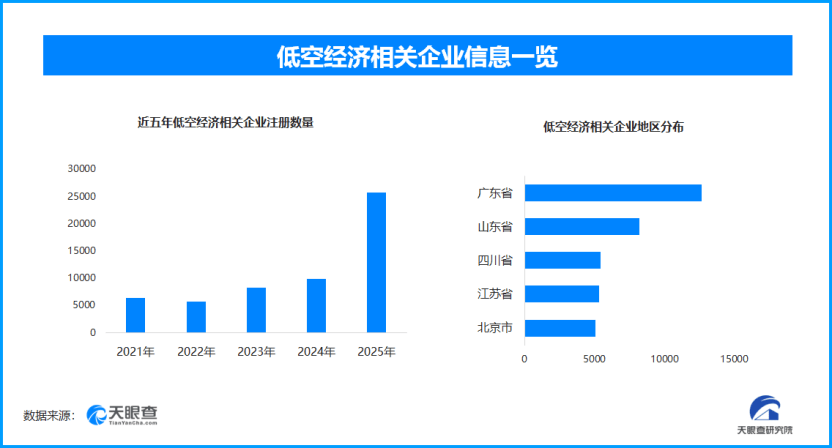
Group 1 - The low-altitude economy has transitioned from conceptual exploration to a substantial development phase characterized by "infrastructure first, application scenario driven" [1] - Cities like Shenzhen, Guangzhou, and Hefei are implementing comprehensive support policies for the entire industry chain while advancing the construction of infrastructure such as drone takeoff and landing sites, low-altitude flight communication networks, and intelligent scheduling platforms [1] - The technical strength and compliance foundation of related enterprises are crucial in this rapid layout process, with investors or partners able to assess the core team's capabilities in airspace management, communication technology, and systems engineering [1] Group 2 - As of now, there are over 100,000 existing low-altitude economy-related enterprises in China, with more than 25,000 new registrations expected by 2025, indicating a steady growth trend over the past five years [2] - The number of registered low-altitude economy-related enterprises is projected to peak in 2025, with a significant year-on-year increase of 162.36% [2] - Guangdong and Shandong provinces lead in the number of low-altitude economy-related enterprises, with over 12,000 and 8,100 respectively, followed by Sichuan, Jiangsu, and Beijing [2]
展望一季度内地经济两大看点:环球市场动态2026年2月10日
citic securities· 2026-02-10 03:32
Market Overview - A-shares opened higher with the Shanghai Composite Index rising 1.41% to 4,123.09 points, and the ChiNext Index up 2.98% to 3,332.77 points, with a total trading volume of approximately 22.7 billion yuan[17] - The Hang Seng Index increased by 1.76% to 27,027.16 points, with major tech stocks rebounding, and total market turnover around 255.1 billion HKD[13] - European markets saw collective gains, with the Euro Stoxx 600 index up 0.7% and the DAX index rising 1.19% to 25,014.87 points, supported by positive economic data[11] Economic Insights - The macroeconomic outlook for Q1 highlights two key points: the impact of the longest Spring Festival holiday on consumption and policy direction from local two sessions[6] - Consumer recovery is characterized by a shift towards service alternatives, while commodity prices remain constrained by household balance sheet recovery[6] - The focus of policy has shifted from traditional infrastructure expansion to granular competition in sectors like low-altitude economy and computing power[6] Commodity and Currency Trends - Oil prices rose for two consecutive days, with NYMEX crude oil up 1.27% to $64.36 per barrel, driven by geopolitical tensions in the Middle East[28] - The dollar index fell by 0.8%, leading to a significant increase in gold prices, which rose 1.3% to $5,050.9 per ounce[28] - The Japanese yen initially fell but later gained 0.9% against the dollar, closing at 155.88[28] Fixed Income Market - U.S. Treasury yields fluctuated, with the 10-year yield at 4.20%, down 0.4 basis points, while the 30-year yield rose by 0.7 basis points to 4.86%[31] - Asian credit markets showed a strong sentiment with overall spreads narrowing by 1-2 basis points, as investors remained cautious ahead of the Lunar New Year[31] Sector Performance - In the U.S., the technology sector led gains, with the Nasdaq up 0.9% and the S&P 500 rising 0.5%[11] - The AI sector showed a 40% quarter-over-quarter growth in annual recurring revenue, indicating a positive trend despite initial skepticism[24] - The white liquor sector is expected to perform better than market expectations during the Spring Festival, driven by strong consumer demand[20]
汇嘉时代20260205
2026-02-10 03:24
Summary of Huijia Times Conference Call Company Overview - **Company**: Huijia Times - **Industry**: Retail, specifically supermarkets and department stores Key Points and Arguments 1. **2026 Performance Outlook**: Huijia Times has shown strong performance in early 2026, with significant growth in supermarket sales and remodeled stores, benefiting from an extended sales peak due to the late Spring Festival [2][4] 2. **Store Performance**: The North Huijia store, a benchmark for the company, achieves daily sales of approximately 900,000 to 1,000,000 yuan on weekdays and up to 1,500,000 yuan on weekends, maintaining a net profit margin of around 8% and a gross margin of 22%-23% [2][7] 3. **Strategic Initiatives**: The company plans to advance its initiatives in urban renewal electricity, low-altitude economy, and overseas market expansion to enhance gross margins and drive business growth [2][4] 4. **Low-Altitude Economy**: Huijia Times is actively pursuing low-altitude economy projects, including testing drone delivery on a pilot route from Tiemenguan to Alar, aiming to promote franchise business development [2][9] 5. **Agricultural Collaboration**: The company is collaborating with the Aksu region to advance agricultural pest control services, expected to launch in 2026, leveraging existing qualifications for rapid implementation [10] 6. **Supply Chain Structure**: In the North Huijia supermarket, approximately 10% of sales come from Donglai products, with 40% supplied by Dazhang's unified supply chain and 30% from the same-source supply chain with Pang Donglai [17][18] 7. **Revenue and Profit Growth**: The company anticipates steady revenue and profit growth of around 10% in 2026, contingent on the performance of remodeled stores [4][29] 8. **Franchise Business Development**: The franchise business is in the early stages, primarily aligning with the Xinjiang Production and Construction Corps, awaiting policy changes to relax low-altitude airspace restrictions [9] 9. **Overseas Market Strategy**: The initial overseas strategy focuses on exporting supply chains rather than establishing retail stores, with plans to evaluate the feasibility of opening stores later [14][15] 10. **Real Estate Investment Trusts (REITs)**: The company is exploring opportunities related to REITs, particularly in light of new policies that simplify approval processes, aiming for larger scale and faster growth [21] Additional Important Information 1. **Consumer Demographics**: The North Huijia store primarily serves Han consumers, with a consistent product selection across stores, although specific items may vary [8] 2. **Market Position**: Huijia Times does not face competition from higher-end shopping districts in Urumqi, benefiting from a strong consumer base [26] 3. **Investment Strategy**: The company maintains a cautious approach to new industry investments, focusing on core business stability and growth [23] 4. **Store Renovation Impact**: The renovation of stores, particularly the North Huijia store, has significantly improved foot traffic and sales, contributing to overall positive performance [4][19] 5. **Future Growth Paths**: The company’s growth strategies include international expansion, store openings, and franchise development, with dedicated teams for each area [28]
