
新发展理念

Search documents
人民日报钟才文:中国GDP今年预计可达140万亿元
Ren Min Ri Bao· 2025-10-01 02:28
Economic Growth and Achievements - Since the establishment of New China and especially after the reform and opening up, China's economic development has been remarkable, with GDP growing from 367.9 billion yuan in 1978 to an expected 134.9 trillion yuan in 2024, averaging an annual growth rate of 8.8%, significantly higher than the global average of about 3% during the same period [1] - During the 14th Five-Year Plan period, China's GDP surpassed 100 trillion yuan in 2020 and has since crossed the thresholds of 110 trillion, 120 trillion, and 130 trillion yuan, with an expectation to reach 140 trillion yuan this year [1] Leadership and Governance - The leadership of the Communist Party of China (CPC) provides fundamental guarantees for economic and social development through top-level design, overall layout, coordination, and implementation [1] - The CPC's long-term governance avoids policy shortsightedness and instability seen in Western multi-party systems, serving as a "stability anchor" for China's economic development [1] Theoretical Framework and Innovation - The CPC continuously innovates its theoretical framework to provide scientific guidance for economic and social development, adhering to the principles of "liberating thoughts, seeking truth from facts, and maintaining integrity while innovating" [2] - Xi Jinping's economic thought introduces new concepts such as "new development concepts" and "new development patterns," which build upon traditional socialist models while adapting to contemporary needs [2] Strategic Planning and Macro Control - The combination of strategic planning and effective macroeconomic control is a unique advantage for long-term economic stability, guiding resource allocation and ensuring orderly implementation of development goals [2] - China emphasizes the importance of macroeconomic control systems to manage economic fluctuations and maintain operations within a reasonable range [2] People-Centric Development - A people-centered development approach is crucial for long-term economic stability, focusing on improving living standards and ensuring that development benefits are equitably shared among the population [3] - The successful poverty alleviation of nearly 100 million people and the establishment of the world's largest social security system reflect the commitment to shared development [3] Market Economy and Production Relations - The integration of socialism with a market economy has injected continuous vitality into China's economic development, with a focus on balancing government and market roles [4] - Recent efforts have been made to optimize production relations to align with new productive forces, enhancing resource allocation efficiency and promoting high-quality economic development [4] Innovation and Market Potential - China's vast domestic market, with over 1.4 billion people and more than 400 million middle-income individuals, creates significant potential for innovation and economic growth [5] - The interaction between supply and demand fosters a conducive environment for innovation, reducing costs and accelerating technological advancements to meet the evolving needs of the population [5] Conclusion - The long-term stable development of China's economy is a result of strong leadership from the CPC and the synergistic effects of various factors, indicating a robust trend and logic behind the rapid economic growth and social stability [5]
深刻认识中国经济长期稳定发展的内在逻辑
Xin Hua Wang· 2025-09-30 23:20
Core Insights - The article emphasizes the internal logic behind China's long-term stable economic development, highlighting the role of the Communist Party's leadership and strategic planning [2][3][4]. Group 1: Economic Achievements - Since the establishment of New China and particularly after the reform and opening-up, China's GDP has grown from 367.9 billion yuan in 1978 to an expected 134.9 trillion yuan in 2024, averaging an annual growth rate of 8.8%, significantly higher than the global average of about 3% during the same period [2]. - During the 14th Five-Year Plan period, China's GDP surpassed 100 trillion yuan in 2020 and is projected to reach 140 trillion yuan this year [2]. Group 2: Leadership and Governance - The leadership of the Communist Party provides a fundamental guarantee for economic and social development through top-level design, overall layout, and effective coordination [2][3]. - The Party's long-term governance avoids the policy shortsightedness seen in Western multi-party systems, serving as a "stability anchor" for China's economic development [2]. Group 3: Theoretical Framework - The continuous innovation of the theoretical system provides a scientific guide for economic and social development, with Xi Jinping's economic thought introducing new concepts such as "new development concepts" and "new development patterns" [3]. - The integration of traditional socialist models with contemporary practices has led to a unique economic development path [3]. Group 4: People-Centric Development - The focus on a people-centered development philosophy has led to significant improvements in living standards, with nearly 100 million people lifted out of poverty and the establishment of the world's largest social security system [4]. - The alignment of national development goals with the aspirations of the populace has strengthened public trust and support for the government [4]. Group 5: Market Economy and Innovation - The combination of socialism with a market economy has injected continuous vitality into China's economic development, with reforms focusing on the relationship between government and market [5]. - The establishment of a high-level socialist market economy has optimized resource allocation and maximized efficiency, driving high-quality economic growth [5]. Group 6: Market Size and Innovation - China's vast domestic market, with over 1.4 billion people and more than 400 million middle-income individuals, creates significant potential for innovation and economic growth [6]. - The interaction between supply and demand has lowered innovation costs and accelerated technological advancements, meeting the evolving needs of the population [6].
从全球视角看新时代中国经济的跨越与蝶变
Xin Hua Wang· 2025-09-29 23:34
Core Insights - The article emphasizes the significant transformation and resilience of the Chinese economy under Xi Jinping's leadership, highlighting its strategic focus on high-quality development and a new development pattern in contrast to other major economies [2][5]. Economic Growth and Development - Since the 18th National Congress, China's GDP has grown from 54 trillion yuan to nearly 135 trillion yuan from 2012 to 2024, with an average annual growth rate of 6%, nearly double the global average of 3.1% [2]. - The International Monetary Fund (IMF) reports that China's economy is gradually shifting towards a higher quality, more balanced, and sustainable growth model [2]. Innovation and Competitiveness - China's innovation capabilities have significantly improved, with its global innovation index ranking rising from 34th in 2012 to 10th in 2025, marking it as one of the fastest-improving economies in innovation over the past decade [3]. - In 2024, China filed 70,160 patents under the Patent Cooperation Treaty, surpassing the United States and Japan by 30% and 45%, respectively [3]. Regional Development and Coordination - The article discusses the successful implementation of major regional strategies such as the Beijing-Tianjin-Hebei integration and the Yangtze River Economic Belt, which have led to significant improvements in urban-rural development and poverty alleviation [4]. - Nearly 100 million rural residents have been lifted out of poverty, with rural income growth outpacing urban income growth for several consecutive years [4]. Green Transformation - China's commitment to green development is highlighted, with a focus on ecological protection and sustainable growth, leading to a significant rise in its energy transition index ranking by 66 places to 12th by 2025 [4]. International Trade and Influence - China has adopted a proactive opening-up strategy, establishing 22 free trade pilot zones and becoming a major trading partner for over 150 countries, maintaining the world's largest goods trade volume [5]. - The share of China's economy in the global economy increased from 11.3% in 2012 to 17.1% in 2024, providing new opportunities for win-win cooperation with other countries [5]. Social Welfare and Quality of Life - The article notes improvements in the quality of life for Chinese citizens, with life expectancy reaching 79 years and safety indices surpassing those of several developed countries [6]. - Continuous efforts in public welfare have enhanced the sense of gain, happiness, and security among the population [6].
从全球视角看新时代中国经济的跨越与蝶变(习近平经济思想指引下的中国经济专论)
Ren Min Ri Bao· 2025-09-29 22:30
Core Viewpoint - Since the 18th National Congress of the Communist Party of China, the country has entered a new era of socialism with Chinese characteristics, maintaining strategic determination and high-quality development despite global uncertainties and challenges [1] Economic Growth - China's GDP is projected to grow from 54 trillion yuan to nearly 135 trillion yuan from 2012 to 2024, with an average annual growth rate of 6%, nearly double the global average of 3.1% [1] - The International Monetary Fund (IMF) reports that China's economy is gradually transitioning to a higher quality, more balanced, and sustainable growth model [1] Development Dynamics - The supply side of the economy has shifted from traditional factor-driven growth to innovation-driven growth, with new technologies accelerating the development of new industries and business models [2] - During the 14th Five-Year Plan period, consumption is expected to contribute approximately 63% to economic growth, while investment's contribution will decrease to below 28% [2] - China's global innovation index ranking improved from 34th in 2012 to 10th in 2025, making it one of the fastest-improving economies in terms of innovation over the past decade [2] Regional Development - Significant progress has been made in coordinated regional development strategies, including the Beijing-Tianjin-Hebei integration and the Yangtze River Economic Belt [3] - Nearly 100 million rural residents have been lifted out of poverty, with rural income growth outpacing urban income growth for several consecutive years [3] Green Transformation - China is committed to high-quality development with a focus on ecological protection, aiming for carbon peak and carbon neutrality, and has made significant strides in green transformation [3] - The World Economic Forum's energy transition index shows China rising 66 places to rank 12th compared to 2020 [3] International Influence - China has adopted a more proactive opening-up strategy, establishing 22 free trade pilot zones and becoming a major trading partner for over 150 countries [4] - The country's share of the global economy increased from 11.3% in 2012 to 17.1% in 2024, providing new opportunities for win-win cooperation with other nations [4] Social Welfare - The focus on people's well-being has led to improvements in public safety and living standards, with life expectancy projected to reach 79 years by 2024 [5] - China ranks high in the Gallup Law and Order Index, surpassing several developed countries in safety scores [5]
更好发挥经济体制改革牵引作用
Ren Min Ri Bao· 2025-09-29 09:30
Core Viewpoint - The article emphasizes the importance of economic system reform as a driving force for achieving historical achievements and transformations in China's development since the reform and opening-up, highlighting the strategic decisions made by the central leadership under Xi Jinping to deepen reforms comprehensively [1][2][3]. Summary by Sections Economic System Reform as a Key Focus - The publication of Xi Jinping's works on comprehensive deepening of reforms underscores the significance of economic system reform, with nearly 100 out of 165 important documents focusing on this area [2]. - The Third Plenary Session of the 18th Central Committee marked a new era for comprehensive reform, emphasizing the need for economic system reform to drive other reforms [3]. High-Quality Development - The transition from high-speed growth to high-quality development is highlighted, with the central leadership focusing on overcoming systemic obstacles to achieve this goal [4]. - Xi Jinping's emphasis on integrating reform with development is crucial for enhancing vitality and advantages in development [4][5]. Modernization and Reform - The 20th National Congress established high-quality development as a primary task for building a modern socialist country, with reforms aimed at supporting this goal [6]. - Comprehensive deepening of reforms is seen as essential for advancing Chinese-style modernization and addressing systemic barriers [6]. Market System and Economic Governance - The establishment of a unified, open, and competitive market system is crucial for resource allocation, with reforms aimed at enhancing market efficiency and government roles [11][12]. - The macroeconomic governance system is being improved to ensure effective coordination of various economic policies [12]. Common Prosperity and Green Transition - The focus on common prosperity emphasizes social equity and addressing the needs of the populace, with reforms aimed at reducing disparities [13]. - A comprehensive green transition is being pursued, balancing economic growth with environmental sustainability [14]. Open Economy and International Cooperation - The construction of a higher-level open economy is a strategic move to enhance international cooperation and economic reform [15]. - The central leadership is committed to expanding openness while ensuring national security [15]. Leadership and Reform Implementation - Strong leadership and effective mechanisms are essential for the successful implementation of economic reforms, with a focus on systematic integration and grassroots innovation [16][19]. - The emphasis on practical implementation and accountability in reform efforts is critical for achieving desired outcomes [20].
抓好各项货币政策措施执行 充分释放政策效应
Jin Rong Shi Bao· 2025-09-29 01:07
Core Insights - The People's Bank of China (PBOC) emphasizes the need for a moderately loose monetary policy to support high-quality economic development and create a favorable financial environment for economic recovery [1][2] Group 1: Monetary Policy and Economic Environment - The PBOC's monetary policy committee meeting highlighted the importance of using various monetary policy tools to enhance counter-cyclical adjustments and support the real economy [1] - The meeting acknowledged the challenges posed by a complex external environment, including weakened global economic growth and increased trade barriers, while domestic economic performance shows steady improvement [1][2] - The PBOC aims to maintain liquidity and ensure that social financing and money supply growth align with economic growth and price level expectations [2] Group 2: Financial Stability and Support for Key Sectors - The meeting called for large banks to play a leading role in providing financial services to the real economy, while smaller banks should focus on their core responsibilities [3] - Structural monetary policy tools will be effectively implemented to support technology innovation, consumption, small and micro enterprises, and stabilize foreign trade [3] - The PBOC plans to enhance financial services for the private economy and improve financing access for small and micro enterprises [3] Group 3: Policy Implementation and Coordination - The PBOC emphasizes the need for coordinated macro policies to maintain stability and flexibility in economic management [4] - The meeting underscored the importance of expanding domestic demand and stabilizing expectations to sustain economic recovery momentum [4] - The PBOC aims to ensure the effective implementation of financial policies and enhance the management and risk prevention capabilities in an open economy [3][4]
更好发挥经济体制改革牵引作用(深入学习贯彻习近平新时代中国特色社会主义思想)
Ren Min Ri Bao· 2025-09-28 22:28
Core Viewpoint - The article emphasizes the importance of economic system reform as a driving force for achieving historical achievements and transformations in China's development since the reform and opening-up, highlighting the strategic decisions made by the central leadership under Xi Jinping to deepen reforms comprehensively [1][2][3]. Economic System Reform - The first and second volumes of Xi Jinping's "On Upholding and Deepening Reform" include 165 important documents, with nearly 100 focusing on economic system reform, reflecting a deepened understanding of the laws governing economic reforms in the new era [2]. - The Third Plenary Session of the 18th Central Committee marked a new era for comprehensive deepening of reforms, emphasizing the pivotal role of economic system reform in driving other reforms [3][4]. High-Quality Development - The report from the 19th National Congress states that China's economy has shifted from a phase of high-speed growth to high-quality development, necessitating reforms to address systemic obstacles to this transition [4][5]. - Xi Jinping has stressed that comprehensive deepening of reforms is essential for implementing new development concepts and enhancing development vitality [4][5]. Modernization and Reform - The 20th National Congress established high-quality development as the primary task for building a modern socialist country, with further reforms aimed at promoting Chinese-style modernization [6][7]. - Economic system reform remains a key focus, with an emphasis on breaking down institutional barriers that hinder high-quality development [6][7]. Market System and Governance - The establishment of a unified, open, and competitive market system is crucial for allowing the market to play a decisive role in resource allocation while ensuring effective government intervention [11][12]. - The macroeconomic governance system has been enhanced to ensure coordinated policies across various sectors, improving overall governance efficiency [12]. Common Prosperity and Green Transition - The goal of common prosperity is emphasized, with reforms aimed at addressing income distribution and social equity to prevent polarization [13][14]. - A comprehensive green transition is being pursued, integrating ecological protection with economic development to achieve sustainable growth [14][15]. Open Economy and International Cooperation - The construction of a higher-level open economy is highlighted as a strategic move to enhance international cooperation and investment [15][16]. - The focus is on expanding market access and aligning with international trade rules to create a favorable environment for foreign investment [15][16]. Reform Implementation and Leadership - Strong leadership and effective mechanisms are deemed essential for the successful implementation of economic reforms, with a focus on integrating various reform efforts [16][17]. - Encouragement of grassroots innovation and exploration is promoted to foster a dynamic reform environment [19][20].
持续推进城市更新行动怎么干?山东有了实施意见
Qi Lu Wan Bao· 2025-09-24 09:27
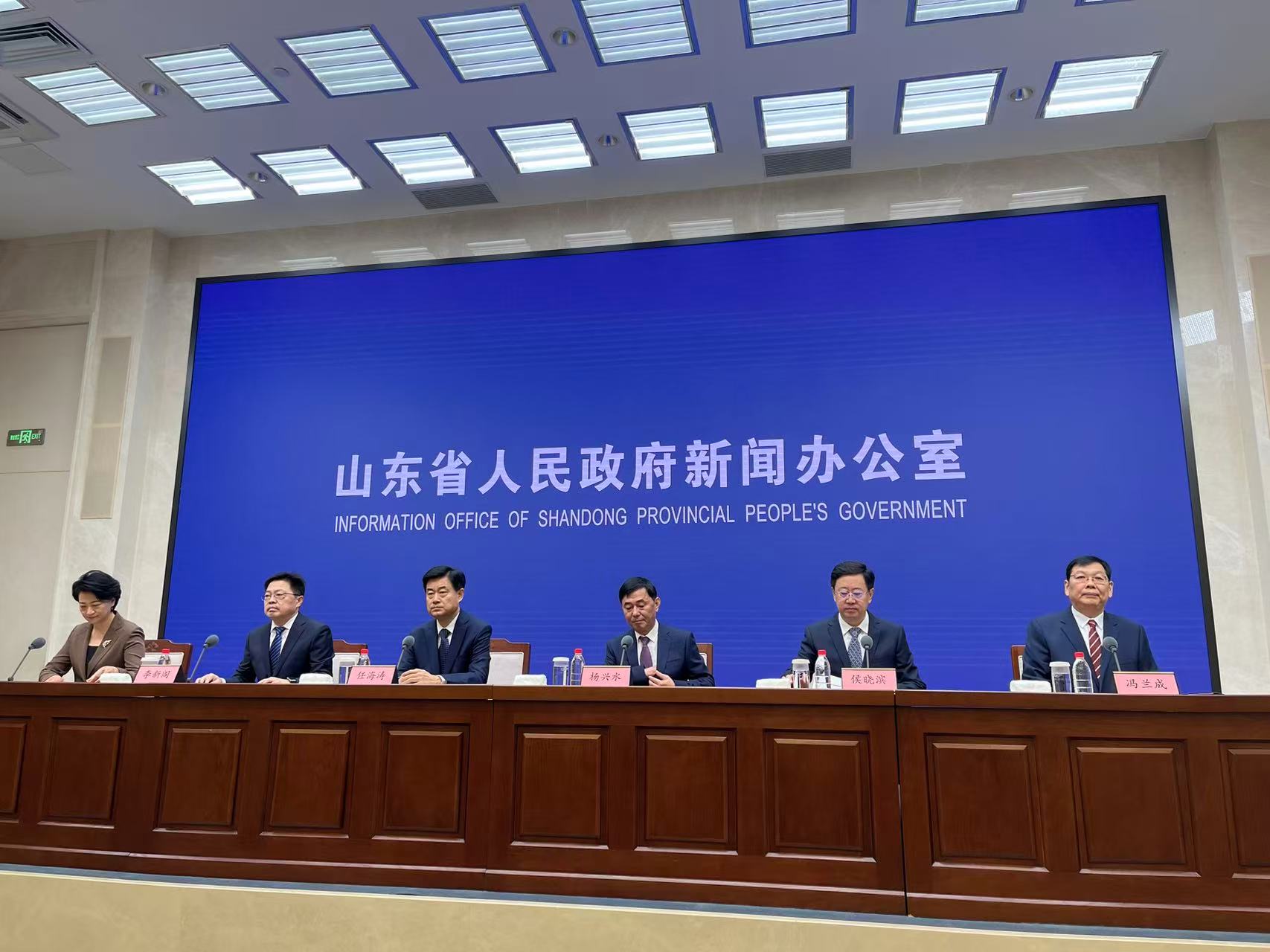
齐鲁晚报·齐鲁壹点记者 王皇 9月24日,记者从山东省政府新闻办举行的省政府政策例行吹风会现场了解到,中共山东省委办公厅 山东省人民政府办公厅《关于持续推进城市更新行动的 实施意见》(以下简称《实施意见》)日前印发实施。山东省住房和城乡建设厅党组书记任海涛介绍,《实施意见》包括5个部分17条内容,围绕城市更新 干什么、怎么干、钱从哪来、谁来干提出,并支持探索多种供地方式、创新项目实施模式等。 在引导多方参与方面,鼓励产权人积极参与,享受更新带来的经济收益、生活便利,政府给予政策扶持。支持开发企业、施工企业、规划设计企业等转型参 与,从提供短期的工程建设服务,向提供长期的全链条运营服务转变。引导咨询、法律等服务机构提前介入、深度参与,依法专业开展更新,细致做好群众 工作。 在创新实施模式方面,围绕项目决策生成,一体化推进城市体检和城市更新,梳理安排好项目建设轻重缓急和实施次序。围绕项目实施流程,提出策划、融 资、设计、建设、运营一体化解决方案。围绕项目资金平衡,探索跨区域平衡、多项目捆绑平衡、近远期平衡、建设运营平衡等模式,合理搭配,统筹更新 片区内资源配置和产出效益。 当前,我国城镇化正从快速增长期转向稳定发 ...

张永生:“两山”理念重新定义可持续发展
Zhong Guo Jing Ying Bao· 2025-09-24 07:08
Core Viewpoint - The "Two Mountains" concept emphasizes the integration of environmental protection and economic development, proposing that they are mutually reinforcing rather than conflicting, which marks a significant shift in development philosophy [2][4]. Group 1: Concept and Philosophy - The "Two Mountains" concept is a distinctive element of Xi Jinping's ecological civilization thought, advocating for a harmonious relationship between environmental protection and economic growth [2]. - This concept challenges the traditional view that sees environmental protection and economic development as opposing forces, suggesting instead that protecting the environment enhances productivity [2][4]. - The "Two Mountains" concept serves as a benchmark for distinguishing between old and new development philosophies, where a belief in conflict indicates traditional thinking, while a belief in mutual promotion indicates a new approach [2]. Group 2: Sustainable Development Redefined - The "Two Mountains" concept redefines sustainable development, proposing that protecting the environment equates to enhancing productivity, thus providing a fundamental solution for sustainable development [4]. - The original definition of sustainable development, as proposed by the UN in 1987, is seen as flawed because it implies an inherent conflict between current and future development [4]. - Achieving the UN's Sustainable Development Goals (SDGs) is viewed as challenging under traditional development paradigms, necessitating a return to ecological civilization principles and the "Two Mountains" framework for effective implementation [4]. Group 3: Economic Implications - The current phase of sustainable development is described as a critical juncture, with some nations attributing domestic crises to environmental protection and climate change, which contradicts the principles of green development [5]. - Emphasizing energy conservation and emissions reduction is seen as a pathway to elevate economic structures rather than a hindrance [6]. - The transition from narrow environmental protection to broader ecological civilization construction represents a fundamental shift in development logic, moving beyond traditional industrial civilization frameworks [6]. Group 4: Business Opportunities - Sustainable development is positioned as a significant opportunity for businesses, with the notion that it should not rely solely on moral imperatives but should create substantial commercial prospects [7]. - The integration of Environmental, Social, and Governance (ESG) criteria is increasingly recognized as a means for companies to discover new technologies and business models, potentially enhancing profitability rather than diminishing it [7]. - Companies are urged to align with the trend of green development, which is seen as a major opportunity, and to redefine the roles of government and market within the context of the "Two Mountains" concept [7].
苏成:谱写中国式现代化新疆实践新篇章
Jing Ji Ri Bao· 2025-09-24 00:06
Group 1 - The establishment of the Xinjiang Uygur Autonomous Region in 1955 marked the beginning of a significant phase in China's ethnic autonomy and governance [1] - Since the 18th National Congress of the Communist Party of China, Xinjiang has achieved unprecedented economic and social development, enhancing the sense of gain, happiness, and security among its diverse population [1][2] - The strategic importance of Xinjiang is emphasized, as it plays a crucial role in China's modernization and is a key area for national security and economic development [2][3] Group 2 - The economic growth in Xinjiang has been remarkable, with GDP increasing from 749.947 billion yuan in 2012 to 2,053.408 billion yuan in 2024, marking a significant milestone [4] - The per capita GDP also saw substantial growth, rising from 33,495 yuan in 2012 to 78,660 yuan in 2024, reflecting a 1.3 times increase [4] - The region has established itself as a national energy resource base and a supplier of high-quality agricultural products, contributing significantly to the national economy [3][4] Group 3 - Xinjiang's trade has expanded, with total imports and exports increasing from 158.96 billion yuan in 2012 to 434.16 billion yuan in 2024, showcasing the region's growing role in international trade [5] - The establishment of the China (Xinjiang) Free Trade Pilot Zone in October 2023 is expected to enhance trade facilitation and attract more enterprises [5] - Employment has also increased, with the total number of employed persons rising from 12.46 million in 2012 to 13.91 million in 2024, a growth of 11.64% [6] Group 4 - Education in Xinjiang has improved significantly, with the gross enrollment rate for preschool education reaching 102.72% and the nine-year compulsory education consolidation rate exceeding 99% by 2024 [6] - The region has made notable progress in ecological civilization, with air quality improvement and a forest coverage increase from 4.24% in 2012 to 5.07% in 2024 [6] - The development of a modern industrial system is being prioritized, focusing on resource advantages and promoting strategic emerging industries [8] Group 5 - The South Xinjiang region, which occupies two-thirds of Xinjiang's area, is identified as a key area for development, with plans to enhance infrastructure and promote local industries [9] - Efforts are being made to address the challenges in South Xinjiang, including optimizing industrial layout and improving urbanization through education and job creation [9] - The overall strategy emphasizes the integration of development and security, aiming for sustainable growth and improved living standards for the population [7][9]