
具身智能

Search documents
告别“偏科竞赛”,魔法原子百亿基金改写行业规则
创业邦· 2026-03-17 00:09
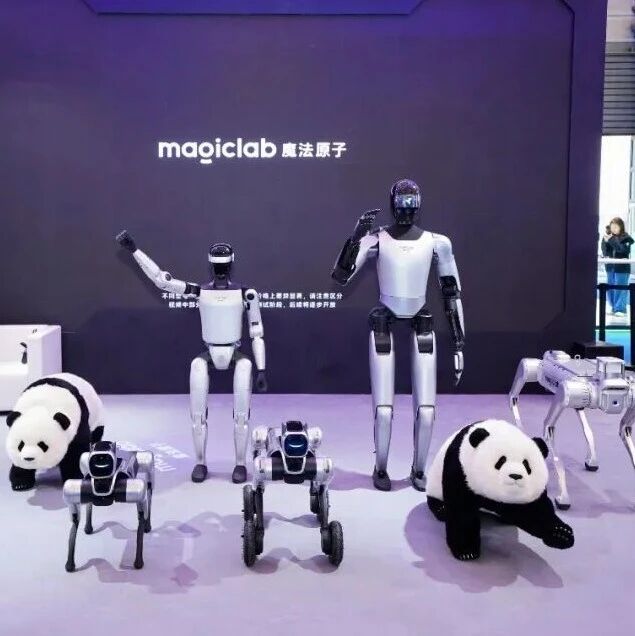
Core Viewpoint - The article discusses the evolving landscape of the embodied intelligence sector, highlighting a shift from single-point breakthroughs to a focus on comprehensive system capabilities that integrate hardware, software, data, and real-world applications [3][5][20]. Group 1: Investment and Financing - Magic Atom has completed a new round of financing amounting to 500 million yuan, with notable investors including Top Group, Jiechuan Intelligent, and Aishida, indicating strong interest from industry capital [3]. - A significant industry ecological fund, with a scale exceeding 10 billion yuan, is focusing on key links in the industrial chain, reflecting a broader trend of capital mobilization in the sector [3]. - The investment landscape is shifting towards companies that can demonstrate comprehensive capabilities rather than just single-point technological advancements [20][21]. Group 2: Industry Trends and Competition - The embodied intelligence sector is moving away from "specialized competition" towards a model where software and hardware must form a closed-loop system to succeed [4][5]. - Companies are now differentiating themselves by their approaches: some focus on models and AI capabilities, while others prioritize hardware and physical performance [5]. - The consensus is emerging that true competition will hinge on the ability to integrate software and hardware effectively, rather than excelling in isolated areas [5][20]. Group 3: Strategic Development - Magic Atom's strategy, termed "embodied intelligence + X," includes a foundational capability base, two core product lines (humanoid and quadruped), and multiple ecological touchpoints for modular product development [6]. - The significance of this strategy lies in the interconnectedness of products and scenarios, emphasizing the need for shared technological foundations [8]. - The company is investing heavily in self-developed key components, which are crucial for enhancing the performance and capabilities of its robots [9]. Group 4: Real-World Application and Data Utilization - For robots to achieve large-scale application, they require not only physical and model capabilities but also real-world data training to navigate complex environments effectively [12]. - Magic Atom has established a data collection factory to streamline the process from data acquisition to model deployment, ensuring that robots are tested in real-world scenarios [12][21]. - The company is deploying its robots in various environments, including industrial, commercial, and specialized scenarios, to accumulate valuable data and enhance system capabilities [18]. Group 5: Market Positioning and Future Outlook - The current climate in the embodied intelligence sector mirrors the early development of the autonomous driving industry, where initial excitement was driven by single-point technological breakthroughs [20]. - As the market matures, investors are increasingly focused on the practical deployment of technologies and the integration of systems rather than just theoretical advancements [20]. - Magic Atom's recent financing activities are seen as a strategic move to position itself as a leader in the comprehensive system capabilities necessary for long-term success in the industry [21].

广汽集团四大因素致亏逾80亿整车毛利率-7.35% 锚定200万辆产销目标突围临大考
Chang Jiang Shang Bao· 2026-03-16 23:02
Core Viewpoint - GAC Group is expected to report a net loss of 8 to 9 billion yuan in 2025, marking its first annual loss in nearly 20 years due to a combination of declining revenue, reduced profits, and rising costs [3][5]. Financial Performance - The company's gross margin for the automotive manufacturing segment is projected to be -7.35% in 2025, with a significant drop from the previous year's gross margin [4][5]. - GAC Group's revenue from automotive manufacturing is expected to decrease from 78.934 billion yuan in 2024 to 69.010 billion yuan in 2025, while the cost of goods sold is projected to be 77.214 billion yuan in 2024 and 74.085 billion yuan in 2025 [4][5]. - The average promotional expenditure per vehicle increased by 5 percentage points compared to the previous year, but this did not lead to a recovery in sales [5]. Factors Contributing to Loss - The decline in revenue is attributed to a 22.83% drop in sales of self-owned brand passenger vehicles [5]. - Increased promotional efforts failed to offset the decline in sales, leading to further compression of profit margins [5]. - Rising costs due to underutilization of capacity and increased fixed costs, including labor and depreciation, have also contributed to the financial strain [5]. Strategic Response - GAC Group aims to return to a production and sales target of 2 million vehicles in 2026, which requires a year-on-year growth rate of 16.2% [6]. - The company plans to focus on three main tasks: stabilizing joint ventures, strengthening self-owned brands, and expanding its ecosystem [7]. - GAC Group is also investing in the development of intelligent robots, with plans for mass production by 2027, which could provide a new growth avenue [12][11]. Future Outlook - The success of the new high-end electric vehicle brand "Qijing," developed in collaboration with Huawei, is seen as crucial for improving profitability [8][7]. - GAC Group is also looking to expand its overseas market presence, targeting sales of over 200,000 vehicles abroad within the year [9].

东莞携8000职位亮相广东春招,年薪20万以上岗位超千个
21世纪经济报道· 2026-03-16 15:40
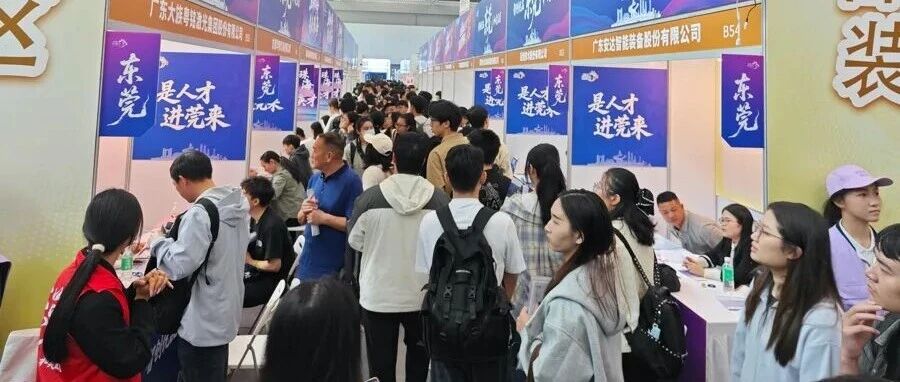
Group 1 - The "Million Talents Gathering in South Guangdong" recruitment event held in Guangzhou released 85,000 quality job positions, attracting nearly 120,000 job seekers on the first day [1] - Dongguan organized 220 companies to participate, providing nearly 8,000 job positions, with about 70% of the positions requiring a bachelor's degree or higher [1][11] - Over 50% of the job positions are in strategic emerging industries such as new-generation electronic information, new energy, new materials, low-altitude economy, and artificial intelligence [1] Group 2 - The demand for algorithm talents is high, with a more than 30% year-on-year increase in recruitment for robot algorithm engineers [4] - Companies like Tuosida are expanding from traditional industrial robots to embodied intelligent robots, indicating a significant talent gap in AI algorithms and mechanical design [4] - The recruitment event featured 13 positions from Tuosida, aiming to attract 50 professionals with master's or doctoral degrees [4] Group 3 - Companies are increasingly valuing comprehensive qualities in candidates, such as logical thinking, communication skills, and innovation spirit [5] - The recruitment strategies include a mentorship system where experienced staff guide new employees, enhancing their rapid growth through project-based practices [5] - The focus is on finding high-quality talents for roles such as algorithm engineers, materials researchers, and embedded engineers [5] Group 4 - Dongguan is piloting the "Moli Cube OPC Ecological Community," which integrates AI and manufacturing, offering incentives like rent exemptions and computing subsidies to attract AI enthusiasts [7][9] - The community aims to connect manufacturing applications with top individual technical expertise, supporting various entrepreneurial projects in AI [9] Group 5 - The Dongguan Materials Institute is actively recruiting for positions related to regional development and industry research, aiming to enhance its visibility and attract high-quality talent [11] - The recruitment event involved 220 participating companies, with 144 companies conducting on-site recruitment, offering over 6,400 job positions [11][12] - The "Million Talents Gathering in South Guangdong" initiative will continue with targeted recruitment at top universities to broaden talent acquisition channels [12]
“最会赚钱”的理想汽车交出低分答卷
Guo Ji Jin Rong Bao· 2026-03-16 13:57
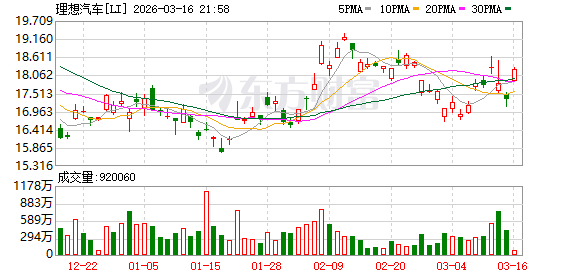
Core Viewpoint - Li Auto's financial performance for Q4 and the entire year of 2025 shows significant declines in vehicle deliveries, revenue, and profits, indicating challenges in both operational and strategic areas [2][3][4]. Financial Performance - In 2025, Li Auto delivered 406,300 vehicles, a year-on-year decrease of 18.8% [2]. - Total revenue for 2025 was 112.3 billion yuan, down 22.3% year-on-year; Q4 revenue was 28.8 billion yuan, a 35% decline compared to the previous year [3]. - The net profit for 2025 was only 1.1 billion yuan, an 85.8% drop from 8 billion yuan in 2024; Q4 net profit plummeted 99.4% to 20 million yuan [3][4]. - Operating loss for 2025 was 521 million yuan, contrasting with a profit of 7 billion yuan in 2024; Q4 operating loss expanded to 443 million yuan [4]. Operational Challenges - The company faced its first annual operating loss, with a significant decline in operating profit margin to -1.5% [4]. - The average selling price of vehicles decreased from 278,000 yuan in Q3 2025 to approximately 250,000 yuan in Q4 [5]. - Gross margin for vehicles fell to 16.8% in Q4, down 3 percentage points from Q3, breaking the long-standing 20% threshold [5]. Cash Flow and Reserves - Operating cash flow turned negative, dropping from 15.9 billion yuan in 2024 to -8.6 billion yuan in 2025; free cash flow also fell from 8.2 billion yuan to -12.8 billion yuan [5]. - Despite the negative cash flow, Li Auto had a strong cash reserve of 101.2 billion yuan at the end of 2025 [5]. Strategic Transition - 2025 was marked as a critical year for Li Auto's transition from a single range-extended strategy to a dual strategy of "range-extended + pure electric," but faced significant setbacks [6]. - The launch of the MEGA pure electric model was hindered by high sales targets and infrastructure issues, while the i8 model faced public controversy [6]. - The competitive landscape in the high-end SUV market has intensified, with rivals replicating Li Auto's successful strategies [6]. Organizational Changes - In response to declining sales and profits, Li Auto initiated a major organizational restructuring in the second half of 2025, reverting to a startup management model [7]. - Key executives, including those from Huawei, departed, and the R&D team was restructured to focus on creating "digital humans" [7]. Sales and Market Strategy - Li Auto launched a store partner program to improve management and sales incentives, while denying rumors of closing 100 stores [8]. - R&D investment reached a record high of 11.3 billion yuan in 2025, with over 50% allocated to AI technology [8]. - The company plans to introduce new models, including the next-generation L9 and high-end pure electric i9, while also expanding into international markets [10]. Future Outlook - For Q1 2026, Li Auto expects vehicle deliveries to be between 85,000 and 90,000, a year-on-year decline of 8.5% to 3.1% [10]. - The company aims for a 20% year-on-year growth target for 2026, returning to approximately 490,000 units sold, but analysts remain cautious about this goal [11].

为实现同比20%的增长 理想汽车的三大选择
2 1 Shi Ji Jing Ji Bao Dao· 2026-03-16 13:57
Core Insights - Li Auto reported a revenue of 112.3 billion yuan and a net profit of 1.1 billion yuan for the year 2025, marking it as the only new energy vehicle company in China to achieve over 100 billion yuan in revenue and profitability for three consecutive years [2] - The company aims for a sales target of 480,000 vehicles in 2026, representing a 20% year-on-year growth, which is considered a pragmatic approach compared to previous high-growth targets [2][4] Financial Performance - In 2025, Li Auto's cash reserves reached 101.2 billion yuan, leading among domestic new energy vehicle companies [2] - The company delivered 406,300 vehicles in 2025, setting a foundation for the 2026 sales target of 480,000 vehicles [2] Sales Strategy - Li Auto is focusing on improving its sales system management to achieve the 20% growth target [4] - The company continues to adhere to a direct sales model, emphasizing service experience and price consistency [6] - A new "store partner" system has been introduced to enhance store management and incentivize store managers, shifting their roles from sales managers to business operators [7][8] Product Development - The upcoming L9 model is undergoing a significant upgrade, with a focus on intelligent driving technology and a new decision-making model [10] - The new L9 will feature the world's first mass-produced fully controlled chassis and an 800V active suspension system, enhancing its competitive edge [11] - Li Auto plans to ensure successful deliveries of its pure electric models, including the i8 and i6, to support the sales growth target [12] R&D Investment - In 2025, Li Auto invested 11.3 billion yuan in R&D, with 50% allocated to AI-related projects, and plans to maintain a similar level of investment in 2026 [14] - The company is restructuring its R&D team to enhance efficiency and focus on core technology capabilities, aiming to integrate AI into its business model [15]
为实现同比20%的增长,理想汽车的三大选择
2 1 Shi Ji Jing Ji Bao Dao· 2026-03-16 13:48
Core Viewpoint - Li Auto has become more pragmatic in 2026, setting a sales target of 480,000 vehicles, which is a 20% year-on-year growth from 2025, reflecting a focus on product upgrades and operational efficiency rather than high growth targets [2][3]. Financial Performance - In 2025, Li Auto achieved a revenue of 112.3 billion yuan and a net profit of 1.1 billion yuan, marking it as the only new force car company in China to surpass 100 billion yuan in revenue for three consecutive years while remaining profitable [2]. - By the end of 2025, Li Auto's cash reserves reached 101.2 billion yuan, leading among domestic new energy vehicle companies [2]. Sales Strategy - The company aims to manage its sales system effectively to achieve its growth target, emphasizing quality over quantity in its sales channels [6][9]. - Li Auto continues to adhere to a direct sales model, believing it ensures service quality and pricing consistency, despite the trend of other companies incorporating dealerships [7][9]. Store Management - The introduction of the "store partner" system aims to empower store managers with decision-making and profit-sharing rights, transforming them into true business operators [10]. - The company is optimizing its existing stores by closing those in poor locations and focusing on high-potential markets for new store openings [8][9]. Product Development - The upcoming L9 model represents a significant upgrade, incorporating advanced AI and smart driving technologies, with a focus on enhancing the vehicle's responsiveness and overall performance [11][12]. - Li Auto plans to ensure successful deliveries of its pure electric models, including the i8 and i6, to support its sales growth target [13]. R&D Investment - In 2025, Li Auto invested 11.3 billion yuan in R&D, with 50% allocated to AI-related projects, and plans to maintain a similar level of investment in 2026 [14]. - The company has restructured its R&D team to enhance efficiency and foster innovation in AI capabilities, aiming to integrate these advancements into its business model [15].
中国最大家电展上,一批想帮你做家务的机器人来了!
36氪· 2026-03-16 13:37
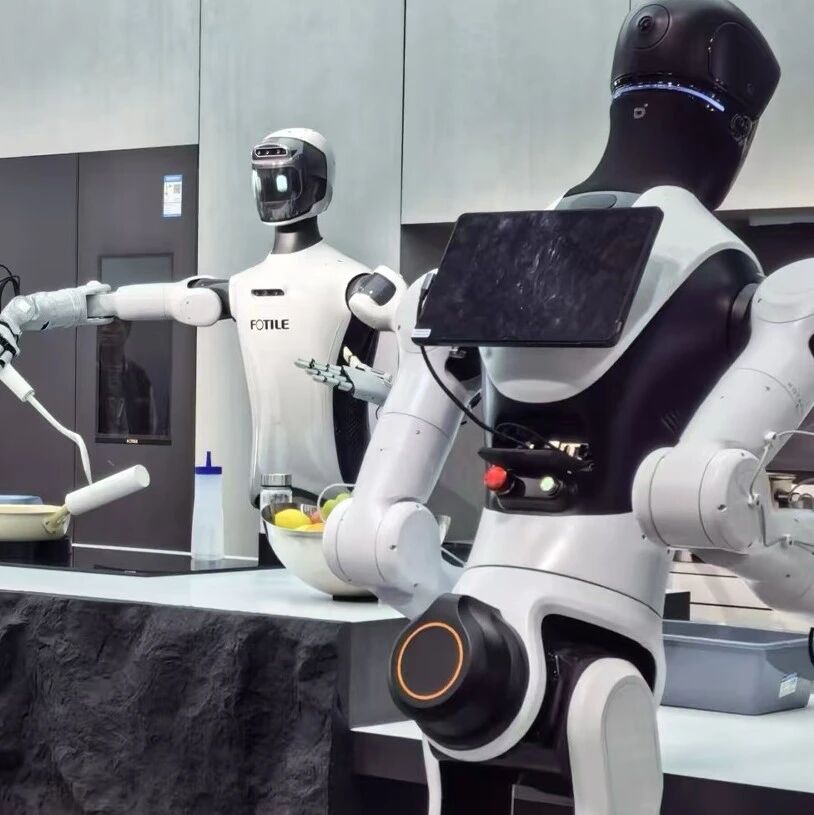
Core Insights - The article discusses the emergence of embodied intelligent robots in the home appliance sector, highlighting their evolving roles from emotional support to practical household tasks [4][5][6]. Group 1: Industry Trends - The 2026 AWE showcased a shift from traditional home appliances to embodied intelligent robots, with major home appliance companies leading the charge [4]. - Companies are focusing on household services as the core objective for robots, demonstrating functionalities like home patrol, elder protection, and basic chores [4]. Group 2: Company Innovations - **Chasing**: Introduced a "wheelchair robot" capable of navigating the home and assisting elderly users, featuring a multifunctional bionic hand for controlling other appliances [8][11]. - **Ecovacs**: Launched the "Bajie" robot, designed to act as a user's avatar at home, capable of performing tasks like organizing and cleaning, although it currently faces speed and stability issues [14][18]. - **Haier**: Presented a penguin-shaped companion robot that can monitor elderly individuals for falls and remind them to take medication, along with a cleaning robot that addresses traditional cleaning challenges [20][23]. - **TCL**: Showcased the AiMe robot, which features a modular design allowing for interaction and emotional support, while also being able to change its appearance [29][32]. - **Hisense**: Unveiled the Savvy robot, which can interact with other home appliances to perform tasks like laundry and adjusting home conditions based on user activities [35][36]. - **MOVA**: Introduced a flying vacuum robot that can navigate multiple floors, addressing the need for efficient cleaning across levels [40]. - **Leshare Technology**: Developed the M1 robot, which can autonomously charge and is designed for quiet operation during nighttime, with future capabilities for monitoring and companionship [44][46]. - **Tesla**: Announced the upcoming Optimus V3 robot, expected to begin production in 2026, which will utilize advanced AI and technology from Tesla's electric vehicles [50][51]. - **FOTILE**: Demonstrated a kitchen robot system capable of cooking tasks, although it is currently a prototype without plans for mass production [61][65].





理想汽车-W:Q4 环比扭亏,关注双“9”新车-20260316
HTSC· 2026-03-16 13:25
Investment Rating - The report maintains a "Buy" rating for the company with a target price of 78.42 HKD [7][5]. Core Insights - The company reported total revenue and net profit for 2025 at 112.3 billion and 1.1 billion RMB, respectively, reflecting a year-on-year decline of 22% and 86% due to intensified competition in the high-end market [1][5]. - In Q4 2025, the company achieved revenue of 28.8 billion RMB, down 35% year-on-year but improved from a net loss of 600 million RMB in Q3 2025 to a net profit of 20 million RMB, indicating a recovery [1][2]. - The company is focusing on the "9" series products to regain market share in the high-end segment, with the new models L9 and L9 Livis set to launch in Q2 2026 [3][4]. Financial Performance - Q4 2025 saw vehicle sales of 109,000 units, a decrease of 31% year-on-year but an increase of 17% quarter-on-quarter, driven by the delivery of models i6 and i8 [2][3]. - The gross margin for Q4 2025 was 17.8%, down 2.5 percentage points year-on-year but up 1.5 percentage points quarter-on-quarter, attributed to a reduction in the impact of the Q3 MEGA recall [2][4]. - The company expects to deliver between 80,000 to 83,000 vehicles in Q1 2026, although inventory pressure is anticipated to remain significant [2][5]. Profitability Forecast - Revenue estimates for 2026 and 2027 have been adjusted to 135.9 billion and 153.5 billion RMB, respectively, reflecting a decrease of 1% and 19% [5][12]. - The forecast for GAAP net profit has been revised down to 1.5 billion and 4.2 billion RMB for 2026 and 2027, representing a reduction of 51% and 59% [5][12]. - Non-GAAP net profit estimates have also been lowered to 2.7 billion and 5.6 billion RMB for 2026 and 2027, with a projected increase to 10 billion RMB by 2028 [5][12]. Valuation Metrics - The report employs a comparable company valuation method, assigning a price-to-sales (PS) ratio of 1.1x for 2026, reflecting a 20% premium over the average of comparable companies [5][15]. - The average PS for comparable companies is noted to be 0.9x for 2026, with the company’s target price adjusted from 84.80 HKD to 78.42 HKD [5][15]. Strategic Developments - The company is enhancing its autonomous driving technology, with the AD Pro 4.0 system being rolled out to L series vehicles, marking a significant advancement in urban driving assistance capabilities [4][3]. - The introduction of self-developed M100 chips in new models is expected to reduce costs and improve performance, with a focus on achieving over 400 km of pure electric range [3][4].
理想汽车:盈利阶段性承压,产品周期与技术投入支撑中长期发展-20260316
海通国际· 2026-03-16 13:25
Investment Rating - The report maintains a NEUTRAL rating for Li Auto with a target price of HK$83.29, based on a current price of HK$69.90 [2][14]. Core Insights - Near-term profitability is under pressure due to product cycle transitions and competitive dynamics, but the company's scale, cash reserves, and technology investments are expected to support a gradual recovery in operating performance [3][11]. - The company is transitioning from a primarily EREV-driven portfolio to a dual-platform strategy that includes both EREV and BEV models, with new product launches planned for 2026 [4][12]. - Li Auto is investing heavily in R&D, particularly in AI-related initiatives, with R&D spending reaching Rmb11.3 billion in 2025, which is about half of the total R&D budget [3][11]. Financial Performance Summary - For FY2025, Li Auto reported revenue of Rmb112.3 billion, marking the third consecutive year of revenue exceeding Rmb100 billion, although non-GAAP net profit declined by 78% year-on-year to Rmb2.4 billion [3][11]. - The company expects revenues of Rmb122.2 billion, Rmb153.8 billion, and Rmb164.6 billion for 2026, 2027, and 2028 respectively, reflecting a cautious but optimistic long-term growth outlook [14]. Product Development and Strategy - The company plans to launch an updated L9 model in 2026, focusing on enhancing premium experience and charging efficiency, while also ramping up production of the i-series BEV models [4][12]. - Li Auto is also developing its in-house M100 chip, which aims to enhance computing efficiency for autonomous driving and AI applications, alongside exploring robotics for logistics and operations [5][13]. Market Position and Competitive Landscape - Despite recent sales pressures, Li Auto maintains a strong market position with quarterly deliveries of approximately 110,000 units, remaining among the larger volumes within China's NEV start-ups [3][11]. - The report highlights that while the near-term outlook is cautious due to competitive pressures, the long-term growth potential remains intact, supported by ongoing product development and technological advancements [14].
地瓜机器人完成1.2亿美元B1轮融资,滴滴、美团等加持
Guo Ji Jin Rong Bao· 2026-03-16 13:05
Core Insights - The company, DiGua Robotics, has successfully completed a $120 million Series B1 financing round, following a $100 million Series A round completed in 2025 [1] - DiGua Robotics focuses on providing foundational technology for robotics, including computing chips, algorithms, and software development platforms, without manufacturing the physical robots themselves [1][2] - The funding will support the company's full-stack hardware and software technology development and product iteration, aiming to promote scalable and inclusive development in the robotics industry [2] Company Overview - DiGua Robotics was established in January 2024 as a spin-off from Horizon Robotics' AIoT team, positioning itself as a "foundation company" for robotic intelligence [1] - The company offers a range of intelligent computing platforms, from 5 to 128 TOPs, catering to various robotic applications such as humanoid robots, service robots, and logistics AMRs [1] - The CEO, Wang Cong, emphasizes the company's role as a "technical partner" for other robotics manufacturers, focusing on chip and algorithm development [2] Business Model - DiGua Robotics has three main revenue streams: chip sales, ecosystem and product technology services based on chips, and cloud services, which have recently begun generating revenue [2][3] - The current revenue is primarily driven by chip sales, with a focus on the consumer electronics sector, which is expected to see increased product offerings in the next two to three years [3] - The company anticipates that revenue from embodied intelligence products will match that of consumer electronics in three years, despite lower shipment volumes [3]
