
可持续发展

Search documents
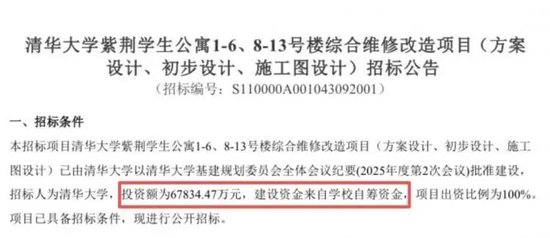
清华大学,自筹6.7亿元改造学生宿舍
Xin Lang Cai Jing· 2026-01-12 04:37
Core Viewpoint - Tsinghua University has officially launched a large-scale renovation project for its Zijing Student Dormitory, with a total investment of 678 million yuan, marking one of the largest investments in upgrading student accommodation conditions in recent years [1][2]. Group 1: Project Overview - The renovation project involves 12 dormitory buildings (Buildings 1-6 and 8-13) within the Zijing Student Dormitory area, covering a total construction area of 135,668.94 square meters, with buildings reaching up to 8 stories above ground and no basement [2][8]. - The project has been approved by the Tsinghua University Infrastructure Planning Committee, indicating that it has completed internal decision-making processes and is entering the substantive design bidding phase [2][8]. Group 2: Rationale and Importance - The selected buildings for renovation are part of the early construction phase of the Zijing Dormitory, with internal facilities and systems nearing their design lifespan, highlighting the necessity for systematic upgrades in response to evolving student living standards and updated building energy efficiency and accessibility standards [4][10]. - Improving student accommodation has become a key focus in campus development for major universities in China, as emphasized in the Ministry of Education's guidelines for enhancing educational quality and campus environments [4][10]. Group 3: Funding and Financial Aspects - The entire funding for the project is sourced from Tsinghua University's own budget, reflecting the university's commitment to improving student living conditions and its financial management capabilities [5][10]. - The investment of 678 million yuan demonstrates the university's prioritization of enhancing the accommodation environment for students, with funding derived from various sources including tuition, research service income, and donations [5][10]. Group 4: Project Execution and Design Principles - The project will adhere to national construction bidding management regulations and Tsinghua University's procurement guidelines, ensuring a structured approach to design and construction [11]. - The renovation is expected to follow principles of safety, suitability, economy, and sustainability, integrating modern design concepts such as smart campus features, energy efficiency, and accessibility [11].

新产品|农银致远价值混合基金正在发行
Sou Hu Cai Jing· 2026-01-12 01:47
Core Viewpoint - The article discusses the launch of the Agricultural Bank of China Asset Management's new mixed securities investment fund, emphasizing a performance-based fee structure that aligns the interests of fund managers with investors [2][8]. Fund Overview - The fund is named "Agricultural Bank of China Zhiyuan Value Mixed Securities Investment Fund" with A-class (025930) and C-class (025931) shares currently being issued [2][18]. - The fund aims to achieve returns that exceed its performance benchmark through selective stock picking and risk control [17]. Fee Structure - The fund introduces a flexible fee structure where management fees are linked to performance, with a standard management fee of 1.2% per year for holdings under one year [6][22]. - For holdings over one year, the management fee varies based on performance, ranging from 0.6% to 1.5% per year depending on the annualized return relative to the benchmark [6][22]. - The fund encourages long-term holding by requiring a minimum holding period of one year to enter the performance-based fee structure [11]. Investment Strategy - The fund will invest 60%-95% of its assets in stocks, with up to 50% of stock investments in Hong Kong Stock Connect stocks [16][18]. - The investment philosophy focuses on long-term value, targeting sectors such as technology and consumer goods, with a belief in sustainable development [16]. Manager Profile - The proposed fund manager, Gu Chao, has a strong background with 13 years of experience in the securities industry and has invested 500,000 yuan of his own funds in the fund, demonstrating confidence in its potential [13][15].

有产品二手价超原价近300%,爱马仕们成投资神器
凤凰网财经· 2026-01-11 14:57
Core Insights - The second-hand fashion and luxury goods market is projected to become a core growth engine in the global fashion industry by 2025, with a market size of approximately $210 to $220 billion and an annual growth rate of 10%, three times that of the primary market [2][4]. Group 1: Market Dynamics - The second-hand luxury goods market currently accounts for 8% of the total global luxury fashion sales, expected to exceed $320 to $360 billion by 2030, increasing its market share to 10% [4]. - Leather goods, clothing, and footwear dominate the market, comprising about 80%, while watches and jewelry are the fastest-growing segments due to their strong value retention and rising consumer demand for durable collectibles [4][5]. - Nearly 80% of surveyed consumers cite value for money as the primary reason for choosing second-hand luxury goods, with over half indicating that second-hand channels allow access to high-end brands they otherwise could not afford [5]. Group 2: Consumer Behavior - The Z generation is emerging as a significant force in the second-hand luxury market, with 32% of their wardrobes consisting of second-hand items, emphasizing emotional and creative aspects of consumption [6]. - In the U.S., 87% of respondents prioritize value for money when purchasing second-hand luxury items, while European consumers focus more on sustainable fashion practices [7]. - Different income groups exhibit distinct consumption behaviors, with aspirational consumers viewing second-hand channels as affordable entry points to high-end fashion, while affluent consumers seek rare or sold-out luxury items [7]. Group 3: Brand Value and Investment - The valuation of luxury brands is shifting from market popularity to value retention, with brands like Hermès achieving a resale value retention rate of 138%, significantly above the benchmark for "unicorn brands" [9]. - The resale prices of certain Hermès bags have surged, with the Kelly Mini selling for 282% above its original price, highlighting the investment potential of select luxury items [10]. - The revival of vintage styles is driving market interest, with significant increases in search volumes for iconic bags from the early 2000s, indicating a strong emotional connection to these classic designs [10]. Group 4: Future Trends - The second-hand luxury market is expected to continue its growth trajectory into 2026, with traditional luxury brands focusing on craftsmanship while also embracing innovation [11]. - The Z generation's influence is anticipated to deepen, shifting from participation to market leadership, with a growing demand for personalized, sustainable, and brand story-driven products [12]. - Brands are encouraged to develop clear second-hand strategies to balance pricing and enhance customer engagement, particularly targeting both aspirational and affluent consumers [12].

苏黎世保险董事长及总经理回应每经:看好中国市场前景
Sou Hu Cai Jing· 2026-01-11 12:49
Core Insights - Zurich Insurance Group has completed the acquisition of AIG's global personal travel insurance and Travel Guard emergency assistance services, marking a significant shift in the global travel insurance market and enhancing service capabilities through integrated global rescue networks [1][4]. Group 1: Acquisition Details - The acquisition was initiated in June 2024 and completed in October 2025, reflecting the growing demand for global travel protection solutions and Zurich's strategic positioning in the market [4]. - Personal travel insurance is one of the fastest-growing segments in the global insurance market, and this acquisition allows Zurich to expand its market share and become one of the largest travel insurance companies globally [4]. - The integration of Travel Guard with Zurich's previously acquired CoverMore Group enhances the company's ability to provide consistent, professional, multilingual service experiences to customers worldwide [4]. Group 2: Strategic Plans in China - Zurich Insurance has begun localizing its travel insurance business in China, launching promotional efforts on social media platforms like Xiaohongshu and Douyin [3][7]. - The acquisition allows Zurich to offer well-known travel insurance products in China, such as "万国游踪" and "乐悠游," and aims to provide higher quality and more responsive international travel protection services [5]. - The company plans to introduce embedded insurance, deepen partnerships, and leverage technology for rapid policy issuance and claims processing, while also incorporating green elements to support sustainable travel [5][6]. Group 3: Market Potential and Future Outlook - Zurich Insurance has reported steady growth in the Chinese market, with premium income exceeding 1 billion yuan and a solvency ratio of 272.71% as of the end of 2024 [9]. - The company aims to continue its "global vision, local cultivation" strategy, focusing on niche markets and new customer segments to drive growth [9]. - Future opportunities in the Chinese insurance market include increased demand for liability insurance, cybersecurity insurance, and travel insurance, driven by digital transformation and heightened awareness of health and safety [11][12].


消费添“绿”,产业向“新”
Sou Hu Cai Jing· 2026-01-11 05:19
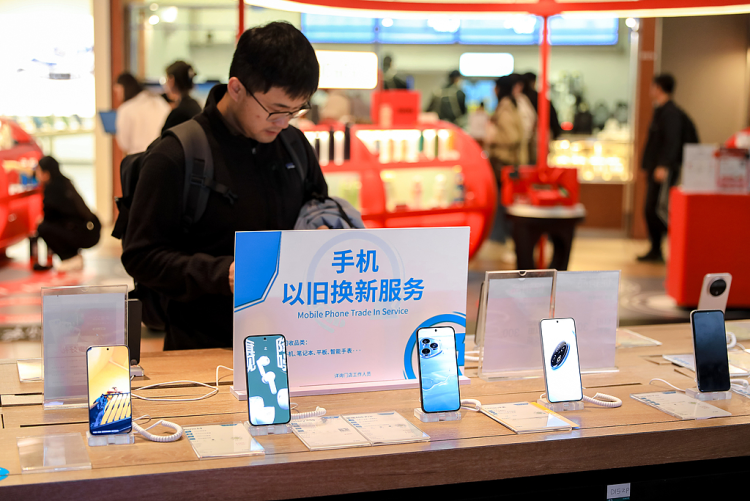
Group 1 - The core idea of the news is the implementation of a green consumption promotion action plan by nine government departments, which includes 20 measures across seven areas to encourage sustainable consumption practices [1][3]. - The action plan aims to lower the cost of green consumption through subsidies, credit support, and incentive programs, thereby boosting consumer confidence and willingness to engage in green purchasing [3]. - The plan anticipates significant outcomes, including the replacement of 18.3 million cars and 192 million home appliances through trade-in programs by 2025, with nearly 60% of new vehicles being electric and over 90% of appliances meeting high energy efficiency standards [3][4]. Group 2 - The promotion of green consumption is expected to trigger transformations across various sectors, including manufacturing, construction, and energy, leading to innovations such as energy-efficient appliances and green buildings that can reduce energy consumption by over 90% compared to traditional structures [4]. - The national carbon market is gaining momentum, providing businesses with tangible incentives to reduce emissions, which is part of the broader strategy to enhance resource recycling and achieve a projected output value of over 5 trillion yuan by 2025 [4]. - Young consumers are identified as key drivers of green consumption, with a survey indicating that 93.3% of young respondents prioritize purchasing eco-friendly products, suggesting a shift towards sustainable lifestyles among the youth [6].

中国经济信心说丨消费添“绿”,产业向“新”
Xin Lang Cai Jing· 2026-01-10 16:23
Core Viewpoint - The recent joint announcement by the Ministry of Commerce and nine other departments on promoting green consumption aims to establish a comprehensive incentive mechanism, proposing 20 measures across seven areas to drive green transformation in production and lifestyle, thereby injecting new momentum into high-quality development [1][3]. Group 1: Policy Measures - The initiative includes policy subsidies, credit support, and incentive points to lower the cost of green consumption for consumers, effectively stimulating consumption willingness and confidence [3]. - Measures such as promoting green recycling and upgrading energy efficiency labeling management are designed to solidify the institutional foundation for normalizing green consumption [3]. - It is projected that from 2024 to 2025, 18.3 million vehicles will be replaced under the old-for-new policy, and 192 million home appliances will be upgraded, with nearly 60% being new energy vehicles and over 90% being first-level energy-efficient appliances [3]. Group 2: Industry Transformation - The push for green consumption is expected to trigger a chain reaction of transformations across various sectors, including manufacturing, circulation, energy, and emissions reduction [4]. - In manufacturing, energy-efficient appliances are continuously evolving, while smart variable frequency devices balance comfort and energy savings [4]. - The construction industry is seeing the rise of green buildings that can reduce energy consumption by over 90% compared to traditional buildings, significantly enhancing residents' living experiences [4]. Group 3: Youth Engagement - The youth demographic is identified as a key driver in promoting green consumption, with 93.3% of surveyed young individuals prioritizing the purchase of green products, and 77.6% believing that a green low-carbon lifestyle will become more prevalent among their peers [6]. - As policy support becomes more robust, it is expected to create new scenarios for green consumption, facilitating a seamless connection for young consumers to engage in sustainable practices [6].
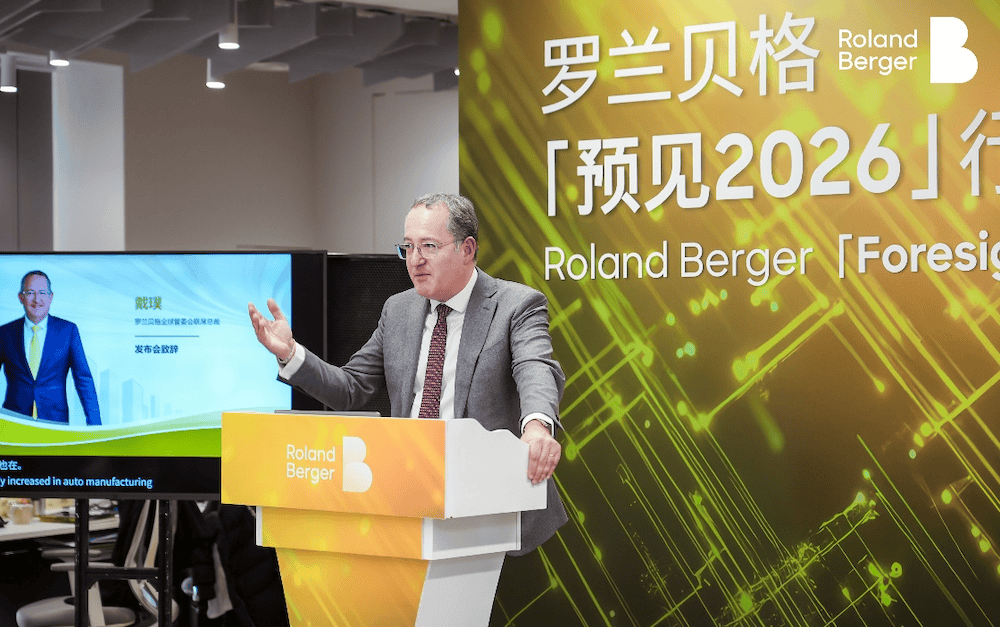
罗兰贝格郑赟:中国车企出海会迎来一两年平台期,需要设定阶段性目标
Sou Hu Cai Jing· 2026-01-10 14:54
Core Insights - The report "Forecast 2026: China Industry Trends" by Roland Berger highlights the strategic transformation of China towards high-quality development and sustainable modernization, emphasizing the need for persistent efforts and a comprehensive strategy to enhance productivity and consumer confidence [1][3]. Group 1: Automotive Industry Trends - The Chinese automotive industry is undergoing significant transformation, with total sales expected to reach approximately 34 million units in 2025, including around 7 million exports, and a monthly average of 3 million passenger vehicles [4][5]. - The penetration rate of new energy vehicles (NEVs) has surpassed 60% by December 2025, indicating a rapid transition from traditional fuel vehicles to electric vehicles within five years [4][5]. - Despite the growth in volume, the automotive industry's profit margin remains low at about 4.4%, with over 50% of dealers experiencing losses and an average vehicle price declining by approximately 9% year-on-year [4][5]. Group 2: Key Transformation Lines - Six key transformation lines are identified as critical for industry competition in 2026: elimination race, deepening transformation, internationalization, technology competition, capital race, and AI competition [6][7]. - The "elimination race" suggests a market structure where a few leading companies dominate, while the "deepening transformation" indicates a shift from traditional vehicles to smart mobility devices integrated with advanced technologies [6][7]. - The automotive industry is expected to further localize operations globally, enhancing service to consumers through localized employment and product adaptation [6][7]. Group 3: Global Expansion of Chinese Automakers - Chinese automotive exports are projected to enter a "platform period" over the next one to two years, with an optimistic long-term outlook despite facing local protectionism and compliance challenges [10][12]. - By 2030, the export volume of Chinese vehicles is anticipated to reach between 8 million and 10 million units, transitioning from rapid growth to a focus on quality, profitability, and brand development [12][16]. - The main challenge for Chinese automakers abroad is adapting to local markets, necessitating coordination between headquarters and local operations, as well as building local supply chains [14][15].
遗憾!西藏蕴藏3000万吨铜矿,可逆转中国贫铜现状,却不敢开发
Sou Hu Cai Jing· 2026-01-10 03:38
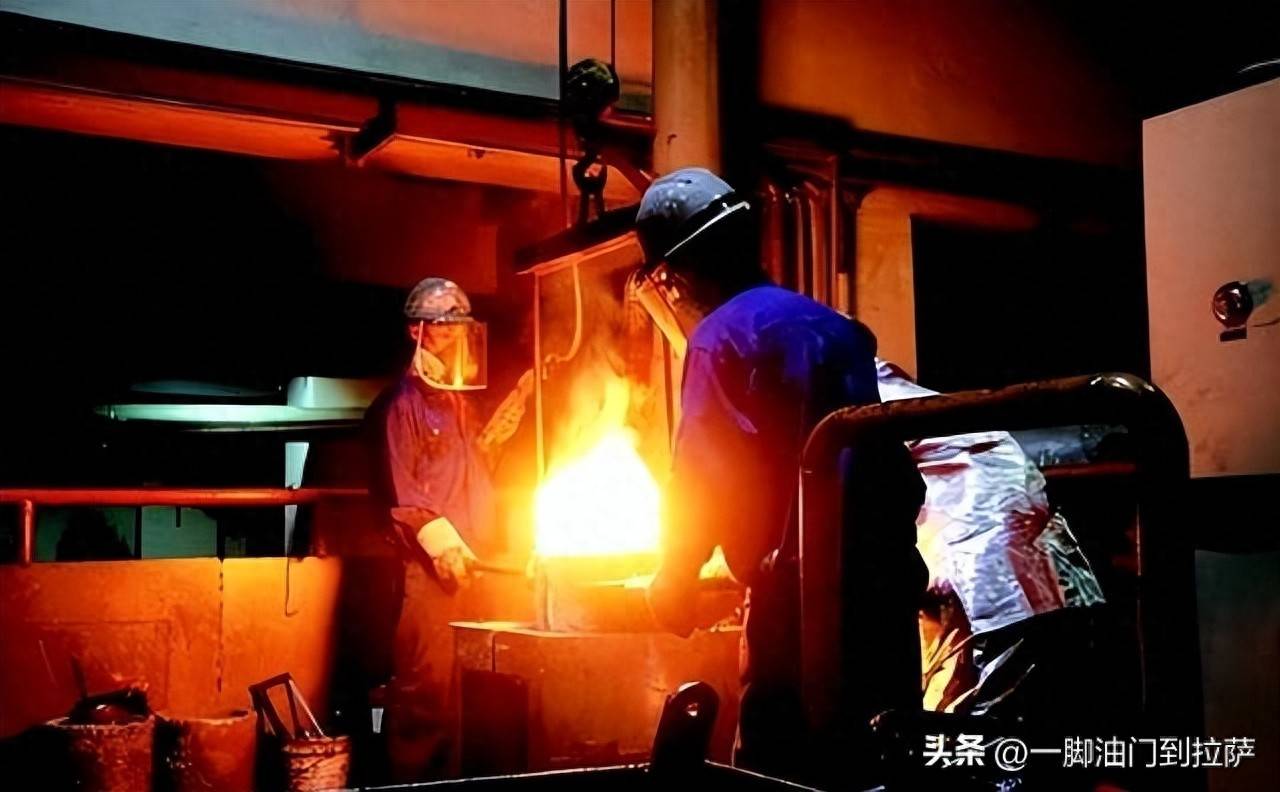
中国这几年经济发展快,工业用铜量大得惊人。 大家都知道,铜是工业里不可缺的材料,用在电线、电器、建筑上,到处都离不开它。 中国铜消费量占全球一半以上,可自家铜储量只占全世界3%左右,对外进口依赖度高达七八成。 这情况挺尴尬的,每年得花大把钱从国外买铜精矿。要是能多开发点国内资源,就能缓解不少压力。 偏偏西藏那边藏着海量铜矿,总量接近3000万吨,要是全挖出来,能大大改变中国贫铜的局面。可这么多年过去,这些矿大多没大规模动工。 这些矿区地质条件特殊,因为高原板块碰撞,形成大量斑岩型铜矿,潜力巨大。 地质调查局说,"十四五"以来,青藏高原新增铜资源2000多万吨,预测潜力1.5亿吨。 要是全开发,西藏能成世界级铜基地。 这些矿发现挺早的。 中国铜矿主要分布在江西、云南、安徽这些地方,但总量不算多。2022年数据看,中国铜储量大约2700万吨,全球排名第九。 消费端呢,铜精矿产量190万吨左右,还得靠进口2500多万吨来补缺口。进口金额超500亿美元,这笔账算下来,压力不小。 铜价波动大,国际市场一变,中国企业就得跟着调整。 专家说,铜是关键金属,尤其在新能源领域,像电动车、风电都需要大量铜。 要是依赖进口太多,供 ...
2025二手奢侈品市场消费趋势:从“捡漏”到“投资”
Xin Lang Cai Jing· 2026-01-09 22:53
Core Insights - The second-hand fashion and luxury goods market is projected to become a significant growth engine in the global fashion industry by 2025, with a market size of $210 billion to $220 billion and a stable annual growth rate of 10%, three times that of the primary market [1][3] - The market is characterized by "scale expansion and structural upgrading," with the second-hand luxury goods market currently accounting for 8% of total global luxury sales, expected to exceed $320 billion to $360 billion by 2030, increasing its market share to 10% [3][4] - The demand for second-hand luxury items is driven by both buyers seeking value and sellers looking to declutter and generate income, with online platforms becoming the primary channel for transactions [4][6] Market Dynamics - The second-hand luxury market is supported by a dual-driven model from both buyers and sellers, with nearly 80% of buyers citing value for money as their primary reason for purchasing second-hand items [4] - The market is seeing a significant influence from Generation Z, who have a higher proportion of second-hand items in their wardrobes (32%) and prioritize style expression and unique experiences over mere cost [5][6] - Regional differences are evident, with American consumers leading in acceptance of second-hand luxury goods, particularly in handbags, while European consumers focus more on sustainable fashion practices [6][7] Brand Value and Investment - The valuation of luxury brands in the second-hand market is shifting from "market heat" to "value retention," with brands like Hermès and Goyard achieving high resale values, indicating strong investment potential [8][9] - The resurgence of retro styles is driving demand, with significant increases in search volumes for iconic bags from the 2000s, reflecting consumer nostalgia and emotional connection to these items [9] - The luxury jewelry sector is anticipated to become the next growth hotspot, as consumer interest in sustainable luxury and investment pieces rises [11] Future Outlook - The second-hand luxury market is expected to continue its growth trajectory into 2026, with traditional luxury brands focusing on craftsmanship and innovation to attract consumers [10][11] - Brands are encouraged to develop clear second-hand strategies to balance pricing and enhance customer trust, particularly among affluent consumers [11] - The evolving consumer mindset towards sustainability and value will further shape the second-hand luxury market, creating opportunities for brands that adapt to these changes [10][11]
自然堂探索美妆“生态—商业”闭环
Jing Ji Guan Cha Wang· 2026-01-09 13:04
Core Viewpoint - The collaboration between Chando Group and Shanghai Natural History Museum aims to integrate beauty industry with science education and promote public awareness of biodiversity and sustainable consumption [1][2] Group 1: Exhibition Details - The "Beauty and Nature Coexist" biodiversity theme exhibition combines science popularization, interactive experiences, and artistic co-creation [1] - The exhibition is based on the Shanghai Natural History Museum's "My Natural Treasure Box" science popularization brand, showcasing public achievements in biodiversity investigation and protection [1] - The science popularization activities under this brand have attracted over 4.7 million participants over the past nine years [1] Group 2: Future Plans - Chando Group plans to further deepen cooperation with Shanghai Natural History Museum to explore the integration of cultural tourism, commerce, and industrial tourism within the beauty industry [2] - The future beauty city project by Chando Group will serve as a full-chain experience space combining beauty science communication, smart production visits, and immediate consumption [1]