
节能家电

Search documents
焦点访谈丨透过年货清单,见证中国消费市场的蓬勃活力
Yang Shi Wang· 2026-02-14 13:30
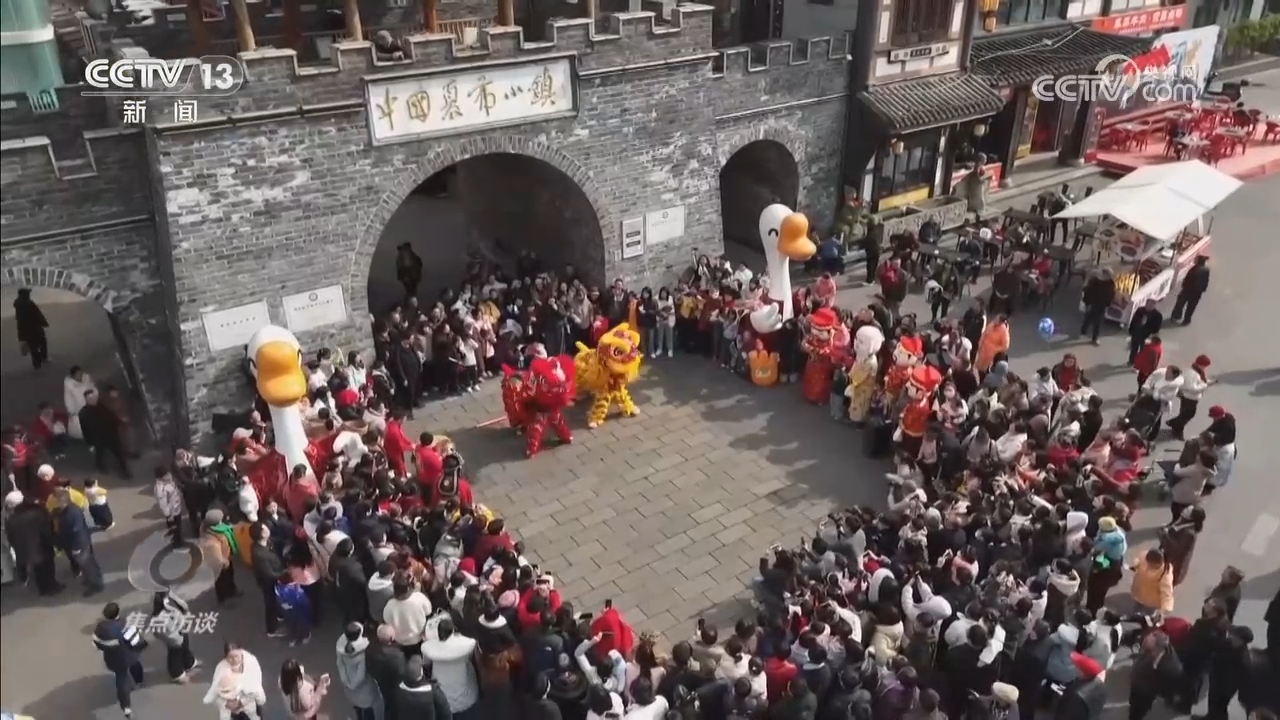
Core Viewpoint - The article highlights the evolving nature of Chinese New Year shopping, showcasing a blend of traditional and modern consumer behaviors, with an emphasis on cultural significance and economic implications. Group 1: Traditional and Modern Shopping Trends - Traditional markets are experiencing a resurgence, with local specialties and festive foods being popular among consumers [3][5] - The integration of online platforms with traditional markets is enhancing the shopping experience, allowing farmers to promote their products through live streaming [5] - Consumers are increasingly purchasing a mix of local and international products, reflecting a globalized shopping trend during the New Year [7] Group 2: Travel and Experience as New Year Goods - Travel has become a significant category of New Year goods, with an increase in average travel days during the holiday, reaching 5.9 days, up by 1.1 days from the previous year [9] - Various promotional activities, including the distribution of over 3.6 billion yuan in consumer vouchers, are encouraging travel and cultural experiences during the holiday [9] Group 3: Technological and Cultural Products - The demand for upgraded electronic products, such as energy-efficient appliances and smart devices, has surged, with sales exceeding 590 billion yuan in January alone [13] - Cultural products, particularly those related to zodiac themes and traditional crafts, are gaining popularity, with unique items like the "crying horse" toy becoming bestsellers [17] Group 4: Cultural Significance and Global Influence - The inclusion of the Spring Festival in the UNESCO list of intangible cultural heritage has expanded its global influence, attracting foreign consumers to participate in the New Year shopping [19] - The blending of consumption and cultural expression reflects a growing cultural confidence in China, as consumers increasingly seek products that embody cultural symbols [21]

鄂尔多斯旗区也派消费红包!家政年货都实惠
Nei Meng Gu Ri Bao· 2026-02-13 08:51
Group 1 - The core idea of the news is the launch of a comprehensive consumer subsidy program in Ordos City, aimed at boosting spending during the upcoming Spring Festival with significant financial incentives for various sectors [1][2] - The program includes a vehicle trade-in subsidy of up to 20,000 yuan and a maximum subsidy of 1,500 yuan for energy-efficient home appliances and digital products, encouraging consumers to upgrade their purchases [1] - Multiple rounds of consumer vouchers will be distributed, covering shopping, dining, cultural tourism, and home services, effectively reducing costs for consumers and stimulating spending [1] Group 2 - The East Victory District will issue 2 million yuan in consumer vouchers weekly, covering supermarkets and restaurants, along with an additional 3 million yuan in vehicle trade-in subsidies to enhance consumer experience [2] - The Yijinhuoluo Banner focuses on cultural tourism with a 5 million yuan subsidy benefiting scenic spots and lantern festivals, allowing residents and tourists to enjoy discounts while exploring the city [2] - The Ordos City has planned nearly 100 Spring Festival consumer activities, catering to various needs from purchasing New Year goods to leisure and quality upgrades, ensuring a comprehensive approach to meet festive demands [2]

开局有新风|消费、就业、投资……这些变化与你息息相关!
Sou Hu Cai Jing· 2026-02-12 04:13
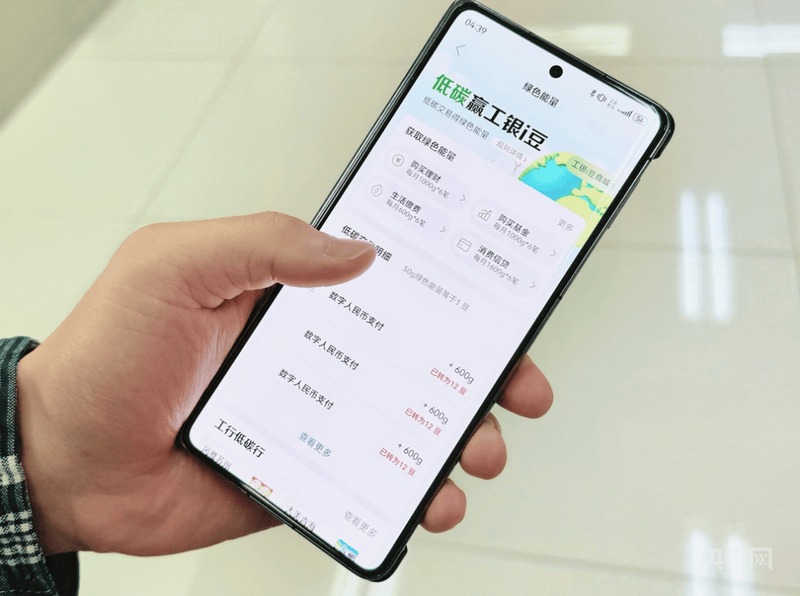
Group 1: Green Consumption and Policy Framework - In 2026, the "dual carbon" goals will enter a critical phase, with green consumption transitioning from policy advocacy to widespread public practice. The first policy document focusing on green consumption has been released, establishing a comprehensive policy framework for the supply-consumption-recycling chain [2][3] - The policy outlines three main strategies: over 88,000 national green agricultural product certifications, a sales boost of over 3.9 trillion yuan from trade-in policies for automobiles and home appliances, and a resource recycling industry with an annual output value exceeding 5 trillion yuan [2] Group 2: Employment Opportunities in Green Sector - There is a significant demand for green jobs, with nearly one million positions expected in the "dual carbon" field, while current practitioners number only around 100,000, indicating a substantial gap [3] - The Ministry of Human Resources and Social Security has recognized 137 green occupations, with new roles like carbon accountants and ESG consultants seeing a surge in demand, potentially creating 38 million jobs by 2050 [3] Group 3: Rural Revitalization and Digital Agriculture - The story of a new farmer in Pinggu, who has utilized smart algorithms to redefine agricultural practices, illustrates that rural revitalization involves the emergence of new productive forces rather than mere industrial transfer [4][6] - The recent central government document emphasizes high-quality rural e-commerce development and the integration of agriculture with tourism, which aligns with the efforts of new farmers to enhance local income through innovative practices [4] Group 4: Employment Market Trends - The employment policy direction is shifting from "stabilizing employment" to "high-quality employment," with opportunities emerging at the intersection of policy and industry [7] - Key sectors for future job growth include high-end manufacturing and digital services, with significant developments in digital economy, low-altitude economy, and artificial intelligence expected to create numerous job opportunities [9] Group 5: Wealth Management and Investment Trends - The wealth management sector has seen significant activity, with international gold prices experiencing volatility and approximately 70 trillion yuan in household deposits maturing, leading to discussions about "deposit migration" [10][12] - Predictions indicate that the scale of bank wealth management could exceed 35 trillion yuan by 2026, with "fixed income+" products likely to remain a mainstream choice due to their balanced risk and return profile [12]
年味“活”起来 “年货展销+民俗展演”传递浓浓祝福拉动节日消费
Yang Shi Wang· 2026-02-11 03:00
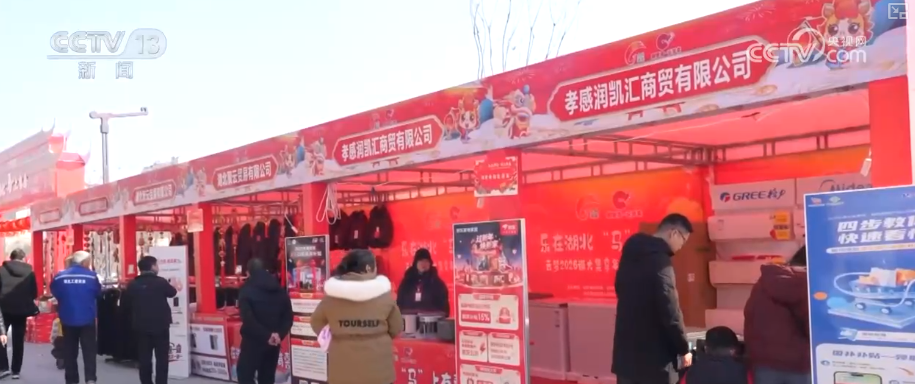
Group 1 - The core activity of promoting consumption during the Spring Festival in Yunmeng County, Hubei, includes offering consumer vouchers and a trade-in program for home appliances [1] - The event features various sections such as a trade-in area for energy-efficient appliances and new energy vehicles, which attracted significant public interest [3] - The festival atmosphere is enhanced by interactive activities like live streaming sales and writing Spring Festival couplets, conveying good wishes [5] Group 2 - The Lunar New Year market in Funing County, Jiangsu, opened with a "one-stop" shopping and cultural experience area, drawing many visitors [6] - The market showcases a wide variety of local specialties and snacks, providing an extensive selection for attendees [8] - Cultural performances, including Huai opera and calligraphy demonstrations, are part of the event, adding to the festive spirit [9]
经济新方位|“新国补”落地首月,消费市场热气腾腾
Ren Min Ri Bao· 2026-02-08 04:37
Core Insights - The new "old-for-new" policy is driving consumer demand and revitalizing the retail market, particularly in home appliances and electric vehicles as consumers take advantage of subsidies and services [1][2][3] Group 1: Policy Impact - The 2026 "old-for-new" policy has been optimized to include a unified subsidy standard for key appliances and vehicles, providing stability and encouraging consumer spending [3][5] - The policy has expanded to include new smart devices, such as smart glasses, and focuses on high-efficiency products, enhancing the overall quality of consumer goods [3][4] Group 2: Market Performance - Sales data indicates a significant increase in consumer activity, with over 15 million units sold in January across six categories of home appliances and digital products, generating nearly 59 billion yuan in sales [2][4] - Retailers like Suning have reported a dramatic increase in sales, with some stores experiencing an over 800% increase in sales compared to the previous month, driven by the new policy [2] Group 3: Consumer Trends - The policy is influencing consumer preferences, with a notable shift towards high-end and energy-efficient products, as evidenced by a 35.7% increase in sales of high-efficiency water heaters and a 28.9% increase in televisions [4] - A significant portion of consumers are opting for new energy vehicles when trading in older models, indicating a trend towards greener choices in the automotive sector [3]
“新国补”落地首月销售近590亿元,你家换新了吗
Sou Hu Cai Jing· 2026-02-07 00:22
Core Viewpoint - The "New National Subsidy" policy has significantly stimulated consumer demand in the market, particularly in the home appliance and automotive sectors, as evidenced by increased sales and consumer engagement during the initial month of its implementation [1][2][3]. Group 1: Consumer Market Impact - The implementation of the "New National Subsidy" has led to a surge in consumer purchases, with notable sales figures such as 13.36 million transactions and a total sales amount of 5.9 billion yuan in Hebei province alone during the first two days of January [1] - In Fuzhou, the old-for-new policy generated nearly 16 million yuan in sales, contributing to a total consumption increase of 1.25 billion yuan [1] - The overall sales of six categories of home appliances and four categories of digital and smart products exceeded 15 million units, with sales revenue approaching 59 billion yuan in January [2] Group 2: Retail Sector Performance - The "New National Subsidy" has revitalized offline retail, with stores like Suning experiencing an over 800% increase in sales and a 110% rise in customer traffic during the first week of January [2] - The sales of energy-efficient home appliances have surged, with first-level energy-efficient products accounting for 92% of sales in certain stores, indicating a strong consumer preference for high-efficiency products [2] - The policy has also positively influenced cross-sector consumption, driving growth in leisure, transportation, and dining sectors as consumers engage in multiple spending activities [2] Group 3: Policy Optimization and Future Trends - The 2026 old-for-new policy has been optimized to include a unified subsidy standard for key appliances and vehicles, aiming to provide stable expectations for businesses [3] - The policy expansion to include new smart devices like smart glasses and a focus on high-efficiency products reflects a strategic alignment with consumer trends and industry innovation [3][4] - Data indicates a shift towards high-end, intelligent, and green vehicles, with 81.2% of fuel vehicle users opting for new energy models during trade-ins, showcasing a significant transformation in consumer preferences [3]
2025年我国GDP首次突破140万亿元,新旧动能加快转换成关键
Jing Ji Ri Bao· 2026-01-26 10:08
Economic Overview - In 2025, China's economy is projected to steadily progress under pressure, with the total economic output surpassing 140 trillion yuan for the first time, reflecting strong development resilience and profound structural changes towards higher quality growth [1] - The transformation from old to new driving forces is a prominent feature of the current economic operation, with high-tech, high-efficiency, and high-quality industries showing significant growth [1] Industry Changes - High-tech manufacturing's added value is expected to account for 17.1% of the industrial added value above designated size, while equipment manufacturing will reach 36.8%, with growth rates of 9.4% and 9.2% respectively, both significantly outpacing the average industrial growth rate [1] - Emerging industries such as new energy, new materials, aerospace, quantum technology, biomanufacturing, and embodied intelligence are becoming new economic growth points, contrasting with traditional industries facing resource and efficiency constraints [1] Consumer Trends - In 2025, service retail sales are projected to grow by 5.5%, outpacing goods retail sales by 1.7 percentage points, with sectors like culture, tourism, entertainment, health, and sports becoming growth highlights [2] - The shift in consumer behavior is evident as the market transitions from basic goods consumption to service consumption, emphasizing quality experiences [2] Investment Landscape - Fixed asset investment is expected to decline by 3.8% in 2025 due to factors like decreased real estate investment, yet the investment structure continues to optimize, focusing on technological innovation, industrial upgrades, and improving living standards [2] - Investment in emerging fields such as high-end equipment, green energy, and intelligent manufacturing is ongoing, indicating a collaborative effort between material and human investment for long-term development [2] Future Characteristics of Economic Transition - The future of industrial competition will focus on the integration of digital technology with the real economy, advanced manufacturing with modern services, and green low-carbon practices with traditional industries, leading to the emergence of new business models [3] - The economic structure's diversity and broader sources of power will enhance resilience against risks, with domestic demand, particularly consumption, playing a foundational role [3] - Higher levels of openness will attract global high-end resources and integrate into global innovation networks, creating new cooperation opportunities for the world [3] Complexity of Transition - The process of transitioning from old to new driving forces will not be a simple linear replacement but a complex coexistence, leading to profound adjustments in industrial layout, employment structure, and regional economic patterns [4] - Emerging industries will experience significant opportunities, while some traditional sectors will face transformation challenges, highlighting the complexity and phase-specific nature of economic structural adjustments [4]
“十五五”时期如何充分发挥生态环境政策对扩大内需、拉动增长的作用?
Zhong Guo Huan Jing Bao· 2026-01-25 23:33
Group 1: Economic Development Strategy - The core viewpoint emphasizes the importance of domestic demand-driven economic growth, with a focus on consumption and investment as key drivers for sustainable development [1] - The "15th Five-Year Plan" aims to enhance ecological policies to stimulate domestic demand and promote green transformation [1][3] Group 2: Green Investment and Infrastructure - The construction of ecological infrastructure is identified as a crucial engine for driving green domestic demand, with an estimated investment of 803.74 billion yuan in pollution control for 2024 [4] - The government is expected to play a leading role in guiding social capital towards ecological investments, creating new economic growth points [2][4] Group 3: Green Consumption and Standards - Activating green consumption is essential for linking high-level ecological protection with quality living, with new consumption scenarios emerging from the "Beautiful China" initiative [6][7] - The enhancement of ecological standards is necessary to stimulate greater green consumption, with a focus on electric vehicles and energy-efficient appliances [8][9] Group 4: Technological Innovation - Technological innovation is highlighted as a core driver for green transformation, with a focus on key technology breakthroughs and the commercialization of research outcomes [10] - The establishment of a national platform for ecological technology transfer aims to support enterprises in achieving green and low-carbon development [10] Group 5: Global Green Trade - The expansion of green trade is seen as a way to enhance domestic industries' international competitiveness, with projections indicating a significant market growth for green products by 2030 [11] - The strategy includes aligning domestic green standards with international ones to facilitate better integration into global green trade [11]
聚焦2026河北两会·两会声音|左克永委员:政企民协同,推动绿色消费提质扩容
Xin Lang Cai Jing· 2026-01-25 00:45
Core Viewpoint - Green consumption is emerging as a new trend under the sustainable development concept, with a call for collaboration among government, enterprises, and citizens to enhance and expand green consumption [3] Group 1: Green Consumption Development - The province has shown initial success in green consumption, with projections indicating that by 2025, installed capacity for wind and solar power will exceed 140 million kilowatts, and certain factories will achieve 100% green electricity production [3] - The total retail sales of consumer goods in the province are expected to grow by 5.6% year-on-year, marking green consumption as a new growth point in the market [3] Group 2: Policy and Market Recommendations - It is suggested to strengthen the policy framework, enhance market supply, and regulate market order to deeply embed the concept of green consumption and promote a green lifestyle [3] - Innovative financial support models are recommended, including the promotion of a "green credit + consumption subsidy" mechanism to encourage financial institutions to offer low-interest green consumption loans [3] Group 3: Certification and Public Awareness - Establishing a local standard certification system for green products and carbon footprint accounting is advised, with a focus on applying green certification results in government procurement and bidding processes to enhance product credibility [4] - A nationwide promotional campaign is proposed, including events like "Green Consumption Month" and "Energy Conservation Promotion Week," to create a societal atmosphere that honors green consumption [4]

中经评论:经济发展新旧动能加快转换
Jing Ji Ri Bao· 2026-01-23 00:09
Group 1 - The core viewpoint emphasizes that the transition from old to new economic drivers is a complex process characterized by coexistence and mutual stimulation, leading to profound adjustments in industrial layout, employment structure, and regional economic patterns [1][5]. - By 2025, China's economy is projected to exceed 140 trillion yuan, showcasing resilience and a significant transformation towards a more advanced economic structure [1]. - High-tech manufacturing is expected to account for 17.1% of the industrial added value, with equipment manufacturing reaching 36.8%, both significantly outpacing the average industrial growth rate [1]. Group 2 - The consumer market is shifting from goods consumption to service consumption, with service retail expected to grow by 5.5% in 2025, outpacing goods retail growth by 1.7 percentage points [2]. - Investment in fixed assets is anticipated to decline by 3.8% in 2025, yet the investment structure is optimizing, focusing on technological innovation and upgrading industries [2]. - New consumption trends are emerging, with a focus on green and intelligent durable goods, driven by policies encouraging the replacement of old products [2]. Group 3 - The acceleration of the transition from old to new economic drivers is driven by policy guidance, market demand, and technological innovation, supported by China's large-scale market and complete industrial system [3]. - Future characteristics of this transition include integration across industries, enhanced resilience through diverse economic structures, and increased openness to global markets [4].