
绿水青山就是金山银山

Search documents
科技小院让林区创新“不打烊”
Jing Ji Ri Bao· 2025-08-04 22:10
Core Insights - The "Heibei Technology Courtyard" initiated by Heilongjiang Longjiang Forest Industry Group, Northeast Forestry University, and Heilongjiang Ecological Engineering Vocational College aims to integrate ecological education with industry, facilitating direct application of research in forest areas [1][2]. Group 1: Innovation and Research - The establishment of the technology courtyard addresses the mismatch between research outcomes and practical needs in forest regions, promoting a closer relationship between researchers and local workers [1]. - The courtyard features a "mini-laboratory" function, allowing for practical, verifiable micro-experiments rather than large-scale, costly research facilities [1][2]. - Continuous presence of research teams and periodic consultations from various experts enhance the innovation environment in forest areas, transforming them into ongoing innovation workshops [1][2]. Group 2: Economic Development and Industry Transformation - The technology courtyard serves as a strategic incubator for new industries in forest regions, which are seeking alternatives following a complete halt in logging activities [2]. - Expert evaluations conducted at the courtyard provide diverse solutions for industry transformation, potentially enabling forest economies to transition from "catching up" to "leading" [2]. - The collaborative agreements between forestry bureaus and educational institutions extend beyond technical cooperation to include talent cultivation and value system development [2]. Group 3: Sustainable Development and Ecological Protection - The technology courtyard model respects scientific principles while being closely aligned with the practical realities of forest regions, addressing both immediate needs and long-term development [3]. - It embodies the concept of "green mountains and clear waters are as valuable as mountains of gold and silver," facilitating a harmonious relationship between high-quality development and ecological protection in forest areas [3].
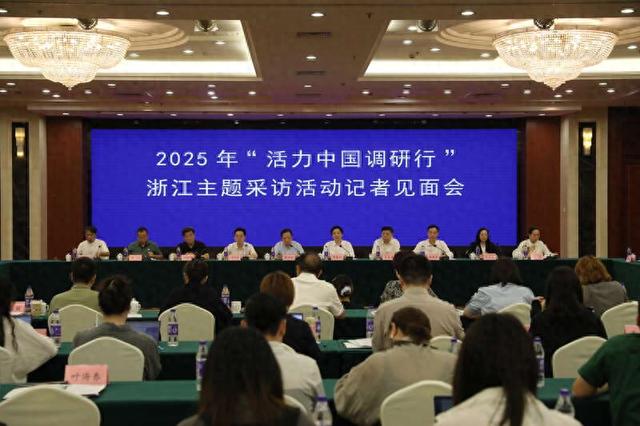
活力中国调研行 | “两山”理念提出20年 美丽经济成浙江发展新增长点
Zhong Guo Qing Nian Bao· 2025-08-04 05:40
Core Viewpoint - The article highlights the progress and achievements of Zhejiang Province in ecological civilization and environmental protection over the past 20 years, emphasizing the dual goals of protecting the environment ("green mountains and clear waters") and promoting economic growth ("golden mountains and silver mountains") [1][3]. Group 1: Environmental Achievements - The proportion of surface water with good quality in Zhejiang has increased from 41.9% to 98.6% over the past 20 years [1]. - The average PM2.5 concentration in urban areas has decreased from 61 micrograms per cubic meter in 2013 to 26.1 micrograms per cubic meter [1]. - Zhejiang has established 49 national ecological civilization demonstration zones and 14 "green mountains and clear waters" practice innovation bases, leading the nation in quantity [1]. Group 2: Economic Development Initiatives - The province is actively promoting the transformation of traditional industries, such as the lead-acid battery industry, into new energy sectors, resulting in a reduction of companies from 175 to 16 while increasing output value by 14 times [3]. - The government has implemented ecological compensation mechanisms and environmental rights trading, leading to the establishment of 50 projects that have attracted approximately 140 billion yuan in investment [3]. - The "beautiful economy" is identified as a new growth point for sustainable economic and social development in the region [3].

“两山合作社”以制度创新解难题
Jing Ji Ri Bao· 2025-08-03 21:53
Group 1 - The core idea of the article emphasizes the transformation of ecological advantages into developmental advantages in Zhejiang, driven by the "Green Mountains and Clear Water are Gold and Silver Mountains" philosophy [1][3] - The Two Mountains Cooperative serves as a key vehicle for implementing this philosophy, establishing a management system for ecological product operations that integrates government leadership, social participation, and market-oriented operations [1][2] - Digitalization is identified as a crucial solution to the bottlenecks in ecological value transformation, addressing challenges such as measurement, collateralization, trading, and monetization of ecological products [1][2] Group 2 - A multi-party win-win mechanism is essential for achieving ecological prosperity for the people, requiring a sustainable benefit-sharing model [2] - The Two Mountains Cooperative operates under the principle of "government guidance and market operation," creating multi-level subsidiaries to connect various stakeholders, including village collectives, enterprises, and farmers [2] - The integration and upgrading of the industrial chain are necessary to unlock the deeper value of ecological resources, focusing on core industries and enhancing both the production and value chains [2] Group 3 - The Two Mountains Cooperative employs institutional innovation to address the challenge of converting "Green Mountains and Clear Water" into "Gold and Silver Mountains," effectively releasing the value of ecological products through market-oriented methods [3] - The practice in Zhejiang is significant in the context of China's ecological civilization construction over the past twenty years, driving ecological prosperity and common wealth, with green development becoming a hallmark of high-quality growth [3]
“将中国传统生态智慧融入现代化进程的伟大创举”
Ren Min Ri Bao· 2025-08-02 22:01
Core Insights - The article highlights the transformation of Yucun village in Anji County, Zhejiang Province, showcasing the successful implementation of the "Green Mountains and Clear Water are Gold and Silver Mountains" concept, which emphasizes the integration of ecological preservation with economic development [1][2][3] Group 1: Ecological Transformation - Yucun village has evolved from a dusty mining area to a picturesque landscape with oilseed rape fields and lotus ponds, demonstrating a successful shift from "selling stones" to "selling scenery" and "earning carbon credits" [1][2] - The village's transformation serves as a vivid example of China's commitment to ecological civilization, illustrating that a good ecological environment is a necessity rather than a luxury [2][6] Group 2: International Recognition - A recent seminar attended by representatives from six countries praised the "Green Mountains and Clear Water" philosophy and China's achievements in green development, recognizing its significant reference value for global sustainable practices [1][2] - The participants noted that the ecological value created in Yucun not only enhances local residents' quality of life but also fosters rural tourism, aligning with the principles of the "Green Mountains and Clear Water" concept [2][3] Group 3: Bamboo Industry and Innovation - Anji, known as "China's Bamboo Town," is leveraging its bamboo resources to replace plastics, with over 1,000 bamboo enterprises and initiatives like the "Bamboo Replaces Plastic" campaign launched in collaboration with the International Bamboo and Rattan Organization [3][5] - The local bamboo industry has significantly reduced single-use plastic consumption, with over 5 million sets of disposable plastic products eliminated through the promotion of bamboo products [5][6] Group 4: Youth Empowerment and Community Development - The establishment of the "Qinglai Ji" entrepreneurial space in Dazhuang Village aims to attract young talent by providing a collaborative environment for startups, resulting in over 60 partners and new economic projects [7] - The community focuses on creating a sense of belonging and interaction for young people, addressing their needs for work, life, and entertainment, which is seen as a model for other regions facing youth retention challenges [7][8]

牢固树立和践行绿水青山就是金山银山理念 协同推进高质量发展和高水平保护
Ren Min Ri Bao· 2025-07-31 23:01
Core Viewpoint - The concept of "Lucid waters and lush mountains are invaluable assets" emphasizes the dialectical relationship between economic development and ecological protection, advocating for a harmonious coexistence of both [2][3][4]. Group 1: Theoretical and Practical Implications - The idea serves as a significant development principle for sustainable growth and modernization, requiring deep understanding and implementation [1][2]. - It breaks the rigid opposition between environmental protection and economic growth, suggesting that economic development can provide the necessary resources for ecological protection [2][3]. Group 2: Public Demand and Welfare - The concept addresses the increasing public demand for a better ecological environment, recognizing that a good ecological environment is a fundamental public good and essential for people's well-being [3][4]. - It highlights the importance of providing high-quality ecological products to meet the growing needs of the populace for a better living environment [3][6]. Group 3: Global Sustainable Development - The concept reveals a new path for global sustainable development, emphasizing the need for international cooperation in ecological governance and climate change [4][7]. - It positions the country as a leader in global environmental governance, actively participating in international agreements and initiatives [7][8]. Group 4: Achievements in Ecological Civilization - Since the 18th National Congress, significant progress has been made in ecological civilization construction, with historical changes in ecological quality and environmental governance [4][5]. - The country has established the world's largest clean energy systems and has made substantial improvements in air and water quality, with PM2.5 levels decreasing by 56% over the past decade [5][6]. Group 5: Future Directions - The focus will be on promoting a harmonious coexistence between humans and nature, with an emphasis on green development and pollution prevention [8][9]. - There will be a push for comprehensive green transformation in economic and social development, alongside reforms in ecological civilization systems to ensure sustainable practices [9][10].
咱这儿的碳汇能生金(美丽中国)
Ren Min Ri Bao· 2025-07-29 22:22
Group 1: Carbon Sink Projects in Guizhou - The single-tree carbon sink project in Congjiang County, Guizhou, allows villagers to monetize the carbon absorption of individual trees, enhancing the ecological value of forest resources [2][3] - In 2024, a total of 110 households, including Wu Xueyong, signed carbon sink purchase agreements, generating a total of 1.35 million yuan in carbon sink revenue for the participating households [3] - By the end of 2024, 7,962 households in Congjiang County participated in the single-tree carbon sink project, collectively earning nearly 12 million yuan from carbon sink funds [3] Group 2: Soil Carbon Sink Initiatives in Fujian - In Huian, Fujian, soil improvement techniques have led to increased crop yields, with sweet melons yielding 400-500 more pounds per acre due to enhanced soil conditions [4][5] - The company Matta provides soil conditioners for free, funded by the carbon credits generated from reduced greenhouse gas emissions during crop cultivation [5] - Soil carbon sinks are a significant component of agricultural carbon sinks, with ongoing efforts to develop more precise measurement methods for carbon credits in agriculture [5] Group 3: Marine Carbon Sink Developments in Shandong - The "solid algae gather fish" model in Long Island, Shandong, involves deploying artificial reefs to enhance marine ecosystems, resulting in an annual carbon absorption of over 280 tons [6][7] - The "seaweed bed and algae field carbon sink loan" product allows marine farms to use future carbon credit revenues as collateral for loans, facilitating financial support for ecological projects [7] - The intelligent transformation of marine farms has improved fish survival rates by 30%, leading to an annual catch of 1,000 tons and generating significant economic benefits for the local community [7]
中共中央办公厅、国务院办公厅印发《地方党政领导干部生态环境保护责任制规定(试行)》
Zhong Guo Neng Yuan Wang· 2025-07-29 13:46
Core Points - The Central Committee of the Communist Party of China and the State Council have issued the "Regulations on the Responsibility System for Ecological and Environmental Protection of Local Party and Government Leaders (Trial)" to enhance ecological protection responsibilities [1][3]. Group 1: Regulations Overview - The regulations aim to strengthen the Party's leadership in ecological civilization construction and establish a responsibility system for ecological and environmental protection [3][4]. - The regulations apply to members of local party committees and government leadership at the county level and above, as well as heads of ecological environment departments [3][4]. Group 2: Principles of Implementation - The implementation of the responsibility system should adhere to principles such as shared responsibility between party and government, integration of development and environmental protection, and a focus on public welfare [5][6]. - Emphasis is placed on a clear accountability mechanism that encourages officials to take responsibility and act proactively [5][6]. Group 3: Responsibilities of Local Leaders - Local party committee leaders are responsible for integrating ecological protection into overall economic and social development, conducting research, and coordinating efforts across departments [7][8]. - Local government leaders must develop ecological protection plans, ensure compliance with environmental regulations, and oversee the implementation of ecological protection measures [9][10]. Group 4: Supervision and Accountability - The regulations establish a framework for supervision and accountability, including audits and assessments of local leaders' performance in ecological protection [17][18]. - Specific criteria for accountability are outlined, including failure to implement central policies, neglect of responsibilities, and causing significant ecological damage [18].
古堰新智润柳河
Liao Ning Ri Bao· 2025-07-29 01:07
Core Viewpoint - The comprehensive governance and land consolidation project of the Liu River in Zhangwu County aims to achieve integrated benefits in flood prevention, ecological restoration, and water resource utilization, embodying the philosophy of "green water and lush mountains are invaluable assets" [1][3]. Group 1: Water Management Challenges - Liu River, a seasonal river, faces severe flooding during the rainy season, leading to a "suspended river" phenomenon where the water level is nearly 2 meters above the city [2]. - During dry seasons, the riverbed becomes exposed, contributing to wind erosion and ecological degradation, which has significantly impacted local agriculture and living conditions [2]. Group 2: Governance Strategies - The governance project draws inspiration from the Dujiangyan irrigation system, focusing on enhancing flood safety, improving water ecology, and developing eco-tourism [3]. - Flood control measures include the construction of protective embankments and riverbed management to meet a 50-year flood standard in urban areas and a 20-year standard in rural areas [4]. Group 3: Ecological and Agricultural Improvements - Non-flood control initiatives include creating wetlands that enhance water retention and biodiversity, while also developing recreational facilities along the river [5]. - The project has transformed previously arid land into productive rice paddies, increasing agricultural yields and benefiting over 3,900 residents [6]. Group 4: Economic and Tourism Development - The Liu River has become a vital resource for eco-tourism, attracting significant visitor numbers and boosting local economic development through unique cultural and culinary experiences [7]. - The area has seen a surge in tourism, with 700,000 visitors recorded in the first half of the year, highlighting the successful integration of ecological restoration and economic growth [7].
深入学习贯彻习近平生态文明思想,以美丽中国建设全面推进人与自然和谐共生的现代化
Ren Min Ri Bao· 2025-07-28 22:30
Core Points - The construction of ecological civilization is a fundamental strategy for the sustainable development of the Chinese nation, emphasized by the central leadership since the 18th National Congress of the Communist Party of China [1][4][22] - The publication of "Selected Works on Ecological Civilization by Xi Jinping" reflects the rich connotation and scientific system of Xi Jinping's ecological civilization thought, which is crucial for promoting harmonious coexistence between humans and nature [1][2][8] Group 1 - Xi Jinping's ecological civilization thought addresses major theoretical and practical issues in the new era, promoting innovation in ecological civilization theory, practice, and systems [2][4] - The thought emphasizes the importance of ecological civilization in the overall layout of socialism with Chinese characteristics, highlighting the need for a beautiful China [4][5] - The thought integrates Marxist principles with traditional Chinese ecological culture, providing a comprehensive understanding of ecological civilization [9][10] Group 2 - The ecological civilization construction has undergone historical, transformative, and comprehensive changes since the 18th National Congress, achieving significant results under Xi Jinping's leadership [7][18] - The thought outlines the core concepts and strategic paths for ecological civilization construction, emphasizing the relationship between economic development and environmental protection [13][19] - It stresses the importance of a systematic approach and institutional guarantees for ecological civilization construction, advocating for strict laws and regulations to protect the environment [14][15] Group 3 - The thought calls for a collective effort in building a beautiful China, promoting global sustainable development, and fostering a shared ecological consciousness among the populace [16][22] - It highlights the need to address five major relationships in ecological civilization construction, including high-quality development versus high-level protection [19][20] - The strategic tasks and major initiatives for advancing the construction of a beautiful China are outlined, focusing on green and low-carbon development [21][22]
开展7批生态文明示范创建工作 让生态文明理念开花结果
Zhong Yang Ji Wei Guo Jia Jian Wei Wang Zhan· 2025-07-28 13:19
Group 1 - The year marks the 20th anniversary of the "Lucid waters and lush mountains are invaluable assets" concept, with the Ministry of Ecology and Environment reporting significant progress in ecological protection and restoration efforts under Xi Jinping's ecological civilization thought [1] - Since 2017, the Ministry has organized seven batches of ecological civilization demonstration creation work, resulting in the establishment of 572 ecological civilization demonstration zones and 240 "Lucid waters and lush mountains are invaluable assets" practice innovation bases [1][2] Group 2 - Demonstration areas have shown significant improvements in ecological quality, with air and water quality ranking among the best in their provinces, and nearly half of the "two mountains" bases achieving "excellent" ecological status [2] - The regions are leading in green development, transitioning from energy consumption control to carbon emission control, with unit GDP energy consumption and carbon emission intensity being among the best in their provinces [2] - Various transformation paths have been identified, including "protecting green for gold," "gathering green to create gold," and "borrowing green to generate gold," along with seven transformation models such as ecological compensation, ecological agriculture, ecological tourism, and ecological finance [2] Group 3 - The selection process for the 2025 ecological civilization construction demonstration zones and "Lucid waters and lush mountains are invaluable assets" practice innovation bases is currently underway, with new changes including optimized indicators and simplified procedures [3] - The frequency of selection has been adjusted from annually to every three years, focusing on quality over quantity to enhance the demonstration effect of selected areas [3] - Enhanced supervision measures have been implemented, including warnings for significant ecological issues and re-evaluations for areas that have held their designation for six years [3]